数字技术

Search documents
数智技术催生金融风险新形态 业内建言监管治理体系要跟上
Zheng Quan Shi Bao· 2025-10-28 18:08
Group 1 - The financial industry is undergoing a digital and intelligent transformation, which is driving business innovation and improving service quality while also changing risk patterns and security boundaries [1] - Financial regulatory bodies need to enhance their digital intelligence levels and establish regulatory mechanisms that align with the development of digital technologies to effectively balance financial innovation and risk prevention [1] - The use of big data analysis technology reduces the difficulty of risk prediction, allowing financial institutions to quantify potential risks and implement timely interventions [1] Group 2 - Digital technology is changing the transmission paths and speed of financial risks, with risks potentially spreading rapidly across platforms and ecosystems [2] - The collaboration between banks and third-party service providers, such as cloud service and fintech companies, increases the risk spillover effects [2] - The widespread use of homogeneous algorithms and models may lead to a "herding effect," increasing the probability of market resonance and pro-cyclical risks [2] Group 3 - Systematic promotion of financial legal construction is crucial for risk prevention and collaborative governance in the digital age [3] - Regulatory bodies are encouraged to innovate friendly regulations that manage risks while allowing sufficient space for financial innovation [3] - The ultimate goal of regulation is to enable finance to better serve the real economy and promote national economic development [3]



海南华茂明珠珠宝首饰有限公司成立 注册资本100万人民币
Sou Hu Cai Jing· 2025-10-28 11:12
Core Viewpoint - Hainan Huamao Mingzhu Jewelry Co., Ltd. has been established with a registered capital of 1 million RMB, indicating a new player in the jewelry industry focusing on various sales and technology services [1] Company Summary - The company is legally represented by Lu Wanqi and has a registered capital of 1 million RMB [1] - The business scope includes licensed operations in internet live streaming technology services and general operations in jewelry wholesale, retail, and repair services [1] - Additional services offered include internet sales, sales of gold and silver products, metal products, and various technical services related to artificial intelligence and data processing [1] Industry Summary - The establishment of Hainan Huamao Mingzhu Jewelry Co., Ltd. reflects the growing trend of integrating technology with traditional retail, particularly in the jewelry sector [1] - The company's focus on internet data services and artificial intelligence indicates a shift towards digital transformation within the jewelry industry [1]
“绕世界一圈后还想留塘口” 广东打通农文旅价值新链路
2 1 Shi Ji Jing Ji Bao Dao· 2025-10-28 10:25
Core Insights - Tangkou Town has transformed from a "hollow village" with only 9 households to a vibrant community with 23 guesthouses, 372 startups, and over 50 operational projects, showcasing a successful model of rural revitalization through the integration of culture, tourism, and entrepreneurship [1][2][9] Investment and Economic Growth - In 2024, Tangkou Town is projected to see a 16.2% year-on-year increase in fixed asset investment and an impressive 124.8% growth in industrial investment, indicating a robust economic recovery and growth trajectory [2] - The establishment of 372 new startups in the past three years has created over 2,000 jobs, contributing significantly to local employment [2] Cultural and Tourism Development - The transformation of the former grain warehouse into a bookstore has generated 5 million yuan in revenue and attracted 1.5 million visitors in 2024, highlighting the potential for cultural spaces to thrive even amid a national decline in physical bookstores [4][5] - The integration of historical architecture and cultural experiences has shifted tourist expectations from mere aesthetics to meaningful engagement, reflecting a broader trend in rural tourism [6] Community and Entrepreneurial Ecosystem - The "IE Commune" initiative aims to attract global entrepreneurs to Tangkou, offering incentives such as rent exemptions and investment subsidies, fostering a supportive environment for innovation and business development [10][12] - The community has seen a significant influx of "new villagers," with over 2,000 individuals drawn to the area, indicating a successful blend of urban and rural lifestyles [9][10] Digital Transformation - Digital platforms are reshaping the rural economy, with initiatives like the "Jiangmen Supply and Marketing Tangkou Village Store" combining traditional agricultural practices with modern e-commerce strategies [15][17] - The introduction of AI-driven marketing tools is enhancing local businesses' outreach and engagement, demonstrating the role of technology in revitalizing rural economies [13][17] Sustainable Development and Future Prospects - Tangkou Town is positioning itself as a model for sustainable rural development by integrating cultural heritage, community engagement, and digital innovation, creating a vibrant ecosystem that attracts both residents and visitors [12][18] - The ongoing efforts to blend local culture with modern entrepreneurial practices are expected to further enhance the town's appeal as a destination for both living and working, contributing to long-term economic sustainability [18]
下一个五年 这两个字更重要
Zhong Guo Xin Wen Wang· 2025-10-28 00:14
Group 1 - The core viewpoint emphasizes that "expanding high-level opening-up" has been elevated in importance within China's 14th Five-Year Plan, reflecting a proactive choice amid geopolitical risks and trade protectionism [1][2] - The opening-up is primarily aimed at promoting China's own development, with a target of reaching a goods trade scale of $6.16 trillion and service trade exceeding $1 trillion by 2024 [2][3] - High-level opening-up has become a strong driving force for China's economic development [3] Group 2 - The nature of opening-up is undergoing a structural transformation, shifting from merely removing barriers to establishing rules [4][5] - China is transitioning from being a follower to a leader in global standards and rules, particularly in fields like artificial intelligence, quantum computing, and advanced manufacturing [5][6] - The next five years will see strategic deployments in three pillars of trade: goods, services, and digital trade [6][7] Group 3 - Emerging fields such as service trade and digital trade are becoming new frontiers for high-level opening-up [7][8] - Technologies like artificial intelligence and digital tools are reshaping traditional trade organization and resource allocation, enhancing certainty and resilience in opening-up [8] Group 4 - China's opening-up strategy is diversifying and is no longer reliant on a single market, with increasing trade with Belt and Road Initiative countries and significant growth in trade with ASEAN following the RCEP agreement [9] - The emphasis on "active" opening-up indicates a shift from compliance-based to a more proactive approach, enhancing foreign investment confidence [9][10] - The total foreign direct investment in China from 2021 to May 2025 is projected to reach 4.7 trillion yuan, surpassing the total during the previous five-year plan [9][10] Group 5 - Investment in China is becoming a necessity for multinational companies, with foreign firms expressing increased confidence in the Chinese market due to the emphasis on opening-up and innovation [10] - China's high-level opening-up not only drives its own development but also plays a stabilizing role in global connectivity, creating a mutually beneficial rule system for broader market access and investment opportunities [10]
文化新观察|技术跃迁,如何赋能电影行业发展?
Xin Hua She· 2025-10-27 14:58
Core Insights - The film industry is increasingly integrating new technologies such as artificial intelligence (AI) and virtual reality (VR) to enhance creativity and production efficiency [1][5][12] Group 1: Digital Technology Empowering Creation - Recent films like "Nezha" and "The Wandering Earth" showcase the deep integration of digital technology, providing audiences with immersive viewing experiences [2] - AI is now prevalent in all stages of film production, from content creation to post-production [4] - AI applications have achieved a 95% accuracy rate in film dubbing and have improved frame rates from 24 to 48 frames per second [5] Group 2: Classic Film Restoration - The restoration of classic films using advanced technologies like 2K and 4K has revitalized old films, making them accessible to modern audiences [6][8] - AI algorithms are being utilized to enhance restoration quality, addressing issues like contrast loss and enabling automatic noise reduction [6][8] - The China Film Archive has completed 535 2K restorations and 83 4K restorations, expanding its resource library [8] Group 3: Virtual Reality Film Development - Virtual reality films, such as "Dream Back to Tang Dynasty," are gaining traction, supported by government initiatives to integrate VR technology into the film industry [9][11] - The content of VR films is diversifying, covering themes from cultural heritage to adaptations of popular film IPs [11] - Challenges such as compatibility between content and VR equipment highlight the need for standardized systems in VR film production [11] Group 4: Embracing Technological Innovation - The film industry recognizes that embracing technological innovation is essential for achieving high-quality development [12] - There is a focus on leveraging China's large film market to create visually impactful and culturally rich works that meet audience expectations for high-quality audiovisual experiences [12]

专访丨全球治理倡议有助于弥合南北发展差距——访埃及新闻总署副署长娜什瓦·阿卜杜勒-哈米德
Xin Hua Wang· 2025-10-27 06:11
Core Viewpoint - The global governance initiative proposed by China aims to address the widening development gap between the Global North and South, reinforcing the core values established by the United Nations 80 years ago and injecting new momentum for fair cooperation and innovative development [1][2]. Group 1: Global Challenges and Governance - The current global governance mechanisms are either ineffective or unfair in addressing political, economic, military, and social turmoil [1]. - Wealthy countries maintain disproportionate influence in international decision-making, while Global South countries lack adequate representation, leading to significant burdens on emerging markets and developing nations [1]. Group 2: Climate Change and Responsibility - Developed countries, particularly the U.S., have historically contributed to climate change but now pressure developing nations regarding carbon emissions, despite the latter being the most affected by climate-related issues [1]. - The question of effective global climate action arises when wealthy nations evade historical responsibilities [1]. Group 3: China's Global Governance Initiative - Following previous initiatives, China's global governance initiative emphasizes equal participation in international affairs for all nations, regardless of size or wealth, and aims to promote common development [2]. - China advocates for reforming international financial institutions to bridge the long-standing North-South gap and supports the legitimate development rights of emerging markets and developing countries [2]. Group 4: Technological Innovation and Development - The world is entering a new industrial revolution led by artificial intelligence and digital technology, with Global South countries eager to leverage innovation for accelerated development [2]. - China's proposal to establish a World Artificial Intelligence Cooperation Organization aims to address the digital and intelligence divide, responding to the urgent needs of developing nations [2].
乘“数”而上拓展应用场景
Jing Ji Ri Bao· 2025-10-26 22:06
Core Insights - The concept of "digital empowerment" is gaining significant attention as digital technologies rapidly integrate into various sectors, transforming production methods, lifestyles, and social governance [1][2] Group 1: Digital Economy Growth - The digital economy in China is experiencing explosive growth, with the core industry value added expected to account for approximately 10% of GDP by 2024, and the number of 5G base stations reaching 4.251 million [1] - New innovative scenarios created by digital technologies are reshaping the future of production and life, including applications in digital agriculture, smart water management, and intelligent factories [1] Group 2: Challenges in Digital Empowerment - There are deep-seated issues that hinder the innovative application of digital technologies, such as the need for improved infrastructure and the existence of institutional barriers in the marketization of new data elements [2] - Key challenges include data rights confirmation, pricing, trading, and distribution, which require urgent solutions to unlock the potential of digital empowerment [2] Group 3: Technological Innovation and Reform - To fully harness the potential of digital empowerment, technological innovation and systemic reform are essential, focusing on strengthening technology, expanding application scenarios, and optimizing resource allocation [2][3] - Encouraging the establishment of various innovative platforms in the data field and promoting foundational research and original technology innovation are critical steps [2] Group 4: Resource Optimization - The government and market should leverage their respective advantages to enhance resource allocation, with the market playing a decisive role while the government provides guidance [3][4] - There is a need to construct a data element market and break down institutional barriers that restrict the smooth flow of resource elements [3] Group 5: Infrastructure Development - The construction of digital infrastructure should be prioritized, including the implementation of the "East Data West Computing" project and the development of diversified computing resources [4] - Enhancing communication network efficiency and expanding coverage of next-generation communication networks are vital for supporting digital services [4]
为服装产业注入文化底气
Jing Ji Ri Bao· 2025-10-26 22:06
Core Viewpoint - The rise of Guofeng fashion is a significant driver for the Chinese clothing industry, reflecting cultural confidence and the urgent need for transformation and upgrading in the sector [1][2]. Market Dimension - The Guofeng fashion industry has the potential to tap into a market worth trillions, with consumption scenarios expanding from ceremonial occasions to daily commuting and social displays [1]. - The consumer base is shifting from niche preferences to mass consumption, indicating a broader acceptance and integration of Guofeng fashion into everyday life [1]. Industry Dimension - Leading brands are focusing on the integration of traditional craftsmanship with modern design, while smaller brands are concentrating on lightweight Hanfu and new Chinese styles, fostering a diversified development landscape [1]. - Guofeng fashion is gaining international recognition, frequently appearing on global platforms like Paris Fashion Week, which enhances cultural exchange and boosts export growth [1]. Innovation and Technology - The integration of Guofeng fashion with traditional culture should go beyond superficial elements, delving into Chinese philosophy and aesthetics to create meaningful design narratives [2]. - Embracing digital technologies such as AI, big data, and new materials is essential for enhancing design efficiency and enabling personalized production, thereby creating immersive consumer experiences [2]. Collaborative Ecosystem - The Guofeng fashion movement requires systemic innovation across the entire value chain, from material research and manufacturing processes to brand building and tourism integration [3]. - Key regional clusters should play a coordinating role to eliminate bottlenecks in the industry chain, providing support and services to small and medium enterprises, and promoting collaborative development [3]. Cultural Confidence - The Guofeng fashion industry not only injects growth momentum into the Chinese clothing sector but also reinforces cultural confidence, showcasing the revival of traditional craftsmanship within modern design [3].
一图看懂《上海手册:21世纪城市可持续发展指南》2025年度报告
Di Yi Cai Jing· 2025-10-26 02:05
Group 1 - The project aims to enhance urban living through digital technology and international cooperation, focusing on community engagement and youth participation [10][15][18] - The initiative includes contributions from 11 countries, showcasing diverse approaches to urban sustainability and smart city development [8][9] - The Shanghai Metro is leading the development of a comprehensive digital maintenance platform, integrating various professional systems for improved operational efficiency [17][19] Group 2 - The project has organized numerous activities during its implementation, generating significant community engagement and feedback [15] - The Shanghai Manual serves as a guideline for sustainable urban development, with annual reports highlighting progress and best practices [6][8] - The initiative emphasizes a holistic approach to urban governance, addressing social, economic, environmental, and cultural aspects [9][10]

国际人士表示中共二十届四中全会为世界经济发展注入动力
Yang Shi Xin Wen Ke Hu Duan· 2025-10-26 01:51
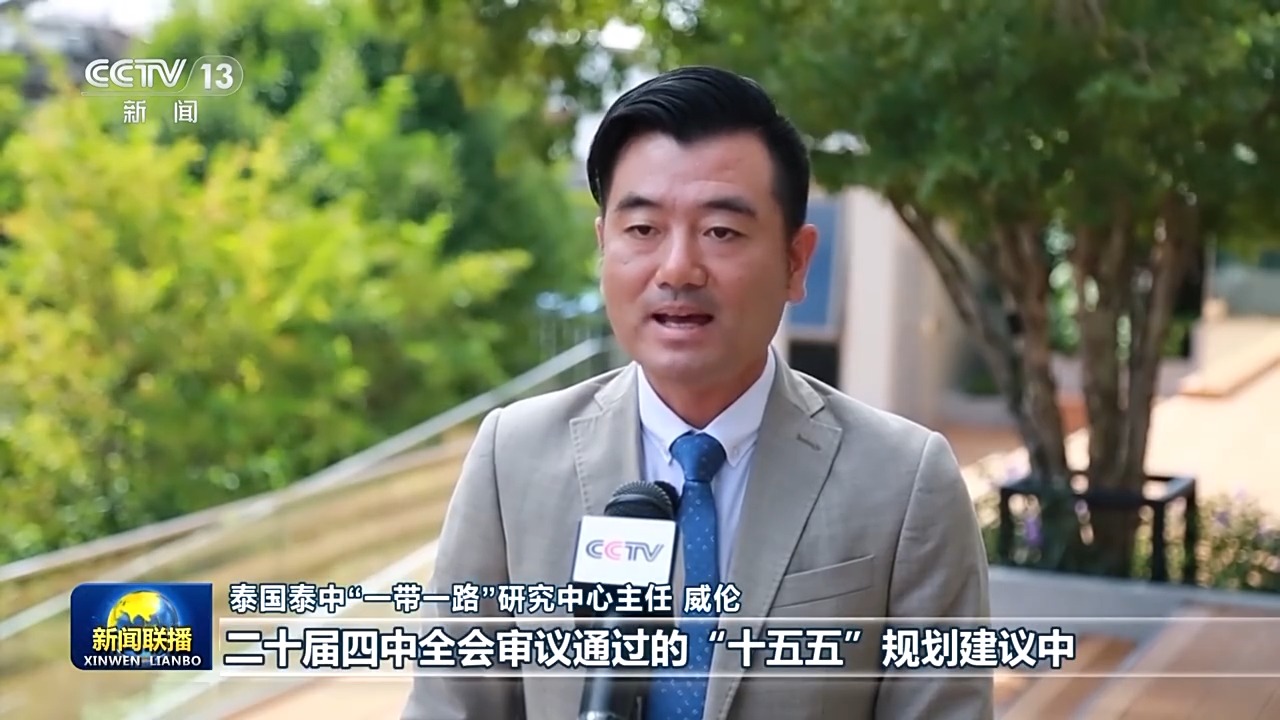
俄罗斯科学院世界经济与国际关系研究所副所长 亚历山大·洛马诺夫:二十届四中全会部署的重点工作中,我最为关注的是扩大高水平对外开放的内容。中 国的大门将越开越大,而且是高质量的开放,不仅能够促进中国国内经济创新发展,也为合作伙伴国家提供发展的动力。 国际社会高度关注中共二十届四中全会。多国人士表示,全会规划了中国未来五年的发展蓝图,释放出中国与世界各国共享机遇的信号,为世界经济发展注 入动力。 泰国泰中"一带一路"研究中心主任 威伦:二十届四中全会审议通过的"十五五"规划建议中确立了中国建设现代化产业体系,加快高水平科技自立自强的目 标。我相信中国在习近平主席的坚强领导下,一定能够开创中国式现代化建设新局面,中国将继续为推动人类社会进步和繁荣贡献力量。 联合国前副秘书长 索尔海姆:中国已经迈入由高科技和创新驱动的高质量发展阶段。中国在人工智能、清洁能源、数字技术等多个领域走在世界前列。我 认为"十五五"期间中国有望实现上述产业间的深度融合,这也是我们非常期待的。 古巴拉丁美洲通讯社报道说,中国未来五年的核心目标包括推动高质量发展、加快高水平科技自立自强、推进国家安全体系和能力现代化以及扎实推进共同 富裕。报道关 ...