
气候变化

Search documents
凝聚行动共识,加速绿色转型(寰宇平)
Ren Min Ri Bao· 2025-11-15 21:51
Core Viewpoint - The article emphasizes the urgent need for global cooperation to combat climate change, highlighting the significance of the COP30 conference in Brazil and the adoption of the Belem Declaration, which calls for more equitable and inclusive climate actions [1][2]. Group 1: Climate Action and International Cooperation - The Belem Climate Summit serves as a reminder of the commitments made in the Paris Agreement, which established a framework for international climate action based on "nationally determined contributions" [1]. - Global climate cooperation has progressed over the past decade, with significant milestones such as the establishment of the "loss and damage fund" and the agreement to transition away from fossil fuels [2]. - Despite these advancements, there remains a substantial gap between ambition and reality, with increasing extreme weather events and rising greenhouse gas emissions indicating that the climate crisis is not alleviating [2][3]. Group 2: Responsibilities of Developed and Developing Nations - The principle of "common but differentiated responsibilities" is crucial in addressing climate change, with developed countries bearing historical and legal obligations to lead in emissions reduction and provide financial support to developing nations [3]. - The voices from the Belem Climate Summit reflect a collective expectation for substantive fairness and climate justice, emphasizing the need for developed countries to take more effective actions [3]. Group 3: Green Transition and Economic Development - The article highlights the necessity of a green low-carbon transition as a global trend, linking climate crisis mitigation with poverty alleviation and economic development [4]. - Countries are encouraged to enhance international cooperation in green technology and industry, ensuring the accessibility and affordability of clean energy technologies [4]. - The focus on national contributions at the Belem conference has seen over 100 countries submit new climate action plans, with notable commitments from China and Brazil to significantly reduce greenhouse gas emissions by 2035 [5]. Group 4: South-South Cooperation and Global Impact - Developing countries are increasingly exploring diverse energy transition models and climate financing solutions, with China achieving significant milestones in renewable energy capacity and emissions reduction [5][6]. - Initiatives like the "Evergreen Tropical Rainforest Fund" and commitments from countries like India to increase non-fossil energy sources demonstrate the proactive stance of global South nations in climate action [5]. - The article underscores that addressing climate change is a shared responsibility, with all nations needing to collaborate for a sustainable future [5][7].
COP30“中国角”边会关注适应气候变化中国方案
Xin Hua She· 2025-11-15 15:24
Core Viewpoint - The 30th Conference of the Parties to the United Nations Framework Convention on Climate Change (COP30) is taking place in Belem, Brazil, focusing on climate change adaptation strategies, particularly from China [1] Group 1: Climate Change Adaptation - Over 150 domestic and international guests participated in the "China's Solutions for Climate Change Adaptation" themed side event, sharing advanced concepts and practical cases [1] - The head of the Chinese delegation, Vice Minister of Ecology and Environment Li Gao, emphasized that climate change is a severe challenge faced by humanity, and China maintains a dual focus on mitigation and adaptation [1] Group 2: China's Initiatives - China is implementing 39 pilot projects for climate-adaptive urban construction, establishing a collaborative framework of "national strategy + provincial implementation + urban demonstration" [1] - The Chinese side expressed willingness to work with all parties to enhance global capacity to respond to climate change challenges [1]
COP30“应对气候变化和促进绿色低碳转型国际合作”边会在巴西贝伦举行
Zhong Guo Xin Wen Wang· 2025-11-15 03:08
欧洲气候基金会首席执行官劳伦斯·图比亚娜指出,全球绿色转型需要构建多元包容的治理框架, 应通过政策协调、标准互认等方式减少合作壁垒,推动形成技术共享、责任共担、利益共赢的合作格 局。 就有关深化绿色经贸合作加速推进全球气候目标的议题,能源转型委员会主席阿代尔·特纳表示, 过去十年间,太阳能电池、风能等关键低碳技术实现跨越式突破,中国在技术研发、产业规模化应用等 方面作出了突出贡献,为全球能源转型奠定了重要基础。 当地时间11月12日,中国国际发展知识中心在《联合国气候变化框架公约》第30次缔约方大会 (COP30)上联合举办"应对气候变化和促进绿色低碳转型国际合作"边会,邀请国内外专家和实践者围绕 全球气候变化、绿色经贸合作、绿色低碳转型国际合作等议题深入研讨。 中国气候变化事务特使刘振民在致辞中指出,气候变化是全球共同的,任何国家都无法置身事外。 作为全球南方国家的重要一员,中国始终秉持人类命运共同体理念,愿与各国携手构建更加公平、高 效、包容的绿色技术创新与产业合作环境,以实际行动推动全球气候治理向纵深发展。 国际可再生能源署总干事弗朗切斯科·拉卡梅拉表示,可再生能源是应对气候变化的核心力量,需 进一步强 ...
房新文总领事在2025年澳大利亚中国总商会能源与资源委员会全澳大会暨中澳经贸合作论坛上发表视频致辞
Shang Wu Bu Wang Zhan· 2025-11-14 06:03
房总领事祝贺论坛成功召开,并指出能源与资源一直是中澳双边经贸合作的重要领域,中澳已将绿色低 碳、能源转型、共同应对气候变化等列入合作清单,双方资源与市场优势互补,合作空间广阔。房总领 事表示,二十届四中全会通过的"十五五"规划建议向包括澳大利亚在内的世界各国发出了共享机遇、共 促发展的积极信号。希望双方企业在两国领导人战略引领下,进一步发挥比较优势,推动能源资源合作 取得更大成绩。 11月10日,房新文总领事在2025年澳大利亚中国总商会(CCCA)能源与资源委员会全澳大会暨中澳经 贸合作论坛上发表视频致辞。塔州能源与可再生能源部长杜根、塔州政府增长部代表平托、霍巴特代理 市长谢洛克、驻澳使馆公使衔参赞高峰、我馆参赞衔领事迟洁超、CCCA会长李芒等政商界代表近200 人参加活动。 ...
重新定义造林固碳潜力 未来全球造林行动有了“路线图”
Ke Ji Ri Bao· 2025-11-14 02:53
团队还从土地的可持续"供给"和国家的政策"需求"两个维度,重新打造了未来森林恢复的蓝图。 研究指出,全球仍有巨大的造林潜力,有望每年最多吸收50亿吨的二氧化碳。但在综合考虑土地可 持续利用和国家意愿后,这一潜力会降低到每年15亿吨,造林的实际减排潜力远远低于预期。 "各国的植树造林承诺与土地的潜力存在极大的错位:有土地潜力的国家所做出的承诺相对较少, 而承诺较多的国家,尤其是低收入国家,却缺少足够的土地和相关资源来支撑其造林意愿。"覃章才 说,希望他们的研究成果可以为全球气候变化合作,各国森林资源的不对称和南北国家的权责失衡等问 题提供一定科学参考。 据悉,《科学》杂志的编辑认为,该研究考虑了多种要素,提供了更真实的气候效应评估。 为给地球"降温",全球亟待减少二氧化碳排放并增强生态系统的二氧化碳吸收能力。森林作为天然 的"吸碳器",是调节气候的"绿色空调",而植树造林也被认为是极具成本效益的气候解决方案之一。 "然而,当前学界对未来植树造林能吸收多少二氧化碳存在巨大分歧。争议主要缘于两点:一是, 虽然植被固碳能力相对明确,但土壤的碳变化还很难算清;二是,针对全球适合造林的土地面积,不同 研究间的估算值相差巨 ...
预计2025年全球葡萄酒产量2320万千升,增长3%
Xin Hua She· 2025-11-14 00:27
Core Insights - The global wine production has faced a decline for three consecutive years due to extreme weather conditions, with a slight projected increase in 2025 [2] - Climate change and shifting consumer habits are expected to continue impacting global wine production negatively [2] Production Estimates - The International Organization of Vine and Wine estimates that global wine production in 2025 will be approximately 23.2 million kiloliters, a 3% increase from 2024, but still below average levels [2] - The 2024 production is noted to be the lowest since 1961 [2] Regional Production Trends - The European Union accounts for 60% of global wine production, with France expected to have its lowest production since 1957 and Spain at a 30-year low [2] - Italy's production is returning to near-normal levels, while some Central and Eastern European countries have seen increases [2] - In the Northern Hemisphere, the United States, the fourth-largest wine producer, is projected to see a 3% year-on-year increase in production [2] - The Southern Hemisphere is expected to see a 7% increase in wine production, although it remains 5% below average levels, with South Africa, Australia, New Zealand, and Brazil experiencing rebounds, while Chile faces significant declines due to heatwaves and drought [2] Climate Impact - The Secretary General of the International Organization of Vine and Wine, John Buck, highlighted that the decline in wine production over the past three years is primarily due to climate change, with regions experiencing extreme temperatures, droughts, and unexpected weather events [2]
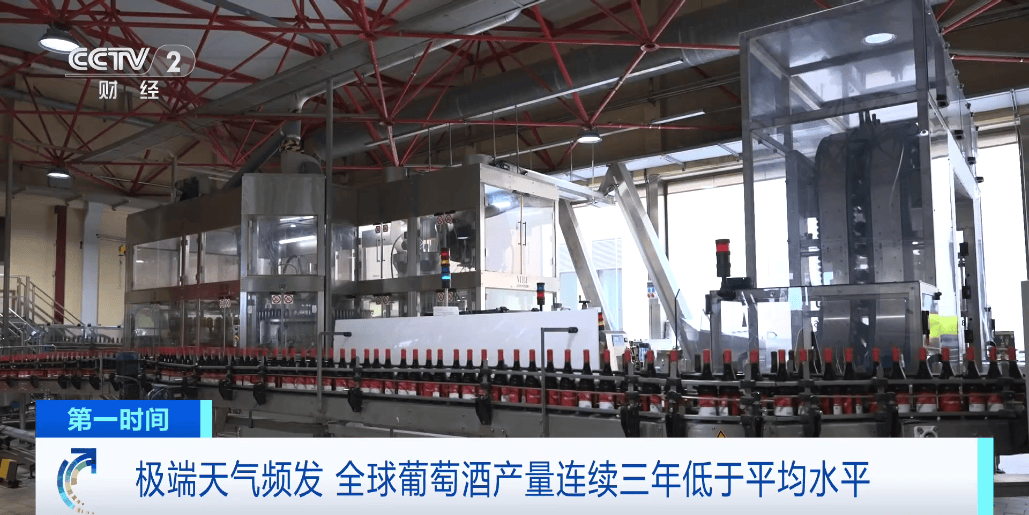
极端天气频发!全球葡萄酒产量连续三年低于平均水平
Sou Hu Cai Jing· 2025-11-13 09:28
Core Viewpoint - The International Organization of Vine and Wine (OIV) projects a slight increase in global wine production in 2025, but it will remain below average levels due to the impact of extreme weather conditions over the past three years [1][3][7]. Group 1: Global Wine Production Estimates - The estimated global wine production for 2025 is approximately 23.2 billion liters, representing a 3% increase from 2024, yet still below average levels [3]. - The 2024 global wine production was reported as the lowest since 1961 [3]. - The European Union accounts for 60% of global wine production [3]. Group 2: Regional Production Insights - France is expected to have its lowest wine production since 1957 in 2025, while Spain's production has dropped to a 30-year low [3]. - Italy's wine production is recovering to near normal levels, and some Central and Eastern European countries have seen production increases [3]. - In the Northern Hemisphere, the United States, the fourth-largest wine producer globally, is projected to see a 3% year-on-year increase in production [3]. Group 3: Southern Hemisphere Production - The Southern Hemisphere is expected to see a 7% year-on-year increase in wine production, although it remains 5% below average levels [5]. - Countries like South Africa, Australia, New Zealand, and Brazil are experiencing production rebounds, while Chile faces significant declines due to heatwaves and drought [5]. Group 4: Climate Change Impact - The OIV's Secretary General, John Buck, indicated that the decline in wine production over the past three years is primarily due to climate change, with regions experiencing extreme temperatures, droughts, followed by heavy rains or unexpected frosts [7]. - The organization predicts that global wine production will continue to decrease due to climate change and changing consumer habits [7].

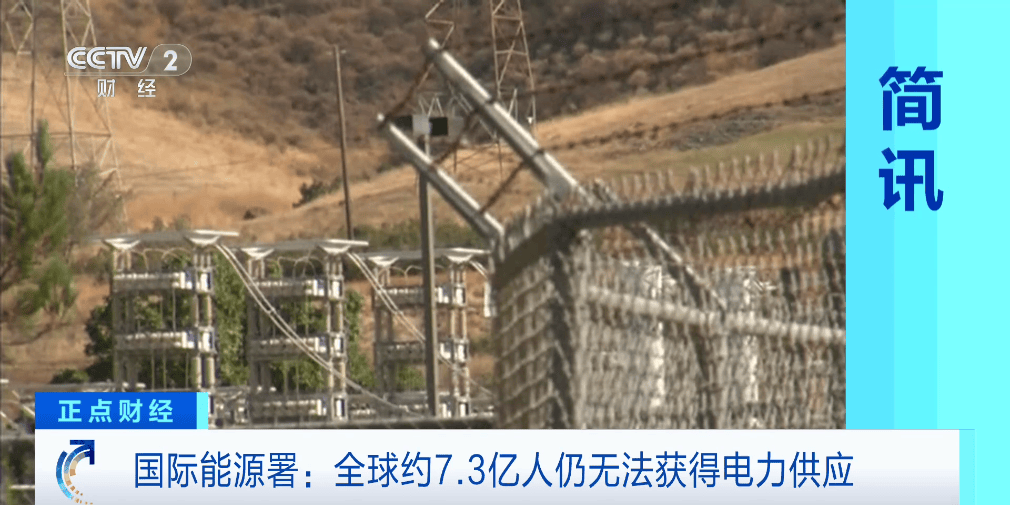
国际能源署:全球约7.3亿人仍无法获得电力供应
Sou Hu Cai Jing· 2025-11-13 08:12
Core Insights - The International Energy Agency (IEA) released the "World Energy Outlook 2025" report, indicating that approximately 730 million people globally still lack access to electricity, highlighting a failure to meet energy accessibility and climate change response targets [1][3] Group 1 - The report emphasizes the increasing climate risks, but achieving net-zero emissions by mid-century could help limit long-term temperature rise to within 1.5°C [3] - The IEA urges countries to accelerate energy diversification and deepen international cooperation to address future uncertainties and risks [3]
国际能源署:全球约7.3亿人仍无法获电力供应
中国能源报· 2025-11-13 07:04
Core Insights - The International Energy Agency (IEA) released the "World Energy Outlook 2025" report, highlighting that approximately 730 million people globally still lack access to electricity and that climate risks are intensifying [1] - The report indicates that global targets for energy accessibility and climate change response have not been met, but achieving net-zero emissions by mid-century could help limit long-term temperature rise to within 1.5 degrees Celsius [1] Energy Demand Trends - The report forecasts that electricity demand will grow at a rate significantly faster than overall energy consumption, driven primarily by data centers and artificial intelligence, particularly in developed economies and China [1] - Renewable energy, especially solar photovoltaic, is expected to see the fastest growth in demand, with China maintaining its position as the largest renewable energy market globally [1] Nuclear and Fossil Fuels Outlook - A revival in nuclear energy is anticipated, with global nuclear power capacity expected to increase by at least one-third by 2035 [1] - In the short term, global oil and natural gas supplies are projected to be generally sufficient, although geopolitical risks remain a concern [1] Recommendations for Future Energy Strategy - The IEA urges countries to accelerate the diversification of energy structures and deepen international cooperation to address future uncertainties and risks [1]
国际能源署:全球约7.3亿人仍无法获电力供应
Xin Lang Cai Jing· 2025-11-12 14:23
Core Insights - The International Energy Agency (IEA) report highlights that approximately 730 million people globally still lack access to electricity, while climate risks are intensifying [1] - The report indicates that global energy accessibility and climate change response have not met targets, but achieving net-zero emissions by mid-century could keep long-term temperature rise within 1.5 degrees Celsius [1] - The report discusses future energy trends, noting that electricity demand is expected to grow significantly faster than overall energy use, driven mainly by data centers and artificial intelligence in developed economies and China [1] Energy Demand and Supply - Renewable energy demand, particularly solar photovoltaic, is projected to grow the fastest, with China maintaining its position as the largest renewable energy market globally [1] - Nuclear energy is expected to see a revival, with global nuclear power capacity projected to increase by at least one-third by 2035 [1] - In the short term, global oil and natural gas supply is generally sufficient, although geopolitical risks remain a concern [1] Recommendations and Future Outlook - The IEA calls for countries to accelerate energy diversification and deepen international cooperation to address future uncertainties and risks [1]