生成式AI

Search documents
OpenAI第一款硬件要来了,但可能“没那么AI”?
美股研究社· 2026-02-10 11:10
Core Viewpoint - OpenAI is facing challenges in launching its first consumer hardware device, the "Dime," due to rising BOM costs from the global storage chip crisis, leading to a downgrade from an independent device to a basic cloud-dependent headset [7][9]. Group 1: Product Development and Specifications - OpenAI's first consumer hardware, internally codenamed "Sweetpea" and named "Dime," was initially designed to feature a Samsung 2nm Exynos chip for advanced AI processing capabilities [8]. - Due to high costs of storage components, OpenAI is forced to downgrade the Dime to a simpler headset, which will primarily serve as a conduit for cloud-based AI models rather than a standalone AI computing device [8][9]. Group 2: Market Strategy and Production Plans - Despite the product's specification compromises, OpenAI is aggressively pursuing its hardware strategy, with executives prioritizing hardware projects [11]. - The company plans to officially launch the Dime in September 2026, with production likely handled by Foxconn in Vietnam, aiming for sales of 40 to 50 million units in the first year [11]. Group 3: Additional Consumer Devices - OpenAI is also developing a second consumer device, codenamed "Gumdrop," which will have a pen-like shape and no screen, focusing on environmental awareness and interaction [13]. - Key features of the Gumdrop include situational awareness through cameras and microphones, local AI model execution with cloud support, and the ability to convert handwritten notes to text for ChatGPT [15].


又一家华尔街投行下调中国软件业评级:AI颠覆,估值重构!
硬AI· 2026-02-10 07:03
Core Viewpoint - UBS has downgraded the rating of the Chinese software industry, indicating that generative AI is disrupting the traditional SaaS logic, forcing software companies to shift from high-margin standardized subscriptions to low-margin customized services, leading to "revenue growth without profit" [2][4] Group 1: Valuation Changes - The valuation logic for leading Chinese software companies has historically relied on "convergence premium," betting that they would achieve high-profit standardized subscription models similar to Salesforce or Adobe [8] - UBS believes this logic has been fundamentally undermined by AI, with stock prices of leading US software companies dropping by 10%-40% amid the decline of SaaS subscription model premiums [11] - The valuation framework for the Chinese software industry is shifting away from SaaS towards traditional IT service valuations, meaning P/E or EV/FCF will replace EV/Sales as the new pricing anchor [12] Group 2: Revenue Growth vs. Profitability - UBS cites data from the Ministry of Industry and Information Technology showing that while revenue growth in the Chinese software industry has accelerated since early 2025, profit margins have declined [13] - This indicates a harsh reality where AI has increased IT spending, but the demand is not directed towards standardized software products [14] - The combination of increased spending on AI and the need for extensive customization means that revenue growth does not equate to profit margin expansion, potentially dragging down profitability due to heavy customization demands [15][17] Group 3: Challenges in AI Monetization - UBS identifies three bottlenecks in software companies' ability to monetize AI: insufficient AI capabilities, immature digital ecosystems, and credibility issues regarding AI expertise compared to startups and cloud vendors [15] - Despite these challenges, opportunities remain for companies that can provide end-to-end solutions, understand vertical industries, and cross-sell traditional digital products [16]

亚马逊欲进军AI内容市场 力争筑起出版商与AI大模型之间的价值链
美股IPO· 2026-02-10 04:36
Core Viewpoint - Amazon plans to launch an AI content marketplace, allowing publishers to sell content rights to tech companies providing AI products, enhancing its position in the AI ecosystem [1][4]. Group 1: AI Content Marketplace - The AI content marketplace will enable publishers to negotiate usage-based fees for their content, which can be used for training AI models or generating AI responses [3][6]. - Amazon aims to standardize content licensing and usage tracking mechanisms through this marketplace, providing reliable data inputs for its AI developer ecosystem [6][9]. Group 2: Strategic Positioning of AWS - The initiative is part of Amazon's strategy to create a "content + AI" bilateral market, benefiting both content providers and AI developers [4][5]. - AWS is already a leader in the cloud computing market, and this move will further solidify its role in the AI development ecosystem, reducing legal risks associated with unauthorized content [5][9]. Group 3: Financial Implications and Growth Potential - Analysts predict that Amazon's AWS revenue and operating profit could see growth rates exceeding 40% due to the surge in demand for AI applications [7][8]. - Amazon plans to invest approximately $200 billion in cloud infrastructure and AI-related projects by 2026, indicating a strong commitment to enhancing its AI capabilities [8][9].


中国AI大战:“百模大战”已结束,最大的利润池归属大厂,智谱和MiniMax如何突围?
Hua Er Jie Jian Wen· 2026-02-10 03:58
Core Insights - The Chinese AI industry is transitioning from a "hundred models war" phase to one where commercial viability, model innovation, and global layout are key determinants of success [1][2] - The number of capable and well-funded model developers in China has decreased from over 200 to less than 10 [1] - The largest profit pool in the domestic AI industry is expected to shift towards platform giants that control distribution, while independent firms must find survival niches through "structural neutrality" [1][12] Industry Overview - The competition in the AI sector is shifting from a technical race to the ability to build commercial systems [2][3] - The report highlights that model capabilities are becoming increasingly homogeneous, while funding consumption is rising exponentially [2] - Clients are now more focused on delivery capability, stability, and sustainability [2] Profit Distribution - The long-term profit pool in the generative AI sector is likely to be highly concentrated among large internet platforms like Tencent and Alibaba [5][6] - These platforms have advantages in distribution, monetization paths, and high-frequency transaction flows, making them more capable of internalizing AI capabilities as features rather than standalone products [6][7] Independent Model Companies - Independent model developers like Zhiyu and MiniMax are positioned to provide "structural neutrality" and avoid direct competition with platform giants [11][12] - Zhiyu's business model focuses on high-compliance localized deployments, while MiniMax aims for global market expansion with high-margin offerings [1][21] Zhiyu's Financials - Zhiyu's revenue is primarily derived from localized deployments, which accounted for 85% of total revenue in the first half of FY2025, with a gross margin of 59.1% [14] - The company is expected to transition to a recurring revenue model as foundational models become embedded in critical workflows [15] MiniMax's Global Strategy - MiniMax generates over 73% of its total revenue from international markets, having deployed in over 200 countries [22][23] - The company has a balanced revenue structure across its three main business lines: AI companionship, generative media, and an open platform [22][32] Growth Projections - MiniMax is projected to achieve a compound annual growth rate (CAGR) of 127% from 2026 to 2030, with profitability expected by 2029 [26][33] - Zhiyu is also expected to see significant growth in cloud-based API revenue starting in the second half of 2025 [17] Cost Structure Changes - The cost structure in the AI industry is shifting from "training-driven" to "inference-driven," with inference costs becoming the dominant expense [29][35] - By 2030, the percentage of total costs attributed to training will drop significantly for both Zhiyu and MiniMax, while inference-related costs will rise sharply [39]

破局“后摩尔时代”:玻璃基板迈向全球商业化新纪元
Jin Rong Jie· 2026-02-10 03:54
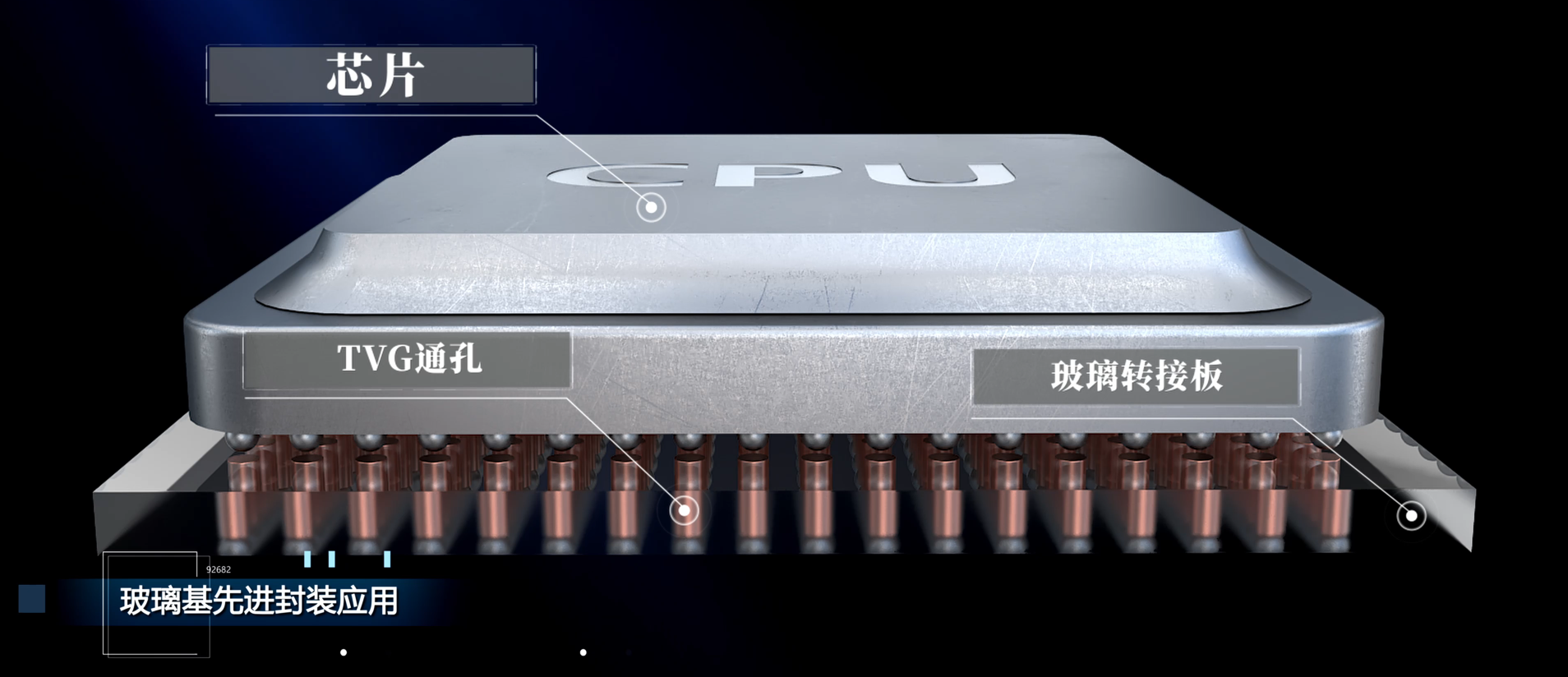
Core Insights - The demand for computing power driven by generative AI is pushing the limits of chip packaging, leading to a shift from traditional organic substrates to glass substrates, which offer superior flatness, thermal stability, and insulation properties [1] - 2026 is identified as a critical year for the transition of glass substrates from small-scale validation to mass production [1] Industry Dynamics - Intel is advancing its glass substrate commercialization plans and showcased a large glass chip substrate prototype at a recent exhibition in Japan, targeting mass production post-2026 [2] - Samsung is actively pursuing glass substrate development, announcing a joint venture and a commercialization roadmap, while also investing in building a glass substrate ecosystem [2] - Companies from Japan and mainland China, such as BOE and Lens Technology, are making significant progress in glass substrate technology, with predictions of over 10% annual growth in semiconductor glass wafer shipments from 2025 to 2030 [2] Technical Challenges - The main hurdle for the commercialization of glass substrates, particularly for advanced semiconductor packaging, lies in the TGV (Through Glass Via) process, which requires creating micro-sized vias in thin glass and perfect metallization [3] - The current process heavily relies on hydrofluoric acid, posing safety and environmental compliance challenges, prompting experts to explore alternatives like high-temperature alkaline solutions [3] Competitive Advantages - Chinese companies, exemplified by Woge Optoelectronics, are leveraging their extensive experience in chemical management to overcome challenges associated with TGV processing, significantly reducing initial investment and operational costs [6][7] - Woge Optoelectronics has developed a comprehensive management system for handling hazardous chemicals, allowing for a smoother transition to TGV production lines [6] Future Prospects - Woge Optoelectronics is leading the development of GCP (Glass Circuit Board) technology, which is becoming a crucial component in the global electronic information supply chain [7] - The commercialization wave of glass substrates is gaining momentum, with Chinese firms poised to leverage their unique advantages in core processes to compete in the high-end semiconductor packaging materials market [8]

消息称OpenAI已启动ChatGPT内部广告测试
Huan Qiu Wang Zi Xun· 2026-02-10 03:53
Core Insights - OpenAI has officially launched internal advertising tests for ChatGPT, marking it as the first major player in the generative AI sector to explore commercial advertising [1][3] Group 1: Advertising Strategy - The company has committed to ensuring that ads are "clearly labeled, placed only at the bottom of responses, and do not affect content generation" [3] - Ads will appear in a non-intrusive card format at the bottom of the ChatGPT response area, without algorithmic interference or paid prioritization affecting the objectivity of replies [3] - This testing phase is described as a "preliminary exploration," with potential adjustments to implementation details such as advertiser selection and frequency control in the coming weeks to months [3] Group 2: Revenue Model - Advertising is viewed as a crucial pathway for OpenAI to scale its profitability, although it is expected that long-term advertising revenue will account for less than 50% of total revenue [3] - Other revenue streams may include enterprise-level API services, subscription models (like ChatGPT Plus), and customized AI solutions [3] Group 3: Competitive Landscape - The day before OpenAI's advertising test launch, competitor Anthropic released a controversial ad stating "No Ads in AI," which is widely interpreted as a direct response to OpenAI's move [3]

透过ASML 2025全年财报,看增长背后的结构变化
3 6 Ke· 2026-02-10 03:09
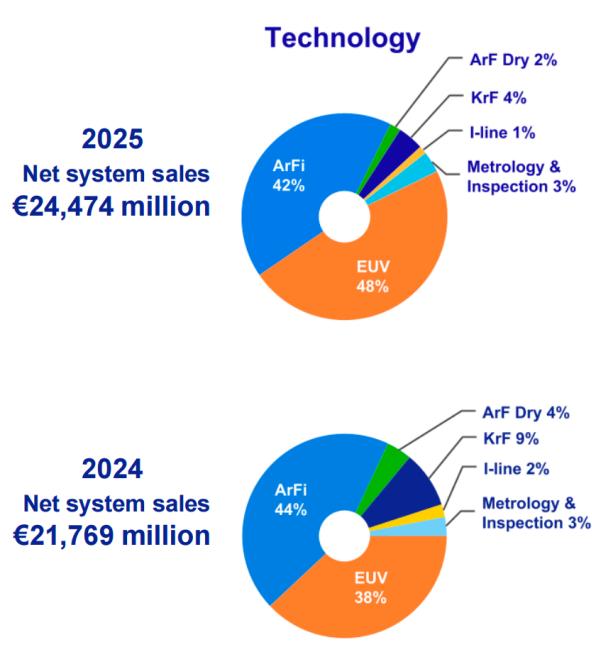
Core Viewpoint - The semiconductor industry is transitioning from a traditional cycle dominated by mobile and PC devices to a multi-driven evolution represented by "AI computing infrastructure" as of early 2026. The demand for logic chips and HBM (High Bandwidth Memory) in data centers is surging due to the explosion of generative AI applications in 2025, driving a new wave of investment in advanced processes and mature processes alike [1]. Group 1: ASML's Financial Performance - In 2025, ASML achieved a net sales of approximately €32.7 billion, a gross margin of about 52.8%, and a net profit of around €9.6 billion, marking a record-breaking performance [2]. - ASML's order backlog reached approximately €38.8 billion by the end of 2025, providing high visibility for revenue growth in 2026 and beyond [2]. - The sales of ASML's EUV (Extreme Ultraviolet) systems reached €11.6 billion in 2025, a year-on-year increase of 39%, with EUV accounting for 48% of the company's system revenue [2]. Group 2: Equipment Types and Market Dynamics - EUV's share in revenue structure is increasing, while DUV (Deep Ultraviolet) remains a core device in semiconductor manufacturing, fulfilling the majority of lithography tasks [4]. - ASML emphasizes that DUV lithography machines will continue to play a crucial role in the industry, with high-end DUV systems evolving to meet advanced process requirements [4]. - DUV's application is expanding from "front-end wafer manufacturing" to "advanced packaging and 3D integration," indicating a dual-track growth structure supported by both EUV and DUV technologies [5]. Group 3: Demand Drivers in China - ASML's net system sales in China accounted for 33% of total sales in 2025, demonstrating strong resilience and demand in the Chinese market despite export control concerns [6]. - The growth in demand for DUV equipment in China is driven by the expansion of mature processes (28nm and above) in automotive electronics, industrial automation, IoT, and home appliance chips [6]. - AI's demand is creating a "spillover effect," with significant needs for supporting chips produced mainly by DUV processes, further driving orders for DUV equipment [7]. Group 4: Advanced Packaging and System Performance - The acceleration of 2.5D/3D packaging line construction in Chinese foundries is enhancing system-level performance, aligning with ASML's investments in advanced packaging equipment [8]. - ASML expects its revenue share from China to stabilize around 20% in 2026, reflecting a return to "normalization" rather than a decline in demand [8]. Group 5: ASML's Strategic Transformation - ASML is transitioning from a "cyclical equipment vendor" to a "structural platform company," providing comprehensive solutions around lithography [9]. - The revenue from installed base services reached approximately €8.2 billion in 2025, indicating a shift towards a balanced revenue structure that includes lifecycle services [10]. - ASML's ambition to reach €60 billion in revenue by 2030 is supported by the increasing demand for AI-related infrastructure and services [13]. Group 6: Stock Buyback and Future Outlook - ASML announced a stock buyback plan of up to €12 billion, reflecting management's confidence in future cash flow strength while continuing significant R&D investments [14]. - The company is positioned as an essential infrastructure platform in the digital civilization landscape, providing "manufacturing certainty" beyond merely selling lithography machines [16].

中国大模型“疯狂2月”启幕!Qwen3.5曝光,阿里涨近4%,资金抢跑布局港股互联网ETF(513770)
Xin Lang Cai Jing· 2026-02-10 02:36
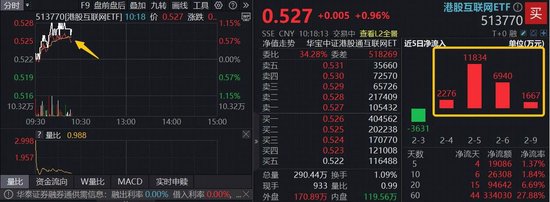
Core Viewpoint - The Hong Kong stock market opened positively on February 10, with major tech stocks showing strength, particularly Kuaishou, Alibaba, and Xiaomi, indicating a strong buying sentiment in the market [1][7]. Group 1: Market Performance - Kuaishou-W rose nearly 4%, while Alibaba-W and Xiaomi Group-W increased by over 2% [1][7]. - Tencent Holdings and Bilibili-W also saw gains, while Meituan-W experienced a slight decline [1][7]. - The Hong Kong Internet ETF (513770) saw its price rise by over 1% at one point, currently up 0.96%, reflecting strong buying interest [1][7]. Group 2: Fund Inflows - The Hong Kong Internet ETF (513770) attracted a total of 227 million yuan in inflows over the past four days [1][7]. - The ETF is designed to passively track the CSI Hong Kong Internet Index, which includes major tech companies [3][9]. Group 3: AI Developments - Recent developments in AI include the anticipated release of Alibaba's Qwen3.5 model, which has generated significant discussion in the global AI open-source community [2][9]. - DeepSeek is set to launch its next-generation AI model, DeepSeek V4, in mid-February, which is expected to catalyze a reevaluation of Chinese technology on a global scale [3][9]. - The competition in AI, driven by large models, is expected to enhance the commercial ROI for domestic AI companies, leading to a revaluation of their stock prices [3][9]. Group 4: ETF Composition - The top ten holdings of the Hong Kong Internet ETF include Alibaba-W, Tencent Holdings, Xiaomi Group-W, Kuaishou-W, and Bilibili-W, collectively accounting for nearly 77% of the ETF [3][10]. - The ETF provides exposure to leading internet platforms that possess AI capabilities, capital expenditure, talent investment, and application capabilities [3][9].
透过ASML 2025全年财报,看增长背后的结构变化
半导体行业观察· 2026-02-10 01:14
Core Viewpoint - The semiconductor industry is transitioning from a traditional cycle dominated by mobile and PC devices to a multi-driven evolution represented by "AI computing infrastructure" as of early 2026 [1] Group 1: ASML's Financial Performance - In 2025, ASML achieved a record net sales of approximately €32.7 billion, a gross margin of about 52.8%, and a net profit of around €9.6 billion [4] - ASML's order backlog reached approximately €38.8 billion by the end of 2025, providing high visibility for revenue growth in 2026 and beyond [4] - The sales of ASML's EUV systems reached €11.6 billion in 2025, a year-on-year increase of 39%, with EUV accounting for 48% of the company's system revenue [4] Group 2: Equipment Demand Dynamics - EUV systems are becoming the core production tool for advanced processes, while DUV systems remain essential in the semiconductor manufacturing ecosystem [7] - DUV systems are expected to continue playing a major role in the industry, with significant demand for high-end DUV systems like the latest ArF immersion lithography machine [7][8] - DUV applications are expanding from "front-end wafer manufacturing" to "advanced packaging and 3D integration," indicating a dual-track growth structure for ASML [8] Group 3: Market Resilience in China - ASML's net system sales in the Chinese market accounted for 33% of total sales in 2025, exceeding previous expectations [9] - The strong demand in China is driven by the growth of mature processes (28nm and above) and the urgent need for domestic chip production [10] - AI's demand is creating a "spillover effect," with many supporting chips produced using DUV processes, further driving ASML's orders [11] Group 4: Advanced Packaging and System Performance - The acceleration of 2.5D/3D packaging production lines in China is enhancing system-level performance, aligning with ASML's investments in advanced packaging equipment [12] - ASML expects its revenue share from China to stabilize around 20% in 2026, reflecting a return to "normalization" rather than a decline in demand [12] Group 5: Transition to a Platform Company - ASML is evolving from a "cyclical equipment vendor" to a "structural platform company," providing comprehensive solutions around lithography [14] - The company's measurement and inspection systems saw a 28% year-on-year increase in sales, indicating a shift towards a balanced revenue structure [15] - ASML's installed base revenue reached approximately €8.2 billion in 2025, becoming the second-largest revenue source after system sales [15] Group 6: Future Growth Projections - ASML projects net sales for 2026 to be between €34 billion and €39 billion, with a gross margin maintained at 51%-53% [18] - The company aims to reach total revenues of €44 billion to €60 billion by 2030, with AI as a key driver of future growth [18] - A significant stock buyback plan of up to €12 billion has been announced, reflecting management's confidence in future cash flow [19]
【Omdia趋势洞察】生成式AI如何重塑可穿戴设备市场
Canalys· 2026-02-10 01:01
Group 1 - The wearable device market is reaching a critical turning point in 2026, driven by generative AI, which is transforming products from "passive recording" to "intelligent companionship," redefining the value of data and altering industry competition logic [2][3] - The market is witnessing a shift with the accelerated development of new forms such as smart rings and AI glasses, where a multi-device ecosystem becomes key, providing experiences with enhanced situational awareness through cross-device collaboration [3][4] - Software and services are emerging as the most important differentiators, with generative AI enabling "interpretation capabilities" that promote proactive health management, personalized exercise recommendations, and new subscription-based experiences [3][4] Group 2 - Generative AI is upgrading wearable devices from data recording tools to intelligent partners, creating new value through multi-device ecosystems like smart rings and AI glasses [4] - There is a critical transition from "data collection" to "intelligent interpretation," emphasizing the importance of software, services, and subscription models as core competitive advantages [4]