能源安全

Search documents
欧盟拟全面禁止进口俄天然气 匈牙利:将起诉
Yang Shi Xin Wen· 2025-12-04 01:27
匈牙利外长 西雅尔多:匈牙利不可能接受执行以及完成欧盟的这项要求。实际情况是,欧盟此举威胁 匈牙利能源安全。如果没有来自俄罗斯的能源供应,匈牙利现有基础设施根本无法安全地获得足够的石 油和天然气,欧盟的决定将导致匈牙利家庭的能源支出至少上涨三倍。一旦该法案在欧盟正式获得投票 通过 ,匈牙利将立即向欧盟法院提起诉讼,我们将立即启动法律程序。 匈牙利外长西雅尔多表示,欧盟此举损害匈牙利能源安全,将向欧盟法院提起诉讼。 当地时间12月3日,欧盟理事会表示,欧盟理事会和欧洲议会议员代表达成协议,同意分步骤直至全面 禁止进口俄罗斯天然气。该协议仍需得到各成员国以及欧洲议会批准方可生效。 (总台记者 卜卫军) ...
匈牙利将就欧盟禁止进口俄能源提起诉讼
Xin Hua She· 2025-12-03 22:44
西雅尔多还表示,斯洛伐克同样高度依赖俄油气供应,相关决定对该国能源安全和经济构成严重威 胁。他已就此同斯洛伐克外长磋商,双方同意协调一致采取法律行动。他说,斯洛伐克政府也已决定通 过法律途径继续就进口俄能源问题同欧盟抗争。 西雅尔多当天在布鲁塞尔出席北约外长会期间举行记者会说,欧盟委员会、欧洲理事会和欧洲议会 就一项立法草案达成政治协议,计划自2027年9月逐步禁止欧盟成员国通过管道进口俄天然气,欧盟委 员会还提出自2027年底起禁止进口俄原油。 西雅尔多批评欧盟相关决定是出于政治和意识形态考量,认为其违背欧盟的基本条约,即能源政策 完全属于成员国的国家权限范围。他表示,一旦禁止进口俄能源的法案获得通过,匈牙利将立即向欧盟 法院提起诉讼,目前相关法律准备工作已经启动。 新华社布鲁塞尔12月3日电(记者 张兆卿 丁英华)匈牙利外交与对外经济部长西雅尔多·彼得3日表 示,匈牙利将就欧盟逐步禁止进口俄罗斯能源的相关决定向欧盟法院提起诉讼,认为这一决定损害匈牙 利能源安全,违反欧盟条约。 西雅尔多说,在现有基础设施条件下,匈牙利离不开俄罗斯的原油和天然气供应,匈方不可能接受 并执行欧盟这一"勒令"。他警告说,如果逐步 ...
加强能源产供储销体系建设 夯实能源安全供应保障基础(深学笃行阐释习近平经济思想)
Ren Min Ri Bao· 2025-12-03 22:29
引 言 习近平总书记指出,能源保障和安全事关国计民生,是须臾不可忽视的"国之大者"。《习近平经济文 选》第一卷中的《积极推动我国能源生产和消费革命》一文指出,"能源安全是关系国家经济社会发展 的全局性、战略性问题,对国家繁荣发展、人民生活改善、社会长治久安至关重要。"党的十八大以 来,各有关方面深入学习领会习近平总书记关于能源保供的重要指示批示精神,始终坚持以习近平经济 思想和习近平生态文明思想为指导,深入推进能源产供储销体系建设,多措并举加强供需调节,全面推 进能源高质量发展,不断筑牢能源安全保障根基。 一、背景情况 习近平总书记指出,能源安全事关经济社会发展全局。我国作为世界上最大的能源消费国,如何有效保 障国家能源安全,始终是能源发展的首要问题。从需求端看,我国经济持续稳定增长,终端用能电气化 进程加快,人民对改善生活舒适度意愿增强,带动能源消费较快增长。从供给端看,我国能源绿色低碳 转型持续推进,清洁能源装机占比不断提升,但风电、光伏具有随机性、间歇性和波动性特征,在电量 方面仍处于增量替代阶段,在电力方面难以提供稳定、可靠的电力支撑,在安全方面一定程度上加剧了 电网安全稳定运行风险,实现新能源对传统 ...
欧盟将于2027年秋全面禁止进口俄罗斯天然气
Xin Hua Wang· 2025-12-03 12:52
国际能源署10月27日发布报告称,2025年前三季度,俄罗斯对欧洲天然气出口量大幅下降,液化天 然气出口量同比下降10%,管道天然气出口量下降45%。报告预计,今年全年欧洲液化天然气进口量将 创历史新高,比2024年增长约20%。由于消费需求上升加之管道天然气进口减少等因素,欧洲液化天然 气价格高企。 新华社布鲁塞尔12月3日电(记者周海伦 姚雨璘)欧盟理事会3日在网站发布消息称,欧盟将从 2027年秋季开始全面禁止进口俄罗斯天然气。 消息称,欧盟理事会和欧洲议会议员代表达成协议,分步骤直至全面禁止进口俄罗斯天然气。协议 规定,俄罗斯液化天然气进口禁令将从2026年底生效,管道天然气进口禁令将从2027年秋季生效。 欧盟轮值主席国丹麦气候、能源和公用事业大臣拉尔斯·奥高说,欧盟必须终结对俄罗斯天然气的 依赖。为加强欧盟安全并保障能源供应,成员国和欧洲议会快速达成上述协议。 【纠错】 【责任编辑:施歌】 ...
媒体报道︱“十五五”规划建议首次出现,建设“能源强国”
国家能源局· 2025-12-03 10:40
Core Viewpoint - The construction of an energy powerhouse is essential for coordinating domestic and international needs, development and security, and advancing Chinese-style modernization [2] Group 1: Energy Supply and Demand - The global energy supply and demand landscape is undergoing significant adjustments due to geopolitical factors, climate change, and energy transition, making energy issues a priority for national security [2] - During the "14th Five-Year Plan" period, China's energy consumption is expected to continue its rigid growth, with an anticipated annual increase of approximately 600 billion kilowatt-hours [2] - China must shift from a high-energy consumption and high-emission model to a green and low-carbon development path, given its population of over 1.4 billion [2] Group 2: Energy Industry Development - China has established itself as the world's largest energy producer, maintaining an energy self-sufficiency rate of over 80% [3] - The country has built the largest and most complete new energy industrial chain globally, providing over 80% of the world's photovoltaic components and 70% of wind power equipment [3] - Significant breakthroughs have been made in energy technologies and equipment, particularly in hydropower, advanced nuclear power, heavy-duty gas turbines, and smart grids [3] Group 3: Systematic Engineering Approach - The construction of an energy powerhouse is a systematic project that requires a balanced approach, emphasizing stability and progress [3] - The relationship between energy security and transition must be managed carefully, with a focus on gradual and orderly phasing out of traditional energy while promoting new energy sources [3] - Energy development must also consider energy conservation, advocating for green and low-carbon production and lifestyle practices [3] Group 4: Government and Market Relations - There is a need to deepen market-oriented reforms in competitive energy sectors and improve energy pricing mechanisms to stimulate internal motivation and innovation [4] - The new energy system will accelerate the construction of a clean, low-carbon, safe, and efficient energy framework during the "15th Five-Year Plan" period [4]

乌克兰危机升级背景下 普京首次访印聚焦能源合作
Sou Hu Cai Jing· 2025-12-03 04:43
Group 1 - Russian President Putin's visit to India on December 4-5 is significant as it marks his first visit post the escalation of the Ukraine crisis and coincides with the 25th anniversary of the Russia-India strategic partnership [1] - Energy cooperation is the core focus of this visit, with Russia expected to supply approximately 634.5 million barrels of oil to India in 2024, accounting for 36.4% of India's total oil imports, allowing India to save around $2.2 billion through discounted prices [3] - Despite U.S. tariffs on Indian imports, India remains committed to maintaining energy security and has no plans to halt oil purchases from Russia, with both nations signaling a strengthening of energy cooperation [3] Group 2 - The visit is expected to result in multiple cooperation agreements in areas such as military procurement, nuclear energy utilization, and Arctic route development, indicating an expansion of Russia-India collaboration into various sectors [3] - India's diplomatic diversification is accelerating in response to U.S. tariff pressures, with a focus on deepening cooperation with Russia and exploring new markets in Latin America and West Asia [4] - The deepening of Russia-India cooperation is seen as a strategic alignment to address international changes, which could reshape bilateral relations and have profound implications for the global energy market and geopolitical balance [4]
年营收超170亿,承载国家能源安全使命,稀缺铀资源标的中国铀业上市在即
梧桐树下V· 2025-12-02 09:57
Core Viewpoint - The successful IPO of China Uranium Corporation (stock code: 001280) marks a significant step in filling the upstream resource gap in the nuclear fuel industry in the A-share market, driven by the increasing global and domestic demand for nuclear power [1][2]. Group 1: Nuclear Power Demand and Uranium Resource Value - Global consensus on nuclear power growth has been reignited due to energy security concerns and carbon neutrality goals, with commitments from 31 countries to double global nuclear power capacity by 2050 [3][4]. - In China, the approval and construction of nuclear power projects have accelerated, with 29 nuclear units under construction and a total capacity of 33,165 MW expected by the end of 2024 [4]. Group 2: Supply-Demand Imbalance and Challenges - The supply of natural uranium is lagging behind the explosive growth in nuclear power demand, with a significant gap between global uranium production (47,300 tons) and demand (62,500 tons) in 2021 [5]. - China's reliance on international procurement for uranium due to insufficient domestic supply highlights the strategic importance of China Uranium in ensuring national energy security [6]. Group 3: China Uranium's Market Position - China Uranium is the only domestic operator covering the entire natural uranium industry chain, with over 90% of its revenue from uranium mining and trading [2][7]. - The company holds significant mining rights and is a key supplier for domestic nuclear power plants, ensuring a stable supply through long-term contracts [7][10]. Group 4: Financial Performance and Growth - China Uranium's revenue has shown strong growth, with projected revenues of 10.535 billion, 14.801 billion, and 17.279 billion yuan from 2022 to 2024, reflecting a compound annual growth rate of 28.07% [11]. - The company reported a revenue of 9.551 billion yuan in the first half of 2023, a year-on-year increase of 18.74% [11]. Group 5: Strategic Investment and Capacity Expansion - The IPO proceeds will focus on capacity expansion, resource utilization, and working capital, aligning with national strategies for energy security and clean energy development [13][19]. - Key projects include the development of domestic uranium mining capacity, which will significantly enhance production and reduce reliance on foreign sources [15][16]. Group 6: Long-term Development and International Expansion - The company plans to use part of the IPO funds to support international resource exploration and projects, enhancing its global resource control capabilities [17]. - The strategic investments are crucial for meeting the growing uranium demand driven by China's nuclear power expansion plans [19].

天风证券:近月原油价格或仍有压力 Brent长期中枢价格较为坚挺
智通财经网· 2025-12-01 03:18
Group 1 - The oil market is currently in a contango structure, with the latest Brent long-term contract price at $68 per barrel as of November 20, 2025. The near-term prices may face pressure, but long-term prices are expected to be supported by improved OPEC strategies and nearing depletion of OPEC's spare capacity [1] - There is a significant discrepancy between mainstream institutions' expectations of oil surplus and actual inventory accumulation, particularly after OPEC announced accelerated production increases mid-year. In November, OPEC's production strategy shifted, indicating a pause in production increases for Q1 2026, reflecting their interest in maintaining oil prices [1] - For 2026, if OPEC resumes production in Q2, the global supply increase is projected to be 1.93 million barrels per day, which is an increase of 930,000 barrels per day compared to the surplus in 2025. If OPEC does not resume production throughout 2026, the supply increase is expected to be 1.65 million barrels per day, an increase of 650,000 barrels per day compared to 2025 [1] Group 2 - The average breakeven cost for U.S. shale oil is approximately $55 per barrel, as indicated by the latest Q3 2025 reports. Most shale oil companies have lowered their capital expenditure guidance for 2025 but have raised their annual production forecasts [2] - The spot market basis has weakened, and the crack spread for refined oil has reached a new high for the year. The Dubai spot price relative to Brent has weakened, and Saudi Arabia has announced a decrease in official selling prices for December, reflecting concerns over weak supply and demand [3] - Since November, the Brent month-on-month differentials have strengthened, with increases of $0.41, $1.55, and $2.50 per barrel for the 1-2, 1-6, and 1-12 month spreads, respectively. This may indicate instability in supply due to escalating sanctions on Russian oil by Europe and the U.S. [3]

中国西气东输气源地新增超深天然气产能20亿方
Zhong Guo Xin Wen Wang· 2025-11-29 15:11
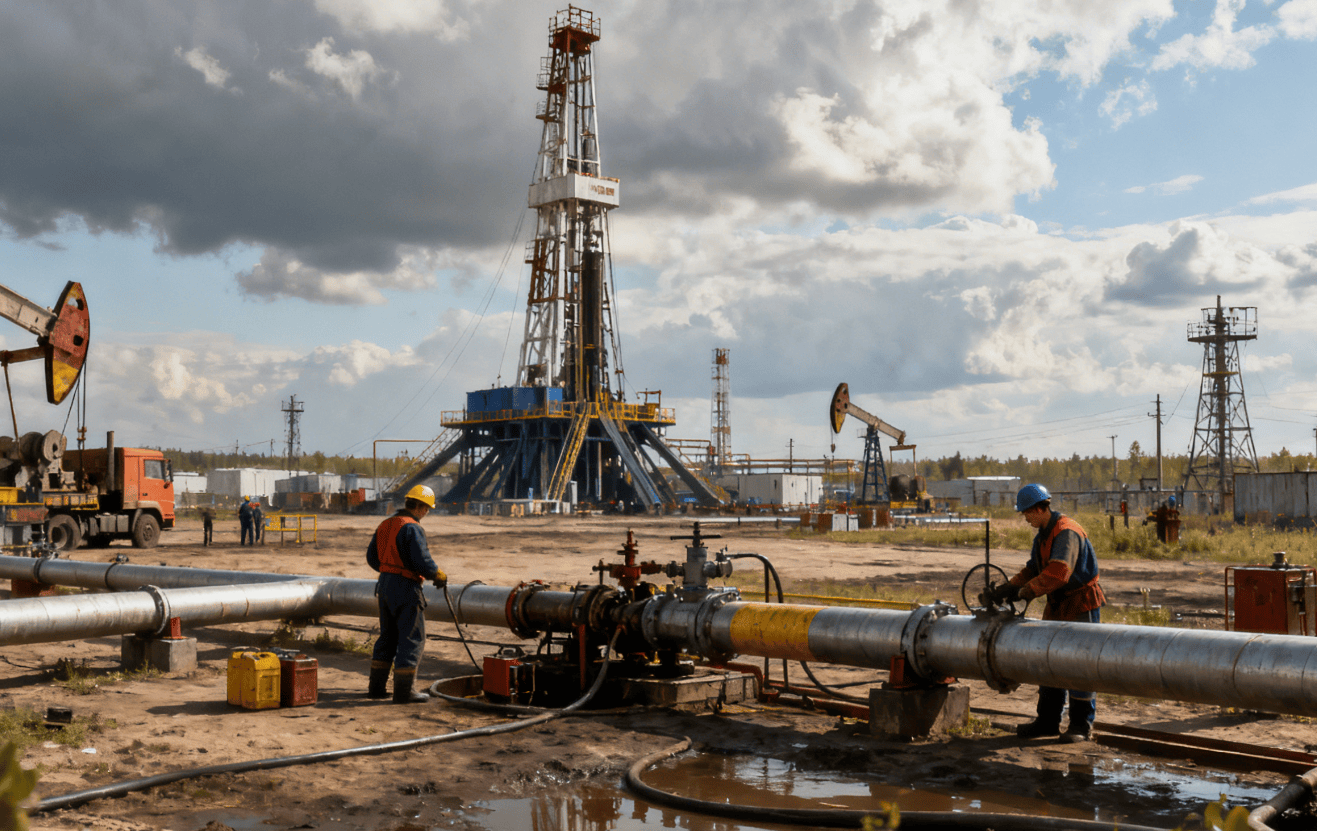
Core Insights - The article highlights the addition of 2 billion cubic meters of natural gas production capacity from ultra-deep wells in China's West-to-East Gas Transmission project, enhancing energy security for the country [1] Company Summary - China Petroleum's Tarim Oilfield has successfully drilled 27 ultra-deep gas wells this year, utilizing advanced 10,000-meter drilling technology [1] - The new natural gas production capacity is a significant contribution to China's energy supply, providing a boost to energy security [1] Industry Summary - The development of ultra-deep natural gas resources is crucial for meeting China's growing energy demands and ensuring energy security [1] - The successful drilling and production from ultra-deep wells indicate advancements in drilling technology and resource extraction capabilities within the industry [1]

匈牙利为俄能源将起诉欧盟,美国暗中撑腰,西方阵营分裂加速
Sou Hu Cai Jing· 2025-11-29 08:47
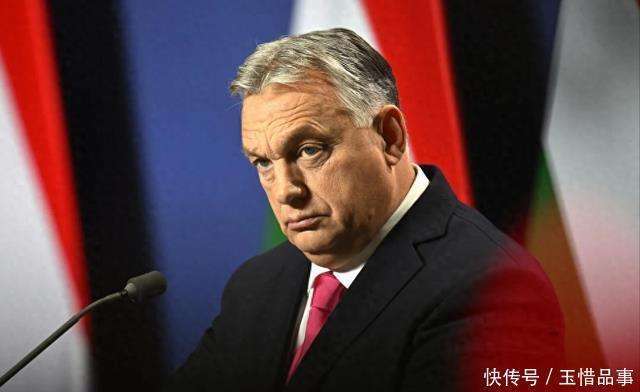
"我们坚决不接受这一明显非法,且与欧洲价值观相违背的解决方案。"匈牙利总理欧尔班在14日接受国 家广播电台采访时,直言不讳地表达了他的立场。他宣布,匈牙利政府将向欧洲法院提出诉讼,挑战欧 盟决定逐步停止从俄罗斯进口天然气的决议。欧尔班的讲话揭示了欧盟在俄罗斯能源问题上的深刻分 歧。这位亲俄的领导人所在国家严重依赖俄罗斯的能源供应,而现在匈牙利正准备通过法律手段对抗欧 盟委员会的这一决定。 在每周的例行采访中,欧尔班毫不掩饰自己对欧盟决定的不满。"布鲁塞尔选择这一方案,实际上是为 了压制那些与他们意见不合的国家政府,"他对匈牙利听众表示。法律争议的焦点主要集中在决策程序 上。欧尔班指出:"这已经不再是制裁,而是一个贸易政策措施。制裁需要欧盟成员国一致同意(通过 投票表决),而贸易政策则只需获得多数票就能通过。"上个月,欧盟各国同意到2027年底前逐步停止 从俄罗斯进口剩余的天然气。根据外交官透露,所有欧盟成员国都支持这一决定,除了匈牙利和斯洛伐 克。欧盟于2025年10月下旬批准的第19轮对俄制裁明确规定,禁止俄液化天然气进入欧洲市场,这使得 匈牙利这个内陆国家面临了巨大的能源供应压力。 对于匈牙利来说,俄罗斯 ...