
供应链金融

Search documents
解决企业账款拖欠问题需金融端发力
Jin Rong Shi Bao· 2025-07-28 02:33
Core Insights - The increasing scale of accounts receivable and extended payment terms among enterprises pose significant risks to cash flow and operational stability, potentially leading to systemic financial risks [1][2][3] - The government is taking comprehensive measures to address the issue of delayed payments, emphasizing the importance of resolving this problem for economic stability and social credit [1][7] - The financial sector is expected to play a crucial role in alleviating the accounts receivable issue by providing necessary credit support and facilitating smoother cash flow [1][15] Group 1: Current Situation - As of May 2025, accounts receivable for large industrial enterprises reached 26.40 trillion yuan, a 9% year-on-year increase, with an average recovery period of 70.5 days, up by 4.1 days [1][2] - The construction and manufacturing sectors are particularly affected, with government departments and large enterprises being the main debtors, often exploiting their bargaining power to delay payments [2][3] Group 2: Internal Mechanisms - While credit sales are a normal business practice, malicious delays can lead to a collapse of commercial credit and supply chain disruptions [3][4] - The misuse of credit mechanisms by dominant market players exacerbates the issue, leading to increased cash flow pressure for smaller enterprises [3][4] Group 3: Causes of Delays - Economic downturns and the malicious practices of core enterprises contribute to the worsening accounts receivable situation [4][5] - Core enterprises often impose excessively long payment terms and stringent conditions, which further complicates the payment landscape for smaller suppliers [4][5] Group 4: Financial Solutions - Developing a diversified financial market can positively impact the resolution of accounts receivable issues, as seen in more developed economies [5][6] - Financial institutions can provide necessary credit support to enterprises facing temporary cash flow challenges due to delayed payments [6][15] Group 5: Domestic Practices - Strengthening legal frameworks and enhancing credit constraints are key measures being implemented to address the accounts receivable problem [7][8] - The government has initiated multiple rounds of debt clearance actions, establishing clear timelines and accountability measures [9][10] Group 6: International Practices - Various countries have established legal frameworks to enforce timely payments, with the EU and the UK setting strict payment deadlines and penalties for delays [11][12] - Efficient dispute resolution mechanisms are in place in several countries to assist small and medium enterprises in recovering debts [12][13] Group 7: Financial Sector's Role - The financial sector can alleviate accounts receivable issues by providing financing support, risk management, and credit restoration [15][16] - Innovations in supply chain finance can help convert accounts receivable into immediate cash flow, easing financial pressures on smaller enterprises [16][17] Group 8: Challenges Faced - The financial sector faces challenges such as the misuse of credit tools and the lack of transparency in accounts receivable management [18][19] - Regulatory gaps and the absence of a unified oversight mechanism complicate the resolution of accounts receivable issues [21][22] Group 9: Future Directions - To effectively address accounts receivable challenges, financial services must focus on regulatory compliance and proactive measures [22][23] - Establishing a collaborative ecosystem among various stakeholders, including government, banks, and industry associations, is essential for creating a supportive environment for timely payments [24]
盛业(06069.HK):高成长的AI+供应链龙头企业
Ge Long Hui· 2025-07-26 03:35
Group 1: Supply Chain Finance Opportunities - The financing difficulty for small and micro enterprises remains high, with only 20.7% obtaining funds through traditional bank loans as of Q1 2025 [1] - Supply chain finance addresses the financing pain points of small and micro enterprises by using accounts receivable, deposits, and orders as collateral, leveraging the credit of core enterprises to enhance creditworthiness [1] - The scale of supply chain basic assets is expected to grow at a rate of 5.7% from 2023 to 2027, reaching 121.1 trillion yuan by the end of 2027 [1] Group 2: Importance of Commercial Factoring - As of the end of 2022, accounts receivable accounted for 53.36% of the 90.7 trillion yuan in supply chain basic assets [1] - Nearly half of the financing needs of small and micro enterprises are for daily operations, primarily due to cash flow being tied up in accounts receivable [1] - The average accounts receivable for small and micro enterprises was 79,000 yuan in Q1 2025, representing 61.2% of their average quarterly revenue [1] Group 3: Company Performance Drivers - The company has shifted from a heavy asset model to a light asset operation since 2022, allowing business growth independent of debt scale [2] - The company has expanded into new business areas such as overseas e-commerce, intelligent computing services, and robotics, with a potential market size exceeding 10 trillion yuan and over 10 million potential customers [2] - The contribution of joint venture profits to the company's overall operating profit is increasing, with 31.49% of operating profit coming from joint ventures in 2024, up by 25.68 percentage points from 2023 [2] Group 4: AI Empowerment in Risk and Efficiency - The company utilizes the Shengyitong cloud platform to connect with core enterprises, verifying the authenticity of accounts receivable and simplifying processes while ensuring asset quality [2] - The overdue rate and non-performing rate for the company are 0.18% and 0.10% respectively in 2024, indicating strong asset quality [2] - AI has increased the average funding turnover per employee from 18 million yuan in 2021 to 63 million yuan in 2024, with a CAGR of 52% [2] Group 5: Investment Outlook - The company is projected to achieve total operating revenues of 1.171 billion yuan, 1.339 billion yuan, and 1.541 billion yuan from 2025 to 2027, with year-on-year growth rates of +11.64%, +14.36%, and +15.02% respectively [3] - The net profit attributable to the parent company is expected to be 500 million yuan, 636 million yuan, and 806 million yuan for the same period, with growth rates of +31.49%, +27.20%, and +26.70% respectively [3] - The company is initiating coverage with a "buy" rating based on these projections [3]
盛业(06069):高成长的AI+供应链龙头企业
Guolian Minsheng Securities· 2025-07-25 09:18
Investment Rating - The report assigns a "Buy" rating for the company for the first time [5][13][17] Core Insights - The company leverages AI to enhance supply chain finance, addressing the financing challenges faced by small and micro enterprises [3][15] - The supply chain finance market is expected to grow significantly, with a projected scale of 121.1 trillion yuan by the end of 2027, reflecting a compound annual growth rate (CAGR) of 5.7% from 2023 to 2027 [10][34] - The company has transitioned from a heavy asset model to a light asset operation, which has improved its profitability and operational efficiency [12][18] Summary by Sections 1. Supply Chain Finance: Broad Development Space - The financing difficulties for small and micro enterprises persist, with only 20.7% obtaining funds through traditional bank loans as of Q1 2025 [10][27] - Supply chain finance reduces the reliance on fixed asset collateral, using accounts receivable and other liquid assets instead, thus lowering the financing threshold for small businesses [34][41] 2. AI + Industry Supply Chain Leader - The company has over ten years of experience in the factoring industry and has established partnerships with major enterprises, enhancing its market position [55] - The company’s revenue is expected to grow significantly, with projected total revenues of 1.171 billion, 1.339 billion, and 1.541 billion yuan for 2025, 2026, and 2027 respectively, reflecting growth rates of 11.64%, 14.36%, and 15.02% [14][17] 3. Profit Forecast and Investment Recommendations - The company is expected to achieve net profits of 500 million, 636 million, and 806 million yuan for 2025, 2026, and 2027, with growth rates of 31.49%, 27.20%, and 26.70% respectively [14][17] - The report emphasizes the company's strong growth potential due to its innovative business model and successful partnerships with state-owned enterprises [12][18]
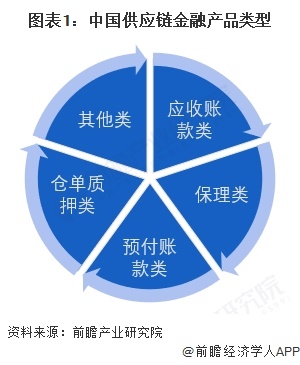
2025年中国供应链金融行业产品现状 多样产品为企业提供多元化融资方案【组图】
Qian Zhan Wang· 2025-07-25 03:14
Core Insights - The article discusses the diverse types of supply chain finance products in China, emphasizing their role in enhancing liquidity for enterprises through various financing solutions [1][3]. Product Types - Supply chain finance products are categorized into four main types: accounts receivable financing, prepayment financing, inventory financing, and others, aimed at revitalizing enterprise liquidity [1][3]. - Accounts receivable financing involves transferring receivables to a financial institution for funding, which includes comprehensive services like receivables management and bad debt guarantees [3][4]. - Prepayment financing is primarily used for downstream financing of core enterprises, with two main business models: "first invoice then payment" and "warehouse receipt financing" [8][10]. - Inventory financing is divided into inventory financing and warehouse receipt financing, with the latter further categorized into standard and ordinary warehouse receipts [10]. Specific Product Details - **Recourse Factoring**: A type of factoring where the factor has the right to reclaim funds from the financing party if receivables cannot be collected [4]. - **Leasing Factoring**: Provides financing based on receivables from leasing companies, similar to a "re-factoring" service [4]. - **Accounts Receivable Pledge Financing**: Involves pledging accounts receivable as collateral for short-term loans, requiring notification to core enterprises for confirmation [6]. - **Standard Warehouse Receipt Financing**: Involves using standard warehouse receipts as collateral, primarily for commodities like soybeans, copper, and aluminum [10]. - **Ordinary Warehouse Receipt Financing**: Utilizes ordinary warehouse receipts for financing, requiring clear ownership of the pledged goods [10]. Industry Impact - Supply chain finance plays a crucial role in promoting economic development by helping enterprises activate their liquid assets, including receivables, prepayments, and inventory [3].





一场技术与场景碰撞的创新秀
Jin Rong Shi Bao· 2025-07-25 00:57
Group 1: Digital Currency Development - Digital RMB has developed applications across various sectors including retail, dining, education, and public services, forming a replicable model for online and offline use [1][7] - As of April 2025, the cumulative transaction amount of digital RMB in pilot areas reached 10.8 trillion yuan, with 2.1 billion personal wallets opened through the digital RMB app [1][7] Group 2: Supply Chain Finance and Smart Contracts - Agricultural Bank of China has integrated digital RMB smart contracts into the supply chain of Luzhou Laojiao, enabling precise control of loan funds for 2,259 downstream distributors, resulting in 2.418 billion yuan in loans [2] - Smart contracts are effectively addressing financing challenges for small and micro enterprises, enhancing fund management efficiency and reducing compliance costs [2] Group 3: Prepaid Consumption Management - Postal Savings Bank has utilized smart contract technology to address the issue of "easy recharge, difficult refund" in prepaid consumption, covering over 700 merchants and preventing consumer losses [3] - Agricultural Bank has established a regulatory system for prepaid funds, incorporating over 4,000 merchants and 1.5 billion yuan into its network, ensuring consumer protection [3] Group 4: Inclusive Finance Innovations - CITIC Bank is exploring digital RMB loan services, launching products like "信保贷" and "政采e贷" to support small and micro enterprises [4] - Postal Savings Bank has created a payment loop from planting to retail in agricultural scenarios, demonstrating the practical application of digital RMB in rural finance [4] Group 5: Cross-Border Payment Enhancements - The "Currency Bridge" project aims to improve cross-border payment efficiency and reduce costs, with 35 banks from four jurisdictions participating in real transactions [8][9] - The platform can process cross-border payments in 6 to 9 seconds, significantly cutting costs compared to traditional methods [9] Group 6: Expanding Digital RMB Usage - Didi Group has integrated digital RMB into its services, allowing users to pay for bike rentals and freight services in over 250 cities [5][6] - Tencent is enhancing the digital RMB experience for foreign visitors in China, enabling them to use digital RMB in various scenarios through WeChat [10]





业务创新 | 标准化与数字化,驱动金融仓储与仓储融资一体化
Sou Hu Cai Jing· 2025-07-24 22:27
Core Viewpoint - The development of inventory and warehouse receipt financing in China has faced significant challenges since the "Shanghai Steel Trade Case" in 2012, and there is a pressing need for improved regulations, standardization, and digitalization to revitalize this market segment [1][4][16]. Regulatory Environment - In developed countries, warehouse financing operates under a well-established legal framework, including laws specific to warehouse receipts and industry standards, which are lacking in China [2][5]. - China's current legal framework is fragmented, with no dedicated "Warehouse Receipt Law," leading to issues such as multiple pledges on a single asset and difficulties in verifying the authenticity of warehouse receipts [5][6]. Market Potential - The potential market demand for inventory financing in China is estimated at 75 trillion yuan, highlighting the significant opportunity for financial warehouse services to bridge the gap between the real economy and financial services [4][16]. Challenges in the Industry - The lack of a clear regulatory authority and the absence of a cohesive standard system have resulted in uncertainty and risks in warehouse financing [5][6]. - The industry faces a fragmented application of digital technologies, with many small to medium-sized warehouse enterprises still relying on manual management, which hampers efficiency and increases risks [6][10]. Standardization and Digitalization - There is an urgent need to establish a comprehensive standard system for financial warehousing and warehouse receipt financing, including national standards for warehouse receipt issuance and management [6][9]. - The integration of digital technologies such as IoT and blockchain is still in its early stages, with significant room for improvement in data sharing and process automation [10][14]. Future Directions - The industry is encouraged to build a collaborative ecosystem involving regulatory bodies, financial institutions, and technology providers to enhance the standardization and digital transformation of financial warehousing [7][16]. - The establishment of a national warehouse receipt registration platform and the promotion of standardized practices are essential for improving transparency and efficiency in the financing process [8][9]. Trends in the Industry - The trend towards deeper integration of technology in warehouse management is expected to enhance operational efficiency and reduce financing risks [14][15]. - The increasing focus on electronic warehouse receipt financing is likely to attract more attention from financial institutions, driven by the advantages of efficiency and security [15][16].

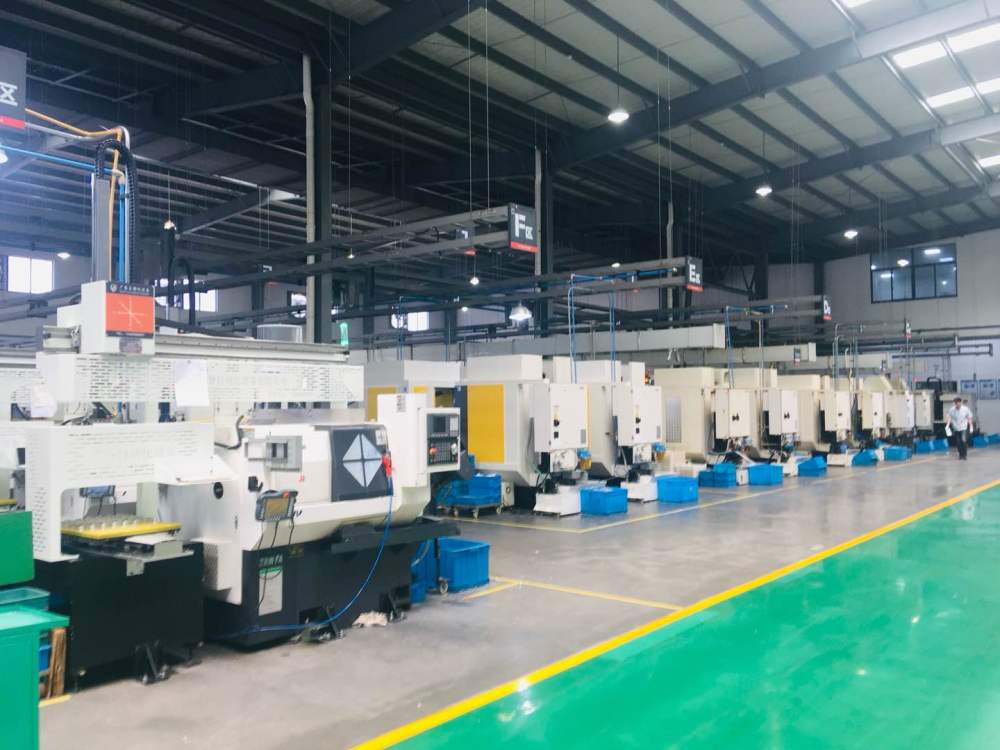
新华财经|浙江绍兴:金融“引擎”驱动汽车零部件产业加速跑
Xin Hua She· 2025-07-24 08:42
Core Insights - The automotive parts industry in Shaoxing, Zhejiang Province, is a crucial pillar of its high-end equipment manufacturing sector, with over 2,000 related enterprises and a comprehensive industrial system [1] - The industry includes products such as brake systems, steering pumps, motors, new energy vehicle batteries, and chassis systems, with some products entering the international market [1] - Recent financial support initiatives have been implemented to enhance the high-quality development of the automotive parts industry [1] Group 1 - Zhejiang Bozhong Automotive Parts Co., Ltd. has received global supplier qualifications from major international automotive parts companies and recently secured a €20 million order from Europe [3] - The company faced liquidity challenges due to the need for new equipment to expand production, leading to a tailored financial service from Postal Savings Bank, which provided ¥10 million in credit support [3] - Zhejiang Xinyongli Ring Co., Ltd. received a specialized loan of ¥22 million from Postal Savings Bank to overcome R&D funding shortages, facilitating the upgrade of automotive parts manufacturing [3][4] Group 2 - Postal Savings Bank of Shaoxing has launched customized financial products such as "Specialized and Innovative Loans" and "Scientific Innovation Credit Loans" to support the transformation and upgrading of automotive parts enterprises [4] - The bank has utilized big data technology to innovate product services, shortening approval cycles and reducing financing costs to inject financial momentum into the high-quality development of the real economy [4] - The bank's support has enabled companies like Zhejiang Te Yi Zhong Chi Automotive Parts Co., Ltd. to expand production capacity and implement intelligent upgrades through a ¥600,000 scientific innovation credit loan [4] Group 3 - The automotive industry is undergoing rapid electrification and intelligent transformation, prompting Postal Savings Bank to deepen integration with key industrial chains [5] - The bank aims to build a more comprehensive supply chain financial system to support technological innovation and market expansion for automotive parts enterprises [5] - The ongoing efforts are expected to contribute significantly to the high-quality development of the automotive parts industry [5]
西安银行:打造文旅数智供应链金融平台 助力陕西文旅产业高质量发展_陕西日报数字报-群众新闻网
Shan Xi Ri Bao· 2025-07-23 20:06
Core Viewpoint - Xi'an Bank and Shaanxi Cultural Industry Investment Holding Group have launched a strategic cooperation to create a "Cultural Tourism Intelligent Supply Chain Financial Platform," aimed at enhancing the digital financial services in the cultural tourism sector and supporting the development of a trillion-level cultural tourism industry cluster in Shaanxi [1][2][3]. Group 1: Platform Overview - The platform is designed to integrate data flow, capital flow, logistics, and business flow in the cultural tourism industry, enhancing demand forecasting, intelligent decision-making, and risk perception capabilities [1][2]. - It has already facilitated credit issuance of 200 million yuan and reduced financing cycles to 2 days, achieving full online processes and data-driven credit assessments [2][3]. Group 2: Financial Services and Innovations - Xi'an Bank is leveraging its financial products and digital technology to provide customized financial services to cultural tourism enterprises, focusing on high-quality development [3][5]. - The bank has developed specialized financial products like "Cultural Tourism Loan" and "Scenic Business Loan" to support the development of key scenic spots in Shaanxi [6]. Group 3: Technological Integration - The bank is integrating technology into the cultural tourism ecosystem, offering services such as online ticket sales, smart payment solutions, and comprehensive financial services for various scenic spots [7]. - It has provided over 15 billion yuan in credit support to key cultural tourism enterprises in Shaanxi, focusing on projects related to scenic spots, cultural creativity, and rural tourism [7].
链动产业共赢 渤海银行“车销易”破局车生态供应链金融
Zhong Guo Jing Ji Wang· 2025-07-23 07:11
Core Insights - Bohai Bank has launched the "Che Xiao Yi" automotive financial service brand to address the pain points in the parallel import vehicle industry, focusing on a one-stop financial solution for the entire supply chain [2][3] Group 1: Industry Challenges - The parallel import vehicle business faces challenges such as complex cross-border payments, foreign exchange management, and customs regulations, leading to inefficiencies and increased costs for dealers [2] - Traditionally, companies in this sector have struggled with long inventory cycles and high capital occupation rates, requiring large upfront payments during procurement [2][3] Group 2: Innovative Solutions - The "Che Xiao Yi" product offers targeted financing solutions, combining online letter of credit and import financing to enhance efficiency and inventory turnover [3] - The service includes 24/7 online tax payment and a guarantee for customs duties, significantly reducing clearance times and optimizing the overall supply chain efficiency [3] Group 3: Market Position - Tianjin Port has become the largest hub for parallel imported vehicles in China, accounting for over 70% of the national import volume, indicating a strong demand for efficient financial services in this sector [3] Group 4: Financial Performance - Bohai Bank's supply chain financial services have seen significant growth, with 2,634 supply chain enterprises served in 2024, a year-on-year increase of 126.8%, and a total financial product issuance of 257.19 billion, up 36.69% year-on-year [4] Group 5: Future Outlook - Bohai Bank plans to continue enhancing its supply chain financial services in response to national calls for improving the resilience of industrial supply chains, aiming to deepen industry engagement and extend supply chain capabilities [5]
湖南强化金融对科技创新和产业发展的支持作用 优化金融服务增添发展动力
Ren Min Ri Bao· 2025-07-22 21:44
Group 1 - Hunan's financial sector focuses on "risk prevention, strong regulation, and promoting development" to support the real economy and enhance high-quality economic growth [1] - The implementation of the "Regulations on Promoting Financial Support for Technological Innovation and Development of Small and Medium-sized Enterprises in Hunan Province" strengthens financial support for technological innovation and industrial development [1] - Financial institutions in Hunan are addressing the financing difficulties of small and micro enterprises by launching credit loan products like "Rongxintong" and "Rongyitong," which are well-received by tech companies [1] Group 2 - Hunan Lanyue Electromechanical Technology Co., Ltd. received a credit loan of 47 million yuan and an expedited credit approval of 247 million yuan from China Construction Bank to support its production expansion and key component R&D [2] - The coverage rate of inclusive micro-loan financial service stations in Hunan exceeds 90%, benefiting over 130,000 small and micro enterprises [2] - Silver Dragon Village successfully obtained a 4 million yuan loan for collective economic development, leading to a significant increase in tourism from 13,000 visitors in 2020 to 400,000 in 2024 [2] Group 3 - The agricultural infrastructure in Hunan is being upgraded, with a 200 million yuan loan provided by Agricultural Bank of China for a 50,000-acre farmland renovation project, improving grain production capacity by approximately 100 kg per mu [3] - Hunan financial institutions are enhancing financial services to improve public welfare, such as the introduction of WeChat medical payment functions in hospitals [4] - Continuous innovation in pension financial products is being promoted to support the health and elderly care industries, with a focus on improving financial services for elderly and special groups [4]