
指数化投资

Search documents
从宽基到赛道,天弘基金权益指数工具箱服务1284万持有人,行业第1!
Sou Hu Wang· 2025-10-27 14:06
Core Insights - Index investing has become the mainstream choice for both institutional and individual investors in the increasingly mature capital market, with Tianhong Fund solidifying its leading position in passive equity investment through a systematic research and investment framework and advanced technology applications [1] Fund Performance - As of June 30, 2025, Tianhong Fund's index funds reached a total scale of 158.09 billion, with over 12.84 million holders, maintaining the industry's top position [1] - Among the 91 disclosable index funds, 69 achieved excess returns, representing over 75% of the total, with 13 enhanced index funds achieving excess returns since inception [2] - Tianhong Fund's 39 participating index funds received a three-year rating of three stars or above, with 29 funds achieving five stars, ranking sixth in the industry [2] Investment Strategy - Tianhong Fund employs AI technology in quantitative investment, utilizing machine learning and big data to capture market signals, with its industry rotation model achieving an annualized excess return of 15.73% over the past two years [3] - The investment research team consists of 10 senior fund managers and 7 industry researchers, with an average experience of 9.14 years, focusing on index product design, liquidity management, and strategy iteration [3] Product Offering - Tianhong Fund has developed a product matrix that includes "core broad-based + sector selection" strategies, covering major indices like CSI 300, CSI 500, and ChiNext, as well as popular sectors such as healthcare, technology, and new energy [1] - The "ChiNext Dream Team" series includes five distinct index funds, providing a comprehensive toolset for investors to participate in the ChiNext market, serving over 5 million holders [1]
年内“日光基”累计达88只 新发基金指数型产品占比居高
Zheng Quan Shi Bao Wang· 2025-10-26 23:20
Core Insights - The public fund issuance market is experiencing a vibrant atmosphere, with a high number of new funds being launched and a notable rise in "daylight funds" that sell out within a single day, indicating strong investor demand [1] Market Trends - As of October 25, 2025, a total of 88 funds sold out on their first day of issuance, reflecting a significant enthusiasm for public fund products [1] - The frequent emergence of "daylight funds" is attributed to the stabilization and improvement of the macroeconomic environment in 2025, along with the A-share market reaching new highs, which has led to an increase in investor risk appetite [1] Product Innovation - Fund companies are launching products that better align with market demands, such as technology innovation bond ETFs and REITs, providing investors with diverse allocation tools [1] - The data indicates that passive index products constitute a high proportion of new funds this year, highlighting the deepening trend of index-based investment [1] Future Outlook - Industry experts anticipate that the active trend in the public fund issuance market is likely to continue, with "daylight funds" potentially becoming a regular occurrence as the market continues to recover [1]
年内“日光基”累计达88只 基金指数化投资趋势再深化
Zheng Quan Shi Bao· 2025-10-26 22:47
Core Insights - The public fund issuance market is experiencing a significant surge, with a notable increase in "one-day sold-out" funds, indicating strong investor demand for public products [1][4] - A total of 88 funds were sold out on their first day of issuance as of October 25, 2025, reflecting a robust appetite for public offerings [1] - The emergence of "daylight funds" is primarily driven by a stabilizing macroeconomic environment and rising A-share market, leading to increased investor risk appetite [4] Fund Issuance Trends - The issuance of funds has remained high, with 12 funds achieving over 1 billion yuan in issuance this year, and several products raising funds in less than 10 days [1][2] - Notable funds include Huatai-PineBridge's Yingtai Stable 3-Month Holding FOF, which raised over 5 billion yuan and announced early closure on its first day [1] - Passive index bond funds, particularly those tracking high-credit-rated technology innovation bonds, have become dominant, with many achieving 3 billion yuan in issuance within one day [2] REITs and Equity Funds - Real Estate Investment Trusts (REITs) have gained attention, with several products achieving significant first-day sales, indicating strong demand for assets with stable distribution characteristics [2] - Equity funds are also showing promise, with mixed-asset funds like China Merchants Balanced Preferred A raising nearly 5 billion yuan and selling out on the first day, suggesting a recovery in investor confidence in the equity market [3] - The market is witnessing a diversification in risk appetite, with investors actively seeking opportunities in various sectors, including Hong Kong stocks and technology themes [3] Market Outlook - Analysts predict that the active trend in the public fund issuance market is likely to continue, with "daylight funds" potentially becoming a regular occurrence as the market remains favorable [4] - The high proportion of passive index products in new fund issuances reflects a deepening trend towards index-based investment strategies [4]
上海证券报、鹏华基金走进中国科学技术大学 举办科技教育高校宣讲与2025“上证杯”巡讲
Sou Hu Cai Jing· 2025-10-21 07:16
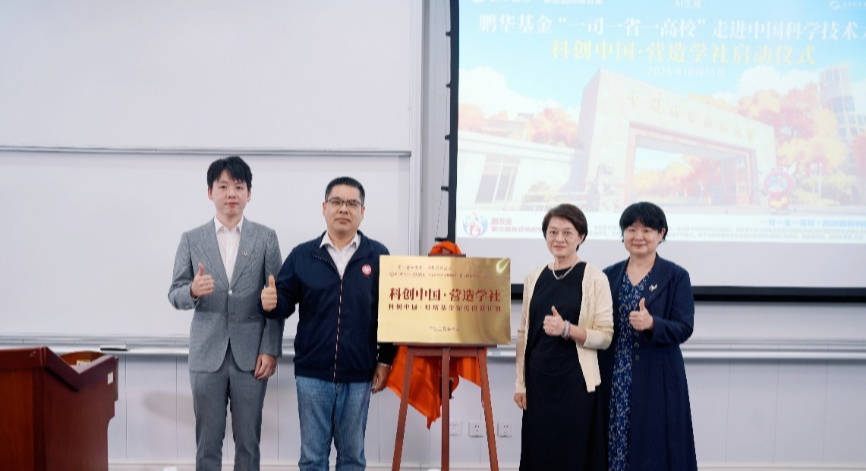
Core Viewpoint - The event held on October 15, 2023, at the University of Science and Technology of China, emphasized the importance of integrating technology finance and innovation education to foster high-quality talent and enhance national competitiveness in technology [1][2]. Group 1: Event Overview - The "Science and Technology Innovation Education into Colleges" initiative aims to deepen investment education in universities and showcase the capital market's role in promoting enterprise innovation and economic transformation [2][4]. - The unveiling of the "Science and Technology Innovation China·Construction Society" marks a collaborative effort to focus on research and exchange in areas such as valuation of innovative enterprises and quantitative investment strategies [2][4]. Group 2: Educational Impact - The collaboration between Shanghai Securities News and the University of Science and Technology of China has provided students with valuable opportunities to learn about the latest theories and practices in the capital market [4][8]. - The event serves as a platform for knowledge transfer and value guidance, encouraging students to think deeply about the integration of technology innovation and capital markets [4][13]. Group 3: Institutional Roles - Penghua Fund, as a leading asset management institution, emphasizes its commitment to serving the real economy and supporting technological innovation through educational initiatives [6][11]. - The Shanghai Securities News has been a long-standing participant in the capital market, actively engaging in educational activities related to technology innovation and ETF themes [8][9]. Group 4: Future Prospects - The event is seen as a practical implementation of the "technology-finance-talent" cycle, aiming to enhance collaboration between academia and industry for the cultivation of financial and technological talent [13]. - The focus on the "Science and Technology Innovation China·Construction Society" is expected to further deepen the integration of theory and practice, contributing to the development of a strong financial and technological workforce [13].

上周ETF全市场净流入608亿元,股票ETF净流入超300亿元
Ge Long Hui· 2025-10-21 00:55
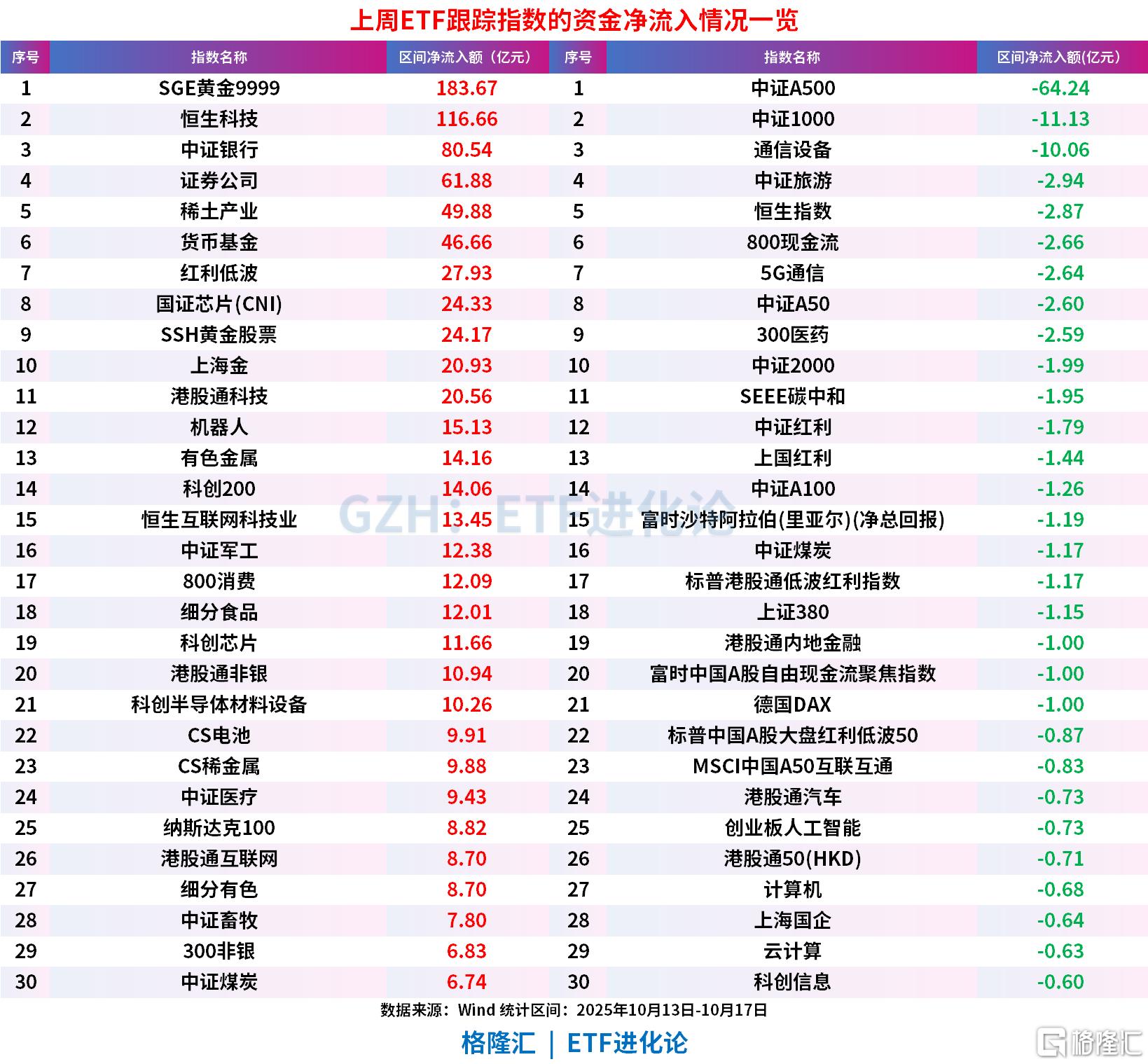
Market Overview - The A-share market saw a decline across major broad-based indices last week, with the Shanghai Composite Index, CSI 300, and CSI 1000 recording returns of -1.47%, -2.22%, and -4.62% respectively. The STAR 50, SME Index, and ChiNext Index had poorer performances with returns of -6.16%, -5.77%, and -5.71% respectively [1] - Trading volume increased for major broad-based indices last week. In terms of sectors, banking, coal, and food & beverage sectors performed well with returns of 4.99%, 4.27%, and 0.85% respectively, while electronics, media, and automotive sectors lagged with returns of -7.10%, -6.28%, and -6.24% respectively [1] Fund Flows - Last week, the total net inflow for ETFs across the market was 60.8 billion yuan, with stock ETFs seeing a net inflow of 33.8 billion yuan. Cross-border stock ETFs had a net inflow of 15.6 billion yuan, commodity ETFs saw a net inflow of 20.7 billion yuan, and money market ETFs had a net inflow of 4.7 billion yuan, while bond ETFs experienced a net outflow of 13.9 billion yuan [2] - Specific indices with significant net inflows included SGE Gold 9999 (18.4 billion yuan), Hang Seng Technology (11.7 billion yuan), CSI Bank (8.1 billion yuan), and Securities Companies (6.2 billion yuan). Conversely, indices such as CSI A500 and CSI 1000 saw net outflows of 6.4 billion yuan and 1.1 billion yuan respectively [2][4] ETF Performance - The median weekly return for stock ETFs was -4.18%. Among broad-based ETFs, the SSE 50 ETF had the smallest decline at -0.21%. In sector classifications, the median return for financial ETFs was -2.31%, with bank ETFs showing the highest return of 5.07%. Conversely, robotics ETFs and AI-themed ETFs performed poorly, with the robotics ETF from Fortune down by 10.03% [10] - Year-to-date performance for various gold ETFs showed significant gains, with the top performers achieving returns exceeding 60% [12] New ETF Products - A total of 33 new funds were reported last week, an increase from the previous week. This includes 4 FOFs and 3 QDIIs, along with several ETFs focused on sectors such as satellite industry and artificial intelligence [16][17] - Seven new stock ETFs were launched last week, including the Fortune SSE Sci-Tech 100 ETF and others related to the Sci-Tech sector [17] Notable News - The first batch of Brazilian ETFs has been filed, marking a significant step in the interconnection between Chinese and Brazilian capital markets [18] - Gold ETFs have attracted over 85.1 billion yuan in inflows this year, with a total scale of 217.5 billion yuan across 20 gold-themed ETFs [18] - The total scale of ETFs in China reached a historical high of 5.63 trillion yuan by the end of Q3 this year [19] - Several precious metal funds have implemented purchase limits due to a surge in demand following recent price increases [20]
15 只百亿级科创债ETF诞生 机构持仓占比高、个人也可参与
2 1 Shi Ji Jing Ji Bao Dao· 2025-10-20 12:41
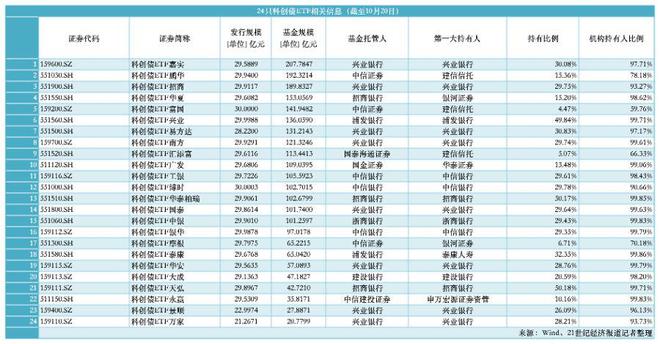
Core Insights - The launch of two batches of Sci-Tech Bond ETFs marks a significant entry into the "hard technology" sector for China's bond ETF market [1] - As of October 20, 2025, the total scale of 24 Sci-Tech Bond ETFs reached 246.875 billion yuan, with 15 products exceeding 10 billion yuan in size [1] - Institutional investors dominate the subscription of Sci-Tech Bond ETFs, with over 90% held by institutions in many funds [1][3] Institutional Investor Insights - Major institutional investors include banks, securities firms, wealth management subsidiaries, insurance companies, and trusts [3] - For instance, the top two holders of the Sci-Tech Bond ETF from Industrial Bank are Pudong Development Bank and Industrial Bank, holding 49.84% and 29.83% respectively [3] - The first major holder of the Huatai-PB Sci-Tech Bond ETF is China Merchants Bank, with a holding ratio of 50.17% [3] Market Dynamics - The China Securities Regulatory Commission (CSRC) has emphasized the need to enhance support for technology innovation through the multi-tiered bond market [4] - The introduction of the "technology board" in the bond market aims to alleviate financing difficulties for tech innovation companies [4] - Sci-Tech Bond ETFs serve as important tools for participating in investments on the technology board, gaining market favor [4] Investment Characteristics - Sci-Tech Bond ETFs consist of a basket of AAA-rated bonds from technology innovation companies, providing a diversified investment option [4][5] - They offer high liquidity and can participate in repurchase agreements, helping to alleviate redemption pressures on wealth management products [4] - The ETFs are suitable for both institutional and individual investors, providing a channel for personal investors to access Sci-Tech bonds [5][6] Risk and Return Profile - Compared to government bonds and money market funds, Sci-Tech bonds offer higher annualized returns, especially in the context of a declining deposit rate [7] - However, the investment in technology enterprises carries higher risks due to uncertainties in development and market changes [7] - The ETFs are designed to balance returns and volatility, making them suitable for medium to low-risk investors [6][8] Index Tracking - The existing 24 Sci-Tech Bond ETFs track three types of indices: the CSI AAA Technology Innovation Company Bond Index, the SSE AAA Technology Innovation Company Bond Index, and the SZSE AAA Technology Innovation Company Bond Index [7] - Each index has different characteristics, catering to various investor preferences regarding risk and return [7][8]
千元“寒王”的背后:信仰、博弈与未来
Zhong Zheng Wang· 2025-10-20 08:48
Core Viewpoint - Cambricon has emerged as a leading player in the semiconductor industry, achieving a market capitalization exceeding 520 billion yuan, driven by the rapid development of AI in China and the growth of index-based investments in A-shares [1][2]. Group 1: Who Made Cambricon Successful - The rise of Cambricon is closely linked to the rapid advancement of China's AI sector and the development of index-based investment strategies in the A-share market [1]. - The release of DeepSeek-V3.1, which utilizes UE8M0 FP8 parameters, has sparked interest in the domestic computing power supply chain [1][2]. - Major domestic computing power chip suppliers include Huawei, Haiguang Information, Cambricon, and others, all of which have announced compatibility with DeepSeek models [2]. Group 2: Who is Trading Cambricon - Notable investor Zhang Jianping has increased his holdings in Cambricon, with a market value exceeding 9 billion yuan as of late August [6]. - On August 22, despite a 20% surge in stock price, there was a net outflow of 678 million yuan, indicating some investors opted to take profits [6][7]. - Various trading desks, including those of UBS and Huabao Securities, have shown significant buying and selling activity, reflecting a mix of institutional and retail investor participation [6][7]. Group 3: Who Will Be the Next Cambricon - The AI chip market is expected to grow significantly, with projections indicating a compound annual growth rate of 53.7% from 2025 to 2029, reaching a market size of 1.34 trillion yuan by 2029 [8]. - Yuntian Lifei, recognized as a leading AI inference chip company, has also seen stock price increases, indicating potential for future growth [9]. - Chipone Technology is developing high-performance graphics processing technology aimed at data centers and GPU-AI computing, positioning itself as a competitor in the AI chip market [9][10].
记者观察|从泉果旭源三年持有期基金到期谈起
Sou Hu Cai Jing· 2025-10-20 00:20
Core Insights - The performance of the Quan Guo Xu Yuan three-year holding period fund has improved significantly, allowing investors to redeem their investments after a challenging period [17][18] - The fund was established on October 18, 2022, and after three years of volatility, it has recently seen a net value increase of approximately 40% [17][19] - Investors initially had high expectations due to the fund manager's previous accolades, but the fund faced significant declines during the downturn in the new energy sector [17][19] Fund Performance - As of October 16, 2023, the fund's net value reached 1.0558 yuan, recovering from a significant drop experienced in the past years [17][19] - The fund's recovery is attributed to the manager's focus on quality companies and a consistent investment style, which has allowed it to navigate market fluctuations effectively [18][19] Investment Strategy - The investment philosophy emphasizes selecting fund managers based on their long-term sustainable investment frameworks rather than short-term trading abilities [18] - A consistent investment style focusing on high-quality enterprises is deemed more effective than frequent trading, especially during market downturns [18][19] - The ability of fund managers to adapt and evolve their strategies in response to market changes is crucial for identifying new investment opportunities [18][19] Industry Trends - The industry has seen the issuance of over 300 holding period funds from 2020 to 2024, with varying performance outcomes [19] - Many funds have struggled due to a lack of mature investment frameworks and a tendency to chase market trends, leading to prolonged underperformance [19]
指数化投资加速提质扩容,未来趋势如何?
Di Yi Cai Jing· 2025-10-19 16:18
Core Insights - The scale of index products in China has reached approximately 6.5 trillion yuan, reflecting a 43% increase compared to the end of the previous year [1] - The Shanghai Stock Exchange is committed to promoting index investment development through systematic layout and enhancing the index and quantitative investment ecosystem [2][3] - The rapid growth of index and quantitative investment is significantly impacting the asset management industry, with a focus on regulatory development and market ecology [1][2] Index Product Growth - The number of indices compiled by the Shanghai Stock Exchange and China Securities Index has exceeded 8,700, with tracking product scale surpassing 5 trillion yuan [2] - The scale of ETF products in the Shanghai market has increased from 0.9 trillion yuan to 4 trillion yuan over the past five years, representing a cumulative growth of nearly 350% [2] Technology and Thematic Indices - A diverse index system focusing on technology innovation, including 369 technology-related indices with a product scale of 900 billion yuan, has been established [2] - The Science and Technology Innovation Board has become the segment with the highest index investment ratio, with 33 indices and a tracking product scale exceeding 340 billion yuan [2] Market Trends and Investor Behavior - The penetration rate of index investment in the domestic market has significantly increased, with ETF trading volume accounting for over 7% of total A-share trading volume [3] - Factors driving the growth of index investment include the transparency, low cost, and diversification of index products, as well as the increasing effectiveness of the market [3] ETF Market Development - The domestic ETF market has experienced rapid growth, with the number of listed ETF products nearing 1,200 and a total scale exceeding 5.6 trillion yuan [5] - The domestic ETF market has surpassed Japan, becoming the largest ETF market in Asia, with a total scale exceeding 5.5 trillion yuan [4] Future Outlook - The focus on broad-based index products is expected to increase in importance, with thematic indices in artificial intelligence and other sectors becoming key areas for fund managers [5] - Multi-asset allocation indices are anticipated to play a more significant role in wealth management for residents in a declining interest rate environment [5]
鹏扬基金:以专业践行信义 以创新驱动发展
Zhong Guo Zheng Quan Bao· 2025-10-17 20:19
Core Viewpoint - The public fund industry in China is entering a critical phase of deepening reform and improving quality and efficiency, with a focus on high-quality development to meet national strategies and public expectations [1][2] Group 1: Industry Development - The China Securities Regulatory Commission issued an action plan in May to promote high-quality development in the public fund industry, providing guidance for overcoming development challenges [1] - The industry faces the need to enhance investment capabilities, optimize customer experience, and strengthen investor trust while achieving scale growth [1][2] Group 2: Investment Research and Strategy - The company emphasizes a "platform-type, team-based, integrated, multi-strategy" investment research system to adapt to the evolving investment environment and diverse investor needs [2][3] - The focus is on quality enterprises and deepening value research to enhance the product and research system [2] Group 3: Talent Development - The company is optimizing its talent mechanism by attracting and cultivating versatile talents, organizing specialized learning, and encouraging teams to stay updated with global technological innovations [3] - A unified communication language is promoted to strengthen consensus and cognitive development within the research teams [3] Group 4: Product Innovation - The company is committed to developing actively managed equity funds that align with China's economic transformation, focusing on sectors like digital economy, consumption upgrade, and healthcare [4] - The company is expanding its ETF product offerings to meet the needs of long-term investors seeking transparent and efficient investment solutions [4] Group 5: Risk Management and Compliance - The company views compliance as a lifeline, continuously building a scientific system to ensure comprehensive compliance management across all branches and business segments [6] - A culture of compliance is cultivated to enhance the company's soft power and ensure the fulfillment of fiduciary responsibilities [6] Group 6: Investor Engagement - The company aims to shift the industry focus from "scale" to "investor returns," enhancing the investment experience through strategic sales services [7] - The company actively engages in investor education and social responsibility initiatives, promoting scientific investment concepts and supporting community development [7]