数字贸易

Search documents
三大区域外贸领跑:韧性背后的增长密码
Sou Hu Cai Jing· 2025-11-25 14:43
Core Insights - China's foreign trade in the Yangtze River Delta, Guangdong-Hong Kong-Macao Greater Bay Area, and Beijing-Tianjin-Hebei regions has shown strong resilience, with significant growth in exports and imports over the first ten months of the year [1][2][6] Group 1: Trade Performance - The Yangtze River Delta's import and export volume reached 14 trillion yuan, a year-on-year increase of 6% [1] - The Guangdong-Hong Kong-Macao Greater Bay Area's trade volume hit 7.52 trillion yuan, marking a historical high for the same period [1] - The Beijing-Tianjin-Hebei region's exports reached 1.2 trillion yuan, also a historical high, with continuous growth for seven months [2][6] Group 2: Sector Contributions - Private enterprises in the Yangtze River Delta accounted for 55.9% of the region's total trade, with a year-on-year increase of 9.7% in their import and export volume [1] - The Greater Bay Area's export structure has improved, with electromechanical products making up nearly 70% of exports, and significant growth in electronic components and "new three types" products [1][6] Group 3: Regional Advantages - The three regions benefit from strong industrial foundations and innovation capabilities, transitioning from cost advantages to innovation-driven growth [6] - They are deeply embedded in global supply chains, maintaining stable trade relations with over 240 countries and regions [2][6] - Institutional innovation, supported by top-level policies, has fostered a collaborative and competitive open economy [6] Group 4: Future Outlook - The future of foreign trade in these regions is expected to focus on digital trade, green trade, and comprehensive solution exports, with the Yangtze River Delta leading in digital technology and green technology integration [8] - The Greater Bay Area aims to enhance its role as a global service trade hub, while the Beijing-Tianjin-Hebei region will focus on high-end equipment and system integration exports [8]

新蛋智能ERP SellingPilot 赋能数字贸易跨境电商产业对接会
Sou Hu Cai Jing· 2025-11-25 03:02
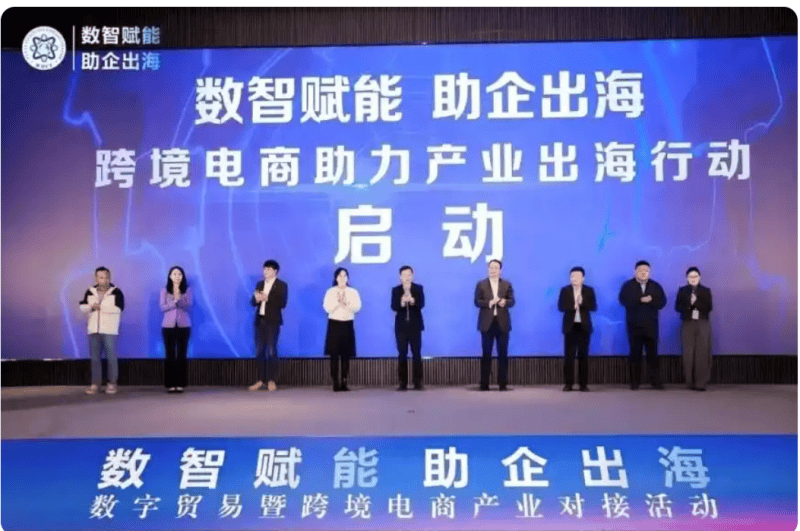
Core Insights - The event "Digital Trade and Cross-Border E-commerce Industry Matching" was successfully held in Wuhan, focusing on empowering enterprises for overseas expansion through digital intelligence [1][3] - The event attracted over 30 global cross-border e-commerce platforms and service providers, along with more than 200 participating enterprises, resulting in the establishment of over 10 cooperation projects in the digital trade and cross-border e-commerce industry chain [1][3] Industry Developments - The 20th Central Committee's Fourth Plenary Session emphasized accelerating the construction of a strong trade nation and innovating the development of digital trade, supporting the growth of new business models like cross-border e-commerce [3] - The event aimed to implement the central government's decisions on innovating digital trade and to explore new practices for industry innovation driven by digital intelligence [3] Company Initiatives - Wuhan's cross-border e-commerce association, in collaboration with major platforms like Amazon, Walmart, Alibaba, and eBay, launched the "Cross-Border E-commerce Action to Assist Industry Going Global" to enhance resource integration and build a comprehensive cross-border e-commerce service system [5] - The first "Cross-Border Going Global Benchmark Enterprises" list was released, featuring 14 companies from Wuhan recognized for their product quality and supply chain capabilities [5] Technology and Tools - Newegg's global CEO highlighted the company's focus on addressing common barriers in cross-border trade, such as regulatory differences and multi-language marketing challenges, through technology-driven solutions [7] - Newegg's SellingPilot, an AI-driven ERP tool, has shown significant results, with contract value growth for Chinese sellers exceeding 50% in 2025, validating the effectiveness of their strategic direction [7][10] - SellingPilot offers five core advantages, including deep integration with major platforms, AI-driven market analysis, logistics visibility, multi-language customer support, and competitive data analysis tools [8][10] Market Impact - SellingPilot has attracted users from over 60 countries, with more than 50% of users from China, covering various core categories such as electronics and apparel [10] - The tool has streamlined operations for sellers, reducing the need for large teams and improving operational accuracy [10] - The digital transformation in cross-border e-commerce is accelerating, with expectations for Newegg's SellingPilot to help more Chinese manufacturers build global brands [12]

活力中国调研行|稳外贸,江苏着力在“新”字上做文章
Ren Min Ri Bao· 2025-11-25 02:57
Core Insights - Jiangsu's foreign trade demonstrates resilience despite uncertainties, with a total import and export value of 4.88 trillion yuan from January to October, accounting for 13.1% of the national total and contributing over 20% to the national export growth [1] Group 1: Market Expansion - Jiangsu is focusing on opening new markets and expanding new business formats to enhance foreign trade [1] - Yangjie Electronics has seen a 30% growth in foreign sales, with plans for factory expansions in Vietnam, Malaysia, and Thailand [2] Group 2: Innovation in Trade - The "Shicaitong" platform in Changshu has facilitated a significant increase in exports for small and micro foreign trade businesses, growing from 1 billion USD to over 15 billion USD since 2020 [3] - Jiangsu's imports and exports with Belt and Road countries reached 2.44 trillion yuan, an 11.7% increase year-on-year, while trade with ASEAN countries grew by 22.1% [3] Group 3: Digital Transformation - The cross-border e-commerce sector in Suzhou's Shengze Town has seen a 225.4% increase in import and export value, reaching 3.635 billion yuan from January to September [4] - Jiangsu's cross-border e-commerce platforms experienced over 60% growth in imports and exports from January to October, with traditional industries leveraging digital channels for international market expansion [5] Group 4: Brand Development - Companies like Borui Electric and Yadea are enhancing their competitive edge through quality control and innovation, with Borui's products entering over 70 countries and Yadea adapting products for Southeast Asian markets [6] - Jiangsu's effective invention patent numbers remain among the highest in the country, with advanced manufacturing clusters contributing over 60% of these patents [7]
三大区域,外贸为啥跑得快?
Ren Min Ri Bao Hai Wai Ban· 2025-11-25 00:42
Core Insights - The foreign trade performance of China's three major regions—Yangtze River Delta, Guangdong-Hong Kong-Macau Greater Bay Area, and Beijing-Tianjin-Hebei—has shown strong resilience and vitality, with significant year-on-year growth in imports and exports [1][2][4] Group 1: Trade Performance - In the first ten months of this year, the Yangtze River Delta's import and export volume reached 14 trillion yuan, a year-on-year increase of 6% [2] - The Guangdong-Hong Kong-Macau Greater Bay Area's import and export volume was 7.52 trillion yuan, marking a historical high with a year-on-year growth of 4% [3] - The Beijing-Tianjin-Hebei region's import and export volume reached 3.91 trillion yuan, with exports hitting a historical high of 1.2 trillion yuan [4] Group 2: Sector Contributions - In the Yangtze River Delta, private enterprises contributed significantly, with their import and export volume reaching 7.83 trillion yuan, a year-on-year increase of 9.7%, accounting for 55.9% of the total trade [2] - The Guangdong-Hong Kong-Macau Greater Bay Area saw nearly 70% of its exports coming from electromechanical products, with electronic components and "new three types" products growing by 19.5% and 32.2% respectively [3] - The Beijing-Tianjin-Hebei region's exports were bolstered by the automotive sector, with automotive and parts exports increasing by 1.5 percentage points, now accounting for 8.2% of the region's total exports [5] Group 3: Structural Advantages - The three regions benefit from strong industrial foundations and innovation capabilities, transitioning from traditional cost advantages to innovation-driven growth [5] - The regions are deeply integrated into global supply chains, showcasing adaptability to external demand fluctuations, which has led to stable growth despite global challenges [6] - Institutional innovations, such as the establishment of free trade zones and comprehensive bonded zones, have created a favorable business environment for international trade [7] Group 4: Future Outlook - The regions are expected to further develop a multi-layered open system, with the Yangtze River Delta focusing on digital and green technologies, the Guangdong-Hong Kong-Macau area enhancing its role in global service trade, and the Beijing-Tianjin-Hebei region concentrating on high-end equipment exports [10] - Emerging markets and new trade areas, such as digital trade and green trade, are anticipated to become new growth drivers for these regions [10]
三大区域,外贸为啥跑得快?
Ren Min Ri Bao· 2025-11-24 22:57
Core Insights - The foreign trade performance of China's three major regions—Yangtze River Delta, Guangdong-Hong Kong-Macao Greater Bay Area, and Beijing-Tianjin-Hebei—has shown strong resilience and vitality, with significant year-on-year growth in imports and exports [2][4][8] Group 1: Trade Performance - In the first ten months of this year, the Yangtze River Delta's import and export volume reached 14 trillion yuan, a year-on-year increase of 6% [2] - The Guangdong-Hong Kong-Macao Greater Bay Area's import and export volume was 7.52 trillion yuan, marking a historical high with a growth of 4% [3] - The Beijing-Tianjin-Hebei region's import and export volume reached 3.91 trillion yuan, with exports hitting a historical high of 1.2 trillion yuan [4] Group 2: Sector Performance - In the Yangtze River Delta, private enterprises contributed significantly, with their import and export volume reaching 7.83 trillion yuan, a growth of 9.7% [2] - The Guangdong-Hong Kong-Macao Greater Bay Area saw nearly 70% of its exports coming from electromechanical products, with electronic components and "new three types" products growing by 19.5% and 32.2% respectively [3] - The Beijing-Tianjin-Hebei region has leveraged its free trade zones and comprehensive bonded zones to enhance export growth, with significant increases in exports from specific areas [4] Group 3: Structural Advantages - The three regions benefit from strong industrial foundations and innovation capabilities, transitioning from traditional cost advantages to innovation-driven growth [5] - The regions are deeply integrated into global supply chains, showcasing adaptability to external demand fluctuations [6] - Institutional innovations, such as breaking down administrative barriers and optimizing resource allocation, have created a favorable business environment [7] Group 4: Future Outlook - The future of regional foreign trade is expected to expand, with digital trade and green trade emerging as new growth drivers [10] - The differentiation in regional trade development is forming a "multi-polar support" structure, enhancing the overall economic resilience [9] - The integration of high-end manufacturing and service trade is anticipated to strengthen the competitive position of these regions in the global market [10]
全球贸易破局者:数商云以S2B2C系统构建跨境数字贸易新生态
Sou Hu Cai Jing· 2025-11-24 15:45
Core Insights - The article discusses the challenges faced by traditional commodity trading models in the context of a rapidly changing global trade landscape in 2025, highlighting the need for innovative solutions like the S2B2C system developed by Shushangyun [2] Group 1: S2B2C Model Value Proposition - The S2B2C model addresses traditional trade pain points by integrating the supply chain, moving from a "linear break" to a "circular symbiosis," which reduces demand forecasting errors by 40% and improves inventory turnover rates [2] - It establishes a "digital frontier" to tackle cross-border compliance and security challenges, utilizing a hybrid deployment model of private and public clouds [2] - The system empowers intelligent decision-making by integrating AI models and digital twin technology, enhancing trade decision-making capabilities, such as increasing hit rates for popular products by 70% through social media trend analysis [2] Group 2: Technical Architecture Innovations - The S2B2C system employs a hybrid cloud deployment strategy, ensuring core business systems are on private clouds while non-sensitive operations run on public clouds, achieving low latency for global access [6] - It features a real-time computing engine that supports peak order volumes exceeding 8 million orders per hour during high-demand events [6] - The blockchain traceability network records the entire lifecycle of carbon emissions for products, allowing companies to enhance product pricing by 12% through carbon footprint certification [6] Group 3: Industry Practices and Future Outlook - Shushangyun has served over 300 global enterprises across 12 industries, creating a replicable solution library and transitioning from a technology provider to an ecosystem operator [4] - The company plans to focus on building a global supply chain network and promoting a green trade ecosystem, aiming to reduce product loss rates from 15% to 5% [4] - The S2B2C system is positioned as a paradigm shift in business logic, facilitating China's transition from a "world factory" to a "global value hub" in the digital trade era [5]

数贸“引擎”与全链服务新机 驱动“武汉制造”货通全球
2 1 Shi Ji Jing Ji Bao Dao· 2025-11-22 06:34
Group 1 - The 2025 Digital Trade and Cross-Border E-commerce Industry Matching Event was successfully held in Wuhan, attracting over 30 global cross-border e-commerce platforms and more than 200 enterprises [1] - The event aims to seize new opportunities in digital trade development and explore innovative practices driven by digital intelligence [1][2] - Wuhan's business bureau emphasized the importance of cross-border e-commerce as a new engine for foreign trade transformation and upgrading [1] Group 2 - The Wuhan Cross-Border E-commerce Association, in collaboration with major platforms like Amazon and Alibaba, launched the "Cross-Border E-commerce Action to Support Industry Going Global" initiative [2] - The event facilitated the establishment of 10 cooperation projects in various fields, including digital industry, logistics supply chain, and talent cultivation [2] - Notable companies like 易海创腾 (Yihai Chuangteng) plan to set up operations in Wuhan to enhance service offerings for enterprises looking to expand internationally [2][3] Group 3 - Leading global cross-border e-commerce platforms presented strategies for market expansion, including SellingPilot's approach for North America and Alibaba's AI-driven "simplified going global" path [3] - The event provided a platform for Wuhan enterprises to connect with global resources and gain practical insights into international market strategies [3] - Companies like Wuhan 音石网络科技 (Yinshi Network Technology) are leveraging local advantages to import high-quality supplements, enhancing their market presence through participation in the event [4] Group 4 - The Wuhan business bureau plans to continue promoting a combination of online and offline development, focusing on optimizing policy environments and enhancing service efficiency [4] - The goal is to support high-quality development in digital trade and cross-border e-commerce, contributing to the construction of a modern and open inland Wuhan [4]
把握丝路电商发展新机遇
Jing Ji Ri Bao· 2025-11-21 22:42
我国与共建"一带一路"国家跨境电商交易额近5年保持年均20%以上增速。"丝路电商"不仅构建了高效 便捷的"网上丝路",更通过模式创新为我国外贸领域注入了全新活力。 高质量共建"一带一路",是《中共中央关于制定国民经济和社会发展第十五个五年规划的建议》提出的 一个明确要求。在此前举办的2025年中国国际服务贸易交易会上,商务部相关负责人明确表示将拓展与 共建"一带一路"国家的数字贸易合作,并积极对接国际高标准经贸规则。在此背景下,推动"丝路电 商"从规模扩张转向质量提升,使其从一条便捷的"新通道"升级为驱动共建"一带一路"高质量发展的引 擎,正当其时。 丝路电商作为共建"一带一路"的创新实践,从积极探索迈向深化拓展,取得了令人瞩目的成就。从广度 看,合作网络持续扩大,丝路电商伙伴国增至36个,搭建起覆盖欧亚非的数字化贸易桥梁。从深度看, 生态体系日益健全,我国已在全球建设超2400个海外仓,服务半径显著扩大,有效破解跨境物流瓶颈。 以白俄罗斯为例,借力丝路电商,其优质乳制品和特色食品通过电商平台直达中国消费者,"中白工业 园"则转型为跨境电商枢纽,实现从传统产业合作向数字贸易升级。丝路电商不仅构建了高效便捷的" ...
总金额近30亿元!汉交会上,武汉国际供应链对接合作交流现场签约8个项目
Sou Hu Cai Jing· 2025-11-21 19:57
Core Insights - The Wuhan International Supply Chain Docking Cooperation Exchange event successfully facilitated the signing of 8 procurement and cooperation projects, with a total contract value of nearly 3 billion yuan, showcasing diverse cooperation, business model innovation, regional collaboration, and supply chain complementarity [1][4]. Group 1: Event Overview - The event was part of the 2025 "Hanjiao Conference" and was organized by the Wuhan Municipal Bureau of Commerce, with support from the China Chamber of Commerce for Import and Export of Mechanical and Electrical Products [1]. - The theme of the event was "Linking Resources for a Win-Win Future," aimed at leveraging the "Hanjiao Conference" platform to gather government departments, industry organizations, and key enterprises to support Wuhan's businesses in expanding domestic and international supply chain partnerships [1]. Group 2: Key Projects and Collaborations - The signed projects include the Changjiang Commerce automobile export project, Hubei Chuxiang fertilizer export project, Hubei Guomao beef import project, and Jiuzhou Pharmaceutical medical equipment procurement project, which will enhance international supply chain channels and expand trade scale and share [4]. - A strategic cooperation agreement on digital trade was reached between the International Economic Cooperation and the Wuhan Digital Trade Research Institute, focusing on upgrading the supply chain towards digitalization and collaboration, significantly improving efficiency and resilience [4]. Group 3: Participation and Future Plans - The event was attended by over 200 guests, including officials from embassies of Kenya, Cuba, Mongolia, and Kyrgyzstan, as well as representatives from supply chain platform enterprises, foreign distributors, and well-known brands [5]. - The Wuhan Municipal Bureau of Commerce plans to continue nurturing international supply chain enterprises, improving the comprehensive foreign trade service system, and expanding new spaces for international cooperation to contribute to making Wuhan an inland open highland [4].

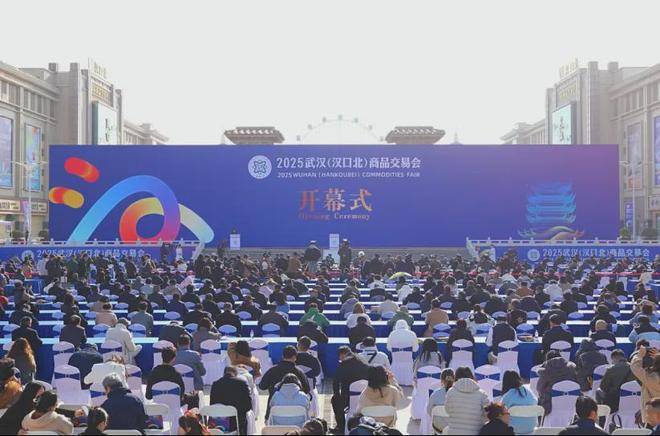
黄向墨出席2025武汉(汉口北)商品交易会
Sou Hu Cai Jing· 2025-11-21 18:06
Core Viewpoint - The 2025 Wuhan Commodity Fair, themed "Connecting the World, Trade Across Borders," has officially commenced, showcasing the international trade landscape and attracting global exhibitors and buyers [1][3]. Group 1: Event Overview - The fair features a total exhibition area of 190,000 square meters, the largest in its history, with one main exhibition area and nine market zones covering cutting-edge fields such as artificial intelligence, low-altitude economy, high-end manufacturing, and digital trade [5]. - Approximately 50 diplomatic envoys, business leaders, and experts from various countries and regions attended the opening ceremony, highlighting the event's international significance [3]. Group 2: Company Focus - Yuhua Cold Chain - Yuhua Cold Chain has been investing in the construction of an international frozen goods trading center in Hubei since 2021, with key projects including the Yuhua Cold Chain (Wuhan) Trading Center and the Yuhua Cold Chain (Xiangyang) Trading Center [8]. - The Yuhua Cold Chain (Wuhan) Trading Center officially opened on September 27, 2023, serving as a critical node in the company's Central China layout, integrating functions such as cold chain wholesale trading, warehousing, processing, inspection, and supply chain finance [8][10]. - The center has attracted over 400 domestic and international cold chain food enterprises and aims to introduce over a thousand food trading companies, with an expected annual transaction volume of 1 million tons and a transaction value exceeding 20 billion yuan [10].