
生态文明建设

Search documents
浙江省委省政府严肃追责问责83人,其中厅局级干部3人
Bei Jing Ri Bao Ke Hu Duan· 2025-12-13 01:59
浙江省委、省政府高度重视,坚决扛起"绿水青山就是金山银山"理念发源地和率先实践地的使命担当, 高标准严要求抓好督察整改和责任追究工作。省纪委监委及时成立追责问责工作组,准确把握"三个区 分开来"要求,坚持实事求是、厘清责任、审慎稳妥原则,认真组织开展调查核实,科学界定责任,精 准定性量纪,确保政治效果、纪法效果、社会效果有机统一。 据《浙江日报》12月13日报道,浙江省通报第三轮中央生态环境保护督察移交问题追责问责情况: 2024年5月7日至6月7日,中央第二生态环境保护督察组对浙江省开展第三轮中央生态环境保护督察, 2024年8月21日向浙江省反馈督察情况,同时移交督察发现的4个生态环境损害责任追究问题,要求认真 调查、分清责任,依规依纪依法处理。 根据查明的事实,依据《中国共产党问责条例》及有关规定,对15个责任单位、83名责任人员严肃追责 问责。其中,厅局级干部3人、县处级干部31人、乡科级及以下干部49人;给予党纪政务处分22人、诫 勉21人、通报15人、采取其他方式追责问责25人。现将有关情况通报如下。 四、关于"一些城市大气污染防治工作落实不力,空气质量出现反弹"问题 杭州市有关部门未按规划要求建 ...
绿水青山映鹏城五年蝶变谱新篇
Zhong Guo Huan Jing Bao· 2025-12-12 01:53
Core Viewpoint - Shenzhen has made significant strides in ecological civilization construction, becoming a national model city for ecological development, integrating environmental protection with economic growth, and setting a benchmark for sustainable urban development [2][14][22]. Institutional Support - Shenzhen has established a comprehensive ecological civilization system, including the first ecological environment protection legislation in China, which covers air, water, noise, solid waste, and soil [5][17]. - The city has developed a systematic ecological civilization construction plan, designating 24% of land and 19% of sea areas for ecological protection [17][18]. Environmental Quality Improvement - Over the past five years, Shenzhen has achieved a significant improvement in environmental quality, with air quality good days reaching 96.7% and PM2.5 concentration dropping to 15.6 micrograms per cubic meter, ranking third among 168 major cities in China [20]. - The city has transformed polluted rivers into clean water bodies, with 100% of monitored river sections meeting water quality standards [20][21]. Green Economic Transformation - Shenzhen has shifted towards a green economy, with clean energy accounting for 82.2% of installed capacity and the value added of green low-carbon industries reaching 2.439 billion yuan [22][23]. - The city has become a leader in electric vehicles, with over 2.9 million units produced and a penetration rate of 76.9% for new energy vehicles [22]. Carbon Market and Green Finance - Shenzhen's carbon market has achieved significant trading volume and value, accounting for 12.75% of the national pilot market's trading volume, providing effective market incentives for low-carbon transitions [23].

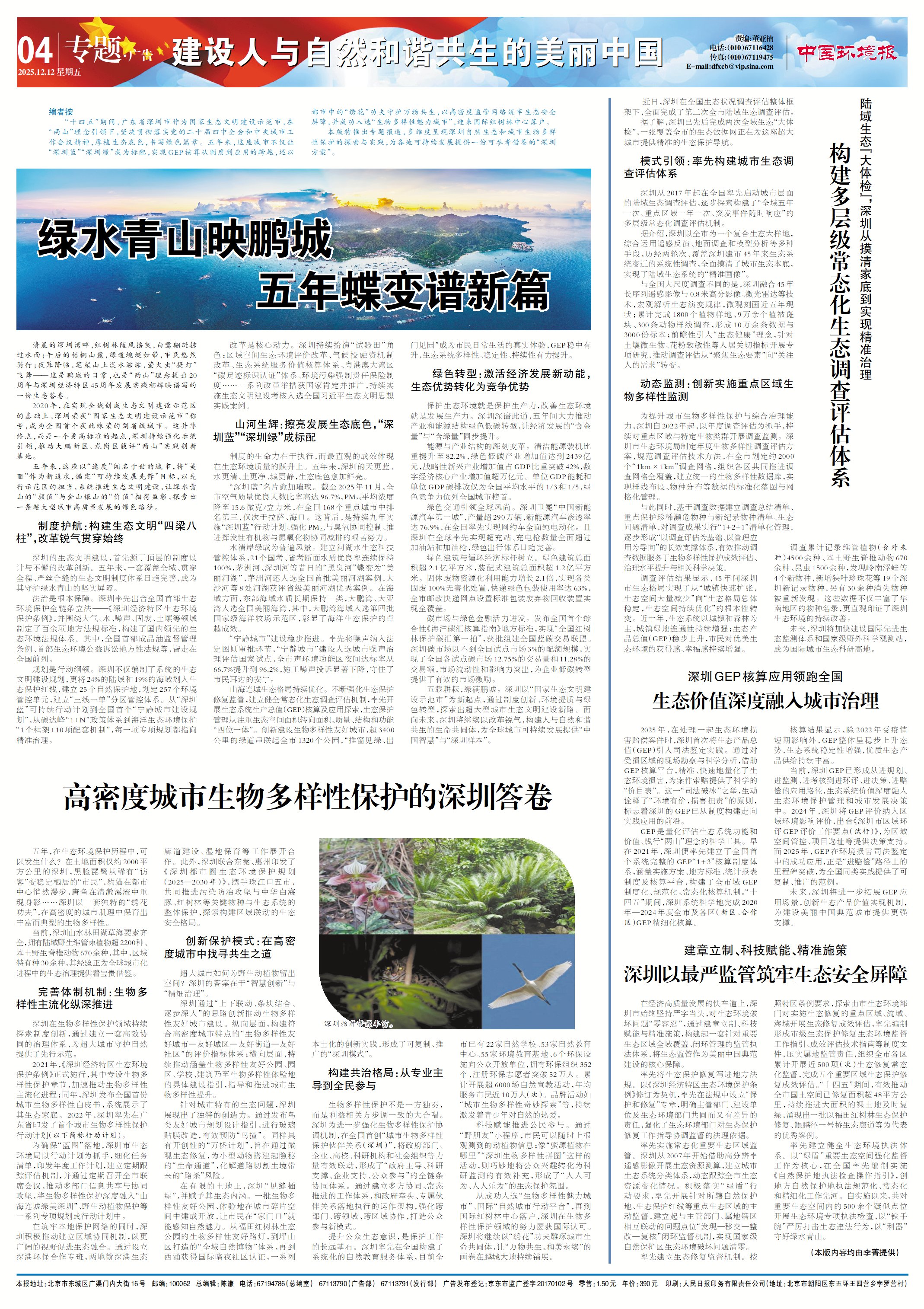
五年路上你我他——四中全会精神大家谈丨一把“古琴”奏响绿色致富曲
He Nan Ri Bao· 2025-12-11 23:33
Core Insights - The article emphasizes the importance of ecological civilization construction for sustainable development in China, highlighting the need for a comprehensive green transformation in economic and social development to build a beautiful China [2] Group 1: Ecological Protection and Green Development - The province of Henan is committed to the "dual carbon" strategy, aiming for ecological priority and green development, with continuous improvement in ecological environment quality [2][4] - The "14th Five-Year Plan" prioritizes air pollution prevention, with a target to reduce PM2.5 concentration to below 40 micrograms per cubic meter by the end of the year [5] - Significant achievements in ecological governance in the Yellow River basin have been noted, with improved flood control capabilities and effective river management practices [6][7] Group 2: Economic Transformation and Green Initiatives - The county of Lankao has successfully transformed ecological disadvantages into development advantages, focusing on green growth engines through innovative agricultural practices and green manufacturing [8] - Renewable energy generation in Lankao has increased 31 times since 2016, with projections indicating that 2024 electricity generation will exceed total social electricity consumption [8] - Lankao is implementing a "waste-free" city management system, achieving over 95% resource utilization of municipal waste [8] Group 3: Cultural and Community Development - Lankao has integrated cultural tourism with ecological protection, hosting events that promote local heritage and environmental awareness [7][8] - The county has achieved a forest coverage rate of 32.2%, enhancing its ecological network and improving overall environmental quality [9] - The preservation of traditional crafts, such as guqin making, is being promoted as a sustainable development path, linking cultural heritage with modern innovation [10]
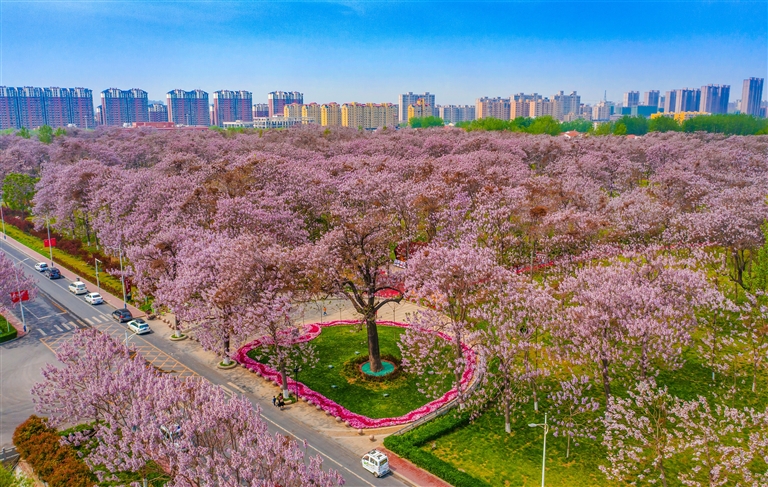
与青山绿水相拥 和美丽中国同行——“绿水青山·美丽中国行”系列生态文化传播活动在兰州正式启动
Xin Lang Cai Jing· 2025-12-11 08:53
来源:微言环保 以文艺为媒,以文化为桥,与青山绿水相拥,和美丽中国同行。2025年12月9-10日,"绿水青山·美丽中 国行"启动仪式暨首站"绿水青山·美丽甘肃行"系列生态文化传播活动在黄河之滨——兰州正式拉开帷 幕,一场汇聚各方"智慧"的生态之旅正式启程。 活动由生态环境部宣传教育中心、甘肃省生态环境厅和兰州市人民政府联合主办。来自全国各地的生态 环境专家学者、传媒、企业、国际机构、社会组织和文艺界代表等共聚一堂,共研生态环境治理之策, 共绘美丽中国建设蓝图;共同走进多姿多彩的祖国河山,用脚步丈量大地,用镜头、画笔和文字,发掘 鲜活实践案例,讲述美丽中国故事。 林玉副主任在讲话中指出,"绿水青山·美丽中国行"是一场凝聚社会各界智慧和力量,发现生态之美、 共话绿色未来的盛会,活动将生态环境宣教与生态文旅融合,旨在讲好美丽中国故事,为"十五五"时期 绿色高质量发展凝聚最广泛的社会共识与行动力量。首站选在甘肃,很有意义。这片土地历史底蕴深 厚、生态资源丰富;八步沙三代治沙的坚韧奇迹、祁连山国家公园的生态修复、黄河之畔的绿色发展等 绿色实践故事都是生态文化传播的生动素材,希望活动从甘肃开始,让更多动人的绿色声音从这 ...
在绿色发展路上迈出关键一步!吉林龙井荣获两项国家级荣誉
Zhong Guo Jing Ji Wang· 2025-12-11 08:13
Group 1 - Longjing City has been awarded two national honors: "2025 Ecological Civilization Construction Demonstration Zone" and "'Green Water and Green Mountains are Gold and Silver Mountains' Practice Innovation Base," marking a significant step in ecological civilization and green development [1] - The city prioritizes ecological protection and green development, implementing a comprehensive ecological civilization construction system through various plans, including the "Implementation Plan for Deepening Pollution Prevention and Control" [1] - Focused on the Hailan River basin, Longjing City has adopted a combination of pollution prevention and ecological restoration strategies, ensuring stable water quality standards through systematic governance [1] Group 2 - Longjing City has improved its spatial planning and infrastructure, implementing "River Chief System" and "Forest Chief System" to enhance environmental risk management and strengthen ecological barriers in Northeast Asia [2] - Since the establishment of air quality monitoring, PM2.5 concentration has decreased from 19 µg/m³ to 11 µg/m³, with an average of 99.1% of days classified as good air quality since the 14th Five-Year Plan [2] - The city has achieved 100% compliance with water quality standards in the Hailan River and has ensured that all drinking water sources meet safety standards [2] Group 3 - Longjing City is leveraging its natural scenery and Korean ethnic culture to develop eco-tourism and leisure products, transforming beautiful landscapes into economic benefits [3] - The city is implementing a three-pronged approach of technology, industry, and ecology, enforcing strict environmental assessments for major projects and promoting green industry development [3] - Continuous urban and rural environmental improvements are being made, including waste management systems, to enhance living conditions and ensure that the benefits of ecological civilization reach all citizens [3]
“雪山蓝”常驻 前11月空气质量优良天数达278天 成都生态环境质量稳步提升
Si Chuan Ri Bao· 2025-12-11 00:35
Core Insights - Chengdu has achieved significant improvements in environmental quality, with air quality good days reaching 278, an increase of 9 days year-on-year, and water quality standards maintained at 100% for drinking water sources [3][4] - The city has implemented a comprehensive carbon peak and carbon neutrality policy framework, promoting green and low-carbon transformation [4][5] - Chengdu's environmental governance system is modernizing, with the establishment of a multi-dimensional smart governance platform for real-time monitoring of air, water, and soil [5][6] Environmental Quality Improvements - Air quality has shown notable progress, with 80 days of "snow mountain visible from the window" this year, indicating a poetic scene becoming a norm [3] - Surface water quality has improved, with the Huanglong Creek water quality transitioning from "poor" to "good" [3] Carbon Neutrality and Green Initiatives - Chengdu has accelerated its green low-carbon transition, with over 330 million registered users in the "Carbon Benefit Tianfu" mechanism and a green travel rate of 71% [4] - The city has introduced various measures to support high-quality development, including the "35 environmental protection measures" and simplified environmental assessments for pilot projects [4] Modern Governance and Collaboration - The city has developed a "1+N" policy system for ecological damage compensation and established horizontal ecological protection compensation mechanisms [5] - Chengdu has created an "Ecological Advantage Park Service Chief" system and an online service platform to enhance business services [4][5] Future Plans - Chengdu aims to formulate an implementation plan for building a beautiful city, focusing on targeted actions in tasks, policies, and projects [6] - The city will continue to deepen ecological civilization reforms and enhance governance modernization, with a focus on the "beautiful city cell" project [6]

博盈特焊:国内垃圾焚烧炉市场需求可以分为存量市场与增量市场
Zheng Quan Ri Bao Wang· 2025-12-10 13:45
Core Viewpoint - The domestic waste incineration furnace market is driven by both stock and incremental demand, influenced by national strategies such as "Ecological Civilization Construction" and "Waste-Free Cities" [1] Group 1: Market Demand - The demand for waste incineration is categorized into stock market and incremental market [1] - The need for "harmless, reduced, and resource-based" waste treatment is a rigid requirement due to the deepening of national strategies [1] - Stricter policies on emission standards, operational efficiency, and energy recovery rates are creating a demand for technological upgrades and replacements of existing incineration furnaces [1] Group 2: Stock Market - There is a market for updating old and inefficient incineration furnaces to meet new standards such as "ultra-low emissions" [1] - The replacement of outdated equipment with more advanced and environmentally friendly devices is essential to comply with new regulations [1] Group 3: Incremental Market - The incremental market is particularly evident in the central and western regions of China, as well as in third and fourth-tier cities [1] - These areas are experiencing accelerated urbanization and increased waste production, but lack sufficient treatment facilities, making them the main market for new projects [1]
从先行先试到全国推广,生态警务机制如何更好“联动”?
Zhong Guo Huan Jing Bao· 2025-12-09 23:29
Core Viewpoint - The issuance of the "Opinions on Strengthening the Construction of Ecological Policing Mechanism" by the Ministry of Public Security and nine other departments marks a significant step towards institutionalizing ecological policing at the national level, providing strong mechanisms to combat environmental resource crimes and ensuring the safety of ecological civilization construction [1] Group 1 - The establishment of the ecological policing mechanism is crucial for effectively addressing environmental crimes and has been a long-standing demand, with successful pilot programs in regions like Zhejiang and Jiangsu [1][2] - The implementation of the new Environmental Protection Law in 2015 allowed for the transfer of certain illegal activities to the public security authorities, significantly enhancing the efficiency of environmental law enforcement [1] - The current priority is to adapt the ecological policing mechanism to local conditions across the country, ensuring that it is supported by reliable personnel, funding, and institutional frameworks [2] Group 2 - Successful ecological policing relies on collaboration among various departments, requiring unified goals and effective communication to protect the environment [3] - The ultimate aim of ecological policing is not just to punish environmental crimes but to encourage proactive pollution control and ecological restoration by businesses and individuals [3] - The establishment of a robust ecological policing mechanism is essential for enhancing the overall effectiveness of environmental protection through legal means, contributing to high-quality development and ecological safety [4]
央媒报道!雄安新区:一座高水平现代化城市正拔地而起
Xin Lang Cai Jing· 2025-12-09 08:19
Core Viewpoint - Xiong'an New Area is rapidly transforming from a planning blueprint into a modern high-level city, showcasing significant achievements in industrial clustering, ecological construction, and the relocation of non-capital functions from Beijing [4][16]. Group 1: Relocation and Infrastructure Development - Xiong'an New Area is designated as a key area for the relocation of non-capital functions from Beijing, with visible progress in the establishment of core functions [6][21]. - As of now, over 400 central enterprise branches and more than 4,000 Beijing-origin enterprises have successfully settled in Xiong'an [6][21]. - The first batch of central enterprise relocation projects is accelerating, with major companies like China Huaneng and China Sinochem officially moving their headquarters to Xiong'an [6][21]. Group 2: Service Mechanisms and Support Policies - Xiong'an has introduced the "1+N" action plan for enterprise migration, facilitating a smooth and efficient relocation process [7][22]. - The local government has implemented comprehensive support policies for relocated personnel, covering housing, social security, education, and talent incentives [8][23]. - The establishment of "zero-distance" service stations directly at enterprises aims to address the needs of relocated employees [8][23]. Group 3: Innovation and Industrial Growth - Innovation is a core driver of development in Xiong'an, with a collaborative ecosystem emerging among enterprises in the region [9][26]. - The Xiong'an Artificial Intelligence Industrial Park is fostering a unique industrial collaboration environment, enhancing innovation capabilities [9][26]. - The successful launch of the first "Xiong'an-made" satellite marks a significant milestone in the development of the aerospace information industry in Xiong'an [12][27]. Group 4: Ecological Development - Xiong'an has adopted a "green first, then build" philosophy, resulting in the planting of 483,000 acres of trees and the establishment of a vibrant ecological landscape [13][28]. - The water quality of Baiyangdian has improved significantly, now classified as a good lake, with biodiversity efforts leading to an increase in bird species [13][29]. - The urban park system is being developed to ensure accessibility to green spaces, enhancing the quality of life for residents [14][30].
合力筑牢鸟类保护防线 苏州市发布今年第1号总林长令
Su Zhou Ri Bao· 2025-12-09 00:37
Core Viewpoint - Suzhou has issued its first general forest chief order of the year, focusing on strengthening bird protection and combating illegal hunting and trading activities [1] Group 1: Bird Protection Measures - The order emphasizes the role of various levels of forest chiefs as the primary responsible persons for bird protection within their jurisdictions [1] - It aims to address the new challenges in bird protection by integrating it into the supervision system of wildlife resource protection and ecological civilization construction [1] - Key areas of focus include regions with concentrated bird populations, migratory stopover sites, and active bird trading locations [1] Group 2: Enforcement Actions - The order mandates a crackdown on the entire chain of illegal activities, including hunting, trading, transportation, and consumption of birds [1] - It calls for the destruction of criminal gangs involved in illegal bird activities and the public disclosure of typical cases to create a strong deterrent effect [1] - A comprehensive cleanup of illegal bird hunting and trading practices is to be conducted [1]