
产业集群

Search documents
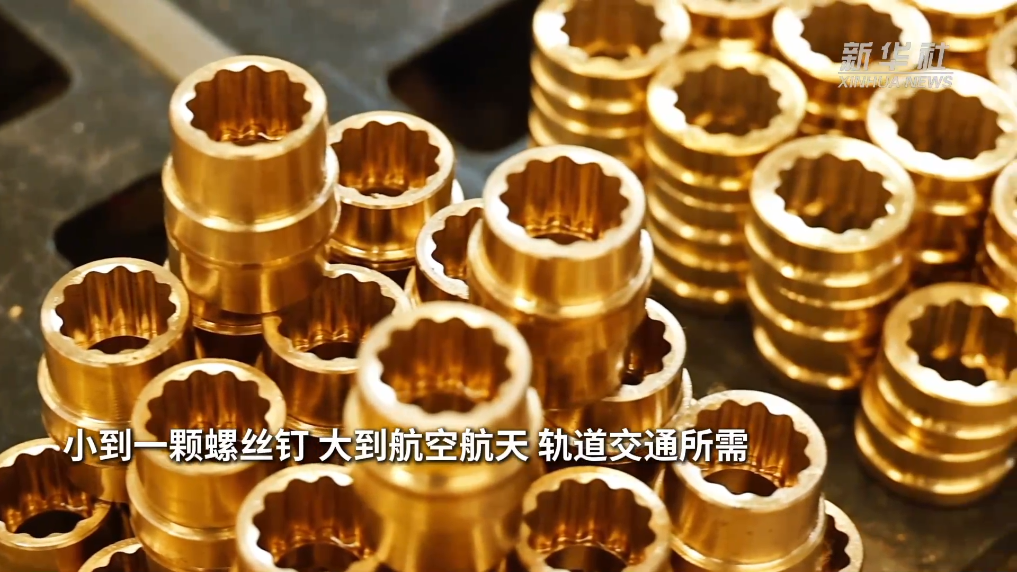
走进民企看发展|五金机电“南皮制造”“破圈”出海
Xin Hua Wang· 2025-08-12 05:44
Core Insights - The hardware and electromechanical industry in Nanpi County, Cangzhou City, Hebei Province, has a long-standing reputation dating back to the 1950s and 1960s [1] - The region is home to over 4,000 hardware and electromechanical production enterprises, generating an annual output value exceeding 34 billion yuan, which accounts for over 60% of the county's total economic output [1] - The industry is increasingly integrating into the global supply chain, with "Nanpi manufacturing" expanding its market presence in Europe, North America, and Southeast Asia [1]

8月9日晚间央视新闻联播要闻集锦
Yang Shi Xin Wen Ke Hu Duan· 2025-08-09 12:41
Group 1 - The "Two Mountains" concept, proposed by Xi Jinping 20 years ago, emphasizes the unity of ecological protection and economic development, marking a significant step in building a beautiful China [4] - The central government has allocated 32 million yuan to support flood relief efforts in Gansu and Guangxi provinces [8] - The consumer price index (CPI) remained stable year-on-year in July, with a slight month-on-month increase of 0.4% [11] Group 2 - The "New Tibet" series highlights the integration of culture and tourism in Tibet, showcasing its unique natural and cultural resources [9] - The exhibition commemorating the 80th anniversary of the victory in the Chinese People's Anti-Japanese War has attracted over 300,000 visitors [10] - The cumulative export-import volume of the Western Land-Sea New Corridor has exceeded 4 trillion yuan since its implementation [14]
产业破局,需求涌动:长三角第四城合肥的消费与住房活力密码
Cai Jing Wang· 2025-08-08 12:36
Economic Growth and Development - Hefei's GDP reached 6514.7 billion yuan in the first half of the year, with a year-on-year growth of 6% [2] - From 2000 to 2024, Hefei's GDP increased from 32.5 billion yuan to 13507.7 billion yuan, ranking among the top 20 cities in China [2] - In 2024, Hefei's GDP growth rate of 6.1% was the highest among cities with a trillion GDP [2] Population Dynamics - Hefei has experienced a continuous net inflow of population, with an increase of approximately 632,000 residents since 2020, reaching a total of 10 million by the end of 2024 [2] - The urbanization rate in Hefei stands at 86.38%, reflecting a growth of 0.83 percentage points [8] Industrial Development - Hefei has established a "6+5+X" industrial cluster strategy, focusing on six leading industries and five pioneering industries, along with several frontier technology directions [5][6] - The six leading industries include new energy vehicles, next-generation information technology, advanced photovoltaics, biomedicine, smart home appliances, and high-end equipment [5] - In 2024, the output value of strategic emerging industries in Hefei grew by 12.6%, marking a new high in 24 months [4] Employment and Talent Attraction - The chip industry in Hefei employed 32,000 people by the end of 2023, while the new energy vehicle sector employed over 150,000, including more than 40,000 in R&D [8] - The continuous growth in population and employment has led to increased consumer demand, with retail sales in Hefei reaching 2783.25 billion yuan, growing by 4.8% year-on-year [8][10] Real Estate Market - Hefei's real estate investment has accelerated, with a year-on-year growth of 6.4% in real estate development investment in the first half of 2025 [10] - The average transaction price for residential land in Hefei reached 1,106.29 million yuan per mu, with significant growth in both transaction area and amount compared to the previous year [11] - Major state-owned enterprises dominate the land acquisition market, reflecting confidence in Hefei's real estate development prospects [11][12]
2024年玉溪市钢铁产业实现产值818亿元
Xin Hua Cai Jing· 2025-08-08 01:26
Group 1 - The steel industry is a crucial growth driver for Yuxi's economy, with an expected output value of 81.8 billion yuan in 2024, accounting for 35.6% of the city's industrial output above designated size [1] - There has been a shift in Yuxi's steel production, with a decrease in the proportion of rebar and wire products and an increase in high-end plate products, providing raw material support for deep processing and extending the steel manufacturing industry chain [1] - The operation of the China-Laos Railway has enhanced the quality and efficiency of Yuxi's steel industry, optimizing the industrial layout and structure, and forming a green steel industry cluster that drives the development of supporting industries such as equipment manufacturing and logistics [1] Group 2 - The completion of the dedicated railway line for Xianfu Steel in the Dahu Industrial Park will enable seamless connection between the station and the factory, significantly reducing logistics costs and transportation steps, while also lowering carbon emissions through rail transport [2] - The dedicated line will provide stable and efficient transportation support for the company's products and raw materials, and activate the logistics network along the railway, facilitating new cooperation paths towards the Southeast Asian market [2]
准万亿产业,驱动“智造名城”加速跑
Xin Hua Ri Bao· 2025-08-07 23:01
Core Insights - The rapid development of the new energy industry in Changzhou is creating a "trillion-level" industrial landmark, with significant growth in sales and production of electric vehicles and components [1][7] - The collaboration within the supply chain is a key factor driving the strength of Changzhou's new energy sector, with over 900 automotive parts companies and a high degree of integration in the battery supply chain [2][3] - Technological advancements and deep collaboration among companies are enhancing the competitive edge of the industry, as seen in the innovations by companies like Ninebot and the construction of advanced energy storage projects [4][6] Group 1: Industry Growth - In the first half of the year, Changzhou's new energy vehicle sales exceeded 470 billion yuan, growing by 9.4%, with a vehicle production increase of 42.3% to 391,000 units [1] - The region's GDP grew by 5.8% year-on-year, with public budget revenue reaching 40.6 billion yuan, a 1.8% increase [1] Group 2: Supply Chain Collaboration - Vestas, the world's leading wind turbine manufacturer, has recognized Changzhou Yougu Technology as a key supplier due to its precision manufacturing capabilities [2] - The local supply chain includes over 500 parts companies within a 4-hour radius of major manufacturers, enhancing efficiency and reducing costs [2][3] Group 3: Technological Innovation - Ninebot's production of smart electric two-wheelers reached 8 million units in just two months, showcasing rapid innovation and supply chain integration [4] - The Huaneng Jintan compressed air energy storage project is being developed with 100% domestic equipment, highlighting local technological capabilities [5][6] Group 4: Future Prospects - By 2024, the scale of Changzhou's new energy industry is expected to exceed 850 billion yuan, with vehicle production nearing 800,000 units [7] - The region is positioning itself for future growth, with significant investments in battery production and other key projects set to drive the industry forward [7]

活力中国调研行•走进吉林丨吉林产业跃迁:龙头企业领航 工业集群崛起
Sou Hu Cai Jing· 2025-08-06 16:30
Group 1: Overview of Jilin Province's Economic Development - Jilin Province is experiencing a vibrant economic development, driven by key industries such as advanced manufacturing, automotive, and new materials [2][4][14] - The province's development is characterized by the integration of industry and culture, showcasing a coordinated development model [2][4] Group 2: China FAW Group (China First Automobile Works) - China FAW is the leading player in Jilin's automotive industry, playing a crucial role in the establishment of the "Changchun International Automobile City" concept [4][14] - The company has fostered a complete automotive industry chain, from parts manufacturing to vehicle production, enhancing regional economic collaboration [4][5] - Jilin Shibao Machinery Manufacturing Co., a key supplier to China FAW, exemplifies the growth of automotive component manufacturers in the region [4][5] Group 3: CRRC Changchun Railway Vehicles Co., Ltd. - CRRC Changchun is a prominent player in the rail transportation sector, focusing on the research and manufacturing of rail transit equipment [7][8] - The company has achieved significant technological advancements, particularly in high-speed train technology, contributing to China's rapid rail development [8][9] - CRRC Changchun is leading the digital transformation in the industry by establishing a supply chain management platform that connects nearly sixty enterprises [9][19] Group 4: Jilin Chemical Fiber Group - Jilin Chemical Fiber Group has made breakthroughs in carbon fiber production, which is lightweight yet stronger than steel, marking a significant advancement in new materials [12][13] - The company has invested heavily in R&D, collaborating with universities and research institutions to accelerate the development of high-performance fiber materials [13][20] - The establishment of a complete industrial chain around high-performance fiber materials has positively impacted the local economy and industry structure [13][20] Group 5: Future Directions - Changchun aims to strengthen its industrial economy by focusing on advanced manufacturing and integrating technology with industry [14][21] - Leading enterprises like China FAW, CRRC Changchun, and Jilin Chemical Fiber Group are pivotal in driving economic growth and technological innovation in Jilin Province [14][21]



潍坊安丘:厚植沃土育生机 民营经济“乘风破浪”
Qi Lu Wan Bao Wang· 2025-08-05 07:09
Group 1: Economic Growth - The industrial output value of Yili Precision Manufacturing Co., Ltd. increased by 13.7% year-on-year in the first half of the year, reflecting the robust development of the private economy in Anqiu City [1] - Anqiu City has implemented multiple measures such as policy support, innovation leadership, and cluster development to inject strong momentum into the private economy [1] Group 2: Policy Support - Anqiu City has issued a series of supportive policies for private enterprises, including financial support, tax incentives, project approvals, and resource guarantees [2] - The establishment of a service office for enterprise development has led to the classification and support of over 620 enterprises and projects, with 49 key projects identified for focused assistance [2] - The coordination efforts helped 10 enterprises, including Shandong Lemon Biochemical, secure 170,000 tons of grain and cotton import quotas, saving over 110 million yuan in production costs [2] Group 3: Innovation Drive - Anqiu City encourages private enterprises to increase investment in technological research and development, enhancing their innovation capabilities [3] - Qinghua Powder Technology has achieved a leading market share in vertical impact crushers and has seen global sales success in lithium battery negative electrode equipment [3] - The establishment of industry-university-research cooperation platforms has facilitated partnerships between over 100 enterprises and academic institutions, boosting innovation [3] Group 4: Industrial Clusters - Anqiu City is fostering the growth of specialized industrial clusters in sectors such as health food, equipment manufacturing, and electronic information [4] - The health food industry is being enhanced through the integration of ecological agricultural resources and the establishment of high-end food industrial parks [4] - Yili Precision Manufacturing Co., Ltd. is leading the electronic information sector, with significant growth in industrial output and plans for new automated production lines [5]
《南沙方案》白皮书首次发布 2025年第一阶段任务目标基本完成
Zheng Quan Shi Bao Wang· 2025-08-05 06:02
Group 1 - The "White Paper" outlines the achievements and strategies of Nansha's development over the past three years, focusing on the implementation of the "Nansha Plan" and its five major tasks [1] - Nansha has established itself as a hub for technological innovation, with 19 joint technology projects initiated and the Hong Kong University of Science and Technology (Guangzhou) accelerating its development in the region [1][2] - The region has become a leader in various industries, including a breakthrough in the shipbuilding and marine engineering sector with an output value exceeding 30 billion yuan [2] Group 2 - Nansha has created a vibrant entrepreneurial ecosystem, with 15 youth innovation bases established, incubating 2,336 projects, and generating an annual output value of 3 billion yuan [2] - The Nansha Port has become the largest and most comprehensive hub in South China, with a projected container throughput of 20.49 million TEUs in 2024, ranking among the top globally [2] - Financial market connectivity has been enhanced through the establishment of the Guangzhou Futures Exchange, with a cumulative transaction volume of approximately 25 trillion yuan [2][3] Group 3 - The strategic emerging industries in Nansha now account for 37.8% of GDP, with R&D intensity rising to 5.48%, and the number of high-tech enterprises growing at an annual rate of 21.5% [3] - The region aims to leverage opportunities for comprehensive cooperation with Hong Kong and Macau, focusing on enhancing Nansha's development capabilities towards the 2035 goals [3]
税收数据展现河北民营经济发展强劲势头
Zhong Guo Chan Ye Jing Ji Xin Xi Wang· 2025-08-04 22:36
Core Insights - The private economy is a driving force for China's modernization and a crucial foundation for high-quality development. Recent data from the Hebei Provincial Taxation Bureau shows significant growth in the private sector in Hebei Province during the first half of the year [1] Group 1: Growth in Private Enterprises - The number of newly registered private enterprises in Hebei Province increased by 35.01% year-on-year in the first half of the year, indicating a surge in entrepreneurial enthusiasm [2] - In Cangzhou, 44,109 new private enterprises were established, representing a nearly 60% increase compared to the same period last year [2] - The establishment of private enterprises in Anping County, known as the "Silk Screen Capital of China," has led to a significant contribution to the national silk screen industry, with over 13,000 enterprises and a revenue exceeding 100 billion yuan [2] Group 2: Investment in Technology and Equipment - The amount spent by private enterprises on purchasing information technology equipment in Hebei Province rose by 41.63% year-on-year in the first half of the year [4] - Hebei Jingcai (Beijing) Logistics Co., Ltd. invested 15 million yuan in an automated cold chain temperature monitoring system, which has reduced losses in the supply chain by 50% and increased profits by over 10% [4] - Jin Gu Mining Group Co., Ltd. invested 20 million yuan in an intelligent transformation project, enhancing operational efficiency and reducing costs significantly [5] Group 3: Innovation and High-Tech Growth - The sales revenue of high-tech industries among private enterprises in Hebei Province grew by 12.03% year-on-year in the first half of the year, reflecting significant advancements in technology and transformation [6] - Zheng Guigu Technology Co., Ltd. developed a commercial robot that integrates facial recognition technology, showcasing the company's commitment to innovation in the "Internet + Advanced Manufacturing" sector [6] - Morning Light Bio-Technology Group Co., Ltd. successfully extracted sodium chlorogenic acid, a byproduct of its main product, leading to a 15% increase in the yield of its primary product, steviol glycosides [7]
中新网:武汉举办主题报告会 向全球投资者发出邀约
Zhong Guo Xin Wen Wang· 2025-08-04 04:09
中新网湖北新闻7月30日电(向智 胡一洲 张婷 覃墨添)7月29日,武汉市举办"建设支 点 当好龙头"系列形势政策宣传教育活动"投资武汉共赢未来——以一流营商环境推动招商 引资高质量发展"主题报告会。该市投资促进局(市政务服务局)局长张智以《招商引资转 型赋能城市跃升共绘支点建设》为题作主旨报告,讲述了武汉正以招商引资的深度转型撬动 城市发展能级的历史性跃升,并向全球投资者发出盛情邀约,与武汉一起迈向3万亿元。中 共武汉市委常委、宣传部部长吴朝安出席。 "回溯武汉招商引资的历程,是一部与时代同频、与改革共振的发展史。"张智介绍,上 世纪80年代,面对GDP排名跌至全国第18位的挑战,武汉以"两通起飞"战略破局,东湖高新 区、武汉经开区等高能级平台应运而生,神龙汽车、可口可乐等项目的落地,让"武汉制 造"重新焕发生机。1991年至2000年,武汉实际利用外资从1亿美元跃升13亿美元,GDP增长 10倍,奠定了工业城市的坚实根基。 步入21世纪,武汉抢抓加入WTO和中部崛起战略机遇,以"项目兴市"激活发展动能。 东风总部迁汉、中韩石化80万吨乙烯、富士康科技等重大项目落地,推动武汉GDP实现年均 17%的高速增长 ...