
价值投资

Search documents
A股稳守4100点与港股回调:2026年初结构性分化行情下的市场逻辑
Sou Hu Cai Jing· 2026-01-19 10:09
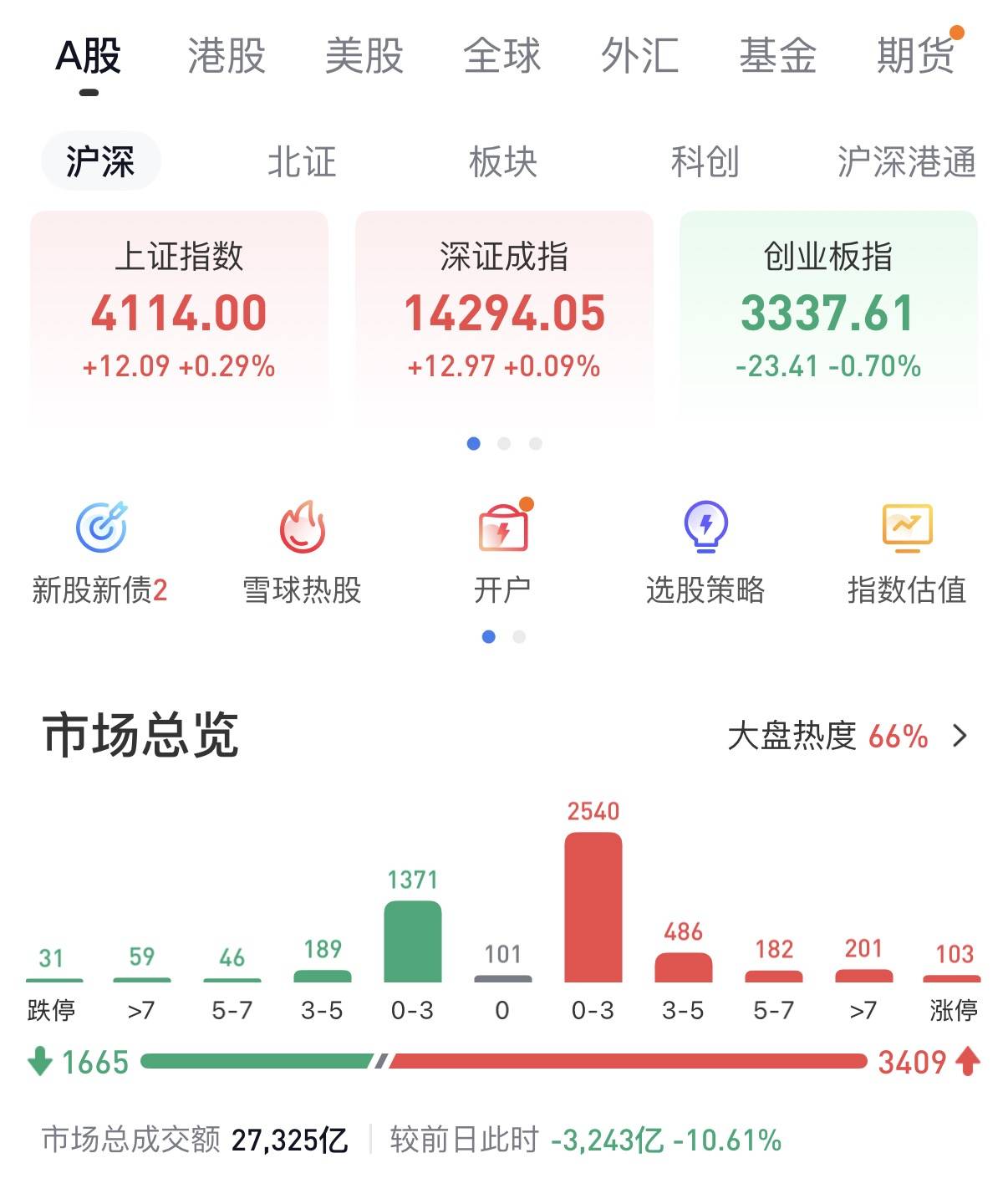
Core Viewpoint - The Chinese capital markets are exhibiting divergent trends, with A-shares showing resilience while Hong Kong stocks are under pressure, reflecting significant changes in capital flows and market sentiment at the start of 2026 [3][4]. A-Share Market Performance - The A-share market demonstrated a mixed performance with the Shanghai Composite Index rising by 0.29% to close at 4114.00 points, while the Shenzhen Component Index increased by 0.09% and the ChiNext Index fell by 0.70% [3]. - Over 3500 stocks in the A-share market rose, indicating a positive earning effect despite a significant decrease in trading volume to 2.71 trillion yuan, suggesting cautious entry of new funds [4]. - The electric grid equipment sector showed strong performance due to a projected investment of 4 trillion yuan during the 14th Five-Year Plan, a 40% increase from the previous plan, providing robust support for the entire industry chain [4][5]. Sectoral Analysis - The commercial aerospace sector is gaining momentum as several companies initiate IPO processes, indicating a shift towards capitalized and scaled development [5]. - The robotics sector is closely linked to the global AI wave and domestic manufacturing upgrades, while the tourism and hotel sectors are benefiting from anticipated consumer recovery during the Spring Festival [5]. - Conversely, previously popular themes, particularly AI applications, are experiencing a significant decline due to regulatory warnings against excessive speculation, leading to a market shift towards performance-driven and value investments [5][6]. Hong Kong Market Dynamics - The Hong Kong market is facing greater pressure, with the Hang Seng Index dropping by over 1%, primarily due to weak performances in major technology and financial stocks [6][7]. - The decline in technology stocks may be attributed to global valuation adjustments and investor reassessment of growth prospects for major internet companies, while financial stocks are under pressure due to concerns about macroeconomic recovery and interest rate environments [6][7]. - Despite the downturn, some sectors like aviation stocks are performing well, with China Eastern Airlines seeing a price increase of over 9% due to optimistic expectations regarding supply-demand dynamics in the aviation industry [6]. Market Outlook and Investment Strategy - Analysts suggest that the current market environment is characterized by a transition towards a "slow bull" market, with regulatory measures aimed at curbing excessive speculation and leveraging risks [8][9]. - The A-share market is expected to experience structural differentiation as it moves towards a phase where company performance and industry trends become the primary focus for investment selection [9]. - For the Hong Kong market, internal recovery momentum and external factors such as U.S. monetary policy and geopolitical risks will continue to influence its performance, with long-term investors finding value in its low valuation despite short-term pressures [9].

“只买不卖”!“香港巴菲特”将四分之一的财富投入黄金
华尔街见闻· 2026-01-19 09:46
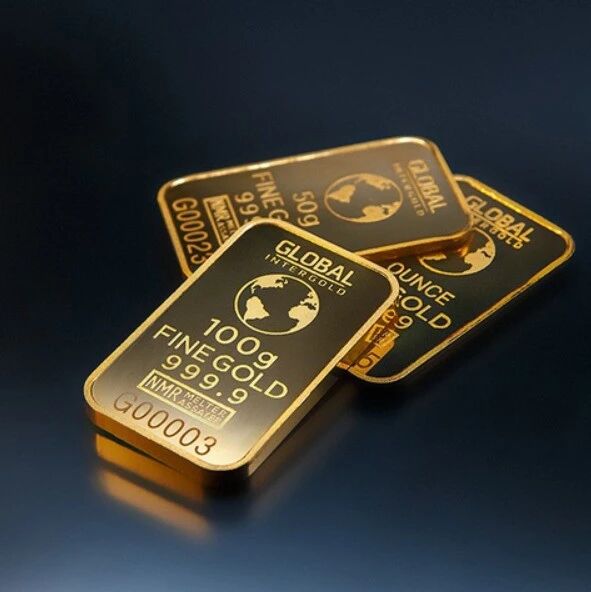
Core Viewpoint - The article highlights the investment strategy of Cheung Hai, known as the "Hong Kong Buffett," who allocates a significant portion of his wealth to gold, far exceeding the average allocation among peers, and adheres to a "buy and hold" strategy [1][4]. Group 1: Investment Strategy - Cheung Hai has allocated approximately 25% of his family office assets, totaling around $1.4 billion, to precious metals, while the average allocation in global family offices is only 2% [1][4]. - His investment in precious metals began with small amounts in 2008, leading to substantial investments in physical gold ETFs, resulting in cumulative gains of $251.1 million and a 167% increase over ten years [2][4]. - He recommends a portfolio composition of 60% stocks, 20% bonds, and 20% precious metals, primarily gold, citing geopolitical tensions as a driving force for gold and silver prices [3][4]. Group 2: Market Insights - Cheung Hai's investments are supported by historical highs in metals like gold, silver, copper, and tin, driven by anticipated monetary easing from the Federal Reserve and geopolitical tensions [3][8]. - He emphasizes the importance of physical gold storage, especially in light of recent geopolitical events, suggesting that it serves as a secure asset against potential sanctions or asset seizures [7][8]. - The article notes that silver has seen a significant price increase, doubling in value over the past year, which has attracted interest from various Asian family offices [8].
东方红资管陷信任危机:规模利润双降,三年持有期产品争议凸显 |基金观察
Sou Hu Cai Jing· 2026-01-19 09:33
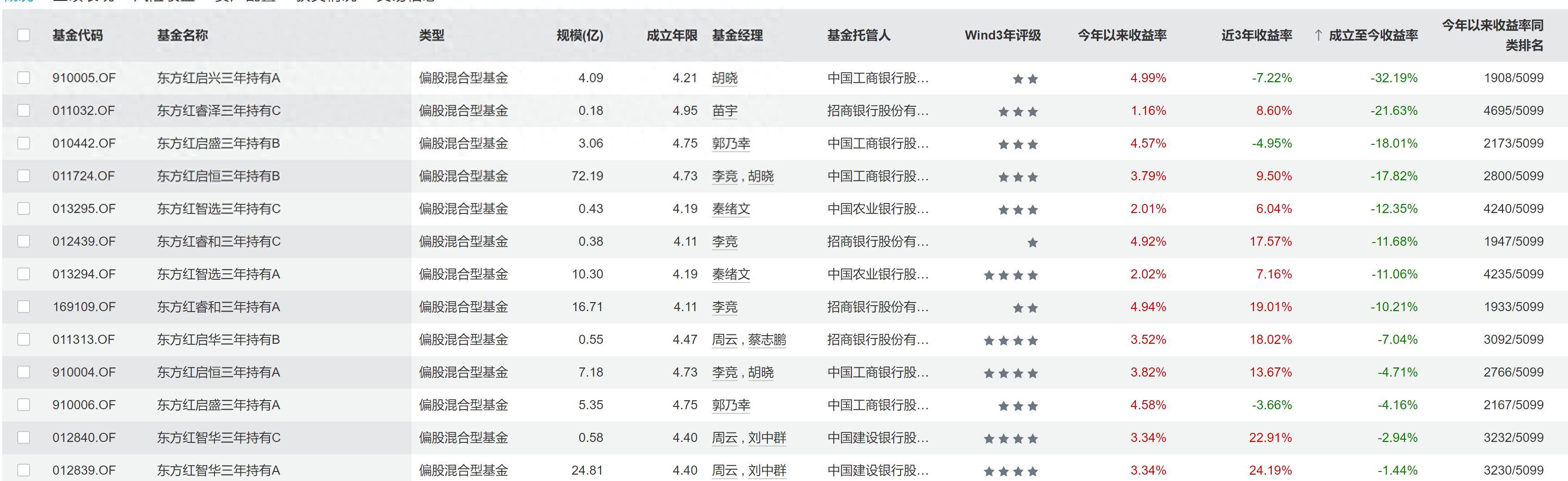
Core Viewpoint - Dongfanghong Asset Management Co., Ltd. is facing unprecedented development challenges, including a significant reduction in management scale, a sharp decline in net profit, loss of core research talent, and underperformance of three-year holding period products, which collectively threaten the trust foundation of this once-renowned asset management institution [1]. Group 1: Fund Performance - In the first half of 2025, Dongfanghong Asset Management experienced a brief surge in new fund issuance, with two products performing well: the Dongfanghong Core Value Mixed Fund raised 2 billion yuan and the Dongfanghong Yingfeng Stable Allocation FOF reached 6.573 billion yuan, setting a record for similar products in 2025 [2]. - Despite the excitement in new fund issuance, existing products are struggling, with 13 three-year holding period products failing to achieve positive returns as of the end of 2025. The Dongfanghong Qixing Three-Year Holding A product has accumulated losses of 32% [2][4]. - The disparity between the success of new funds and the poor performance of existing products reflects Dongfanghong's awkward position, where brand inertia attracts funds but insufficient core investment capabilities erode trust among existing clients [3]. Group 2: Financial Decline - Dongfanghong Asset Management's decline is characterized by structural issues rather than short-term cyclical fluctuations. The management scale has shrunk from a peak of approximately 270 billion yuan in 2021 to about 207.3 billion yuan by the end of 2025, a loss of nearly 60 billion yuan, resulting in a drop in industry ranking to around 40 [4]. - The company's profitability has also plummeted, with net profit falling from 1.438 billion yuan in 2021 to 333 million yuan in 2024, a decline of over 76%, marking the lowest level since 2016 [6]. Group 3: Talent and Investment Strategy - The decline of Dongfanghong Asset Management is closely linked to the continuous loss of core research talent. The company once boasted a strong investment research team but has faced a talent exodus, including key figures who have left to establish their own firms [11]. - The loss of talent has led to a transformation in investment style, with new fund managers frequently shifting their investment focus, diverging from the company's traditional deep value investment approach [13]. - The three-year holding period products, initially intended to promote long-term investment, have come under scrutiny due to their poor performance, particularly those launched at market peaks in 2021, which have resulted in significant losses for investors [8]. Group 4: Future Challenges - For the new head, Cheng Fei, the initial success in new fund issuance only temporarily alleviates pressure. The company faces multiple challenges, including improving the performance of underperforming products, addressing the concerns of trapped investors, rebuilding a research system independent of individual stars, and restoring its value investment philosophy to regain market trust [18].
“只买不卖”!“香港巴菲特”将四分之一的财富投入黄金
Hua Er Jie Jian Wen· 2026-01-19 07:46
Core Viewpoint - The article highlights the investment strategy of Cheung Hai, known as the "Hong Kong Buffett," who allocates a significant portion of his wealth to gold, far exceeding the average allocation among peers, and adheres to a "buy and hold" strategy without trading or using derivatives [1][2]. Group 1: Investment Strategy - Cheung Hai has allocated approximately 25% of his family office assets, totaling around $1.4 billion, to precious metals, particularly gold, while the average allocation among family offices is only 2% [1][2]. - His investment in precious metals began with small amounts in 2008, leading to substantial purchases of physical gold ETFs ten years later, resulting in cumulative gains of $251.1 million and a growth rate of 167% [1][2]. - He recommends an investment portfolio consisting of 60% stocks, 20% bonds, and 20% precious metals, primarily gold, citing geopolitical tensions as a driving force for gold and silver [1][2]. Group 2: Historical Context and Performance - Cheung Hai's significant gold purchases were funded by selling shares of his company, Wei Li Group, before a major market correction in 2015 [4]. - He launched the Value Gold ETF in 2010, storing physical gold in Hong Kong, and remains the largest shareholder of the fund, valued at approximately HKD 1.3 billion ($167 million) [4]. - The prices of gold, silver, copper, and tin reached historical highs in early 2026, driven by anticipated easing policies from the Federal Reserve, political pressures from the Trump administration, and ongoing geopolitical tensions [1][4]. Group 3: Market Trends and Insights - Cheung Hai believes that the world is entering a period of large-scale "vault migration," with wealthy Asian families increasingly moving their assets back to the region to avoid U.S. sanctions or potential asset seizures [4]. - He emphasizes that owning physical gold is a secure way to store wealth, as it does not rely on any third party [4][5]. - The article notes that some Asian family offices are bypassing intermediaries to trade physical gold directly, reflecting a growing trend in precious metal investments [5].
传奇投资者格兰瑟姆再预警:AI是终将破裂的典型泡沫 当前机会不在股市而在风投领域
Zhi Tong Cai Jing· 2026-01-19 06:47
Core Viewpoint - Legendary investor Jeremy Grantham warns that artificial intelligence (AI) is a classic market bubble waiting to burst, similar to past bubbles like the 2000 internet bubble and the 2008 financial crisis [1] Group 1: Market Analysis - Grantham emphasizes that the only consistently reliable investment strategy is to buy assets when they are cheap, aligning with classic value investing principles [1] - Current high prices in AI-related stocks, driven by capital expenditure and market enthusiasm, suggest that future returns may be lower [1] - Grantham compares the current AI boom to transformative technologies of the past, indicating that it is the basis for a "huge bubble" [1] Group 2: Investment Opportunities - Despite concerns about the AI bubble, Grantham remains optimistic about opportunities in the venture capital space rather than the public markets [2] - Grantham has previously warned that the AI sector will eventually face a collapse, similar to other transformative technologies that have experienced bubbles [2] - A Deutsche Bank survey indicated that over half of the 440 asset managers surveyed view the AI bubble as a major concern for 2026 [2] Group 3: Broader Market Concerns - Bridgewater founder Ray Dalio warns that the AI-driven surge in tech stocks is entering the early stages of a bubble [3] - Bernstein Advisory Company highlights that excess liquidity is pushing asset prices beyond fundamental support levels, indicating a "broad frenzy" in the market [3] - The current market bubble extends beyond AI, affecting cryptocurrencies, meme stocks, SPACs, and various bond categories, driven by loose monetary and fiscal policies [3] Group 4: Diverging Opinions - Some market participants, such as Bank of America strategists, claim they have not observed any signs of an AI bubble, suggesting that the global AI arms race is still in its early to mid-stages [4] - Vanguard notes that the AI investment cycle may have only reached 30%-40% of its peak, although risks of a pullback in large tech stocks are acknowledged [4] - Coatue Management's founder argues that the current AI investment wave differs from the internet bubble due to the strong cash flows of major tech companies, which are expected to invest over $500 billion in AI infrastructure [5]



幻方量化与它的“杭州效应”,悄悄赢了北上广深!2025中国私募地区榜揭晓!
私募排排网· 2026-01-19 03:20
Core Insights - The article highlights the performance of private equity firms in China, particularly focusing on the returns of private equity products in major cities by the end of 2025, with a notable emphasis on the strong performance of firms in Hangzhou [2][3]. Group 1: Overall Market Performance - As of December 2025, there are 7,518 private equity firms in China, with 5,422 located in first-tier cities (Beijing, Shanghai, Guangzhou, Shenzhen, Hangzhou), accounting for 72.12% of the total [2]. - The average returns for private equity products in first-tier cities for 2025 are as follows: Beijing 31.81%, Shanghai 31.98%, Guangzhou 33.56%, Shenzhen 34.22%, and Hangzhou 42.46% [3]. Group 2: Hangzhou Private Equity Performance - Hangzhou's private equity products have an impressive average return of 42.46%, with a high positive return rate of 98.70% among 307 products [3][6]. - The top three private equity firms in Hangzhou for 2025 are: Nongfu Private Equity, Haokun Shengfa Asset, and Yunqi Quantitative, with Nongfu leading the pack [6][12]. Group 3: Beijing Private Equity Performance - In Beijing, there are 1,242 private equity firms, with an average return of 31.81% for 679 products [13][14]. - The top three private equity firms in Beijing for 2025 are: Beijing Xiyue Private Equity, Qiaogeli Capital, and Huacheng Private Equity [14][19]. Group 4: Shanghai Private Equity Performance - Shanghai hosts 2,012 private equity firms, with an average return of 31.98% for 1,428 products [20][21]. - The leading private equity firms in Shanghai for 2025 are: Shanghai Hengsui Asset, Shanghai Yixin Private Equity, and Haiseng Fund [21][26]. Group 5: Guangzhou Private Equity Performance - Guangzhou has 441 private equity firms, with an average return of 33.56% for 275 products [27][28]. - The top three private equity firms in Guangzhou for 2025 are: Jingyan Private Equity, Hainan Xiangyuan Private Equity, and Sanhe Chuangying [28][32]. Group 6: Shenzhen Private Equity Performance - Shenzhen has 1,256 private equity firms, with an average return of 34.22% for 843 products [33][34]. - The leading private equity firms in Shenzhen for 2025 are: Qiantou Investment, Fuyuan Capital, and Zhongying Investment [34][39]. Group 7: Other Regions Private Equity Performance - Outside the major cities, there are 2,096 private equity firms, with an average return of 28.52% for 1,213 products [40][41]. - The top three private equity firms in other regions for 2025 are: Luyuan Private Equity, Lanbaoshi Fund, and Zhihua Asset Management [41][45].

时隔十年,融资保证金再收紧,释放出哪些信号?
私募排排网· 2026-01-19 03:20
Core Viewpoint - The adjustment of financing margin from 100% to 80% by the three major exchanges in August 2023 laid the foundation for a liquidity bull market a year later, with significant market participation observed in early 2026 [2]. Market Reaction - On January 14, 2026, the financing margin was raised back to 100%, leading to a sharp market adjustment, with the Shanghai and Shenzhen 300 index erasing early gains and closing down by 0.40% [2]. - The market's "V-shaped" fluctuation indicates a struggle between exuberant sentiment and rational regulation, with the regulatory intent being to conduct necessary "counter-cyclical adjustments" in response to signs of overheating [2]. Financing Margin Adjustment History - The last increase in financing margin occurred on November 14, 2015, during a period of market rebound after a leveraged bull market bubble burst, with significant increases in financing balance and trading activity [5]. - In October 2015, the financing balance increased by 126.1 billion, with daily financing buy amounts rising by 76% compared to September, prompting regulatory concerns about excessive leverage [5]. Impact on Market Liquidity - The increase in financing margin is expected to suppress market trading volume, as seen in late 2015 when trading volumes returned to previous average levels despite slight index gains [8]. - The theoretical reduction in financing purchasing power by 20% will lead to a decrease in new leveraged funds, resulting in a structural optimization of market volume rather than a simple decline in trading activity [8]. Investment Logic - The policy aims to shift market focus from speculative trading to fundamental-based investments, emphasizing the importance of earnings certainty, valuation safety margins, and sustainable dividend capabilities [10]. - Large-cap stocks are expected to outperform as the reliance on leveraged trading diminishes, with blue-chip and dividend assets likely to rise quickly to compensate for previous underperformance [10]. Differences from Previous Adjustments - The current margin adjustment is considered more moderate compared to 2015, focusing on preemptive risk management rather than reacting to a market crisis [14]. - Despite the increase in margin, the current market is characterized by a recovery in earnings structure and confidence, with the financing balance relative to market capitalization remaining lower than in 2015 [15].

“手痒式交易”与“躺平式持股” 2026开年投资者姿势各异
Zhong Guo Zheng Quan Bao· 2026-01-18 21:34
Group 1 - The core viewpoint of the articles highlights the contrasting investment strategies between long-term value investors like Duan Yongping and the short-term trading behaviors prevalent in the current market environment [1][5][6] - Duan Yongping's investment in Apple since 2011 has yielded a cumulative return of 1623.48%, showcasing the benefits of patience and long-term commitment to a single stock [2][3] - Duan's strategic timing for his investments coincided with market lows, such as after Steve Jobs' death in 2011 and during the supply chain crisis in 2022, indicating a contrarian approach to investing [2][3] Group 2 - Duan Yongping's portfolio, managed by H&H International Investment, had a market value of nearly $14.7 billion as of September 2025, with Apple and Berkshire Hathaway being the top two holdings, comprising nearly 80% of the total portfolio [3] - Berkshire Hathaway's recent investment in Alphabet, acquiring approximately 17.85 million shares, marks a significant shift in its investment strategy towards technology stocks, reflecting a broader adaptation of value investing principles [4] - The articles emphasize the need for investors to adapt to changing market conditions and technological advancements, suggesting that long-term investment strategies should be based on continuous learning and research [5][6]
银华基金方建: 芒格信徒的“变”与“不变”
Zhong Guo Zheng Quan Bao· 2026-01-18 21:27
Core Viewpoint - The article highlights the investment philosophy of Fang Jian, a fund manager at Yinhua Fund, emphasizing a balance between maintaining a steadfast investment framework and adapting to market realities to enhance investor experience [1][2]. Investment Philosophy - Fang Jian's investment framework remains unchanged, focusing on buying high-quality growth companies at reasonable prices and holding them long-term to benefit from company performance rather than valuation fluctuations [2][3]. - His investment style is characterized by seeking companies with strong growth potential, high market cap ceilings, and excellent management, while emphasizing long-term holding and minimizing short-term speculation [2][3]. Performance Metrics - As of September 30, 2025, the net value growth rate of the Yinhua Zhi Hui fund managed by Fang Jian reached 149.04%, significantly outperforming the benchmark of 32.89% [2]. - The Yinhua Integrated Circuit Fund, managed by Fang Jian, reported a net value growth rate of 73.69% over the past year, with an excess return of 15.05% relative to its benchmark [3]. Product Development - Fang Jian has introduced a new product, Yinhua Hui Xiang Three-Year Open-End Fund, aimed at achieving long-term absolute returns while improving the holding experience for investors [4]. - The focus of this product is on steady growth and consistent profitability for clients, with an emphasis on controlling volatility and drawdowns [5]. Risk Management Strategies - Fang Jian employs three key strategies for managing volatility and controlling drawdowns: 1. Conducting deep research for valuation judgments to identify potential bubbles [5]. 2. Actively responding to market sentiment to take profits when necessary [5]. 3. Establishing clear risk control standards for new investments and reassessing existing holdings to avoid emotional decision-making [5]. AI and Technology Investment - Fang Jian views the AI revolution as an inevitable transformation, addressing fundamental human productivity challenges and believes that AI's overall development does not exhibit a bubble despite localized overvaluation [7][8]. - He outlines a clear investment framework for AI, emphasizing the importance of semiconductors, data storage, and efficient communication technologies as critical components of the AI ecosystem [7]. Robotics and Pharmaceutical Sector - The robotics industry is seen as a significant physical manifestation of AI, with potential for explosive growth as leading companies achieve production breakthroughs [9]. - Fang Jian expresses optimism about China's position in the global innovative pharmaceutical industry, citing advantages in engineering talent and clinical cost efficiency, predicting substantial growth potential post-adjustment [9].
“手痒式交易”与“躺平式持股”2026开年投资者姿势各异
Zhong Guo Zheng Quan Bao· 2026-01-18 20:45
□本报记者 王昱炟 张舒琳 2026年初,投资圈被一张持仓截图刷屏,知名投资人段永平在社交平台展示的一个账户显示,其自2011 年建仓苹果以来,以近乎"躺平"的姿态持有了14年,最终斩获1623.48%的累计收益。 回顾段永平两次加仓苹果的节点,都恰逢市场情绪的相对低点。2011年10月,乔布斯离世,市场对苹果 转型前景充满疑虑,股价一度震荡下探,11月,段永平以平均13.75美元/股的价格买入13.1万股;2022 年,全球供应链危机叠加消费市场疲软,苹果股价年内暴跌超过26%,看空声浪此起彼伏,段永平逆势 小幅加仓,平均成本128.94美元/股。 据公开数据,截至2025年9月底,段永平旗下H&H International Investment持有美股组合市值近147亿美 元,持仓共11只股票。其中,持仓占比超过3%的重点股票仅6只,苹果和伯克希尔·哈撒韦一直是前两 大持仓。截至2025年9月底,H&H持有苹果的市值达89亿美元,持仓占比为60.42%,环比减持近29万 股;H&H持有伯克希尔·哈撒韦的市值为26亿美元,持仓占比为17.78%,相较二季度末增持181万股。 在绝大部分时间内,两只股票都占 ...