
报行合一

Search documents
上市险企业绩报|中国人保股价创新高 加码新能源车险出海
Xin Hua Cai Jing· 2025-08-29 07:43
Core Viewpoint - China Pacific Insurance's stock price has reached new highs due to strong operating performance and favorable policies supporting the insurance industry [2][3][4]. Group 1: Financial Performance - In the first half of 2025, China Pacific Insurance achieved premium income of 454.6 billion yuan, a year-on-year increase of 6.4% [3]. - Property insurance premium income was 323.3 billion yuan, up 3.6%, while life insurance premium income rose to 131.2 billion yuan, an increase of 13.8% [3]. - The company's investment asset scale surpassed 1.7 trillion yuan as of June 30, 2025, reflecting a growth of 7.2% since the beginning of the year [3]. Group 2: Market Environment - The insurance industry is experiencing a historical development opportunity due to China's high-quality economic growth [4]. - The competitive landscape in the insurance sector is intensifying, particularly in the auto insurance market, which has entered a phase of stock competition [5][6]. Group 3: Strategic Initiatives - China Pacific Insurance is actively expanding its overseas insurance business for new energy vehicles, with over 1,000 units insured in Hong Kong by mid-2025 [6]. - The company plans to leverage its experiences in Hong Kong and Thailand to explore markets in Southeast Asia, Europe, and South America [6]. - Non-auto insurance premium income reached 26.7 billion yuan, a year-on-year increase of 16.6%, with a comprehensive cost ratio of 97% [7].


中国太保(601601):业绩增速转正 持续推动分红险转型
Xin Lang Cai Jing· 2025-08-29 06:33
Core Viewpoint - The company reported a year-on-year increase in net profit and operating profit for the first half of 2025, driven by strong growth in new business value and stable performance in property and casualty insurance [1][2]. Financial Performance - In H1 2025, the group achieved a net profit attributable to shareholders of 27.9 billion yuan, up 11% year-on-year, and an operating profit of 19.9 billion yuan, up 7.1% year-on-year [1]. - The group's net investment yield was 1.7%, total investment yield was 2.3%, and comprehensive investment yield was 2.4%, all showing a decline compared to the previous year [1][4]. New Business Value (NBV) - The life insurance segment reported a NBV of 9.5 billion yuan, reflecting a significant year-on-year increase of 32.3% [2]. - The new business value margin increased by 0.4 percentage points to 15%, benefiting from adjustments in the preset interest rate and the integration of sales channels [2]. Property and Casualty Insurance - The property and casualty insurance segment recorded original premiums of 112.8 billion yuan, a slight increase of 0.9% year-on-year, with auto insurance premiums rising by 2.8% and non-auto insurance premiums declining by 0.8% [3]. - The combined ratio for property and casualty insurance improved to 96.3%, a decrease of 0.8 percentage points year-on-year, with the loss ratio at 69.5% [3]. Investment Strategy - The group’s investment assets reached 2.92 trillion yuan, an increase of 7% from the previous year, with a focus on increasing allocations to bonds, stocks, and funds [4]. - The bond allocation increased to 62.5% of the total investment portfolio, while stock allocation rose to 9.7% [4][5]. Future Outlook - The company adjusted its EPS forecasts for 2025-2027 to 5.2, 5.5, and 5.7 yuan respectively, with a target price of 47.5 yuan for 2025, maintaining a "recommended" rating [5].

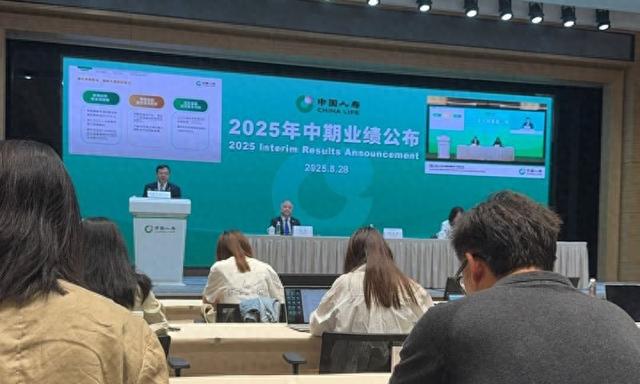
直击业绩发布会|中国人寿已获批5000万美元QDII额度,高管表示优先配置港股市场
Hua Xia Shi Bao· 2025-08-29 04:55
Core Viewpoint - The company emphasizes the importance of the Hong Kong stock market in its equity investment strategy, highlighting a significant recovery in valuations and a leading performance compared to global indices [2][7]. Financial Performance - In the first half of 2025, the company achieved total premium income of 525 billion yuan, a year-on-year increase of 7.3%, marking the highest level for the same period in five years [2]. - The net profit attributable to shareholders reached 40.931 billion yuan, up 6.9% year-on-year [2]. Strategic Initiatives - The company attributes its stable growth to three proactive strategies: strategic initiative, transformation initiative, and development initiative [3]. - The individual insurance channel generated total premiums of 400.448 billion yuan, a 2.6% increase year-on-year, while the bancassurance channel saw a 45.7% increase in total premiums and a 111.1% rise in new premiums [3]. Asset-Liability Management - The company has improved its asset-liability management, reducing the effective duration gap of new business from 2-2.5 years to 1.5 years in the first half of 2025, which strengthens its ability to manage interest rate risks [3][5]. - The cost of liabilities decreased significantly by 59 basis points year-on-year, enhancing the company's ability to manage future interest spread risks [4]. Investment Strategy - The company plans to increase its allocation to equity assets, having added over 150 billion yuan to its equity asset scale in the first half of the year, resulting in significant growth in equity investment returns [6][7]. - The company maintains a balanced and diversified investment structure, focusing on new economic sectors and high-dividend stocks [6]. Market Outlook - The company remains optimistic about the A-share market in the second half of the year, focusing on sectors such as technological innovation, advanced manufacturing, new consumption, and overseas enterprises for investment opportunities [7]. - The company has been approved for a QDII quota of 50 million USD, indicating a strategic focus on the Hong Kong stock market as a key component of its equity investment [7]. Industry Potential - The company expresses confidence in the future development of the insurance industry, citing three main reasons: vast market potential due to a large population, strong demand for health and wealth management, and clear policy support from the government [8][9].

上半年A股五大上市险企共赚近1782亿元 归母净利润“四升一降”
Zheng Quan Ri Bao· 2025-08-29 04:01
Core Insights - The five major A-share listed insurance companies reported a total net profit attributable to shareholders of 178.19 billion yuan for the first half of 2025, representing a year-on-year increase of 3.7% [1] - The overall performance of A-share listed insurance companies showed a "four increases and one decrease" trend in net profit, with notable growth in new business value for life insurance and a decline in comprehensive cost ratios for property insurance [2] Group 1: Financial Performance - China Ping An achieved the highest net profit of 68.05 billion yuan, while China Life reported a net profit of 40.93 billion yuan, up 6.9% year-on-year [2] - China Pacific Insurance's net profit reached 27.88 billion yuan, growing by 11%, and China People's Insurance's net profit was 26.53 billion yuan, increasing by 16.9% [2] - New China Life Insurance saw the highest growth rate in net profit at 14.8 billion yuan, with a year-on-year increase of 33.5% [2] Group 2: New Business Value - The new business value for life insurance companies showed significant improvement, with China Life's new business value increasing by 20.3% year-on-year to 28.55 billion yuan [2] - China Ping An's new business value for life and health insurance grew by 39.8%, with a new business value rate increasing by 9 percentage points [2] - New China Life achieved a new business value of 6.18 billion yuan, up 58.4%, while China Pacific Insurance's new business value reached 9.54 billion yuan, growing by 32.3% [3] Group 3: Property Insurance Performance - China People's Insurance's property insurance comprehensive cost ratio was 95.3%, the best level in nearly a decade [4] - China Ping An's overall comprehensive cost ratio was 95.2%, down 2.6 percentage points year-on-year, indicating strong profitability [4] - China Pacific Insurance's comprehensive cost ratio was 96.3%, a decrease of 0.8 percentage points from the previous year, reflecting improved underwriting profits [4] Group 4: Investment Strategies - Insurance companies increased their equity market investments, with China Life's public market equity scale increasing by over 150 billion yuan by mid-year [5] - China People's Insurance reported a 26.1% growth in A-share investment assets compared to the beginning of the year, with an increase in total investment asset proportion by 1.2 percentage points [5] - The focus on optimizing equity investment strategies aims to balance absolute and relative returns, as well as short-term and long-term gains [6]


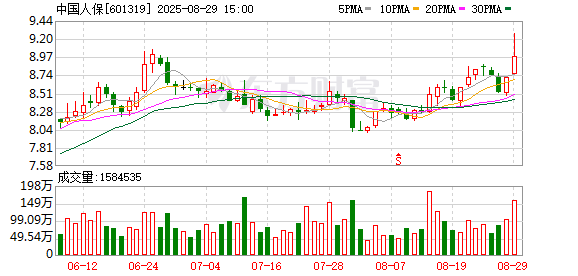
加大入市力度!中国人保:稳步提升A股投资资产规模和占比
券商中国· 2025-08-29 01:49
Core Viewpoint - China People's Insurance Company (CPIC) has shown strong performance in the first half of the year, with significant growth in net profit and insurance service revenue, leading to a rise in stock prices across its A and H shares [2][4]. Financial Performance - CPIC reported a net profit attributable to shareholders of 26.53 billion yuan, a year-on-year increase of 16.9% [2]. - Insurance service revenue reached 280.25 billion yuan, up 7.1% year-on-year [2]. - Original insurance premium income was 454.63 billion yuan, reflecting a growth of 6.4% [2]. - As of June 30, total assets amounted to 1.88 trillion yuan, with shareholder equity at 285.11 billion yuan, both showing growth [2]. Stock Performance - CPIC's H shares have increased by 209% since 2020, while its property insurance shares rose by 184%, outperforming peers and the market [5]. - The A shares have seen a 54% increase over the past year, reaching a six-year high recently [5]. Dividend Policy - CPIC plans to distribute a cash dividend of 0.75 yuan per 10 shares, a 19% increase year-on-year, totaling 3.317 billion yuan [6]. Investment Strategy - The company reported an annualized total investment return of 5.1%, with investment assets growing to 1.76 trillion yuan, a 7.2% increase from the beginning of the year [7]. - Total investment income for the first half was 41.478 billion yuan, up 42.7% year-on-year [7]. - CPIC is focusing on long-term stock investments and has received approval to establish a private fund management company [7]. Property Insurance Performance - CPIC's property insurance segment reported original premium income of 323.28 billion yuan, capturing a market share of 33.5% [8]. - The combined cost ratio improved to 95.3%, the best level in nearly a decade, with underwriting profit increasing by 53.5% to 11.699 billion yuan [8]. Non-Motor Insurance Outlook - The company anticipates improvements in non-motor insurance performance due to regulatory changes expected to be implemented in the fourth quarter [9]. International Expansion - CPIC is expanding its overseas insurance business, particularly in the electric vehicle insurance sector, with successful entries into Hong Kong and Thailand [10]. - The company aims to leverage the growth of Chinese electric vehicle exports to enhance its international market presence [10]. Life Insurance Growth - The life insurance segment, including CPIC Life and CPIC Health, reported a significant increase in new business value, with a 71.7% rise to 4.978 billion yuan [11]. - The bancassurance channel saw a remarkable 107.7% increase in new business value [11]. - CPIC Health achieved a premium income of 40.7 billion yuan, marking a 12.2% growth [11].

5家亏损,2家净利下滑!新三板保险中介陷窘境
Guo Ji Jin Rong Bao· 2025-08-28 16:41
Core Insights - The insurance intermediary market in China is facing significant challenges, with 5 out of 8 newly listed companies on the New Third Board reporting losses in the first half of 2025, and 2 others experiencing a decline in net profit [1][4] - The overall development model of the insurance intermediary market is considered crude, with weak competitive capabilities, necessitating innovation and diversification to meet changing market demands [1][5] Revenue Analysis - In the first half of 2025, Mintai An achieved a revenue of 358 million yuan, marking a year-on-year increase of 1.82%, while Chenganda reported a revenue of 310 million yuan, with a growth rate of 23.11% [3] - Other companies like Zhongheng Insurance, ST Chuangyue, and Yizheng Insurance reported revenues below 100 million yuan, with Zhongheng Insurance at 94 million yuan (up 15.75%), ST Chuangyue at 85 million yuan (up 19.68%), and Yizheng Insurance at 24 million yuan (up 17.25%) [3] - Two companies, Runhua Insurance and Runsheng Insurance, saw negative revenue growth, with Runhua's revenue down 2.75% to 40 million yuan and Runsheng's down 44.97% to 9 million yuan [3] Profitability Challenges - Among the 8 listed insurance intermediaries, 5 reported losses in the first half of 2025, with Chenganda transitioning from profit to a net loss of 2.98 million yuan [4] - Runsheng Insurance and Yizheng Insurance reported losses of 1.38 million yuan and 789,900 yuan, respectively, both showing an increase in losses compared to the previous year [4] - The profitability of Runhua Insurance decreased by 25% to 353,600 yuan, while Zhongheng Insurance's profit fell by 55.44% to 814,400 yuan [4] Market Dynamics - The number of listed insurance intermediaries on the New Third Board has been declining, with only 8 companies remaining, down from over 30 at the peak in 2016 [7][8] - The decline is attributed to the imbalance between listing costs and benefits, as well as increased regulatory scrutiny and competition, leading to the natural elimination of companies lacking core competitiveness [8] - Companies are increasingly opting to delist to reduce operational burdens, reflecting a broader trend of quality over quantity in the industry [8] Strategic Recommendations - To thrive in the competitive landscape, insurance intermediaries should focus on professional development, digital transformation, and service innovation [9] - Emphasis on talent cultivation and specialized services can enhance customer engagement and satisfaction [9] - Investment in technology, such as big data and AI, is crucial for improving operational efficiency and meeting the evolving needs of a younger customer base [9]
中国人寿(601628):NBV表现稳健,股息同比高增
HUAXI Securities· 2025-08-28 15:27
Investment Rating - The investment rating for the company is "Buy" [1] Core Views - The company reported a stable performance in its new business value (NBV), with a year-on-year increase of 20.3% to 28.546 billion yuan in the first half of 2025 [2][3] - The company achieved a total revenue of 239.235 billion yuan, reflecting a 2.1% year-on-year growth, and a net profit attributable to shareholders of 40.931 billion yuan, up 6.9% year-on-year [2] - The interim cash dividend per share is 0.238 yuan (before tax), representing a 19% increase compared to the previous year [2] Summary by Sections Business Performance - The company’s NBV grew by 20.3% to 28.546 billion yuan in H1 2025, with new single premiums increasing by 0.6% to 161.255 billion yuan [3] - The NBV margin (NBVM) improved by 2.9 percentage points to 17.7%, driven by the implementation of "reporting and operation integration" and business structure transformation [3] - Individual insurance channel NBV rose by 9.5% to 24.337 billion yuan, while new single premiums decreased by 21.6% to 73.885 billion yuan [3] - Non-individual insurance channel NBV surged by 179.2% to 4.209 billion yuan, with new single premiums increasing by 32.4% to 87.370 billion yuan [3] Investment Performance - As of the end of H1 2025, the company’s investment assets reached 7.127 trillion yuan, a 7.8% increase from the previous year [4] - The proportion of fixed-income investments decreased by 0.73 percentage points to 73.56%, while the allocation to stocks and funds increased by 1.4 percentage points to 13.62% [4] - The company achieved a net investment income of 96.067 billion yuan, up 4.0% year-on-year, with a net investment yield of 2.78% [4] Profit Forecast and Valuation - The company maintains its profit forecast, expecting revenues of 524.5 billion yuan, 537.1 billion yuan, and 545.2 billion yuan for 2025-2027 [5] - The projected net profit attributable to shareholders for 2025-2027 is 105.9 billion yuan, 108.5 billion yuan, and 110.1 billion yuan respectively [5] - The expected earnings per share (EPS) for 2025-2027 are 3.75 yuan, 3.84 yuan, and 3.90 yuan [5] - The price-to-earnings value (PEV) ratios for 2025-2027 are projected to be 0.76, 0.70, and 0.63 respectively [5]
中国人保业绩会:非车险“报行合一”有望四季度落地,“反内卷”已取得初步成效
Sou Hu Cai Jing· 2025-08-28 14:13
出品|搜狐财经 作者|汪梦婷 8月28日,中国人保召开2025年中期业绩发布会。 业绩会上,中国人保管理层对上半年经营业绩进行了解读,同时回应了"报行合一"、股价新高、巨灾损失等诸多热点问题。 今年上半年,中国人保实现归母净利润265.30亿元,同比增长16.9%。原保险保费收入4546.25亿元,同比增长6.4%;其中,财产险保费收入3233亿元,同比 增长3.6%。人身险保费收入1312亿元,同比增长13.8%。 对于行业而言,"报行合一"有助于避免行业"内卷式"竞争,于泽在发布会上对于"反内卷"也进行了回应。 | | | | - | | --- | --- | --- | --- | | 主要会计数据 | 2025年1-6月 | 2024年1-6月 | 增减(%) | | 营业总收入 | 324,014 | 292,307 | 10.8 | | 保险服务收入 | 280,250 | 261,629 | 7.1 | | 营业总支出 | 281,521 | 257,328 | 9.4 | | 保险服务费用 | 246,201 | 227,518 | 8.2 | | 营业利润 | 42,493 | 34,97 ...
中国人保于泽:非车险“报行合一”落地利于综合成本率大幅改善
Bei Jing Shang Bao· 2025-08-28 10:16
Core Viewpoint - The implementation of "reporting and execution in one" for non-auto insurance is expected to significantly improve the comprehensive cost ratio of the company and the non-auto insurance industry by regulating property insurance business and controlling premium collection risks [1] Group 1: Policy Implementation - The China Insurance Regulatory Commission has been soliciting industry opinions on the "reporting and execution in one" policy since March, with plans for it to be implemented in the fourth quarter of this year [1] - The policy aims to standardize non-auto insurance business, urging insurance companies to strictly adhere to reported insurance terms and premium rates [1] Group 2: Impact on the Industry - The anticipated policy is expected to have a limited impact on the overall annual performance but is projected to significantly enhance profitability in the non-auto insurance sector by 2026 [1] - The implementation is seen as a means to reduce costs and improve efficiency within the property insurance industry, ultimately benefiting public welfare and the real economy [1]
中国人寿(601628):分红险转型成效显著 大幅增配FVOCI股票
Xin Lang Cai Jing· 2025-08-28 00:28
Core Viewpoint - The company achieved a net profit attributable to shareholders of 40.9 billion yuan in H1 2025, representing a year-on-year increase of 6.9%, with a notable growth in new business value (NBV) of 20.3% to 28.5 billion yuan [1][2]. Financial Performance - In H1 2025, the company reported a net profit of 40.9 billion yuan, up 6.9% year-on-year, and an NBV of 28.5 billion yuan, reflecting a 20.3% increase [1][2]. - The net and total investment returns were 2.78% and 3.29%, respectively, both showing a decline of 0.25 percentage points and 0.3 percentage points year-on-year [1][3]. - The proposed interim dividend is 0.238 yuan per share (before tax) [1]. Business Growth - The company experienced a slight increase in new single premiums, which rose by 0.6% to 161.3 billion yuan, primarily driven by a significant expansion in lump-sum premiums, which surged by 306.5% to 20 billion yuan [2]. - The NBV margin improved by 2.9 percentage points to 17.7%, benefiting from adjustments in the preset interest rate and the integration of insurance and banking services [2]. - The individual insurance channel saw an NBV increase of 9.5% to 24.3 billion yuan, despite a slight reduction in the number of agents [2]. Investment Strategy - The company's investment assets reached 7.13 trillion yuan by the end of H1 2025, marking a 7.8% increase from the previous year [3]. - The allocation to equity assets increased, with stocks rising by 1.12 percentage points to 8.7% and funds by 0.28 percentage points to 4.92%, totaling 13.62% [3]. - The proportion of FVOCI stocks significantly expanded, increasing by 11 percentage points to 23% within the equity allocation [4]. Future Outlook - The company adjusted its EPS forecasts for 2025-2027 to 3.04, 3.19, and 3.25 yuan, respectively, with a target price of 50.1 yuan for 2025, maintaining a "recommended" rating [4].