
智能建造

Search documents
楼市,大消息!
Zheng Quan Shi Bao Wang· 2025-10-11 03:51
Core Viewpoint - The "14th Five-Year Plan" period has seen significant reforms and developments in the housing and urban construction sector, focusing on high-quality growth and the establishment of new mechanisms for housing supply and urban governance [2][10]. Group 1: Reforms in Housing and Urban Construction - The Ministry of Housing and Urban-Rural Development is deepening reforms in the housing and real estate sector, aiming to create a new model for real estate development and improve the housing supply system [2]. - A new mechanism linking housing, finance, and other resources is being established to enhance urban governance and construction efficiency [2][8]. - The construction sector is being transformed through the integration of new technologies and standards, promoting smart construction and a modernized building industry [2][10]. Group 2: Market Dynamics - During the "14th Five-Year Plan," a total of 5 billion square meters of new residential properties have been sold, with the secondary housing market expanding significantly, as evidenced by 15 provinces and cities where second-hand home transactions have surpassed new home sales [3][9]. - The approval amount for loans related to white-listed real estate projects has exceeded 7 trillion yuan, ensuring the delivery of commercial housing projects [9]. Group 3: Consumer Protection and Quality Standards - The Ministry is prioritizing the protection of homebuyers' rights, with over 7.5 million units of sold but undelivered homes successfully delivered [4]. - The national mandatory residential project standards have been upgraded, including 14 new requirements such as increased building height and sound insulation standards [7]. Group 4: Urban Renewal and Historical Preservation - The Ministry has initiated urban health assessments in 297 cities and over 150 counties, focusing on urban renewal and the protection of historical buildings [2][11]. - More than 70 cities are piloting historical building preservation, with numerous old districts being revitalized into cultural and tourism hubs [11]. Group 5: Future Planning and Policy Implementation - The Ministry is working on several supporting documents to implement the Central Urban Work Conference's spirit, focusing on urban renewal, governance modernization, and the preparation of the "15th Five-Year Plan" [12][13].
楼市,大消息!
证券时报· 2025-10-11 03:37
Core Viewpoint - The article discusses the achievements and reforms in the housing and urban construction sector during the "14th Five-Year Plan" period, emphasizing the need for high-quality development and the establishment of new mechanisms for housing supply and urban governance [2][11]. Group 1: Reforms in Housing and Urban Construction - The Ministry of Housing and Urban-Rural Development aims to deepen reforms in the housing and real estate sector, focusing on a new model for real estate development and improving the housing supply system [2]. - A total of 297 cities and over 150 county-level cities have initiated urban health check-ups [3]. - The cumulative sales of new residential buildings reached 5 billion square meters during the "14th Five-Year Plan" period, with 15 provinces and cities reporting higher transaction volumes for second-hand homes compared to new ones [4]. Group 2: Legal and Regulatory Measures - The Ministry is committed to protecting the rights of homebuyers, with over 7.5 million units of unsold homes being delivered to maintain buyer rights [5]. - A project white list system has been implemented, with loan approvals exceeding 7 trillion yuan for real estate projects [12]. Group 3: Quality Standards and Construction - The Ministry emphasizes five key aspects for building "good houses": standards, design, materials, construction, and maintenance [7]. - New regulations for residential projects include 14 enhanced requirements, such as increasing floor height from 2.8 meters to at least 3 meters and mandating elevators in buildings over four stories [9]. Group 4: Urban Renewal and Historical Preservation - The Ministry is exploring ways to transform old houses into "good houses" through renovation [8]. - Pilot projects for the protection and utilization of historical buildings have been launched in over 70 cities, with many historical districts becoming national-level tourist attractions [14]. Group 5: Future Planning and Governance - The Ministry plans to focus on three key areas to implement the Central Urban Work Conference's spirit: urban renewal, urban governance modernization, and the preparation of the "15th Five-Year Plan" for housing and urban construction [16].


住建部:“十四五”期间已累计完成既有建筑节能改造8亿平方米
Mei Ri Jing Ji Xin Wen· 2025-10-11 03:19
每经AI快讯,10月11日,住房城乡建设部副部长李晓龙在国新办举行的"高质量完成'十四五'规划"系列 主题新闻发布会上表示,"十四五"期间大力发展智能建造等新型建造方式,推动工程建设数字化设计, 部品部件自动化生产,施工现场智慧化精细化管理。住房城乡建设部聚焦"双碳"目标任务,大力发展绿 色建材、绿色建造、绿色建筑,推动全面执行建筑节能强制性标准,累计完成既有建筑节能改造8亿平 方米,改造后的建筑冬季室内温度可以提高3~5度。住房城乡建设部与海南省共建的海南博鳌零碳示范 区已经进入零碳运行阶段,成为向世界展示中国绿色低碳发展理念技术和实践的窗口。 ...
富煌钢构从“经验驱动”到“数据驱动”
Quan Jing Wang· 2025-10-09 02:37
Core Insights - The steel structure industry is experiencing unprecedented development opportunities driven by policies such as the "dual carbon" strategy, new building industrialization, and "Digital China" [1] - As a leading enterprise in the industry, Fuhuang Steel Structure is leveraging technological innovation, digital transformation, and the "T+EPC" model to enhance its core competitiveness and expand its service boundaries [1] Policy and Market Dynamics - Recent government policies have emphasized the development of green buildings and new building industrialization, particularly encouraging the use of steel structures in public buildings like hospitals and schools [2] - The market for steel structures is gradually expanding, prompting companies to innovate technologically to gain competitive advantages [2] Technological Innovation - Fuhuang Steel Structure has obtained over 300 patents and nearly 100 innovative technological achievements, covering key areas such as large-span space structures and prefabricated steel structures [2] - The company has successfully completed landmark projects, including the Spanish Pavilion at the Shanghai Expo and the Universal Studios Beijing [2] Special Projects - The company is focusing on high-difficulty special steel structure projects, such as the compact fusion energy experimental facility in Hefei, utilizing innovative construction processes to tackle installation challenges [3] Digital Transformation - Fuhuang Steel Structure is a pioneer in digital transformation, establishing a digital collaboration mechanism throughout the lifecycle of projects using BIM technology [4] - The company has achieved a significant reduction in period expense ratio to 10.53%, down 3.08 percentage points compared to the previous year, showcasing the effectiveness of its digital initiatives [4] Production Efficiency - The integration of BIM with manufacturing execution systems (MES) has enabled flexible production scheduling and real-time tracking of project progress, enhancing production efficiency [5][6] - The introduction of smart welding robots and CNC plasma cutting machines has improved production efficiency and product quality [6] Market Potential - The steel structure industry has a promising outlook, with projections indicating that by 2035, steel structures will account for approximately 40% of new building area in China, with annual steel usage expected to exceed 200 million tons [7][8] - Currently, China's steel structure penetration rate is only 5%-7%, particularly low in the residential sector, indicating significant market growth potential [7] T+EPC Model - Fuhuang Steel Structure is actively promoting the "T+EPC" (Technology + Engineering Procurement Construction) model, aligning with national goals to enhance industry integration and construction efficiency [8] - This model leverages the company's extensive experience in steel structure design and construction, ensuring project success through collaborative design and risk management [8] Future Outlook - The company plans to continue deepening its technological capabilities in smart construction and new materials while expanding into strategic areas supported by the government, such as rural revitalization and renewable energy [9]

富煌钢构从“经验驱动”到“数据驱动” :锚定科技创新与智能制造 掘金建筑产业转型蓝海
Zheng Quan Shi Bao Wang· 2025-10-08 14:51
Core Insights - The steel structure industry is experiencing unprecedented development opportunities driven by multiple policies such as the "dual carbon" strategy, new building industrialization, and "Digital China" [1] - As a leading enterprise in the industry, Fuhuang Steel Construction is leveraging policy guidance and market demand through technological innovation, digital transformation, and the "T+EPC" model to enhance its core competitiveness and expand service boundaries [1][12] Policy and Market Dynamics - Recent national policies have emphasized the development of green buildings and new building industrialization, particularly encouraging the use of steel structures in public buildings like hospitals and schools, injecting strong momentum into the steel structure industry [2] - The market for steel structures is gradually opening up, prompting companies to accelerate their transition from traditional manufacturing to intelligent and digital upgrades [2] Technological Innovation - Fuhuang Steel Construction has obtained over 300 patents and nearly 100 innovative technological achievements, covering key areas such as large-span spatial structures and prefabricated steel structures [2] - The company focuses on high-difficulty special steel structure projects, including the construction of the compact fusion energy experimental facility (BEST) in Hefei, showcasing its advanced construction capabilities [6][8] Digital Transformation - Fuhuang Steel Construction has established a digital collaborative mechanism centered on BIM technology, achieving a shift from "experience-driven" to "data-driven" management [9] - The company reported a decrease in its period expense ratio to 10.53%, down 3.08 percentage points compared to the previous year, indicating significant results from its digital transformation efforts [9] - The integration of digital tools in design, manufacturing, and construction processes has enhanced efficiency and quality, creating a "transparent factory" environment [10] Market Potential - The steel structure industry has a promising outlook, with projections indicating that by 2035, steel structures will account for approximately 40% of new building area in China, with an expected annual steel usage of over 200 million tons [11] - Currently, China's steel structure penetration rate is only 5%-7%, particularly in the residential sector, which is below 1%, suggesting significant growth potential [11] T+EPC Model - Fuhuang Steel Construction is actively promoting the "T+EPC" (Technology + Engineering Procurement Construction) model, which integrates core technologies into every phase of project management, ensuring project success and risk mitigation [12] - The company has successfully applied this model in various projects, including rural revitalization and municipal infrastructure, fostering a collaborative industry ecosystem [12] Future Outlook - Fuhuang Steel Construction aims to continue deepening its technological capabilities in intelligent construction and new material applications while expanding into strategic areas supported by national policies [13]
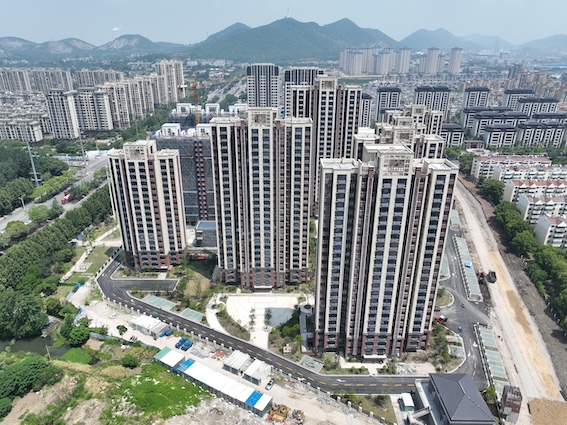
“好房子”离不开好标准好服务
Jing Ji Ri Bao· 2025-10-08 00:22
Group 1 - The construction of "good houses" is progressing, emphasizing green, low-carbon, intelligent, and safe living environments, which are crucial for meeting housing needs and stimulating domestic demand and economic growth [1] - A comprehensive standard system for "good houses" is being established, with the implementation of the national standard "Residential Project Specifications" starting from May 1, which sets baseline requirements for construction [1] - Various provinces and cities are developing local standards based on national guidelines to enhance the quality of "good houses" according to regional conditions and market demands [1] Group 2 - Demonstration projects are expected to inspire more "good house" constructions, with 38 initial projects announced in Henan, categorized into affordable housing, existing housing renovations, newly built residential projects, and ongoing constructions [2] - The importance of service quality in "good house" construction is highlighted, with a focus on improving property management and providing essential services such as elderly care and childcare [2] - Companies like Yuan Yang Group are actively engaging in community services, such as establishing elderly care stations to enhance living conditions for seniors [2] Group 3 - The construction of "good houses" is shifting the focus of the real estate and construction industries from speed and quantity to high quality, new technologies, and better services [3] - China State Construction Engineering Corporation is implementing a "good house" construction system to address housing quality issues and has recently awarded certifications to four pilot projects [3] - The design, materials, and construction methods for "good houses" are being prioritized, with ongoing design competitions and a push for the development of green building materials [3] Group 4 - The concept of "good houses" is becoming more ingrained in public perception, shifting from merely acquiring larger living spaces to emphasizing the quality and standards of the homes purchased [4]
中建六局加强协同创新——精绘绿色智造图景
Jing Ji Ri Bao· 2025-10-03 22:04
Core Viewpoint - The company is actively advancing its construction projects, focusing on technological innovation and green building practices, which have led to significant economic growth and successful project completions in both domestic and international markets [1][4][6]. Group 1: Project Developments - The Dalian Changhai Bridge project, with a total investment of approximately 7.9 billion yuan, marks the largest cross-sea bridge project in Northeast China [1]. - The Guojiaoduo Yangtze River Bridge, completed over two years ago, has become a vital transportation artery for the Chongqing region, showcasing the company's capability in handling complex engineering challenges [2][3]. Group 2: Technological Innovations - The company has developed key construction technologies, including ultra-deep anchor construction and seasonal shallow steel truss segment erection techniques, resulting in 68 technological achievements being put into practice [3]. - The company has invested over 2 billion yuan in technology development in the past year, leading to significant breakthroughs in large-scale bridge and public infrastructure projects [4]. Group 3: International Expansion - The company is involved in the Astana Light Rail Project in Kazakhstan, which is the first urban rail transit project in Central Asia built entirely with Chinese standards and equipment, covering approximately 22.4 kilometers [5][6]. - The company has expanded its overseas operations to 17 countries, with new contracts exceeding 10 billion yuan for six consecutive years, establishing a strong international presence [6]. Group 4: Green Building Initiatives - The company has introduced innovative construction technologies such as the "no-ground contact" construction method, which minimizes environmental impact during bridge construction [7][8]. - The company has developed prefabricated products for rail transit projects, achieving millimeter-level precision and reducing carbon emissions by 60% compared to traditional methods [8].
浙江近万名建设者奋战一线 长三角交通一体化再提速
Zhong Guo Xin Wen Wang· 2025-10-03 13:57
Core Viewpoint - The construction industry in Zhejiang is actively progressing during the National Day holiday, with thousands of workers dedicated to various infrastructure projects, showcasing their commitment to enhancing regional connectivity and economic development [1][5]. Group 1: Intelligent Construction - The Zhejiang Transportation Group's Ruicang Expressway project employs intelligent construction techniques, with over 910 workers focused on completing the road surface by October, aiming for operational readiness by year-end [2]. - Advanced machinery, such as three-arm rock drilling rigs and smart anchoring machines, is utilized in the construction of tunnels, significantly improving efficiency and safety [2]. Group 2: Project Milestones - At the Yongjinqu Expressway's construction site, over 1,000 workers are engaged in the critical task of beam installation for the Wuyi River Bridge, emphasizing the urgency to meet annual construction targets [3]. - The construction of 17 bridges and 3 tunnels in the Quzhou section is progressing, with a focus on achieving high-quality standards through meticulous parameter monitoring [4]. Group 3: Coastal Project Significance - The Ningbo Phase III project of the Hangzhou-Ningbo Railway involves 1,500 workers and is crucial for enhancing the coastal transportation network, with the main tower of the bridge reaching 200 meters [5]. - The ongoing construction activities are supported by a robust safety management system, ensuring the well-being of workers during the busy holiday period [5].
申万宏源:十五五产能优化与科技攻坚共振,AI应用蓄势待发(附十大行业前瞻)
Xin Lang Cai Jing· 2025-10-02 10:45
Group 1: 15th Five-Year Plan Outlook - The primary direction for industrial structure adjustment during the 15th Five-Year Plan is transformation and upgrading, with continued support for technological innovation [1] - The real estate sector is expected to stabilize, with new product development and pricing models emerging in core cities [1] - The home appliance industry will focus on smart, green, and globalized policies, aligning with future manufacturing directions [1] - The construction industry will emphasize overseas expansion and smart construction [1] - The importance of strategic resources will increase, benefiting the prices of non-ferrous metals [1] - Cement and glass industries will face strict capacity controls, focusing on profit recovery rather than just revenue [1] - The chemical industry will see a shift towards replacing outdated capacity, with a positive outlook for chemical exports [1] - The new energy sector is expected to experience favorable supply-demand dynamics, with significant growth in wind and solar power installations [1] - The coal industry will see increased resource scarcity and improved performance as prices rise [1] - The technology sector will benefit from government subsidies for AI capabilities and applications [1] - The cultural industry may see relaxed regulations for overseas expansion, positively impacting supply-side recovery [1] Group 2: AI and Computing Sector Insights - Breakthroughs in computing power and AI applications are expected to lead to a surge in the sector by 2026, with companies achieving over 10% revenue from AI [2] - Despite short-term pressures from subsidy reductions, long-term support for domestic semiconductor replacements remains strong [2] - The internet and cloud computing sectors are experiencing a positive cycle of investment and operational efficiency, with a focus on global entertainment and self-consumption [2] - The telecommunications sector is concentrating on 6G and satellite internet development, with opportunities in the IDC supply chain [2] - E-commerce is currently in a phase of competition for existing market share, but AI products are expected to offset negative impacts from subsidy reductions [2] Group 3: Q3 Earnings Outlook - The reduction in national subsidies is expected to pressure earnings in light industry, consumer electronics, and home appliances [3] - The non-ferrous metals sector is anticipated to see continued improvement in Q3 earnings due to rising domestic metal prices [3] - The pharmaceutical sector is not expected to face severe impacts from tariff policies, contrary to some investor fears [3] - The agricultural sector is projected to see weak growth, particularly in pig prices, through Q1 2026 [3] - The light industry is under pressure from both overseas demand and domestic subsidy reductions, leading to continued earnings challenges [3] - The consumer electronics sector may experience marginal declines in growth following subsidy cuts [3] - The chemical industry is expected to achieve stable growth, with a target of over 5% annual increase in value added by 2025-2026 [3] - The food and beverage sector is facing weak demand, but market expectations are low, which may provide some support [3] - The military industry is projected to see overall revenue and earnings growth, with ongoing attention to the 15th Five-Year Plan's impact [3]

打造智能建造新范式,系统性项目交付模式落地延庆
Xin Jing Bao· 2025-09-30 05:35
Core Viewpoint - The strategic cooperation between Beijing Yanqing District Government and Glodon Company Limited aims to advance the construction of an intelligent building industry innovation demonstration zone, marking a significant step towards digital and intelligent development in the region [1] Group 1: Strategic Cooperation - The partnership focuses on a systematic project delivery model (SPD) to promote innovation in the construction industry [1] - This collaboration is expected to provide a "Yanqing model" for the intelligent upgrade of the national construction industry [1] Group 2: Implementation Phases - The cooperation will be executed in three phases: 1. Project-level demonstration using Glodon's digital construction industrial base as a pilot to validate the feasibility of the SPD model [1] 2. Park-level promotion in areas like Yanqing Zhongguancun Science Park to achieve large-scale application of SPD and create an industrial agglomeration effect [1] 3. District-level replication to establish a comprehensive intelligent construction system and develop a systematic and innovative "Yanqing solution" [1] Group 3: Resource Coordination - Yanqing District will coordinate resources while Glodon will provide technical support [1] - An "Intelligent Construction Industry Innovation Alliance" will be formed with industry chain enterprises to enhance technological collaboration and business synergy [1]
