
生成式人工智能

Search documents
2026年《金融评论》关于启用新版采编系统的系列声明
Xin Lang Cai Jing· 2026-01-01 02:19
(来源:中国社会科学院金融研究所) 为优化审稿流程,提高稿件处理效率,实时记录稿件状态,《金融评论》自2026年1月1日起将正式启用新采编系统。 系统唯一网址为:https://jrpl.ajcass.com。 届时将不再接受其他任何途径的投稿。 敬请广大作者、审稿专家知悉。感谢各位一直以来的支持和信任! 2026年《金融评论》系列声明 | 1 启用新版采编系统声明 | | --- | | 2 公开数据和程序代码的说明 | | 3 生成式人工智能使用规范 | | 4 对外审专家的倡议 | | 5 审稿时间说明 | 《金融评论》关于启用新版采编系统的声明 《金融评论》关于公开数据和程序代码等资料要求的说明 本刊自2026年第1期起,要求作者提供刊发论文的数据、程序代码、数理证明过程以及因篇幅限制无法刊发的其他内容。该内容将 由编辑部存档,在条件成熟时予以公开。 关于公开数据和程序代码等资料的具体说明如下。 1. 作者需在终审录用后一周内,向编辑部提交实证分析和模型推导所需的数据和代码等资料。 2. 作者需要提交的资料如下。 (1)对于实证研究类论文,作者需提供:用于运行最终模型的数据集;使用原始数据创建得到最终 ...

“AI魔改”泛滥,整治既是约束更是导向
Nan Fang Du Shi Bao· 2025-12-31 16:02
Core Viewpoint - The National Radio and Television Administration (NRTA) is launching a month-long special governance initiative starting January 1, 2026, to address the rampant spread of "AI-modified" videos, particularly those featuring beloved children's animation characters being altered into inappropriate content [2][3]. Group 1: Background and Context - The NRTA previously issued management guidelines a year ago to require short video platforms to clean up "AI-modified" content, which has seen a significant reduction in problematic videos [3]. - In 2025, ongoing governance efforts included actions by internet authorities to rectify violations related to AI applications, with a focus on cleaning up harmful animated micro-dramas and short videos [3]. - The user base for AI image and video processing applications has surged, reaching 69.82 million and 5.75 million respectively by the second half of 2025, complicating regulatory efforts [3]. Group 2: Regulatory Focus and Content Standards - The upcoming special action emphasizes the responsibility of online video platforms and aims to clarify the boundaries for content creation, addressing issues such as misrepresentation of original works, promotion of incorrect values, and cultural appropriation [4]. - The initiative is a continuation and deepening of previous regulatory actions, with clearer guidelines on unacceptable content, which will help platforms define their boundaries [4]. - Content creators are encouraged to adhere to ethical standards in their work, as the responsibility for maintaining quality and integrity in content creation lies with both the platforms and the creators themselves [4].

AI医疗正迎来商业化拐点 机构高频调研股揭晓
Zheng Quan Shi Bao Wang· 2025-12-31 14:10
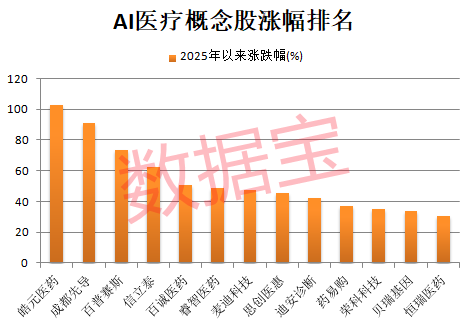
Group 1: AI Medical Industry Outlook - The AI medical industry is expected to maintain high prosperity due to continuous breakthroughs in AI technology and increasing healthcare demands [1] - The integration of AI in the medical field is becoming a core driver for industry development, with significant policy support from the government [5][4] - The global AI medical market is projected to grow at a compound annual growth rate (CAGR) of 43% from 2024 to 2032, potentially exceeding $491 billion [5] Group 2: Beijing's Support for AI in Healthcare - Beijing's health commission has introduced the "Action Plan" and "Several Measures" to support the development of AI in healthcare, focusing on core application scenarios and expanding application areas [3][4] - The "Action Plan" outlines 16 key tasks aimed at promoting collaboration between medical institutions and AI companies, with a goal to establish a robust AI industry support system by 2027 [3] Group 3: Market Performance of AI Medical Stocks - AI medical concept stocks have seen an average increase of 18.75% this year, with five stocks rising over 50% [6] - Haoyuan Pharmaceutical has the highest cumulative increase of 102.86% this year, reflecting strong market interest and institutional attention [8][6] - Yunnan Baiyao has been the most frequently researched stock, with 41 institutional surveys conducted this year, indicating significant investor interest [8]

中金快讯 | 中金公司保荐AI制药龙头「英矽智能」完成港股IPO
Sou Hu Cai Jing· 2025-12-31 13:02
Group 1 - InSilico Medicine Cayman TopCo, referred to as "InSilico", officially listed on the Hong Kong Stock Exchange on December 30, with a pre-green shoe financing scale of HKD 22.77 billion and a post-green shoe financing scale of HKD 26.19 billion, assuming full exercise of the green shoe option [2] - This IPO is the largest for an AI pharmaceutical company in Hong Kong and the largest biotech IPO since 2025, reflecting strong market interest and recognition of InSilico's leadership in the AI pharmaceutical sector [2] - The offering attracted 15 cornerstone investors, including Eli Lilly, Tencent, Temasek, Schroders, UBS, Oak Tree Capital, E Fund, and Taikang Life, with international placement oversubscribed by 26.27 times and Hong Kong public offering oversubscribed by approximately 1427.37 times [2] Group 2 - CICC has been supporting InSilico since 2022, providing comprehensive cross-market services and leveraging its expertise in the TMT and pharmaceutical sectors to effectively promote the project and engage with global investors [3] - The project exemplifies CICC's capability in facilitating global capital operations for high-tech enterprises, with plans to continue providing comprehensive financial services to enhance the global competitiveness of international high-tech companies [3] - InSilico is a global AI-driven drug discovery and development company, utilizing its proprietary Pharma.AI platform to generate over 20 clinical or IND-stage assets, with three assets licensed to international pharmaceutical and healthcare companies, totaling a contract value of up to USD 2.1 billion [3]


人工智能是旅游和酒店业的核心:驱动个性化、效率和发展
PwC· 2025-12-31 07:58
Investment Rating - The report does not explicitly provide an investment rating for the tourism and hospitality industry, but it highlights significant opportunities for growth and transformation through AI adoption. Core Insights - The tourism and hospitality industry is undergoing a transformation driven by artificial intelligence (AI), which is redefining competition, operations, and growth [6][7]. - AI is seen as a strategic enabler that enhances efficiency, sustainability, and innovation, allowing for personalized customer experiences and improved resource management [7][8]. - The report identifies a significant gap between AI adoption and full-scale implementation, with only 3% of respondents achieving enterprise-wide deployment, indicating substantial room for growth [12][19]. Summary by Sections 01 - Executive Summary & Key Findings - The research provides a clear and actionable roadmap for three main stakeholder groups in AI adoption: policy and destination management, operators, and intermediaries [15]. - AI is positioned as a core component of the 2030 vision in Saudi Arabia, aiming to increase tourism's contribution to GDP from 3% to 10% [8]. 02 - A Transforming Sector: Challenges and Opportunities in Tourism and Hospitality - The industry faces a "perfect storm" of challenges, including rising costs, geopolitical uncertainty, and environmental pressures, which accelerate the need for innovation and resilience [25]. - AI presents transformative potential by helping the industry reduce costs, generate revenue, and reshape customer experiences [25]. 03 - Survey Results: Need for Better Integration - 94% of regional tourism and hospitality leaders have begun experimenting with AI, but only 3% have achieved full-scale implementation, highlighting a significant opportunity for broader adoption [32][33]. - 63% of respondents are using or planning to use AI embedded in core hotel systems, indicating a shift towards integrating AI into operational frameworks [35]. 04 - Avoiding Pitfalls: What Not to Do When Implementing AI - 77% of respondents believe AI will create new roles and job functions in the next five years, emphasizing a shift towards a collaborative human-machine model [63]. - Organizations must avoid viewing AI as an add-on and instead integrate it into existing workflows to achieve measurable ROI [67]. 05 - What Tourism and Hospitality Leaders Need to Consider - The future of the industry will depend on how effectively technology is combined with human empathy and innovation [76]. - Leaders should focus on projects that quickly demonstrate ROI, ensuring data quality and relevance to transform AI from a buzzword into a business multiplier [86].
你是自己的第一作者
Xin Lang Cai Jing· 2025-12-30 17:06
Core Insights - The article reflects on the rapid changes and significant events that have shaped the world over the past 25 years, highlighting the acceleration of technological advancements and the disruption of established norms and values [2][3][4]. Group 1: Technological Advancements - The emergence of generative artificial intelligence, along with advancements in biomedicine, quantum communication, and brain-machine interfaces, signifies a transformative period in human technology [3]. - These advancements are leading to a "surge" in scientific and technological achievements, suggesting a potential elevation of human civilization to a new level [3]. Group 2: Societal and Economic Challenges - The acceleration of change brings both excitement and anxiety, particularly regarding the future and the stability of established norms [4]. - The article discusses the structural challenges facing the economy, including shifts in industry structure, debt rates, and external environments, which require new development models [4]. Group 3: Individual and Collective Action - The article emphasizes the importance of individual action in addressing societal anxieties and improving expectations, suggesting that change must come from proactive choices rather than reliance on external factors [5][6]. - It highlights the need for individuals across various sectors to engage actively in shaping their futures, reinforcing the idea that personal agency is crucial in navigating the complexities of modern life [5][6].

江小涓最新演讲:科创浪潮下的金融业
Xin Lang Cai Jing· 2025-12-30 12:59
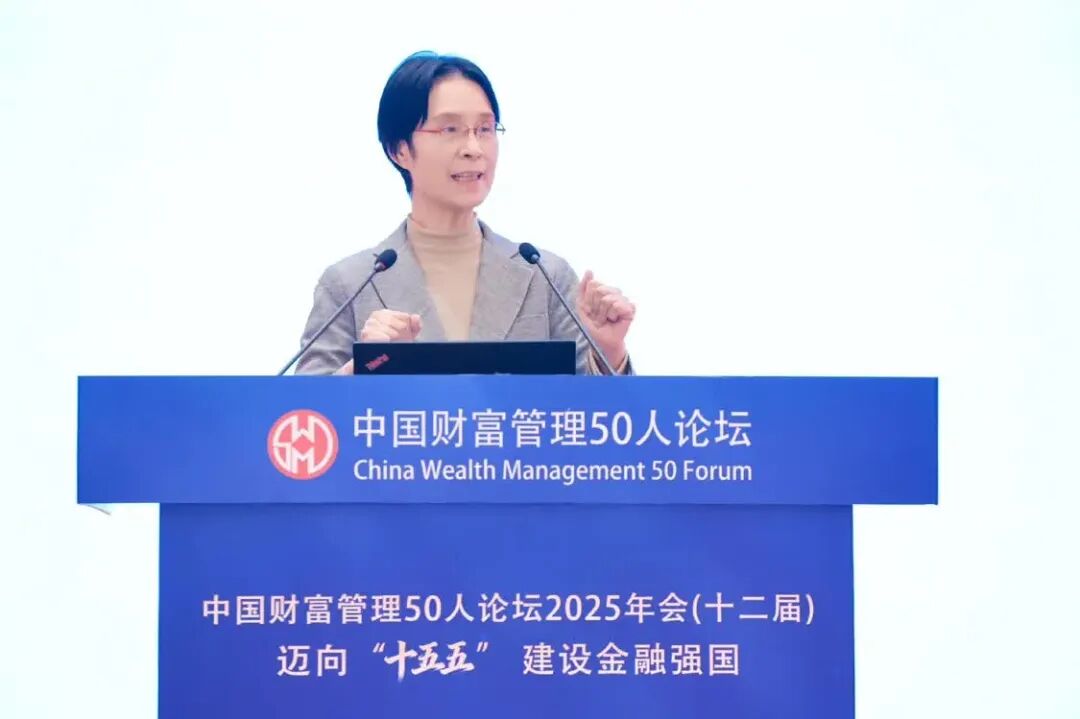
Core Insights - The financial industry in China is poised for significant opportunities during the "14th Five-Year Plan" period, driven by advancements in technology and innovation [2] - The emergence of new technologies is a certainty, and the growth of science and technology enterprises is crucial for attracting investment in the sector [2] - Traditional financial institutions face challenges as new investment forces reshape the landscape of science and technology investment [3] Investment Landscape - Traditional venture capital (VC) and private equity (PE) are seeing decreased activity, while corporate venture capital (CVC) is becoming a key player in funding innovative projects [3] - Major tech companies, both domestic (like Alibaba and Tencent) and international (like Musk's companies), are actively investing in significant science and technology projects [3] - Government venture capital (GVC) is also participating in new project investments, but the effectiveness of project selection remains to be seen [3] Financial Transformation - The financial industry must accelerate its transformation in marketization, digital intelligence, and internationalization to enhance competitiveness [4] - Marketization focuses on improving the efficiency of financial resource allocation and ensuring a safe market environment for participants [4] - The digital intelligence transformation has positioned China's financial sector as a global leader, with significant advancements in digitalization prior to 2022 [4] International Opportunities - There is a broad commercial prospect for the coordinated "going out" of China's industries and financial sectors, particularly in developing countries with lower labor costs [5] - China's strong industrial and technological competitiveness can facilitate the transfer of excess capacity and stabilize domestic investor returns [5] - The solar photovoltaic industry exemplifies the potential for successful international expansion, with significant export growth expected from 2024 to 2025 [5] Conclusion - The financial industry must maintain a sense of urgency and leverage the "three transformations" to allocate substantial funds and capitalize on the influx of science and technology enterprises [5]
谈谈2025年人工智能现状及发展趋势分析
3 6 Ke· 2025-12-30 09:18
Core Insights - The article discusses the current state of artificial intelligence (AI) development and trends for the upcoming year, highlighting a paradox of high adoption rates but low conversion rates in enterprises [1][2]. Group 1: Adoption and Impact - 88% of organizations report regular use of AI in at least one business function, up from 78% the previous year [4] - Only 39% of organizations attribute revenue growth to AI [4] - Over 90% of enterprises are attempting to adopt AI solutions to maintain competitiveness, yet 95% of organizations see no measurable return from generative AI investments [5][6]. Group 2: Challenges in Implementation - Major barriers to scaling AI include organizational and cultural inertia rather than technical issues, with many organizations failing to redesign workflows [9] - Approximately 80% of organizations have conducted pilot projects, but only about 5% of custom enterprise AI tools make it to production [9][10]. - Psychological safety significantly impacts the success of AI projects, with 83% of leaders acknowledging its importance [10]. Group 3: Successful Companies - Only about 5% of companies successfully implement AI, often treating it as a strategic priority managed by top leadership [16]. - Successful organizations undergo operational transformation and redesign workflows to maximize AI's inherent capabilities [17]. - They focus on establishing a culture that reduces resistance to new technologies and emphasizes productivity enhancement rather than immediate layoffs [19]. Group 4: Industry Adoption Rates - The highest adoption rates for AI are found in technology, sales and marketing, media and entertainment, and e-commerce sectors [24]. - Other notable sectors include professional services, finance, healthcare, and telecommunications [25]. Group 5: Future Trends - Global AI spending is expected to approach $1.5 trillion by 2025, driven by applications in consumer products and data center infrastructure [52]. - By 2030, AI is projected to contribute up to $15.7 trillion to the global economy, with significant contributions from regions like India [53]. - The rise of autonomous AI agents capable of independent reasoning and execution of multi-step tasks is anticipated to transform operational risks and governance requirements [42].
第一财经新年致读者:你是自己的第一作者
第一财经· 2025-12-30 06:46
Core Viewpoint - The article reflects on the rapid changes and disruptions experienced over the past 25 years, emphasizing the dual themes of "acceleration" and "disruption" in various fields, particularly in technology and societal structures [4][5]. Group 1: Acceleration and Disruption - The emergence of generative AI technologies, such as ChatGPT, alongside advancements in biomedicine, quantum communication, and brain-machine interfaces, signifies a transformative phase in human technological achievements [4][5]. - The acceleration of human progress is likened to a boiling point that could elevate civilization to a new dimension, while the disruption challenges established norms and moral foundations in global governance and social order [5]. Group 2: Economic and Structural Challenges - The new quarter-century presents challenges related to industrial structure, debt rates, birth rates, and external environments, necessitating a reevaluation of development models [5]. - The article discusses the need for either macroeconomic policies to ensure stability or deeper reforms to unlock potential, highlighting the importance of addressing structural issues through comprehensive reforms [5][6]. Group 3: Individual Response and Agency - Individuals are encouraged to confront the mixed feelings of excitement and anxiety brought about by rapid changes, emphasizing the importance of proactive choices and actions in shaping one's future [6][7]. - The article posits that every small improvement in individual circumstances contributes to a larger collective force, underscoring the significance of personal responsibility and agency in navigating the complexities of the modern world [7].

第一财经新年致读者:你是自己的第一作者
Di Yi Cai Jing· 2025-12-30 05:42
Group 1 - The core sentiment of the current era is characterized by "acceleration" and "disruption," driven by advancements in generative AI, biotechnology, quantum communication, and other fields, indicating a significant shift in human technological achievements [2][3] - The economic landscape is facing structural challenges due to new variables such as changes in industry structure, debt rates, birth rates, and external environments, necessitating a reevaluation of development models [3][4] - The need for reform and proactive individual actions is emphasized as essential for addressing structural issues and improving expectations, which can stabilize confidence in the market [4][5] Group 2 - The interplay of excitement and anxiety in economic fields reflects the dual nature of globalization and industry security, as well as the impact of AI on employment and public welfare [3] - The importance of individual agency in shaping one's future is highlighted, suggesting that personal choices and actions are crucial in navigating the complexities of the current era [5][6] - The metaphor of the "reed flower" symbolizes resilience and beauty, representing the broader narrative of the Chinese economy and its people, emphasizing the enduring spirit amidst challenges [6]