人形机器人

Search documents
AI领域趋势深度洞察报告-从蛮力到智能:2025年人工智能发展的三大核心
Sou Hu Cai Jing· 2026-02-27 22:52
AI Industry Trends - The report identifies three core trends in the AI field leading to a shift from "brute force" to "skill" in AI development, driven by algorithm innovation and the open-source wave [1][4] - The MoE architecture significantly reduces training costs, with DeepSeek and Llama 4 emerging as notable open-source models, lowering the barrier to AI usage [1][4][7] - AI is evolving from a dialogue tool to a productivity tool, with explosive growth in enterprise AI spending, leading to the mass production of AI agents and humanoid robots across various industries [1][4][22] - A global regulatory framework for AI is gradually being established, with China, the EU, and South Korea implementing relevant policies, and China outlining a "three-step" strategy to balance innovation and regulation [1][4] Trend 01: Algorithm Innovation - DeepSeek's release marks a milestone in open-source models, establishing two key principles for large models in 2025: a declaration of control processes and intent [7] - The MoE architecture allows models to activate only necessary parameters during operation, drastically reducing computational costs [10][12] - The cost of training with DeepSeek is approximately $5.57 million, compared to over $500 million for OpenAI, showcasing a significant reduction in costs [9][10] Trend 02: Exponential Growth in Enterprise AI Spending - According to a report by Silicon Valley venture capital firm Wentures, enterprise spending on generative AI is projected to grow from $11.5 billion in 2024 to $37 billion in 2025, representing a 3.2-fold increase [24][28] - This spending is primarily focused on integrating AI into actual business processes, transitioning from dialogue tools to productivity tools [24][29] - GitHub Copilot, an AI programming assistant, has seen user numbers exceed 16 million, indicating a significant shift in software development processes [26][27]


江苏宏微科技股份有限公司2025年度业绩快报公告
Xin Lang Cai Jing· 2026-02-27 21:35
Core Viewpoint - Jiangsu Hongwei Technology Co., Ltd. reported a significant increase in net profit for the fiscal year 2025, driven by the recovery in the power semiconductor industry and strategic adjustments in operations [3][4]. Financial Data and Indicators - The company achieved an operating income of 134,635.60 million RMB, a year-on-year increase of 1.13% [3]. - The net profit attributable to the parent company was 1,743.30 million RMB, reflecting a substantial growth of 220.50% compared to the previous year [3]. - The net profit after deducting non-recurring gains and losses was 913.52 million RMB, up by 126.88% year-on-year [3]. - Total assets at the end of the reporting period were 268,044.19 million RMB, an increase of 3.03% from the beginning of the period [3]. - The equity attributable to the parent company was 108,668.02 million RMB, growing by 1.03% [3]. Operating Performance and Financial Condition - The recovery in the power semiconductor industry positively impacted the company's performance, with increased demand for new power electronic devices in sectors such as renewable energy and AI servers [4]. - The company optimized its product and customer structure, which contributed to improved profitability [5]. - A significant reduction in asset impairment losses due to the clearance of long-term stagnant inventory also enhanced net profit [5]. - The company plans to focus on enhancing product competitiveness and expanding into high-performance power modules in emerging fields like AI server power supplies and controlled nuclear fusion [4][5].

中德经贸精彩开启“下一程”
Xin Lang Cai Jing· 2026-02-27 20:32
Group 1 - German Chancellor Merz's visit to China signals strong long-term cooperation between Germany and China, with over 10 cooperation agreements signed in various sectors including industry, logistics, and energy [1] - Jiangsu province is highlighted as a key area for German investment, with actual investment from Germany reaching $810 million in 2022, a 29.7% increase year-on-year [1] - The collaboration includes innovative projects such as humanoid robots, zero-carbon parks, and innovation centers, indicating a focus on future industries [1][2] Group 2 - Schaeffler, a leading automotive parts manufacturer, plans to invest 1 billion yuan in Jiangsu to develop a humanoid robot factory, integrating advanced technologies like AI and 5G [2] - The project aims to enhance the domestic supply chain for new energy vehicles and create a positive cycle of technology breakthroughs and industrial applications [2] - The Taicang High-tech Zone is collaborating with the German International Cooperation Agency to establish a zero-carbon park, building on previous energy efficiency initiatives [3] Group 3 - Jiangsu has signed an agreement with the Rhine-Neckar region of Germany to establish an innovation center, focusing on green economy, digital intelligence, and health sectors [4] - The center will connect German innovation resources with Chinese startups, providing comprehensive support for cross-border business operations [4] - German companies are increasingly investing in Jiangsu, with Siemens investing 2 billion yuan in a smart motor factory and Bosch upgrading its R&D center in Nanjing [6] Group 4 - The trend of "headquarterization" and "R&D" reflects the shift of German companies in Jiangsu from manufacturing bases to innovation hubs, driven by the pursuit of certainty and stable market conditions [7] - The collaboration between Jiangsu and Germany has evolved from traditional trade to deep integration of industrial and innovation chains, exemplified by partnerships like that of Mercedes-Benz and Momenta [8] - DHL has established a direct cargo route from Wuxi to Leipzig, further enhancing logistics capabilities and supporting Jiangsu's manufacturing exports [8]
未来十大趋势,大运来了!
Sou Hu Cai Jing· 2026-02-27 17:04
Group 1 - Autonomous driving technology is expected to experience explosive growth in the next one to two years, significantly improving urban travel experiences by alleviating traffic congestion caused by human driving differences [3] - The development of humanoid robots is set to liberate humans from tedious and dangerous labor, with potential applications in logistics and elder care, combining AI and precision mechanics for enhanced emotional interaction [3] - AI large models are showing capabilities that may surpass human experts in drug development and target discovery, with the potential to tackle complex diseases like cancer and ALS in the next five to ten years, possibly extending human lifespan to 120 years [3] Group 2 - AI is evolving towards general large models, expected to replace over 90% of existing applications across various service scenarios, necessitating increased regulation and value guidance [5] - The demand for raw materials such as copper, aluminum, and rare earths will continue to rise due to the reliance of AI on powerful computing, with China's green electricity capacity surpassing coal power and a surge in energy storage needs [5] - The real estate sector is entering a new development phase characterized by significant "80/20" differentiation, where core urban assets remain strong while 80% of the population continues to leave cities, leading to a lack of fundamental support in those markets [5] Group 3 - The aging population and declining birth rates are accelerating trends in the "silver economy" and health industries, while also driving the rapid rise of pet economy, single economy, emotional value consumption, and cost-effective consumption [7] - The complex global geopolitical landscape is intensifying great power competition, leading to a new arms race and highlighting the importance of strategic resources such as aerospace, communication satellites, and rare earths in modern warfare [7] - Biotechnology is revolutionizing the food industry with scalable production of basic nutrients like mushroom protein and synthetic starch, potentially replacing traditional agriculture and contributing to carbon neutrality and ecological restoration [7] Group 4 - China has established a dominant position in global photovoltaic, new energy vehicles, and power battery sectors, with future advancements in domestic AI large models, GPU chips, and super applications expected to accelerate breakthroughs and form a more complete self-controlled industrial chain [9] - The article aims to provide trend references based on public information and industry observations, emphasizing the importance of maintaining a learning and open mindset to better understand changes and embrace the future [9]

绝对稀缺资源!吃透【稀土+小金属】产业链及 5 大核心公司
Sou Hu Cai Jing· 2026-02-27 14:20
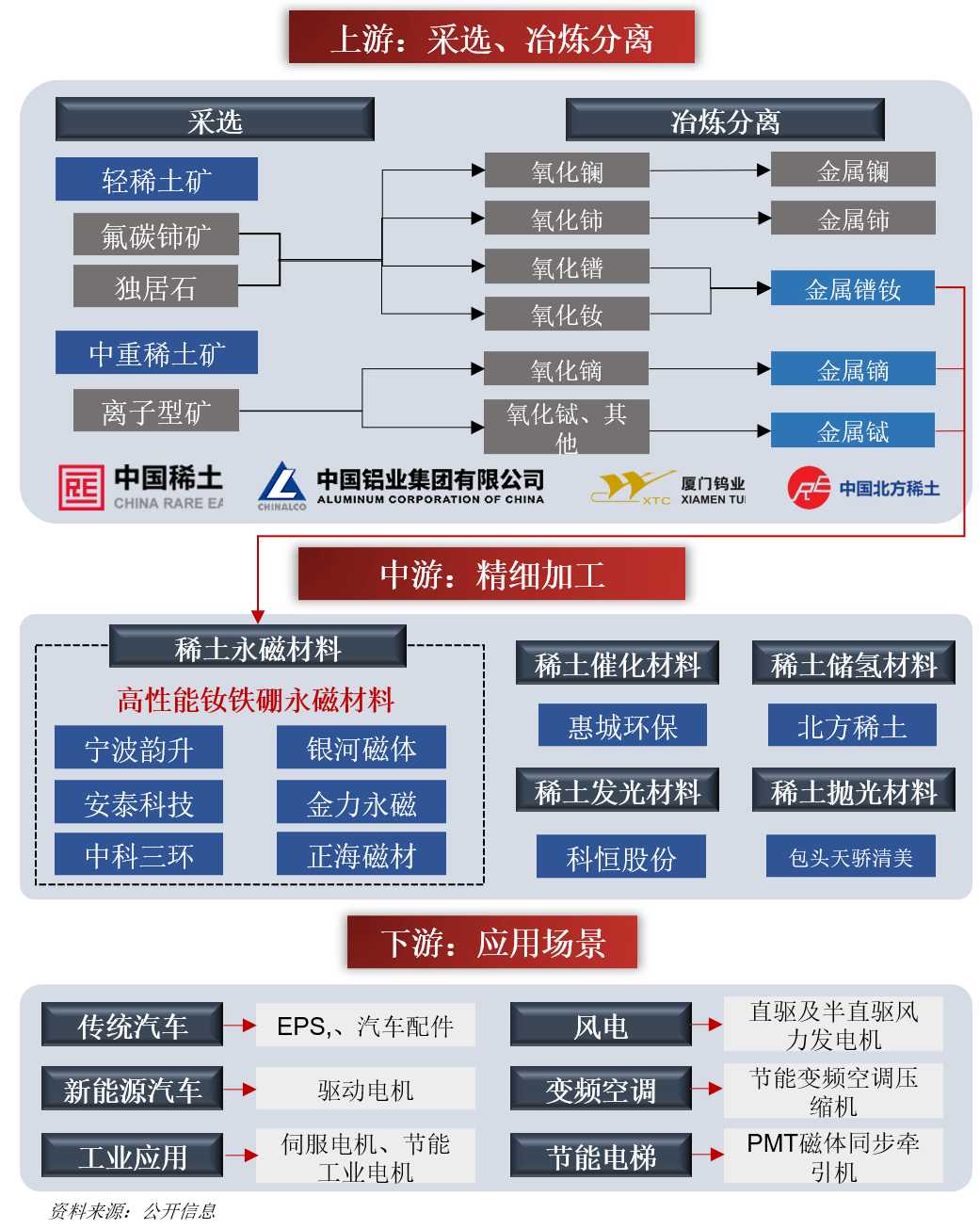
Core Insights - The article emphasizes that while there are concerns about AI replacing jobs, the essential resources for AI operation, such as rare earth elements and minor metals, are irreplaceable and finite, making companies that control these resources stable investments in the tech wave [1]. Industry Overview - Rare earth elements consist of 17 metals, including 15 lanthanides, scandium, and yttrium, known for their unique electronic structures that enhance magnetic, optical, and electrical properties, making them critical for various high-tech applications [3][4]. - The global rare earth reserves exceed 85 million tons, with China holding 44 million tons, accounting for 51.59% of the total, indicating a highly concentrated resource distribution among the top four countries [5]. Supply Chain Analysis - China dominates the rare earth separation market, with projections indicating that by 2025, it will account for 63% of light rare earth production and 16% of heavy rare earth production, totaling nearly 90% of global separation capacity [8]. - Despite being a major rare earth reserve holder, China remains a key importer of rare earth concentrates due to its technological advantages in the refining and separation processes, reinforcing its monopolistic position in the global supply chain [12]. - The political instability in Myanmar poses significant uncertainties for rare earth supply, as it is a major source for China, contributing 64.18% of its rare earth imports [14]. Demand Dynamics - The demand for neodymium-iron-boron magnets is diverse, with significant applications in electric vehicles (18% of demand), home appliances (8.8%), and industrial robots (10%) [24]. - The global sales of electric vehicles are projected to grow from 3.31 million units in 2020 to 23.54 million units by 2025, reflecting a compound annual growth rate of 48.05%, which will drive the demand for high-performance neodymium-iron-boron magnets [27]. - The industrial robotics sector is expected to maintain stable growth, with global installations increasing from approximately 420,000 units in 2018 to around 550,000 units in 2022, providing consistent demand for permanent magnets [32]. Key Companies in Rare Earth and Minor Metals - Shenghe Resources focuses on rare earth refining and processing, with a significant global resource footprint and a projected net profit increase of 650.09% in the first half of 2025 [36]. - China Tungsten High-Tech operates across the tungsten value chain, with a resource reserve of 1.23 million tons, and anticipates a production increase in tungsten concentrates to approximately 25,000-26,000 tons in 2025 [37]. - Luoyang Molybdenum is a leading producer of copper and cobalt, expecting a net profit of 20-20.8 billion yuan in 2025, driven by its mining operations in the Democratic Republic of Congo [40]. - Huayu Mining specializes in non-ferrous metal mining, with a focus on antimony and zinc, projecting a production of over 2,000 tons of antimony concentrates in 2025 [42]. - Baowu Magnesium is a leader in magnesium alloy production, benefiting from the lightweight trend in electric vehicles, with an expected output of over 100,000 tons of magnesium alloys in 2025 [43].
92亿泰铢落地!5家中国巨头落户泰国,打造海外首个人形机器人核心基地
Sou Hu Cai Jing· 2026-02-27 13:12
Group 1 - The Thai Investment Promotion Committee (BOI) has approved five leading Chinese companies to invest a total of 92.2 billion THB in building key component factories for humanoid robots in Thailand, marking a significant milestone in Sino-Thai technological cooperation and positioning Thailand at the forefront of the global robotics industry [1][3] - The five approved companies are all core suppliers to major global players like Tesla, Apple, and Huawei, specializing in critical technologies for humanoid robots, including "muscles, bones, and joints" [3] - The investments include: - Hangzhou Senpin Electromechanical: 21.2 billion THB for precision components in Chonburi - Better Technology: 16.7 billion THB for core transmission parts, with an additional 30 billion THB project pending approval in Chonburi - Sanhua Intelligent Drive: 18 billion THB for joint actuators in Chonburi - Top Technology: 9.3 billion THB for motion control devices in Nakhon Nayok - Xusheng Group: 27 billion THB for robot frames in Rayong [3] Group 2 - This investment is expected to create 1,000 high-skilled jobs, enhance local employment for engineers and technicians, and lead to an annual procurement of 45 billion THB in raw materials, thereby upgrading the local supply chain [9] - The factories will be located in the Eastern Economic Corridor (EEC) of Thailand, which aims to establish the country as a high-end manufacturing hub in Southeast Asia [9] - The humanoid robot industry is projected to experience a commercial explosion by 2027, with a market size expected to reach over 100 billion USD by 2030, growing at an annual rate exceeding 100% [11] Group 3 - The collaboration between China and Thailand is evolving from traditional manufacturing in the automotive sector to high-end manufacturing in artificial intelligence and robotics [13] - The establishment of these five leading companies is anticipated to attract more upstream and downstream enterprises, positioning Thailand as a core production base for humanoid robot components within the next 3-5 years [13] - This development signifies the formation of a new robotics industry landscape in Southeast Asia, characterized by "Chinese technology + Thai manufacturing + global market" [13]

2026年3月A股及港股月度金股组合:节后表现值得期待-20260227
EBSCN· 2026-02-27 10:22
Overall Research - The A-share market showed a mixed performance in February, with major indices mostly rising, particularly the CSI 1000 which increased by 2.9%, while the Sci-Tech 50 saw a decline of 1.6% [1] - The Hong Kong stock market experienced a pullback in February, with the Hang Seng Index falling by 3.7% and the Hang Seng Technology Index dropping by 10.6% [1] - The report anticipates a seasonal rebound in market trading activity post-Chinese New Year, setting a positive foundation for future market performance [1] A-share Insights - The report suggests focusing on growth and cyclical sectors, with growth benefiting from sustained industry enthusiasm and increased risk appetite among investors during the spring market [2] - Key sectors to watch include humanoid robots and the AI industry chain, which are expected to see significant catalytic events [2] - Cyclical sectors are anticipated to benefit from strong commodity prices and supportive policies, with recommendations to focus on resource products and offline service sectors [2] Hong Kong Stock Insights - The Hong Kong market is expected to remain volatile, with strong expectations for recovery in the spring, but concerns about earnings realization and foreign capital inflow persist [3] - Major internet companies are experiencing slower-than-expected profit recovery, which is impacting the overall economic environment [3] - The report recommends a "barbell strategy" for portfolio allocation, combining high-dividend defensive sectors with growth sectors such as semiconductor equipment and AI computing [3] - The report highlights the potential for a structural market recovery driven by domestic capital inflow and policy support [3] A-share Recommended Stocks - The recommended stocks for March 2026 include: - Zhongji Xuchuang (中际旭创) - Communication - Keda Xunfei (科大讯飞) - Computer - Shenghong Shares (盛弘股份) - Power Equipment - Jereh Group (杰瑞股份) - Machinery - Nanjing Bank (南京银行) - Banking - Hualing Steel (华菱钢铁) - Steel - Chuanheng Shares (川恒股份) - Basic Chemicals - China Jushi (中国巨石) - Building Materials - Sun Paper (太阳纸业) - Light Industry Manufacturing - Haier Smart Home (海尔智家) - Home Appliances [3][6] Hong Kong Recommended Stocks - The recommended stocks for March 2026 include: - Hon Teng Precision (鸿腾精密) - Communication - Huiju Technology (汇聚科技) - Power Equipment - Sinopec Oilfield Service (中石化油服) - Oil and Petrochemicals [4][7]






进出口银行多家省分行行长调整
Xin Lang Cai Jing· 2026-02-27 09:26
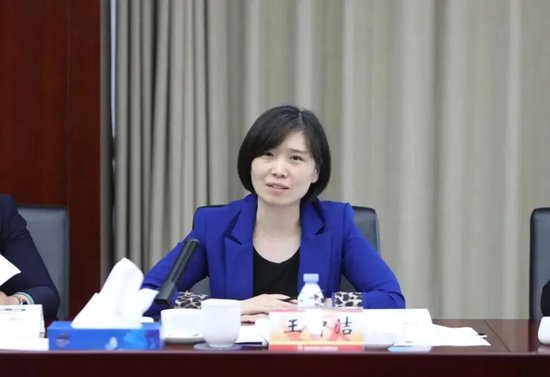
Group 1 - The core point of the article is the recent personnel adjustments at the Export-Import Bank of China, including new appointments for provincial branch leaders and department managers at the headquarters [1][18][30] - In January 2026, the Export-Import Bank appointed new party secretaries and general managers for six provincial branches, including Jilin, Hebei, Inner Mongolia, Shanxi, Guizhou, and Liaoning [1][18] - The adjustments are part of a broader strategy to optimize resource allocation, enhance risk management, improve operational efficiency, and cultivate versatile talent within the bank [11][26] Group 2 - Key personnel changes include Wang Zhijie, the current head of the Beijing branch, being proposed for the position of General Manager of the Internal Control and Compliance Department [3][20] - Liu Ya, the head of the Guangdong branch, is proposed to take over as the head of the Beijing branch [5][21] - Zhou Liangqiu, the head of the Tianjin branch, will become the Party Secretary and head of the Guangdong branch [7][21] - Zhang Ju, the Deputy General Manager of the Special Financing Department, is appointed as the Party Secretary of the Tianjin branch [9][24] - Huang Huali, the head of the Ningbo branch, is proposed to be the General Manager of the Financial Institutions Department [11][23] - Ji Chun, the Deputy General Manager of the Financial Institutions Department, is set to take over as the head of the Ningbo branch [13][26] Group 3 - The Export-Import Bank has 32 domestic branches and 8 overseas branches and representative offices, covering 28 provincial administrative regions [11][26] - The bank underwent structural reforms in the second half of 2025, establishing new departments, including the Special Financing Department and the Financial Institutions Department [14][27] - The bank's mission is to support China's foreign economic trade and investment development, contributing to the Belt and Road Initiative and modern industrial system construction [30]
国金证券:具身智能迫近临界点 关注人形机器人四大潜在商业化场景
智通财经网· 2026-02-27 09:01
Core Insights - The report from Guojin Securities highlights the increasing integration of "Bots" in the CCTV Spring Festival Gala, indicating a growing trend in humanoid robots' commercial applications. The report identifies four potential commercial scenarios based on the differentiation between ToB/C customer segments and the generalization requirements of brain and cerebellum capabilities [1][2]. Group 1: Commercialization Scenarios - ToB + Brain Generalization: Scenarios such as guiding, shopping assistance, and patrols, exemplified by Xiaopeng's Iron robot in showroom tours and company front desk duties, require fluent communication and a friendly humanoid presence [1]. - ToB + Cerebellum Generalization: Specialized industry scenarios, as demonstrated by Yushutech's performance in the CCTV Spring Festival Gala, showcasing 16 robots performing complex movements with millisecond-level coordination, necessitating human-like motion control and swarm collaboration [2]. - ToC + Brain Generalization: Personal companionship scenarios, illustrated by the emotional engagement capabilities of robots in the "Grandma's Favorite" segment, focusing on language-based emotional value delivery and user data interaction [2]. - ToC + Cerebellum Generalization: Home care scenarios, as shown in the New Year microfilm, where robots perform tasks like walnut cracking and folding clothes, requiring fine motor skills and visual coordination [2]. Group 2: Advances in Embodied Intelligence - Breakthroughs in one-shot learning systems have been achieved, with Figure AI's Helix 02 enabling dexterous, long-term autonomous behavior across entire rooms, while Tesla integrates Optimus with a shared simulation model for advanced scheduling [3]. - Pre-training of brain-side models has surpassed the Scaling Law threshold, with Generalist AI's GEN-0 confirming that the activation parameter for embodied intelligence is around 7 billion, indicating that challenges are more data and engineering-related than scientific [3]. - The cerebellum side has seen significant advancements, with Skild AI's universal cerebellum demonstrating rapid adaptation capabilities across different robotic forms, achieving a 500-fold increase in training volume compared to traditional models [3]. Group 3: Data Integration and Training - True machine data is essential for embodied training, with UMI providing a low-cost, lightweight real data collection solution at approximately $400, consisting of 3D-printed components [6]. - Simulation synthetic data is being enhanced through platforms like NVIDIA's Isaac & Sim and domestic robotics training platforms, which have shown that diverse simulation data can help bridge the Sim2Real gap [6]. - Human video data is gaining traction, with advancements in Gemini 3.0/3.1 Pro improving screen understanding and abstract reasoning, which may accelerate robots' ability to comprehend the real world [6].

多家上市公司跨界入局!PEEK赛道持续火热,谁在加快布局?
Sou Hu Cai Jing· 2026-02-27 08:57
Group 1: Acquisition and Business Expansion - Han Jian He Shan plans to acquire 99.9978% of Xingfu New Material through a combination of share issuance and cash payment, aiming to expand into organic chemical raw material manufacturing, which will create new revenue and profit growth points [1] - Xingfu New Material specializes in organic chemical raw materials, including intermediates for PEEK and other chemical products, establishing a complete industrial chain for producing 4,4'-difluorobenzophenone (DFBP) [2] Group 2: New Players in the PEEK Market - Baihehua Group announced an investment of up to 100 million yuan to build a project with an annual production capacity of 1,000 tons of PEEK materials, aiming to meet the growing demand in various industries [3] - Dayang Biological plans to invest 193.25 million yuan to establish a project for producing 2,000 tons of PEEK and its key intermediate DFBP, facilitating a transition into the high-performance engineering plastics sector [4][5] Group 3: Industry Trends and Demand - The demand for PEEK materials is rapidly increasing, driven by trends in lightweight robotics and other emerging fields, highlighting PEEK's advantages such as high strength, heat resistance, and fatigue resistance [10][14][15] - The PEEK market is attracting various companies, including Fuchun Dyeing and Weaving, Ningbo Huaxiang, and Meihu Intelligent Manufacturing Group, indicating a growing interest in this new materials sector [6] Group 4: Supply Chain and Competitive Positioning - Xinhan New Material is enhancing its competitive edge by acquiring a 51% stake in Hai Rui Te Engineering Plastics, which specializes in PEEK resin production, thereby completing its supply chain from raw materials to finished products [7][8]