
智慧交通

Search documents
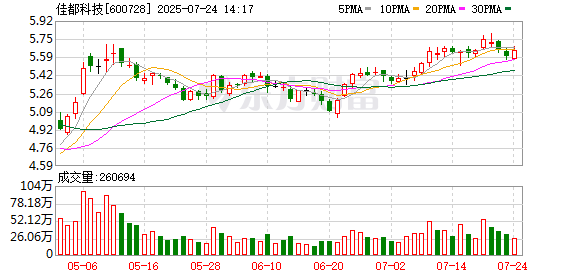
佳都科技:正共建开源鸿蒙智慧车站 将加速智慧交通全场景布局
Xin Hua Cai Jing· 2025-07-24 06:17
Core Viewpoint - The article highlights the participation of Jiadu Technology in the 2025 Open Atom Open Source Ecology Conference, showcasing its "Traffic Jia Hong" operating system tailored for the transportation industry, along with innovative solutions for urban and rail transit scenarios [2][3]. Group 1: Technology and Innovation - Jiadu Technology's "Traffic Jia Hong" system features five key technological characteristics: unified system, unified IoT model, distributed soft bus, industrial safety and trustworthiness, and AI large model empowerment, addressing various innovative applications and equipment needs in urban and rail transportation [2]. - The company has initiated a pilot project with Shenzhen Metro on Line 6 to implement an AFC professional innovation solution, adapting the "Traffic Jia Hong" system for smart station construction [2]. Group 2: Collaboration and Ecosystem Development - Jiadu Technology emphasizes an open cooperation philosophy, collaborating with industry partners to drive technological advancements and expand application scenarios for smarter urban transportation solutions [3]. - The company has established the "Open Source Harmony AI Model SIG" to promote the deep application of AI large models in the transportation sector, fostering collaboration with industry associations, research institutions, and partner enterprises [3].


科技加持,暑期旅途惬意升级
Ke Ji Ri Bao· 2025-07-24 01:18
原标题:科技加持,暑期旅途惬意升级 截至7月22日,为期62天的2025年全国铁路暑运已过1/3。今年暑运期间全国铁路预计发送旅客9.53 亿人次,日均发送1537万人次。面对持续高位运行的客流,全国铁路部门在加大运力的同时,升级并运 用多种科技手段,提升在途服务水平,让人们夏日出行既清凉又舒适。 "智慧大脑"保畅通 7月的西安站,暑气裹挟着南来北往的客流涌动。与往年不同的是,今年进站口前再也看不到车站 工作人员手持扩音器调度的场景,曾经让旅客望而生畏的拥堵长龙,如今被井然有序的队伍取代。AI 技术的应用,正让这座近百年老站的面貌焕然一新。 在西安站生产调度指挥中心,一面巨大的综合监控屏格外醒目。屏幕中的高清数字地图上,车站重 要区域以红、黄、绿三色动态标注客流量。"我们站采用的这套AI智能测算系统就像车站的'超级大 脑',能够24小时不间断分析人流汇聚速度、移动方向和峰值时段。"西安站指挥中心主任董海峰指着屏 幕介绍道。 当这一系统监测到东8进站口实时客流突破150人阈值,终端立即弹出红色预警,该区域在地图上瞬 间"闪红"。预警信息被同步推送到相关工作人员的智能手环上。在进站口巡查的值班员看了眼智能手 环, ...
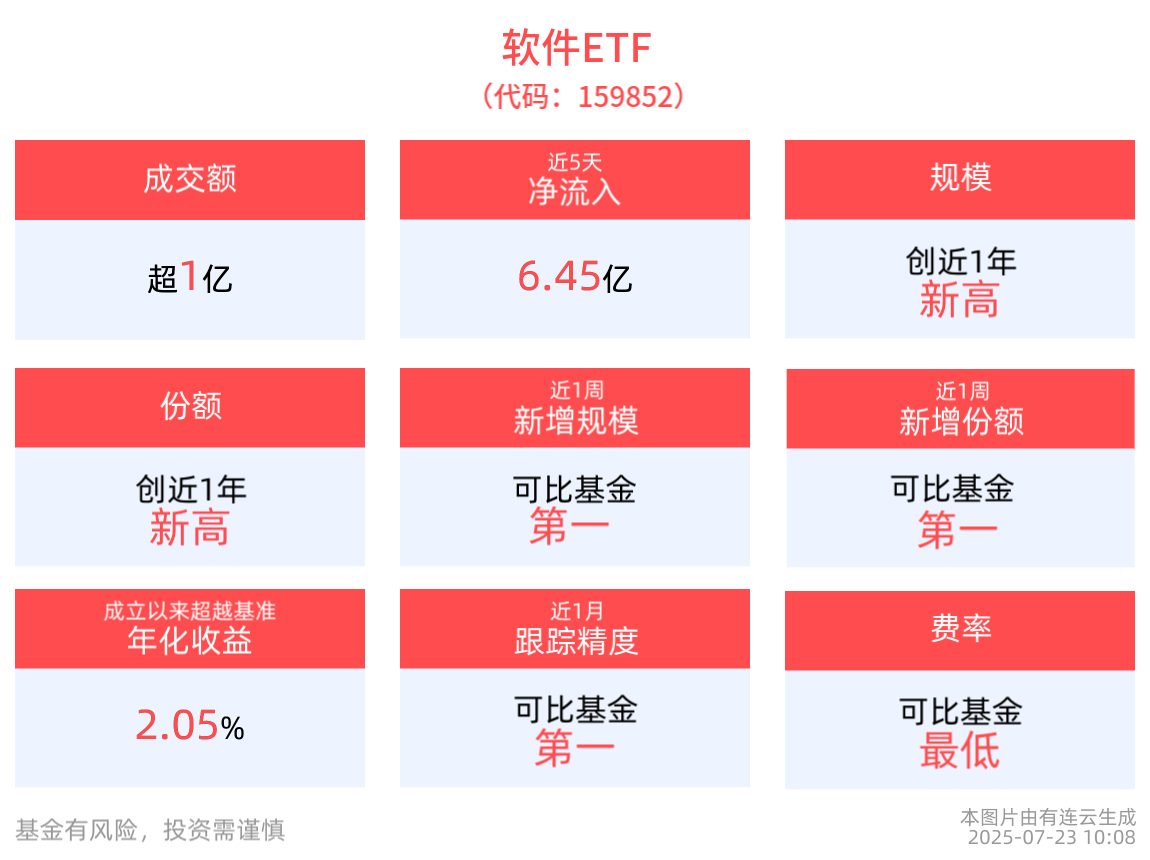
最新单日“吸金”2.52亿元,软件ETF(159852)红盘蓄势,近1周日均成交同类第一!
Sou Hu Cai Jing· 2025-07-23 02:38
Group 1 - The software ETF has a turnover rate of 2.83% and a trading volume of 1.25 billion yuan, with an average daily trading volume of 4.02 billion yuan over the past week, ranking first among comparable funds [2] - The latest scale of the software ETF reached 44.03 billion yuan, a one-year high, and its share reached 5.331 billion, also a one-year high, both ranking first among comparable funds [2] - The software ETF recorded a net inflow of 2.52 billion yuan, with a total of 6.45 billion yuan net inflow over the last five trading days, with inflows on four of those days [2] Group 2 - Since its inception, the software ETF has achieved a highest monthly return of 39.35%, with the longest consecutive monthly gains being three months and a maximum cumulative increase of 69.40%, averaging a monthly return of 9.98% during rising months [2] - The computer and software development industry is experiencing high demand in segments such as AI computing power and LiDAR, with AI applications accelerating; other segments like software outsourcing, financial IT, quantum computing, and data elements are also showing stable growth [2] - The top ten weighted stocks in the CSI Software Service Index account for 60.56% of the index, including companies like iFLYTEK, Kingsoft Office, and Tonghuashun [3]
腾讯申请集群分配方法、装置、设备、存储介质及程序产品专利,提高数据处理效率
Jin Rong Jie· 2025-07-23 00:54
Group 1 - The core point of the article is that Tencent Technology (Shenzhen) Co., Ltd. has applied for a patent related to a cluster allocation method, which aims to improve data processing efficiency in various fields such as cloud technology, artificial intelligence, and smart transportation [1][3]. Group 2 - Tencent Technology (Shenzhen) Co., Ltd. was established in 2000 and is primarily engaged in software and information technology services, with a registered capital of 2 million USD [2]. - The company has made investments in 15 enterprises and participated in 260 bidding projects, holding 5000 trademark records and 5000 patent records, along with 501 administrative licenses [2].

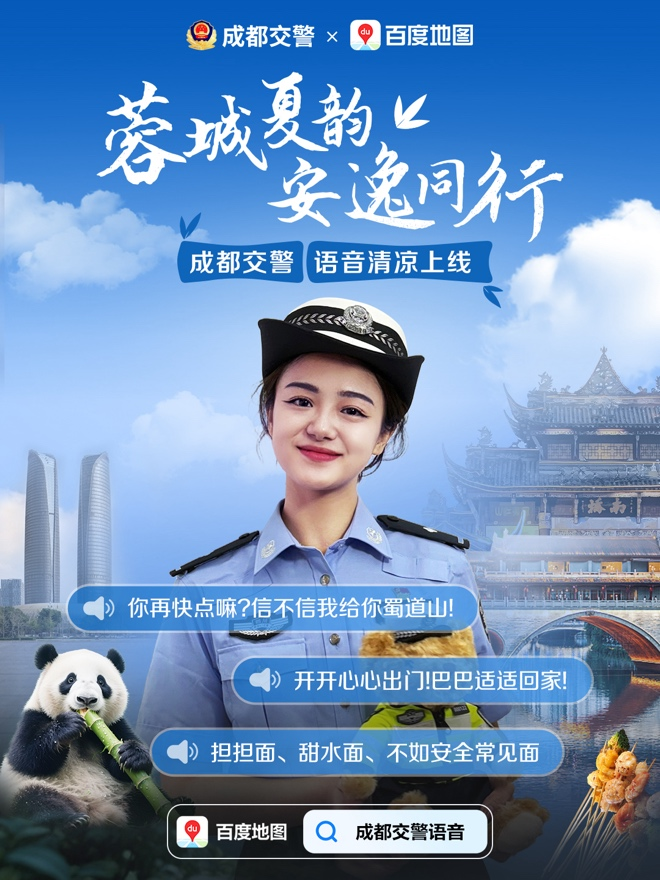
百度地图上线“川音导航”,携手成都交警打造方言版安全语音
Quan Jing Wang· 2025-07-22 10:34
Core Insights - Baidu Maps has launched a dialect voice navigation package in collaboration with the Chengdu Traffic Management Bureau, enhancing user experience with local cultural elements [1][5] - The voice package incorporates humorous Sichuan dialect phrases to provide safety reminders, making navigation more relatable and memorable for users [1][3] - The initiative aims to transform rigid traffic regulations into engaging and memorable messages, significantly improving public safety awareness [5] Group 1 - The "Chengdu Traffic Police" dialect voice navigation package allows users to hear familiar safety prompts in Sichuan dialect while navigating [1][3] - The voice prompts include playful phrases that alleviate driving anxiety and encourage patience in traffic situations, integrating local culinary references for a more engaging experience [1][3] - Users can activate the voice package through the Baidu Maps app by searching for "Chengdu Traffic Police Voice" and enabling it for various travel scenarios [3] Group 2 - Baidu Maps is leveraging technology to create a new paradigm for traffic safety, embedding local cultural elements into traffic regulations [5] - The company is connecting smart transportation with human warmth, providing a safety network that combines local cultural nuances with technological services [5] - Baidu Maps is expanding this initiative to other cities, creating a comprehensive and reassuring travel ecosystem that resonates with local communities [5]

让“乡音”更懂路况:百度地图“川音导航”上线
Huan Qiu Wang· 2025-07-22 09:28
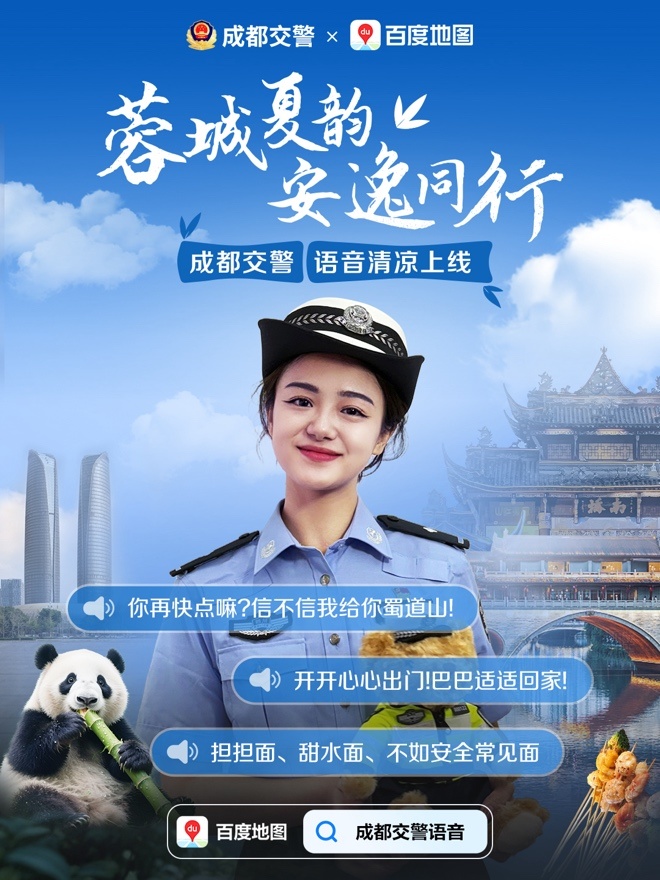
Core Viewpoint - Baidu Maps has launched a local dialect voice navigation package in collaboration with the Chengdu Traffic Management Bureau, enhancing user experience by integrating local culture into navigation prompts [1][3]. Group 1: Product Features - The voice navigation package is deeply rooted in Chengdu's local culture, providing safety alerts that resonate with daily travel scenarios [3]. - Humorous phrases are used for alerts, such as "信不信我给你蜀道山!" to alleviate driver anxiety during speeding incidents [3]. - The package includes references to local cuisine, making safety instructions more engaging and relatable [4]. Group 2: User Interaction - Users can activate the voice package by searching for "成都交警语音" in the Baidu Maps app, allowing for a personalized navigation experience [4]. - The voice prompts are recorded by a local police officer, adding a unique touch to the navigation experience [4]. Group 3: Broader Implications - Baidu Maps aims to connect smart transportation with cultural warmth, continuously injecting care into the travel ecosystem [4]. - The initiative reflects a trend of integrating local cultural elements into traffic safety education, transforming rigid rules into memorable experiences [4].
中国交通新格局:十五万亿焕新途
2 1 Shi Ji Jing Ji Bao Dao· 2025-07-21 13:31
Core Insights - The "14th Five-Year Plan" for transportation in China has achieved significant milestones, with 6 out of 17 key transportation indicators completed ahead of schedule by 2024, including highway and urban rail transit mileage [1][2] - A total of 15.2 trillion yuan has been invested in transportation infrastructure over the first four years of the plan, representing a year-on-year growth of 23.3% [4] Transportation Infrastructure Development - By the end of 2024, the railway operating mileage is expected to reach 162,000 kilometers, an increase of approximately 16,000 kilometers since the end of the "13th Five-Year Plan," with high-speed rail accounting for 10,000 kilometers of this growth [2] - The total length of highways has reached 5.49 million kilometers, with an increase of about 290,000 kilometers, and the total length of expressways has reached 191,000 kilometers, covering 99% of cities with populations over 200,000 [2] - The national comprehensive three-dimensional transportation network has a completion rate of over 90%, connecting more than 80% of county-level administrative regions [2] Impact on Daily Life and Economy - Approximately 1 billion people use rail transit daily, with similar numbers for buses and taxis, showcasing the convenience brought by improved transportation [5] - The logistics costs for the entire society have been reduced by over 400 billion yuan, with transportation costs decreasing by about 280 billion yuan [7] - Daily cross-regional travel averages around 180 million people, with 160 million tons of goods transported and 478 million express parcels collected [6] International Cooperation and Expansion - China has signed over 270 bilateral and multilateral cooperation agreements in various transportation sectors, expanding its international transportation network [8] - The international express delivery business has seen significant growth, with 2024's express delivery volume reaching 175.08 billion parcels, averaging over 500 million parcels collected daily [8] - The number of cargo aircraft has increased to 268, with China's international air cargo market share rising to 44% [9]
达实智能:签约1.22亿元深圳市城市轨道交通13号线二期综合监控系统采购项目
news flash· 2025-07-20 07:36
Core Viewpoint - The company has signed a contract worth 122 million yuan with Hong Kong MTR Corporation and China Railway Electrification for the procurement of a comprehensive monitoring system for the Shenzhen Urban Rail Transit Line 13 Phase II project, which is expected to positively impact the company's future net profit [1] Group 1 - The contract amount for the project is 122 million yuan [1] - The project will utilize the company's self-developed AIoT intelligent IoT control platform [1] - The solution provided will be for the overall smart transportation system for both the northern and southern extensions of Shenzhen Urban Rail Transit Line 13 [1]

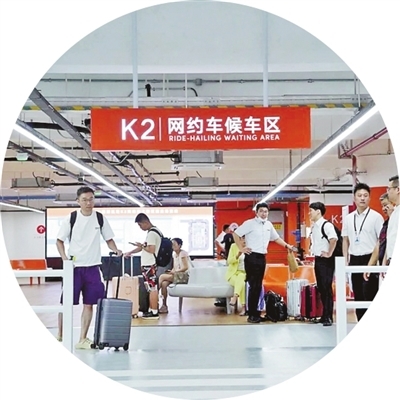
少走路、更舒适! 机场新增K2网约车上客区
Hang Zhou Ri Bao· 2025-07-17 03:09
Core Points - The new K2 ride-hailing pick-up area at Hangzhou Airport has been officially launched, providing travelers with three pick-up zones for a more comfortable and efficient experience [3][4] - The K2 area spans over 4,000 square meters and features seven pick-up points, with amenities such as central air conditioning and fast-charging stations for electronic devices [3][4] - The K2 pick-up area is strategically located about 200 meters from the T4 domestic arrival hall, reducing walking distance and time by 30% compared to the K3 and K4 areas [3][4] Summary by Sections - **Facilities and Features** - K2 pick-up area includes 7 pick-up points and is equipped with 9 central air conditioning units and 20 electric fans for passenger comfort during peak travel seasons [3] - The waiting area has convenient charging stations compatible with Type-C and USB ports, allowing travelers to charge their devices while waiting [3][4] - Safety measures include anti-collision barriers to ensure passenger safety [3] - **Operational Efficiency** - The K2 area is expected to alleviate traffic pressure on the existing K3 and K4 pick-up zones, thereby reducing passenger wait times [5] - The K2 area will feature a smart display screen that provides real-time information on vehicle license plates, entry times, and images, helping to reduce anxiety and uncertainty for waiting passengers [4] - **Traffic Statistics** - The original K3 and K4 pick-up areas have an average daily traffic flow exceeding 12,500 vehicles, with a traffic share rate of over 30% throughout the day, increasing to over 50% when the subway is not operational [4]
“路联通”促进“心相通”
Ren Min Ri Bao Hai Wai Ban· 2025-07-17 01:01
Group 1: Core Insights - The recent high-level meeting of the Global Sustainable Transportation Summit and the 12th Meeting of Transport Ministers of the Shanghai Cooperation Organization (SCO) in Tianjin focused on cooperation opportunities and regional connectivity [1][2] - The construction of "Driver's Homes" in China reflects the care for truck drivers, providing essential services such as rest, food, and vehicle maintenance, which is increasingly important due to the growing cross-border transport volume among SCO member states [2][3] Group 2: "Silk Road Station" Initiative - The SCO member states have reached a consensus on promoting the construction of "Silk Road Stations" to provide necessary service guarantees for international road transport drivers, addressing issues like fatigue driving and low transport efficiency [3][4] - The "Silk Road Stations" will serve as rest stops for drivers, offering basic needs such as hot meals and showers, while also showcasing cultural exchanges among member countries [3][4] Group 3: Future Development Plans - China plans to strengthen cooperation with relevant SCO member states to build a network of "Silk Road Stations," focusing on projects that are small-scale, quick to yield results, and beneficial to the public [4] - The initiative will prioritize the use and renovation of existing facilities like service areas and gas stations, and establish operational standards for the "Silk Road Stations" [4][8] Group 4: Green Transportation Initiatives - The introduction of natural gas-powered buses from Chinese company Beiqi Foton in Qatar highlights the shift towards greener public transport solutions, aligning with Qatar's goal to upgrade from diesel buses [5][6] - China is positioned to further promote green transportation infrastructure and clean energy applications among SCO countries, enhancing international cooperation and knowledge sharing [6][8] Group 5: Training and Capacity Building - A training program for light rail train drivers from Kazakhstan is being conducted in Tianjin, emphasizing practical skills and emergency response techniques to ensure passenger safety [7] - China's efforts in building extensive transportation networks and providing training support to SCO countries contribute to regional development and connectivity [7][8]
