AI芯片

Search documents
百度股价大涨6%,公司官宣:分拆芯片业务,独立IPO!昆仑芯最新估值210亿元,机构预测:今年收入将大增6倍
Mei Ri Jing Ji Xin Wen· 2026-01-02 02:19
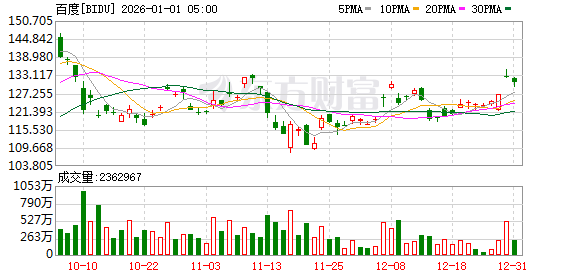
Core Viewpoint - Baidu's subsidiary Kunlun Core has submitted a listing application to the Hong Kong Stock Exchange, aiming for an independent public offering to enhance its operational and financial transparency, attract specialized investors, and improve its market position [1][3]. Group 1: Listing and Financial Impact - Kunlun Core's listing is expected to reflect its value based on its strengths, allowing investors to independently assess its performance and potential [3]. - The company aims to attract investors focused on AI computing chips and related hardware and software systems, differentiating itself from Baidu's diversified business model [3]. - Following the announcement, Baidu's stock surged by 6.92%, with a total market capitalization of HKD 386.7 billion [4]. Group 2: Company Background and Valuation - Kunlun Core, previously Baidu's Intelligent Chip and Architecture Department, completed its first round of independent financing in April 2021, with an initial valuation of approximately RMB 13 billion [5]. - The latest financing round in July 2023 valued Kunlun Core at around RMB 21 billion (approximately USD 2.97 billion), with Baidu holding a 59.45% stake [6]. - Analysts predict that Kunlun Core's revenue will increase from approximately RMB 1.3 billion in 2025 to RMB 8.3 billion in 2026, a sixfold increase, potentially leading to a valuation exceeding RMB 80 billion [8]. Group 3: Product and Market Position - Kunlun Core's P800 series chips have been deployed in thousands, with a single cluster exceeding 30,000 cards, demonstrating significant market acceptance [8]. - The P800 chip is recognized for its performance and energy efficiency, supporting configurations of 8 and 16 cards, with a maximum throughput of 482 times per second [9]. - IDC data indicates that Kunlun Core's shipment volume is projected to reach 69,000 units in 2024, significantly outpacing competitors like Cambricon [9].

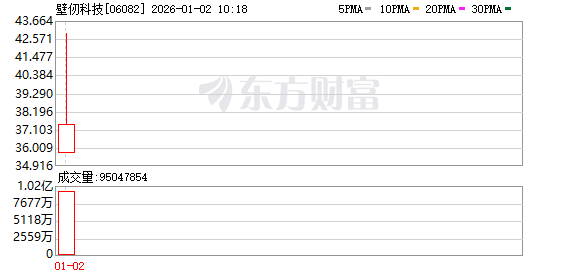
壁仞科技上市首日涨超100% 此前三年亏损
Di Yi Cai Jing· 2026-01-02 02:18
Group 1 - Wall Street debut of Wallran Technology (06082.HK) on January 2, with opening price at HKD 35.7 per share, up 82.14% from the IPO price of HKD 19.6, reaching a peak of HKD 42.88 and a market capitalization exceeding HKD 90 billion [2] - The company raised approximately HKD 5.375 billion from the global offering of about 285 million H-shares, primarily for R&D of intelligent computing solutions and general corporate purposes [2] - Despite revenue growth over the past three years, Wallran Technology has reported significant losses, with cumulative losses of HKD 4.75 billion from 2022 to 2024 [2] Group 2 - The Chinese smart computing chip market is highly concentrated, with Nvidia and Huawei HiSilicon accounting for 94.4% of the market share in 2024, while Wallran Technology holds a mere 0.16% share in the smart computing chip market and 0.2% in the general GPU market [3] - Wallran Technology anticipates a slight increase in market share to 0.19% in the smart computing chip market by 2025 [3] - The fragmented nature of the market outside the two major players presents opportunities for growth and scale for individual participants, with expectations that the market share of Chinese enterprises in smart computing chips will rise from approximately 20% in 2024 to about 60% by 2029 [4]
突发!百度股价大涨6%,公司官宣:分拆芯片业务,独立IPO!昆仑芯最新估值210亿元,机构预测:今年收入将大增6倍
Mei Ri Jing Ji Xin Wen· 2026-01-02 02:17
Core Viewpoint - Baidu's subsidiary Kunlun Core has submitted a listing application to the Hong Kong Stock Exchange, aiming for an independent public offering to enhance its operational and financial transparency, attract specialized investors, and improve its market position [1][3]. Group 1: Listing and Financial Impact - Kunlun Core's listing is expected to reflect its value based on its strengths, allowing investors to independently assess its performance and potential [3]. - The company aims to attract investors focused on general AI computing chips and related hardware and software systems, differentiating itself from Baidu's diversified business model [3]. - Following the announcement, Baidu's stock surged by 6.92%, with a market capitalization of HKD 386.7 billion [3]. Group 2: Company Background and Valuation - Kunlun Core, previously part of Baidu's smart chip division, completed independent financing in April 2021, with an initial valuation of approximately RMB 13 billion [4]. - The latest financing round in July 2023 valued Kunlun Core at around RMB 21 billion (approximately USD 2.97 billion), with Baidu holding a 59.45% stake [5]. - If successfully listed, Kunlun Core's valuation increase could positively impact Baidu's long-term equity investment value, leading to a potential revaluation of Baidu's overall market capitalization [5]. Group 3: Product Development and Market Position - Morgan Stanley predicts Kunlun Core's revenue will soar from approximately RMB 1.3 billion in 2025 to RMB 8.3 billion in 2026, a sixfold increase, with a potential valuation exceeding RMB 80 billion based on a price-to-sales ratio of 10 [7]. - Kunlun Core's third-generation P800 series has been deployed in thousands of units, with significant internal usage for AI model training, demonstrating high performance and cost efficiency [8]. - The company has secured a significant order from China Mobile worth over RMB 1 billion, enhancing its position as a neutral supplier and increasing its appeal to external clients [8]. Group 4: Competitive Landscape - Kunlun Core is positioned in the top tier of the domestic AI chip market, with its P800 chip recognized for its performance and energy efficiency, supporting configurations that achieve high throughput [9]. - IDC forecasts that Kunlun Core's shipment volume will reach 69,000 units in 2024, significantly outpacing competitors like Cambricon, which is expected to ship 26,000 units [10].

百度旗下昆仑芯已向港交所秘密提交IPO申请
Sou Hu Cai Jing· 2026-01-02 02:08
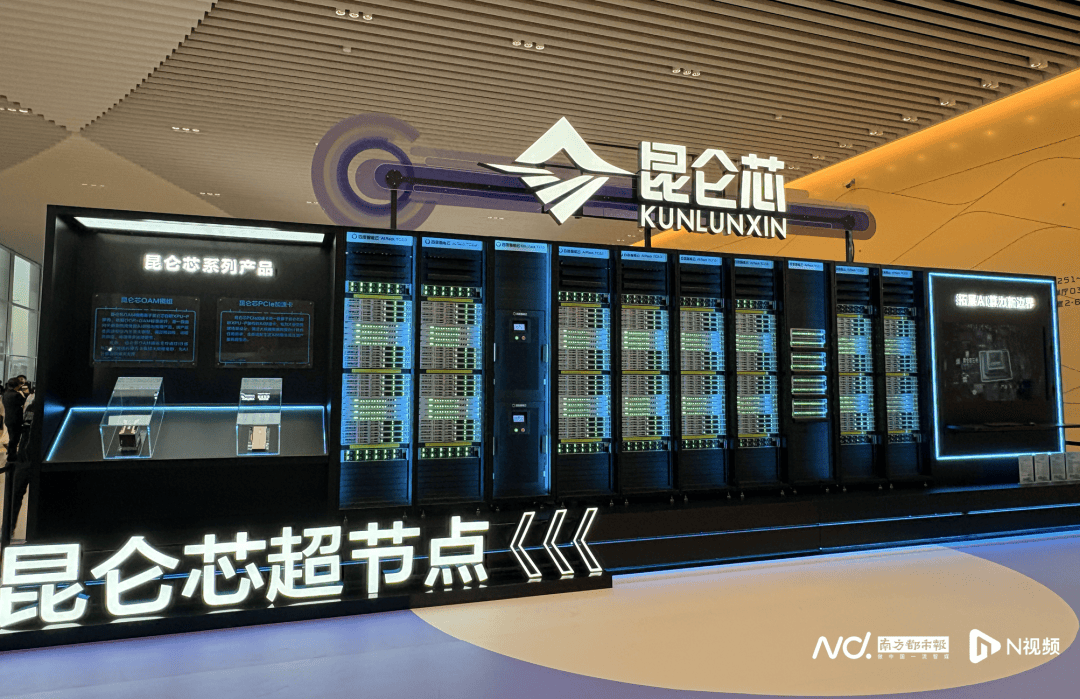
Group 1 - Baidu's Kunlun Chip has submitted a listing application to the Hong Kong Stock Exchange, aiming for an independent IPO by January 1, 2026 [1] - Kunlun Chip, an AI chip company, was previously part of Baidu's Intelligent Chip and Architecture Department and became an independent entity in April 2021 [1] - The spin-off is expected to enhance Kunlun Chip's operational and financial transparency, allowing investors to independently assess its performance and potential [1] Group 2 - Reports of Kunlun Chip's IPO plans surfaced in December 2025, with a target to complete the IPO by early 2027, and a recent funding round raised over 2 billion yuan, valuing the company at 21 billion yuan [2] - Kunlun Chip is projected to achieve over 3.5 billion yuan in revenue by 2025 and reach breakeven [2] - Baidu plans to launch the M100 chip in early 2026 and the M300 chip in early 2027, targeting large-scale inference and multimodal model training needs [2] Group 3 - Baidu is set to release the "Tianchi 256 Super Node" and "Tianchi 512 Super Node" in the first and second halves of 2026, respectively, featuring the Kunlun Chip P800 [4] - The super node products will support up to 256 and 512 interconnected cards, with plans for thousand-card and four-thousand-card nodes starting in the second half of 2027 [4] - The decision to disclose the AI chip roadmap is influenced by competitive pressures and the upcoming IPO of Kunlun Chip [4]
百度公告:分拆昆仑芯上市
Sou Hu Cai Jing· 2026-01-02 01:34
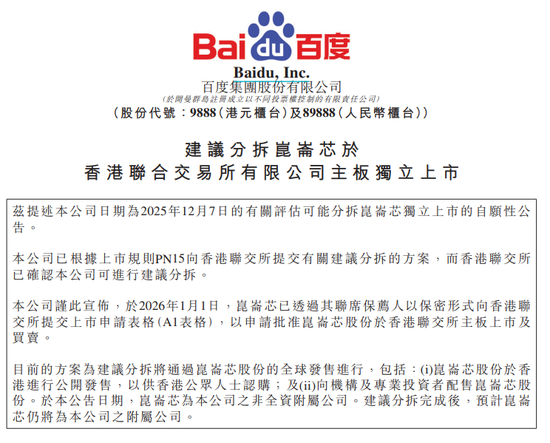
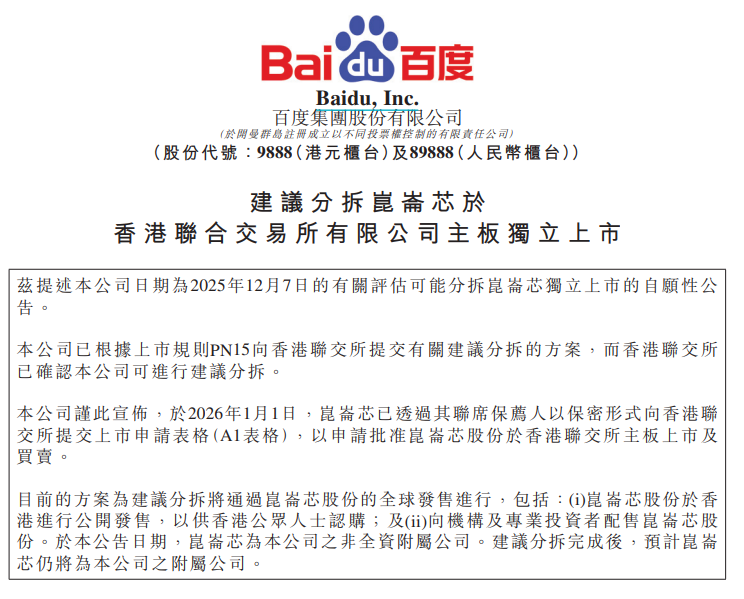
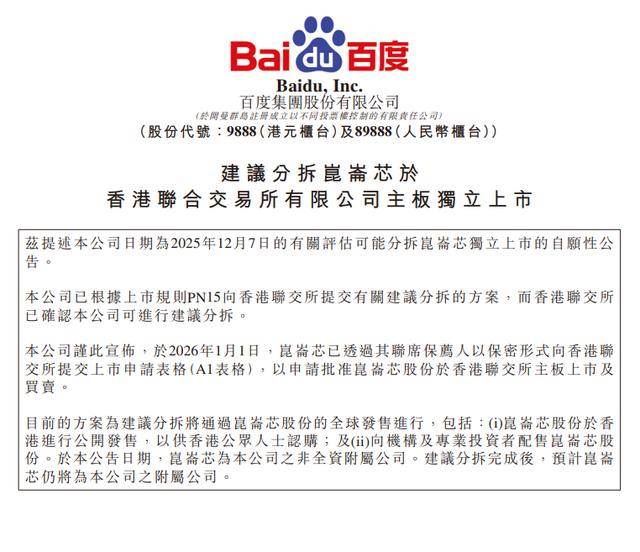
2026年1月2日早间,百度在港交所公告称,1月1日,昆仑芯已透过其联席保荐人以保密形式向香港联交 所提交上市申请表格(A1表格),以申请批准昆仑芯股份于香港联交所主板上市及买卖。目前的方案 为建议分拆将通过昆仑芯股份的全球发售进行,包括:(i)昆仑芯股份于香港进行公开发售,以供香 港公众人士认购;及(ii)向机构及专业投资者配售昆仑芯股份。于本公告日期,昆仑芯为本公司之非 全资附属公司。建议分拆完成后,预计昆仑芯仍将为本公司之附属公司。 据公开消息,昆仑芯(北京)科技有限公司前身为百度智能芯片及架构部,于2021年4月完成独立融 资,首轮估值约130亿元。公司团队在国内最早布局AI加速领域,深耕十余年,是一家在体系结构、芯 片实现、软件系统和场景应用均有深厚积累的AI芯片企业。 2025年12月7日,百度集团港股公告称,公司注意到,于2025年12月5日有媒体报道公司拟分拆非全资附 属公司昆仑芯(北京)科技有限公司进行独立上市。公司表示,目前正就拟议分拆及上市进行评估。倘 进行拟议分拆及上市,将须经相关监管审批程序,而公司并不保证拟议分拆及上市将会进行。 2025年12月5日,百度集团-SW(09888.H ...
一早,百度公告:分拆昆仑芯上市
Shang Hai Zheng Quan Bao· 2026-01-02 01:25
2025年12月5日,百度集团-SW(09888.HK)午后大幅拉涨,一度上涨超7%,截至当天收盘,公司股价 涨超5%。 2026年1月2日早间,百度在港交所公告称,1月1日,昆仑芯已透过其联席保荐人以保密形式向香港联交 所提交上市申请表格(A1表格),以申请批准昆仑芯股份于香港联交所主板上市及买卖。目前的方案 为建议分拆将通过昆仑芯股份的全球发售进行,包括:(i)昆仑芯股份于香港进行公开发售,以供香 港公众人士认购;及(ii)向机构及专业投资者配售昆仑芯股份。于本公告日期,昆仑芯为本公司之非 全资附属公司。建议分拆完成后,预计昆仑芯仍将为本公司之附属公司。 据公开消息,昆仑芯(北京)科技有限公司前身为百度智能芯片及架构部,于2021年4月完成独立融 资,首轮估值约130亿元。公司团队在国内最早布局AI加速领域,深耕十余年,是一家在体系结构、芯 片实现、软件系统和场景应用均有深厚积累的AI芯片企业。 2025年12月7日,百度集团港股公告称,公司注意到,于2025年12月5日有媒体报道公司拟分拆非全资附 属公司昆仑芯(北京)科技有限公司进行独立上市。公司表示,目前正就拟议分拆及上市进行评估。倘 进行拟议分拆及 ...
突发!百度官宣:昆仑芯正式启动港股上市进程
是说芯语· 2026-01-02 00:59
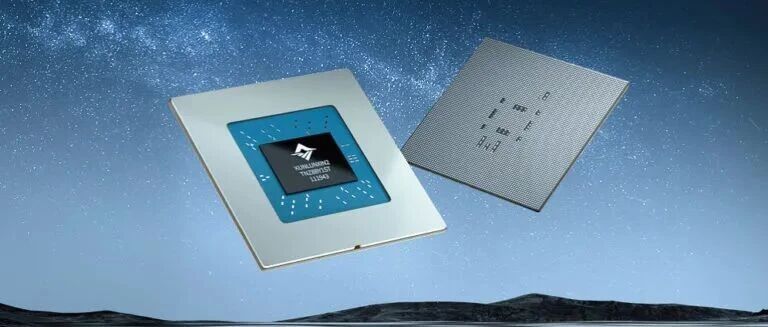
Core Viewpoint - Kunlun Core, a subsidiary of Baidu, is seeking to list on the Hong Kong Stock Exchange, with a recent valuation nearing $3 billion following a new funding round [2] Group 1: Company Overview - Kunlun Core was established from Baidu's AI chip and architecture department, with technology development dating back to 2011 [2] - The company launched its first AI chip, "Baidu Kunlun," in July 2018, marking its entry into the AI chip market [2] - The CEO, Ouyang Jian, has a strong background in chip architecture and has previously worked on various significant projects [2] Group 2: Product Development - Kunlun Core has developed two generations of general-purpose AI processors and several AI accelerator cards, with ongoing development of new products [4] - The company has successfully deployed three generations of products across various industries, serving hundreds of clients and reaching millions of end-users [6] Group 3: Financial Performance - The company is projected to generate approximately 2 billion RMB in revenue for 2024, with a net loss of around 200 million RMB [6] - By 2025, over half of the company's revenue is expected to come from external clients, with revenue anticipated to exceed 3.5 billion RMB and achieve breakeven [6] Group 4: Future Plans - Kunlun Core plans to launch the M100 chip in early 2026, optimized for large-scale inference scenarios, and the M300 chip in early 2027 for ultra-large-scale multi-modal model training and inference [7] - The company aims to provide powerful, low-cost, and self-controlled AI computing power for Chinese enterprises, highlighting its strategic position in ensuring domestic AI computing autonomy [7]
百度集团-SW(09888):建议分拆昆仑芯于香港联合交易所有限公司主板独立上市
智通财经网· 2026-01-01 23:41
Core Viewpoint - Baidu Group's subsidiary Kunlun Chip has submitted a listing application to the Hong Kong Stock Exchange, aiming for a public offering and institutional placement, with the split expected to enhance operational transparency and attract targeted investors [1][2]. Group 1: Listing Application - Kunlun Chip submitted a confidential listing application form (A1 form) to the Hong Kong Stock Exchange on January 1, 2026, for approval to list and trade its shares on the main board [1]. - The proposed split will involve a global offering of Kunlun Chip shares, including a public offering for Hong Kong investors and a placement to institutional and professional investors [1]. Group 2: Business Rationale for the Split - The proposed split is believed to be beneficial for both the company and Kunlun Chip, aligning with overall shareholder interests [2]. - The split will allow for a clearer reflection of Kunlun Chip's value based on its strengths, enhancing operational and financial transparency for investors [2]. - Kunlun Chip's business model, focused on general AI computing chips and related hardware and software systems, is expected to attract a specific investor demographic [2]. - The split is anticipated to improve Kunlun Chip's image among customers, suppliers, and potential strategic partners, thereby benefiting the parent company through its stake in Kunlun Chip [2]. - The separation will enable Kunlun Chip to independently access equity and debt capital markets, allowing for more effective financial resource allocation by the parent company [2]. - The management responsibilities and accountability of both the company and Kunlun Chip will be more directly linked to their respective operational and financial performance, enhancing management focus and corporate governance [2].
港股公告掘金 | 比亚迪股份2025年度新能源汽车销量约460.24万辆 同比增长7.73%
Zhi Tong Cai Jing· 2026-01-01 12:54
Major Events - Black Sesame Intelligence (02533) plans to acquire and increase its stake to 60% in Zhuhai Yizhi Electronic Technology, aiming to establish a full-scenario ecosystem for AI chips [1] - China Biopharmaceutical (01177) has completed the enrollment of the first patient in the Phase III clinical trial of its self-developed TDI01 "ROCK2 inhibitor" for the treatment of idiopathic pulmonary fibrosis [1] - Cao Cao Travel (02643) sees a positive outlook and its controlling shareholder voluntarily extends the lock-up commitment [1] - Laike Pharmaceutical-B (02105) has completed the first dosing of the Phase I single-dose escalation study for LAE103 [1] - VALA (02051) has launched its new model, Vala Home, and is collaborating with Ruichi Automobile to enhance production capacity and delivery systems [1] Operating Performance - BYD Company (01211) expects to achieve approximately 4.6024 million units in new energy vehicle sales for 2025, representing a year-on-year increase of 7.73% [1] - Geely Automobile (00175) reported total vehicle sales of 236,800 units in December, a year-on-year increase of approximately 13% [1] - NIO Inc. (09866) delivered 48,100 vehicles in December, setting a new monthly record with a year-on-year increase of 54.6% [1] - Great Wall Motors (02333) anticipates sales of approximately 1.3237 million units for 2025, reflecting a year-on-year growth of 7.33% [1] - Xpeng Motors (09868) achieved a total delivery of 429,400 vehicles for the entire year of 2025, marking a year-on-year increase of 126% [1] - China Power (02380) reported a total consolidated electricity sales volume of 10.0997 million megawatt-hours in November, an increase of 15.38% year-on-year [1] - Li Auto (02015) delivered 44,200 new vehicles in December, a year-on-year decrease of 24.44% [1]



大手笔背后的焦虑,英伟达用200亿美元购买Groq技术授权
Sou Hu Cai Jing· 2026-01-01 10:19
Core Viewpoint - Nvidia announced a significant deal worth $20 billion to acquire technology licensing from AI chip startup Groq, marking its largest transaction in history, comparable to the total of all previous acquisitions [1][3]. Group 1: Transaction Structure - The deal is structured as a non-exclusive technology licensing agreement rather than a full acquisition, which is a strategic move to avoid antitrust scrutiny [3][4]. - Nvidia's market capitalization is approaching $3.5 trillion, making it a target for regulatory oversight on major actions [4][6]. Group 2: Strategic Rationale - The $20 billion investment not only secures technology but also the expertise and patents of Groq's team, particularly its founder, a key figure in AI chip architecture [6][8]. - By attracting Groq's talent, Nvidia effectively removes a critical competitor from the market while gaining access to advanced technology [8][22]. Group 3: Technology Insights - Groq's core product, the Language Processing Unit (LPU), is designed specifically for AI inference, distinguishing it from Nvidia's GPUs, which dominate the training market [9][11]. - Groq claims its LPU offers significantly faster inference speeds and lower costs compared to Nvidia's H100, which could disrupt Nvidia's current market position [11][13]. Group 4: Competitive Landscape - The AI chip market is becoming increasingly competitive, with major players like Google, Amazon, and AMD aggressively pursuing market share in inference technology [19][27]. - Nvidia's acquisition of Groq can be seen as a strategic insurance policy to maintain its competitive edge in the evolving AI landscape [22][29]. Group 5: Market Implications - The integration of Groq's LPU technology into Nvidia's existing product line could enhance its distribution capabilities and accelerate market penetration [25][27]. - This transaction reflects Nvidia's urgency to adapt to a rapidly changing market where it faces significant competition, indicating a shift in the AI chip industry dynamics [27][29].