LPU(语言处理单元)

Search documents
PCB 设备系列跟踪报告(三):GTC 大会前瞻:重视 LPU 对 PCB 设备和钻针带来的增量需求
EBSCN· 2026-03-02 08:45
Investment Rating - The report maintains a "Buy" rating for the high-end manufacturing industry, indicating an expected investment return exceeding 15% over the next 6-12 months compared to the market benchmark [5]. Core Insights - The introduction of the Language Processing Unit (LPU) by Nvidia is expected to significantly increase the demand for PCB equipment and drilling needles due to the enhanced requirements for PCB area and materials [2][3]. - The LPU's architecture, which complements GPUs in AI workflows, marks a shift from general computing to specialized inference, indicating a growing market for AI computing power [2]. - The anticipated growth in AI computing demand and the need for low-latency inference will likely extend the industry's prosperity into the PCB equipment sector, creating a high-demand environment for PCB drilling needles and related technologies [4]. Summary by Sections LPU Technology Impact - LPU technology is designed for AI inference with low latency and high bandwidth, achieving a bandwidth of up to 80TB/s and reducing first-word latency to approximately 100 milliseconds, outperforming H100 GPUs by about 10 times in inference speed [2]. - The deployment of multiple LPU units will require significantly larger PCB areas and higher-grade materials, leading to increased consumption of PCB drilling needles [3]. PCB Equipment Demand - The demand for PCB equipment is expected to rise due to the increased area requirements and material upgrades necessitated by LPU technology, with a projected significant increase in PCB drilling needle consumption [3]. - Nvidia's Prefill-Decode Disaggregation technology aims to optimize the deployment of GPUs and LPUs, which will further enhance the requirements for advanced packaging and precision in PCB assembly [3]. Investment Opportunities - The report suggests focusing on key manufacturers in the PCB equipment sector, including: 1. High-precision drilling and exposure equipment manufacturers such as Dazhong CNC, Inno Laser, and Dier Laser [4]. 2. High-precision assembly equipment producers like Kaige Precision and Jintuo Co., Ltd. [4]. 3. High-end PCB drilling needle manufacturers such as Dingtai High-Tech, World, and Sifangda [4]. 4. Advanced plating technology firms like Dongwei Technology [4].

英伟达的“神秘芯片”背后:推理时代开启“四大算力新趋势”
Hua Er Jie Jian Wen· 2026-03-01 13:53
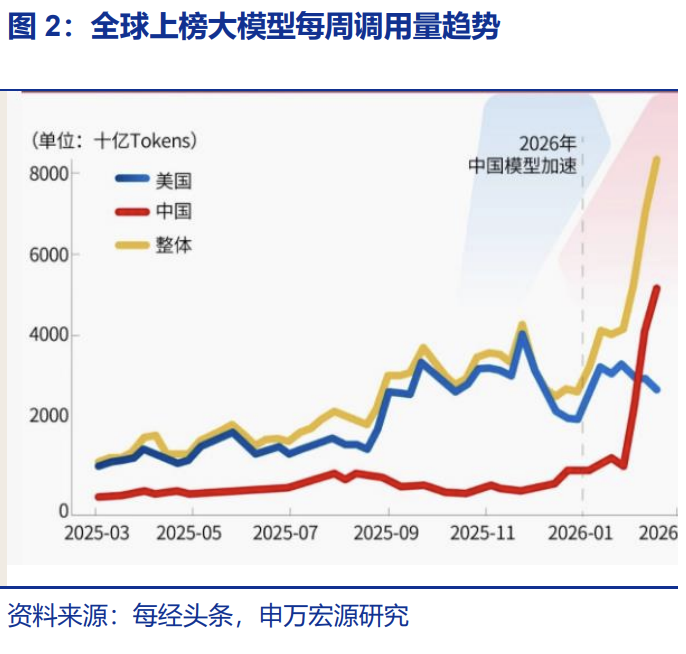
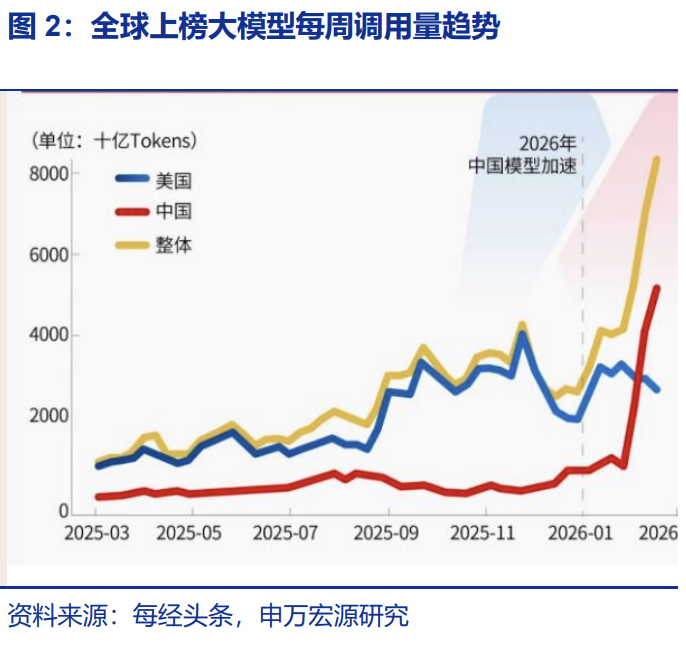
Core Insights - Nvidia is shifting the AI computing competition focus from training to inference, with plans to unveil a new inference chip integrated with Groq's LPU technology at the upcoming GTC developer conference [1] - OpenAI has agreed to become a major customer for Nvidia's new processor, indicating a strong demand for dedicated inference capacity [1] - The report from Shenwan Hongyuan highlights four key trends in inference computing: increased deployment of pure CPU scenarios, the rise of specialized architectures like LPU, accelerated breakthroughs in domestic computing chips, and a shift in demand structure towards mass token consumption [2] Inference Demand Explosion - The demand for inference has surged, driven by the monetization of large models and the rapid deployment of agents in real-world applications, requiring substantial inference computing power [3] - Data shows a significant increase in inference volume during the Chinese New Year, with major models reaching record token consumption [3] LPU's Emergence - Nvidia's acquisition of Groq's core technology for $20 billion signifies the growing importance of pure inference chips, with LPU architecture offering efficiency advantages in inference scenarios [6] - The future AI chip landscape is expected to differentiate between training and inference, with training continuing to use GPU-HBM combinations while inference evolves towards ASIC+LPU-SRAM+SSD configurations [6] System-Level Innovations - The upgrade in inference computing also involves a shift from single chips to system-level innovations, with a three-layer network architecture emerging to meet the demands of low latency and high throughput [7] - Nvidia is expanding its collaboration with Meta Platforms to support large-scale pure CPU deployments, moving beyond a single GPU sales model [7] Domestic Chip Breakthroughs - Domestic inference chips are experiencing significant technological upgrades, with new designs supporting low-precision data formats and enhanced interconnect bandwidth [9] - The supply chain for domestic chips is also improving, as evidenced by the rapid growth in revenue from high-performance computing chip packaging services [9]

英伟达的“神秘芯片”背后--推理时代开启“四大算力新趋势”
Hua Er Jie Jian Wen· 2026-03-01 11:33
Core Insights - Nvidia is shifting the AI computing competition focus from training to inference, integrating LPU technology and collaborating with OpenAI for dedicated inference capabilities [1][2] - The demand for inference computing is surging, driven by the monetization of large models and the acceleration of agent deployment in real-world applications [3][6] Group 1: Inference Computing Trends - The report identifies four major trends in inference computing: increased deployment of pure CPU scenarios, the rise of specialized architectures like LPU challenging GPU dominance, accelerated breakthroughs in domestic computing chips, and a shift in demand structure from single training to mass token consumption [2][10] - Companies providing high-performance, cost-effective inference chips will benefit the most, as breakthroughs in CPU, LPU, and domestic chips reshape the computing landscape [2][10] Group 2: Demand and Usage Statistics - The demand for inference has exploded, with significant increases in token consumption during the Chinese New Year, including 63.3 billion tokens processed in a single day by a leading model [3][10] - Data from OpenRouter indicates that Chinese models surpassed U.S. models in token calls, with a notable increase of 127% in three weeks, highlighting the growing prominence of Chinese AI models [3][10] Group 3: Technological Developments - Nvidia's acquisition of Groq's core technology for $20 billion signifies the recognition of pure inference chips' importance by top players in the industry [6][10] - The architecture of LPU differs from traditional GPUs, providing efficiency advantages in inference scenarios, particularly in addressing latency and memory bandwidth issues [6][10] Group 4: System-Level Innovations - The evolution from single chips to system-level innovations is crucial for the upgrade of inference computing, with a three-layer network architecture emerging to meet the demands of low latency and high throughput [8][10] - Nvidia is expanding its collaboration with Meta Platforms to support large-scale pure CPU deployments, indicating a shift away from a single GPU sales model [8][10] Group 5: Domestic Chip Advancements - Domestic inference chips are experiencing significant technological upgrades, including support for low-precision data formats and increased interconnect bandwidth, with expectations for a new version to launch in Q1 2026 [10] - The growth of domestic packaging companies reflects the increasing supply capability of domestic computing chips, with revenues from high-performance computing chip packaging services projected to rise significantly [10]
补齐AI推理拼图:英伟达黄仁勋揭秘Groq LPU整合路线图
Sou Hu Cai Jing· 2026-02-27 03:45
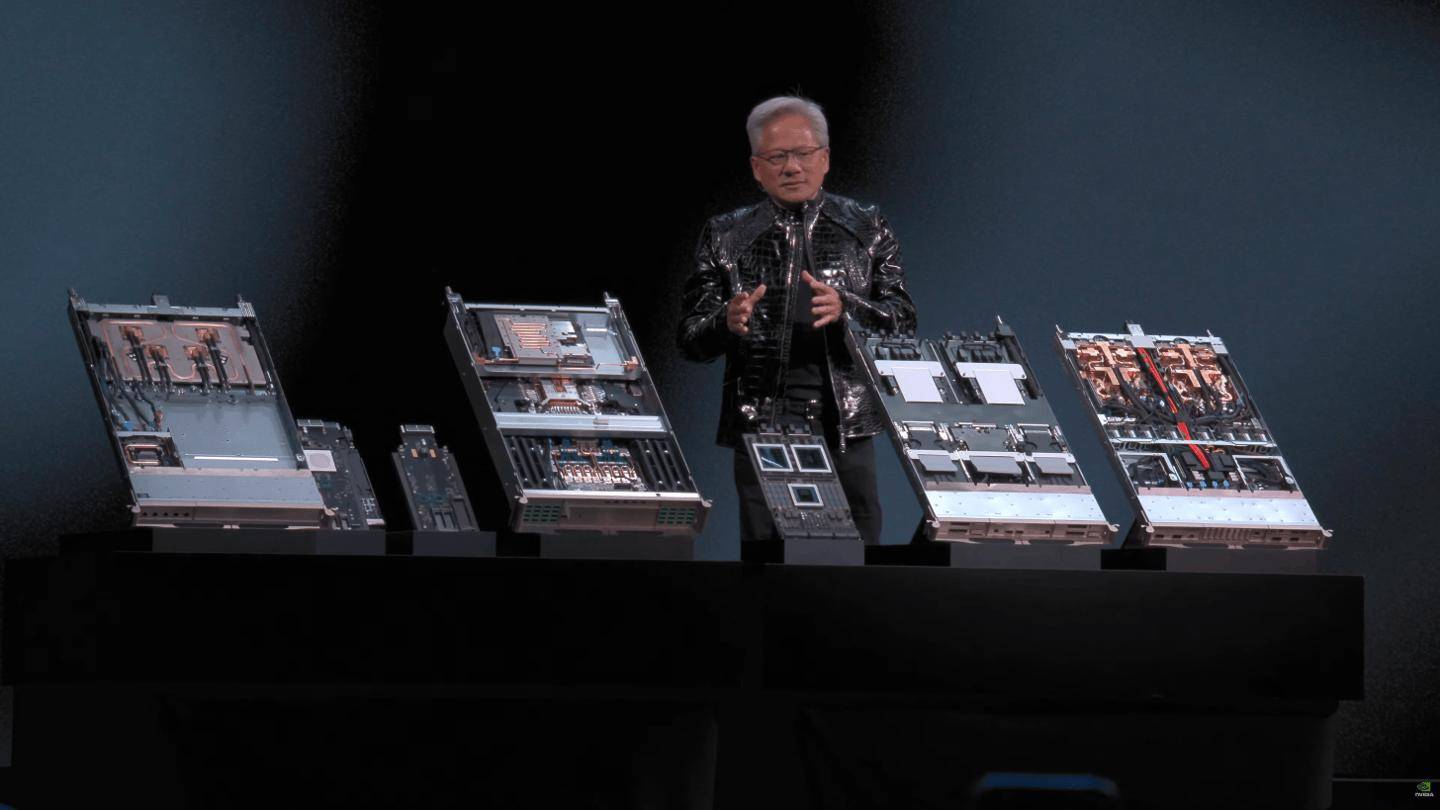
Core Insights - NVIDIA's CEO Jensen Huang announced a $20 billion acquisition of Groq, which is expected to play a revolutionary role in NVIDIA's AI strategy, comparable to the acquisition of Mellanox [1] - The integration of Groq is aimed at addressing the latency issues in the AI inference phase, as the industry moves towards an Agentic AI era requiring ultra-low latency and rapid response [1] - NVIDIA currently dominates the AI model training market with its Hopper and Blackwell architectures, but needs Groq's technology to set industry standards in the decoding phase, which is highly sensitive to latency [1] Strategic Layout - Groq is expected to enhance NVIDIA's capabilities in AI inference, particularly in achieving ultra-low latency decoding, which is critical for multi-agent collaboration [1] - The AI industry is accelerating towards a multi-agent collaborative environment, necessitating advancements in response speed and latency [1] Technical Implementation - NVIDIA aims to fully leverage Groq's hardware potential, specifically its Language Processing Unit (LPU) that utilizes on-chip SRAM to provide internal bandwidth of tens of TB per second [2] - This technology has been adopted by other industry leaders like Cerebras and Microsoft, allowing AI agents to perform complex logical reasoning in seconds, thus overcoming computational bottlenecks in multi-agent collaboration [2] Hardware Deployment - GF Securities predicts that NVIDIA will unveil a hybrid computing solution called "LPX Rack" at the GTC conference, which is expected to integrate 256 LPU units within a single rack [4] - The LPU units will connect using a native quasi-synchronous inter-chip protocol, while LPU and GPU connections are anticipated to utilize NVLink Fusion technology for efficient processing of massive KV cache offloads during the prefill phase [4]
大手笔背后的焦虑,英伟达用200亿美元购买Groq技术授权
Sou Hu Cai Jing· 2026-01-01 10:19
Core Viewpoint - Nvidia announced a significant deal worth $20 billion to acquire technology licensing from AI chip startup Groq, marking its largest transaction in history, comparable to the total of all previous acquisitions [1][3]. Group 1: Transaction Structure - The deal is structured as a non-exclusive technology licensing agreement rather than a full acquisition, which is a strategic move to avoid antitrust scrutiny [3][4]. - Nvidia's market capitalization is approaching $3.5 trillion, making it a target for regulatory oversight on major actions [4][6]. Group 2: Strategic Rationale - The $20 billion investment not only secures technology but also the expertise and patents of Groq's team, particularly its founder, a key figure in AI chip architecture [6][8]. - By attracting Groq's talent, Nvidia effectively removes a critical competitor from the market while gaining access to advanced technology [8][22]. Group 3: Technology Insights - Groq's core product, the Language Processing Unit (LPU), is designed specifically for AI inference, distinguishing it from Nvidia's GPUs, which dominate the training market [9][11]. - Groq claims its LPU offers significantly faster inference speeds and lower costs compared to Nvidia's H100, which could disrupt Nvidia's current market position [11][13]. Group 4: Competitive Landscape - The AI chip market is becoming increasingly competitive, with major players like Google, Amazon, and AMD aggressively pursuing market share in inference technology [19][27]. - Nvidia's acquisition of Groq can be seen as a strategic insurance policy to maintain its competitive edge in the evolving AI landscape [22][29]. Group 5: Market Implications - The integration of Groq's LPU technology into Nvidia's existing product line could enhance its distribution capabilities and accelerate market penetration [25][27]. - This transaction reflects Nvidia's urgency to adapt to a rapidly changing market where it faces significant competition, indicating a shift in the AI chip industry dynamics [27][29].
英伟达为何斥资200亿美元收购Groq
半导体行业观察· 2026-01-01 01:26
Core Viewpoint - Nvidia's acquisition of Groq's technology and talent for $20 billion raises questions about the strategic rationale behind the deal, especially given the potential for antitrust scrutiny and the actual benefits derived from Groq's technology [1][2]. Group 1: Nvidia's Acquisition Details - Nvidia paid $20 billion for a non-exclusive license of Groq's intellectual property, including its Language Processing Unit (LPU) and associated software libraries [2]. - Groq will continue to operate independently, retaining its high-performance inference-as-a-service product, despite significant talent loss to Nvidia [2]. - The acquisition is seen as a move to eliminate competition, but the justification for the $20 billion price tag remains debatable [2]. Group 2: Technology Insights - Groq's LPU utilizes Static Random Access Memory (SRAM), which is significantly faster than the High Bandwidth Memory (HBM) used in current GPUs, potentially offering 10 to 80 times the speed [3]. - Groq's chip achieved a token generation speed of 350 tok/s in tests, and even higher at 465 tok/s when running mixed expert models [3]. - However, SRAM's low space efficiency means that running medium-sized language models would require hundreds or thousands of Groq's LPUs, raising questions about its practicality [4]. Group 3: Architectural Innovations - The key innovation from Groq is its "dataflow architecture," designed to accelerate linear algebra operations during inference, which could provide Nvidia with a competitive edge in chip performance [5][6]. - This architecture allows for continuous processing of data without waiting for memory, potentially overcoming bottlenecks that slow down GPU performance [6][7]. - Groq's LPU can theoretically achieve performance levels comparable to high-end GPUs, but practical performance may vary [7]. Group 4: Future Implications - Nvidia's collaboration with Groq could lead to new technology options for enhancing chip performance, particularly in inference optimization, an area where Nvidia has previously lacked a strong offering [8]. - The upcoming Rubin series chips from Nvidia are designed to optimize the inference pipeline, indicating a shift in architecture that could leverage Groq's technology [9]. - Groq's existing chip designs may not serve as excellent decoders, but they could be useful for speculative decoding, which enhances performance by predicting outputs from smaller models [9]. Group 5: Market Context - The $20 billion price tag for Groq's technology is substantial but manageable for Nvidia, given its recent operating cash flow of $23 billion [10]. - The acquisition may not immediately impact Nvidia's current chip production, as the company could be positioning itself for long-term strategic advantages [12].
英伟达豪掷200亿美元“收编”最强对手,华尔街:目标价看涨至300美元
美股IPO· 2025-12-27 03:11
Core Viewpoint - Wall Street analysts are optimistic about NVIDIA's acquisition of AI inference chip company Groq, viewing it as a strategic move that combines both offensive and defensive elements [1][4][7] Group 1: Acquisition Details - NVIDIA has signed a non-exclusive licensing agreement with Groq, allowing NVIDIA to use Groq's inference technology, with Groq's key personnel joining NVIDIA to enhance the implementation of this technology [3][4] - The acquisition is valued at approximately $20 billion, focusing on Groq's intellectual property and talent [3][4] Group 2: Analyst Ratings - Cantor has reiterated NVIDIA as a "preferred stock," maintaining a "buy" rating with a target price of $300, emphasizing the dual strategic significance of the acquisition [4][5] - Bank of America has also maintained a "buy" rating for NVIDIA with a target price of $275, acknowledging the high cost of the acquisition but recognizing its strategic value [6][7] Group 3: Strategic Implications - The acquisition is seen as a way for NVIDIA to convert potential threats from ASIC technology into competitive advantages, thereby strengthening its market position in AI infrastructure, particularly in real-time workloads like robotics and autonomous driving [5][10] - Analysts highlight that Groq's low-latency, high-efficiency inference technology will be integrated into NVIDIA's complete system stack, potentially enhancing compatibility with CUDA and expanding NVIDIA's share in the inference market [5][10] Group 4: Groq's Background and Technology - Groq, founded in 2016 by Jonathan Ross, a key developer of Google's TPU, focuses on AI inference chips and has developed a language processing unit (LPU) that significantly outperforms NVIDIA's GPUs in inference speed [10][11] - Groq's partnerships with major companies like Meta and IBM, as well as its involvement in the U.S. government's "Genesis Project," position it as a strong competitor in the AI chip market [11]
黄仁勋200亿美金接盘Groq,中东王爷和特朗普都笑了
3 6 Ke· 2025-12-26 08:48
Core Insights - Groq has entered into a $20 billion technology licensing agreement with NVIDIA, which is not a legal acquisition but a non-exclusive technology licensing deal allowing NVIDIA to use Groq's hardware and architecture designs [2][3] - Groq's CEO Jonathan Ross and nearly all key members will join NVIDIA, while Groq will continue to operate as an independent company, retaining its core intellectual property [2] - The deal's significance extends beyond the monetary value, as it reflects NVIDIA's strategic positioning in the AI landscape amid regulatory challenges and market pressures [3][28] Group 1: Transaction Details - The transaction is valued at approximately $20 billion, which is enough to acquire GlobalFoundries entirely or represents a quarter of Intel's market value [3] - NVIDIA will acquire all of Groq's physical assets but not its intellectual property, indicating a focus on talent acquisition rather than a traditional acquisition [2] - Groq has raised a total of $1.8 billion in funding, with significant investments from entities like the Saudi sovereign wealth fund [5][27] Group 2: Groq's Technology and Market Position - Groq's core product, initially named TSP and later LPU, utilizes a unique architecture with 144-wide VLIW design, offering advantages in speed and efficiency [5][9] - The architecture's reliance on on-chip SRAM instead of external memory allows for fast access speeds but limits storage capacity, posing challenges for deploying larger AI models [6][7] - Groq's architecture is distinct from traditional ASICs and TPUs, focusing on deterministic system behavior and low latency, which are appealing for real-time inference scenarios [10][11] Group 3: Industry Context and Strategic Implications - The deal is seen as a strategic move by NVIDIA to solidify its position in the AI infrastructure market, especially in light of increasing regulatory scrutiny and competition [28][31] - The transaction may also serve as a means for NVIDIA to gain favor with U.S. and Middle Eastern stakeholders, potentially easing export restrictions on AI products [28][30] - The broader context includes a trend of large tech companies engaging in high-value agreements with promising startups to secure technology and talent without formal acquisitions [26][27]
英伟达重金收编潜在挑战者
Bei Jing Shang Bao· 2025-12-25 14:41
Core Insights - Groq, an AI inference chip startup founded in 2016, has entered a non-exclusive licensing agreement with Nvidia, where Nvidia pays approximately $20 billion for Groq's core AI inference technology and related assets [2][5] - Groq's technology is seen as a significant competitor to Nvidia's GPUs, particularly in the AI inference market, where Groq claims its chips can achieve up to 10 times the inference speed compared to Nvidia's offerings [1][5] - The transaction reflects a growing trend among tech giants to utilize "quasi-acquisitions" to acquire technology and talent while avoiding full ownership and regulatory scrutiny [4][5] Company Overview - Groq was founded by Jonathan Ross, a key member of Google's TPU project, to address inefficiencies in traditional computing architectures for modern AI tasks [1] - The company has recently partnered with major firms like Meta and IBM to enhance its AI inference capabilities [3] Financial Aspects - The $20 billion deal significantly exceeds Groq's previous valuation of $6.9 billion, indicating a strong market interest in its technology [7][8] - Groq's recent revenue forecast was lowered by approximately 75%, highlighting challenges in scaling its operations and the competitive landscape [7] Strategic Implications - Nvidia aims to integrate Groq's low-latency processors into its AI factory architecture to enhance its platform capabilities for AI inference and real-time workloads [3][5] - The acquisition strategy allows Nvidia to strengthen its position in the AI inference market while maintaining Groq's operational independence, which could lead to faster commercialization of Groq's technology [8]
AI芯片独角兽一年估值翻番,放话“三年超英伟达”,最新融资53亿超预期
3 6 Ke· 2025-09-18 08:15
Core Insights - Groq, an AI chip startup, has raised $750 million in funding, exceeding the initial expectation of $600 million, bringing its valuation to $6.9 billion [1][4][5] - The company's valuation has more than doubled in one year, from $2.8 billion to $6.9 billion [2][4][5] - Groq's CEO, Jonathan Ross, emphasizes the importance of inference in the current AI era and the company's goal to build infrastructure for high-speed, low-cost delivery [3][4] Funding and Valuation - The recent funding round was led by Disruptive, with significant investments from BlackRock, Luminus Management, and Deutsche Telekom Capital Partners, among others [6][9] - Groq has raised over $3 billion in total funding to date [6][9] Company Strategy and Operations - Groq plans to use the new funds to expand its data center capacity, including announcing its first Asia-Pacific data center location this year [7][9] - The company has received requests from clients for higher capacity that it currently cannot meet [8] Product and Technology - Groq is known for producing AI inference chips optimized for pre-trained models, with a founding team that includes many former Google TPU engineers [9][10] - The company has developed the world's first Language Processing Unit (LPU) and refers to its hardware as "inference engines," designed for efficient AI model operation [12] - Groq claims its inference acceleration solution is ten times faster than NVIDIA's GPUs while reducing costs to one-tenth [14]