
全国统一大市场

Search documents
利好!重磅发布会 信息量很大
Zhong Guo Ji Jin Bao· 2026-01-20 04:54
Core Viewpoint - The Chinese government is focused on implementing policies to ensure a strong start for the 14th Five-Year Plan, emphasizing economic resilience, high-quality development, and improved living standards [1][3]. Economic Development Goals - By 2025, the main economic and social development goals are expected to be achieved, with economic operations showing steady progress and resilience [3]. - The government aims to implement more proactive macro policies, promote high-level technological self-reliance, and enhance the quality of life for citizens [3]. Technological and Industrial Advancements - The digital economy's added value is projected to reach 49 trillion yuan by 2025, accounting for approximately 35% of GDP, creating significant market opportunities [4]. - The government is planning to advance several major high-tech industry projects during the 14th Five-Year Plan period [4]. Domestic Demand and Supply Optimization - The government recognizes the current imbalance of strong supply and weak demand, aiming to expand domestic demand and optimize supply to achieve a dynamic balance [6]. - Key strategies include focusing macro policies on strengthening domestic circulation, enhancing the real economy, and promoting a unified national market [7]. Investment and Consumption Initiatives - In 2025, over 360 million people are expected to apply for subsidies for replacing old consumer goods, driving sales of related products to exceed 2.6 trillion yuan [9]. - The "Two New" policies are expected to support over 8,400 equipment upgrade projects, leading to total investments exceeding 1 trillion yuan and a projected 11.8% increase in equipment investment [9]. Policy Effectiveness and Future Plans - The government plans to optimize the "Two New" policies to enhance their effectiveness, including lowering barriers for project applications and improving management of funding [11][12]. - Future initiatives will focus on increasing residents' income to boost consumption, with plans for a new action plan aimed at stabilizing jobs and increasing urban and rural residents' income [14].
12月经济数据点评:四大对冲力量在增强
Huachuang Securities· 2026-01-20 04:46
Group 1: Economic Structure and Wealth - By 2025, the new economy is expected to account for 20.1% of the total economy, surpassing the old economy at 19.7% for the first time[2][11] - Financial assets held by residents are projected to exceed residential assets by 2026, driven by increases in deposits, non-deposit financial investments, and stock market valuations[3][13] Group 2: Spending Willingness and Supply-Demand Dynamics - Resident spending willingness has declined from 101.4% in 2021 to 80% in 2025, but is expected to rebound to 107.6% by 2025 due to fiscal and external demand support[4][18] - In December 2025, the midstream manufacturing sector is expected to see a demand growth rate of 8.4%, contrasting with upstream at -6.8% and downstream at 3.2%[5][21] Group 3: Quarterly Economic Data Insights - In Q4 2025, GDP growth was recorded at 4.5%, with a nominal GDP growth of 3.8% and a cumulative annual growth of 5.0%[6][25] - The contribution rates to economic growth in Q4 were 52.9% from final consumption, 16.0% from capital formation, and 31.1% from net exports[29] Group 4: Employment and Consumer Behavior - The urban unemployment rate remained stable at 5.1% in December 2025, with a total of 18.006 million migrant workers, reflecting a year-on-year growth of 0.8%[46][39] - Consumer spending growth in December was 0.9%, down from 1.3% in the previous month, indicating a slowdown in consumer demand[51][43]
国家发展改革委:综合整治“内卷式”竞争,实现从卷价格向优价值转变
Qi Huo Ri Bao· 2026-01-20 04:36
Core Viewpoint - The Chinese government is focusing on expanding domestic demand and optimizing supply to achieve a dynamic balance and virtuous cycle in the economy, emphasizing the need for a new economic development model driven by domestic demand and consumption [2][3][4]. Group 1: Economic Strategy - The National Development and Reform Commission (NDRC) is developing a strategic plan for expanding domestic demand from 2026 to 2030, addressing the current issues of insufficient demand and supply [2]. - The strategy aims to strengthen the domestic circulation of the economy, adapting to the trend of demand upgrading and aligning with the new technological revolution and industrial transformation [2]. Group 2: Focus on Real Economy - The emphasis is placed on developing the real economy and constructing a modern industrial system, which is seen as the foundation of China's economic development [3]. - The approach includes fostering new supply through innovation and creating new job opportunities, with a focus on intelligent, green, and integrated development [3]. Group 3: Market Regulation and Competition - The government aims to enhance market vitality by advancing the construction of a unified national market and addressing issues of "involution" in competition [3]. - Measures will be taken to improve market access, ensure fair competition, and regulate prices in key industries to promote a healthy market order [3]. Group 4: Innovation and Development Potential - By 2026, China's economic structure is expected to continue improving, with new productive forces developing steadily and significant potential being released across consumption, investment, technology, and regional development [4]. - New economic growth points are emerging in sectors such as renewable energy, aerospace, and quantum technology, with new energy storage capacity exceeding 100 million kilowatts, accounting for over 40% of the global total [4][5]. Group 5: Regional Innovation and Investment - China has 24 global top 100 innovation clusters, leading the world for three consecutive years, with plans to establish major international technology innovation centers in key regions [5]. - The establishment of national venture capital funds aims to enhance regional investment and innovation, contributing to the creation of a global technology innovation hub [5].
利好!重磅发布会,信息量很大
中国基金报· 2026-01-20 04:35
Core Viewpoint - The article discusses the implementation of the Central Economic Work Conference's spirit and the efforts to achieve a good start for the "14th Five-Year Plan," highlighting the resilience of China's economic development and the focus on enhancing domestic demand and innovation [1][3]. Group 1: Economic Development Goals - By 2025, the main goals for economic and social development are expected to be achieved, with economic operations showing stability and progress, and improvements in people's livelihoods [3]. - The focus will be on implementing more proactive macro policies, advancing high-level technological self-reliance, and breaking through economic circulation bottlenecks [3][4]. Group 2: Digital Economy and Innovation - The digital economy's added value is projected to reach 49 trillion yuan by 2025, accounting for approximately 35% of GDP, indicating significant market potential [4]. - China currently has 24 global top 100 innovation clusters, maintaining the highest number in the world, which enhances the role of innovation in driving economic growth [4]. Group 3: Domestic Demand and Supply Optimization - There is a current imbalance in the economy characterized by strong supply and weak demand, necessitating a focus on expanding domestic demand and optimizing supply to achieve a dynamic balance [6]. - The strategy includes three key focuses: strengthening domestic circulation, emphasizing the real economy, and advancing the construction of a unified national market [6][7]. Group 4: Investment and Consumption Policies - In 2025, over 360 million people are expected to apply for subsidies for replacing old consumer goods, which will boost related sales by over 2.6 trillion yuan [9]. - The "Two New" policies are expected to play a significant role in stabilizing investment, expanding consumption, and promoting transformation, with a total investment increase of 1.8 percentage points expected from these initiatives [9]. Group 5: Enhancing Consumer Capacity - Plans are underway to enhance residents' income through actions aimed at stabilizing and expanding employment, which is crucial for boosting domestic demand [13][14]. - The government will focus on combining investment in physical and human capital to improve investment efficiency and promote consumer demand [14].

利好!重磅发布会,信息量很大
Zhong Guo Ji Jin Bao· 2026-01-20 03:42
Core Viewpoint - The Chinese government is committed to implementing policies that promote economic stability and growth, focusing on enhancing domestic demand and optimizing supply to achieve a balanced and sustainable economic development during the 14th Five-Year Plan period [2][4][10]. Group 1: Economic Development Goals - By 2025, the main economic and social development goals are expected to be achieved, with economic operations showing steady progress and resilience [2]. - The focus will be on implementing proactive macro policies, advancing high-level technological self-reliance, and addressing economic circulation bottlenecks [2][4]. - The digital economy's added value is projected to reach 49 trillion yuan by 2025, accounting for approximately 35% of GDP, indicating significant market potential [3]. Group 2: Domestic Demand and Supply Optimization - The government aims to expand domestic demand and optimize supply to achieve a dynamic balance and virtuous cycle at a higher level [4][10]. - A strategic plan for expanding domestic demand from 2026 to 2030 is being developed to align new demand with new supply [4]. - Emphasis will be placed on strengthening the real economy and modernizing the industrial system, with a focus on innovation and the development of new industries [5]. Group 3: Investment and Consumption Initiatives - In 2025, over 360 million people are expected to apply for subsidies for replacing old consumer goods, driving sales of related products to exceed 2.6 trillion yuan [6][7]. - The "Two New" policies are expected to support over 8,400 equipment renewal projects, leading to total investments exceeding 1 trillion yuan and a projected 11.8% increase in equipment investment [7]. - The government plans to enhance the effectiveness of the "Two New" policies by optimizing support ranges and subsidy standards, ensuring better management of project funding [8][9]. Group 4: Consumer Income and Spending Power - Increasing consumer income is identified as a crucial aspect of boosting domestic demand, with plans for actions to stabilize and expand employment and enhance residents' income [10]. - The government will continue to implement the old-for-new consumption policy, with an initial allocation of over 60 billion yuan to stimulate consumption [10]. - A combination of policy support and reform innovation will be pursued to enhance the effectiveness of domestic demand strategies [11].
未来5年大方向定了!发改委:扩大内需战略实施方案将出台
Xin Lang Cai Jing· 2026-01-20 03:29
Core Viewpoint - The National Development and Reform Commission (NDRC) has outlined the successful completion of major economic and social development goals for 2025, emphasizing steady economic performance and improved resilience, alongside enhanced welfare policies for the populace [2][10]. Group 1: Economic Policies and Goals - The NDRC is implementing more proactive macroeconomic policies to elevate economic strength [3]. - A focus on accelerating high-level technological self-reliance and breakthroughs in new productive forces is being prioritized [3]. - The NDRC has conducted over 120 meetings with private enterprises to address development challenges directly [3][12]. - Urbanization rate reached 67.89% by year-end, an increase of 0.89 percentage points from the previous year [3]. Group 2: Future Economic Outlook - The NDRC is planning to advance significant high-tech industry projects during the 14th Five-Year Plan period [4]. - The digital economy's added value is expected to reach 49 trillion yuan, accounting for approximately 35% of GDP by 2025 [4]. - China is home to 24 of the world's top 100 innovation clusters, maintaining its leading position globally [4]. Group 3: Domestic Demand and Supply Balance - The NDRC aims to address the current imbalance of strong supply and weak demand by expanding domestic demand and optimizing supply [5]. - A strategic plan for expanding domestic demand from 2026 to 2030 is being developed [5]. - Emphasis is placed on strengthening the domestic economic cycle and adapting to demand upgrades [5]. Group 4: Market Regulation and Competition - The NDRC is focused on enhancing the modern industrial system and promoting quality upgrades in key industries [6]. - Measures are being taken to regulate market operations and eliminate "involution" competition, shifting focus from price competition to value [6]. - The establishment of a unified national market is a priority to stimulate market vitality [6]. Group 5: Monetary Policy and Price Stability - Promoting reasonable price recovery is a key goal of macroeconomic regulation, with positive changes observed in price trends since Q4 2025 [7]. - A combination of proactive fiscal policies and moderately loose monetary policies will be implemented to foster economic growth and price recovery [7]. Group 6: Investment and Project Management - The NDRC is lowering investment thresholds for project applications to support small and medium-sized enterprises [9]. - Enhanced scrutiny and management of project conditions and standards are being established to prevent resource wastage [9]. - A closed-loop management system for equipment renewal projects is being developed to ensure accountability and improve project implementation efficiency [9]. Group 7: Social Welfare and Employment - The NDRC is committed to enhancing public welfare and addressing urgent societal needs, with an average urban unemployment rate of 5.2% for the year [10]. - Initiatives such as childcare subsidies and free preschool education are being implemented to improve quality of life [10]. - The upcoming 2026 Spring Festival holiday will be extended to nine days, responding to public demand for better holiday arrangements [11].
国家发改委:完全有信心、有能力、有条件、有底气推动“十五五”开好局、起好步
Xin Lang Cai Jing· 2026-01-20 03:29
Core Viewpoint - The Chinese government is committed to implementing proactive macroeconomic policies and reforms to ensure a strong start for the 14th Five-Year Plan, aiming for high-quality economic development and improved living standards [1][2][3][4]. Group 1: Economic Policies and Growth - The government plans to implement a series of proactive macroeconomic policies to enhance economic strength, targeting a total economic output of 140 trillion yuan with a growth rate of 5%, maintaining a leading position among major global economies [1]. - The focus will be on stabilizing employment and promoting high-quality development through various measures, including the continuation of policies initiated in the previous year [1]. Group 2: Technological Innovation - There is a strong emphasis on accelerating self-reliance in technology, with significant breakthroughs in new productive forces, particularly in artificial intelligence, biomedicine, and robotics, positioning China at the forefront of global innovation [2]. - The manufacturing sector has maintained its position as the world's largest for 16 consecutive years, showcasing the country's robust innovation capabilities [2]. Group 3: Reform and Opening Up - The government is addressing systemic barriers and deep-seated contradictions through targeted reforms, enhancing the competitive landscape in key industries and promoting a unified national market [3]. - The implementation of the Private Economy Promotion Law and regular communication with private enterprises aims to resolve development challenges, with over 120 meetings held to support private sector growth [3]. Group 4: Regional Development and Urbanization - Efforts are being made to promote balanced regional development and urbanization, with a focus on integrating regional strategies and enhancing the urbanization rate, which reached 67.89%, reflecting an increase of 0.89 percentage points from the previous year [4]. - The development of green economic corridors along the Yangtze and Yellow Rivers is being advanced to support sustainable growth [4]. Group 5: Social Welfare and Employment - The government is enhancing social welfare initiatives to meet public expectations, with an average urban unemployment rate of 5.2% and the introduction of childcare subsidies and free preschool education [4]. - These measures aim to improve the quality of life for citizens and create a sense of tangible benefits from economic growth [4].
国家发改委:将研究制定全国统一大市场建设条例
Bei Jing Shang Bao· 2026-01-20 03:08
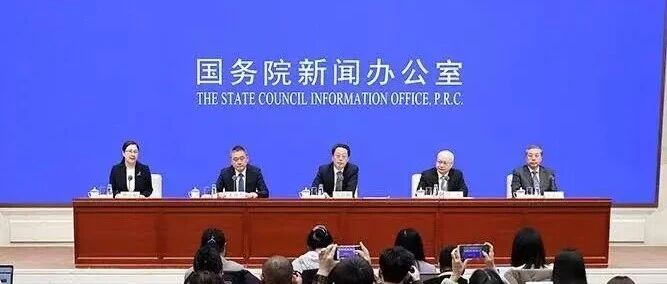
北京商报讯(记者 程靓)1月20日,国家发改委体制改革综合司司长王任飞在国务院新闻办公室举行的 新闻发布会上表示,将研究制定全国统一大市场建设条例,加强法制保障。同时,将制定出台妨碍建设 全国统一大市场事项清单、招商引资鼓励和禁止事项清单,明确地方在促进经济发展时"哪些能做,哪 些不能做"。 ...
国家发改委:将研究制定出台2026-2030年扩大内需战略实施方案
第一财经· 2026-01-20 03:07
Core Viewpoint - The article emphasizes the need for China to strengthen domestic demand and adapt to the upgrading of demand structure, with a focus on innovation and high-tech industries to drive economic growth [1][2]. Group 1: Economic Strategy and Development - The National Development and Reform Commission (NDRC) plans to formulate a strategy for expanding domestic demand from 2026 to 2030, aiming to create new demand through new supply and provide strong innovation measures and resource guarantees [1]. - By 2025, China's digital economy is expected to reach a value of 49 trillion yuan, accounting for approximately 35% of GDP, indicating significant market potential [2]. - The NDRC is working on a series of major projects in high-tech industries during the 14th Five-Year Plan period, focusing on the integration of innovation, industry, and talent [2]. Group 2: Investment and Policy Measures - The establishment of a national-level merger and acquisition fund is being considered to enhance government investment and fund layout planning, promoting innovation and new productive forces [3]. - A unified subsidy standard for "two new" initiatives (new energy and new technology) will be implemented nationwide, covering various sectors including automotive and electronics [4]. - The promotion of reasonable price recovery is highlighted as a key consideration in monetary policy, with a focus on structural adjustments and a combination of fiscal and monetary policies to foster economic growth [5]. Group 3: Market Regulation and Legal Framework - The NDRC plans to develop a list of items that hinder the establishment of a unified national market and a list of encouraged and prohibited items for investment attraction [6].
国家发改委:将统一“两新”补贴标准,落实全国统一大市场要求
Mei Ri Jing Ji Xin Wen· 2026-01-20 02:50
Group 1 - The National Development and Reform Commission (NDRC) will unify the subsidy standards for "two new" policies, which include vehicle scrapping and replacement, as well as the replacement of six categories of home appliances and four categories of digital and smart products [1] - This initiative aims to implement a nationwide unified market requirement, ensuring consistent subsidy standards across the country [1] - The announcement was made by Wang Shancheng, the Director of the Resource Conservation and Environmental Protection Department of the NDRC, during a press conference [1]