
冷链物流

Search documents
财经聚焦|今年中国农民丰收节金秋消费季,有何新看点?
Xin Hua She· 2025-09-22 15:05
Core Insights - The article highlights the vibrant scenes of agricultural harvest celebrations and the potential of urban-rural consumption markets during the "Golden Autumn Consumption Season" in September [1][2]. Group 1: Agricultural Products and Consumption Trends - Various local agricultural products are gaining popularity, with significant sales figures reported; for instance, daily sales in a market reached 100,000 jin (50,000 kg) [2]. - The "Golden Autumn Consumption Season" is a key event for promoting agricultural products, running from early September to the end of November, themed "Celebrating Agricultural Harvest and Enjoying a Better Life" [2]. - E-commerce platforms have reported substantial growth in sales of agricultural products, with over 120 million orders and a year-on-year increase of 56% in order volume and 47% in transaction value from September 10 to 19 [5]. Group 2: Youth Engagement and Cultural Experience - An increasing number of young consumers are drawn to unique rural products, with many participating in local markets and cultural experiences [6][7]. - Young consumers prefer online shopping for agricultural products, utilizing platforms like "Duoduo Fengshouguan" for easy access to quality goods [7]. - The "Rice Field Paradise" in Zhejiang has attracted many young visitors, with a reported 20% increase in visitor numbers since September [7]. Group 3: Supportive Policies and Infrastructure Development - Various e-commerce platforms and financial institutions have launched numerous support measures for farmers, including subsidies and promotional initiatives [5]. - Experts emphasize the need for improved cold chain logistics and infrastructure to enhance the distribution of agricultural products, addressing issues like insufficient initial cold chain facilities [9][11]. - Local governments are taking steps to facilitate agricultural product sales, such as establishing direct sales points and enhancing rural e-commerce training programs [11]. Group 4: Future Outlook - The article suggests that as urban-rural consumption links become more efficient, the potential for agricultural products to move from villages to cities will increase, further stimulating consumption [12].

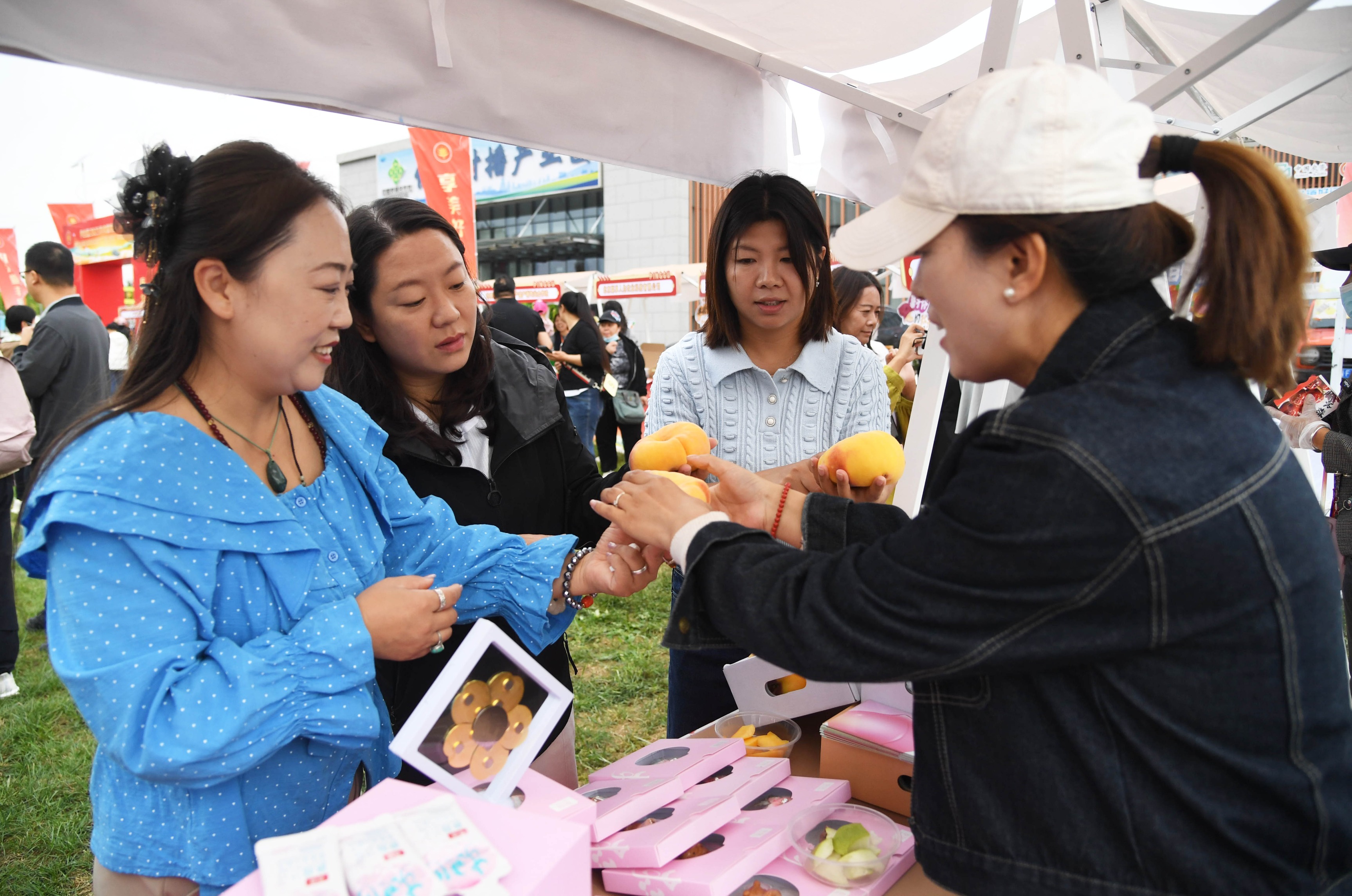
财经聚焦丨今年中国农民丰收节金秋消费季,有何新看点?
Xin Hua Wang· 2025-09-22 14:47
Core Viewpoint - The article highlights the vibrant consumption scene during the harvest festival, showcasing the potential of urban and rural markets through various agricultural products and cultural experiences [1][2][4]. Group 1: Agricultural Products and Market Trends - The "Golden Autumn Consumption Season" is a key event celebrating agricultural harvests, running from early September to the end of November, with a theme of "Celebrating Agricultural Harvest, Enjoying a Better Life" [2][4]. - In Shandong, the daily sales volume of seafood reached 100,000 jin (approximately 50,000 kg) during this consumption season, driven by the seasonal demand and the opening of the sea [2]. - Data from Douyin indicates that from September 10 to 19, over 120 million orders of various agricultural products were sold, with a year-on-year increase of 56% in order volume and 47% in transaction value [4]. Group 2: E-commerce and Financial Support - Major e-commerce platforms and financial institutions have launched numerous support measures, including 25 initiatives from six well-known e-commerce platforms and 34 measures from eight financial institutions aimed at assisting farmers [4]. - The integration of online and offline sales models has provided consumers with diverse choices and revitalized the market, as noted by experts [4]. Group 3: Consumer Demographics and Preferences - There is a growing interest among young consumers in "earthy and beautiful" products, with many young people participating in the consumption season, facilitated by e-commerce and logistics developments [5][6]. - Young consumers prefer online platforms for purchasing agricultural products, with a notable increase in participation from university students [6]. Group 4: Challenges and Solutions in Agricultural Sales - Despite the booming sales, challenges such as inadequate cold chain logistics and market saturation in e-commerce are highlighted, necessitating improvements in infrastructure and technology [7][9]. - Local governments are taking initiatives to enhance the sales channels for agricultural products, such as setting up direct sales points and promoting rural e-commerce [9].

金乡大蒜:全链赋能擦亮“世界蒜都”名片
Zhong Guo Shi Pin Wang· 2025-09-22 08:17
Core Insights - The article highlights the advancements in garlic cultivation and processing in Jinxiang County, emphasizing the integration of technology and standardization in the industry [1][2]. Group 1: Breeding and Cultivation - Jinxiang County, known as the "Garlic Capital," cultivates garlic on 600,000 acres, influencing over 2 million acres in surrounding areas. A comprehensive breeding system has been established, utilizing space breeding, gene editing, and virus-free seedlings to select 8 new suitable varieties from over 700 germplasm resources [1]. - The county has successfully developed varieties such as "Jin Garlic No. 5" and "Hang Garlic No. 1," with the unique "Yongguang Single Clove No. 3" achieving a single clove rate of 96%, overcoming previous limitations in northern regions [1]. Group 2: Standardization and Mechanization - Jinxiang has promoted standardized planting, establishing a core demonstration area of 10,000 acres, with a cumulative certification area of 1 million acres under the "Three Products and One Standard" initiative. By 2024, the mechanization rate for garlic farming is expected to reach 60%, achieving full mechanization in production [1]. Group 3: Storage and Logistics - The county has built the largest cold chain logistics base for agricultural products in China, with a total cold storage capacity of 4.8 million tons, capable of preserving approximately 40% of the national garlic supply. Over 5,000 standard cold storage facilities have been established to ensure domestic and international supply [1]. Group 4: Marketing and Distribution - Jinxiang has developed a robust platform for garlic distribution, including 3 designated markets by the Ministry of Agriculture and Rural Affairs, 6 e-commerce parks, and 2 provincial-level cross-border e-commerce zones. There are 545 e-commerce companies and 6,742 online stores, with over 900 enterprises holding independent import and export rights, exporting to more than 170 countries and regions, accounting for over 70% of national exports [2]. Group 5: Processing and Value Addition - The establishment of the Jinxiang County Food Industry Park has brought together over 50 garlic-related enterprises, focusing on initial processing with an annual output of over 1.5 million tons, exporting to over 170 countries and regions [2]. - The food industry park collaborates with over 40 universities and research institutions to develop high-value products such as garlic extract and health supplements, with an annual output exceeding 1.8 million tons across 105 products [2].
中西部城市离“海鲜自由”更近一步了
吴晓波频道· 2025-09-22 00:30
Core Viewpoint - The article highlights the increasing consumption of seafood in China, driven by rising incomes and improved supply chains, leading to a significant shift in consumer behavior towards seafood, especially in inland regions [2][3][17]. Group 1: Market Trends - From January to July 2023, the national seafood wholesale market transaction volume reached 5.35 million tons, a year-on-year increase of 3.36%, with western regions like Sichuan and Chongqing also experiencing growth [2][16]. - The consumption of seafood by urban residents increased by 20% from 2013 to 2023, while rural residents saw an 84% increase, indicating a growing preference for seafood across demographics [3][17]. - The opening of fishing seasons in August led to a significant increase in seafood supply, with prices for certain species expected to drop by 20% to 30% [3][5]. Group 2: Regional Consumption Patterns - Coastal provinces have a per capita seafood consumption exceeding 60 kg, while inland provinces like Tibet have consumption as low as 1.23 kg, highlighting a stark regional disparity [13]. - The trend of seafood consumption is shifting westward, with significant increases in sales in western regions during festive seasons [16][17]. Group 3: Supply Chain Innovations - The introduction of strict fishing regulations since 2017 has led to a significant recovery of marine resources, with some species seeing population increases of 20% to 80% [18]. - Technological advancements in aquaculture, such as AI and 5G, have improved the efficiency and sustainability of seafood production [21][22]. - The establishment of a national cold chain logistics network has reduced transportation losses from 20% to below 8%, enhancing the efficiency of seafood distribution [36]. Group 4: Industry Transformation - The seafood industry is evolving from a focus on primary production to a more integrated model that includes processing and value-added products, increasing profitability [26]. - New farming techniques and the development of inland aquaculture are expanding the geographic reach of seafood production, with regions like Xinjiang successfully cultivating various seafood species [23][25].

诺力股份跌2.00%,成交额1.34亿元,主力资金净流出1397.67万元
Xin Lang Cai Jing· 2025-09-19 06:07
Company Overview - Noli Co., Ltd. is located in Changxing County, Zhejiang Province, and was established on March 3, 2000. The company was listed on January 28, 2015. Its main business involves the research, production, and sales of light small handling vehicles and electric storage vehicles [1]. - The revenue composition of Noli Co., Ltd. is as follows: Intelligent Manufacturing Equipment Business accounts for 60.67%, while Smart Logistics Business accounts for 39.51% [1]. Financial Performance - As of June 30, 2025, Noli Co., Ltd. achieved an operating income of 3.215 billion yuan, a year-on-year decrease of 7.40%. The net profit attributable to shareholders was 246 million yuan, reflecting a year-on-year growth of 2.28% [2]. - Since its A-share listing, Noli Co., Ltd. has cumulatively distributed cash dividends amounting to 1.167 billion yuan, with 533 million yuan distributed over the past three years [3]. Stock Market Activity - On September 19, Noli Co., Ltd. experienced a 2.00% decline in stock price, trading at 24.50 yuan per share, with a total transaction volume of 134 million yuan and a turnover rate of 2.10%. The total market capitalization is 6.311 billion yuan [1]. - Year-to-date, the stock price has increased by 43.67%, with a slight increase of 0.20% over the last five trading days, a decrease of 12.50% over the last 20 days, and an increase of 15.13% over the last 60 days [1]. Shareholder Information - As of June 30, 2025, the number of shareholders of Noli Co., Ltd. is 19,000, a decrease of 9.70% from the previous period. The average circulating shares per person increased by 10.74% to 13,585 shares [2]. - Among the top ten circulating shareholders, Hong Kong Central Clearing Limited ranks as the fifth largest, holding 5.6037 million shares, an increase of 1.6207 million shares compared to the previous period [3]. Market Position - Noli Co., Ltd. is classified under the Shenwan industry as Mechanical Equipment - Engineering Machinery - Complete Engineering Machinery. The company is associated with several concept sectors, including Smart Parking, Express Delivery, Smart Logistics, Small Cap, and Cold Chain Logistics [1].

海立股份涨2.40%,成交额4.13亿元,主力资金净流出1056.44万元
Xin Lang Cai Jing· 2025-09-19 02:06
Company Overview - Shanghai HaLi Group Co., Ltd. is located in the China (Shanghai) Free Trade Zone and was established on March 26, 1993, with its listing date on November 16, 1992 [2] - The company's main business involves the research, production, and sales of refrigeration rotary compressors, automotive electric scroll compressors, and refrigeration motors [2] - The revenue composition of the main business includes 73.17% from compressors and related refrigeration equipment, 25.24% from automotive parts, and 1.29% from other sources [2] Financial Performance - For the first half of 2025, the company achieved an operating income of 12.426 billion yuan, representing a year-on-year growth of 13.16% [2] - The net profit attributable to the parent company was 33.3546 million yuan, showing a significant year-on-year increase of 693.76% [2] Stock Performance - As of September 19, the stock price of HaLi increased by 2.40%, reaching 23.49 yuan per share, with a total market capitalization of 25.213 billion yuan [1] - The stock has risen 92.75% year-to-date, with a 5.53% increase over the last five trading days and a 114.72% increase over the last 60 days [1] - The company has appeared on the trading leaderboard eight times this year, with the most recent appearance on September 9, where it recorded a net buy of -21.7957 million yuan [1] Shareholder Information - As of June 30, 2025, the number of shareholders was 117,100, a decrease of 20.27% from the previous period [2] - The top ten circulating shareholders include the China Securities Shanghai State-owned Enterprise ETF, which holds 4.2098 million shares, an increase of 796,200 shares from the previous period [3]

盐田港跌1.10%,成交额1.42亿元,今日主力净流入-914.68万
Xin Lang Cai Jing· 2025-09-18 13:19
Core Viewpoint - Shenzhen Yantian Port Co., Ltd. is a key player in the port industry, with significant expectations for overall listing and benefits from the development of the Guangdong-Hong Kong-Macao Greater Bay Area [2][3] Company Overview - Shenzhen Yantian Port Co., Ltd. was established on July 21, 1997, and listed on July 28, 1997. The company is located in Yantian District, Shenzhen, Guangdong Province [7] - The main business activities include port investment and development, terminal construction management, toll highway operation management, customs supervision warehouses, and other port-related warehousing operations [7] - The revenue composition of the company is as follows: port cargo handling and transportation 59.49%, highway tolls 30.11%, and warehousing and other services 10.41% [7] Business Dynamics - The company operates in the port industry, which is closely linked to the national and regional economic trade development. The port serves as a crucial hub connecting domestic and international markets [2] - In May 2022, Kunshan Zhongpin Cold Chain Logistics Co., Ltd. became a wholly-owned subsidiary of Yantian Port Cold Chain Investment Holdings Co., Ltd. [2] - The company is recognized as one of the highest single-port container throughput terminals globally, with strong market expectations for its overall listing [2] Financial Performance - As of June 30, 2025, Yantian Port achieved an operating income of 389 million yuan, a year-on-year decrease of 4.49%, while the net profit attributable to shareholders increased by 4.07% to 653 million yuan [8] - The company has distributed a total of 7 billion yuan in dividends since its A-share listing, with 1.557 billion yuan distributed in the last three years [8] Market Activity - On September 18, the stock price of Yantian Port fell by 1.10%, with a trading volume of 142 million yuan and a turnover rate of 1.00%, bringing the total market capitalization to 23.294 billion yuan [1] - The stock has seen a net outflow of 5.1332 million yuan from main funds today, marking a reduction in main fund positions for two consecutive days [4][5]

湘佳股份跌2.03%,成交额6878.29万元,主力资金净流出576.13万元
Xin Lang Cai Jing· 2025-09-18 06:49
Company Overview - Xiangjia Co., Ltd. is located in Shimen County, Hunan Province, and was established on April 8, 2003. The company was listed on April 24, 2020. Its main business includes breeding of poultry, raising and selling poultry, poultry slaughtering and processing, and production and sales of feed and bio-fertilizers [2]. Financial Performance - For the first half of 2025, Xiangjia Co., Ltd. achieved operating revenue of 2.134 billion yuan, representing a year-on-year growth of 15.13%. However, the net profit attributable to the parent company was 5.8479 million yuan, a decrease of 59.95% year-on-year [2]. - Since its A-share listing, the company has distributed a total of 105 million yuan in dividends, with 63.9177 million yuan distributed over the past three years [3]. Stock Performance - As of September 18, the stock price of Xiangjia Co., Ltd. was 14.97 yuan per share, with a market capitalization of 3.042 billion yuan. The stock has increased by 19.42% year-to-date but has seen a decline of 4.47% in the last five trading days and 8.05% over the last 20 days [1][2]. - The company has appeared on the "Dragon and Tiger List" once this year, with the most recent appearance on April 7, where it recorded a net buy of -20.2126 million yuan [2]. Shareholder Information - As of June 30, 2025, the number of shareholders of Xiangjia Co., Ltd. was 22,400, an increase of 40.48% from the previous period. The average circulating shares per person were 5,802, a slight decrease of 0.34% [2]. - Among the top ten circulating shareholders, the Guotai Zhongzheng Livestock Breeding ETF (159865) ranked as the ninth largest shareholder, holding 1.443 million shares, an increase of 457,900 shares from the previous period [3]. Market Position - Xiangjia Co., Ltd. operates within the agricultural sector, specifically in the livestock industry focusing on chicken farming. Its main revenue sources are fresh chicken (58.53%), other products (20.74%), and live poultry (20.72%) [2]. - The company is categorized under several concept sectors, including micro-cap stocks, small-cap stocks, e-commerce, chicken farming, and cold chain logistics [2].
味知香跌2.01%,成交额6810.46万元,主力资金净流入189.47万元
Xin Lang Cai Jing· 2025-09-18 06:02
Company Overview - Suzhou Weizhi Xiang Food Co., Ltd. is located in Suzhou, Jiangsu Province, and was established on December 10, 2008. The company went public on April 27, 2021. Its main business involves the research, production, and sales of semi-finished dishes [2]. Financial Performance - For the first half of 2025, the company achieved operating revenue of 343 million yuan, representing a year-on-year growth of 4.70%. However, the net profit attributable to the parent company was 31.95 million yuan, a decrease of 24.46% year-on-year [2]. - Since its A-share listing, the company has distributed a total of 325 million yuan in dividends, with 225 million yuan distributed over the past three years [3]. Stock Performance - As of September 18, the company's stock price decreased by 2.01%, trading at 26.80 yuan per share, with a total market capitalization of 3.698 billion yuan. The stock has increased by 9.01% year-to-date, but has seen a decline of 3.11% over the last five trading days [1][2]. - The stock's trading volume on September 18 was 68.1046 million yuan, with a turnover rate of 1.82%. The net inflow of main funds was 1.8947 million yuan, with significant buying and selling activity [1]. Business Segmentation - The company's revenue composition is as follows: beef products 40.04%, poultry 17.35%, fish 14.32%, shrimp 13.36%, pork 8.33%, other categories 4.44%, supplementary products 1.28%, and lamb 0.87% [2]. - The company operates within the food and beverage industry, specifically in the food processing sector, focusing on pre-processed foods. It is associated with concepts such as pre-made dishes, small plates, and cold chain logistics [2].

曹妃甸供电公司:贴心服务护航“冷链物流”发展
Zhong Guo Neng Yuan Wang· 2025-09-17 03:37
Core Insights - The focus on cold chain logistics in the Caofeidian area is enhancing the sales capabilities of local agricultural products, particularly seafood, by ensuring stable electricity supply and advanced cold storage facilities [1][2] - The Caofeidian power supply company is proactively conducting electricity load forecasting and inspections to ensure the reliability of power supply for cold chain logistics during the fishing season [2] Group 1: Cold Chain Logistics Development - The Caofeidian cold chain logistics project has a total investment of 59 million yuan and covers an area of 21.5 acres, with a total construction area of approximately 9,000 square meters [1] - The facility is equipped with advanced cold chain equipment, capable of storing 9,000 tons of fresh fruits, vegetables, frozen meat, and seafood annually, allowing for staggered market entry to avoid low-price periods [1] - The project aims to leverage the port advantages of Caofeidian to connect local agricultural products with broader domestic and international markets, enhancing brand value [1] Group 2: Power Supply Assurance - The Caofeidian power supply company has conducted special power supply actions at 67 key refrigeration sites, eliminating 23 potential defects to ensure safe operation [2] - The company is implementing intelligent operation and maintenance systems to monitor load dynamics in real-time, adjusting power supply methods to prevent equipment overheating and failures [2] - The company is committed to providing continuous, safe, and high-quality power support for the development of the cold chain logistics economy in Caofeidian, positioning itself as a key driver for product value enhancement [2]