农产品电商

Search documents
突破山海阻隔,1400万青年带火乡土年货
吴晓波频道· 2026-02-04 00:30
Core Viewpoint - The modernization of rural areas should not be a homogenized transformation mimicking cities, but rather a rooted modernization that enhances local values and products [54]. Group 1: E-commerce Development in Rural Areas - The e-commerce platform Pinduoduo has significantly supported the sales of local agricultural products, such as the Salt Lake sheep meat, by providing financial and traffic support through initiatives like the "100 Billion Subsidy" [10][19]. - In 2023, the national online retail sales of agricultural products reached 587.03 billion RMB, marking a 12.5% increase from the previous year [19]. - The establishment of logistics infrastructure, including over 34,000 village-level logistics service stations, has facilitated the growth of rural e-commerce [22]. Group 2: Standardization and Quality Control - The shift towards standardized breeding practices has improved the quality of agricultural products, allowing for consistent market offerings [32]. - The implementation of a quality traceability system has enabled producers to ensure product consistency, which is crucial for meeting modern market demands [32][33]. - The production facility has expanded to 1,600 square meters, allowing for comprehensive processing capabilities, including cutting and vacuum sealing [34]. Group 3: Youth Engagement and Entrepreneurship - The trend of "returning youth" has surged, with over 14.3 million individuals returning to their hometowns for entrepreneurship by mid-2025, driven by increased business opportunities in rural areas [24]. - The number of young entrepreneurs on platforms like Pinduoduo has increased significantly, with a 30% rise in "post-00s" merchants [24]. - The growth of e-commerce in rural areas has created job opportunities and attracted more young people to engage in agricultural and related businesses [25]. Group 4: Market Dynamics and Value Creation - E-commerce has broken down traditional barriers between producers and consumers, allowing small farmers to regain pricing power and market access [39]. - The digital transformation has enabled farmers to respond to consumer preferences more effectively, leading to tailored product offerings [33]. - The brand value of Salt Lake sheep has reached 12.813 billion RMB, contributing significantly to local farmers' income [36]. Group 5: Structural Changes in Agriculture - The rise of e-commerce has addressed the long-standing structural issues in China's small-scale farming economy, enhancing farmers' market power [37]. - The integration of digital technology in agriculture has facilitated a "virtual agglomeration," overcoming geographical limitations and fostering industry clusters [35]. - The transformation of rural economies through e-commerce represents a fundamental shift in how agricultural products are marketed and valued [45].



葡萄柚成新晋爆款,福建水果如何在拼多多炼成区域“金招牌”?
Nan Fang Du Shi Bao· 2025-10-16 03:08
Core Insights - The article highlights the success of young farmers in Fujian, particularly Zhang Jin, who transitioned from a sports education background to selling local agricultural products on Pinduoduo, leveraging the platform's support to boost sales and help local farmers [1][2][4]. Group 1: Market Dynamics - Fujian is a major fruit-producing province in southern China, with products like honey pomelo and grapefruit becoming significant contributors to the local economy, exemplified by the honey pomelo industry reaching a valuation of 100 billion yuan [2]. - The article notes that agricultural products are high-frequency repurchase items, with lower competitive pressure compared to other categories like pets and electronics, making them attractive for young entrepreneurs [3]. Group 2: Sales Performance - Zhang Jin's sales of honey pomelo reached over 20 million yuan in just two months before the Mid-Autumn Festival, doubling from the previous year's total sales of over 40 million yuan [4]. - The introduction of high-end products like the "tail degree pomelo" and "grapefruit" has been successful, with sales strategies focusing on gift-giving scenarios [4][6]. Group 3: Platform Support - Pinduoduo's "100 billion support" plan has significantly aided small and medium-sized businesses, with increased consumer engagement through substantial coupon offerings, leading to rapid sales growth [6]. - The platform's report indicates a 47% year-on-year increase in agricultural product sales, with seasonal fruit sales rising by 51% [7].
财经聚焦|今年中国农民丰收节金秋消费季,有何新看点?
Xin Hua She· 2025-09-22 15:05
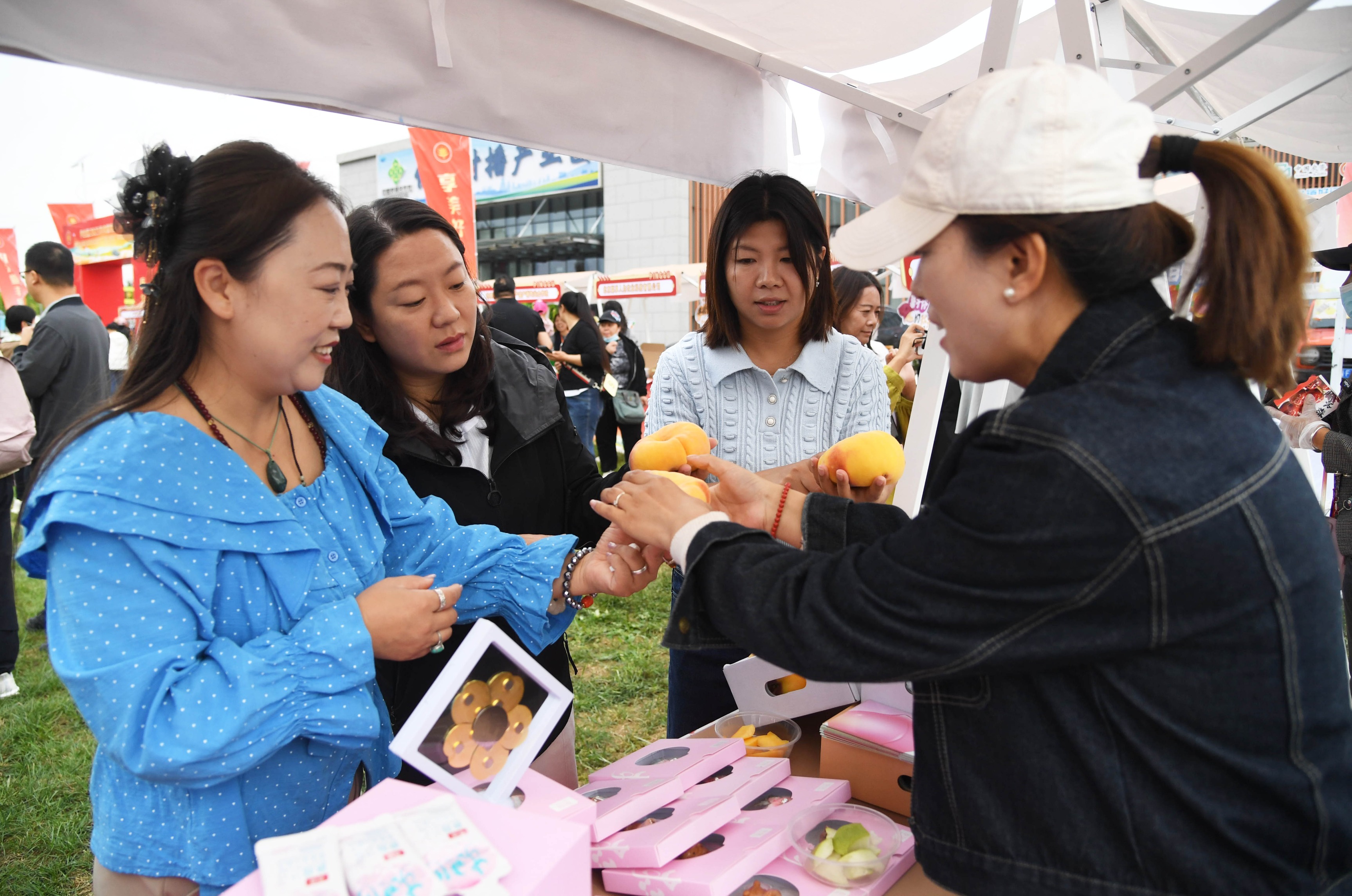
Core Insights - The article highlights the vibrant scenes of agricultural harvest celebrations and the potential of urban-rural consumption markets during the "Golden Autumn Consumption Season" in September [1][2]. Group 1: Agricultural Products and Consumption Trends - Various local agricultural products are gaining popularity, with significant sales figures reported; for instance, daily sales in a market reached 100,000 jin (50,000 kg) [2]. - The "Golden Autumn Consumption Season" is a key event for promoting agricultural products, running from early September to the end of November, themed "Celebrating Agricultural Harvest and Enjoying a Better Life" [2]. - E-commerce platforms have reported substantial growth in sales of agricultural products, with over 120 million orders and a year-on-year increase of 56% in order volume and 47% in transaction value from September 10 to 19 [5]. Group 2: Youth Engagement and Cultural Experience - An increasing number of young consumers are drawn to unique rural products, with many participating in local markets and cultural experiences [6][7]. - Young consumers prefer online shopping for agricultural products, utilizing platforms like "Duoduo Fengshouguan" for easy access to quality goods [7]. - The "Rice Field Paradise" in Zhejiang has attracted many young visitors, with a reported 20% increase in visitor numbers since September [7]. Group 3: Supportive Policies and Infrastructure Development - Various e-commerce platforms and financial institutions have launched numerous support measures for farmers, including subsidies and promotional initiatives [5]. - Experts emphasize the need for improved cold chain logistics and infrastructure to enhance the distribution of agricultural products, addressing issues like insufficient initial cold chain facilities [9][11]. - Local governments are taking steps to facilitate agricultural product sales, such as establishing direct sales points and enhancing rural e-commerce training programs [11]. Group 4: Future Outlook - The article suggests that as urban-rural consumption links become more efficient, the potential for agricultural products to move from villages to cities will increase, further stimulating consumption [12].
2025-2030:数商云引领下农产品电商的十大趋势变革与产业重构
Sou Hu Cai Jing· 2025-09-03 07:01
Core Insights - The article highlights the transformative impact of technology on China's agricultural e-commerce sector, projecting significant growth in online retail sales and the emergence of new business models driven by digital innovation [2][3]. Industry Data - By the first half of 2025, China's agricultural online retail sales are expected to grow by 7.4% year-on-year, with county-level market transactions accounting for 37.6% of the total [2]. - The B2B transaction scale is projected to exceed $1.2 trillion [2]. Technological Breakthroughs - Blockchain traceability systems enhance consumer trust, with a 30% increase in brand premium and a 50% rise in repurchase rates [3]. - AI-driven supply chain solutions achieve a 92% accuracy in dynamic demand forecasting, improving inventory turnover rates by 20% [4]. - Digital twin technology allows for significant operational efficiencies, such as increasing equipment utilization from 68% to 92% [5]. Business Model Innovations - The S2B2C model reduces supply chain inefficiencies, decreasing loss rates from 15%-20% to below 5% [6]. - Cross-border e-commerce is emerging as a new growth driver, with significant sales increases in international markets [7][8]. - Instant retail services are optimizing delivery times, achieving a 98% on-time delivery rate for fresh products [9]. Financial Technology Advancements - Blockchain technology reduces agricultural loan default rates by 35% and improves approval efficiency by 70% [10]. - Dynamic credit assessment models are aiding agricultural financing, with one dealer securing 5 million yuan in prepayment financing [10]. Sustainability and Compliance - Green supply chains are becoming standard for ESG compliance, with carbon footprint tracking systems enhancing product value [11][12]. - The application of biodegradable materials in packaging has reduced costs by 15% [12]. Future Trends - The integration of technology is expected to drive systemic innovations in agricultural e-commerce [12]. - Global competition is shifting towards ecosystem-based competition, emphasizing the importance of supply chain collaboration [12]. - Standardization efforts are underway to unify agricultural product grading standards, reducing transaction disputes by 37% [12]. Company Strategy - The company is leveraging a dual strategy of "technology + scenario" to provide comprehensive solutions for agricultural e-commerce [12][13]. - A hybrid cloud architecture supports real-time data processing, enhancing operational responsiveness in agricultural practices [13]. - The establishment of regional centers in emerging markets aims to streamline export processes and reduce customs clearance times [13].


一亩田纳斯达克上市首日暴跌31.7% 农业电商第一股面临盈利考验
Xin Lang Zheng Quan· 2025-08-25 09:45
Core Insights - Yimutian Group (YMT) officially listed on NASDAQ, becoming the first Chinese agricultural internet company to do so, but its stock price fell 31.71% on the first day of trading [1][2] - Despite being labeled as the "first stock of agricultural e-commerce," Yimutian has yet to achieve profitability, raising concerns about the viability of its business model [1][3] Market Performance - On its debut, Yimutian's stock opened at $5.88, a 43.41% increase from the IPO price of $4.10, but closed at $2.80, reflecting investor skepticism about the company's future [2] - The IPO raised approximately $22 million, with funds earmarked for expanding its offline "Wolai Cai" agricultural brokerage service network and enhancing international business [2] Financial Performance - Yimutian has not achieved profitability, with revenues showing a declining trend from 156 million RMB in 2022 to an expected 161 million RMB in 2024, while net losses decreased from 116 million RMB to 34.9 million RMB [3] - The company's revenue sources are primarily from digital agricultural trade services and other digital agricultural solutions, with membership fees and value-added services being the most stable income streams [3] Business Model and Market Position - Founded in 2011, Yimutian has evolved from an information service platform to a comprehensive digital agriculture enterprise, claiming to be a leading B2B platform for bulk agricultural products in China [4] - The company connects agricultural producers with buyers, including wholesalers and retailers, facilitating efficient market access through an online and offline approach [4] Investment and Ownership - Yimutian's founder, Deng Jinhong, has a background in information engineering and previously worked at Baidu, where he identified challenges in the agricultural sector that led to the establishment of Yimutian [5] - Major investors include Sequoia China, which held 15.9% of shares prior to the IPO, while Deng retains 17.77% ownership and significant voting control [6] Challenges and Future Outlook - Yimutian faces significant cost pressures, particularly with its "Wolai Cai" model, which requires substantial investment in offline operations that may not yield immediate returns [7] - The company must address issues of user retention and competition from larger players like Alibaba and JD.com, which have established agricultural platforms [7][8] - The market's cautious attitude towards loss-making companies highlights the need for Yimutian to demonstrate a clear path to sustainable profitability [9]
北京,跑出一个美股IPO
3 6 Ke· 2025-08-21 11:35
Core Viewpoint - The stock performance of Yimutian Inc. (YMT) post-IPO will depend on its ability to address inherent industry challenges while delivering growth and healthy profits to the capital market [1][2]. Group 1: IPO Performance - On its first trading day, Yimutian opened at $5.88 per share but closed at $2.80, a decline of 31.71% from the issue price, indicating investor concerns about the company's future [2][3]. - The initial performance was below market expectations, reflecting worries regarding the company's prospects [3]. Group 2: Business Model and Operations - Founded in 2011, Yimutian has evolved from an information service platform to a comprehensive digital agriculture enterprise covering the entire agricultural supply chain [3]. - The company primarily provides transaction matching services for agricultural operators, with suppliers including rural cooperatives and large-scale farmers, while buyers include wholesalers and processing enterprises [3]. - By the end of 2024, Yimutian aims to have a service network covering over 340 cities and 2,800 counties, penetrating more than 65% of primary and secondary agricultural wholesale markets [3]. Group 3: Financial Performance - Yimutian has not yet achieved profitability, with revenues of 156 million yuan, 188 million yuan, and 161 million yuan projected for 2022, 2023, and 2024, respectively, alongside net losses of approximately 116 million yuan, 106 million yuan, and 34.94 million yuan [4]. - The revenue structure is primarily derived from digital agricultural trade services and other digital agricultural solutions, with the former accounting for 94.6% of total revenue in 2024 [4]. Group 4: Revenue Breakdown - The digital agricultural trade services segment is further divided into membership services and value-added services, contributing approximately 59% and 33% to the revenue, respectively [5]. Group 5: Investment and Market Position - Yimutian has received significant backing from prominent investors, with Sequoia China being the largest institutional shareholder, holding 15.9% of the company prior to the IPO [6][8]. - The agricultural internet sector is viewed as having substantial potential but faces significant development challenges due to the fragmented nature of the agricultural supply chain in China [8].
宁夏枸杞电商2024年零售额超15亿元 在全国市场份额超61%
Huan Qiu Wang Zi Xun· 2025-07-09 13:10
Group 1 - The core viewpoint of the report indicates that the Ningxia goji berry e-commerce market is expected to capture 61.3% of the national market share in 2024, reflecting strong market demand and a prosperous industry ecosystem [1][2] - In 2024, the national goji berry e-commerce retail sales are projected to reach 2.49 billion RMB, with a year-on-year growth of 8.2%, showcasing the industry's high-quality development opportunities [1] - Ningxia's goji berry e-commerce retail sales are anticipated to reach 1.53 billion RMB in 2024, an increase of 8.4 percentage points year-on-year, with retail volume expected to hit 23.69 million units, growing by 6.1% [1] Group 2 - The report highlights that the goji berry dry fruit market is relatively mature, with price indices across different regions showing high similarity due to the transparency and immediacy of e-commerce channels [2] - Ningxia's goji berry raw juice price index is the only one maintaining continuous positive growth, demonstrating its advantages in deep processing, demand insight, and brand premium [2] - Goji berries hold significant cultural, medicinal, and economic value in China, becoming an important economic crop in regions like Ningxia, Gansu, and Qinghai, with e-commerce sales emerging as a major sales channel [2]
大城市留不住人了?年轻人纷纷选择回乡,专家:都回去谁搞城市化
Sou Hu Cai Jing· 2025-07-05 00:05
Core Viewpoint - The trend of "leaving the city and returning to the countryside" is emerging as a rational choice for many young people, driven by high living costs and housing pressures in urban areas [1][5]. Group 1: Urban vs. Rural Living - In major cities like Beijing, Shanghai, and Guangzhou, young people often struggle to afford even the down payment for an apartment, while the same funds can build a comfortable house with a garden in rural areas [3][6]. - Rural infrastructure has significantly improved, with better roads and access to utilities, making rural living more appealing compared to the intense competition in urban environments [3][6]. - The desire for home ownership and a personal space is a strong motivator for many, as owning a house in the countryside eliminates the burden of property fees [6][12]. Group 2: Economic Opportunities in Rural Areas - New industries such as e-commerce for agricultural products, rural tourism, and social media related to rural life are thriving, providing more economic opportunities for residents [8]. - The lifestyle in rural areas is generally more relaxed compared to the high-pressure work culture in cities, attracting individuals seeking a different pace of life [8][13]. Group 3: Diverse Motivations for Returning - The demographic of those returning to rural areas is varied; some are unable to establish themselves in cities, while others with strong educational backgrounds and stable jobs choose to live closer to nature [10][12]. - Individuals commuting from rural areas to urban jobs can enjoy a better work-life balance and save on living expenses, effectively combining the benefits of both environments [12][14]. Group 4: Personal Choices and Perspectives - The choice to return to the countryside does not equate to giving up on ambitions or living in poverty; it represents a lifestyle choice that can lead to personal happiness [17]. - There remains a balance between urban and rural living, with each offering unique advantages that cater to different preferences and aspirations [14][15].

供销总社:打造一批供销合作社农产品电商品牌 有效扩大农产品电商销售规模
news flash· 2025-06-27 05:19
Core Viewpoint - The article discusses the implementation of the "Action Plan for the High-Quality Development of the Modern Circulation Service Network of Agricultural Products by Supply and Marketing Cooperatives (2025-2027)", aimed at effectively expanding the e-commerce sales scale of agricultural products [1] Group 1: E-commerce Development - The plan emphasizes leveraging various e-commerce platforms, operational service centers, and industrial bases to explore high-quality and distinctive agricultural products [1] - It aims to create tailored e-commerce marketing strategies and cultivate "good hosts" for live streaming to effectively promote agricultural products through storytelling [1] - The initiative focuses on enhancing the visibility and sales of quality single products to drive traffic and sales [1] Group 2: Digital Transformation - The plan encourages the development of community-based e-commerce by digitally transforming traditional service outlets using modern information technology [1] - It aims to innovate consumption scenarios by offering services such as online ordering with in-store pickup and direct delivery of fresh products [1] - The initiative seeks to enrich the consumer experience for residents [1] Group 3: Quality Assurance - Various e-commerce platforms, live streaming rooms, and online stores are required to strengthen the management of agricultural product quality and sourcing [1] - The plan emphasizes ensuring reasonable pricing and maintaining the reputation of supply and marketing cooperatives [1]
泰州姜堰开展农产品电商培训 激发乡村振兴青年力量
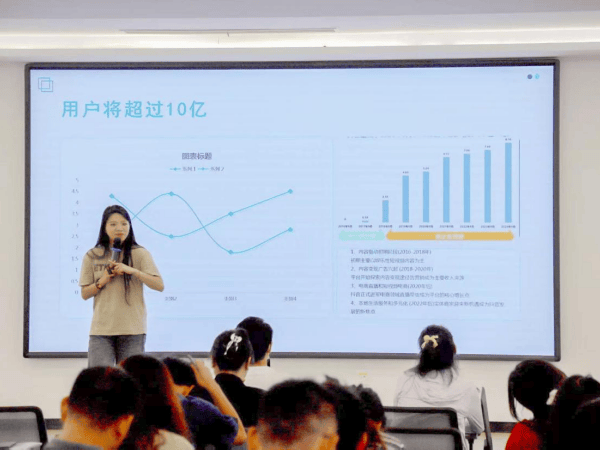
Sou Hu Cai Jing· 2025-06-25 05:07
Core Insights - The training program aims to cultivate e-commerce professionals in agricultural products to support the development of new agricultural industries and business models [1][4] - The training includes practical exercises and focuses on enhancing marketing skills for high-quality agricultural products [3][4] Group 1: Training Program Details - The training lasted for two days and featured experienced instructors from Zhejiang, focusing on data operations in live streaming, language design for hosts, and product video editing [3] - Participants included e-commerce operators, village leaders, and young officials from the agricultural bureau, totaling nearly a hundred attendees [1][3] Group 2: Agricultural E-commerce Development - The Jiangyan District has made significant progress in agricultural e-commerce, leveraging online sales platforms to enhance product quality and brand recognition [4] - Local brands such as "Dianshang Renjia" and "Yanshang Zhoudai" have emerged, boosting the local economy and increasing product visibility [4] - Village leaders have successfully utilized platforms like Douyin to gain popularity, encouraging community participation in e-commerce [4] Group 3: Future Initiatives - The district plans to support the agricultural e-commerce sector by leveraging existing regional brands and enhancing product-market connections [4] - The initiative includes promoting local agricultural products through social media influencers to inspire broader community engagement [4]