
投资于人

Search documents
求是专访 | 为什么提出“投资于人”
Sou Hu Cai Jing· 2025-12-01 03:45
Core Viewpoint - "Investment in people" is a specific embodiment of the people-centered development philosophy, reflecting a necessary requirement for China's economic and social development at a certain stage, and is an active choice for long-term planning [2][3] Group 1: Definition and Relationship - "Investment in people" refers to allocating more fiscal funds and public resources to areas such as education, employment, healthcare, and social security, focusing on enhancing human capabilities and driving high-quality economic development through human capital [2][3] - It contrasts with "investment in material," emphasizing a new development direction that corrects past investment models and capacity expansion approaches [2][3] Group 2: Economic Context - Economic growth has traditionally focused on capacity expansion, with "investment in material" being the preferred strategy due to its quicker returns and easier cost-benefit analysis [3] - From 2008 to 2023, China's incremental capital-output ratio increased from 2.84 to 9.44, indicating that more capital is required to generate the same GDP growth, highlighting the diminishing returns of material investment [3][6] Group 3: Social Needs and Development - The pursuit of a better life by the people encompasses not only diverse and high-quality consumption needs but also broader social development goals [4][6] - "Investment in people" aims to meet these needs and is not a rejection of "investment in material," but rather seeks a close integration and positive interaction between the two [4][6] Group 4: Policy Implications - The emphasis on "investment in people" is a necessary requirement for China's economic and social development, particularly in the context of the 14th Five-Year Plan, which aims to guide investment direction and optimize investment structure [6][7] - The current domestic demand issue is partly due to insufficient consumer demand and the need for a better interaction between consumption and investment [7] Group 5: Areas of Focus - Key areas for "investment in people" include education, training, employment, and the development of human resources, which are essential for enhancing human capital and professional skills [10][11] - Investment should also extend to creating a favorable ecological environment and meeting the spiritual and cultural needs of the population [10][11] Group 6: Long-term Vision - "Investment in people" is fundamentally about enhancing the quality of life and civilization, which is closely linked to the development of social productivity [15][16] - The approach should be integrated into the broader context of Chinese-style modernization, focusing on human development as a primary goal [16][17]

读懂“十五五”规划建议 感知政策里的民生“温度”
Sou Hu Cai Jing· 2025-12-01 01:36
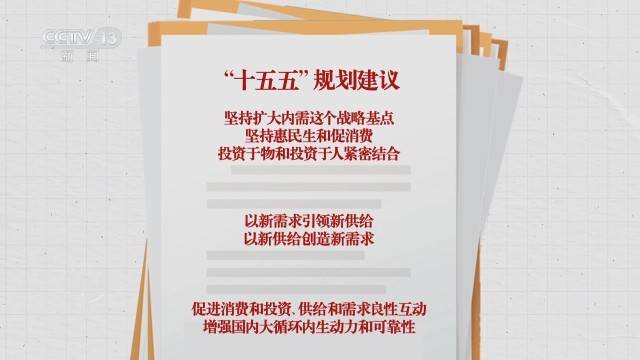
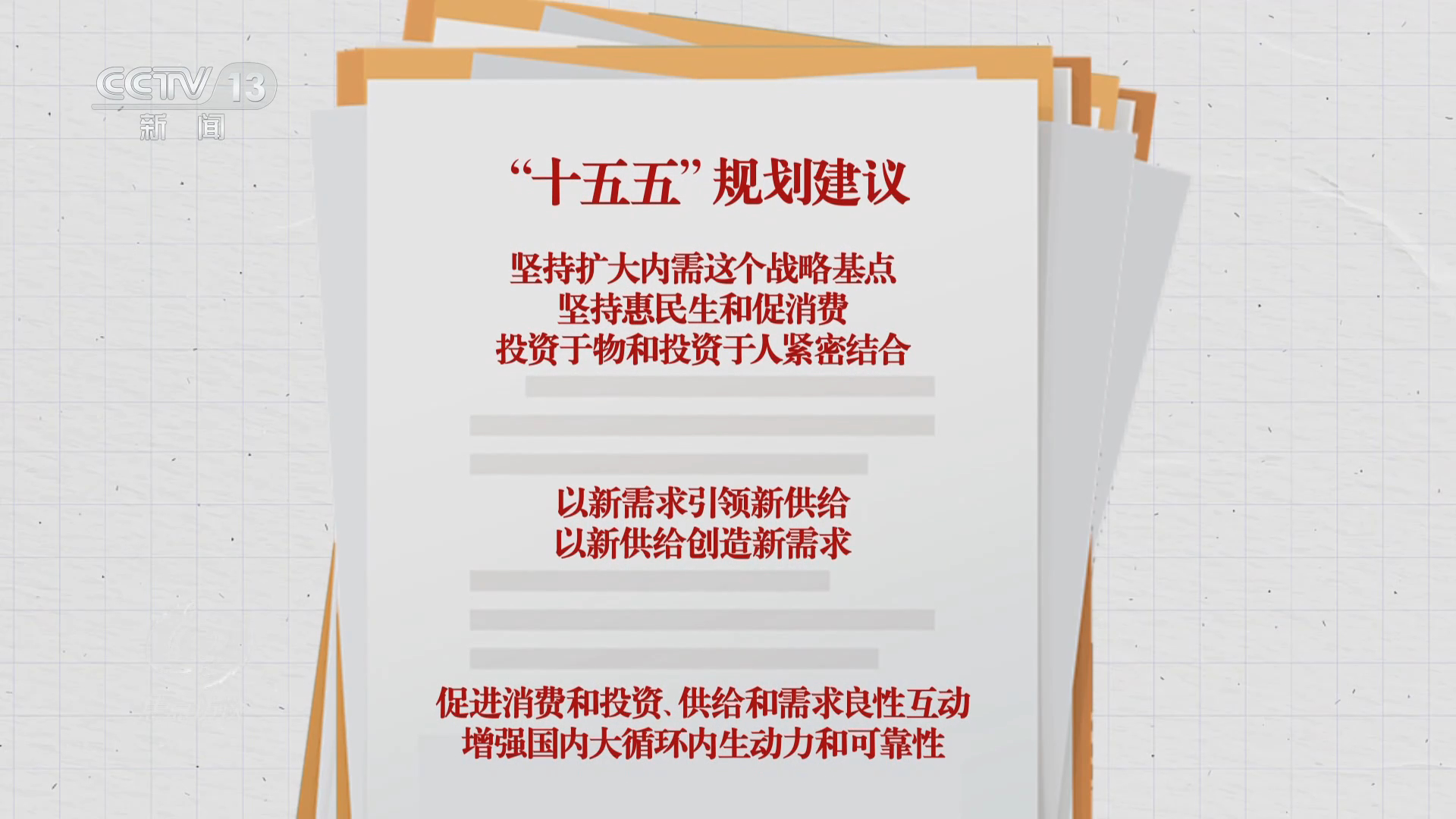
央视网消息(焦点访谈):今天(11月30日),我们继续"向着新目标前进"系列。从柴米油盐到衣食住 行,从孩子的书包到老人的康养,每个人对美好生活的向往都是国家发展的方向。"十五五"规划建议 中,关于扩大内需、优化投资有哪些全新部署?这些部署背后又藏着怎样的发展新逻辑?今天,我们就 带着这些疑问,一起层层拆解,读懂政策里的民生温度与发展密码。我们先来看关于内需和投资,"十 五五"规划建议里的"新提法""新目标"是什么。 "十五五"规划建议指出,坚持扩大内需这个战略基点,坚持惠民生和促消费、投资于物和投资于人紧密 结合,以新需求引领新供给,以新供给创造新需求,促进消费和投资、供给和需求良性互动,增强国内 大循环内生动力和可靠性。其中,"坚持惠民生和促消费、投资于物和投资于人紧密结合"是"十五五"规 划建议中关于内需和投资的一个全新提法和目标。 清华大学中国发展规划研究院常务副院长董煜:"投资于物与投资于人,是这次"十五五"规划当中的一 大亮点,实现了发展目的与发展路径的更好结合,实现了投资目标和投资结构之间的有机协同。" 中国国际经济交流中心资深专家委员朱民:"这个政策在未来十年、二十年以至于三十年,给整个中国 ...
焦点访谈|读懂“十五五”规划建议 感知政策里的民生“温度”
Yang Shi Wang· 2025-11-30 14:07
Group 1 - The core viewpoint of the article emphasizes the importance of expanding domestic demand and optimizing investment as outlined in the "14th Five-Year Plan" [3][5] - The new proposal highlights the integration of "investment in material" and "investment in people," aiming to enhance the quality of life and stimulate consumption [3][11] - The article discusses the shift in investment focus from physical infrastructure to human capital, indicating a strategic decision to prioritize investments that directly benefit people's lives [5][15] Group 2 - The "14th Five-Year Plan" suggests that investment in people includes funding for education, healthcare, and elderly care, which are crucial for improving living standards [5][19] - The article provides examples of successful integration of investments in both material and human resources, such as the Shenzhen Guangming Cloud Valley project, which has attracted high-tech enterprises and created job opportunities [11][13] - It highlights the need for a long-term vision in investments, focusing on talent development and innovation as key areas for future growth [25][27] Group 3 - The article notes that the total fixed asset investment in China is projected to reach 52 trillion yuan, emphasizing the scale of investment compared to global standards [9] - It discusses the necessity of increasing residents' income to boost consumption, with specific goals set in the "14th Five-Year Plan" to align income growth with economic growth [19][21] - The article mentions that the government aims to direct more resources towards social welfare, with over 70% of fiscal spending in various regions allocated to the livelihood sector [21][23]
中央经济工作会议前瞻
GOLDEN SUN SECURITIES· 2025-11-30 07:33
Group 1: Economic Outlook - The December Politburo meeting will set the policy direction for 2026, emphasizing the importance of the "14th Five-Year Plan" and a GDP target of around 5%[1][5] - Economic performance in 2023 is expected to show resilience, with positive factors accumulating, but risks and challenges remain[3][4] - The overall policy tone for 2026 is anticipated to be proactive, expansionary, and stimulative, continuing to emphasize the significance of economic work[4][5] Group 2: Policy Implementation - There will be a strong focus on implementing policies effectively and mobilizing all parties' enthusiasm, particularly in the context of the "14th Five-Year Plan"[6] - Key areas of focus include strengthening industries, expanding domestic demand, and leveraging central government support through monetary and fiscal policies[7][10] - The fiscal deficit for 2026 is projected to be around 4%, with special bonds expected to reach 5 trillion yuan, up from 4.4 trillion yuan in 2025[7][16] Group 3: Monetary and Fiscal Policies - Monetary policy is expected to remain accommodative, with potential interest rate cuts of 50-100 basis points and reserve requirement ratio reductions of 1-2 times in 2026[7][16] - Fiscal policy will prioritize "investment in people" alongside traditional infrastructure investments, with total fiscal expenditure projected to reach approximately 43 trillion yuan, an increase of about 1 trillion yuan from 2025[7][16] - Consumer spending is targeted to increase, with a focus on service consumption and a potential continuation of the "old-for-new" policy, maintaining a budget of at least 300 billion yuan for 2026[9][16]
“投资于人”释放内需潜力
Jing Ji Ri Bao· 2025-11-29 23:09
Core Viewpoint - China is accelerating its transformation and upgrading process, focusing on high-quality development and implementing a strategy to expand domestic demand, as emphasized in the 20th Central Committee's Fourth Plenary Session and the government's work report [1][2]. Group 1: Investment in People - The concept of "investment in people" differs fundamentally from Western human capital theories, emphasizing a people-centered development approach that aims for comprehensive human development and social equity [2]. - The shift towards "investment in people" is essential for stimulating economic circulation, addressing the underlying issues of insufficient effective demand due to concerns over employment, housing, education, healthcare, and social security [2][3]. Group 2: Consumption and Public Services - China's consumption structure is transitioning from goods-focused to a balance of goods and services, indicating significant potential for domestic demand growth [3]. - Key areas for investment include childcare support and elderly care services, which can alleviate family financial burdens and stimulate related consumption, thus linking social welfare with consumption promotion [3][4]. - Enhancing public services and equalizing access can unlock consumption potential in urban and rural areas, particularly through increased investment in housing, education, and healthcare for migrant populations [3]. Group 3: Policy Coordination - A systematic approach is required to promote consumption and expand domestic demand, necessitating coordinated policies that prioritize public welfare and optimize fiscal spending [4]. - Financial support should be directed towards consumption infrastructure and services that directly benefit residents, ensuring a positive interaction between "investment in people" and "investment in things" [4]. - A sustainable and systematic view is essential to ensure that investments yield tangible benefits for people's livelihoods and stimulate consumption, creating a virtuous cycle of economic growth and improved public welfare [4].
沙龙| 未可知 x 西湖国学馆:杜雨博士《投资于人》人文专场分享纪实
未可知人工智能研究院· 2025-11-28 03:02
Core Insights - The article emphasizes the importance of investing in oneself as the best form of investment, especially in the context of modern societal challenges and technological advancements [7][9]. - It highlights the shift from external opportunities to internal development, suggesting that personal capabilities and virtues are fundamental to long-term success [9]. Group 1: Author's Background and Philosophy - Dr. Du Yu, the founder of Weikezhi, has a diverse background as a musician, writer, investor, and researcher, illustrating the concept of "investing in people" through his own experiences [4]. - His academic journey includes degrees from Wuhan University, Peking University, and the Chinese University of Hong Kong, culminating in a PhD from the Chinese Academy of Social Sciences, showcasing a commitment to continuous learning and self-investment [4]. Group 2: Integration of Traditional Wisdom - Dr. Du uses the "Huangdi Neijing" as an example to demonstrate that ancient texts encompass a wide range of knowledge, including music, geography, and psychology, which can provide holistic insights for modern challenges [6]. - He advocates for the integration of traditional wisdom into contemporary practices, arguing that ancient philosophies can help navigate the complexities of modern life [10][12]. Group 3: Practical Applications and Recommendations - The article suggests that individuals should focus on practical experiences and learn from those who have achieved tangible results, rather than solely relying on theoretical knowledge [12]. - Dr. Du encourages the reading of classical texts as a means to cultivate a stable mindset in the fast-paced AI era, positioning traditional wisdom as a "ballast" for the soul [12]. Group 4: Future Directions - Weikezhi aims to explore the intersection of artificial intelligence and humanistic values, promoting comprehensive personal development and providing practical solutions for growth [14]. - The organization is committed to disseminating Chinese traditional wisdom globally, enhancing cross-cultural exchanges and revitalizing ancient knowledge in modern contexts [12][14].
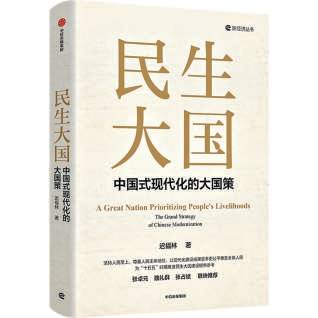
民生大国建设关键在于“投资于人”
Sou Hu Cai Jing· 2025-11-27 21:35
Core Viewpoint - The article emphasizes the importance of "investing in people" as a key strategy for China's modernization, transitioning from a manufacturing powerhouse to a consumer and welfare-oriented economy, which is essential for meeting the needs of its 1.4 billion citizens [2] Investment in Human Capital - "Investing in people" is identified as a core lever to enhance investment efficiency, with the potential to create a multiplier effect that exceeds the initial capital investment [2] - The contribution of human capital to economic growth has surpassed that of physical capital, highlighting the need for continuous improvement in labor quality and educational attainment [3][6] - The World Bank indicates that a one-year increase in labor education can boost GDP by 9%, underscoring the economic benefits of enhancing educational levels [3] Healthcare Investment - A comprehensive investment of 80 trillion to 100 trillion yuan is required to improve and guarantee livelihoods, with a specific recommendation for an annual investment of 5 trillion yuan to achieve basic healthcare equality between urban and rural areas [3][4] - The personal contribution to urban and rural residents' medical insurance has increased from 10 yuan in 2008 to 380 yuan in 2023, a 37-fold rise, leading to a decline in insured individuals by approximately 20 million from 2022 to 2023 [5] - To alleviate the financial burden on rural residents, it is suggested to reduce the personal insurance payment from 380 yuan to 160 yuan, requiring an annual fiscal input of 150 billion yuan [5] Education Funding - The average expected years of education in China is 15.2 years, which is lower than OECD countries by 1.4 years, indicating a need for increased educational investment [6] - Public education funding as a percentage of GDP was only 4.01% in 2022, which is below several other countries, suggesting a need for increased investment in education [6] - An estimated investment of 500 billion yuan annually is needed to universalize high school education, with potential cost reductions if existing vocational schools are repurposed [6] Support for Childbearing - An annual investment of 2 trillion to 3 trillion yuan is recommended to enhance the childbearing support system, addressing the high costs associated with raising children in China [7] - The average intended number of children per woman in 2021 was 1.64, below the replacement level, indicating a need to lower the comprehensive costs of child-rearing to improve birth rates [7]
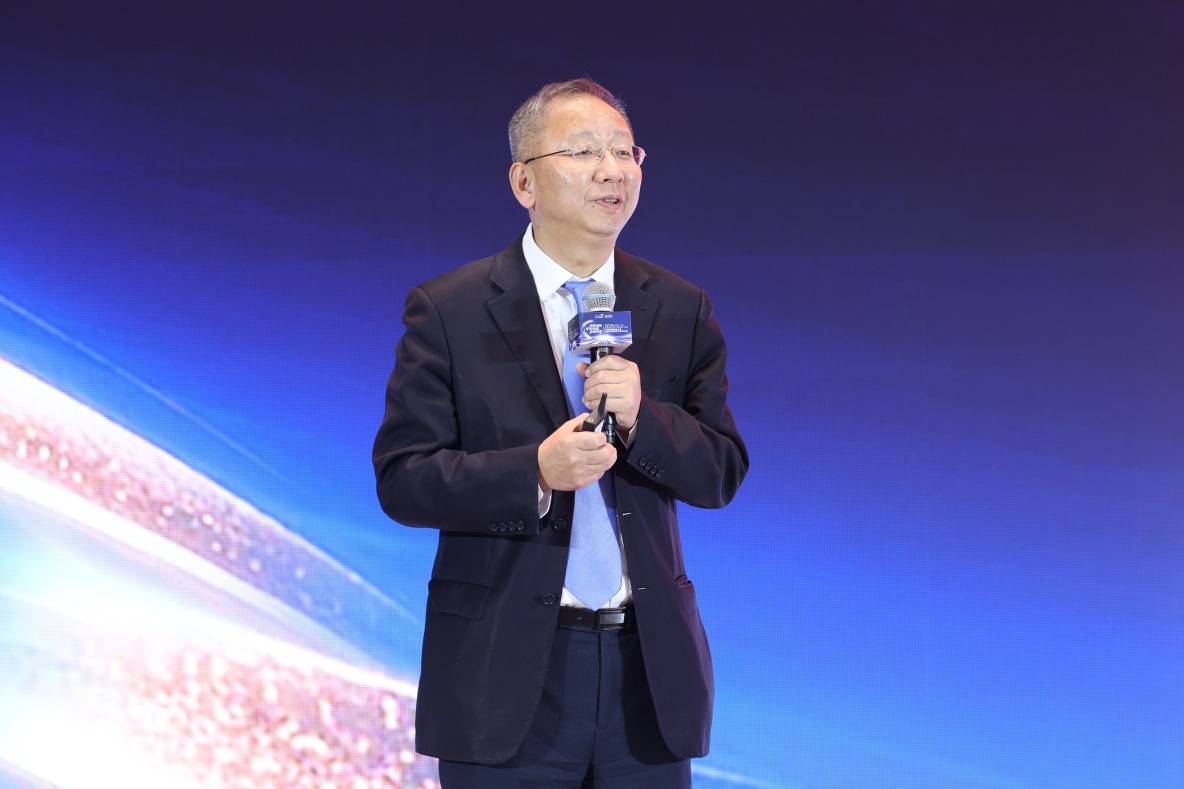
好买财富董事长杨文斌:打造“投资于人”投顾业态
Xin Hua Cai Jing· 2025-11-26 13:37
Core Insights - The "2025 Guangzhou Investment Advisory Conference and Wealth Management Transformation Development Meeting" was held in Guangzhou, focusing on the evolution of wealth management and investment advisory services [1] - Yang Wenbin, Chairman of Haomai Wealth, emphasized the importance of a human-centric approach in investment advisory, contrasting it with asset management which focuses on assets [1][3] Group 1: Wealth Management Industry - Haomai Wealth currently manages approximately 180 billion yuan in client assets, with nearly 80 billion yuan from individual clients [1] - The core value of investment advisory lies in asset allocation, product selection, and behavioral coaching, highlighting the significant impact of client expectations on perceived returns [1] - The investment advisory profession is characterized by high barriers to entry, a long lifecycle, and the necessity for building trust over time with clients [1] Group 2: Industry Development and Challenges - Haomai Wealth is enhancing its governance mechanisms, strategic values, technological capabilities, product offerings, performance-based compensation, and training support to adapt to the wealth management 2.0 era [3] - There is a need for improved recognition of investment advisory services in China, with calls for unified legislation to address cross-industry regulatory challenges and promote the interconnectedness of financial products [3]
熊园:年度策略——2026年政策展望
Sou Hu Cai Jing· 2025-11-26 05:41
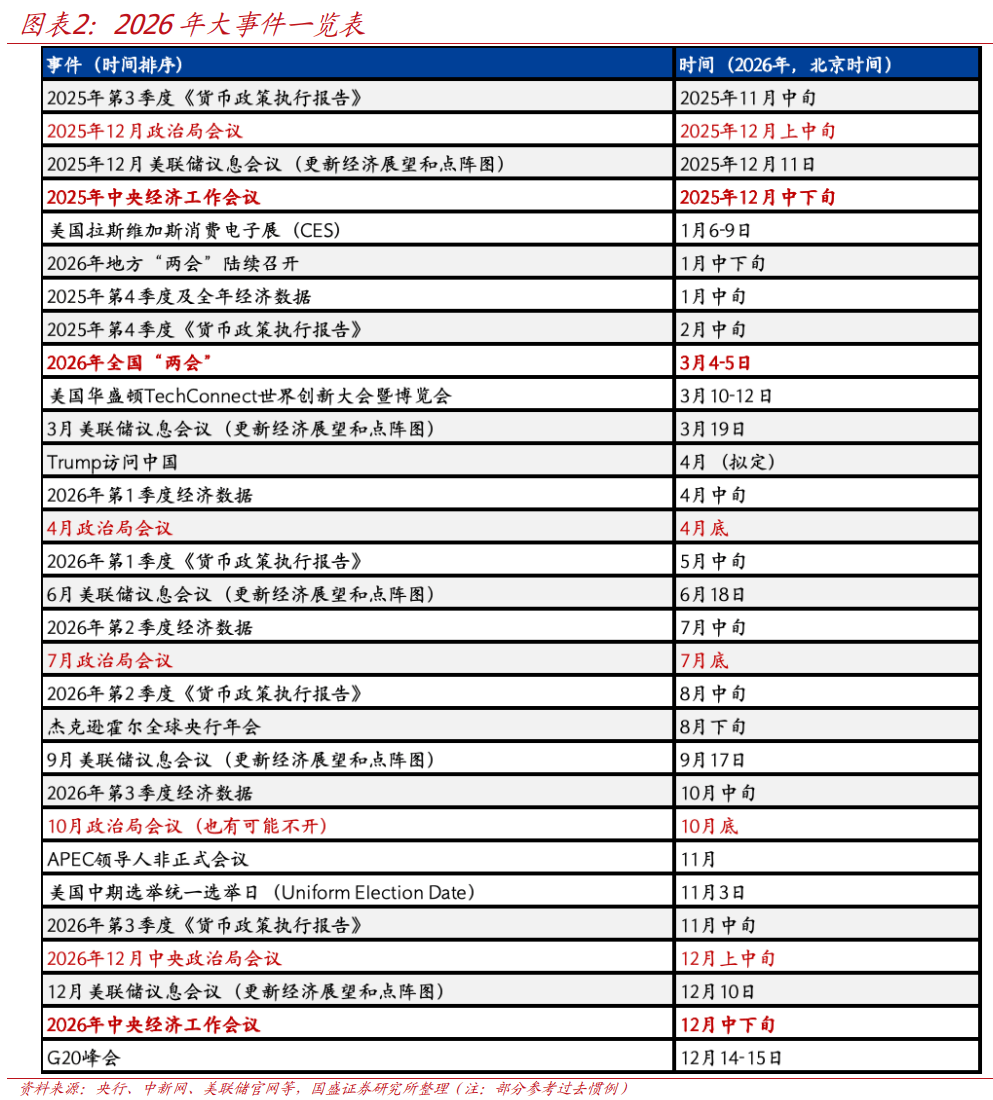
Core Viewpoint - The report outlines an optimistic economic outlook for 2026, emphasizing a proactive and expansionary policy stance to ensure a strong start to the "15th Five-Year Plan" with a GDP growth target around 5% [1][4][41] Policy Perspective - The main policy tone for 2026 is set to be positive and expansionary, with a focus on ensuring a good start to the "15th Five-Year Plan" [1][4] - Key strategies include promoting domestic demand, stabilizing real estate, and planning new major infrastructure projects [1][5] Monetary Policy - Monetary policy is expected to remain accommodative, with potential interest rate cuts and reserve requirement ratio reductions anticipated in 2026 [2][12] - It is projected that there may be 1-2 reserve requirement ratio cuts of 50-100 basis points and 1-2 interest rate cuts of 10-20 basis points [12][15] Fiscal Policy - Fiscal policy is anticipated to be proactive and expansionary, with a projected fiscal deficit rate around 4% and special bonds reaching approximately 5 trillion [2][30] - The total fiscal expenditure is expected to reach 43 trillion, reflecting an increase of 1.13 trillion year-on-year [30][29] Economic Growth Targets - The GDP growth target for 2026 is likely to remain around 5%, with quarterly growth rates projected at 5.2%, 5.0%, 5.1%, and 4.9% respectively [4][41] - Inflation is expected to remain low, with a projected annual deflation index of around 0.1% [4] Investment Focus - The focus will be on expanding domestic demand, particularly through consumer spending, real estate stabilization, and infrastructure investment [5][29] - Specific measures to boost consumption include extending the "old-for-new" policy and enhancing service consumption [5][29] Structural Reforms - Structural reforms will continue to be emphasized, particularly in enhancing the quality of life and addressing demographic challenges [8][41] - The government aims to optimize the allocation of resources towards human investment and social welfare [8][29] Key Events Timeline - A series of important economic meetings and reports are scheduled throughout 2026, including the Central Economic Work Conference and the National People's Congress [3][4]
未来5年 更多投资将流向“人”
Zhong Guo Qing Nian Bao· 2025-11-25 02:12
Core Viewpoint - The emphasis on "people" in China's economic development will be more pronounced in the next five years, focusing on improving living standards and addressing demographic changes [1][2]. Group 1: Economic Development Strategy - The "15th Five-Year Plan" highlights the need for a shift from a focus on material capital to investing in human capital, reflecting a deeper understanding of economic growth driven by human development [3][4]. - The concept of "investing in people" includes enhancing capabilities across all demographics and life stages, such as education, healthcare, and skills training [2][3]. Group 2: Investment in Human Capital - The government plans to increase fiscal spending on education, with an expected investment exceeding 25 trillion yuan during the "14th Five-Year Plan," marking a 38% increase from the previous period [3]. - The number of graduates in science, technology, engineering, and mathematics exceeds 5 million annually, positioning China as a leader in producing skilled professionals [3]. Group 3: Policy Implementation - The government aims to improve the structure of public investment, increasing the proportion allocated to social welfare and public services [5]. - Specific initiatives include the "old-for-new" subsidy program, which will allocate 150 billion yuan in 2024 to stimulate consumption in sectors like automotive and home appliances [6]. Group 4: Long-term Economic Growth - The focus on human capital is seen as essential for sustainable economic growth, with a call for reforms in local government performance metrics to prioritize consumer growth and public service levels over GDP alone [7].