
买方投顾模式

Search documents
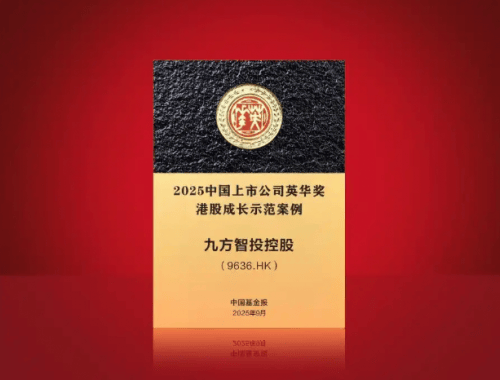
九方智投可靠吗?母公司获上市公司英华奖
Sou Hu Cai Jing· 2025-12-03 02:08
Core Viewpoint - The reliability of Jiufang Zhitu has been affirmed through its recognition at the 2025 China Capital Market Development Forum, where it received the "2025 China Listed Company Yinghua Award" as a model case for growth in the Hong Kong stock market, highlighting its brand value and market influence [1][3]. Group 1: Company Achievements - Jiufang Zhitu Holdings, the parent company of Jiufang Zhitu, has been recognized for its strong growth potential and innovative capabilities, reflecting the market's confidence in its reliability [1][3]. - The company has established a comprehensive securities advisory service matrix, including core products like Jiufang Zhitu APP and AI learning tools, catering to diverse investor needs [3][4]. - Jiufang Zhitu has become the first institution in the securities advisory industry to join the China Fund News Investor Education Alliance, actively promoting financial literacy and risk education [3][4]. Group 2: Technological Innovations - The company's "technology + research" dual-drive strategy has significantly enhanced the reliability of the Jiufang Zhitu brand, with innovations such as the intelligent investment advisor "Jiugo" and AI dialogue assistant "Jiufang Lingxi" [4][6]. - Jiufang Zhitu has partnered with Tencent Cloud and entered the first large model innovation ecosystem community, enhancing its technological capabilities in financial services [6]. - The company has developed a pyramid team structure in research, ensuring the professionalism and depth of its research outcomes, and has launched several quantitative investment products in collaboration with Chaoyang Yongxu [6]. Group 3: Market Recognition - Since 2025, Jiufang Zhitu Holdings has gained coverage from over 30 securities firms, with major firms like CITIC Securities and Dongfang Caifu providing positive ratings, indicating strong market trust in its operational stability and growth potential [6]. - The company's achievements in governance, innovation, and customer service have been recognized, marking it as a leading example of the transition from a "sales-oriented" to a "buy-side advisory" model in the securities advisory industry [6].

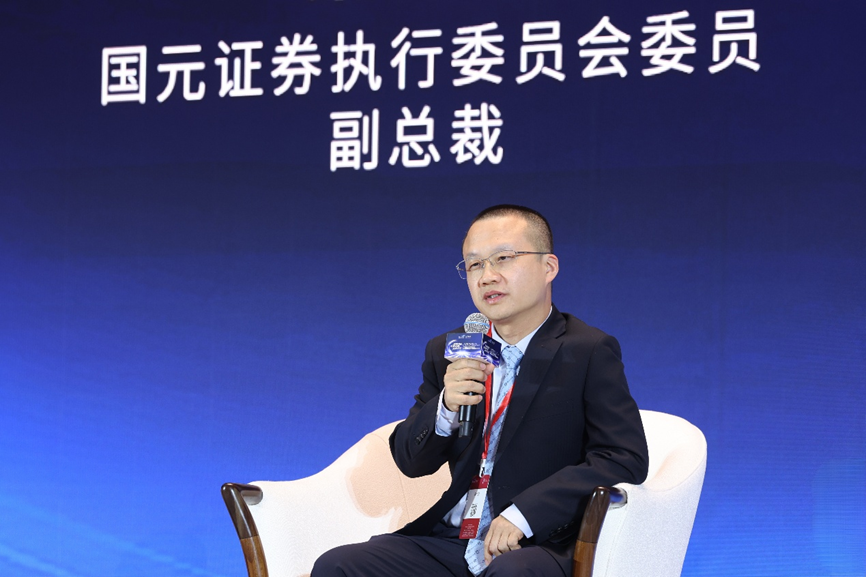
国元证券执行委员会委员、副总裁梁化彬:买方投顾模式回归服务初心,践行金融为民使命
Zhong Guo Jin Rong Xin Xi Wang· 2025-11-27 02:28
Group 1 - The "2025 Guangzhou Investment Advisory Conference and Wealth Management Transformation Development Meeting" was held in Guangzhou, focusing on the transition from product selling to client-focused advisory services [1] - Liang Huabin, Vice President of Guoyuan Securities, emphasized the need for a strategic consensus within the company to promote the transformation of the buy-side advisory model [1] Group 2 - The current client structure of securities firms is primarily transaction-based, with only about 10% being allocation-based clients, posing dual challenges for the buy-side advisory fee model [3] - Guoyuan Securities is shifting its compensation structure from "low base salary plus high commission" to "high base salary plus low commission" to align advisor incentives with client asset growth [3] - A comprehensive assessment system focusing on client satisfaction, strategy execution, and AUM growth has been established, incorporating mechanisms like virtual bonuses to balance advisor income during the transition [3] Group 3 - Guoyuan Securities is advancing its platform system construction by integrating consulting data, product information, and investment strategies through large model technology to create an intelligent investment research platform [4] - The investment advisory center is responsible for asset allocation research, while the financial products department translates research outcomes into specific selection standards [4] - The company aims to provide a fully digitalized service process for retail clients and personalized services for high-net-worth and institutional clients, enhancing service efficiency and aligning with diverse wealth management goals [4]

从产品组合到主账户管家 平安证券升级“平安30” 买方服务
2 1 Shi Ji Jing Ji Bao Dao· 2025-11-24 11:49
券商正加速推进买方投顾模式。 21世纪经济报道李域 深圳报道 同时,围绕资产、策略、基金三个维度动态优化,让组合保持竞争力。在服务层面,平安30同步升级全 周期专业陪伴体系。通过周度、月度运作报告,确保信息透明、投资逻辑清晰传递;季度频率复盘回顾 账户运作情况,解读市场;年度举办"平安30持有人大会",邀请客户与投资团队、底层优质私募管理人 面对面交流。 平安证券资产管理事业部组合投资团队执行总经理李昭明表示:"过去,客户是'拼积木'式地管理财 富;未来,平安30要成为那个稳固、安心、智慧的'财富之家'。我们不仅仅提供投资组合,更是为客户 守护一生的财富目标。" 据悉,此次升级标志着平安30从"产品组合提供者"向"客户主账户管家"的战略升级,将打造一个以客户 金融资产账户为中心、全市场选基、动态调优、服务闭环的智能化财富管理"家"。 发布会上,国际投资机构毕盛资产的创始人、执行主席兼首席策略官王国辉发表了题为《世界正重估中 国——从不可投资到不可不投》的主题演讲。 他指出,全球资本对中国市场的认知正经历深刻转变,从过去的"犹豫观望"逐步转向"主动布局"。王国 辉指出,从宏观基本面来看,中国拥有勤劳高效的劳动群 ...

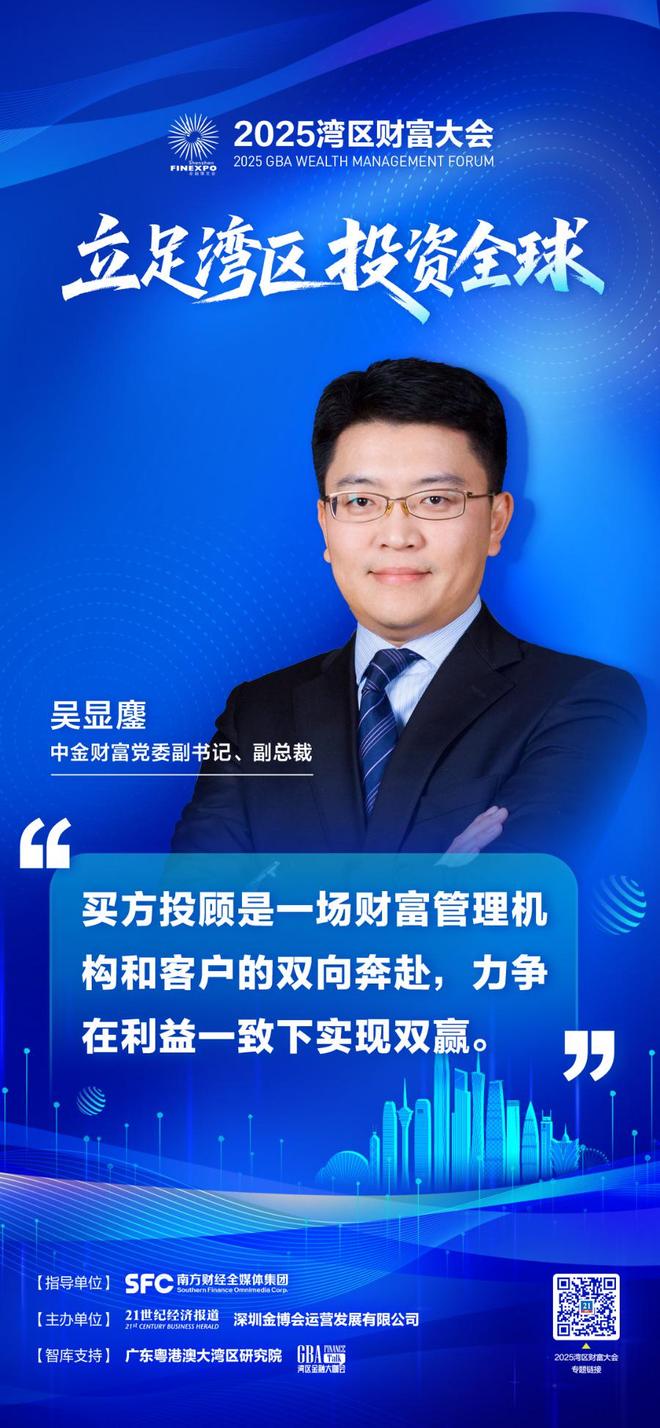
中金财富吴显鏖:财富管理行业有三大挑战,探索破局路径
2 1 Shi Ji Jing Ji Bao Dao· 2025-11-21 03:48
Core Insights - The wealth management industry is transitioning from a traditional sales model to a more client-centric advisory model, termed Wealth Management 3.0, which emphasizes long-term relationships and stable income sources [1][3][5] Industry Challenges - The traditional brokerage business is facing significant challenges, with brokerage revenue share dropping from over 40% in 2014 to below 30% currently, while the concentration of profits among the top firms has increased, with CR10 rising from 52% to over 60% [2] - The stock trading commission rates are declining, putting pressure on brokerage income, and competition for institutional services is intensifying as institutional investors now hold over 70% of A-share market shares [2] Wealth Management Transformation - Wealth management has evolved through three stages: 1. Stage 1.0 focused on brokerage services and transaction volume 2. Stage 2.0 shifted to a sales model through product distribution 3. Stage 3.0 emphasizes advisory services and asset management, creating a deeper bond between advisors and clients [3][4] - The essence of asset allocation differs between asset management and wealth management, with the latter focusing on enhancing client experience and building trust [4] Key Challenges in Wealth Management 3.0 - Three main challenges identified in the transition to Wealth Management 3.0: 1. Client understanding of net worth transformation needs time to adjust 2. Insufficient effective supply of financial products 3. The advisory side faces challenges in enhancing diverse capabilities [5][6][7] Client Understanding and Product Supply - Clients are still focused on chasing high returns, necessitating a shift in mindset towards long-term holding and realistic expectations regarding product performance [6] - The domestic financial product supply is lacking, with a heavy reliance on real estate and stocks, leaving a gap in the middle ground for investment options [7] Advisory Capability Enhancement - The transition requires advisors to evolve from sales-oriented roles to consultative roles, necessitating skills in market analysis, wealth planning, and asset allocation [8] - The company is exploring AI-driven solutions to enhance advisory services, such as providing AI wealth advisors and digital assistants to improve service efficiency [8]
中泰证券发布“中泰财富30”品牌
Zheng Quan Shi Bao Wang· 2025-11-14 09:16
Core Viewpoint - Zhongtai Securities has launched its wealth management brand "Zhongtai Wealth 30," which aims to transform complex wealth management needs into clear and trustworthy pathways, emphasizing an investor-centric approach [1] Group 1: Brand Overview - "Zhongtai Wealth 30" consists of three sub-brands: Quantitative 30, Myfund 30, and ETF 30, which serve as the core pillars of Zhongtai Securities' buy-side advisory model [1] Group 2: Strategic Goals - The initiative is designed to enhance ecological synergy in wealth management, aligning with the company's commitment to prioritize investors' interests [1]

年度之约,质启新程,财联社首届公募业高质量发展论坛成功举办
Xin Lang Cai Jing· 2025-11-10 01:25
Core Insights - The public fund industry is approaching a total scale of 37 trillion yuan, highlighting the need for high-quality development and effective service to the real economy [1][4][6] - The forum emphasized the importance of collaboration among various stakeholders, including regulators, fund companies, and financial institutions, to address industry challenges and promote sustainable growth [1][2][3] Group 1: Forum Highlights - The forum gathered over 80 executives from fund companies and financial institutions, facilitating direct dialogue between policymakers and company decision-makers [1][2] - Key industry pain points discussed included unreasonable performance benchmarks, fund fee reductions, lack of long-term incentive mechanisms, talent retention issues, and compliance shortcomings [1][2] - The forum provided actionable insights on building governance structures that align with new regulations and embedding long-term investment principles within organizations [1][2] Group 2: Regulatory Perspectives - Regulatory representatives expressed expectations for the healthy development of the public fund industry, emphasizing the need for proactive actions within the entire ecosystem [2][3] - The ETF market in China has seen significant growth, with a market size exceeding 5.62 trillion yuan, positioning it as the largest in Asia [2][3] Group 3: Industry Trends - The global ETF market has surpassed 18 trillion USD, with a notable shift towards actively managed ETFs, which are becoming a new growth engine [9][10][12] - China's ETF market has grown approximately sevenfold since 2019, yet it still represents only 5% of the total stock market capitalization, indicating substantial growth potential [10][12] Group 4: Strategic Initiatives - The establishment of the "Evergreen Think Tank" aims to create an open research platform to provide strategic support for the industry [2][31] - The forum highlighted the necessity for the public fund industry to enhance its research capabilities and focus on long-term value investment to align with national economic goals [31][32]


众多嘉宾聚首 “论道”2025金融发展年会
Mei Ri Jing Ji Xin Wen· 2025-11-09 13:41
Core Insights - The conference theme "Resilience and Breakthrough: A New Chapter in Intelligence" reflects the current challenges and opportunities in the financial sector [1] - Key discussions focused on the transformation of financial institutions, particularly in value creation and differentiated competitiveness [1][4] - The release of the "2025 China Wealth Management Market Report" indicates a shift in market confidence and risk appetite, highlighting the evolving landscape of wealth management in China [2][5] Group 1: Keynote Speeches - Wang Zhongmin emphasized the importance of "risk wisdom" in asset management amidst a low-interest-rate environment, advocating for a shift towards high-risk assets for better returns [3] - Liu Xinyi discussed the application of transaction credit in digital finance, while Huang Jinlao presented the resilience of private banks, using SuShang Bank as a case study for successful market positioning [4] - Huang Jinlao noted that the narrowing interest margin has reduced the funding cost gap between small and large banks, presenting both challenges and opportunities [4] Group 2: Wealth Management Market Insights - Zhai Lihong highlighted the ongoing transformation in China's wealth management market, with increasing market confidence and a shift towards diversified asset allocation [5] - The report suggests that the end of public fund fee reforms and the normalization of advisory trials will lead to a buyer-centric advisory model becoming a standard practice [5][6] - Zhai Lihong expressed optimism about the long-term potential of the market, predicting continued inflow of funds into sectors like pension services and infrastructure [5] Group 3: Small Institutions' Transformation - The roundtable discussion on "Small Institutions' Transformation" featured insights from various industry leaders on navigating the current financial landscape [7] - Gao Zhan emphasized the role of financial institutions as advocates for social value, particularly in serving underrepresented communities [8] - Jiang Rinna pointed out the unprecedented challenges faced by the life insurance industry due to rapidly declining interest rates, urging a return to fundamental industry principles [8] - He Xiaolei stressed the need for small banks to adopt a customer-centric approach and leverage digital transformation for sustainable growth [8][9] - Sun Junjie identified the low-interest environment as an opportunity for diversified asset allocation, recommending proactive strategies in various markets [9] - Zhang Sicheng discussed the challenges faced by insurance intermediaries and the need for differentiated strategies to achieve high-quality growth [10] - Liu Yaqi advised small financial institutions to focus on digitalization and efficiency improvements to adapt to the evolving market demands [10]
息差收窄如何破局,中小银行如何突围,买方投顾如何升级这场金融年会给出答案
Mei Ri Jing Ji Xin Wen· 2025-11-09 08:00
Core Insights - The annual conference focused on how the Chinese financial industry can reshape its development logic in a low-interest-rate environment, emphasizing the need for transformation and innovation [1][2][3] Group 1: Key Themes from the Conference - The theme of the conference was "Resilience and Breakthrough: A New Chapter in Intelligence," highlighting the challenges and opportunities in the current financial landscape [1] - Keynote speakers discussed the importance of risk management and the shift towards high-risk asset allocation due to narrowing interest margins [2][3] - The conference featured a roundtable discussion on the transformation of small and medium-sized financial institutions, emphasizing the need for precise strategies and customer-centric services [8][9] Group 2: Insights on Wealth Management - The "2025 Wealth Management Market Report" was released, indicating a recovery in market confidence and risk appetite, leading to increased demand for diversified and professional asset allocation [5][6] - The report highlighted a shift from limited product offerings to comprehensive, customized solutions, and from single-channel approaches to ecosystem-based service models [6][7] - AI technology is expected to play a crucial role in upgrading advisory services, enhancing personalization and service quality [7] Group 3: Challenges and Strategies for Financial Institutions - The narrowing interest margin has reduced the funding cost gap between small and medium banks and larger banks, providing more competitive pricing opportunities [3] - Institutions are focusing on digital transformation and innovative service models to adapt to the low-interest-rate environment and increasing competition [9][11] - Emphasis on leveraging AI and data intelligence to improve customer acquisition and operational efficiency, moving away from traditional mass marketing strategies [11]
试点六年 基金投顾供需错配仍存
Bei Jing Shang Bao· 2025-10-29 16:40
Core Insights - The article highlights the significant progress and challenges in the development of the public fund investment advisory business in China over the past six years since its pilot launch [1][2][3] Group 1: Business Development - The pilot program for public fund investment advisory services was officially launched by the China Securities Regulatory Commission (CSRC) on October 25, 2019, with 60 institutions obtaining pilot qualifications [2] - As of October 2025, the asset scale of buyer advisory services has exceeded 120 billion yuan, with some institutions reporting a high profitability ratio among their advisory accounts [2][3] - The overall profitability of advisory accounts has been significantly higher than non-advisory accounts, with reported excess returns of 7.01%, 4.23%, and 1.33% over one, two, and three years respectively [2] Group 2: User Experience and Strategy - Institutions have developed diverse strategies to cater to different investor needs, including liquidity management, conservative investments, and aggressive investments [3] - Feedback from clients indicates a generally positive experience with advisory services, although challenges remain in user awareness and service content alignment with client needs [3][4] Group 3: Fee Structure and Optimization - Suggestions for optimizing the fee structure include diversifying the charging model and linking advisory fees to product performance to align the interests of advisors and investors [4] Group 4: Investment Variety and Regulatory Support - There is a call for a broader range of investment products, including overseas markets and various asset classes, to meet diverse investor demands [5][6] - The CSRC is actively working to transition the advisory business from pilot to regular status, with plans to include more investment options such as Sci-Tech Innovation Board ETFs [6][7]
国信“领先·智谈”会客厅项目正式启动
Zhong Guo Zheng Quan Bao· 2025-10-29 11:59
Core Insights - The launch of the "Leading·Smart Talk" project under the "Leading 30" wealth management brand by Guosen Securities aims to create a high-end communication platform for clients, gathering industry experts and leaders for in-depth discussions on investment strategies and market trends [1][2] Group 1: Project Overview - The "Leading·Smart Talk" project is a key component of the high-end service system under the "Leading 30" brand, focusing on closed-door seminars and deep dialogues [1] - The inaugural event took place on October 16 at Guosen Financial Building, featuring award-winning private fund managers discussing investment insights on various assets [1] - The project will be held regularly, inviting top investment institutions to share market outlooks, helping clients better understand market dynamics [2] Group 2: Brand Philosophy - The "Leading 30" brand is designed to provide comprehensive wealth management solutions throughout the entire lifecycle, moving away from single product sales to a more holistic approach [2] - The brand aims to respond to the historical transformation of China's capital market and the evolving wealth management needs of residents [2] Group 3: Competitive Advantages - The brand emphasizes three main advantages: leading concepts, professional expertise, and superior service [3] - It categorizes wealth management into three levels: product research, strategy production, and client service, adhering to the principle of "client interests first" [3] - A systematic research framework is established, combining quantitative and qualitative analysis to create tailored strategy solutions for clients [3] Group 4: Future Outlook - Guosen Securities plans to enhance its wealth management services by integrating professional research, innovative services, and a closed-loop system of "research-driven strategies and strategy-empowered services" [3] - The company aims to support investors on their wealth progression journey, ensuring a stable and prosperous future in wealth management [3]
