产业链

Search documents
“十五五”四维融合密码:科技创新如何链接产业、人才与市场?
Xin Lang Cai Jing· 2026-01-22 10:08
Core Viewpoint - The core objective during the "14th Five-Year Plan" period is to significantly enhance the level of technological self-reliance and strength, with the integration of the innovation chain, industry chain, capital chain, and talent chain being a key pathway to achieve this goal [2][16]. Group 1: Challenges in Four-Dimensional Integration - The integration of the innovation chain, industry chain, capital chain, and talent chain faces multiple real-world obstacles, particularly in the disconnect between supply and demand [3][17]. - Only 10%-30% of China's cutting-edge scientific achievements are applied in actual production, with only 20% of those forming scalable industries, leading to an overall technology transfer rate of around 30%, significantly lower than the 60%-70% seen in developed countries [3][17]. - The traditional talent evaluation system focuses on academic metrics, which misaligns with the core needs of enterprises for technology transfer capabilities and market application effectiveness [3][17]. Group 2: Regional Talent Distribution and Funding Issues - There is an uneven distribution of high-end innovative talent, heavily concentrated in first-tier cities and developed eastern regions, which restricts balanced regional innovation development [4][18]. - The long-term stability of funding for basic research is lacking, causing potential research directions to stagnate due to funding interruptions [4][19]. - Structural biases in funding allocation lead to resources flowing into low-level repetitive construction areas rather than critical sectors like integrated circuits and high-end instruments [5][19]. Group 3: Policy Recommendations and Strategic Initiatives - The "14th Five-Year Plan" proposes targeted measures to enhance the integration of the innovation chain and industry chain, optimize the talent chain, and empower the capital chain [6][20]. - The establishment of regional technology innovation centers and high-tech industrial zones is emphasized to accelerate the practical implementation of these strategies [6][20]. - Collaborative innovation mechanisms across regions are being developed to break down barriers related to talent, technology, and funding [7][21]. Group 4: Talent Development and Educational Reforms - The optimization of the talent chain is crucial for deepening the collaboration between industry, academia, and research, with a focus on aligning talent development with innovation needs and industry directions [8][22]. - Reforms in talent evaluation are aimed at breaking the traditional focus on publications and project levels, facilitating better integration between research institutions and industry [8][22]. - Various local initiatives are emerging to enhance collaborative talent cultivation, such as the joint development of educational resources and training bases among enterprises and educational institutions [9][23]. Group 5: Financial Support and Innovation Cycle - Precise financial investment is identified as a key engine for technological breakthroughs and industrial upgrades, with a focus on directing funds towards basic research and original innovation [12][26]. - Policies are being implemented to alleviate financing difficulties for technology innovation enterprises, such as increasing loan limits and compensation ratios for small and medium-sized enterprises [13][27]. - The establishment of a diversified funding input structure is essential to ensure that innovation funds are accurately matched with industry pain points and talent development needs [12][27].


区域协调发展—— 统筹发展和安全的有力支撑
Xin Lang Cai Jing· 2026-01-11 22:25
Core Viewpoint - The "14th Five-Year Plan" emphasizes the need to balance development and security, highlighting the modernization of the national security system as a crucial aspect of national modernization [1][2]. Group 1: Development and Security - The integration of national security into all aspects of party and state work has been a focus since the 18th National Congress, reinforcing the importance of both development and security [2]. - National security encompasses various fields, including political, territorial, military, economic, cultural, and social security, making it essential for maintaining stability during modernization [2]. - Development is deemed the primary task, while security is viewed as a prerequisite for sustainable development, indicating that both must be prioritized simultaneously [2]. Group 2: Regional Coordinated Development - Regional coordinated development is crucial for supporting the balance of development and security, enhancing the resilience of industrial and supply chains, and ensuring national industrial security [3][4]. - The current global landscape presents risks to supply chains, necessitating a focus on regional development to mitigate these risks and enhance competitiveness [4]. - By promoting regional advantages and facilitating the flow of production factors, regional coordinated development can create a favorable business environment and attract high-quality investments [4]. Group 3: Social Stability and Public Services - Addressing regional disparities through coordinated development can improve public service delivery, thereby enhancing the sense of well-being among citizens and promoting social stability [5]. - The establishment of a clear and effective public service system is essential for narrowing gaps in service provision across regions, contributing to social harmony [5]. - Initiatives to support underdeveloped areas through resource allocation and collaboration can strengthen social cohesion and stability [5]. Group 4: Security Enhancement through Regional Development - Regional coordinated development addresses imbalances and enhances security capabilities at both national and local levels, integrating efforts from various sectors [6][7]. - Key areas of national security, such as territorial, economic, social, food, ecological, and energy security, are directly supported by regional development initiatives [7]. - Strengthening regional cooperation and infrastructure can improve overall security and stability, particularly in border and economically vulnerable areas [7].
市委常委会学习习近平总书记近期重要讲话精神,研究部署一季度经济工作
Nan Jing Ri Bao· 2026-01-08 02:11
会议还研究了其他事项。 会议强调,一季度是"十五五"开局之年开好局、起好步的关键期,要认真学习贯彻中央经济工作会 议部署和省委、省政府工作安排,切实增强工作责任心和紧迫感,全力抓好一季度经济工作,奋力实 现"开门红"。要落实省委信长星书记在南京调研有关要求,放大比较优势,主动担当、大胆探索,着力 培育壮大科技领军企业和优势产业集群,更好发挥引领示范和辐射带动作用。要开局即加速、起步即冲 刺,紧抓快干、靠前发力,推动重点任务早部署早推进、重要政策早发布早落地、重大项目和活动早谋 划早启动。要把强化产业攻坚作为开局发力重点,深化拓展"人工智能+"行动,着力培育"1026"新兴产 业集群和产业链。要把项目引育和建设作为重中之重,掀起新一轮招商攻势,形成更多实物工作量。要 把做强服务业支撑和促消费摆在突出位置,抓住春节消费契机,提升文旅消费体验。要加强助企走访帮 扶,尽快推出营商环境政策8.0版,进一步提振社会发展预期和经营主体信心。要统筹发展和安全,扎 实做好各项民生保障,守牢安全稳定底线。 1月7日,市委常委会召开会议,学习习近平总书记近期重要讲话精神,总结全市学习贯彻习近平 总书记对江苏工作重要讲话精神进展情况 ...
推动区域新型工业化、信息化、城镇化、农业现代化发展 皖北持续提升产业能级
Ren Min Ri Bao· 2026-01-05 22:32
Group 1 - The core viewpoint of the articles highlights the rapid industrial development in Anhui's northern region, particularly in the automotive and technology sectors, with significant investments and production capabilities being established [1][2][3] - Anhui Aodehua Automotive Parts Co., Ltd. has completed 11 factory buildings and is expected to produce 1.15 million sets of clutches annually, generating an estimated annual output value of 1 billion yuan [1] - The Anhui provincial government aims to achieve a scale of over 330 billion yuan in the new energy vehicle industry by 2027, indicating a strong commitment to industrial growth in the region [1] Group 2 - The "Four Synchronizations" strategy (new industrialization, informationization, urbanization, and agricultural modernization) is being implemented to enhance the industrial capacity of the northern Anhui region, which includes cities like Suzhou, Bengbu, and Fuyang [2] - The integration of innovation, industry, finance, and talent chains is accelerating in the northern Anhui region, with the establishment of multiple provincial-level innovation centers and partnerships with universities [2] - The collaboration between cities in Jiangsu, Zhejiang, and Shanghai with northern Anhui has led to the establishment of testing bases and industrial parks, significantly reducing costs and improving operational efficiency for local companies [2][3] Group 3 - The construction of industrial parks is progressing rapidly, with significant investments being made, such as 67 projects signed in the Xuhai Industrial Cooperation Park with a total investment of 30.47 billion yuan [3] - The cooperation between Bengbu and Ningbo has resulted in the establishment of the Yongbang Cooperation Industrial Park, with 51 projects signed and a total investment of 21.935 billion yuan [3] - A total of 360 projects with over 160 billion yuan in investment have been established through the collaboration between cities in Jiangsu, Zhejiang, and northern Anhui [3]
大道之兴 产业强州动能澎湃
Xin Lang Cai Jing· 2025-12-21 22:47
Core Insights - Guizhou's industrial transformation is driven by strategic initiatives focusing on six major industrial bases and resource optimization, aiming to enhance economic strength through industrial development [10][11]. Group 1: Industrial Development - The construction of a high-purity manganese project in Guizhou is nearing completion, with production expected to start in one month [9]. - Guizhou's gold industry is set to achieve a production value exceeding 10 billion yuan in 2024, reflecting a year-on-year growth of 111.3% [14]. - The aluminum industry in Guizhou is forming a comprehensive industrial cluster, integrating upstream and downstream processes, with 14 companies involved in the aluminum production chain [15]. Group 2: Agricultural Advancements - Guizhou's agricultural sector has seen an average annual growth of 5.2%, with a processing conversion rate of 58% for agricultural products [17]. - The region has established 38 production bases recognized as "vegetable baskets" for the Guangdong-Hong Kong-Macao Greater Bay Area [17]. - The brand value of "Puan Red" tea has reached 3.25 billion yuan, marking its entry into the top ten national red teas [26]. Group 3: Service Sector Growth - The service sector's contribution to GDP has reached 53.3%, with overnight tourist numbers increasing by an average of 14.82% annually [18]. - The opening of the Panxing High-speed Railway has significantly boosted tourism, with hotel occupancy rates rising to 75% shortly after its launch [29]. - Guizhou is enhancing its tourism offerings by integrating cultural and health tourism, with a focus on creating diverse travel experiences [30]. Group 4: Infrastructure and Investment - Guizhou has signed over 700 projects since the start of the 14th Five-Year Plan, with total contracted investments exceeding 150 billion yuan [24]. - The region is actively optimizing its business environment, with the number of industrial enterprises reaching 344 by the end of 2024 [24]. - Infrastructure investment has seen an average annual growth of 12.3%, contributing to the overall economic development [17].

中美竞争新阶段,美国转攻为守,输的代价太沉重,后院都快管不住了!
Sou Hu Cai Jing· 2025-12-20 15:06
Group 1 - The intense phase of competition between the US and China has largely passed, with the US realizing that its previous strategies are no longer effective [1][11] - The US is considering a strategic shift to focus more on its own region, as it has exhausted many of its tactics against China, which has shown resilience and progress in various sectors [3][11] - China's semiconductor industry has made significant strides, with self-sufficiency improving and export volumes sometimes exceeding imports, indicating a strengthening of its industrial chain despite external pressures [3][5] Group 2 - The automotive sector has seen a transformation, with Chinese electric vehicle brands gaining global recognition for their technology, range, and cost-effectiveness, moving away from a low-end image [3][5] - Traditional export sectors like shipbuilding and machinery are also witnessing improvements in technological content, moving away from reliance on low-value products [5] - China's military capabilities are advancing rapidly due to a complete industrial system that supports quick development and testing of military equipment, contrasting with the US's reliance on global supply chains [5][7] Group 3 - The US's military advantage is being challenged as its manufacturing base has hollowed out, making military projects increasingly dependent on external resources, which raises risks [7][11] - The ongoing conflict in Ukraine has highlighted the vulnerabilities in US military logistics and production capabilities, prompting a reevaluation of potential conflicts with a stronger opponent like China [7][11] - China's defense spending remains relatively low at about 1.5% of GDP, suggesting that there is potential for increased military investment without compromising economic development [9][10] Group 4 - The previous dynamic of the US applying pressure while China defended is changing, with China strengthening its industrial capabilities and technological advancements [11] - The future international landscape is likely to involve prolonged competition and coexistence, with the US refocusing on its immediate surroundings while China continues its modernization efforts [12]

从水润京华到智汇中原 京豫共探民营经济“四链融合”新范式
He Nan Ri Bao· 2025-12-18 00:28
Group 1 - The event "Chain Gathering Beijing-Henan Leading the Future" aims to deepen strategic cooperation between Beijing and Henan, providing a platform for private enterprises to enhance collaboration and resource sharing [1][2] - The 14th Five-Year Plan emphasizes the importance of promoting the private economy, indicating a broad and promising future for private enterprises in China [1][3] - Henan's commitment to "open cooperation and mutual benefit" has facilitated the integration of Beijing's technological and financial resources, supporting high-quality development of the private economy [1][2] Group 2 - Collaborations such as Linzhou Fengbao Pipe Industry's partnership with Beijing University of Science and Technology on an AI smelting platform highlight the shift towards digitalization and high-end transformation in enterprises [2] - The establishment of a national hybrid wheat industrialization base and a research center for edible fungi in Henan demonstrates the focus on innovation and industrial clustering [2][3] - The release of financing and technology demand lists from 40 private enterprises in Henan indicates a strong desire to advance into high-tech sectors, particularly in AI, new materials, and smart automotive components [3][4] Group 3 - The event featured discussions on macroeconomic trends, the role of large models in industry, and pathways for technology transfer, showcasing the collaborative spirit between private enterprises and investment institutions [4] - The synergy between Henan's solid industrial foundation and Beijing's vibrant capital market and top-tier innovation resources is paving the way for a prosperous future through enhanced cooperation [4]
“聚金汇才圳帮你”首期活动在深举行 引金融“活水”赋能人才发展
Zhong Zheng Wang· 2025-12-17 12:21
Core Viewpoint - The initiative "聚金汇才圳帮你" aims to enhance the integration of talent, innovation, industry, and finance in the Guangdong-Hong Kong-Macao Greater Bay Area, supporting the development of a high-level talent hub [1][2] Group 1 - The event was organized by the Shenzhen Municipal Financial Office and the Shenzhen Talent Work Bureau to promote the deep integration of various chains [1] - Shenzhen has established a comprehensive support system for talent and enterprises through measures such as angel funds, innovative financial products, and support for company listings, with over 100 talents and related enterprises served and financing exceeding 100 million yuan [1] - The new brand "聚金汇才圳帮你" aims to consolidate quality financial resources from Shenzhen's financial institutions to provide financial support for talent innovation and entrepreneurship [1] Group 2 - The "1+N+X" mechanism will systematically advance the initiative, with "1" representing regular events, "N" involving flexible collaboration with financial experts and institutions, and "X" focusing on personalized services for enterprises [2] - Future activities will include project roadshows, financing connections, and expert guidance to inject financial momentum into the high-quality development of the Guangdong-Hong Kong-Macao Greater Bay Area [2]
从C端到B端:京东工业上市背后的蝶变转型
Sou Hu Cai Jing· 2025-12-15 13:27
Core Insights - JD Industrial's listing on the Hong Kong Stock Exchange marks the sixth publicly listed company in the JD ecosystem, highlighting JD's deep involvement in the supply chain and its focus on B2B opportunities [2][3] - The listing reflects the significant potential for transformation and upgrading within China's supply chain and industrial sectors, especially as the consumer market matures [2][6] - JD Industrial is recognized as a "hidden unicorn," emphasizing its strong B2B customer base and the growth potential it represents for investors [2][3] Group 1: JD's Deep Supply Chain and Industry Layout - JD has made extensive investments and deepened its connections within the supply chain and industry, which is evident in its ability to empower B2B clients [2][3] - The strong relationships with B2B customers provide a substantial growth opportunity, showcasing the potential of the B2B market [3][5] - JD's focus on integrating technology and finance into its supply chain strategy differentiates it from competitors [3][6] Group 2: Digital Transformation and Smart Upgrading - JD's commitment to digital transformation is crucial for assisting B2B clients in their upgrades, leveraging technologies like AI, big data, and cloud computing [4][5] - The successful implementation of digital solutions is seen as a key factor for sustained growth in the B2B sector [4][5] - JD's deep exploration in digitalization allows it to maintain continuous engagement with B2B users, facilitating their transformation [4][5] Group 3: Evolution of Business Model - JD is transitioning from a consumer-driven model to a more B2B-focused approach, unlocking greater development potential [6][7] - The shift involves moving away from merely connecting C-end and B-end users to providing deep empowerment at the industry level [6][7] - This transformation signifies a broader shift from the consumer internet era to the industrial internet era, marking a significant evolution in JD's business strategy [6][7]

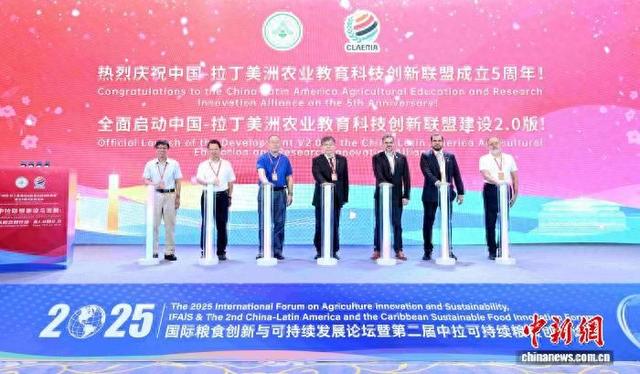
中拉联盟已覆盖15国汇聚78家成员单位
Zhong Guo Xin Wen Wang· 2025-12-11 06:26
Group 1 - The "China-Latin America Agricultural Education and Technology Innovation Alliance" (hereinafter referred to as "the Alliance") has formed a robust ecosystem covering 15 countries and gathering 78 member units, with over 200 inter-institutional cooperation agreements signed [1][2] - The Alliance, initiated by South China Agricultural University, is a non-governmental, non-profit, open, and international multilateral cooperation platform aimed at promoting collaboration in talent cultivation, scientific research, technology promotion, cultural exchange, and policy research between China and Latin American countries [2] - The Alliance has established two sub-alliances: the China-Brazil Agricultural and Forestry Education Technology Innovation Alliance and the China-Latin America Soybean Industry Technology Innovation Alliance, along with four overseas technology stations in Colombia, Ecuador, and Cuba [2] Group 2 - The Alliance has launched six overseas joint research bases or demonstration gardens, including the China-Cuba Rice Joint Research Center and the Brazil Longping Soybean Breeding Base, and has signed a memorandum of cooperation with the National University of Colombia to initiate the construction of the "China-Latin America International Joint College" [2] - The Alliance aims to address global challenges such as food security and climate change by enhancing integrated construction and promoting the deep integration of the "education chain, innovation chain, industry chain, and talent chain" [3] - The focus will be on food security and sustainable development, creating replicable and scalable "comprehensive solutions," while strengthening standardized and institutionalized construction to enhance the Alliance's cohesion and international influence [3]