
人形机器人产业

Search documents
资产配置周报告|大金融发力,反攻节点出现!
Xin Lang Cai Jing· 2025-12-08 12:27
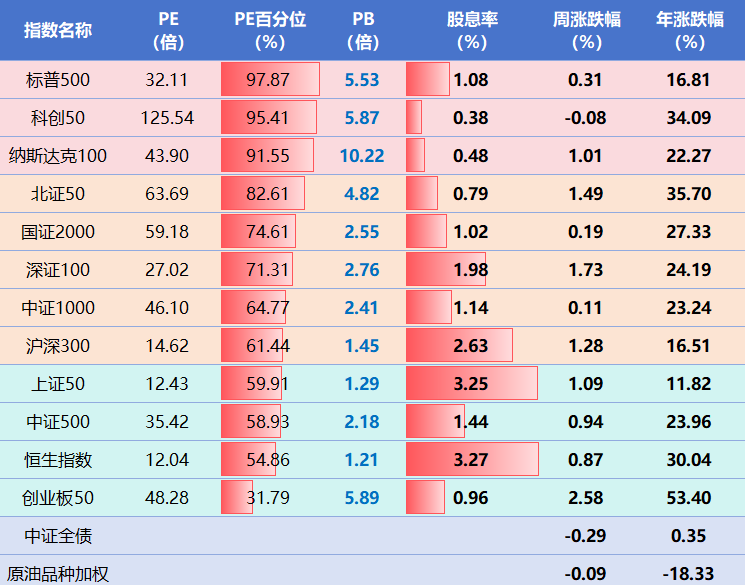
Market Overview - The overall market sentiment is cautiously optimistic, with a focus on the financial sector showing signs of recovery, particularly with major indices rebounding above key levels [1][39] - The current price-to-earnings (PE) ratio for the market is 22.92 times, with a significant stock-bond yield spread of 2.52%, indicating favorable conditions for equity investments [4][42] Sector Performance - The top-performing sectors last week included non-ferrous metals, oil and petrochemicals, and national defense and military industry, while media entertainment, household goods, and real estate saw declines [14][52] - The aerospace and Fujian sectors demonstrated sustained performance, while other sectors experienced rotation, indicating increased operational difficulty in the short term [2][40] Investment Strategies - Short-term strategies should focus on sectors highlighted in the 14th Five-Year Plan, such as controllable nuclear fusion, quantum technology, and commercial aerospace, with a recommendation to maintain trading discipline [2][40] - The long-term outlook remains bullish, with the expectation of a gradual recovery in the market, particularly in sectors with structural opportunities like consumer electronics and AI [9][47] Bond Market Insights - The bond market is currently experiencing low volatility, with the 10-year government bond yield at 1.85%, indicating a stable interest rate environment [11][49] - The yield curve is expected to remain stable unless influenced by significant policy changes or international events [11][49] Emerging Industry Opportunities - The marine economy is gaining attention, with government reports emphasizing the development of deep-sea technology, which is expected to drive growth in related sectors [16][19] - Solid-state batteries are projected to see significant advancements, with energy density potentially exceeding 500Wh/kg, positioning them as a key technology in the future of energy storage [23][28] - The humanoid robotics sector is poised for growth, with increasing demand expected to exceed 100 million units domestically, creating substantial market opportunities for related components [32][35]

2026世界人形机器人运动会赛项征集活动启动
Bei Jing Shang Bao· 2025-12-04 09:01
Core Points - The World Humanoid Robot Sports Committee announced the call for competition events for the 2026 World Humanoid Robot Sports Games, inviting participation from various entities and individuals with expertise in humanoid robotics [1] Group 1: Competition Requirements - The competition projects should be forward-looking and innovative, reflecting the technological level of the humanoid robotics industry, while being feasible for most participating teams to reach competition standards after development and training [2] - Scenario-based projects should address real-world needs in industrial, medical, and domestic settings, designed for long-range closed-loop competitions with potential for transformation and demonstration [2] - Competition projects must have clear scoring criteria, allowing judges to conduct officiating work through quantifiable standards [2] Group 2: Design Considerations - Project designs should be engaging and visually appealing, attracting audiences and being easy to understand [3] - The projects should align with the principles of sportsmanship, humanistic care, and technological innovation, avoiding sensitive areas and ethical safety risks [3]

“友邦惊诧”遭遇中国速度
Guan Cha Zhe Wang· 2025-12-02 06:44
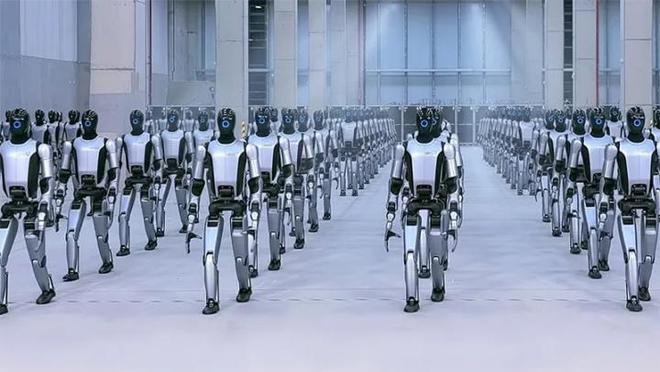
Core Viewpoint - The video released by Chinese robotics company UBTECH showcasing hundreds of Walker S2 humanoid robots has sparked controversy, primarily questioning its authenticity rather than the technology itself, highlighting a gap in technological perception and a potential shift in industry power dynamics [1][3][12] Industry Characteristics - The humanoid robotics industry is a complex system engineering field that integrates multiple technologies, including mechanical structures, motor drives, sensors, AI algorithms, and battery energy, reflecting the comprehensive capabilities of a country's manufacturing base [3][4] - Shenzhen's "Robot Valley" exemplifies a dense industrial ecosystem where hundreds of robotics companies and component suppliers are located within walking distance, significantly reducing design-to-prototype cycles and enabling rapid iteration [4][5] Cost Control and Market Position - Chinese humanoid robotics companies benefit from long-term accumulation in core components like motors, batteries, and sensors, leading to significant cost advantages. For instance, a humanoid robot priced under 10,000 RMB was recently launched, demonstrating high performance despite its low cost [4][5] - The Chinese government supports the robotics industry by providing real-world application scenarios, which helps companies identify viable business models and accelerates technology iteration [5][10] Comparison with Western Counterparts - In contrast to the rapid development of Chinese humanoid robotics, Western companies like Boston Dynamics face challenges in commercialization despite having advanced technologies. The company has changed ownership multiple times due to difficulties in achieving profitability [6][10] - Western robotics firms often struggle with the paradox of being technologically advanced but commercially lagging, as they find it hard to scale their innovations into practical applications [6][7] Market Dynamics and Future Outlook - The humanoid robotics sector is at a pivotal moment, similar to the early smartphone industry, where the ability to mass-produce at low costs will determine success. China holds a favorable position due to its complete supply chain, large domestic market, and supportive policies [10][12] - The diversity of the Chinese humanoid robotics market, with around 200 startups focusing on various applications, contrasts sharply with the Western market dominated by a few giants, fostering faster technological iteration and richer application exploration [8][10] Marketing and Perception - The controversy surrounding the authenticity of UBTECH's video may have been a strategic marketing move to generate global attention, similar to previous instances in the Chinese tech industry [9][12] - The skepticism from Western observers reflects a deeper anxiety about the changing competitive landscape in the robotics industry, as they struggle to reconcile their perceptions with the rapid advancements made by Chinese companies [11][12]
未来十年成本最高降低70% 人形机器人产业站上商业应用历史拐点
Zhong Guo Jing Ying Bao· 2025-11-29 09:46
Core Insights - The cost of humanoid robots is expected to decrease by 60%-70% over the next decade, driven by advancements in technology and ecosystem development [1][5] - By 2035, global annual sales of humanoid robots could reach 6 million units, with a market size exceeding $120 billion, and in optimistic scenarios, sales may surpass 10 million units, reaching $260 billion [1] - The humanoid robot industry is attracting various players, including traditional automotive manufacturers and chip suppliers, indicating a shift towards a new technological landscape [2] Industry Developments - Multiple cities in the Yangtze River Delta, including Shanghai and Nanjing, have initiated policies to support the development of the humanoid robot industry [1] - Chery Automobile and Dongfeng Motor are actively entering the humanoid robot sector, with Chery showcasing its "Mojia" robot capable of multilingual interaction and advanced navigation [2] - Dongfeng plans to launch its humanoid robots by 2026, viewing this as a strategic move to cultivate new production capabilities [2] Market Predictions - Bain & Company predicts that the humanoid robot market will undergo three development phases: early commercial exploration, industrial application, and widespread use in commercial and household settings [5] - The BOM (Bill of Materials) cost for humanoid robots is projected to drop from $40,000-$50,000 to $10,000-$20,000 by 2035, mirroring trends seen in the electric vehicle industry [5] Challenges and Considerations - Despite advancements, humanoid robots still face challenges in large-scale deployment, particularly in achieving human-level performance in perception and decision-making [4] - Key factors for successful large-scale deployment include cost reduction, technological breakthroughs, industry demand, and risk tolerance in application scenarios [4] Strategic Recommendations - Companies must define strategic goals, select competitive tracks, and establish differentiated advantages to succeed in the humanoid robot market [3] - Investors and businesses are encouraged to seize the current strategic window for planning and positioning in the humanoid robot sector [3]
《全球人形机器人产业专利导航报告》发布
Xin Hua Ri Bao· 2025-11-28 22:02
Core Insights - The global humanoid robot market is set to enter a phase of rapid growth starting in 2025, with an average annual patent application volume of 3,000 since 2021, indicating a competitive landscape dominated by China, the US, and Japan [1] Group 1: Patent Landscape - The patent application volume for humanoid robot technologies has shown a significant increase, with China achieving a notable lead in patent numbers [1] - In China, Guangdong province leads with 3,369 patent applications, followed by Beijing with 1,978 and Shanghai with 1,672, while Jiangsu ranks fourth with 1,447 applications [1] Group 2: Industry Development - Jiangsu province has developed a complete and collaborative innovation ecosystem in the humanoid robot industry, with key players emerging in upstream components, control technology, and midstream manufacturing [1] - The southern region of Jiangsu has become a core area for industrial innovation, with cities like Nanjing, Suzhou, Wuxi, and Changzhou forming the leading tier of industrial innovation [1]
贝恩:未来5至10年人形机器人产业将进入黄金发展期
Xin Hua Cai Jing· 2025-11-26 13:59
Core Insights - The global humanoid robot industry is currently in an early exploration phase, with applications primarily in research, guidance, and limited industrial manufacturing, and is expected to ship only a few thousand units in 2024 [1] - The market is projected to enter a golden development period in the next 5 to 10 years, with humanoid robots set to reshape industrial production and significantly impact commercial services and home life, ushering in an era of "general-purpose labor" [1] - The large-scale deployment of humanoid robots will depend on key factors such as cost reduction and technological breakthroughs [1] Industry Overview - By 2035, global annual sales of humanoid robots are expected to reach 6 million units, with a market size exceeding $120 billion; in optimistic scenarios, sales could surpass 10 million units, reaching a market size of $260 billion [1] - The industry is expected to see a diversification of business models, including core component supply, R&D outsourcing, and original equipment manufacturing (OEM) and original design manufacturing (ODM), forming a complete ecosystem [1] Cost and Technology Insights - In terms of hardware, planetary roller screws and six-dimensional force sensors account for the highest cost components of humanoid robots, approximately 40% of total costs, with potential cost reductions of 70%-80% in the future [2] - Eight key technological bottlenecks have been identified in the humanoid robot industry, covering areas such as AI chips, battery and thermal management, and sensors [2] Market Phases - The humanoid robot industry is expected to undergo three phases over the next decade: early commercial exploration, initial applications in industrial sectors, and widespread adoption in commercial and home scenarios [2] - The initial market will be driven by tech enthusiasts and industrial pilots, followed by sectors like automotive, electronics, and machinery manufacturing, and ultimately expanding into medical, logistics, commercial cleaning, and home companionship [2] Strategic Recommendations - Financial investors should focus on market size, profitability, technological barriers, cost reduction potential, and cross-industry application prospects, with planetary roller screws, tactile sensors, and AI chips identified as the most attractive hardware areas [3] - Potential industry participants must clarify strategic goals, select competitive tracks, develop commercialization paths, and build differentiated advantages [3] - Clients planning to deploy humanoid robots should evaluate from two dimensions: value creation and implementation feasibility [3]
花旗中国人形机器人公司调研:所有人都很乐观,2026年行业或实现指数级增长,至少翻倍!
Hua Er Jie Jian Wen· 2025-11-26 12:00
Core Insights - The human-shaped robot industry is expected to enter an exponential growth phase by 2026, with production anticipated to at least double compared to 2025 [1][2] - The report indicates that the current stock price corrections in the sector provide a favorable investment opportunity for investors [1][5] Industry Growth Projections - A consensus among surveyed companies suggests that revenue from human-shaped robots will experience exponential growth by 2026, potentially doubling [2] - The acceleration in the global human-shaped robot industry is driven by leading manufacturers ramping up production capacity and domestic companies advancing in commercialization [2][4] Key Components and Revenue Potential - The 3D vision sector has seen significant breakthroughs, with Chinese companies capturing about 70% market share in specific niches, leading to projected revenues of 100 million to 200 million yuan by 2026 [3] - Core components like reducers and screws are also showing strong performance, with leading companies nearing 100 million yuan in revenue by Q3 2025, representing 20% of total revenue [3] - Domestic manufacturers are expected to increase their shipment volume from 500 units in 2025 to 2000 units in 2026, with related business revenue potentially exceeding 30% of total revenue [3] Supply Chain Dynamics - The global human-shaped robot industry is characterized by a "global leaders leading + domestic acceleration" model, driving a demand explosion across the entire supply chain [4] - Key component suppliers are urgently expanding capacity, with some needing to increase production to 3000 units per week by Q1 2026 and further to 5000 units per week by year-end [4] Investment Opportunities - Current stock price corrections in related companies present significant investment opportunities, particularly for those with strong order acquisition capabilities and commercial progress [5] - The long-term growth potential of the human-shaped robot market is substantial, with expectations of exceeding 100 billion USD in the next decade, positioning Chinese supply chains as critical players in the global market [5]
贝恩:人形机器人成本十年内将下降70%
Di Yi Cai Jing· 2025-11-26 11:02
Core Insights - The report by Bain & Company highlights that humanoid robot financing in China and the U.S. accounts for nearly 80% of global funding in this sector, with an estimated half of the financing coming from China [1][2] - By 2035, global annual sales of humanoid robots are projected to reach 6 million units, with a market size exceeding $120 billion; in optimistic scenarios, sales could surpass 10 million units, reaching a market size of $260 billion [1] - The report emphasizes the importance of key components in humanoid robots, predicting significant cost reductions in critical hardware modules over the next few years [2][3] Investment Landscape - The humanoid robot sector has seen 162 financing events in China this year, with total funding exceeding 40 billion RMB, significantly surpassing the expected figures for 2024 [1] - Bain's research indicates that the highest cost components in humanoid robots are planetary roller screws and six-dimensional torque sensors, which account for about 40% of total costs [2] - The report anticipates that costs for these key components could decrease by 70% to 80% as domestic companies ramp up R&D efforts [2] Technological Advancements - Other critical technologies include AI chips, battery, and thermal management, with significant breakthroughs expected in 5 to 10 years [3] - The report notes that China has a solid foundation for developing AI chips, with mid-to-low-end chips expected to achieve self-sufficiency in the next five years, while high-end chips may see significant progress in ten years [3] - These technological advancements could lead to humanoid robots surpassing human labor in investment returns, marking a potential tipping point for large-scale labor replacement [3] Strategic Recommendations - For financial investors, it is crucial to focus on market size, profitability, technological barriers, cost reduction potential, and cross-industry application prospects, with planetary roller screws, tactile sensors, and AI chips identified as the most attractive hardware investment areas [3] - Industry participants should define strategic goals, select competitive tracks, and establish commercialization paths to build differentiated advantages [3] - Potential clients looking to deploy humanoid robots should evaluate value creation and implementation feasibility before introduction [3]
贝恩:未来十年,人形机器人产业将进入黄金发展期
Guo Ji Jin Rong Bao· 2025-11-26 09:58
Core Insights - The report by Bain & Company highlights that humanoid robots will reshape industrial production and significantly impact commercial services and home life over the next decade, ushering in an era of "universal labor" [1] - The humanoid robot industry is still in its early exploration phase, with limited applications primarily in research, guidance, and some industrial manufacturing, but is expected to enter a golden development period in the next 5 to 10 years [2][3] Market Projections - By 2035, global annual sales of humanoid robots are projected to reach 6 million units, with a market size exceeding $120 billion; in optimistic scenarios, sales could surpass 10 million units, reaching $260 billion [2] - The cost of the Bill of Materials (BOM) for humanoid robots is expected to decrease from $40,000-$50,000 to $10,000-$20,000 by 2035, a reduction of 60%-70% [2] Key Factors for Deployment - Large-scale deployment of humanoid robots depends on four core factors: reduced scaling costs and positive ROI, breakthroughs in key technologies, urgency of industry demand, and risk tolerance in application scenarios [2] - The experience from the electric vehicle industry, where BOM costs dropped by 50%-60% over the past decade, serves as a strong reference for the humanoid robot sector [2] Hardware and Technology Development - Key hardware components, such as planetary roller screws and six-dimensional torque sensors, account for approximately 40% of total costs, with potential cost reductions of 70%-80% anticipated [3] - Eight critical technological bottlenecks have been identified, including AI chips, battery and thermal management, and sensors, with performance breakthroughs expected in the next 2-10 years [3] Industry Stages and Applications - The humanoid robot industry is expected to progress through three stages: early commercial exploration, initial applications in industrial sectors, and widespread adoption in commercial and household scenarios [3] - Initial markets will include tech enthusiasts and industrial pilots, followed by durable goods industries like automotive and electronics, and eventually expanding to healthcare, logistics, and home applications [3] Strategic Recommendations - Financial investors should focus on market size, profitability, technological barriers, cost reduction potential, and cross-industry application prospects, with particular attention to planetary roller screws, tactile sensors, and AI chips as attractive investment areas [4] - Potential industry participants must define strategic goals, select competitive tracks, and establish commercialization paths to build differentiated advantages [4] - Application customers should evaluate value creation and implementation feasibility before introducing humanoid robots, considering operational efficiency, customer experience, data assets, partner selection, organizational change, and regulatory risks [4]
人形机器人板块午前拉升,机器人ETF易方达(159530)助力布局产业链龙头
Sou Hu Cai Jing· 2025-11-26 05:21
Core Viewpoint - The robotics industry in China is expected to thrive by 2025, driven by top-level design and collaborative innovation across the entire industry chain, with significant contributions from leading companies like Tesla and Xiaopeng [1] Industry Performance - As of the midday close, the National Robotics Industry Index rose by 0.7%, the China Securities Intelligent Electric Vehicle Index increased by 1.2%, the China Securities Consumer Electronics Theme Index climbed by 2.7%, and the China Securities Internet of Things Theme Index surged by 3.7% [1] - The trading volume of the E Fund Robotics ETF (159530) reached 250 million yuan in half a day [1] Industry Development - The production timeline for humanoid robots has been clearly defined by major manufacturers, which has initiated the construction of robotics factories, injecting strong confidence and momentum into the industry chain [1] - The localization process of core components is advancing rapidly, with continuous breakthroughs in key technologies such as reducers and dexterous hands, significantly enhancing the self-controllable capabilities of the supply chain [1]
