低碳化

Search documents
化学原料行业上市公司万华化学、宝丰能源跻身2025年三季报归母净利润百强
Sou Hu Cai Jing· 2025-12-13 11:01
Core Insights - The article highlights the performance of Wanhua Chemical and Baofeng Energy in the third quarter, showcasing two distinct yet successful models within the chemical industry [1] - It emphasizes the ongoing transformation in the chemical sector towards "high-end and low-carbon" development [1] Group 1: Company Performance - Wanhua Chemical (stock code 600309) reported a net profit attributable to shareholders of 9.157 billion yuan, a year-on-year decrease of 17.45%, ranking 72nd [3] - Baofeng Energy (stock code 600989) achieved a net profit attributable to shareholders of 8.950 billion yuan, a year-on-year increase of 97.27%, ranking 75th [5] Group 2: Industry Trends - Both companies represent different successful models in the chemical industry, focusing on quality improvement and efficiency amidst ongoing changes [6] - The restructuring of global energy costs, particularly in Europe, presents structural opportunities for Chinese chemical leaders with complete industrial chains [6] - Wanhua Chemical's growth potential lies in the optimization of the MDI market and continuous breakthroughs in new materials [6] - Baofeng Energy's growth potential is driven by clear capacity expansion and the synergy between green hydrogen and modern coal chemical processes, enhancing its low-carbon competitiveness [6] - The global competitiveness of both companies is expected to improve through technological innovation and globalization [6]



三一重工:不存在应披露而未披露的重大信息
Zheng Quan Ri Bao Wang· 2025-12-12 12:12
Core Viewpoint - Sany Heavy Industry (600031) acknowledges that stock price fluctuations are influenced by various factors, including macroeconomic conditions, industry cycles, market sentiment, and funding preferences [1] Group 1: Company Operations - The company reports that its production and operations are normal, with no undisclosed significant information [1] - Sany Heavy Industry plans to further advance its three major strategies: globalization, low-carbon initiatives, and digital intelligence [1] Group 2: Industry Trends - The company aims to strengthen research and development innovation and promote manufacturing platform transformation to lead the industry's electrification trend [1]

碧水源:公司转型以来膜技术实现了核心原材料自主化
Zheng Quan Ri Bao Zhi Sheng· 2025-12-12 11:08
Core Viewpoint - The company has successfully achieved self-sufficiency in core raw materials for membrane technology, enabling import substitution and application across five major fields: wastewater resource utilization, high-quality drinking water, seawater desalination, lithium extraction from salt lakes, and industrial zero discharge [1] Group 1: Company Transformation and Market Expansion - The company is exploring further into new fields such as industrial resource recycling, comprehensive utilization of seawater resources, pharmaceutical membranes, and new materials [1] - The company is actively developing towards smart, automated, and low-carbon solutions [1] - Revenue from new industry sectors currently constitutes a small portion of the company's overall revenue, indicating a need for time to expand into corresponding markets [1] Group 2: Communication and Reporting - Investors are encouraged to follow the company's periodic reports and official communications for updates on development [1]

研判2025!中国静电除尘器行业分类、市场规模及重点企业分析:破局细颗粒治理瓶颈,静电除尘器行业迎来技术革新关键期[图]
Chan Ye Xin Xi Wang· 2025-12-12 01:21
Core Insights - The Chinese electrostatic precipitator (ESP) industry is currently undergoing a critical phase of technological upgrades and market structure optimization, with a projected market size of approximately 23.6 billion yuan in 2024, representing a year-on-year growth of 8.26% [1][6]. Industry Overview - Electrostatic precipitators are industrial devices that purify dust particles from gases using high-voltage electric fields, effectively capturing particles ranging from 0.01 to 50 micrometers [2][3]. - The industry is characterized by two main types of ESPs: plate-type and tubular-type, each with distinct structural forms, applicable scenarios, and performance characteristics [3]. Market Size - The market for electrostatic precipitators in China is expected to reach about 23.6 billion yuan in 2024, with an annual growth rate of 8.26% [1][6]. - Traditional ESPs have limited efficiency in capturing fine particulate matter, particularly PM2.5, prompting innovative solutions such as the use of dielectric materials with a textured structure and low-frequency bipolar power supplies [1][6]. Key Companies' Performance - Leading companies like Longking Environmental Protection and Fida Environmental Protection dominate the market, leveraging their full industry chain advantages to capture significant market shares in the power and steel sectors [7]. - Fida Environmental Protection reported a revenue of 2.544 billion yuan in the first three quarters of 2025, marking a 14.40% increase year-on-year, with a net profit of 204 million yuan, up 21.10% [7]. - Baoneng New Energy achieved a revenue of 6.754 billion yuan in the same period, reflecting a 10.61% growth, with a net profit of 821 million yuan, increasing by 38.62% [7]. Industry Development Trends 1. **Technological Innovation**: The industry is moving towards smart and low-carbon solutions, integrating IoT, big data, and AI for real-time monitoring and adaptive regulation, which reduces operational costs [8]. 2. **Expansion of Application Scenarios**: Non-electric industries such as steel, cement, and waste incineration are expected to drive demand growth for ESPs, supported by carbon control policies [8]. 3. **Global Market Expansion**: Chinese ESP companies are accelerating their global presence and standard output, with leading firms establishing projects in over 40 countries and contributing to international standards [9][10].


陕西“十五五”规划建议发布 做强做优现代能源产业集群
Zhong Guo Hua Gong Bao· 2025-12-10 02:45
Core Viewpoint - The document outlines the recommendations from the Shaanxi Provincial Committee of the Communist Party of China regarding the 15th Five-Year Plan, emphasizing the focus on developing the real economy and establishing modern industrial clusters in energy, advanced manufacturing, and strategic emerging industries. Group 1: Economic Development Strategy - The focus is on strengthening and optimizing the modern energy industry cluster by maintaining stability in energy production while transitioning fossil energy usage towards chemical raw materials and increasing the share of clean energy [1] - The plan includes accelerating oil and gas resource exploration and development, with a target of constructing a 10 million tons/year refining and chemical integration project in Yan'an [1] Group 2: Strategic Emerging Industries - The recommendations highlight the need to cultivate and expand strategic emerging industries, particularly in fields such as photonics, hydrogen energy, additive manufacturing, and biomanufacturing [1] - The strategy aims to optimize regional economic layout by establishing innovation demonstration zones and modern energy economic demonstration areas [1] Group 3: Carbon Neutrality Goals - The document emphasizes the importance of achieving carbon peak and implementing a dual control system for total carbon emissions and intensity [2] - It advocates for the construction of zero-carbon factories and parks, promoting clean and efficient coal utilization and the green transformation of energy consumption [2]
钢铁业倚重高端化与低碳化破局
Zhong Guo Zheng Quan Bao· 2025-12-01 20:25
Core Viewpoint - The steel industry in China is experiencing a decline in consumption and an increase in inventory, despite stable production levels and improved profitability for some companies [1][2][4]. Production and Consumption - From January to October, China produced 818 million tons of crude steel, a year-on-year decrease of 3.9%, with an average daily output of 2.69 million tons [1][3]. - The apparent consumption of steel in China for the first three quarters of 2025 was 649 million tons, down 5.7% year-on-year, continuing a trend of decline since the 14th Five-Year Plan [1][2]. Inventory Levels - As of November 28, the social inventory of five major steel products reached 10.073 million tons, an increase of 27.82% year-on-year [1][3]. - The inventory of key steel enterprises was reported at 15.61 million tons in mid-November 2025, reflecting a 26.3% increase since the beginning of the year [3]. Profitability and Financial Performance - The steel industry has shown overall stable operations this year, with significant improvements in profitability compared to last year, although demand has decreased [2][4]. - Among 46 listed steel companies that disclosed their third-quarter reports, 31 reported a year-on-year increase in net profit, accounting for approximately 67.39% [2]. Industry Development Strategies - The China Iron and Steel Association (CISA) emphasizes the need for steel companies to adhere to production control policies and focus on sustainable development through structural reforms [4]. - Recommendations for high-quality development include enhancing innovation capabilities, optimizing resource supply, and promoting the integration of steel structure construction [4][6]. Environmental Initiatives - By the end of October, 219 steel enterprises had completed or partially completed ultra-low emission modifications, with total investments exceeding 310 billion yuan [5]. - The industry is encouraged to accelerate technological innovation and expand applications in new energy sectors [5][6].

2025中国汽车供应链大会芜湖召开
Zhong Guo Qi Che Bao Wang· 2025-11-27 06:15
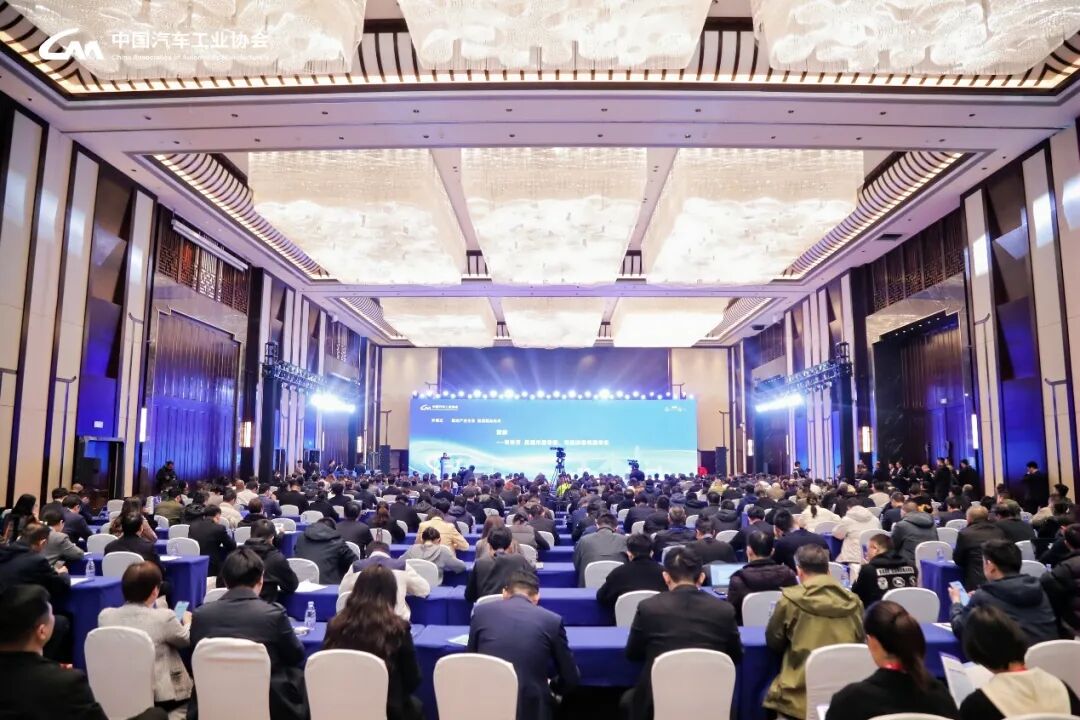
Core Viewpoint - The "2025 China Automotive Supply Chain Conference" emphasizes the transformation and innovation within the automotive supply chain, focusing on the integration of electric, intelligent, connected, and low-carbon technologies to enhance China's position in the global automotive industry [1][3]. Group 1: Industry Transformation - The "14th Five-Year Plan" period is a critical phase for China's automotive industry, aiming for peak carbon emissions and transitioning from a major automotive nation to a strong one, with a focus on maintaining leadership in smart and connected new energy vehicles [3]. - The automotive supply chain is undergoing profound adjustments, necessitating innovation-driven development and exploration of international expansion paths [4]. - The automotive supply chain's resilience and innovation are crucial for adapting to new market conditions and ensuring sustainable growth [5]. Group 2: Strategic Insights - Key strategies for enhancing the automotive supply chain include innovation leadership, collaboration among industry leaders, and fostering an open and cooperative ecosystem for mutual benefits [5]. - The importance of transforming China's supply chain advantages into localized stability within the global market is highlighted, with a focus on creating a sustainable and cooperative supply chain [5][6]. - The "361" supply chain development strategy aims to address core challenges faced by the automotive industry, including supply assurance, innovation, cost management, and sustainability [7]. Group 3: Research and Development - The "2025 China Automotive Supply Chain Development Report" outlines significant achievements in the automotive parts industry, including strengthened foundations, enhanced innovation capabilities, improved industry ecology, and progress towards green and low-carbon transitions [9]. - The globalization of China's automotive parts industry is now seen as a necessity, with the upcoming blue paper providing a comprehensive guide for companies looking to expand internationally [9][10]. - The blue paper introduces a "5C" globalization strategy framework, covering compliance, supply chain, capital, brand, and talent, serving as a practical tool for companies to formulate their international strategies [10].
让钢铁“觉醒” 驰骋世界工地
Su Zhou Ri Bao· 2025-11-24 00:44
智能AGV小车穿梭往来,机械臂灵活挥舞,在三一重机昆山产业园,焊接机器人手臂交替起落, 溅起湛蓝色火花,一台台身披"三一红"的挖掘机正沿着数字化产线有序流动。这里,每17分钟就有一台 大型挖掘机下线,等待奔赴海内外矿山、林场与基建工地。 在推动钢铁"觉醒"之外,三一重机还结合市场需求,细化打造20多个不同品类的"挖掘机机器人战 队",其中最小的1.6吨,最大的达400吨;实现"一台起订",微小挖机定制化率高达75%。 在三一重机演示的产品视频中,井下1.6米深的狭窄矿道中,一台小巧的SY35U矿安机正挥舞机械 臂破碎岩石。"矿井作业如'地道战',传统人工开采效率低、风险高。这款1.6吨设备'个子'虽小,却配 置了防爆系统和伸缩油缸,能适应极端工况。"三一重机小型挖机研究院院长席川比喻道,"它就像矿工 身边的'机械战甲'。" 而另一端,重达400吨的"巨无霸"矿用挖掘机约有3层楼高,将于本月底提前完成500小时耐久试 验,已收到多个海外矿业公司意向订单。"下一步,我们将挑战2000小时极限测试。"张松说,这款设备 光挖斗就有22立方米,可以同时站立几十人,一小时便可挖出一个篮球场。 "十五五"规划建议提出,坚持 ...
锦绣燕赵追新逐绿向未来
中国能源报· 2025-11-16 23:33
Core Viewpoint - The article emphasizes the importance of green and low-carbon development in various regions of Hebei, highlighting initiatives in energy, infrastructure, and ecological restoration as part of a broader strategy to achieve sustainable growth and environmental harmony [1][5][21]. Group 1: Green Development Initiatives - Hebei has established a clean energy system with a total installed capacity of 123 million kilowatts for wind and solar energy, accounting for 64.3% of its total installed capacity, ranking second in the country [2]. - The Hebei province's coal-fired power generation capacity is projected to decrease to 32.6% by the end of 2024, which is 10.6 percentage points lower than the national average [2]. - The province is also leading in the construction of pumped storage projects, with a total planned capacity of 29.97 million kilowatts, and has a hydrogen energy industry chain valued at over 60 billion yuan [2]. Group 2: Xiong'an New Area Development - The construction of Xiong'an New Area is framed as a significant national project, with a focus on green and low-carbon principles, aiming to set a benchmark for sustainable urban development [5]. - Major state-owned enterprises have relocated to Xiong'an, enhancing the area's development momentum, with the Xiong'an Station serving as a key transportation hub [5][6]. - The Xiong'an Station utilizes self-generated electricity for its operations, featuring a photovoltaic power station that generates 15 million kilowatt-hours of green electricity annually [6]. Group 3: Ecological Restoration and Innovation - The transformation of the Saihanba Mechanical Forest Farm from a desert to a lush forest is highlighted as a successful ecological restoration project, generating significant income for the surrounding area [8][9]. - Advanced technologies, such as a digital twin model for forest fire prevention, are being implemented to enhance ecological management and monitoring [10]. - Hebei is promoting integrated protection of natural resources, including the establishment of national parks and biodiversity conservation efforts [10]. Group 4: Energy Port Transformation - Huanghua Port is recognized as a crucial hub for coal transportation, with a coal throughput expected to reach 214 million tons in 2024 [15][16]. - The port is pioneering a zero-carbon pilot project, with plans for wind power generation that could reduce carbon emissions by over 125,000 tons annually [16]. - Huanghua Port is expanding its functionality to include roll-on/roll-off services, enhancing its role in regional economic development [16][17]. Group 5: Rural Revitalization through Renewable Energy - Desheng Village has leveraged its solar energy resources to build photovoltaic power stations, significantly increasing local incomes [19]. - The village has transformed into a tourist destination, attracting over 80,000 visitors in 2024, showcasing the benefits of green energy and rural development [20]. - The construction of zero-carbon buildings in Desheng Village exemplifies the integration of green technology in rural revitalization efforts [20].
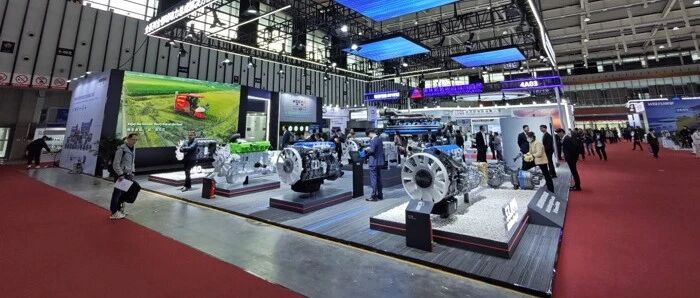
展示全领域动力解决方案 潍柴2025内燃机展有哪些惊喜?
第一商用车网· 2025-11-15 03:36
Core Viewpoint - The 2025 International Internal Combustion Engine and Power Equipment Expo showcased innovations in the internal combustion engine and power systems, emphasizing low-carbon, electrification, and intelligent technology trends, with Weichai presenting a diverse range of products demonstrating its technological strength and versatility [1][14]. Group 1: Weichai's Product Showcase - Weichai displayed nine products at the expo, including traditional and new energy power systems, highlighting its role as a significant engine supplier in the commercial vehicle sector [3][14]. - The WP14H/T commercial vehicle powertrain, featuring a thermal efficiency of 53.09%, 630 horsepower, and 2750 Nm of torque, is designed for long-haul logistics, showcasing Weichai's commitment to high-efficiency engines [3]. - The WP2H lightweight diesel engine, with a displacement of 1.994 liters, maximum power of 190 horsepower, and torque of 420 Nm, is noted for its excellent fuel efficiency due to advanced design features [5]. Group 2: New Energy Innovations - The WP16NG-4.0 gas engine, with a displacement of 15.7 liters, 750 horsepower, and 3400 Nm of torque, offers over 10% improvement in power and torque compared to competitors, along with a 6% reduction in fuel consumption, providing significant cost savings for users [7]. - The WP15 hydrogen engine, with a maximum power of 560 horsepower and torque of 2600 Nm, is optimized for various operating conditions, ensuring stable performance and lower operational costs [9][11]. - The WEF300 fuel cell engine, rated at 300 kW with an efficiency of 63%, is designed for heavy-duty transport, demonstrating high energy conversion efficiency and adaptability to harsh environments [13]. Group 3: Industry Leadership and Innovation - Weichai has established itself as a leader in China's equipment manufacturing industry, driving innovation and setting new benchmarks in the global internal combustion engine sector [14]. - The company's focus on core technology and innovation has propelled the Chinese internal combustion engine industry into a new era of self-reliance and advancement [14].