
供应链改革

Search documents
家家悦(603708):三季度扣非净利大增470%,供应链改革释放利润弹性
GOLDEN SUN SECURITIES· 2025-10-26 12:45
Investment Rating - The report maintains an "Accumulate" rating for the company [5][6]. Core Insights - The company reported a significant increase in net profit, with a 470% year-on-year growth in non-recurring net profit, attributed to supply chain reforms that enhanced profit elasticity [1][4]. - Despite a decline in revenue by 3.87% year-on-year in Q3 2025, the company achieved a net profit of 22.77 million yuan, marking a 24.34% increase compared to the previous year [1][4]. - The company is expected to enter a profit elasticity release period due to stable same-store performance and reduced losses in out-of-province operations, alongside supply chain reforms that improve gross margins [10]. Revenue and Profitability - In Q3 2025, the company achieved revenue of 4.581 billion yuan, a decrease of 3.87% year-on-year, with a total revenue of 13.588 billion yuan for the first three quarters, also down by 3.81% [2]. - The gross margin for the main business in Q3 2025 was 20.59%, an increase of 1.1 percentage points year-on-year, while the overall gross margin for the first three quarters was 23.93%, up by 0.67 percentage points [3]. - The company’s operating cash flow for the first three quarters was 1.584 billion yuan, reflecting a year-on-year growth of 1.08% [1]. Store Expansion and Operations - In Q3 2025, the company opened 7 new direct-operated stores and 13 franchise stores, while closing 14 direct-operated stores, resulting in a total of 1,090 stores at the end of the period [2]. - The company’s store types include 242 comprehensive supermarkets, 400 community fresh food supermarkets, and 202 rural supermarkets [2]. Cost Management - The expense ratio for Q3 2025 was 22.01%, a decrease of 0.09 percentage points year-on-year, with a slight increase in sales and management expense ratios [4]. - The total expenses decreased, contributing to improved profit quality [4]. Future Earnings Forecast - The report projects net profits for 2025, 2026, and 2027 to be 207 million yuan, 250 million yuan, and 288 million yuan, respectively, indicating year-on-year growth rates of 57.2%, 20.6%, and 15.0% [10].

新疆昌吉市:稳供应促消费 打造品质购物新体验
Sou Hu Cai Jing· 2025-09-24 20:35
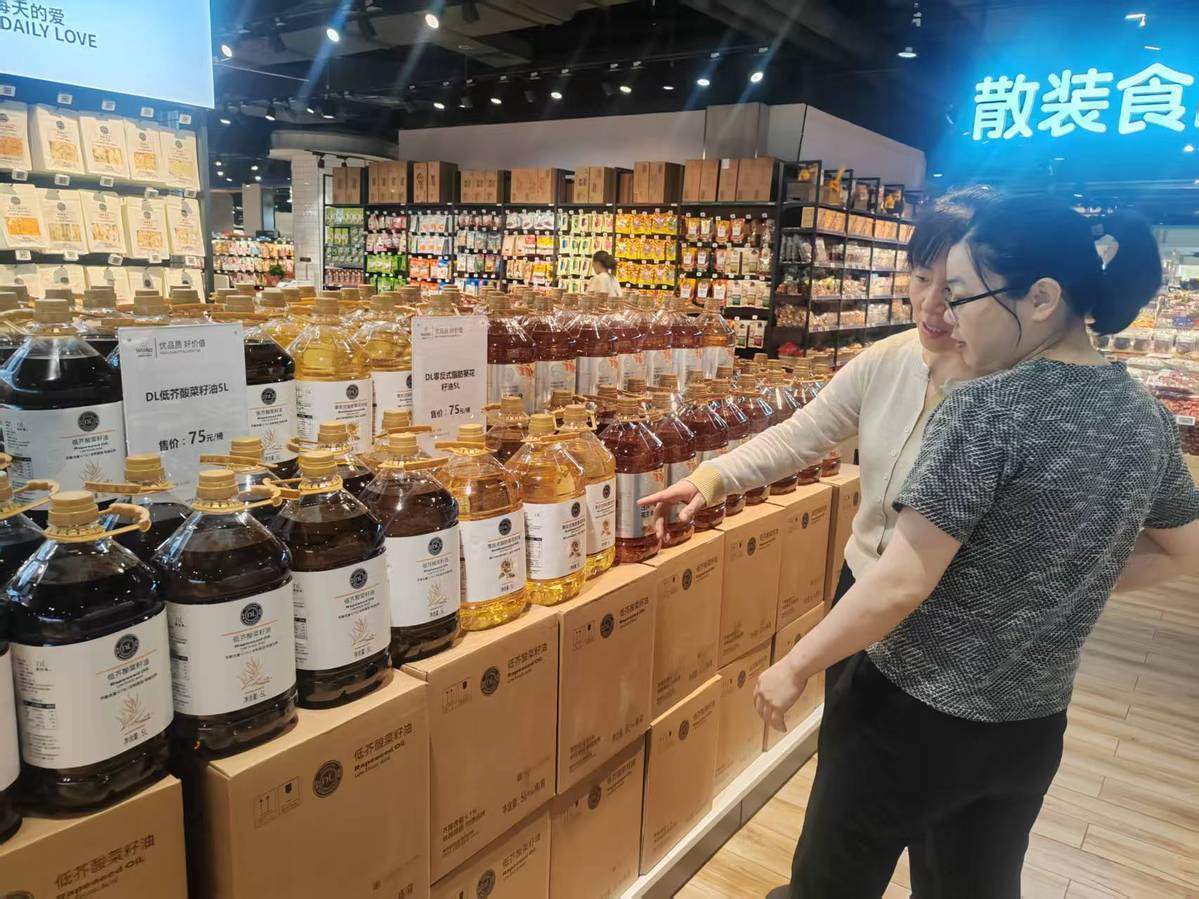
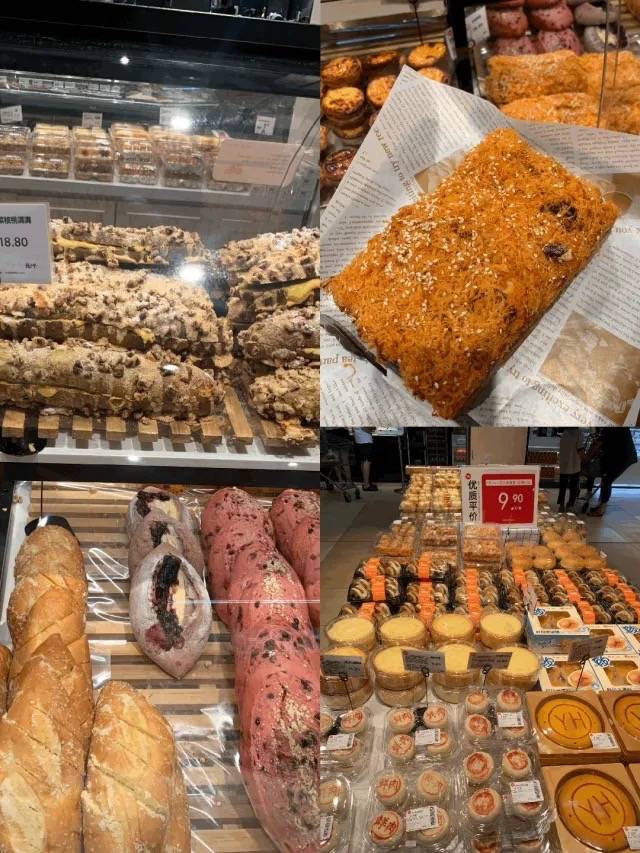
Core Insights - The renovation of the Huijia Times Changji Shopping Center supermarket in Xinjiang focuses on enhancing product quality, optimizing the supply chain, and upgrading service systems, aiming to invigorate the local consumer market [1] Group 1: Product Quality and Offerings - The upgraded supermarket features a bakery area that offers freshly baked goods daily, including milk-flavored bread and crispy snacks, which are sold on the same day they are made [1] - The introduction of a dedicated section for the "Fat Donglai" brand has attracted customers looking for high-quality daily necessities, such as cooking oil and cleaning products [1] Group 2: Supply Chain Optimization - The supermarket has actively introduced a range of "Fat Donglai" products and has stocked up on various food items, cleaning supplies, and other essentials in preparation for the upcoming National Day holiday shopping peak [1] - The restructuring of product offerings aims to meet the diverse shopping needs of both young and older consumers, enhancing the overall shopping experience [1] Group 3: Service Enhancements - A new convenience service area has been established for shoppers to rest, with amenities such as free drinking water and daily necessities available [1] - The implementation of fair scales for weighing products ensures consumer rights are protected, reflecting a commitment to integrity in business operations [1]


中国商超,杀红了眼
Hu Xiu· 2025-09-18 09:43
Core Viewpoint - The article discusses the fierce competition in the Chinese supermarket industry, particularly focusing on the rise of private label brands as a strategic response to market challenges and consumer preferences. Group 1: Industry Trends - The supermarket industry in China is witnessing a shift towards private label brands, with major players like Yonghui and Sam's Club investing heavily in this area to enhance profitability and market share [3][25][107]. - The penetration of private label products has increased significantly, with consumer awareness rising to 90% and 35% having purchased such products in the past six months [19][20]. - Retail giants such as Alibaba, JD, and Meituan are also entering the private label space, indicating a broader trend towards self-branded products across the industry [7][25]. Group 2: Company Strategies - Yonghui has engaged a "Fat Donglai support team" to develop 500 private label products over five years, aiming for these to account for 40% of total sales [3][88]. - Sam's Club has successfully integrated its private label, Member's Mark, which contributes approximately 40% of its revenue despite only accounting for 25%-30% of its SKU [53][54]. - Aldi, known for its high private label ratio of 90%, focuses on a limited SKU strategy, emphasizing quality and cost-effectiveness [56][65]. Group 3: Consumer Behavior - Consumers are increasingly seeking value, with a preference for high-quality products at competitive prices, leading to a demand for private label brands that offer better quality without the brand premium [111][128]. - The trend of "quality-price ratio" is becoming more significant, with consumers willing to try private labels that meet their quality expectations [114][117]. - The success of private labels hinges on building consumer trust through consistent quality and value, as seen with successful brands like Fat Donglai and Costco [138][139]. Group 4: Challenges and Opportunities - Many supermarkets struggle with private label strategies due to a lack of comprehensive supply chain management and product differentiation, often resulting in poor sales performance [91][96]. - The article highlights that while private labels can be a lifeline for traditional supermarkets, they also pose risks if not executed with a clear strategy and commitment to quality [106][109]. - The competitive landscape indicates that successful private label brands require a shift from merely selling products to creating unique offerings that resonate with consumer needs [130][131].
昔日风光不再,传统商超转型成了“必答题”
Qi Lu Wan Bao Wang· 2025-09-15 10:28
Core Insights - Traditional supermarkets are facing significant challenges, with many experiencing declining sales and closures, while some innovative players are thriving in the market [2][3][4] Industry Overview - The supermarket industry is currently divided into two extremes, with traditional players like Carrefour exiting markets and others like Walmart and emerging brands like "胖东来" performing well [2][3] - A survey by the China Chain Store and Franchise Association revealed that only 47.5% of supermarket enterprises saw sales growth in the first half of 2025, while 40% experienced declines [2] Company Performance - Walmart reported a global revenue of $177.4 billion for Q2 2025, a 4.8% increase year-on-year, with a notable 30.1% growth in its China segment [3] - "胖东来" achieved sales of nearly 17 billion yuan in 2024, with profits exceeding 800 million yuan [3] - Alibaba's Hema (盒马) has maintained profitability for nine consecutive months and plans to open nearly 100 new stores by 2026 [3] Consumer Behavior - Consumers are increasingly turning to online shopping and instant delivery services, leading to a decline in foot traffic at traditional supermarkets [4][5] - A significant shift in consumer preferences is noted, with younger shoppers favoring new retail formats that offer unique products and experiences [4] Market Innovations - The "胖改" trend is emerging, where traditional supermarkets are adopting new formats and product offerings to compete with successful models like "胖东来" [8][9] - Supermarkets are increasingly focusing on private label products as a strategy to attract customers and drive sales [10][11] Supply Chain Dynamics - New supermarket models are adopting "short-chain direct supply" strategies to reduce costs and improve efficiency, moving away from traditional multi-level distribution [11]
永辉超市(601933):2025年中报点评:深化供应链改革,零售主业毛利率提升
Changjiang Securities· 2025-09-11 12:15
Investment Rating - The investment rating for the company is "Buy" and is maintained [6]. Core Views - In the first half of 2025, the company achieved revenue of 29.95 billion yuan, a year-on-year decline of 21%, with a net loss attributable to the parent company of 800 million yuan [2][4]. - In the second quarter alone, revenue was 12.47 billion yuan, down 23% year-on-year, with a net loss of 940 million yuan; however, after considering asset disposal gains from store closures, the net loss was reduced to 390 million yuan, a year-on-year improvement of 70 million yuan [2][4]. - The retail segment's gross margin showed improvement, with a gross margin of 19.8% in the second quarter, remaining stable year-on-year, driven by a shift towards self-operated sales in the bakery segment and a reduction in high-margin service business revenue [9]. Summary by Sections Financial Performance - The company reported a total revenue of 29.95 billion yuan in the first half of 2025, a decrease of 21% year-on-year, and a net loss of 800 million yuan [2][4]. - The second quarter revenue was 12.47 billion yuan, down 23% year-on-year, with a net loss of 940 million yuan; however, the loss was reduced to 390 million yuan after accounting for asset disposal gains [2][4]. Supply Chain and Margin Improvement - The company closed 223 stores in the first half of 2025, resulting in a total of 552 stores, which contributed to the revenue decline [9]. - The gross margin for the retail segment improved by 0.6 percentage points year-on-year, attributed to a higher proportion of self-operated sales in the bakery segment and a focus on quality retail and supply chain reform [9]. Strategic Initiatives - The company launched high-quality private label products, including fresh milk at a competitive price, which achieved sales of over 1 million yuan within four days of launch [9]. - The company is actively restructuring its brand marketing system to enhance consumer reach and product differentiation [9]. Future Outlook - The company plans to raise up to 4 billion yuan through a private placement to support store renovations, logistics upgrades, and working capital [9]. - Earnings per share (EPS) are projected to be -0.08 yuan, 0.05 yuan, and 0.12 yuan for 2025, 2026, and 2027, respectively, indicating a potential turnaround [9].

欧派家居20250901
2025-09-02 00:42
Summary of the Conference Call for Oppein Home Company Overview - **Company**: Oppein Home - **Industry**: Home Furnishing Key Points and Arguments Financial Performance - In the first half of 2025, Oppein Home reported revenue of **8.24 billion** yuan, a **4% year-on-year decline**, while net profit attributable to shareholders was **1.02 billion** yuan, reflecting a **2.9% increase** in profitability [2][4][11] - The second quarter showed a narrowing revenue decline of **3.4%**, indicating improved operational conditions [2][4] - Gross margin increased to **36.24%**, up **3.67 percentage points**, and net margin rose to **12.36%**, up **0.82 percentage points**, due to lower material costs and operational efficiencies [2][4][8] Market Environment - The home furnishing market faced challenges, with national statistics showing declines in real estate investment, completion, and sales [4] - The furniture manufacturing sector saw a **4.9%** drop in revenue among major companies, with profits down **23.1%** [4] - Oppein Home's revenue from distribution channels fell **4%**, while direct sales and foreign trade channels grew by **5.6%** and **30%**, respectively [2][4] Strategic Initiatives - The company implemented performance assessment reforms and supply chain improvements to enhance operational quality despite market pressures [2][6] - Oppein Home is focusing on diversifying its revenue streams and optimizing cost structures through its "one-stop shopping" model, which encourages customers to purchase multiple product categories [13][20] - The introduction of top industry talent and a "land distribution" management model aims to boost the autonomy of various business units and foster internal competition [3][15][28] Government Policies and Consumer Behavior - National subsidy policies have stimulated consumption but have not fully reversed the downward revenue trend [10][11] - The company expects future subsidy policies to focus on stabilizing consumption and promoting industrial upgrades, but these may not be sufficient to drive revenue growth alone [11] Future Outlook - The company anticipates continued pressure on gross and net margins due to external market conditions and increased competition [9][18] - Oppein Home is exploring opportunities in the renovation of existing homes, which is becoming a significant growth area as new home sales slow [20][21] - The company plans to enhance its product offerings and service efficiency to capture the potential in the renovation market [21][26] Challenges and Adaptations - The company is aware of the competitive landscape within the furniture industry, with a trend towards market share concentration [19] - Oppein Home is adapting by enhancing its digital tools and optimizing its business layout to improve operational efficiency [19][22] Conclusion - Oppein Home is navigating a challenging market environment through strategic reforms, operational improvements, and a focus on diversifying its revenue streams. The company remains cautiously optimistic about its future performance while preparing for ongoing market challenges [30]

欧派家居(603833):25H1毛利率提升,大供应链改革成效显现
Huaan Securities· 2025-09-01 07:28
Investment Rating - The report maintains a "Buy" rating for the company [8] Core Views - The company reported a revenue of 8.241 billion yuan in H1 2025, a year-on-year decrease of 3.98%, while the net profit attributable to shareholders was 1.018 billion yuan, an increase of 2.88% [4] - The gross profit margin for H1 2025 was 36.24%, an increase of 3.67 percentage points year-on-year [6] - The company is undergoing a significant supply chain reform, which has shown positive results, particularly in overseas markets [5][6] Financial Performance Summary - In H1 2025, the company achieved revenue of 8.241 billion yuan, with a net profit of 1.018 billion yuan, and a non-recurring net profit of 943 million yuan, reflecting a year-on-year growth of 21.41% [4] - The revenue breakdown by product for H1 2025 shows cabinets at 2.407 billion yuan, wardrobes and supporting furniture at 4.239 billion yuan, and other categories with varying performance [5] - The company’s gross profit margins by product category improved, with cabinets at 32.32% and wardrobes at 41.39%, both showing year-on-year increases [5] Future Projections - Revenue projections for 2025-2027 are estimated at 20.026 billion yuan, 21.104 billion yuan, and 22.128 billion yuan, with respective year-on-year growth rates of 5.8%, 5.4%, and 4.9% [8] - The net profit attributable to shareholders is projected to be 2.741 billion yuan in 2025, 2.900 billion yuan in 2026, and 3.048 billion yuan in 2027, with growth rates of 5.4%, 5.8%, and 5.1% respectively [8]
老板电器20250828
2025-08-28 15:15
Summary of Boss Electric's Conference Call Company Overview - **Company**: Boss Electric - **Industry**: Kitchen Appliances Key Financial Performance - **Revenue**: Decreased by 2.58% year-on-year in the first half of the year, but showed growth in Q2 [2][4] - **Net Profit**: Decreased by 6.28%, with a non-recurring profit decline of 2.4% [2][4] - **Operating Cash Flow**: Increased by 23% year-on-year, indicating resilience in challenging conditions [2][4] Sales Channel Performance - **Retail Channel**: Grew by 8.86% in the first half, with Q2 growth of 7.59% [2][5] - **E-commerce Channel**: Decreased by 7.65% in the first half but stabilized in Q2 [2][5] - **Engineering Channel**: Declined by 22% overall, with a Q2 drop of 17.7% [2][5] - **Overseas Channel**: Grew by 52%, contributing approximately 40 million yuan [2][5] Product and Market Expansion - **New Product Categories**: Introduced cabinets with sales of approximately 100 million yuan, partially offsetting declines in the new housing market [2][6] - **International Market**: Initial success in overseas revenue growth, particularly in North America [2][6][12] Dividend and Investor Confidence - **Mid-term Dividend Plan**: Maintained consistent dividend amounts, reflecting commitment to shareholder returns and financial stability [2][7] E-commerce Strategy Adjustments - **Q1 Decline**: E-commerce faced challenges due to national subsidy policy impacts [2][9] - **Q2 Recovery**: Implemented organizational changes, talent acquisition, and a shift towards new media strategies, resulting in recovery [2][9] Gross Margin Improvement - **Q2 Gross Margin**: Increased by 1,500 basis points, attributed to supply chain reforms and reduced raw material costs [2][10][28] Brand Performance - **Star Series**: Significant contribution to user acquisition, maintaining the top position in the hood market despite a decline in average price [3][11] - **Mingqi Brand**: Achieved a 23% growth rate in hoods, entering the top ten in online rankings [3][11] Challenges and Future Outlook - **Real Estate Market Impact**: Ongoing challenges from the declining real estate market affecting kitchen appliance demand [4][21] - **Marketing Expenses**: Expected to remain stable between 25% and 27% of revenue, with variations due to promotional activities [16] Inventory and Tax Adjustments - **Inventory Write-back**: A write-back of 18 million yuan due to previous provisions and returns [18] - **Tax Benefits**: Decrease in software tax refunds and VAT reductions due to policy changes [19][31] Future Capital Expenditure and M&A Plans - **Capital Expenditure**: Planned investment of 350 million yuan for renovations and potential acquisitions [32] - **Dividend Strategy**: Future dividends will be influenced by acquisition outcomes, with a commitment to maintain or exceed current levels [32] Market Dynamics - **Shift to Second-hand Housing**: Increased proportion of second-hand housing due to a significant decline in new housing [33] This summary encapsulates the key points from Boss Electric's conference call, highlighting financial performance, sales channel dynamics, product expansion, and strategic adjustments in response to market conditions.

“胖改先锋”永辉超市,黎明之前弹尽粮绝?
Guan Cha Zhe Wang· 2025-08-26 10:05
Core Viewpoint - Yonghui Supermarket is facing significant financial challenges, with a notable decline in revenue and a shift to losses, raising concerns about its ongoing transformation efforts and sustainability in the competitive retail market [3][5][9]. Financial Performance - In the first half of 2025, Yonghui reported revenue of 29.948 billion yuan, a year-on-year decrease of 20.73% [3][4]. - The net profit attributable to shareholders was a loss of 240 million yuan, compared to a profit of 275 million yuan in the same period last year [3][4]. - The total assets decreased from 42.749 billion yuan at the end of the previous year to 33.963 billion yuan [4]. Transformation Efforts - Yonghui initiated a transformation strategy called "Fat Reform" to adapt to market changes, but the financial results indicate that the pain of this transition is greater than expected [5][9]. - As of June 30, 2025, Yonghui had completed the transformation of 124 stores, with a target of 200 by the end of September [11]. - The company is also restructuring its supply chain and expanding online channels, but the online business has not yet turned profitable, with revenue of 5.49 billion yuan, down from the previous year [12]. Debt and Financial Health - As of the end of the first quarter, Yonghui had only 4.8 billion yuan in cash against total liabilities of 34.9 billion yuan, resulting in a debt ratio nearing 89% [11]. - The first major shareholder, Leaf Guofu, has pledged 18.68 billion shares, which is 70% of his total holdings, raising concerns about financial stability [11]. Market Position and Competition - Yonghui was once a leading player in the supermarket sector but has faced significant declines since 2021, with cumulative losses exceeding 9.5 billion yuan over the past three years [6][7]. - The company is now seen as struggling to meet the demands of the new generation of consumers, with its traditional large-scale supermarket model being questioned [9].

永辉超市(601933):存量门店调改加速,静待盈利拐点
Shenwan Hongyuan Securities· 2025-08-22 15:09
Investment Rating - The investment rating for the company is "Outperform" (maintained) [6] Core Views - The company is undergoing a strategic transformation with a focus on "quality retail," which is expected to improve long-term profitability [6] - The company has closed 227 loss-making stores and is actively adjusting its store operations, with a target of completing adjustments for 208 stores by the end of September [6] - The company reported a significant increase in sales for adjusted stores during the summer season, with a year-on-year growth of 75% [6] - The company is implementing supply chain reforms and aims to reduce the number of suppliers from 2300 to 800 core strategic partners, which is expected to lower procurement costs by 15% [6] - The company maintains a positive outlook on long-term growth despite short-term profit pressures due to store closures and adjustments [6] Financial Data and Earnings Forecast - For 2025, the company expects total revenue of 60,010 million yuan, a year-on-year decrease of 11.2% [5] - The company anticipates a net profit attributable to shareholders of -542 million yuan for 2025, with a projected recovery to 582 million yuan in 2026 [5] - The gross profit margin is expected to stabilize and improve in the long term as store adjustments take effect [6] - The company forecasts revenues of 600 billion yuan, 740 billion yuan, and 826 billion yuan for 2025, 2026, and 2027 respectively [6]