
日日鲜

Search documents
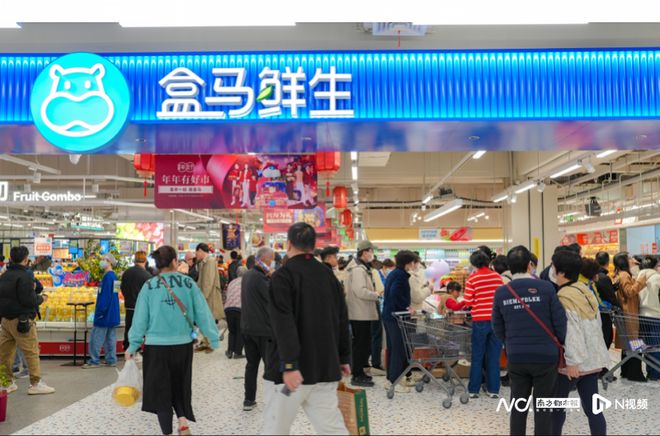
最新消息!盒马要来威海了!
Qi Lu Wan Bao· 2026-01-08 05:31
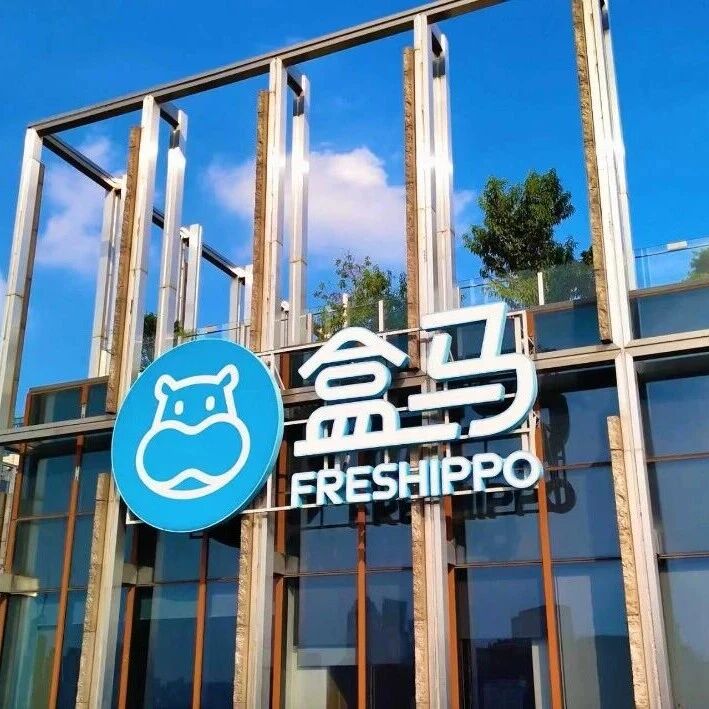
Core Viewpoint - Hema, a new retail giant under Alibaba, is set to enter Weihai, bringing its fresh food shopping experience to local residents, which has generated significant excitement in the community [1][3]. Group 1: Hema's Expansion - Hema will open a store in Weihai's Weigao Plaza, marking its expansion into a new city [1]. - By 2025, Hema plans to enter 40 new cities and open over 200 new stores, with nearly 500 Hema Fresh stores and 400 Super Hema stores currently in operation across the country [3]. Group 2: Unique Selling Propositions - Hema offers a "30-minute rapid delivery" service, allowing customers within a 3-5 km radius to receive fresh ingredients quickly after placing an online order, with an online order ratio of 63% [3]. - The seafood section of Hema is described as a "seafood supermarket," where customers can select live seafood for immediate cooking, showcasing a supply chain that spans over 50 countries [4]. - Hema's bakery section features daily fresh products, catering to various consumer needs, including healthy options for fitness enthusiasts and convenient meals for busy professionals [5]. Group 3: Future Developments - The official opening date for the new Hema store in Weihai has not yet been announced, and further updates will be provided through official channels [6].


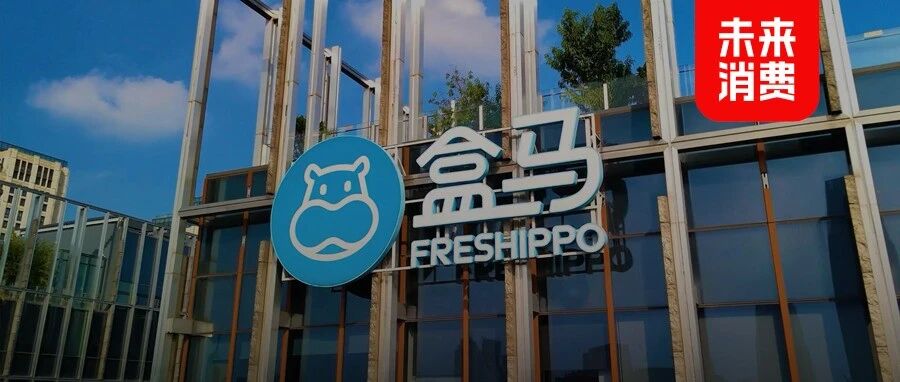
盒马CEO发布内部信,2025年营收同比增速超40%
3 6 Ke· 2026-01-01 03:12
Core Insights - Hema has reported a revenue growth of over 40% year-on-year for the fiscal year 2025, marking a significant achievement in its first year of implementing the "dual-wheel drive" strategy [2][5] - The company achieved adjusted EBITA profitability for the first time in fiscal year 2025, with monthly profitability throughout the year [2][5] - Hema's GMV reached 75 billion yuan in the fiscal year 2025, indicating strong market performance [2] Business Strategy - Hema is focusing on two core business models: Hema Fresh and Super Hema NB, aiming to leverage their complementary advantages [2][5] - In 2025, Hema Fresh expanded into 40 new cities, while Super Hema NB opened over 200 new stores, reflecting a strategic push for growth [5][7] - The expansion into non-first-tier cities is a response to structural changes in the Chinese economy, with emerging cities becoming increasingly important for growth [5][7] Product Development - Hema emphasizes product strength as its core competitive advantage, developing a range of proprietary brands and innovative products [8][9] - The company is actively exploring new consumer trends, particularly in the health sector, by launching health-focused products and collaborating with established brands [9][10] - Hema has established a robust supply chain network, including eight supply chain centers and over 300 direct sourcing bases, enhancing its ability to deliver fresh products efficiently [9][10]

盒马CEO发布内部信,2025年营收同比增速超40%
36氪未来消费· 2026-01-01 02:59
Core Insights - The article highlights the impressive performance of Hema Fresh, achieving over 40% year-on-year revenue growth in 2025 and entering 40 new cities with over 200 new stores opened for its Super Box brand [5][12][27] - Hema Fresh has successfully implemented a "dual-wheel drive" strategy focusing on two core business models: Hema Fresh and Super Box, aiming to enhance operational efficiency and market reach [7][12][25] Business Expansion - In 2025, Hema Fresh expanded into 40 new cities, including key locations such as Tianjin, Shijiazhuang, and Yibin, with reports indicating that new stores are experiencing high customer demand [12][15] - The Super Box brand, which targets community-based services, is also in a rapid expansion phase, with plans to open 20 new stores monthly and a recent entry into Guangdong province [17][16] Financial Performance - Hema Fresh achieved its first full-year adjusted EBITA profitability in the 2025 fiscal year, with a gross merchandise volume (GMV) reaching 75 billion yuan [6][5] - The company has built a robust supply chain network with over 300 direct sourcing bases and 8 logistics centers, enabling efficient product delivery across regions [23] Product Strategy - Hema Fresh emphasizes product innovation and quality, with 80% of new product development focused on core consumer needs, including health-oriented products and unique offerings in categories like baking [19][22] - The company is adapting to new consumer trends, such as emotional consumption, by increasing the variety of products like aromatherapy gift boxes and fresh flowers [24] Organizational Development - Hema Fresh has committed to enhancing organizational efficiency by streamlining processes and empowering frontline employees, with a focus on internal promotions for store managers [28][27] - The company aims to maintain a strong cultural foundation centered on confidence, openness, professionalism, and pragmatism to navigate future challenges [28]
零售商新老势力混战“自有品牌” 谁能更胜一筹?
Mei Ri Jing Ji Xin Wen· 2025-12-09 14:53
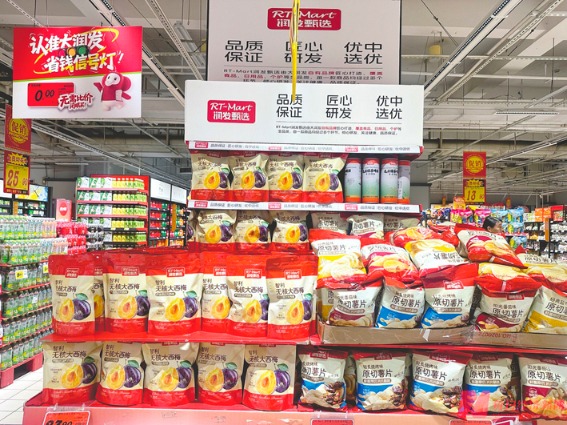
Core Viewpoint - Walmart is intensifying its focus on private label brands, particularly "Wojixian," as a strategic response to competition from e-commerce and emerging retailers, while also addressing the declining image of its Sam's Club brand [1][2][4]. Group 1: Walmart's Strategy - Walmart's private label "Wojixian" has been upgraded to cover essential categories like fresh produce, food, and beverages, emphasizing low prices and health attributes [2][4]. - The company is facing challenges as traditional retail formats struggle against e-commerce platforms, prompting a shift towards private labels to enhance competitiveness [1][4]. - The strategy of launching private labels is seen as a "last resort" to revitalize the hypermarket format amid increasing competition [1][4]. Group 2: Market Competition - Other traditional retailers, such as RT-Mart, are also focusing on private labels, with a similar emphasis on low prices and health trends [2][4]. - New players like Hema and Dingdong Maicai have established private labels as core competitive advantages, highlighting the shift in market dynamics [6][9]. - The competition for quality suppliers is intensifying as both established and emerging retailers seek to enhance their private label offerings [7][8]. Group 3: Financial Performance - RT-Mart's parent company, Gao Xin Retail, reported a revenue decline of 12.1% year-on-year, indicating the financial pressures faced by traditional retailers [5]. - Walmart's performance in China is primarily driven by Sam's Club, while its hypermarket segment has been experiencing store closures [5]. Group 4: Private Label Development - The private label penetration varies significantly among retailers, with Aldi achieving a 90% share in China, while Hema's community stores have nearly 60% [7]. - Successful private label strategies require strong brand value and supply chain management to maintain competitive pricing and quality [7][8]. - Walmart's approach involves stringent supplier selection, with only a small percentage of potential suppliers making it through the rigorous evaluation process [8].

零售商新老势力混战“自有品牌”,谁能更胜一筹?
Mei Ri Jing Ji Xin Wen· 2025-12-09 14:43
Core Insights - Walmart is developing its private label "Wojixian" as a response to the declining image of its high-end membership store Sam's Club, indicating a strategic shift in its retail approach [1][2] - The competition in the retail market is intensifying, with traditional retailers like Walmart and RT-Mart facing pressure from e-commerce and emerging players [1][4] Group 1: Walmart's Strategy - Walmart's "Wojixian" brand focuses on affordability and health, with products prominently displayed at low price points [2][3] - The company is adopting a strategy similar to RT-Mart, which is also enhancing its private label offerings, emphasizing low prices and health attributes [2][3] - The shift towards private labels is seen as a necessary response to market competition and performance pressures, as evidenced by declining revenues and profits reported by RT-Mart's parent company [3][4] Group 2: Market Competition - New retail players like Hema and Dingdong Maicai have established their private labels as core competitive advantages, launching various products since 2017 [4][5] - The self-owned brand strategy is crucial for retailers to attract customers and improve profit margins by defining product standards and reducing intermediary costs [4][5] - The competition for quality suppliers is intensifying as traditional retailers ramp up their private label initiatives, with companies like Dingdong Maicai investing in direct sourcing and partnerships [5][6] Group 3: Supply Chain and Brand Development - The success of private labels relies heavily on effective supply chain management and the ability to create strong brand value [5][6] - Walmart is currently focusing on supplier selection and has a rigorous evaluation process for potential suppliers, which limits the number of partnerships [6] - The retail landscape is evolving, with established players like Walmart actively learning from newer competitors to enhance their product offerings and market positioning [6]
山姆“人设”滑坡、沃尔玛“沃集鲜”成新宠 新老势力混战“自有品牌”谁能更胜一筹?
Mei Ri Jing Ji Xin Wen· 2025-12-05 13:37
Core Insights - Walmart is developing its private label "Wojixian" as a response to the competitive pressures from e-commerce and emerging retailers, positioning it as a "budget version" of Sam's Club [1][2] - The shift towards private labels by traditional retailers like Walmart and RT-Mart is driven by the need to compete with e-commerce platforms and new entrants in the retail market [1][3] Group 1: Private Label Strategy - Walmart's "Wojixian" focuses on affordability and health, with visible pricing strategies such as "everyday low prices" [2][3] - RT-Mart is also enhancing its private label offerings, emphasizing low prices and health trends, but adopts a dual-brand strategy for its private labels [2][3] - The competition in the retail sector is prompting established players to adopt private labels as a core strategy to attract customers and improve profit margins [4][6] Group 2: Market Performance and Challenges - RT-Mart's parent company, Gao Xin Retail, reported a revenue decline of 12.1% year-on-year, highlighting the financial pressures faced by traditional retailers [3] - Walmart's performance in China is primarily driven by the success of Sam's Club, while its traditional hypermarket format is facing challenges, including store closures [3][4] - The competition for quality suppliers and production sources is intensifying as retailers like Hema and Dingdong Maicai have already established strong private label brands [4][6] Group 3: Supply Chain and Brand Development - Successful private label development requires strong supply chain management and the ability to create distinct brand value [6][7] - Retailers are increasingly focusing on sourcing high-quality suppliers, with Walmart currently evaluating a limited number of potential suppliers for its private label products [6][7] - The competition for premium suppliers and production capabilities is expected to escalate as traditional retailers enhance their private label strategies [6][7]
十年翻篇,盒马搭建起零售新坐标系
雷峰网· 2025-09-03 11:45
Core Viewpoint - The article discusses the evolution of Hema, a key player in China's retail sector, highlighting its transition from rapid expansion to a focus on profitability, organizational strength, and sustainable growth. The company aims to redefine retail dynamics in the next decade by leveraging its supply chain and product capabilities [2][27]. Group 1: Hema's Growth and Strategy - Hema has transitioned from a phase of aggressive expansion to a more stable growth model, focusing on profitability and organizational efficiency [2][6]. - The company plans to open 100 new Hema Fresh stores by the fiscal year 2025, indicating a strategic shift towards core business operations [4][6]. - Hema's CEO, Yan Xiaolei, has set a target for the company to achieve a GMV of over 100 billion yuan within three years, emphasizing a streamlined organizational structure [6][20]. Group 2: Product Strategy and Consumer Insights - Hema has adapted its product offerings to meet changing consumer preferences, such as introducing smaller cake sizes to cater to single-person households [9][11]. - The company has focused on health and quality, with plans to reduce sugar in its products and enhance nutritional transparency [12][13]. - Hema's self-branded products have gained significant traction, with a 60% sales share in its community supermarket segment, showcasing its competitive edge in product development [15][16]. Group 3: Market Position and Competitive Landscape - Hema is positioned as a key player in the hard discount market, with its new brand "Chao He Suan NB" rapidly expanding its footprint [22][24]. - The hard discount market in China is still in its early stages, with a penetration rate of only 8%, presenting significant growth opportunities [24][25]. - Hema's collaboration with Alibaba enhances its operational capabilities, making it a crucial component of Alibaba's local life services strategy [20][21]. Group 4: Future Outlook and Challenges - The retail landscape is becoming increasingly competitive, with various business models vying for market share, including Sam's Club and Aldi [28]. - Hema's focus on core competencies and supply chain efficiency will be critical in navigating the complexities of the evolving retail environment [27][28]. - The company must continue to innovate and adapt to consumer demands to maintain its competitive advantage in a diverse market [28].
减糖、低GI成零售商流量密码,盒马商品力建设调至三大方向
Nan Fang Du Shi Bao· 2025-08-11 09:14
Core Insights - The article discusses the strategic shift of Hema in enhancing its product offerings from a focus solely on "fresh" to a broader emphasis on "fresh, healthy, and self-indulgent" products as outlined in their "Ten-Year Consumer Trend Insight" report [1] Group 1: Consumer Trends - There has been a significant change in consumer demands and preferences over the past decade, particularly in the post-pandemic era, with a surge in demand for healthy food options that feature clean ingredient lists [3] - The trend of self-indulgent consumption is rising, especially among younger consumers who are increasingly willing to pay for emotional satisfaction, making emotional consumption a necessity [3] - Consumers are becoming more rational and cautious, demanding a balance between quality and cost-effectiveness [3] Group 2: Product Development Strategy - Hema has adjusted its product development strategy in response to changing consumer preferences, moving from a focus on fresh products to a more concentrated effort on product strength [3] - The company has streamlined its operations to focus on two main formats: Hema Fresh and Hema NB, which has led to improved efficiency and profitability while allowing for more targeted investment in product development [3] Group 3: New Product Categories - Hema is actively expanding into low glycemic index (GI) products, which have shown a 40% year-on-year sales increase due to energy certification and labeling initiatives for items like light salads and sandwiches [4] - The introduction of proprietary low GI product lines has resulted in significantly higher repurchase rates compared to standard products, with a 150% year-on-year increase in the number of traditional health water products [4] - The flower category has also seen rapid growth driven by self-indulgent consumption, with prices dropping nearly 30% since the introduction of flowers in 2021 and a 40% increase in product variety [6] Group 4: Future Outlook - Hema's Chief Product Officer emphasized that product strength is a key driver for the company, and they will continue to adopt a "zero-supply co-creation" approach to provide high-quality, unique, and diverse products [6] - The company aims to enhance its product development and innovation capabilities to better meet the needs of health-conscious consumers, with plans for accelerated expansion to serve a larger customer base [6]
盒马宣布今年将开100家新店 实现盈利后继续狂奔
Zheng Quan Ri Bao Wang· 2025-08-07 05:43
Core Viewpoint - Alibaba's Hema Fresh plans to open nearly 100 new stores within the fiscal year, aiming to exceed 500 total stores, reflecting confidence in the domestic consumption market [1] Group 1: Expansion Plans - Hema Fresh will accelerate its expansion starting in 2024, having opened nearly 70 new stores in the previous fiscal year and added 27 new cities [1] - The rapid expansion has made Hema a popular destination, often seeing long queues even two weeks after opening [1] Group 2: Financial Performance - Hema's GMV for the fiscal year 2025 is projected to exceed 75 billion yuan, marking its first year of adjusted EBITDA profitability [1] - Hema ranked among the top three in the 2024 Chain Store Top 100 list, achieving double-digit growth in both sales and store count [1] Group 3: Product Strategy - Hema has consistently focused on enhancing product offerings, introducing various self-owned brands and a wide range of products to cater to daily needs [2] - The company has built a solid supply chain and continues to innovate with trendy food items that attract consumers [2] Group 4: Service Upgrades - Hema has upgraded its online shopping platform, "Hema Cloud Super," to "Cloud Enjoy Club," allowing non-members to purchase nearly 4,000 products [3] - The membership system has been integrated with Taobao's membership, allowing Taobao 88VIP members to access exclusive Hema benefits, resulting in a rapid increase in membership [3]
“三力”聚合,“首店首发经济”成效显著 我市构建多元化零售生态圈
Zhen Jiang Ri Bao· 2025-06-16 23:51
Core Insights - The opening of Hema Fresh's first store in Jurong marks a significant development in the retail sector, driven by government policies and market forces, leading to a new phase of deep integration between online and offline retail, improved service quality, and continuous release of consumer potential [1][2] Group 1: Company Developments - Hema Fresh, a leading new retail brand in China, has successfully opened a store in Jurong, covering an area of approximately 4,000 square meters, which has generated a consumer frenzy and filled a gap in high-quality new retail offerings in the local market [1] - The store's opening follows the successful launch of Hema Fresh's first store in Zhenjiang, which attracted over 150,000 visitors on its opening day, showcasing the brand's strong market appeal [1] Group 2: Industry Trends - The introduction and operational success of Hema Fresh validate the effectiveness of optimizing the business environment and attracting new retail brands, which invigorates the market's internal dynamics [2] - The local business department has implemented practical measures to enhance commercial layouts and elevate urban commercial capabilities, including the cultivation of high-quality creative consumer districts and the promotion of "night economy" initiatives [2] - From January to May, over 40 new brand stores were introduced in the Dashi Kou business district, indicating a robust trend in the "first store economy" [2]