
健康中国建设

Search documents
波士顿科学携13款微创创新产品亮相进博优品会 赋能健康中国建设
Jing Ji Guan Cha Wang· 2025-12-19 14:55
Core Insights - Boston Scientific showcased 13 innovative minimally invasive products at the Import Expo, focusing on common diseases such as atrial fibrillation, stroke prevention, heart failure, carotid artery stenosis, obesity, benign prostatic hyperplasia, tumors, and Parkinson's disease [1][2] - The FARAWAVE NAV catheter, recently approved, was highlighted as a key product, along with other innovative solutions tailored to the needs of elderly patients in China [2][3] Group 1: Innovative Products - The company introduced several breakthrough therapies, including the SENTINEL embolic protection device for TAVR procedures, the ENROUTE device for carotid artery reconstruction, and the TheraSphere Y90 glass microsphere system for primary liver cancer treatment [3] - Additionally, Boston Scientific presented two weight management technologies, the Orbera365 gastric balloon system and the OverStitch endoscopic suturing device, addressing various obesity treatment needs [3] Group 2: Health Education and Community Engagement - Boston Scientific has invested in health promotion and community engagement, enhancing public health literacy and supporting medical talent development through various initiatives [4] - The company showcased three major public welfare segments at the expo, including a Zhihu science popularization area, patient story documentaries, and an exhibition of public welfare project outcomes [4] Group 3: Future Goals - Leveraging the Import Expo platform, Boston Scientific aims to amplify the outreach of advanced health concepts to a broader audience, contributing to the goal of a healthier China [5]

山西:深化医改强根基 健康答卷绘新篇
Zhong Guo Fa Zhan Wang· 2025-12-10 07:58
Core Viewpoint - The health sector in Shanxi has made significant progress during the "14th Five-Year Plan" period, focusing on high-quality development and enhancing public health services, with a commitment to improving the well-being of its residents [2]. Group 1: Public Health System Enhancement - Shanxi has shifted its health work focus from "disease treatment" to "people's health," with per capita public health service subsidies increasing from 79 yuan in 2021 to 94 yuan [3]. - The coverage of 28 free service items now spans the entire life cycle of residents, with vaccination rates and health management for children under 7 remaining above 90% [3]. - The early death rate from major chronic diseases among the 30-70 age group decreased from 18.5% in 2015 to 15.26% in 2023 [3]. Group 2: Medical Service Improvement - The "Strong Medical Project" aims to address issues of accessibility and quality in healthcare, with patient visits and surgeries at national regional medical centers increasing by 47.5% and 45.6%, respectively [4]. - The establishment of 91 county-level medical centers has improved local healthcare capabilities, with 88% of patients receiving care within their counties [4]. - The initiative has also integrated 328 university-trained rural doctors into the healthcare system, ensuring comprehensive service coverage [4]. Group 3: Reform and Innovation - Shanxi has implemented a unified management approach for medical services, with public hospital service revenue now exceeding 30% of total income [6]. - The average hospital stay has been reduced by half a day, and the province has introduced innovative payment models to enhance efficiency [6]. - A digital imaging cloud platform has been established, benefiting over 560,000 patients and saving more than 76 million yuan in costs [6]. Group 4: Focus on Vulnerable Populations - The province has expanded childcare services, with 117 new public childcare institutions established in 2023, achieving full coverage in all counties [7]. - Health services for the elderly have been enhanced, with 80% of secondary hospitals now offering geriatric care [7]. - The promotion of traditional Chinese medicine has been emphasized, with numerous initiatives aimed at integrating these services into the healthcare system [7].


聚焦“十五五”规划建议丨“十五五”我国居民人均预期寿命将提升到80岁左右
Xin Hua Wang· 2025-12-03 13:27
Group 1 - The core viewpoint of the articles emphasizes the improvement of life expectancy and health levels in China, with a target of reaching an average life expectancy of around 80 years by 2024, reflecting significant progress in public health and medical services [1] - The "14th Five-Year Plan" has shown notable achievements in health, with key indicators like maternal and infant mortality rates improving, placing China among the upper-middle-income countries [1] - Experts suggest a shift from a disease-centered approach to a health-centered approach, advocating for the integration of preventive health measures into all aspects of government planning and daily life [1] Group 2 - The service model should focus on comprehensive health management, connecting prevention, treatment, and rehabilitation to enhance overall health outcomes [2] - The grassroots healthcare system in China is well-established, with 1.04 million primary healthcare institutions and 5.257 million healthcare workers providing essential services [2] - There is a call for improving the accessibility and quality of healthcare services at the grassroots level, emphasizing the need for collaboration between higher-level hospitals and primary care institutions to achieve effective tiered medical services [2]
79岁、101.5亿人次、90895.5亿元……从“硬核”数据看健康中国建设成绩斐然
Yang Shi Wang· 2025-12-03 02:41
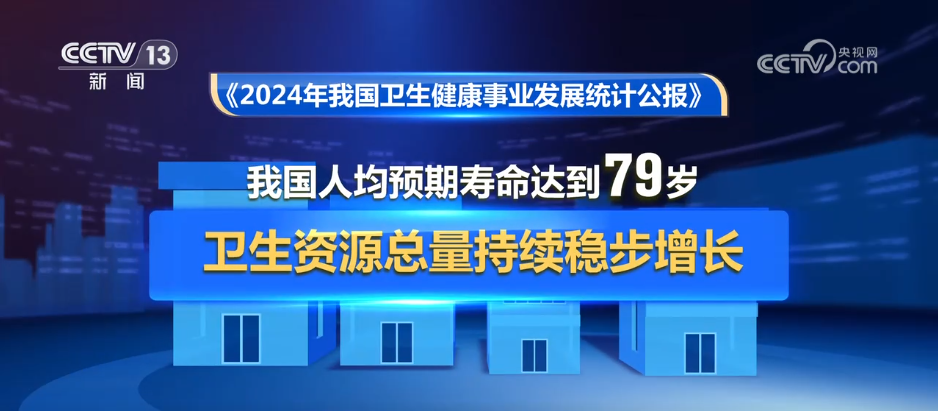
《公报》显示,我国人均预期寿命达到79岁。卫生资源总量持续稳步增长,到2024年末,全国医疗卫生机构总数1093551个,比 上年增加22766个;卫生技术人员1302.0万人,比上年增加53.1万人。 2024年,全国医疗卫生机构总诊疗人次101.5亿,比上年增加6.0亿人次。医院次均住院费用、次均门诊费用,按当年价格比上年 均有所下降。 央视网消息:国家卫生健康委12月2日发布《2024年我国卫生健康事业发展统计公报》(以下简称《公报》),公报显示,我国 人民健康水平持续提升,医疗服务提供量和效率同步提升。 2024年,全国卫生总费用初步核算为90895.5亿元,占GDP的比重为6.7%。我国加强重大疾病与健康危害因素控制,地方病、慢 性病、职业病防治工作等取得积极进展。 ...
国家卫健委主任雷海潮:全国1600万名医疗卫生服务人员遍及城乡
Zhong Guo Xin Wen Wang· 2025-12-01 07:02
Group 1 - The core message emphasizes China's achievements in building a comprehensive healthcare system, which includes 1.09 million medical institutions and 16 million healthcare workers across urban and rural areas, successfully enduring the challenges posed by the pandemic [1] - Since the beginning of the 14th Five-Year Plan, the average life expectancy of Chinese residents has increased by over 0.2 years annually, projected to reach 79 years by 2024, placing China among the leading middle-income countries in health performance with relatively low resource investment [1] - The phased goal for the Healthy China initiative aims for an average life expectancy of around 80 years by 2030, with a long-term target set for 2035 [1] Group 2 - In the realm of global health cooperation, China has dispatched medical teams to 77 countries and regions since 1963, with a total of 30,000 personnel participating in initiatives such as "Bright Action," "Caring Action," and surgical clinics, while also supporting the establishment of the Africa CDC [2] - There are over 60 Sino-foreign joint venture hospitals in China, with pilot foreign-owned hospitals in 7 provinces and 9 cities, alongside initiatives to explore medicinal plant resources through the "New Era Shennong Tastes Hundred Herbs" campaign [2] - China is committed to open innovation and sharing development outcomes in healthcare, reinforcing its support for multilateralism and collaboration with the World Health Organization in various fields, including pandemic response and traditional medicine, contributing to the UN's 2030 Sustainable Development Goals [2]
“再提升一岁”的民生福祉(纵横)
Ren Min Ri Bao· 2025-11-30 22:20
Core Viewpoint - The Chinese government aims to increase the average life expectancy of residents from 79 years in 2024 to around 80 years within five years, highlighting the importance of both longevity and quality of life [1][2]. Group 1: Life Expectancy Improvement - The average life expectancy in China has steadily increased from approximately 35 years at the founding of the People's Republic to 79 years by 2024, reflecting significant advancements in healthcare and social security systems [1]. - Achieving an additional year of life expectancy at this high baseline presents greater challenges, necessitating further improvements in social adaptability and healthcare quality [1][2]. Group 2: Societal Changes and Challenges - The goal of increasing life expectancy by one year corresponds to profound and systematic changes in social structures, including healthcare, social security, and environmental conditions [2]. - There is a growing focus on aging-related adaptations, such as large-print medication instructions and the installation of elevators in older residential buildings, indicating a comprehensive approach to societal aging [2]. Group 3: Changing Social Perspectives - The concept of "active aging" has been emphasized, with initiatives encouraging older individuals to contribute to society, such as returning to teaching or volunteering, reflecting a more caring and vibrant society [2]. - The government and individuals are encouraged to work together to enhance life expectancy, aiming for improvements that genuinely benefit the population and enhance well-being [2].
构建医疗卫生强基工程全链条人才培养机制 推进健康中国建设
Jing Ji Guan Cha Wang· 2025-11-27 22:54
Core Viewpoint - The rural revitalization strategy emphasizes the importance of healthcare services as a core pillar for improving the quality of life in rural areas, addressing the challenges faced by rural healthcare systems, and enhancing the overall development process of rural revitalization [1][11]. Group 1: Talent Development Mechanisms - Targeted training is essential for building a healthcare workforce in rural areas, addressing issues of recruitment and retention by aligning training with actual job demands [2]. - A comprehensive training model should focus on practical skills relevant to rural healthcare needs, including common disease management, public health, and communication skills with local residents [2][3]. - Establishing a multi-faceted collaborative education ecosystem involving educational institutions, healthcare organizations, and government bodies is crucial for effective talent cultivation [3][4]. Group 2: Continuous Learning and Capacity Building - A full-cycle empowerment system is necessary to ensure the quality of rural healthcare services, encompassing pre-employment training, on-the-job training, and career advancement opportunities [5][6]. - On-the-job training should be tailored to local healthcare needs, combining general training with personalized modules to enhance professional skills [6]. Group 3: Retention Strategies - A multi-dimensional retention mechanism is vital for ensuring healthcare professionals remain in rural areas, focusing on salary, career development, work environment, and social recognition [7][8][9]. - Improving working conditions and providing adequate resources and support can enhance job satisfaction and retention rates among rural healthcare workers [8]. Group 4: Cultural and Community Engagement - Creating a supportive cultural environment is essential for fostering a sense of belonging and commitment among healthcare professionals in rural areas [10]. - Promoting a culture of service and excellence in rural healthcare can motivate professionals to engage in community health initiatives and volunteer services, enhancing their sense of purpose and recognition [10]. Group 5: Systematic Approach to Talent Management - The construction of a systematic talent cultivation mechanism is a comprehensive effort that requires precise supply through targeted training, collaborative empowerment, continuous capacity building, retention support, and cultural guidance [11].
商业医疗险精准瞄准民众多元需求
Jin Rong Shi Bao· 2025-11-26 02:25
Group 1: Core Insights - The commercial health insurance market is evolving to meet diverse needs through differentiated and specialized services, with three main segments: Huiminbao, chronic disease insurance, and high-end medical insurance [1] - By 2024, medical insurance is projected to surpass critical illness insurance, accounting for approximately 44% of the health insurance market, marking the beginning of a specialized era dominated by medical insurance [1] Group 2: Huiminbao - Huiminbao, a city-level commercial health insurance, serves as a crucial link between basic medical insurance and commercial health insurance, aiming to provide universal health coverage [2] - The 2026 Huiminbao policies maintain low premiums (195 yuan per person per year) while increasing coverage limits to 3.5 million yuan and expanding the list of covered diseases and medications [2] - As of July 2023, there are 313 local Huiminbao products launched nationwide, with 202 products actively operating [2] Group 3: Chronic Disease Insurance - Chronic disease insurance is gaining traction due to the rising prevalence of chronic diseases, which account for over 80% of total deaths in the population [4] - The market is responding to the needs of specific groups, including the elderly and those with pre-existing conditions, by offering various insurance models that support long-term management of chronic diseases [4][5] - The integration of health management services with chronic disease insurance is becoming common, providing comprehensive support throughout the treatment cycle [6] Group 4: High-End Medical Insurance - The high-end medical insurance market is rapidly growing, driven by rising income levels and increased health awareness among consumers [7] - The number of new customers for high-end medical insurance has surged by 445% year-on-year in 2024, indicating a significant shift towards this segment [7] - High-end medical insurance products are designed to fill the coverage gaps left by basic medical insurance, catering to the high-quality medical needs of the middle-income population [8]
推动食品产业升级 第七届健康中国与食品安全发展大会举办
Zhong Guo Jing Ji Wang· 2025-11-18 02:38
Group 1 - The conference focused on upgrading the food industry to strengthen the foundation of public health, emphasizing the importance of a comprehensive safety defense from production to consumption [1] - The president of the China Xiaokang Construction Research Association highlighted the need for source governance and innovation-driven development to address complex issues in health and food safety [1] - There is a call for improving the governance system and enhancing modern governance capabilities in food safety [1] Group 2 - The president of the China Cooperative Economic Association noted that rising living standards have led to increased attention on the agricultural and food industry, with consumer demand shifting towards higher quality and safety [2] - Emphasis was placed on innovation and technology as key supports for agricultural production and the food industry [2] - The conference also featured a showcase of specialty agricultural products to promote the integration of health initiatives and rural revitalization strategies, enhancing product circulation and sales [2]
全方位守护人民健康
Jing Ji Ri Bao· 2025-11-17 22:42
Core Points - The article discusses the benefits of new healthcare concepts such as centralized procurement of medical supplies, inter-provincial cooperation, and medical insurance drug purchases, which have positively impacted many households [1] - The achievements in healthcare are seen as steps towards the "14th Five-Year Plan" goal of comprehensively promoting the construction of a healthy China [1] Group 1: Healthcare Policies and Achievements - The Chinese government maintains the public welfare nature of basic medical and health services while expanding service scope and improving service standards [1] - During the "14th Five-Year Plan" period, various medical insurance support policies have reduced the financial burden on low-income rural groups by over 650 billion yuan [1] - The online processing rate of medical insurance government services has increased from 55% in 2020 to 92% in 2024 due to the launch of programs like "drug price comparison" [1] Group 2: Technological and Strategic Developments - The guiding ideology for technological development has shifted from "three orientations" to "four orientations," adding "orientation towards people's health" [1] - The "15th Five-Year Plan" emphasizes the implementation of a health-first development strategy [1] - Significant reductions in drug and medical supply prices, along with the continuous improvement of the "15-minute medical insurance service circle," demonstrate visible changes in the social safety net [1]