
关键核心技术攻关

Search documents
湖北集中发布2025年度36项科技创新成果
Zhong Guo Xin Wen Wang· 2026-01-04 09:00
湖北强化基础研究多元化投入和体系化布局,推进"尖刀"技术攻关,探索编制20个重点领域产业链创新 图谱,特色成果不断涌现。2025年,国家量子联合基金、湖北人形机器人联合基金重大专项落地;"尖 刀"攻关形成42项实物成果,先后创造全球最快磁悬浮技术、全球最高强度平顶脉冲磁场强度,研制全 球首个"稻米造血"一类创新药等重大创新产品。 未来,该省还将聚焦先进制造业产业集群创新需求,统筹"尖刀"技术攻关工程、重大科技专项和重点研 发计划,持续支持重大基础研究突破、推进关键核心技术攻关、加快标志性创新产品研发攻坚。同时, 通过项目资助、平台共建、人才集聚等方式,推动基础研究成果技术化、技术创新成果产品化、创新产 品成果商业化。(完) (文章来源:中国新闻网) 记者4日从湖北省科技厅获悉,该省集中发布2025年度36项科创成果,涵盖原创性基础研究、核心技术 攻关以及标志性创新产品研发等方面取得的新突破、新进展、新成效。 2025年,湖北强化"61020"科技创新成果体系建设,即每年产出6项以上重大基础研究成果,突破10项以 上重大关键技术,形成20项以上标志性产品。原创性基础研究在现代农业、金属矿产、生命健康等领域 取得 ...
国家发改委:全链条推进集成电路、工业母机、生物制造等重点领域关键核心技术攻关取得决定性突破
Bei Jing Shang Bao· 2025-12-29 03:44
Core Viewpoint - The article emphasizes the importance of cultivating new quality productivity through high-level technological self-reliance and innovation, highlighting the role of technological breakthroughs in driving this development [1] Group 1: Strengthening Basic Research - The need to enhance basic research by balancing free exploration and goal-oriented approaches, increasing investment ratios, and providing stable support to generate more foundational research outcomes from "0 to 1" [1] Group 2: Promoting Original Innovation - The focus on strengthening original innovation by optimizing the environment for groundbreaking and disruptive innovations, aiming to produce more significant original achievements and foster original ideas, technologies, and industries [1] Group 3: Tackling Key Core Technologies - The emphasis on addressing key core technologies through leveraging the advantages of a new national system, implementing extraordinary measures, and advancing critical fields such as integrated circuits, industrial mother machines, high-end instruments, basic software, advanced materials, and biomanufacturing to achieve decisive breakthroughs [1]
玉渊谭天:国家带头,再干一件大事
Xin Lang Cai Jing· 2025-12-27 03:07
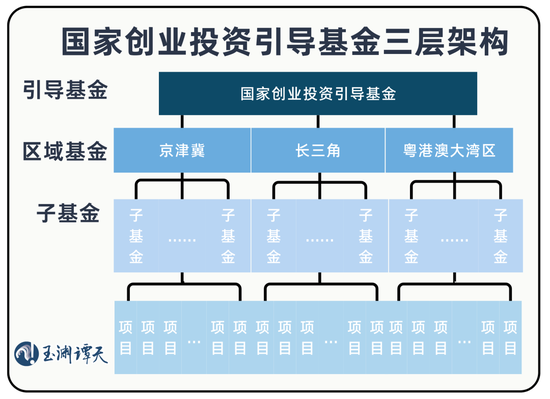
Group 1 - The National Venture Capital Guidance Fund has officially launched, focusing on early-stage and small-scale technology projects [1][26] - The fund aims to address high-risk investments in strategic emerging industries and support disruptive technological innovations [2][27] - The fund's structure includes a multi-layered design of guidance funds, regional funds, and sub-funds, with at least 70% of sub-fund investments directed towards seed and early-stage enterprises [10][39] Group 2 - The fund has a unique 20-year duration, the longest among national-level funds, signaling a commitment to long-term support for technology enterprises [41][42] - The fund operates with a limited partner model, allowing for professional management while respecting market-driven decisions [44] - The fund is expected to mobilize nearly 1 trillion in local and social capital, enhancing the investment landscape for early-stage companies [46] Group 3 - The fund will prioritize investments in sectors such as renewable energy, new materials, aerospace, and low-altitude economy, aiming to foster future industries [47] - Specific regional focuses include high-end chips and foundational software in Beijing, smart product innovation in Zhejiang, and an AI-robotics cluster in Guangdong [52][53] - The fund's approach is designed to avoid duplication of investments across regions, aligning national strategies with local resources and industry foundations [52][53]

新华网:为什么要全链条推动高端仪器等重点领域关键核心技术攻关取得决定性突破?
仪器信息网· 2025-12-25 09:03
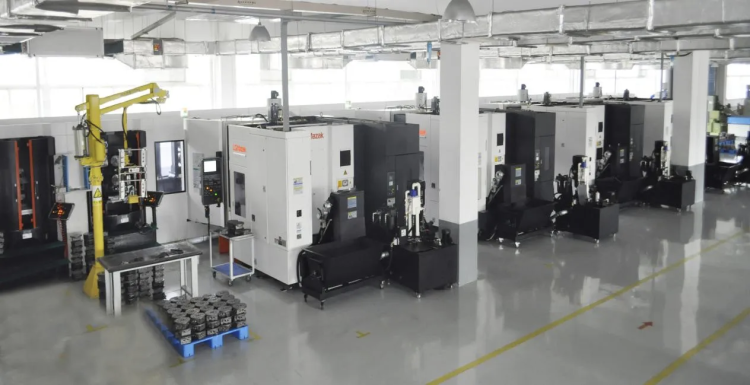
Core Viewpoint - The article emphasizes the importance of key core technologies as national assets, crucial for promoting high-quality economic development and ensuring national security. It advocates for enhancing the capability to tackle key core technology challenges and maintaining control over technological development to provide robust support for high-quality growth [2][3]. Group 1: Importance of Key Core Technologies - Key core technologies are essential for national security and economic development, necessitating a focused effort to overcome challenges in critical areas such as integrated circuits, industrial mother machines, high-end instruments, basic software, advanced materials, and biomanufacturing [3][4]. - Recent advancements in key core technologies include breakthroughs in 5G, Beidou navigation, high-speed rail, and nuclear power, but significant gaps remain in several critical fields that require intensified efforts for decisive breakthroughs [3][4]. Group 2: Strategies for Overcoming Challenges - Accelerating the development of a strong technological nation and modernizing China requires addressing the "bottleneck" issues in key areas, which is vital for national security and competitive advantage [4][5]. - A systematic approach to deploying key core technology initiatives is necessary, including optimizing major technological innovation organizational mechanisms and enhancing the collaboration of innovation forces, resource allocation, and talent development [4][5]. Group 3: Innovation and Research Focus - The root of the "bottleneck" technology issues lies in the inadequacy of foundational theoretical research, highlighting the need for original theoretical proposals and mastery of underlying technical principles to strengthen the foundation of technological innovation and industrial development [5]. - To build a modern industrial system, innovation chains must be aligned with industrial chains, focusing on enhancing capabilities in key areas while avoiding mere imitative innovation [5]. Group 4: Collaborative Efforts and Policy Recommendations - Forming a collaborative framework for advancing key core technology initiatives requires leveraging the advantages of a new type of national system, effectively coordinating government, market, and societal resources [5]. - Implementing extraordinary measures to strengthen goal orientation and demand-driven approaches, while enhancing collaboration among enterprises, universities, and research institutions, is essential for achieving significant technological breakthroughs [5].

重大科学仪器设备研发专项受瞩目,“十四五”七大专项申报指南揭晓
仪器信息网· 2025-12-25 03:55
Core Viewpoint - The article discusses the release of the 2025 project application guidelines for seven key special projects under the "14th Five-Year Plan" by the Ministry of Industry and Information Technology, focusing on strengthening strategic technological capabilities and promoting the integration of key core technology breakthroughs with industrial chains [2][3][12]. Group 1: Key Special Projects - The seven key special projects include "Industrial Software," "Intelligent Robots," "Additive Manufacturing and Laser Manufacturing," "New Energy Vehicles," "Basic Research Conditions and Major Scientific Instrument Equipment Development," "Information Photonic Technology," and "Advanced Computing and Emerging Software" [3][6]. - The "Basic Research Conditions and Major Scientific Instrument Equipment Development" project is particularly noteworthy as it aims to enhance China's research foundation and independent innovation capabilities [6][12]. Group 2: Application Process and Requirements - The application process will follow a single-round submission procedure, with the online submission period from January 4, 2026, to February 5, 2026 [5]. - Project leaders are encouraged to integrate strong teams and include young and female researchers, with age limits set at under 60 for project leaders and under 40 for young scientists [5][11]. Group 3: Management Reforms - Several management reforms are introduced to stimulate innovation, including the establishment of a Young Scientist Project that supports bold exploration without sub-projects or budget evaluations [7]. - A "reveal the list and take charge" mechanism is proposed to encourage capable teams to take on clear tasks, simplifying budget preparation and exploring a negative list for fund management [9]. - The introduction of technology readiness management will incorporate readiness indicators in evaluations and assessments to scientifically control project risks and progress [10].

【微聚焦】工商银行青岛市分行科技金融助力青岛市关键技术攻关
Xin Lang Cai Jing· 2025-12-24 10:32
Group 1 - Qingdao has achieved a significant leap in the Global Innovation Index, ranking among the top 100 technology clusters for five consecutive years, making it the fastest rising city in China over the past five years [1][8] - The city is focusing on a "10+1" innovative industrial system, supported by policy funding and talent platforms, to create a clear pathway from technological breakthroughs to industrial transformation [1][8] - In 2025, key technology projects in Qingdao will cover nine major fields, including new energy, new materials, equipment manufacturing, and biomedicine, with over a hundred projects aimed at driving new productive forces [1][8] Group 2 - ICBC Qingdao Branch emphasizes the importance of financial support for technological innovation, integrating this focus into its "Technology Finance Implementation Opinions" [3][10] - The branch has achieved nearly 60% account coverage and over 40% credit approval rate for key technology projects, with an average loan increase of over 50 million yuan per enterprise [3][10] - ICBC Qingdao Branch has provided over 1 billion yuan in special loans to a leading semiconductor company for equipment upgrades, enhancing national competitiveness in the semiconductor industry [3][10] Group 3 - The branch supports various sectors, including high-end hydraulic equipment and special steel manufacturing, facilitating advancements in technology and quality [4][11] - In the high-end instrument sector, the branch has assisted a small giant enterprise in producing harmonic reducers for humanoid robots, becoming a leading supplier in the domestic market [6][13] - The branch collaborates with key research institutes to provide financial products for technology transfer, focusing on biotechnology and marine biomedicine [7][14] Group 4 - ICBC Qingdao Branch is committed to supporting the construction of a technology-driven city with core competitiveness, continuously improving its financial service mechanisms [3][14] - The branch aims to enhance service efficiency and product offerings to support breakthroughs in key technologies and their commercialization [14]

@科技工作者,“十五五”要全链条攻关这些关键技术
Xin Hua She· 2025-12-24 09:48
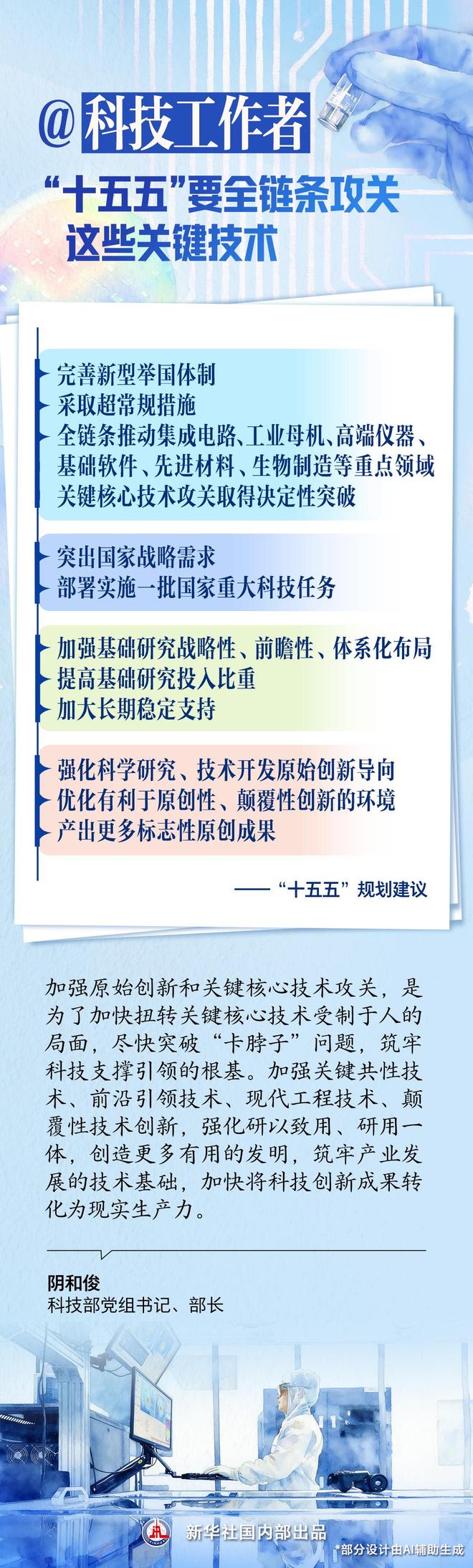
Group 1 - The article emphasizes the importance of strengthening original innovation and key core technology breakthroughs to address the issue of dependency on external technologies and to overcome critical bottlenecks in various sectors [2][1] - It highlights the need for a comprehensive approach to promote integrated circuits, industrial mother machines, high-end instruments, foundational software, advanced materials, and biomanufacturing as key focus areas for technological advancement [1] - The article outlines the strategic deployment of national major scientific tasks to enhance foundational research and increase investment in this area, aiming for a more systematic and forward-looking layout [1][2] Group 2 - The "14th Five-Year Plan" suggests optimizing the environment for original and disruptive innovation to produce more landmark original achievements [2] - It stresses the importance of transforming scientific and technological innovations into practical productivity, thereby solidifying the technological foundation for industrial development [2] - The article calls for a long-term and stable support system for foundational research to ensure sustained progress in key technological areas [1][2]
贴实际、聚人心、重实效(学习贯彻党的二十届四中全会精神)
Ren Min Ri Bao· 2025-12-22 22:27
Group 1 - The core message emphasizes the importance of grassroots theoretical promotion and the innovative expression of ideas to ensure the implementation of the spirit of the Fourth Plenary Session of the 20th Central Committee of the Communist Party of China [1][2] - Various regions, including Guangxi, Jiangsu, and Hebei, have established diverse platforms for theoretical promotion, utilizing local dialects and cultural forms to engage the community effectively [1][2] - The online live streaming of promotional activities has significantly increased participation, with over 4.33 million viewers engaging in a recent event in Jiangsu, and more than 10 million total views across various sessions [2] Group 2 - Beijing University is actively promoting the Party's innovative theories among youth, with student-led initiatives aimed at deepening understanding and practical application of the Fourth Plenary Session's spirit [3] - The university's approach encourages students to connect their academic pursuits with national development, fostering a sense of responsibility and action among the youth [3]
【学习贯彻党的二十届四中全会精神】贴实际、聚人心、重实效
Xin Lang Cai Jing· 2025-12-22 20:23
(来源:工人日报) 从"乡音土语"到直播助力,从理论宣讲到火热实践……连日来,广西、江苏、河北、北京大学等各地各 单位宣讲团深入基层一线,搭建多元宣讲平台,创新理论话语表达,推动宣讲活动走深走实、落地生 效。 "全会提出加快农业农村现代化,扎实推进乡村全面振兴,就是给大伙儿送福利,既有让钱包鼓起来 的'增收礼',更有让精神爽起来的'文化礼'。""00后话百年"宣讲团成员黎建党"唠家常"式的话语,让广 西壮族自治区大新县硕龙镇的宣讲现场氛围格外热烈。 宣讲活动开展以来,广西宣讲团根据基层实际,用群众喜闻乐见的形式宣讲全会精神。来宾市通过"象 州姑娘""呗侬山歌传理论"等宣讲品牌,用百姓视角、百姓语言、百姓故事解读全会精神。玉林市创 新"微"宣讲形式,依托"厅厦邻理""板凳会"等平台,在大榕树下、长廊凉亭、农家小院等场所开展宣 讲,努力把全会精神讲实、讲活。 线上直播为基层宣讲提供助力。 11月21日,"启航'十五五'奋力'挑大梁'"党的二十届四中全会精神联学联讲活动在江苏省启东市启动。 活动通过江苏理论宣讲共建共享平台、全省64家县级融媒体中心同步直播,吸引433万人次在线收看。 目前,江苏各级宣讲团开展超过7 ...
安徽“十五五”规划建议:以超常规举措加强关键共性技术、前沿引领技术、现代工程技术、颠覆性技术创新
Zheng Quan Shi Bao Wang· 2025-12-19 00:29
Core Viewpoint - The proposal from the Anhui Provincial Committee emphasizes the need for original innovation and breakthroughs in key core technologies, aiming to enhance technological capabilities in various critical sectors [1] Group 1: Key Technological Focus Areas - The initiative aims to strengthen common key technologies, frontier-leading technologies, modern engineering technologies, and disruptive technological innovations [1] - A dynamic list of "bottleneck" technologies will be compiled to drive significant breakthroughs in areas such as integrated circuits, new displays, industrial mother machines, high-end instruments, basic software, advanced materials, biomanufacturing, and core seed sources [1] Group 2: Strategic Implementation - The proposal highlights the importance of goal-driven and demand-oriented approaches, establishing mechanisms for identifying and publishing major scientific research tasks [1] - A focus will be placed on implementing several provincial-level technology innovation initiatives to tackle key challenges [1] Group 3: Research and Development Enhancement - There will be an exploration of a non-consensus project selection mechanism based on expert recommendations [1] - The strategy includes a systematic layout for basic research that is strategic, forward-looking, and comprehensive, with an increased proportion of investment in basic research [1] - Long-term stable support for original innovation in scientific research and technology development will be emphasized, aiming to create an environment conducive to original and disruptive innovations, leading to more landmark original achievements [1]