包容性增长

Search documents
21专访|陆挺:新老经济并重,要让消费敢为
2 1 Shi Ji Jing Ji Bao Dao· 2025-11-13 12:10
Core Insights - The "15th Five-Year Plan" emphasizes high-quality development over specific growth targets, focusing on sustainable economic growth and addressing social issues [1][4][10] Economic Development Goals - The goal of achieving "per capita GDP at the level of moderately developed countries" requires three core conditions: enhancing industrial value-added, promoting inclusive growth, and improving social security systems [3][4] High-Quality Development - High-quality development involves addressing historical issues in the "old economy," fostering self-reliance in key industries, and ensuring inclusive growth for all demographics [4][5][6] Key Economic Drivers - Consumption is identified as a critical variable for future economic growth, with government policies aimed at boosting consumer spending through subsidies and pension increases [6][7] Export Performance - Over the past five years, China's exports have seen an average annual growth rate of 8%, driven by a strong manufacturing sector and an increase in high-value-added products [8][9] Future Export Trends - Future export growth is expected to stabilize at 2%-4% annually due to high base effects and external economic pressures, indicating a shift towards low-speed, stable growth in foreign trade [10] Addressing "Involution" - To combat "involution," a collaborative approach involving market-driven mechanisms, industry associations, and government guidance is necessary to eliminate inefficiencies and promote healthy competition [11] Regional Development Focus - The Guangdong-Hong Kong-Macao Greater Bay Area is highlighted as a key region for high-quality development, with Shenzhen aiming to become a global financial center by leveraging its unique advantages [12][13]


中经评论:全球最大消费市场该是啥样
Jing Ji Ri Bao· 2025-11-11 00:10
Core Insights - The eighth China International Import Expo showcased the growing vitality and attractiveness of the Chinese market, emphasizing the need for a balance between economic strength and external responsibilities to become a core engine of global economic growth [1] Group 1: Market Size and Structure - The U.S. personal consumption expenditure is projected to reach approximately $19.8 trillion in 2024, making it the largest in the world; however, its high service consumption ratio, nearly 70%, particularly in healthcare and finance, poses burdens on the public [1] - A truly influential consumer market requires a synergistic development of goods and services to meet diverse consumer needs and reflect a balanced economic operation [1] Group 2: Openness and Global Integration - The U.S. has been a net importer, significantly impacting global supply chains; however, unilateral protectionist policies, such as increased tariffs, challenge global economic growth and deviate from the responsibilities of a major consumer market [2] - In contrast, China is expanding its openness, providing opportunities for global enterprises, with a cumulative import of consumer goods amounting to 7.4 trillion yuan from 2021 to 2024, and a projected inbound tourist spending of $94.2 billion in 2024, a 77.8% increase [2] Group 3: Innovation and Sustainability - Innovation is a key driver for maintaining market leadership, with China leading in digital consumption, projected online retail sales reaching 15.5 trillion yuan in 2024, and mobile payment transactions remaining globally dominant [3] - The "National Trend" phenomenon reflects cultural confidence, enhancing the local market's appeal and combining cultural self-assurance with commercial innovation [3] - The largest consumer market must guide sustainable consumption, promoting green and circular consumption models, as seen in China's trade-in policies that stimulate consumption while advancing environmental goals [3] Group 4: Future Market Dynamics - With a population exceeding 1.4 billion, China is poised to become the largest consumer market globally, but the competition will focus on development quality rather than just scale [4] - The largest consumer market must balance openness and protection, innovation and regulation, and growth and sustainability to ensure stable expectations for global consumers, enabling them to not only "buy" but also "buy well" [4]
南非经济有望保持温和增长
Jing Ji Ri Bao· 2025-10-31 22:09
Economic Overview - The South African Reserve Bank stated that despite geopolitical tensions and ongoing trade frictions, global economic growth remains stable and resilient, with reduced market volatility [1] - South Africa's economy is currently in a stable state, with expectations for moderate growth in the near future [1] Growth Drivers - South Africa's GDP grew by 0.8% in Q2 2025, marking the highest quarterly growth rate in two years, up from 0.1% in Q1 [2] - The current inflation rate is 3.3%, expected to peak around 4% in the coming months before gradually declining to 3% [2] - The South African Reserve Bank indicated that structural reforms will support continued moderate economic growth in the coming years [2] Energy Sector Developments - The South African government approved a comprehensive resource plan aimed at addressing long-standing electricity supply issues, with an investment of 2.2 trillion rand (approximately 126.7 billion USD) [3] - By 2039, the share of coal in South Africa's energy mix is projected to decrease from 58% to 27%, while renewable energy sources will see significant increases [3] Trade Diversification Efforts - South Africa is actively seeking to diversify its trade in response to U.S. tariffs, with July 2025 exports reaching 184.3 billion rand, up from 170.7 billion rand in June [4] - Agricultural exports to Africa account for 40% of South Africa's total agricultural exports, with a focus on value-added products [4] Financial Stability and International Recognition - South Africa has been removed from the Financial Action Task Force (FATF) "grey list," indicating improved financial stability and international recognition [5] - The government aims to strengthen law enforcement and governance processes as part of broader reform efforts [5] G20 Summit Initiatives - South Africa will focus on promoting the development agenda for global South countries, particularly African nations, during the upcoming G20 summit [6] - Key priorities include enhancing disaster response capabilities, ensuring sustainable debt for low-income countries, and promoting equitable energy transitions [6]
CGTN: How China injects stability and fresh momentum into Asia-Pacific development
Globenewswire· 2025-10-28 12:21
Core Viewpoint - China has been a stabilizing force in the Asia-Pacific region, continuously contributing to its development and addressing geopolitical and economic challenges ahead of the 32nd APEC Economic Leaders' Meeting [1][3][4]. Economic Cooperation and Trade - In the first three quarters of 2025, China's trade with APEC economies rose by 2% year-over-year, totaling 19.41 trillion yuan ($2.73 trillion), which constitutes 57.8% of China's total trade [7]. - China's commitment to openness is demonstrated through its active participation in trade agreements like the Regional Comprehensive Economic Partnership (RCEP) and efforts to join the CPTPP and DEPA [8]. Innovation and Technological Development - President Xi emphasized the need for regional economies to embrace the new technological revolution, advocating for cooperation in digital, intelligent, and green transformations [9]. - At the 22nd China-ASEAN Expo, 62 projects focusing on new energy, AI, and advanced materials were signed, highlighting a shift towards joint R&D initiatives [10]. Inclusive Growth and Poverty Reduction - A China-supported project in Papua New Guinea aims to enhance food security and sustainable livelihoods, reflecting China's commitment to common development in the Asia-Pacific [12][13]. - China has been actively promoting initiatives to increase household income and support small and medium-sized enterprises, reinforcing collaboration in poverty reduction and development financing [14].

21评论丨诺贝尔经济学奖:在全球经济低迷中探索内生增长动力
2 1 Shi Ji Jing Ji Bao Dao· 2025-10-15 00:08
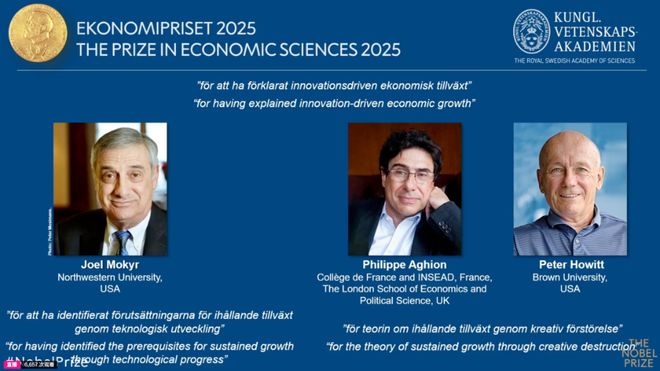
Core Insights - The Nobel Prize in Economic Sciences 2025 was awarded to Joel Mokyr, Philippe Aghion, and Peter Howitt for their contributions to the understanding of innovation-driven economic growth [2][3] Group 1: Theoretical Contributions - Mokyr's research emphasizes the role of knowledge and institutions in long-term growth, particularly how the transformation of knowledge production and dissemination mechanisms contributed to the Industrial Revolution [5] - Aghion's core contribution is the "Schumpeterian endogenous growth model," which highlights the dual role of monopoly rents and competition in driving innovation and productivity growth [6] - Howitt's work, in collaboration with Aghion, integrates financial frictions and market structures into the endogenous growth framework, exploring the impact of credit constraints and institutional quality on innovation [7] Group 2: Practical Implications - The Nobel Committee's choice reflects the practical significance of their research, particularly in addressing productivity stagnation in developed economies through innovation-driven frameworks [9] - Aghion and Howitt's framework links innovation speed, market dynamics, and human capital directly to long-term productivity, providing actionable policy recommendations for decision-makers [9] - Their research on green innovation emphasizes the importance of price signals and R&D support in transitioning from "dirty" to "clean" technologies, relevant in the context of carbon neutrality goals [9] Group 3: Recommendations for China - The scholars advocate for enhancing competition and innovation incentives in China by lowering entry barriers in key industries and strengthening antitrust enforcement [11] - They suggest a tailored approach to policy adaptation based on proximity to technological frontiers, emphasizing competition and original R&D in leading sectors while focusing on absorption and standardization in lagging sectors [12] - The promotion of green technology transitions through carbon pricing, green credit, and government procurement is recommended to capture first-mover advantages in clean technology [12]

21评论|诺贝尔经济学奖:在全球经济低迷中探索内生增长动力
2 1 Shi Ji Jing Ji Bao Dao· 2025-10-13 16:04
Core Insights - The Nobel Prize in Economic Sciences was awarded to Joel Mokyr, Philippe Aghion, and Peter Howitt for their contributions to understanding innovation-driven economic growth [2][3] Group 1: Theoretical Contributions - Mokyr's research emphasizes the role of knowledge and institutions in long-term growth, particularly in the context of the Industrial Revolution, highlighting the importance of practical knowledge accumulation and dissemination [4][5] - Aghion's core contribution is the "Schumpeterian endogenous growth model," which posits that creative destruction drives productivity growth through quality-enhancing innovations, establishing a relationship between competition and innovation [6][7] - Howitt, in collaboration with Aghion, integrates financial frictions and market structures into the endogenous growth framework, exploring the impact of credit constraints and institutional quality on innovation [7][8] Group 2: Policy Implications - The scholars advocate for a combination of innovation policies that balance incentives and knowledge diffusion, including moderate competition, reasonable patent durations, and R&D tax incentives [9][10] - They emphasize the need for tailored industrial and green policies that consider the specific conditions of advanced and catching-up economies, suggesting differentiated tools for different economic contexts [10][11] - The research highlights the importance of inclusive growth strategies to address income inequality resulting from innovation-driven growth, advocating for education, social security, and retraining programs [11][12] Group 3: Relevance to China - The scholars have engaged with Chinese academic institutions, providing insights on enhancing competition and innovation incentives, and suggesting a "frontier-catcher" policy approach [19][20] - They recommend directionality in technological change and green transformation through carbon pricing and emission standards, particularly in sectors like renewable energy and electric vehicles [21][22] - The emphasis on building a robust knowledge ecosystem and open scientific culture is crucial for China's innovation landscape, advocating for the establishment of engineering communities and industry associations [22]
世贸组织报告指出:人工智能技术影响全球贸易格局
Jing Ji Ri Bao· 2025-09-20 02:53
Core Insights - The World Trade Organization's report highlights the significant impact of artificial intelligence (AI) on global trade dynamics, emphasizing the need for multilateral cooperation to ensure inclusive growth rather than exacerbating disparities [1][5] Group 1: Opportunities and Potential of AI in Trade - AI technologies can enhance efficiency in various sectors such as consulting and R&D, potentially increasing global total factor productivity by an additional 0.68% annually [1] - By 2040, global trade is projected to increase by 34% to 37%, with global GDP rising by 12% to 13%, and trade in digitally deliverable services, including AI services, expected to grow by 42% [1] - AI can optimize supply chains, improve customs and compliance efficiency, reduce cross-border communication costs, and assist small and medium-sized enterprises (SMEs) in entering international markets [1][2] Group 2: AI's Role in Market Participation - 90% of companies utilizing AI report trade benefits, with 56% indicating improved risk management capabilities [2] - AI can facilitate broader market participation, particularly benefiting SMEs and developing countries by overcoming barriers such as high compliance costs and insufficient market information [2] - The technology can provide new export opportunities for low-income countries through remote services and online applications [2] Group 3: Risks and Challenges Posed by AI - AI may exacerbate the digital divide, with high-income economies having advanced capabilities compared to low-income countries, potentially leading to a 14% income growth in high-income countries versus only 8% in low-income countries by 2040 [3] - The disparity in AI adoption rates, with over 60% in large enterprises compared to 41% in small enterprises, highlights the challenges faced by lower-income economies [3] - AI's impact on labor markets could threaten jobs in sectors like translation and customer support, which are crucial for low-income countries' export opportunities [3] Group 4: Policy Recommendations for Inclusive Growth - Countries are urged to prepare policies, infrastructure, and capacity building to support AI development, including maintaining low tariffs and open markets [4] - Investment in education and training programs for AI, as well as improvements in data governance and infrastructure, are essential to bridge the skills gap [4] - Support for SMEs in AI adoption and a balanced approach to intellectual property and competition policies are necessary to prevent market concentration [4] Group 5: Importance of International Cooperation - The report stresses the need for enhanced international cooperation in AI governance, particularly in trade-related aspects, to avoid regulatory fragmentation [5] - Inclusive collaboration should involve both high-income and low-income countries in the global AI governance framework [5] - Strategic actions today will determine AI's future impact, with proactive measures potentially transforming AI into a driver of global trade and inclusive growth [5]
第二期中国—东盟青年领军者圆桌对话会在南宁举行陈刚高金洪出席并致辞
Guang Xi Ri Bao· 2025-09-19 01:12
Group 1 - The second China-ASEAN Youth Leaders Roundtable Dialogue was held in Nanning, emphasizing the importance of youth in shaping the future and leading societal development in the era of artificial intelligence [1][2] - The event featured the issuance of certificates to 30 selected youth leaders from China and ASEAN countries, representing a diverse range of sectors including business, youth organizations, and professional fields [2] - The dialogue focused on themes such as digital transformation, sustainable development, and inclusive growth, aiming to deepen partnerships and create more opportunities for youth engagement [2] Group 2 - The ASEAN Secretary-General highlighted the challenges and opportunities faced by youth today, encouraging them to unite, collaborate, and observe the world with unique perspectives to better serve societal development [2] - The roundtable aimed to foster cooperation and mutual understanding among youth from different countries, thereby promoting friendly relations between China and ASEAN [2]
《世界贸易报告》:到2040年AI将推动全球贸易增长近40%
Guo Ji Jin Rong Bao· 2025-09-17 11:50
Core Insights - The WTO's 2025 World Trade Report highlights the evolving relationship between AI and international trade, emphasizing AI's potential to drive inclusive growth and significantly enhance global trade value by nearly 40% by 2040 [1] Group 1: AI's Impact on Trade and Growth - AI is expected to serve as a catalyst for more inclusive growth by lowering trade costs and expanding access to global markets, particularly benefiting small and medium-sized enterprises (SMEs) [2] - The report forecasts that AI could lead to a substantial increase in global trade and GDP, with trade expected to rise by 34% to 37% by 2040, and digital services trade, including AI services, projected to grow by 42% [3] - AI's development and application are anticipated to contribute to global GDP growth, with increases ranging from 12% to 13% across different scenarios [4] Group 2: Trade's Role in AI Innovation - Trade can facilitate the diffusion of AI innovation, with a strong correlation between the growth of digital services trade and cross-border AI patent citations, indicating knowledge flow [5] - In 2023, the global trade value of AI-related inputs, including raw materials and semiconductors, reached $2.3 trillion, highlighting the importance of international markets for AI development [4] Group 3: Challenges and Policy Considerations - The report warns that the impact of AI on inclusive growth depends on the design of trade and related policies, as disparities in policy adoption between countries can exacerbate structural gaps, particularly regarding the digital divide [6][7] - High-income and upper-middle-income economies have more advanced policy frameworks for AI and digital trade, while low-income economies are lagging, limiting their ability to harness AI's potential [7] - The WTO emphasizes the need for targeted government support and international cooperation in policy adoption to ensure that trade continues to be a force for inclusive progress in the AI era [8]
外媒热议:支持多边主义、维护区域稳定,上合组织发挥重要作用
Zhong Guo Xin Wen Wang· 2025-09-01 10:23
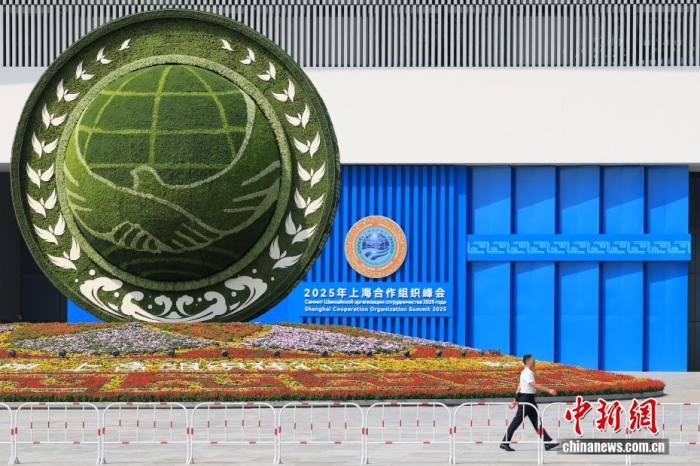
Group 1 - The Shanghai Cooperation Organization (SCO) summit held in Tianjin is the largest since its establishment, with over 20 foreign leaders and 10 international organization heads attending, alongside more than 3,000 media representatives [3] - The summit aims to enhance cooperation among member states, focusing on security mechanisms and counter-terrorism efforts, while promoting friendly exchanges among nations [3][5] - The theme of the summit is "Sustainable Development Year," with discussions on security, trade, energy, and cultural cooperation expected to yield significant outcomes [3] Group 2 - The SCO is recognized as a vital platform for Eurasian cooperation, emphasizing mutual trust and benefit, and seeking common development in trade, energy security, connectivity, and cultural exchanges [5] - The importance of the SCO in supporting multilateralism and maintaining regional stability is highlighted, especially in the context of threats to multilateralism from certain Western policies [5][6] - The SCO is gradually becoming a "diplomatic hub" for the Global South by engaging dialogue partners from Africa, the Middle East, and Southeast Asia, facilitating informal exchanges among member leaders [5][6]