品牌出海

Search documents
东方证券:金价大涨之下黄金珠宝板块分化显著 一口价产品销售占比持续上升
智通财经网· 2026-02-09 06:34
Core Viewpoint - The report from Dongfang Securities indicates that the rising gold prices have significantly suppressed domestic gold jewelry consumption, while the consumption of gold bars and coins, which have more investment attributes, has rapidly increased year-on-year, greatly exceeding that of gold jewelry [1] Group 1: Industry Trends - In 2025, China's gold consumption is projected to be 950.096 tons, a year-on-year decrease of 3.57%. Gold jewelry consumption is expected to decline to 363.836 tons, down 31.61%, while gold bars and coins are anticipated to rise to 504.238 tons, an increase of 35.14% [1] - The closing price of Au9999 gold on the Shanghai Gold Exchange at the end of December 2025 is expected to rise by 58.78% compared to the opening price at the beginning of the year [1] - The impact of high gold prices on the consumption structure of gold jewelry is expected to continue into 2026 [1] Group 2: Company Performance - In 2025, companies with strong brand operations and clear product differentiation are expected to show rapid growth despite industry pressures. Notable examples include: - Chao Hong Ji, with a projected non-recurring profit growth of 125%-175% [2] - Cai Bai Co., with a projected non-recurring profit growth of 39%-64% [2] - Man Ka Long, with a projected non-recurring profit growth of 26% [2] - Chow Tai Fook, with a 16.9% sales growth in mainland China in Q4 2025, and a 53.4% increase in same-store sales for fixed-price products [2] - Luk Fook Holdings, with a projected non-recurring profit growth of 43% for FY2026H1 [2] - Companies that rely on wholesale and franchise models, with weak brand operation and digital capabilities, are facing significant operational pressure due to the sustained rise in gold prices in 2024 and 2025 [2] Group 3: Future Outlook - The report highlights that the rise of Chinese culture and confidence presents significant opportunities for domestic gold jewelry brands to expand internationally, particularly in Southeast Asia, Australia, and North America [3] - The focus for investment opportunities in 2026 will be on companies with strong branding, differentiation, and active international expansion, such as Chao Hong Ji, Lao Pu Gold, Chow Tai Fook, and Luk Fook Holdings [4]


黄金珠宝板块投资机会分析:看好品牌化、差异化发展并具备出海亮点的龙头
Orient Securities· 2026-02-08 15:19
Investment Rating - The report maintains a "Positive" outlook for the gold and jewelry sector [6] Core Insights - In 2025, despite a significant increase in gold prices, domestic consumption of gold jewelry is expected to decline sharply, while the consumption of gold bars and coins is projected to grow rapidly [2][4] - The report highlights that high gold prices will continue to impact the consumption structure of gold jewelry in 2026, with a notable shift towards investment-oriented products [2] - The differentiation and branding of leading companies in the sector are expected to drive growth, even amidst market pressures [3][9] Summary by Sections - **Market Trends**: In 2025, China's total gold consumption is estimated at 950.096 tons, a decrease of 3.57% year-on-year, with gold jewelry consumption dropping by 31.61% to 363.836 tons, while gold bars and coins consumption is expected to rise by 35.14% to 504.238 tons [2] - **Company Performance**: Companies with strong branding and differentiation, such as潮宏基,菜百股份, and周大福, are projected to show significant profit growth, with潮宏基's non-net profit growth estimated at 125%-175% [9] - **Investment Recommendations**: The report recommends focusing on companies with strong branding and international expansion strategies, specifically suggesting to "buy" or "hold" stocks of潮宏基,老铺黄金,老凤祥, and周大生 [4][9]

跨境出海周度市场观察-20260207
Ai Rui Zi Xun· 2026-02-07 08:42
Industry Trends - Vietnam is identified as the most suitable market for Chinese fast-moving consumer goods (FMCG) brands, with traditional channels accounting for 80% of retail, while e-commerce is rapidly growing[2] - By 2025, China's exports are projected to reach 26.99 trillion yuan, a growth of 6.1%, with high-tech product exports increasing by 13.2%[4] - The global marketing landscape is entering the "SuperAgent" era, with a 10% expected increase in marketing budgets for 2026, and overseas market share rising to 25%[8] - The cross-border e-commerce sector is shifting towards compliance and digital economy, with a focus on localizing and branding strategies[8] Brand Dynamics - Xiaomi and Alibaba's AliExpress have formed a strategic partnership to enhance global brand presence, particularly in Europe and Southeast Asia[21] - Yuanji Food's revenue reached 1.982 billion yuan with a GMV of 4.789 billion yuan, focusing on Southeast Asia for overseas expansion[22] - 87% of Amazon sellers are considering AliExpress as a second growth avenue, highlighting its role in brand expansion[23] - Lenovo's "China + N" strategy has positioned it as a global leader, with overseas revenue reaching 314.4 billion yuan in 2024, marking a significant increase in market share[27]
国内称王、海外承压,国产咖啡机格米莱赴港寻解药?
Zhi Tong Cai Jing· 2026-02-06 02:37
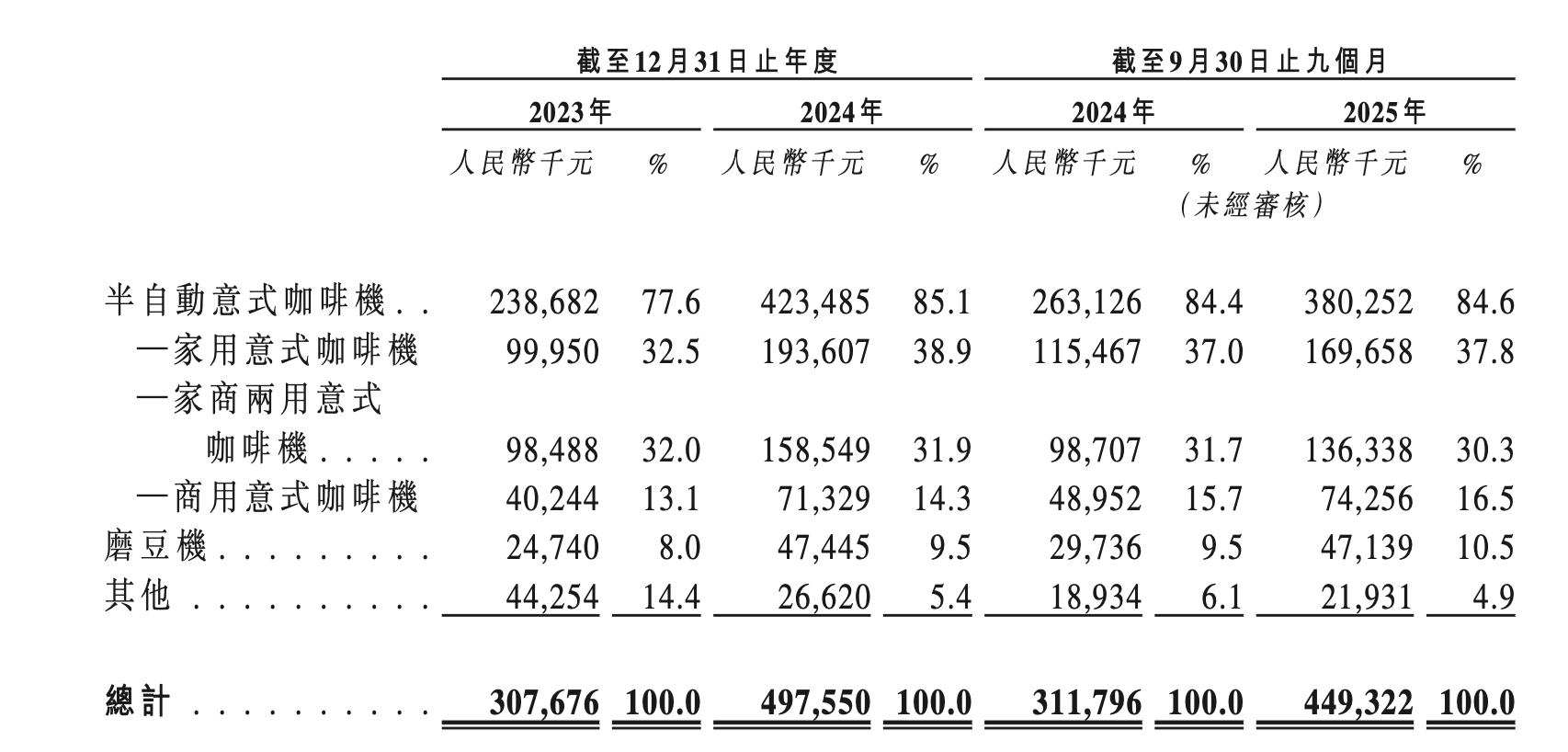
在全球咖啡文化加速渗透与中国消费升级共振的浪潮下,中国咖啡机行业正迎来历史性拐点——从"小众工具"蜕变为"生活方式载体",从代工制造迈向技术 自主与品牌出海。作为这一转型浪潮中的标杆企业,格米莱控股有限公司(以下简称"格米莱")正式向香港资本市场发起冲击。 据港交所1月29日披露,格米莱向港交所主板递交上市申请书,中信证券为其独家保荐人。在国产替代浪潮进入咖啡设备行业的当下,深耕行业十余年的格 米莱到底成色几何呢? 战略转型效果显著,营收净利稳步上行 尽管被称为"高端咖啡机国货代表",公司营收实则"半自动主导、商用稳增"。报告期内,其半自动意式咖啡机收入分别为2.39亿元、4.23亿元、2.63亿元及 3.80亿元,呈显著增长态势,且占营收比重持续提升,从2023年的77.6%升至2025年九个月的84.6%,进一步巩固其核心业务地位。 据招股书显示,格米莱是中国专业咖啡机企业。历经十余年发展,公司已建立一个综合业务模式,涵盖产品设计、研发、制造、销售及售后服务,并实现了 对咖啡机行业价值链的全面覆盖。目前公司的产品分销至全球逾60个国家及地区,累积销量超过200万件,已服务超过40万名用户,并已成为进军国际 ...

新股前瞻|国内称王、海外承压,国产咖啡机格米莱赴港寻解药?
智通财经网· 2026-02-06 02:22
Core Insights - The article highlights the significant transformation of the Chinese coffee machine industry, driven by the global coffee culture and consumption upgrades in China, with Gemi Lai Holdings Limited (Gemi Lai) emerging as a key player in this shift [1][11]. Company Overview - Gemi Lai is positioned as the second-largest coffee machine brand in China by revenue and the largest domestic brand, with a projected market share of approximately 7.5% in 2024 [2]. - The company has established a comprehensive business model covering product design, R&D, manufacturing, sales, and after-sales service, distributing products to over 60 countries and regions [1]. Financial Performance - Gemi Lai's revenue has shown consistent growth, with reported revenues of approximately 308 million RMB in 2023, 498 million RMB in 2024, and 449 million RMB in the first nine months of 2025 [3]. - The company’s net profit increased significantly from 22.01 million RMB in 2023 to 40.01 million RMB in 2024, marking an 81.8% growth [8]. Product Segmentation - The revenue from semi-automatic espresso machines has been the primary driver, accounting for 77.6% of total revenue in 2023 and increasing to 84.6% by the first nine months of 2025 [4][5]. - The home espresso machine segment also showed robust growth, with revenues rising from 100 million RMB in 2023 to 194 million RMB in 2024, reflecting a growing consumer trend [5]. Strategic Focus - Gemi Lai has shifted its strategic focus towards its own brand, with the proportion of revenue from self-owned brands increasing from 69.2% in 2023 to 83.3% in the first nine months of 2025 [7][8]. - The company has adopted a dual-track business model of "own brand + third-party ODM," with a clear emphasis on brand-led growth [6]. Market Dynamics - The global coffee machine market is experiencing strong growth, with the market size expected to increase from $15.3 billion in 2019 to $30.6 billion in 2024, reflecting a compound annual growth rate (CAGR) of 14.9% [9]. - The Chinese coffee machine market is growing even faster, with a projected market size increase from 2 billion RMB in 2019 to 5.3 billion RMB in 2024, representing a CAGR of 21.5% [9]. Challenges and Opportunities - Despite strong domestic performance, Gemi Lai faces challenges in overseas markets, particularly in the U.S., where revenue dropped significantly from 31.2 million RMB in 2023 to 10.7 million RMB in 2024, a decline of 79.3% [10]. - The company’s reliance on the domestic market has increased, with revenue from China rising from 69.7% in 2023 to 80.9% in the first nine months of 2025, indicating potential risks in market diversification [10]. Future Outlook - The upcoming IPO in Hong Kong is seen as a crucial step for Gemi Lai to expand its financing channels, enhance R&D and production capacity, and optimize its business structure for global brand development [11]. - The ability to maintain domestic advantages while effectively penetrating overseas markets will be critical for Gemi Lai's long-term growth and investor interest [11].
薇诺娜扎根卡塔尔,贝泰妮全球化战略稳步推进,多区域实现本土化运营
Jin Rong Jie· 2026-02-05 10:12
Core Insights - The beauty and personal care industry is experiencing significant development opportunities, with companies expanding internationally and making key advancements in innovative drug research [1] - Huolong Securities maintains a "recommended" rating for the beauty and personal care industry, highlighting the overall shift towards high-quality development [1] - Betaini Group's core brand, Winona, has successfully entered the Middle Eastern market, becoming the first Chinese functional skincare brand registered in Qatar, marking a new phase in the internationalization strategy of Chinese beauty brands [1] Group 1 - Winona opened its first offline store in Doha Mall, Qatar, representing a geographical expansion of the brand [1] - The opening ceremony was attended by prominent figures from the local healthcare and retail sectors, showcasing Winona's professional strength and international influence in the functional skincare field [2] - The successful entry into Qatar is attributed to Betaini's systematic compliance capabilities driven by independent research and development, as well as high-quality product formulations validated by extensive clinical trials [2] Group 2 - Betaini has stated that it is continuously improving its global channel network, with its brands operating locally in Southeast Asia, the Middle East, North America, and Europe [3] - The company emphasizes a cautious and pragmatic approach to international expansion, based on in-depth insights into different regional markets [3] - Future expansion plans will be disclosed through official company communications, ensuring transparency in the progress of specific country or region developments [3]
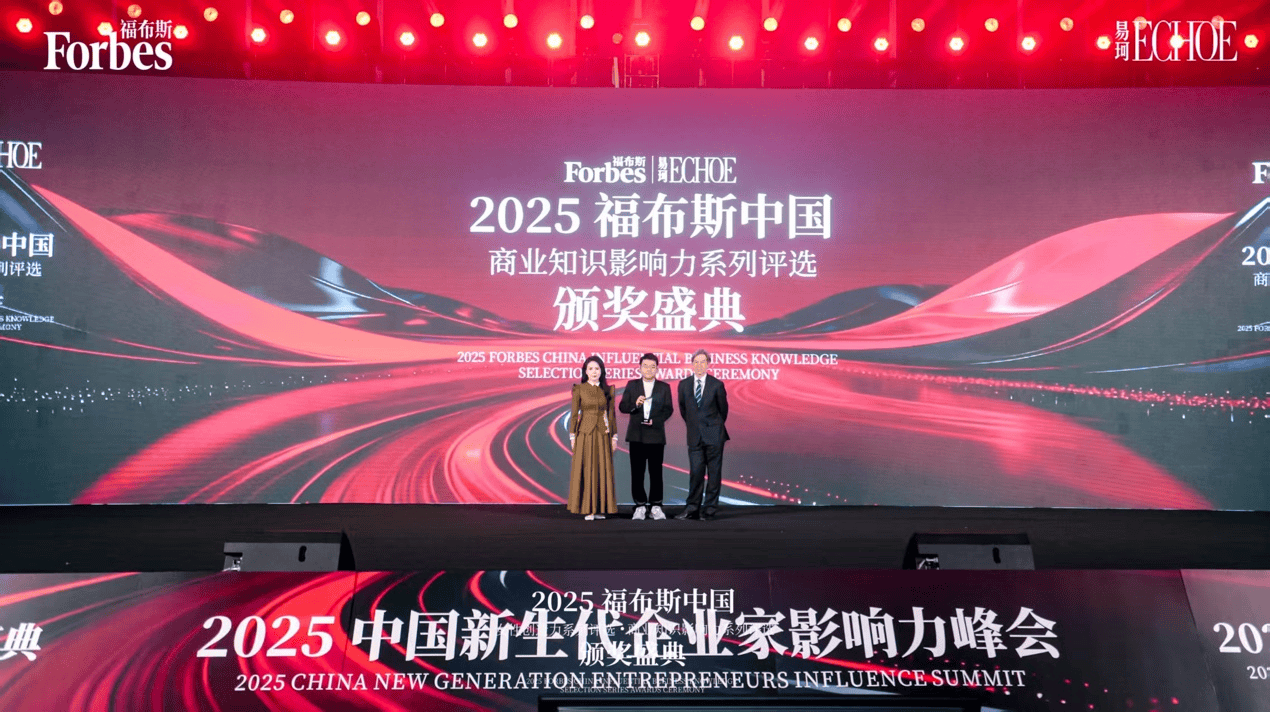
沈帅波荣获“福布斯2025商业知识影响力人物”
Sou Hu Cai Jing· 2026-02-05 09:20
他主理的媒体平台"进击波财经"屡获殊荣,曾入选胡润百富中国最具影响力财经自媒体TOP20,斩获新浪财经、新榜、克劳锐等多个年度商业观察者、财经 自媒体奖项。 在产业研究方面,沈帅波长期关注国内外科技发展与生态建设,与阶跃星辰、扣子AI、腾讯元宝等头部科技企业保持深度交流合作;在品牌出海领域,长 期观察国内外出海品牌和平台如安踏、亚马逊等企业与平台,走遍全球数十个新兴市场开展实地调研,为中国品牌出海提供战略参考。 同时,他笔耕不辍,著有《瑞幸闪电战》《迭代》《开个小店》《伟大的复利》等多部畅销商业书籍,以扎实的调研与独到的见解,为从业者与创业者提供 宝贵的思维借鉴。 2025年,沈帅波在深度内容领域不断深耕。创新深度内容策划"沈帅波和他的朋友们"已连续举办四季,邀请了诸如阶跃星辰副总裁李璟、欧莱雅北亚及中国 公共事务总裁兰珍珍、蚂蚁集团资深副总裁/首席市场官陈亮等科技、消费、教育、艺术、体育等各领域专业人士,收获300万以上直播观看,近亿次曝光。 除此次获奖外,还荣获新浪财经头条"年度洞见奖"、上海证券交易所投资者教育基地联合哔哩哔哩财经颁发的原创优秀作品奖、餐饮老板内参2025年度标杆 咨询公司等。 2025 ...
从万绿湖畔到大洋彼岸 河源“土特产”跨洋出海拓版图
Nan Fang Ri Bao Wang Luo Ban· 2026-02-05 09:09
Group 1 - He Yuan's specialty agricultural products, including He Ping tofu and He Yuan rice noodles, are expanding into the global market, with the first batch of 3 tons valued at $15,000 set to reach the U.S. [1] - He Ping tofu has successfully passed U.S. FDA inspections for the sixth time, allowing it to utilize a "green channel" for customs clearance, with projected sales in the U.S. expected to exceed $2 million this year [1] - The county of He Ping aims to achieve a production value of 700 million yuan for tofu by 2025, transforming production from traditional workshops to standardized and scaled operations [1] Group 2 - Dong Yuan's rice noodles, supported by high-quality water sources and a complete industrial chain, are making their debut in the U.S. market after establishing a strong presence in Hong Kong [2] - Dong Yuan has four leading enterprises in the rice noodle sector, with an industrial output value projected to reach 475 million yuan by 2025, capturing nearly half of Guangdong's rice noodle market [2] - The county aims to achieve an output value of over 1 billion yuan in the rice and noodle processing industry by 2028, fostering more than five well-known domestic and international brands [2]
中国零食量贩模式,在东南亚注定失效
3 6 Ke· 2026-02-04 12:29
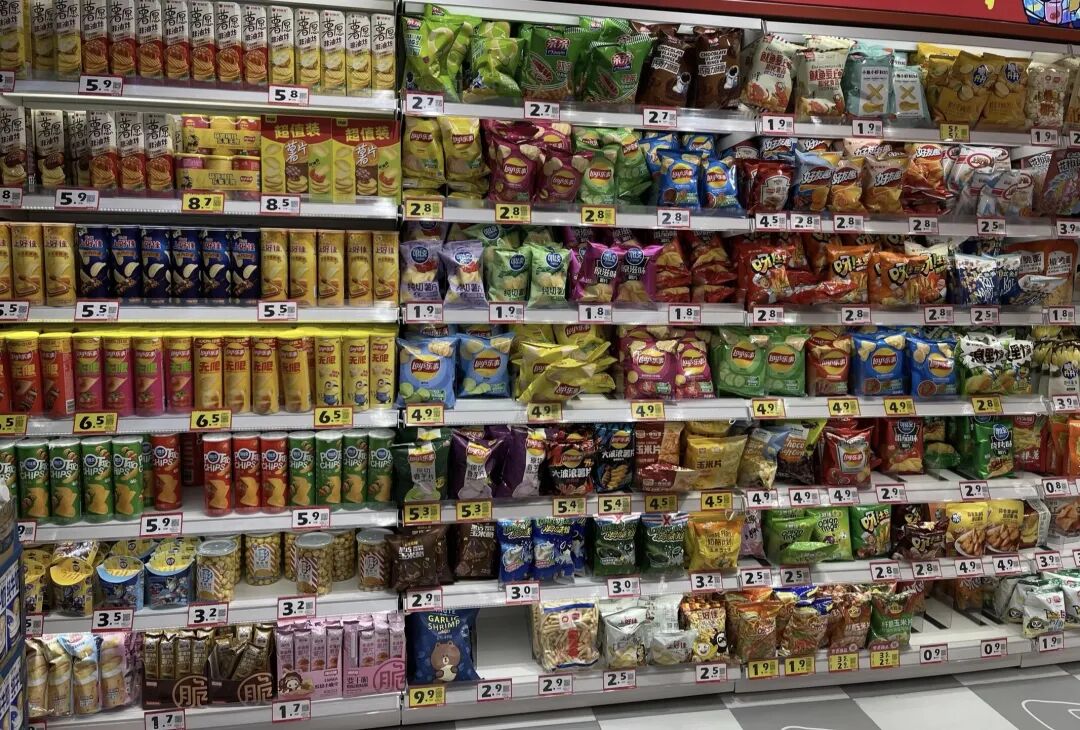
Core Viewpoint - The article discusses the challenges and misconceptions of expanding China's snack retail model into Southeast Asia, emphasizing that the unique conditions that allowed for the success of this model in China do not exist in Southeast Asia, leading to potential failures if the model is blindly replicated [1]. Group 1: Business Model Analysis - The core formula for China's snack retail (hard discount) is based on extreme low prices achieved through supply chain overflow, low fulfillment costs, and high turnover efficiency [3]. - The success of this model in China relies on a surplus of mature production capacity, which is absent in Southeast Asia [7]. - Southeast Asia's food industry is dominated by large corporations, making it difficult for new entrants to negotiate low prices or establish a competitive edge [10]. Group 2: Cost and Logistics Challenges - Importing products from China to Southeast Asia incurs high logistics and tariff costs, which can increase procurement costs by 30%-50% [11]. - The fragmented geography of Southeast Asia, with numerous islands, leads to high fulfillment costs and slow inventory turnover, making it difficult to maintain profitability [29]. Group 3: Consumer Behavior Differences - Southeast Asian consumers prefer small packaging and low prices due to their financial constraints, which contrasts with the bulk purchasing behavior seen in China [20][21]. - The low average transaction value in Southeast Asia can hinder the ability of snack retail stores to cover operational costs, as the model relies on high turnover and sales volume [22]. Group 4: Regulatory and Market Entry Barriers - The requirement for Halal certification in Indonesia and Malaysia presents significant barriers to entry for foreign snack retailers, complicating the process of introducing new products [30][32]. - The lengthy certification process can hinder the ability to quickly adapt to market trends, reducing the attractiveness of stores to consumers [36]. Group 5: Strategic Recommendations - Companies should focus on brand expansion rather than channel expansion, leveraging existing local distribution networks to introduce high-quality products [40]. - Local manufacturing should be prioritized to create products that cater to local tastes and price points, utilizing local resources and production techniques [41]. - Companies should be cautious of drawing parallels between different business models, as the operational dynamics of snack retail differ significantly from those of other sectors like beverage retail [43].
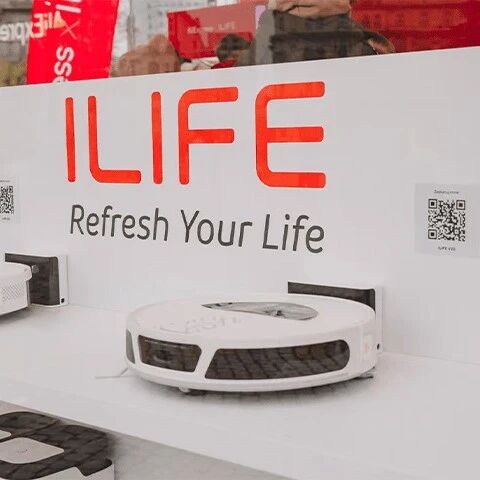
自断主营业务、营收砍半,一家老牌OEM扫地机器人公司的转型豪赌|Insight全球
36氪· 2026-02-04 09:39
Core Viewpoint - ILIFE has transitioned from being an OEM manufacturer to focusing entirely on its own brand, showcasing the evolution of Chinese manufacturing from export-oriented to brand-oriented strategies. The company's sales on AliExpress increased by over 300% in 2025, with significant success in the Polish market, where it became a leading cleaning brand [4][5][18]. Group 1: Company Transformation - ILIFE was previously a typical OEM factory, producing over 2 million units annually for various brands, including Ecovacs and Lukas [7][13]. - In 2024, ILIFE made a decisive choice to stop OEM operations and concentrate on its own brand, despite a short-term revenue decline from over 1 billion yuan to below 500 million yuan [17]. - The shift allowed ILIFE to gain direct market feedback, enhancing product development and responsiveness to consumer needs [17][18]. Group 2: Market Strategy - ILIFE chose to avoid the trend of adding excessive features to its products, instead focusing on the core cleaning function and cost-effectiveness [21][23]. - The company targets the mid to lower market segments, offering competitive pricing by integrating advanced features typically found in higher-end models into more affordable products [23][25]. - ILIFE's cost control measures, including in-house production and logistics, enable it to offer products that are generally 10-20 USD cheaper than competitors [24][25]. Group 3: Consumer Engagement - ILIFE utilizes direct communication with consumers through platforms like AliExpress, allowing for rapid product iteration based on real-time feedback [17][25]. - The company has successfully addressed specific consumer needs, such as the demand for "live water washing" technology, by being proactive in product development [25]. - This approach has positioned ILIFE as a significant player in the overseas market, demonstrating the potential for Chinese brands to thrive internationally [25].