基因编辑

Search documents
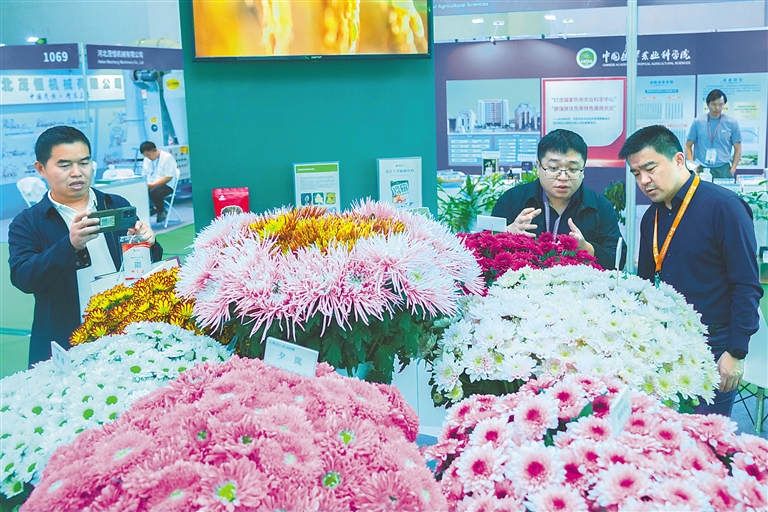
2026三亚国际种业科学家大会开幕
Hai Nan Ri Bao· 2026-01-16 02:09
Core Insights - The 2026 Sanya International Seed Industry Scientist Conference opened with over 30 academicians from various countries discussing new paths and opportunities for international seed industry development [4] Group 1: Conference Overview - The conference gathered more than 2,000 representatives, including over 100 agricultural university presidents and deans, focusing on cutting-edge seed technology and industry transformation [4] - The theme of the conference is "Innovation Leading Seed Industry Development, Cooperation Ensuring Global Food Security," featuring over 30 specialized forums and nearly 200 keynote reports covering key areas such as aquaculture breeding, livestock improvement, rice innovation, biotechnology, smart equipment, and functional agriculture [4] Group 2: International Collaboration and Research - The conference serves as a comprehensive international platform for strategic discussions, technological exchanges, industry cooperation, and talent cultivation, with top scientists and industry experts from countries like China, the USA, Germany, the Netherlands, and Russia engaging in deep discussions on frontier topics such as gene editing, synthetic biology, AI breeding, and nuclear technology applications in agriculture [4][5] - The event also includes the 2026 International Seed Industry Technology Expo, showcasing the latest achievements across the entire industry chain, from superior germplasm resources to new intelligent agricultural machinery and financial services [4] Group 3: Future Directions - The conference has evolved into the largest and highest-level international platform in China's seed technology field over the past five years, with a commitment to promoting collaborative innovation and international cooperation to address key challenges in the seed industry [5]

《自然》前瞻2026年科学大事件:科研AI、基因编辑、深空与深海的全面探索 | 红杉爱科学
红杉汇· 2026-01-14 00:03
Group 1 - The article predicts that AI will transition from being an assistant to an independent researcher, with the potential for AI to achieve its first significant scientific discovery by 2026 [2][3] - AI agents, which integrate multiple large language models, will be capable of executing complex scientific processes with minimal human intervention, including hypothesis generation, experiment design, data analysis, and paper writing [2] - Smaller, specialized AI models are emerging as efficient alternatives for specific scientific problems, requiring less data and focusing on mathematical representations rather than text generation [2] Group 2 - Two clinical trials for personalized gene therapies targeting rare genetic diseases in children are expected to start in 2026, building on the case of KJ Muldoon, who received CRISPR treatment [4] - A clinical trial in the UK is anticipated to reveal results for a single blood test that can detect approximately 50 types of cancer before symptoms appear, involving over 140,000 participants [5] Group 3 - 2026 is projected to be a busy year for lunar exploration, with NASA's Artemis II mission sending four astronauts on a ten-day mission to orbit the Moon, marking the first crewed lunar mission since the 1970s [6] - China's Chang'e 7 mission is planned for 2026, aiming to land near the Moon's south pole to search for water ice and study moonquakes [8] Group 4 - The European Space Agency plans to launch the Plato exoplanet survey satellite by the end of 2026, which will monitor over 200,000 stars to search for Earth-like planets [8] - The Chinese deep-sea drilling vessel "Dream" is set to conduct its first scientific mission in 2026, aiming to drill 11 kilometers deep in the Mariana Trench to collect upper mantle samples [11] Group 5 - The Large Hadron Collider at CERN will undergo a major upgrade in 2026, halting operations for three years to install a high-luminosity LHC, which will enhance data collection for rare process observations [11] - The Mu2e detector at Fermilab is expected to be completed in April 2026, focusing on the exploration of the mysterious subatomic particle, the muon [11]

生命、家园、深空与智能…… 今年可能迎来哪些关键性科技突破?
Xin Lang Cai Jing· 2026-01-12 18:00
Group 1: Scientific and Technological Advances - In 2026, significant breakthroughs in gene editing are anticipated, with clinical trials for personalized gene therapies for rare metabolic diseases planned in Philadelphia [8] - A major cancer detection clinical trial involving over 140,000 participants is expected to reveal results in 2026, potentially allowing for the detection of approximately 50 types of cancer through a single blood test [9] - AI is predicted to play a crucial role in the life sciences sector, particularly in biomarker detection, with the potential to move from detection to prediction [9] Group 2: Climate Change and Renewable Energy - The global average temperature is projected to exceed pre-industrial levels by 1.4 degrees Celsius in 2026, continuing a trend of rising temperatures [9] - Renewable energy is expected to surpass traditional energy sources in various sectors, with China leading the transition towards green and low-carbon energy [10] - China plans to add over 20 million kilowatts of wind and solar power capacity in 2026 as part of its commitment to increasing the share of renewable energy [10] Group 3: Space Exploration - 2026 is set to be a busy year for lunar exploration, with China's Chang'e 7 mission targeting the challenging lunar south pole [11] - Multiple crewed space missions are scheduled by China, including the Tianzhou 10 and Shenzhou 22 and 23 missions, marking significant advancements in their space program [11] - The European Space Agency plans to launch the Plato space telescope in late 2026 to monitor over 200,000 stars in search of habitable exoplanets [11] Group 4: AI in Research - AI is transforming research processes, with predictions of significant scientific breakthroughs driven by AI in 2026 [12] - The integration of multiple large language models for complex tasks is expected to become more common, reducing the need for human intervention [12] - Generative AI is leading technological change, with over two-thirds of chief economists anticipating its commercial value to materialize within the next year [12]

多笔里程碑款项到账,中国创新药“兑现价值” ,1.5万亿美元大市场加速成长
Jin Rong Jie· 2026-01-12 00:44
Group 1 - The core viewpoint of the articles highlights the acceleration of innovation in the biopharmaceutical sector in Guangzhou, focusing on monoclonal antibodies, vaccines, blood products, and diagnostic reagents, aiming for high-end and international development [1] - By 2025, the total value of China's innovation drug license-out transactions is expected to reach $135.655 billion, with an upfront payment of $7 billion and a total of 157 transactions, significantly surpassing the 2024 figures of $51.9 billion and 94 transactions [1] - The collaboration between Bai Li Tian Heng and Bristol-Myers Squibb (BMS) resulted in a milestone payment of $250 million, setting a record for domestic ADC projects, while other partnerships are also expected to yield substantial payments [1] Group 2 - The National Medical Products Administration reports that by the first half of 2025, China's innovation drug license-out transaction scale is nearing one-third of the global market, with 210 innovative drugs approved during the "14th Five-Year Plan" period [2] - The "15th Five-Year Plan" suggests that specialized funds for cell therapy and gene editing will exceed 30 billion yuan, indicating a strong future for these sectors [2] - The domestic innovation drug market is projected to grow, with the share of overseas revenue increasing from 15% in 2025 to 30% by 2030, contributing to a new growth driver for the industry [2]
生命、家园、深空与智能
Xin Lang Cai Jing· 2026-01-11 21:22
Key Insights - The year 2026 is anticipated to witness significant breakthroughs in scientific experiments, climate actions, and space missions, driven by advancements in artificial intelligence (AI) technology [1][2][3] Group 1: Medical Innovations - Gene editing technology is expected to gain momentum in 2026, with two clinical trials focusing on rare diseases, including personalized treatments for children with rare metabolic disorders [1][2] - AI is predicted to play a crucial role in disease screening and diagnosis, with a focus on AI-driven biomarker detection that may surpass traditional methods [2][3] - The intersection of gene editing and AI is expected to lead to effective new therapies for cancer and various genetic diseases [2] Group 2: Climate Action - The global average temperature is projected to exceed pre-industrial levels by 1.4 degrees Celsius in 2026, continuing a trend of rising temperatures [3] - The transition to renewable energy is deemed essential in combating climate change, with significant advancements in renewable energy sources outpacing traditional energy [3] - China aims to increase its renewable energy supply, with plans to add over 20 million kilowatts of wind and solar power capacity in 2026 [3] Group 3: Space Exploration - 2026 is set to be a busy year for lunar exploration, with China planning to launch the Chang'e 7 mission targeting the challenging lunar south pole [4] - The U.S. will focus on lunar missions, including the Artemis 2 mission, which will send astronauts to orbit the Moon [4][5] - Various space telescopes and observatories are expected to be active in 2026, including the launch of the Plato space telescope by the European Space Agency [5] Group 4: AI in Research - AI is transforming research processes, with predictions of significant scientific breakthroughs driven by AI in 2026 [6] - The development of small-scale AI models capable of learning from limited data is expected to be a focus area [6] - The integration of generative AI is anticipated to create commercial value across various sectors in the coming year [6]
生命、家园、深空与智能——2026年全球科技展望
Xin Hua She· 2026-01-08 14:02
Group 1: Medical Innovations - In 2026, gene editing technology is expected to gain momentum, with two significant clinical trials focusing on rare metabolic diseases and immune system genetic disorders [2] - A cancer detection clinical trial involving over 140,000 participants is anticipated to reveal results in 2026, potentially identifying around 50 types of cancer through a single blood test [2] - AI is predicted to play a crucial role in disease screening and diagnosis, with a focus on AI-driven biomarker detection in the life sciences sector [2][3] Group 2: Climate Change and Renewable Energy - The global average temperature is projected to exceed pre-industrial levels by 1.4 degrees Celsius in 2026, continuing a trend of rising temperatures [3] - Renewable energy is expected to surpass traditional energy sources, with significant contributions from China, which plans to add over 20 million kilowatts of wind and solar power capacity in 2026 [3][4] Group 3: Space Exploration - 2026 is set to be a busy year for lunar exploration, with China's Chang'e 7 mission targeting the challenging lunar south pole [5] - The U.S. Artemis 2 mission aims to send astronauts on a lunar flyby, marking the first crewed lunar mission in over 50 years [6] - Various countries, including India and Japan, have planned significant space missions, including crewed flights and solar observation [6][7] Group 4: AI in Research - AI is transforming research processes, with predictions of significant scientific breakthroughs driven by AI in 2026 [8] - The integration of multiple large language models for complex tasks is expected to become more common, enhancing research efficiency [8] - AI's influence is anticipated to expand across various sectors, with over two-thirds of economists expecting it to generate commercial value within the year [8]
焦点访谈 | 李博洋:细胞“打工”造万物 解码生物制造的产业潜能
Xin Lang Cai Jing· 2026-01-08 11:43
Core Insights - The article discusses the emerging field of biomanufacturing, which is recognized as one of the six future industries in China's 14th Five-Year Plan, highlighting its potential to transform various sectors through innovative production methods [11][32][34]. Group 1: Definition and Process of Biomanufacturing - Biomanufacturing involves utilizing biological entities, such as microorganisms and plant or animal cells, to metabolize raw materials into desired products, effectively turning cells into small factories [5][26]. - The process includes maintaining optimal conditions for cell growth, such as temperature and pH, and providing sufficient nutrients like carbon dioxide and hydrolyzed agricultural waste [5][26]. - The production capabilities of biomanufacturing can replace traditional agricultural methods, as seen with artemisinin production, which can be synthesized in a single container rather than requiring extensive farming [32][34]. Group 2: Market Potential and Industry Growth - The biomanufacturing industry in China reached a total scale of 1.1 trillion yuan during the 14th Five-Year Plan period, indicating significant growth potential [11][32]. - China's unified large market and comprehensive manufacturing system provide a strong foundation for developing new fields such as bio-based materials and biopharmaceuticals [34]. - The integration of biomanufacturing with over two-thirds of existing industries, including traditional chemical sectors, presents opportunities for efficiency improvements and greener production methods [34]. Group 3: Technological Advancements and Innovations - Recent breakthroughs in life sciences and synthetic biology, including gene sequencing and editing technologies, are being widely applied in biomanufacturing, leading to transformative changes in production methods [9][30]. - The establishment of national key laboratories and innovation platforms has positioned China as a leader in biomanufacturing research, with over 20% of global publications and patent applications in this field [36][37]. - The development of artificial intelligence-assisted tools for synthetic biology is enhancing the efficiency of strain design and selection processes, facilitating the production of specific therapeutic compounds [34][36]. Group 4: Infrastructure and Support for Startups - The construction of pilot testing platforms is crucial for supporting biomanufacturing startups, allowing them to transition from laboratory research to large-scale production [39][41]. - Regions like Hunan are investing in infrastructure to support biomanufacturing, including a 330-acre acceleration factory set to accommodate multiple startups for large-scale production by 2026 [39][41]. - Local governments are also creating supportive regulations and funding mechanisms to foster the growth of biomanufacturing clusters, enhancing the industry's long-term viability [41]. Group 5: Future Outlook - The rapid development and market expansion of biomanufacturing in China indicate a promising future, with ongoing efforts to innovate and apply biomanufactured products across various sectors [22][43].

AI赋能 拓展医疗新领域
Huan Qiu Wang Zi Xun· 2026-01-08 03:14
Group 1: Russia's Health Project and AI Development - Russia has launched a national health project called "New Technologies for Health Protection," with a budget of 37.5 billion rubles planned for 2025-2027, focusing on enhancing medical research efficiency and ensuring technological sovereignty [1] - The project supports clinical trials for 8 original drugs targeting cancer and cardiovascular diseases, the development of 12 original medical devices, and 8 technologies for treating neurodegenerative diseases [1] - Yandex, Russia's largest search engine, has developed a pediatric MRI analysis tool, marking it as one of the first AI medical products specifically for children, adhering to strict data security standards [1] Group 2: Advances in Neurodegenerative Disease Research - The Peter the Great St. Petersburg Polytechnic University has made progress in neurodegenerative disease research, completing preclinical trials of a compound named C20, which reduces amyloid plaque in Alzheimer's disease model mice without affecting survival or genomic stability [2] Group 3: AI and Digital Health in Germany - The German Cancer Research Center (DKFZ) has released an AI-based cancer imaging analysis tool that identifies early tumor characteristics with unprecedented speed and accuracy [11] - The Fraunhofer Society is developing new biosensors and AI algorithms for real-time monitoring of chronic disease patients, aiming to translate research into practical digital health products [11] - Munich University and other institutions are advancing the development of "digital twins" of the human body to simulate drug metabolism and disease progression, potentially accelerating virtual clinical trials [11] Group 4: Synthetic Biology Legislation in South Korea - South Korea's National Assembly has passed the "Synthetic Biology Promotion Act," establishing synthetic biology as a core national technology and aiming to enhance global competitiveness in this field [14] - The act mandates the Ministry of Science and ICT to develop a national plan every five years, creating a collaborative innovation system among government, research, and industry [14] - The government plans to invest 126.3 billion won in a national "biomanufacturing factory," which will automate the design, construction, and testing of biological components using AI technology [14] Group 5: Vaccine Development and Public Health in South Africa - Biovac has received regulatory approval to begin clinical trials for an oral cholera vaccine, marking the first locally produced vaccine in South Africa in over fifty years [16] - The University of Cape Town's South African Tuberculosis Vaccine Initiative has completed a Phase II clinical trial for a new tuberculosis vaccine candidate, achieving a 54% efficacy rate [16] - South African researchers have discovered broadly neutralizing antibodies effective against multiple HIV strains prevalent in Southern Africa, collaborating with the NIH to initiate Africa's first long-acting injectable antiretroviral drug trial for young women [16]
西藏药业:铸就雪域高原医药标杆
Zheng Quan Shi Bao· 2026-01-06 18:21
Core Viewpoint - During the "14th Five-Year Plan" period, Tibet Pharmaceutical has established itself as a benchmark enterprise in the Tibetan medicine industry, focusing on innovation and responsibility while achieving significant results in the modernization and high-quality development of ethnic medicine [1][2] Group 1: Business Development - Tibet Pharmaceutical has built an industrial layout covering Tibet, Sichuan, Shanghai, Hong Kong, and overseas, with multiple subsidiaries and a full-chain management platform [1] - The company’s core products focus on cardiovascular treatments, forming an industrial pattern that integrates biopharmaceuticals, Tibetan medicine, traditional Chinese medicine, and chemical drugs [1] - In 2024, Tibet Pharmaceutical achieved a revenue of 2.807 billion yuan, with a compound annual growth rate of 20% over the past five years; net profit attributable to shareholders was 1.051 billion yuan, a year-on-year increase of 31.26% [1] Group 2: Product Innovation - Tibet Pharmaceutical has achieved several industry firsts, including the self-developed "New Active Substance" (recombinant human brain natriuretic peptide injection), which is the first gene-engineered new drug for acute heart failure in China [1] - The exclusive Tibetan medicine "Nodikon Capsule" has been included in the national essential drug list and medical insurance directory, marking a significant product in the modernization of Tibetan medicine [1] - The acquisition of "Imdur" (isosorbide mononitrate sustained-release tablets) from AstraZeneca for $190 million enhances the company's portfolio of cardiovascular drugs [1] Group 3: Future Plans and Social Responsibility - In 2025, Tibet Pharmaceutical plans to invest $60 million in Ruizheng Gene to enter the gene editing sector, with its product ART001 recognized as an orphan drug by the FDA [2] - The company has invested 300 million yuan in Morningstar Pharmaceuticals to secure exclusive commercial sales rights for the lung cancer drug "Zolmitriptan" in mainland China, preparing for long-term growth [2] - Tibet Pharmaceutical has integrated social responsibility into its operations, contributing a total tax amount of 2.899 billion yuan, with 2.608 billion yuan paid in Tibet, and donating over 70 million yuan in medicines and materials [2] - Looking ahead to the "15th Five-Year Plan," Tibet Pharmaceutical aims to pursue growth through both internal development and external expansion, while continuing to contribute unique value to the pharmaceutical industry [2]


中农种源获中科创星A+轮投资:打造领先的猪设计育种技术平台
IPO早知道· 2026-01-06 01:19
Core Viewpoint - Zhongnong Zongyuan is a leading pig breeding technology platform in China, combining top-notch research capabilities with mature industrialization abilities, recently completing an A+ round of financing to further its technology development and commercialization [3][5]. Group 1: Company Overview - Zhongnong Zongyuan was established in October 2022 and is a national high-tech enterprise incubated by the Shenzhen Agricultural Genomics Research Institute of the Chinese Academy of Agricultural Sciences [3]. - The company has completed several rounds of financing amounting to hundreds of millions of RMB, with notable investors including Sequoia China Seed Fund and Lenovo Ventures [3]. - The company has established a collaborative network across multiple locations in Shenzhen, Tianjin, Hainan, and Wuhan, focusing on disruptive breeding technology and disease model creation [3]. Group 2: Technology and Product Development - Zhongnong Zongyuan has developed a diverse product pipeline, including standardized disease model pigs for new drug development and disease research [4]. - The company has achieved a full-chain technology closed loop from design breeding to production application, leveraging its leading somatic cell cloning technology and proprietary "Zongyuan Zhixin" liquid phase chip [5]. - The company is positioned favorably in the context of global regulatory policy optimization for gene-edited animals, with significant developments in the U.S. and EU regarding gene editing regulations [5]. Group 3: Strategic Importance and Market Position - The company aims to drive independent innovation in animal breeding technology and ensure genetic resource security, aligning with China's agricultural technology and seed industry revitalization strategies [6]. - Zhongnong Zongyuan's focus on precision editing for key traits such as disease resistance and meat quality is expected to provide a competitive edge in the breeding industry, particularly in the context of China's reliance on imported breeding stock [6]. - The company is set to expand its breeding bases and international market presence, with plans to establish subsidiaries in Hainan, Tianjin, and Wuhan, and a new subsidiary in Hunan [5][6]. Group 4: Investment and Future Growth - The recent financing round will primarily support the advancement of core product lines, expansion of breeding bases, and international market strategies [5]. - The company is anticipated to experience explosive growth as domestic and international regulatory policies for gene editing become clearer, enhancing its market share and technological barriers [7].