
央行加息

Search documents
日本央行加息25基点至三十年来最高水平0.75%,符合市场预期
Hua Er Jie Jian Wen· 2025-12-19 03:20
Core Viewpoint - The Bank of Japan raised interest rates by 25 basis points to a 30-year high of 0.75%, aligning with market expectations [1] Group 1 - The interest rate hike marks the highest level in three decades, indicating a significant shift in monetary policy [1]
10年期公债收益率创18年来新高,受财政疑虑打击
Sou Hu Cai Jing· 2025-12-17 06:26
Core Viewpoint - Japan's 10-year government bond yield reached an 18-year high due to concerns over government spending, rising by 3 basis points to 1.980%, the highest since June 2007 [1] Group 1: Government Spending Concerns - Reports indicate that the draft budget for fiscal year 2026 may exceed 120 trillion yen, setting a historical record, surpassing the current fiscal year's 115 trillion yen [1] - Increased spending concerns have led investors to sell off longer-term Japanese government bonds [1] Group 2: Market Reactions - Shorter-term bonds are being sold off in anticipation of a potential interest rate hike by the Bank of Japan [1] - The pressure on the 10-year government bond yield intensified in the afternoon, following weak results from the Bank of Japan's bond purchase operations for bonds with around 10 years of maturity [1]
日本薪资增长势头延续 暗示央行加息门槛已满足
Xin Lang Cai Jing· 2025-12-15 12:32
Core Viewpoint - The Bank of Japan's report indicates strong wage growth momentum despite U.S. tariffs, which is a key consideration for the central bank's interest rate hike this week [1][2]. Group 1: Wage Growth - The Bank of Japan states that most reports from headquarters and branches indicate that companies expect wage increases for the fiscal year 2026 to be consistent with the high wage growth achieved in fiscal year 2025 [1][2]. - The central bank's governor, Kazuo Ueda, mentioned earlier this month that the bank will actively collect wage growth data to make appropriate decisions regarding interest rate hikes at the meeting ending this Friday [1][2]. Group 2: Interest Rate Expectations - The positive findings in the report make it easier for Governor Ueda to justify raising the benchmark interest rate to 0.75%, a decision anticipated by 50 economists surveyed by Bloomberg [1][2]. - According to overnight swap market pricing, traders estimate a 94% probability of an interest rate hike this week [1][2]. Group 3: Currency and Market Sentiment - On Monday, the yen outperformed other G-10 currencies as investors increased bets on the Bank of Japan raising interest rates later this week, with the yen rising 0.4% to 155.15 yen per dollar as of 5:38 PM Tokyo time [1][2]. - The quarterly Tankan survey released by the Bank of Japan shows that confidence among large manufacturers has reached a four-year high, reinforcing market expectations for a rate hike [1][2]. - The Chief Cabinet Secretary, Hirokazu Matsuno, stated that the specific implementation of monetary policy should be decided by the Bank of Japan [1][2].
【央行圆桌汇】主要央行政策路径分化 英国央行或步美联储后尘降息(2025年12月15日)
Sou Hu Cai Jing· 2025-12-15 04:14
Central Bank Dynamics - President Trump favors Kevin Walsh or Kevin Hassett as the next Federal Reserve Chair, emphasizing the need for interest rate cuts and suggesting a target rate of 1% or lower [1] - The Federal Reserve announced a 25 basis point cut to the federal funds rate, bringing it to a target range of 3.5% to 3.75%, marking the third consecutive cut this year and the sixth since the current easing cycle began in September 2024 [1] - The Bank of Canada maintained its benchmark interest rate at 2.25%, citing the impact of U.S. tariffs on various sectors but overall resilience in the Canadian economy [4] - The Swiss National Bank kept its policy rate at 0%, signaling a commitment to intervene in the foreign exchange market if necessary, amid global economic uncertainties [5] - The Reserve Bank of Australia held its benchmark rate steady at 3.60%, indicating the end of the rate-cutting cycle and a focus on assessing inflation [5] Federal Reserve Officials' Perspectives - Fed Chair Powell stated that monetary policy has no preset path and will be data-driven, acknowledging persistent inflation but noting improvements in core inflation [2] - San Francisco Fed President Daly supported the rate cut, emphasizing the need to balance inflation control with labor market protection [2] - Chicago Fed President Goolsbee expressed concerns about assuming current inflation is temporary and advocated for more data before further rate cuts [3] - Kansas City Fed President Schmidt opposed the rate cut, citing ongoing high inflation and the need for a moderately tight monetary policy [3] - Cleveland Fed President Harmack hinted at a neutral policy stance, preferring a slightly more restrictive approach due to persistent inflation [3] Market Observations - The market anticipates that the European Central Bank will maintain its benchmark rate at 2%, with a focus on economic growth forecasts [8] - The Bank of England is expected to lower rates, with a high probability of a 25 basis point cut to 3.75% due to rising unemployment and slowing inflation [9] - The Federal Reserve's dot plot indicates only one rate cut in 2026, suggesting a more hawkish stance than market expectations [10] - The market pricing shows expectations for rate cuts across major central banks, with the Fed expected to cut by 54 basis points by the end of 2026 [11]
日本国债期货小幅走高,投资者消化日本央行短观调查
Jin Rong Jie· 2025-12-15 01:11
Core Viewpoint - Japanese government bond futures rose slightly in early Tokyo trading as investors digested the Bank of Japan's quarterly Tankan survey results, which showed a large manufacturer sentiment index of 15, aligning with market expectations [1] Group 1: Economic Indicators - The large manufacturer sentiment index reported by the Bank of Japan was 15, matching market expectations [1] - Market participants are anticipating the upcoming Bank of Japan meeting, with U.S. employment data set to be released prior to this meeting [1] Group 2: Market Expectations - Citigroup's economist, Masahiko Akiyama, indicated that if the U.S. employment data does not cause significant market turmoil as seen last summer, the Bank of Japan is expected to raise interest rates as scheduled [1] - A key focus for the Bank of Japan will be how much they will hint at future rate hikes amid the ongoing trend of a weakening yen [1] Group 3: Market Movements - The ten-year Japanese government bond futures increased by 0.09 yen, reaching 134.14 yen [1]
欧洲债市:德债收益率升至3月来最高 交易员关注欧洲央行加息可能性
Xin Lang Cai Jing· 2025-12-08 18:48
欧洲政府债券大跌,德国国债收益率攀升至3月以来的最高水平,交易员开始押注欧洲央行明年可能加 息。 德国五年期国债收益率上涨9个基点至2.49%,为3月18日以来最高水平。 货币市场已押注欧洲央行在2026年12月前加息25个基点的概率为30%,这是自该央行去年开始降息以 来,市场对加息行动最激进的押注。 英国国债也下跌,五年期国债收益率上涨7个基点至4%;交易员正等待英国央行货币政策委员会成员 Alan Taylor和Clare Lombardell周一晚些时候的发言,此前数据显示英国薪酬增长加速。 市场: 德国国债收益率上涨8个基点至2.87%; 德国国债期货跌80点至127.35%; 意大利10年期国债收益率上涨9个基点至3.57%; 欧洲政府债券大跌,德国国债收益率攀升至3月以来的最高水平,交易员开始押注欧洲央行明年可能加 息。 德国五年期国债收益率上涨9个基点至2.49%,为3月18日以来最高水平。 货币市场已押注欧洲央行在2026年12月前加息25个基点的概率为30%,这是自该央行去年开始降息以 来,市场对加息行动最激进的押注。 英国国债也下跌,五年期国债收益率上涨7个基点至4%;交易员正等待英国央 ...
-2.3%!日本GDP超预期萎缩,十年期国债收益率一度下行
Hua Er Jie Jian Wen· 2025-12-08 03:35
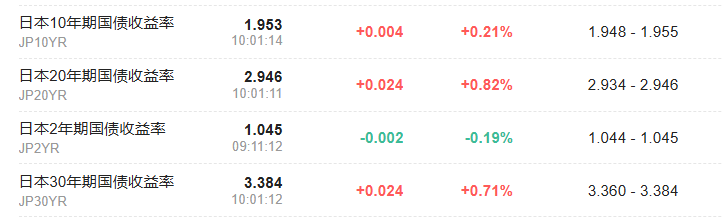
Core Viewpoint - Japan's economy contracted more than initially estimated in the third quarter, marking the first decline in six quarters, which supports the rationale for further economic stimulus measures by the government [1]. Economic Data Summary - The revised GDP for the third quarter showed an annualized contraction of 2.3%, worse than the preliminary estimate of 1.8% and the median forecast of a 2% decline, primarily due to lower-than-expected corporate spending [1]. - Capital expenditure fell by 0.2% compared to the previous quarter, contrasting with the initial estimate of a 1.0% increase, while private consumption was revised up from a 0.1% increase to a 0.2% increase [3]. - In October, real wages decreased by 0.7% year-on-year, marking the tenth consecutive month of decline, although nominal wages rose by 2.6%, indicating ongoing wage growth momentum that still lags behind inflation [3]. Market Reaction - Following the data release, the yield on Japan's 10-year government bonds declined, with the current yield at 1.953%, while the 20-year bond yield increased to 2.946% [1][2]. - Despite the weak economic data, the market does not expect this to alter the Bank of Japan's stance on further interest rate hikes, with a potential rate increase anticipated in December [4].

消息人士:日本央行12月加息几成定局 政府不予干涉
Xin Hua Cai Jing· 2025-12-04 06:53
新华财经北京12月4日电据路透社报道,三位日本政府消息人士称,日本央行很可能在12月加息,而政 府预计将支持这一决定。消息人士称,日本央行似乎准备将政策利率从0.5%上调至0.75%,这也是行长 植田和男周一在演讲中发出的信号。这将是自今年1月以来的首次加息。 (文章来源:新华财经) 其中一位消息人士称:"如果日本央行想在本月加息,请自行决定。这是政府的立场。"他补充说,央行 本月进行加息几乎是确定无疑的。 植田和男周一表示,日本央行将考虑本月加息的"利弊",预示着在12月18日至19日的会议上加息的可能 性很大。这些言论导致市场对12月加息的定价约为80%的可能性。市场的关注点可能会转向央行关于其 最终会将利率提高到何种程度的措辞,而植田和男目前对这一话题仍然模棱两可。 ...
受日本央行加息预期影响 日经指数大幅收跌
Sou Hu Cai Jing· 2025-12-01 08:17
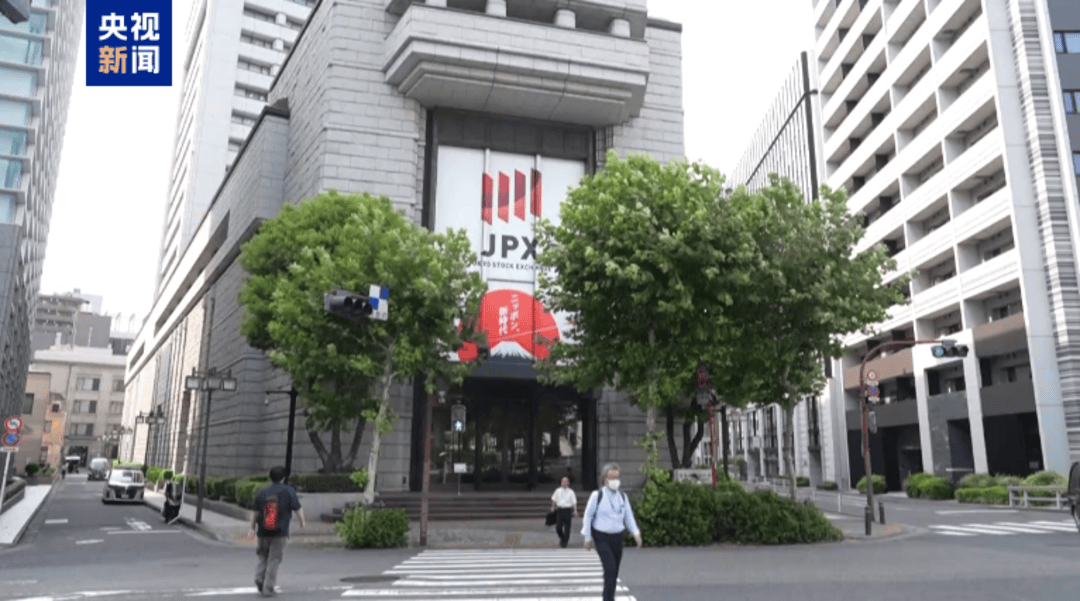
1日下午,日经225指数一度较上一交易日收盘下跌超过1000点,跌幅达2.05%。 日本央行行长植田和男1日表示,本月18日、19日召开的下次货币政策会议"将对是否加息作出恰当判断"。受植田发言影响,市场对日本央行将在下次会 议上进一步加息的预期升温。国债遭抛售,作为日本长期利率指标的新发10年期国债收益率一度升至1.875%,这是自2008年6月以来的最高水平。 当地时间12月1日,受日本央行加息预期影响,日本东京股市日经225指数大幅收跌。 ...
日本财务大臣、央行:警告日元贬值或干预,关注12月加息信号
Sou Hu Cai Jing· 2025-11-30 10:06
Core Viewpoint - The Japanese Finance Minister, Shunichi Suzuki, stated that the recent depreciation of the yen is not driven by fundamental factors, indicating potential intervention in the foreign exchange market to address excessive volatility and speculative movements [1] Group 1: Currency Market Dynamics - The yen has experienced significant depreciation recently, which has raised concerns in the foreign exchange market [1] - The Finance Minister emphasized the need to monitor and potentially intervene in the currency market to stabilize the yen [1] Group 2: Central Bank Insights - Market participants are closely watching the upcoming speech from the Bank of Japan Governor, Kazuo Ueda, for any signals regarding a possible interest rate hike in the December meeting [1] - The statement aligns with the joint declaration made in September by Japan and the U.S., which asserted that exchange rates should be determined by market forces [1]