
市场化

Search documents
大连市渔业船舶交易服务中心完成首笔交易
Liao Ning Ri Bao· 2025-12-07 00:54
日前,新成立的大连市渔业船舶交易服务中心(以下简称"交易中心")完成首笔交易,标志着我省 渔业船舶交易进入规范化、市场化的新阶段,将为全省老旧渔船更新改造及"木改钢"工作提供高效服务 支撑。 交易中心于今年11月25日正式挂牌,位于大连市行政服务中心内,由辽宁省农业农村厅、大连市海 洋发展局指导,中国渔业互保协会、辽宁省渔业互保协会联合设立,属民办非企业单位。交易中心聚焦 全省渔业发展需求,以规范渔业船舶交易秩序、保障交易双方合法权益为核心,通过整合资源、优化服 务,助力全省渔业产业转型升级。 范小明介绍,交易双方签订合同后,交易中心将全程代办老旧渔船注销、拆解、变更等后续手续, 船主将顺利获得全额"减船转产"补助,收购方在获得网具指标批准书后,将建造更安全的大马力钢质渔 船。 交易中心的筹建,得到各相关部门的高度重视。大连市政府专题召开调度会推进,仅用一周时间便 完成筹备并投入运营。目前,交易中心已整合大连市16条渔船资源上线发布,下一步将逐步拓展至全省 范围,持续推动老旧渔船更新改造和"木改钢"工作落地见效。 "我们为渔民和渔业企业提供免费'一站式'服务。"大连市渔业船舶交易服务中心主任范小明介绍, 交易 ...
茅台新任董事长陈华:茅台产品、渠道及终端体系,将围绕“市场化”推进
Xin Lang Cai Jing· 2025-11-28 07:17
Core Viewpoint - The core focus of the article is on Guizhou Moutai's commitment to advancing its marketing and market-oriented transformation as a crucial strategy for navigating the current economic cycle and achieving better development [1] Group 1: Company Strategy - Guizhou Moutai will fully promote the transformation towards a market-oriented marketing strategy, which is a key concern for stakeholders [1] - The company views "marketization" as an inevitable trend and a necessary path for its future growth [1] - Moutai's product, channel, and terminal systems will all be developed with a focus on "marketization" to ensure steady progress [1]

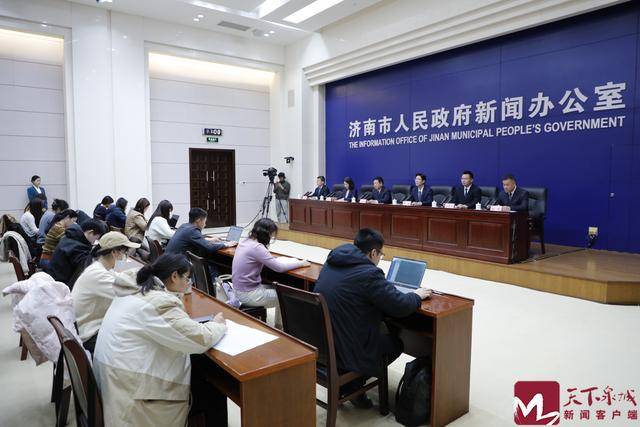
济南将持续清理废除妨碍统一市场和公平竞争的规定和做法,纠治排除、限制市场竞争行为
Sou Hu Cai Jing· 2025-11-26 05:21
Core Viewpoint - Jinan City is actively promoting the construction of a law-based government and aims to become a national model for law-based governance, focusing on fair competition and market regulation [1][3]. Group 1: Fair Competition Implementation - The implementation of the fair competition system is a key task for optimizing the business environment and establishing a national model for law-based governance in Jinan [3]. - A joint meeting composed of 24 departments has been established to coordinate and promote fair competition efforts, having held 8 meetings and addressed 12 topics since its inception [3]. - Jinan is the first pilot city in Shandong Province to require fair competition review as a prerequisite for policy measures, ensuring that policies affecting economic activities undergo fair competition review before legal review [3][4]. Group 2: Policy Review and Regulation - A four-level review process has been established, including self-review by departments, third-party evaluations, joint reviews by market regulation departments, and legal reviews by judicial departments [3]. - In the current year, a total of 337 policy measures have been reviewed, with 82 at the municipal level and 255 at the district and county levels, promoting a fair market environment from the source [3][4]. - Continuous special inspections have been conducted over three years to address inappropriate market interventions, resulting in the identification of 1,883 policy measures related to economic activities [4]. Group 3: Future Initiatives - Jinan will strengthen the enforcement of fair competition reviews and ensure the responsibilities of document drafting units are upheld [4]. - The city plans to continue identifying and eliminating regulations that hinder market competition and promote fair competition through various outreach activities [4].

黄奇帆:新格局下中国开放的新特点、新成就和新重点
Xin Lang Zheng Quan· 2025-11-11 23:07
Core Viewpoint - The new economic framework in China is characterized by a "dual circulation dynamic balance" system, emphasizing domestic circulation while promoting international engagement to foster mutual growth [1] Summary by Relevant Categories Economic Characteristics - China’s economy has developed five new characteristics over the past decade: 1. Trade policy has shifted from an export-oriented approach to a balanced focus on both imports and exports [1] 2. Capital flow has established a dual balance between outbound investments and inbound foreign capital [1] 3. Regional opening policies have evolved from a coastal-first strategy to a more balanced and coordinated approach across all regions, including East, South, West, North, and Central [1] 4. The scope of foreign trade has expanded from traditional manufacturing to include finance, education, healthcare, and service trade, creating a comprehensive and multi-channel opening pattern [1] 5. The focus has shifted from merely increasing flow and factors of openness to managing according to Free Trade Agreement (FTA) requirements, fostering a market-oriented, rule-of-law, and international business environment [1]
股指期货将偏弱震荡,黄金、白银期货将震荡整理,铁矿石、原油、PTA、PVC、豆粕期货将偏弱震荡
Guo Tai Jun An Qi Huo· 2025-11-07 04:01
Report Industry Investment Rating No relevant content provided. Core Viewpoints - Through macro - fundamental and technical analysis, the report predicts the trends of various futures contracts on November 7, 2025, including weak oscillations for stock index futures, iron ore, crude oil, PTA, PVC, and soybean meal futures; shock consolidation for gold and silver futures; and wide - range oscillations for some other futures contracts [2][3][5][6]. Summary by Directory 1. Macro News and Trading Tips - China emphasizes the construction of Hainan Free Trade Port, promotes trade and investment liberalization, and responds to the issue of Nexperia. The Chinese government also conducts reverse repurchase operations and adjusts administrative divisions. In the US, Trump reaches an agreement on GLP - 1 diet pills, and the employment situation is severe, leading to an increase in interest - rate cut expectations. The US government shutdown affects inflation data and the aviation industry. The UK central bank maintains the interest rate, and the expectation of an interest - rate cut in December increases [8][9][10]. - On November 6, international precious - metal futures generally closed down, oil prices declined, and most London base metals rose. Indonesia stops approving applications for nickel ore processing plants, and Saudi Aramco lowers the price of crude oil sold to Asia [10][11]. 2. Futures Market Analysis and Forecast Stock Index Futures - On November 6, major stock - index futures contracts such as IF2512, IH2512, IC2512, and IM2512 showed different degrees of increase. The A - share market rose, with an increase in trading volume. MSCI adjusted its index, and Hong Kong stocks also rose. US and European stock markets generally fell [12][13][14][15][16][17]. - It is expected that on November 7, stock - index futures will show weak oscillations, and in November 2025, they will likely have wide - range oscillations [17][18]. Treasury Bond Futures - On November 6, ten - year and thirty - year treasury - bond futures contracts generally declined. The central bank conducted reverse - repurchase operations, resulting in a net withdrawal of funds. It is expected that on November 7, ten - year and thirty - year treasury - bond futures contracts will have wide - range oscillations [34][35][36][38][39]. Precious - Metal Futures - On November 6, gold and silver futures contracts rose. It is expected that in November 2025, the continuous main contracts of gold and silver futures will have wide - range oscillations, and on November 7, they will show shock consolidation [40][48][49]. Base - Metal Futures - On November 6, copper, aluminum, alumina, and carbon - lithium futures contracts showed different degrees of increase. It is expected that in November 2025, copper, aluminum, and carbon - lithium futures will have wide - range oscillations, and alumina futures will have weak wide - range oscillations. On November 7, copper and alumina futures will have weak oscillations, and aluminum futures will have wide - range oscillations and attempt to break through resistance levels [53][59][63][67][68]. Building - Material and Energy - Chemical Futures - On November 6, futures contracts such as rebar, hot - rolled coil, iron ore, coking coal, glass, soda ash, crude oil, PTA, PVC, methanol, and soybean meal showed different trends. It is expected that in November 2025, most of these futures will have wide - range oscillations. On November 7, rebar, glass, and soda - ash futures will show shock consolidation; hot - rolled coil, iron ore, coking coal, crude oil, PTA, PVC, methanol, and soybean meal futures will have weak oscillations; and carbon - lithium futures will have strong oscillations [70][76][79][84][87][91][95][98][101][103][104].
期指:关注今日进出口数据-20251107
Guo Tai Jun An Qi Huo· 2025-11-07 03:01
1. Report Industry Investment Rating - No relevant content provided 2. Core Viewpoints - On November 6, all four stock index futures contracts for the current month rose. IF rose 1.39%, IH rose 1.06%, IC rose 1.65%, and IM rose 1.07% [1] - On the trading day, the total trading volume of stock index futures declined, indicating a cooling of investors' trading enthusiasm. Specifically, the total trading volume of IF decreased by 5,203 lots, IH by 1,639 lots, IC by 13,675 lots, and IM by 35,254 lots. In terms of positions, the total positions of IF decreased by 5,389 lots, IH by 744 lots, IC by 6,940 lots, and IM by 16,927 lots [1][2] - The trend strength of IF and IH is 1, and that of IC and IM is also 1. The trend strength value ranges from -2 to 2, with -2 being the most bearish and 2 being the most bullish [6] 3. Summary by Related Catalogs 3.1期指期现数据跟踪 - **IF Contracts**: The closing prices of IF2511, IF2512, IF2603, and IF2606 were 4,683.8, 4,670.8, 4,638, and 4,598.8 respectively, with increases of 1.39%, 1.39%, 1.34%, and 1.40%. The trading volumes were 25,490, 71,116, 11,664, and 3,143 respectively, with changes of -2,275, -2,100, +258, and -1,086. The positions were 41,334, 154,733, 56,466, and 12,118 respectively, with changes of -2,507, -1,516, -1,020, and -346 [1] - **IH Contracts**: The closing prices of IH2511, IH2512, IH2603, and IH2606 were 3,043, 3,041.4, 3,038, and 3,032.8 respectively, with increases of 1.06%, 1.04%, 0.91%, and 0.87%. The trading volumes were 10,774, 34,423, 4,594, and 1,690 respectively, with changes of -418, -458, -607, and -156. The positions were 14,300, 61,694, 16,259, and 3,981 respectively, with changes of -862, -181, +156, and +143 [1] - **IC Contracts**: The closing prices of IC2511, IC2512, IC2603, and IC2606 were 7,304.6, 7,246.4, 7,078, and 6,893 respectively, with increases of 1.65%, 1.69%, 1.66%, and 1.76%. The trading volumes were 26,211, 85,816, 16,081, and 5,380 respectively, with changes of -3,023, -7,348, -2,002, and -1,302. The positions were 46,862, 134,122, 51,320, and 17,191 respectively, with changes of -1,474, -2,634, -2,243, and -589 [1] - **IM Contracts**: The closing prices of IM2511, IM2512, IM2603, and IM2606 were 7,487.8, 7,405, 7,186.8, and 6,974.6 respectively, with increases of 1.07%, 1.03%, 1.01%, and 1.05%. The trading volumes were 34,963, 138,409, 21,128, and 8,930 respectively, with changes of -6,787, -21,508, -5,090, and -1,869. The positions were 63,769, 176,903, 77,197, and 31,987 respectively, with changes of -3,317, +40,147, -1,355, and +413 [1] 3.2期指前20大会员持仓增减 - **IF Contracts**: For IF2511, long positions decreased by 1,794 and net long positions decreased by 4,433; short positions decreased by 1,129 and net short positions decreased by 3,098. For IF2512, long positions decreased by 1,767 and short positions decreased by 765. For IF2603, long positions decreased by 549 and short positions decreased by 800. For IF2606, long positions decreased by 323 and short positions decreased by 404 [5] - **IH Contracts**: For IH2511, long positions decreased by 662 and net long positions increased by 607; short positions decreased by 626. For IH2512, long positions increased by 939 and short positions increased by 436, with net short positions decreasing by 80. For IH2603, long positions increased by 330 and short positions increased by 110. The data for IH2606 was not announced [5] - **IC Contracts**: For IC2511, long positions decreased by 1,193 and net long positions decreased by 6,594; short positions decreased by 799. For IC2512, long positions decreased by 2,600 and short positions decreased by 923, with net short positions decreasing by 3,963. For IC2603, long positions decreased by 2,289 and short positions decreased by 1,583. For IC2606, long positions decreased by 512 and short positions decreased by 658 [5] - **IM Contracts**: For IM2511, long positions decreased by 2,930 and short positions decreased by 2,555. For IM2512, long positions decreased by 9,323 and net long positions decreased by 13,143; short positions decreased by 10,151 and net short positions decreased by 13,738. For IM2603, long positions decreased by 890 and short positions decreased by 1,032. The data for IM2606 was not announced [5] 3.3重要驱动 - During the 8th China International Import Expo, China will firmly promote high - level opening - up, expand market access in the service sector, and create a first - class business environment [6] - The EU is actively signing free trade agreements to diversify export markets. China is promoting high - level opening - up, and both sides are willing to deepen cooperation and discuss various economic and trade agreements [6] - The number of US layoffs reached a 20 - year high, Mag7 stocks tumbled, US bonds soared, and cryptocurrencies and gold fell. The Shanghai Composite Index rose 0.97% to 4,007.76 points, the Shenzhen Component Index rose 1.73%, and the ChiNext Index rose 1.84%. A - share trading volume reached 2.08 trillion yuan [6]
环保投资的下一站:三大关键词剧透未来丨每日研选
Sou Hu Cai Jing· 2025-11-05 00:30
Core Insights - The environmental industry is being reshaped by three driving forces: "debt resolution," "marketization," and "green dual carbon" initiatives [1] Group 1: Investment Opportunities - Environmental investment is focusing on three main lines: systematic green transformation driven by dual carbon goals, marketization reforms in resource pricing, and debt resolution policies improving financial health of environmental companies [1] - The non-electric utilization of renewable energy, particularly hydrogen and ammonia, is becoming a significant avenue for green electricity consumption, with European regulations boosting demand for sustainable aviation fuel [2] - The dual drivers of "soil remediation" and "capacity replacement" are creating new opportunities in environmental monitoring and soil restoration sectors [3] Group 2: Asset Valuation and Market Trends - Water and waste incineration operational assets are expected to experience a "Davis double hit" due to increasing environmental quality demands and improved cash flows from debt resolution policies [4] - The market for solid waste management and wastewater treatment is anticipated to grow, with a focus on companies that can provide comprehensive solutions and have stable cash flows [5]
全力确保进博会常办常新越办越好 陈吉宁龚正赴国家会展中心(上海)检查工作
Jie Fang Ri Bao· 2025-10-28 01:41
Core Viewpoint - The eighth China International Import Expo (CIIE) is entering the final preparation stage, emphasizing the importance of service quality and safety to ensure the event's success and continuous improvement [1][3][4] Group 1: Event Preparation and Management - The CIIE is a significant economic diplomatic event following the successful convening of the 20th Central Committee of the Communist Party of China, requiring detailed implementation of service and security measures [1][3] - City leaders are focusing on optimizing traffic organization and emergency response plans to enhance the experience for exhibitors and attendees [2][3] - The overall environment design at the National Exhibition and Convention Center (Shanghai) is nearing completion, with final adjustments being made to improve aesthetics and functionality [2][3] Group 2: Service Quality and Safety - Emphasis is placed on improving key service areas such as customs, surrounding services, and on-site support, utilizing technology to enhance efficiency and attendee experience [3][4] - Safety measures are being prioritized, with detailed plans and rehearsals to mitigate risks and ensure a secure environment for all participants [3][4] Group 3: Economic and Cultural Promotion - The CIIE serves as a platform to showcase Shanghai's urban image and business environment, promoting a market-oriented, legal, and international business climate [3][4] - There is a focus on expanding economic cooperation and investment opportunities, aiming to convert the event's traffic into tangible investment projects [4]
报告:中国矿产资源治理迈入“四化”全新阶段
Di Yi Cai Jing· 2025-10-27 03:36
Core Viewpoint - China's mineral resource governance has officially entered a new stage characterized by rule of law, marketization, greening, and intelligence [1] Regulatory Framework - The new Mineral Resources Law, effective from July 1, 2025, marks a significant milestone in China's mineral resource legal construction, supported by a series of accompanying regulations and policies [1][6] - The law transitions from a "single development management" approach to a comprehensive framework that includes safety, development, protection, and governance [2] Policy Initiatives - The establishment of the 174th mineral type, high-purity quartz, addresses critical resource management gaps [2] - New regulations aim to enhance market competition and protect property rights through mechanisms like competitive bidding for mining rights [5] - The introduction of a "mining area ecological restoration" chapter clarifies the responsibilities of mining rights holders for ecological restoration [5] Environmental and Safety Measures - The legal framework emphasizes ecological protection and the integration of mining development with ecological civilization [3][6] - A focus on full-chain risk prevention and green transformation is evident, with measures in place for safety management and technological upgrades [5][6] Strategic Development - The report outlines a strategic layout for high-quality development in the mining sector, aiming to mobilize societal resources to ensure national mineral resource security [6][7] - A new standard system for mineral exploration and development is being established to enhance the efficiency and effectiveness of resource management [7]
市政府召开第169次常务会议:研究实施“五改四好”加快推进高质量城市更新工作
Chang Jiang Ri Bao· 2025-10-26 10:25
Group 1 - The meeting emphasized the importance of implementing the "Five Reforms and Four Goods" initiative to accelerate high-quality urban renewal and the registration of rural homesteads and collective land use rights [1][2] - The focus is on promoting urban high-quality development, with an emphasis on inner-city development and urban renewal as key strategies to transform urban development methods and drive economic growth [2] - The meeting highlighted the need for a rolling promotion mechanism that includes launching, planning, and reserving urban renewal projects, adhering to principles of small-scale, precise calculations, and gradual improvements [2] Group 2 - The meeting called for a legal and regulatory approach to evaluate the implementation of policies regarding rural homesteads and collective land use rights, ensuring the protection of farmers' legal rights [3]