
强大国内市场

Search documents
推动经济实现质的有效提升和量的合理增长——从中央经济工作会议看“十五五”开局之年中国经济着力点
Shang Hai Zheng Quan Bao· 2025-12-11 18:40
Core Points - The Central Economic Work Conference held on December 10-11, 2023, emphasized the importance of economic work for the year 2025, marking the end of the 14th Five-Year Plan and setting the direction for the 15th Five-Year Plan [1][2] - The conference highlighted the need for a comprehensive understanding of economic work under new circumstances, focusing on maximizing economic potential, combining policy support with reform, and ensuring effective management alongside flexibility [1][2] Economic Policy Direction - The conference called for a more proactive macroeconomic policy, emphasizing stability and quality improvement, and increasing counter-cyclical and cross-cyclical adjustments [3][4] - It was decided to maintain necessary fiscal deficits and optimize fiscal expenditure structures while addressing local fiscal difficulties [4] - Monetary policy will remain moderately loose, utilizing various tools like reserve requirement ratio cuts and interest rate reductions to support economic growth [4] Domestic Market Development - Building a strong domestic market is prioritized, with a focus on enhancing domestic demand and addressing the current insufficient effective demand [6][7] - Specific measures include boosting consumption, expanding the supply of quality goods and services, and optimizing policies to stimulate consumer spending [6][7] Innovation and New Growth Drivers - The conference stressed the importance of innovation-driven development, proposing a series of initiatives to enhance education, technology, and talent development [8][9] - It aims to strengthen the role of enterprises in innovation and promote the integration of technological and industrial innovation [8][9] Reform and Opening Up - The conference outlined reforms to enhance high-quality development, including establishing a unified national market and addressing competitive practices [10][11] - It emphasized the transition from a commodity and factor flow-oriented opening to a rules-based opening, focusing on service sector expansion and digital trade [11] Regional Development and Urban-Rural Integration - Coordinated regional development is essential, with a focus on urban-rural integration and promoting high-quality county-level economic development [12][13] - The conference highlighted the importance of maintaining poverty alleviation efforts and integrating them into rural revitalization strategies [12][13] Green Transition - The conference called for a comprehensive green transition, emphasizing carbon reduction and environmental protection measures [14] - Specific actions include energy system construction and pollution control initiatives to support sustainable development [14] Social Welfare and Employment - The conference underscored the importance of social welfare, focusing on employment stability for key groups and enhancing educational opportunities [16] - It aims to improve public services and ensure the supply of essential goods, particularly during the year-end period [16] Risk Management - The conference addressed the need to stabilize the real estate market and manage local government debt risks [17][18] - It proposed measures to control real estate supply and promote the construction of affordable housing [17][18]
政治局会议定调明年经济工作
Di Yi Cai Jing Zi Xun· 2025-12-08 06:58
Group 1 - The core viewpoint of the article emphasizes the proactive macroeconomic policy for 2026, focusing on enhancing economic governance effectiveness and addressing structural contradictions in economic operations [2][3]. - The meeting highlighted the need for a more active fiscal policy and moderately loose monetary policy to stimulate economic growth and improve governance efficiency [3][4]. - The economic growth target for 2026 is set at around 5%, with a focus on maintaining a relatively loose fiscal and monetary policy to achieve this goal [4][5]. Group 2 - The emphasis on domestic demand and building a strong domestic market remains a priority, with strategies to boost consumption, expand effective investment, and eliminate barriers to a unified national market [6][7]. - The article notes that the consumer spending recovery has slowed down, with retail sales growth declining to 2.9% year-on-year in October, indicating potential downward pressure on consumption in the coming months [7]. - Investment strategies will focus on enhancing public services in education, healthcare, and elderly care, as well as advancing frontier technologies like new information technology and renewable energy [8].


十四五”发展亮点丨中国“大市场”不一般!内需平均贡献率86.4%
Xin Hua Wang· 2025-12-01 05:40
Group 1 - The core viewpoint emphasizes that a strong domestic market is the strategic foundation for China's modernization, with a focus on expanding domestic demand as a key strategy [1] - The average contribution rate of domestic demand to economic growth from 2021 to 2024 is projected to be 86.4%, indicating a transition from a "large market" to a "strong market" [1] - China remains the second-largest consumer market globally, the largest in online retail, and the second-largest in imports [1] Group 2 - Over the past four years, final consumption has contributed an average of 56.2% to economic growth, an increase of 8.6 percentage points compared to the previous five-year period [3] - The integration of artificial intelligence into daily life has led to a surge in demand for smart products, with significant sales growth in items like smart homes and traditional cultural products [3] - The service consumption sector has diversified, with increased demand for cultural, tourism, and wellness services, highlighting trends in urban leisure and traditional tea culture [3] Group 3 - Investment has contributed an average of 30.2% to economic growth, with a focus on improving living standards, including the construction of approximately 7.8 million affordable housing units over the past four years [4] - The expansion of market consumption has driven investment in related sectors, with internet services and communication equipment manufacturing seeing annual investment growth rates of 21.9% and 11.2%, respectively [4] - The "14th Five-Year Plan" emphasizes the integration of consumer and investment strategies to stimulate demand and supply interactions, aiming to enhance the domestic market's internal driving force [4]

新华鲜报·“十四五”发展亮点 | 中国“大市场”不一般!内需平均贡献率86.4%
Xin Hua She· 2025-12-01 04:36
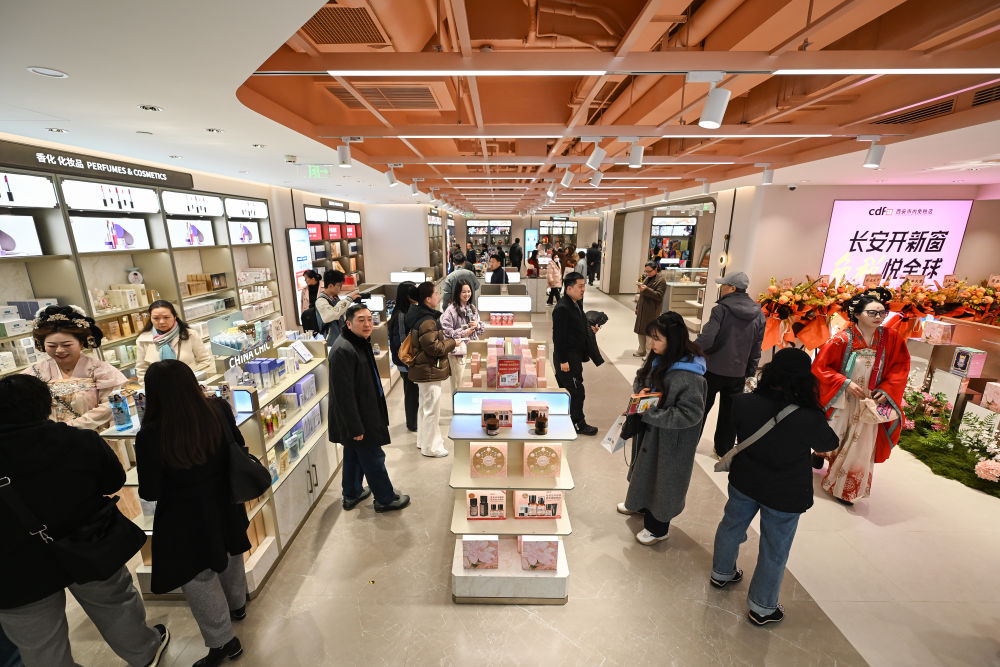
Core Viewpoint - A strong domestic market is the strategic foundation for China's modernization, emphasizing the need to expand domestic demand and enhance the internal circulation's dynamism and reliability [1]. Group 1: Domestic Demand Contribution - From 2021 to 2024, domestic demand is expected to contribute an average of 86.4% to economic growth, indicating a transition from a "large market" to a "strong market" [2]. - The average contribution of final consumption to economic growth reached 56.2%, an increase of 8.6 percentage points compared to the "13th Five-Year Plan" period [3]. Group 2: Consumption Trends - The integration of artificial intelligence into daily life has led to a surge in demand for smart products, with items like smartphones and smart home devices gaining popularity [3]. - Cultural products reflecting national trends, such as Hanfu and creative cultural products, have seen exponential sales growth [3]. Group 3: Investment Dynamics - Investment in capital formation contributed an average of 30.2% to economic growth, with a focus on improving public welfare [3]. - Approximately 7.8 million units of affordable housing have been constructed over the past four years, addressing housing issues for over 20 million people [3]. Group 4: Interaction Between Consumption and Investment - The expansion of market consumption drives investment through production and infrastructure development, with internet and related services investment growing at an annual rate of 21.9% [4]. - Effective investment increases employment and income, enhancing consumer capacity and improving consumption conditions, such as the projected total of 12.818 million charging facilities by the end of 2024 to support the widespread adoption of new energy vehicles [4]. Group 5: Strategic Emphasis - The "14th Five-Year Plan" emphasizes the integration of consumer welfare and investment in goods and people, promoting a virtuous cycle between consumption and investment [4].
新华鲜报·“十四五”发展亮点|中国“大市场”不一般!内需平均贡献率86.4%
Xin Hua She· 2025-12-01 02:44
Core Viewpoint - The strong domestic market is a strategic foundation for China's modernization, with a focus on expanding domestic demand as a key strategy for economic growth [1] Group 1: Domestic Demand Contribution - The average contribution rate of domestic demand to economic growth from 2021 to 2024 is projected to be 86.4%, indicating a transition from a "large market" to a "strong market" [1] - Final consumption's average contribution rate to economic growth has reached 56.2%, an increase of 8.6 percentage points compared to the "13th Five-Year Plan" period [3] Group 2: Consumer Trends - The integration of artificial intelligence into daily life has led to increased popularity of smart products such as smartphones and smart home devices, with new products like panoramic cameras and smart glasses gaining significant market traction [3] - Cultural products reflecting national trends, such as Hanfu and cultural creative products, have seen exponential sales growth [3] Group 3: Investment and Economic Growth - The average contribution rate of capital formation from investment to economic growth is 30.2%, with a focus on improving public welfare [5] - Approximately 7.8 million units of affordable housing have been constructed over the past four years, addressing housing issues for over 20 million people [5] - Investment in the internet and related services has grown at an annual rate of 21.9%, driven by strong consumer demand for products like smartphones [5] Group 4: Policy Emphasis - The "14th Five-Year Plan" emphasizes the integration of consumer and investment strategies, promoting a virtuous cycle between supply and demand [5] - The plan aims to accelerate the construction of a strong domestic market, enhancing the internal driving force of China's large market [5]
促进服务业优质高效发展
Ren Min Ri Bao· 2025-12-01 02:08
Core Viewpoint - The 20th Central Committee of the Communist Party of China emphasizes the importance of promoting high-quality and efficient development of the service industry as a major task for building a modern industrial system and achieving high-quality development in the context of Chinese-style modernization [1] Group 1: Significance of Promoting High-Quality and Efficient Development of the Service Industry - The service industry is a crucial component of the national economy and its development level is a key indicator of a country's economic progress [2] - High-quality and efficient development of the service industry is essential for building a modern industrial system, integrating modern services with advanced manufacturing and modern agriculture [2] - It is an inherent requirement for establishing a strong domestic market, with a significant shift in consumption patterns expected as GDP per capita exceeds $13,400 in 2024 [3] - The service industry is vital for improving the quality of life for citizens, providing numerous employment opportunities and addressing public service needs [4] - It serves as a key driver for cultivating new advantages in international economic cooperation and competition, especially in the context of evolving global trade dynamics [5] Group 2: Foundations for High-Quality and Efficient Development of the Service Industry - Since the 18th National Congress, the service industry has seen significant growth, with its value-added increasing from 24.5 trillion yuan in 2012 to 76.6 trillion yuan in 2024 [6] - The contribution of the service industry to economic growth has risen from 49.9% in 2014 to 56.2% in 2024, indicating a solidifying role as a growth driver [7] - Employment in the service sector has increased by approximately 84 million from 2013 to 2024, accounting for 48.8% of total employment [8] - The structure of the service industry is continuously optimizing, with modern services becoming a significant force in driving industrial transformation [7] - The scale and quality of service trade have improved, with total service imports and exports growing from about 3 trillion yuan in 2012 to over 7.5 trillion yuan in 2024 [9] Group 3: Major Tasks for Promoting High-Quality and Efficient Development of the Service Industry - Implement actions to expand and improve the quality of the service industry, focusing on professionalization and high-end value chain extension [11] - Deepen reform and opening up in the service sector to enhance development momentum and improve service trade quality [12] - Enhance the quality and efficiency of integrated development between modern services and advanced manufacturing, promoting collaborative growth [13] - Improve the policy framework and foundational systems supporting service industry development, including financial, investment, and talent support [14]
促进服务业优质高效发展(学习贯彻党的二十届四中全会精神)
Ren Min Ri Bao· 2025-11-24 22:31
Core Viewpoint - The 20th Central Committee of the Communist Party of China emphasizes the importance of promoting high-quality and efficient development of the service industry as a key task for building a modern industrial system and achieving high-quality development in the context of Chinese-style modernization [1][2]. Group 1: Significance of Promoting High-Quality and Efficient Development of the Service Industry - The service industry is a crucial component of the national economy and its development level is a significant indicator of a country's economic progress [2]. - High-quality and efficient development of the service industry is essential for building a modern industrial system, integrating modern services with advanced manufacturing and modern agriculture [2]. - It is an inherent requirement for establishing a strong domestic market, with a projected per capita GDP of approximately $13,400 in 2024, indicating a shift towards balanced consumption of goods and services [3]. - The service industry plays a vital role in improving the quality of life for citizens, providing numerous employment opportunities and enhancing service supply quality [4]. - Promoting the service industry is also a key strategy for cultivating new advantages in international economic cooperation and competition, especially in the context of rapid advancements in digital technology and service trade [5]. Group 2: Foundations for High-Quality and Efficient Development of the Service Industry - Since the 18th National Congress, the service industry has seen significant growth, with its value-added increasing from 24.5 trillion yuan in 2012 to 76.6 trillion yuan in 2024 [6][7]. - The contribution rate of the service industry to economic growth has risen from 49.9% in 2014 to 56.2% in 2024, reflecting its increasing importance [7]. - The structure of the service industry is continuously optimizing, with modern services becoming a driving force for industrial transformation [8]. - Employment in the service industry has increased significantly, with approximately 84 million new jobs created from 2013 to 2024, accounting for 48.8% of total employment [8]. - The scale and quality of service trade have improved, with total service imports and exports growing from about 3 trillion yuan in 2012 to over 7.5 trillion yuan in 2024 [9]. Group 3: Major Tasks for Promoting High-Quality and Efficient Development of the Service Industry - Implement actions to expand and enhance the quality of the service industry, focusing on both scale and quality improvements [11]. - Deepen reforms and open up the service industry to enhance development momentum and improve service trade quality [12]. - Enhance the quality and effectiveness of integrated development between modern services and advanced manufacturing, promoting innovative service solutions [13]. - Improve the policy framework and foundational systems supporting service industry development, including financial, investment, and talent support [14].
蓝佛安发声!
Xin Hua She· 2025-11-15 12:25
Core Viewpoint - The Ministry of Finance emphasizes the need for innovative and reform-oriented approaches to implement proactive fiscal policies, ensuring strong financial support for China's modernization and national rejuvenation efforts [2][5]. Group 1: Implementation of Proactive Fiscal Policies - The Ministry of Finance has maintained a proactive fiscal policy since the 14th Five-Year Plan, with adjustments made according to changing circumstances, including increasing the deficit ratio from 2.7% to 4% [4]. - The total public budget expenditure is expected to exceed 136 trillion yuan during the 14th Five-Year Plan, representing a 24% increase compared to the previous five-year period [5]. - Over 70% of national fiscal expenditure is directed towards people's livelihoods, with nearly 10 trillion yuan allocated for social welfare over five years [5]. Group 2: Focus Areas for the 15th Five-Year Plan - The 15th Five-Year Plan aims to strengthen the domestic market, with fiscal policies focusing on boosting consumption, effective investment, and establishing a unified market [11][12]. - The Ministry plans to enhance consumer spending through subsidies and tax adjustments, while also increasing investment in strategic projects to improve overall productivity [11][12]. - A key goal is to create a fair market environment by reforming tax and fiscal policies to eliminate local protectionism and promote resource allocation efficiency [12]. Group 3: Fiscal Reform and Management - The Ministry of Finance aims to optimize resource allocation and improve fiscal management by implementing zero-based budgeting and enhancing the efficiency of fund usage [16]. - There is a focus on balancing efficiency and equity in tax policies to support high-quality development and social fairness [16]. - The Ministry will also work on improving the relationship between central and local finances, increasing local fiscal autonomy while ensuring sustainable debt management [16].
蓝佛安,最新发声!
券商中国· 2025-11-14 23:38
Core Viewpoint - The article emphasizes the importance of proactive fiscal policy in supporting high-quality development and the construction of Chinese-style modernization, as outlined in the 20th Central Committee's Fourth Plenary Session [1][4]. Group 1: Fiscal Policy Implementation - Since the beginning of the 14th Five-Year Plan, fiscal policy has maintained a proactive stance, with the deficit ratio increasing from 2.7% to 3.8%, and further to 4% this year [2][3]. - The total new local government special bond quota is set at 19.4 trillion yuan, with over 10 trillion yuan allocated for tax reductions and refunds, expanding fiscal policy space [2][3]. - The total public budget expenditure is expected to exceed 136 trillion yuan during the 14th Five-Year Plan, marking a 24% increase compared to the previous five-year period [3]. Group 2: Strategic Focus for the 15th Five-Year Plan - The 15th Five-Year Plan period is crucial for achieving foundational progress in socialist modernization, with a focus on addressing complex domestic and international challenges [4][5]. - Fiscal policy will prioritize effective demand expansion, with a strong emphasis on boosting consumption and effective investment [6][7]. - The government aims to enhance the efficiency of fiscal resource allocation, particularly in key areas such as technology, education, social security, and ecological protection [5][6]. Group 3: Market Development and Economic Structure - The construction of a strong domestic market is identified as a strategic foundation for Chinese-style modernization, with fiscal measures aimed at balancing supply and demand [6][7]. - The government will support consumption through fiscal subsidies and policies that enhance residents' income, while also focusing on effective investment in strategic projects [6][7]. - A unified market will be promoted through improved fiscal and tax systems to eliminate local protectionism and enhance resource allocation efficiency [7]. Group 4: Fiscal Reform and Management - The establishment of a high-level socialist market economy requires a balance between market freedom and effective regulation, with fiscal policy playing a key role [8][9]. - The government will focus on optimizing resource allocation, enhancing fiscal management, and improving the efficiency of public spending [9][10]. - Emphasis will be placed on coordinating development and safety, particularly in managing government debt sustainably [10].
超大规模市场优势体现在哪,怎样用好
Sou Hu Cai Jing· 2025-11-14 12:02
Core Insights - The article emphasizes the importance of China's super-large market advantage as a strategic asset for economic development and modernization [1][5][6] - It highlights the continuous growth of domestic consumption and the shift towards service consumption as key trends in the market [2][3] Group 1: Market Growth and Consumption Trends - China's social retail sales reached 36.5877 trillion yuan in the first three quarters of this year, with a year-on-year growth of 4.5%, accelerating by 1.2 percentage points compared to the previous year [2] - The retail sales of social consumer goods are projected to grow from 39.1 trillion yuan in 2020 to 48.3 trillion yuan in 2024, with an average annual growth rate of 5.5% [1] - Service retail sales are expected to grow by 6.2% in 2024, outpacing goods retail sales by 3 percentage points, indicating a shift towards service-oriented consumption [2] Group 2: New Consumption Patterns - New consumption formats are emerging, integrating experiences such as shopping, exhibitions, and entertainment, enhancing leisure experiences for consumers [3] - Innovative products and cultural items, including traditional clothing and local specialties, are gaining popularity both domestically and internationally [3] Group 3: Strategic Initiatives and Future Outlook - The "14th Five-Year Plan" emphasizes expanding domestic demand as a strategic foundation, focusing on three key tasks: expanding increments, improving efficiency, and ensuring smooth circulation [5][6] - The plan aims to enhance government investment in public welfare and infrastructure, optimize investment structures, and eliminate market barriers to fully leverage the benefits of the super-large market [6] - The eighth China International Import Expo saw a record high in participating enterprises, with intended transaction amounts reaching 83.49 billion USD, reflecting strong market engagement [5]
