
投资回报率

Search documents
人工智能制胜未来:赋能三大银行业务板块,抢占市场先机
EY· 2025-11-26 05:49
Investment Rating - The report indicates a strong potential for investment in AI applications within the banking sector, particularly in corporate banking, commercial institutions, and small business banking [6][11][111]. Core Insights - AI presents transformative opportunities for banks, not only to optimize existing processes but also to fundamentally reshape service delivery models [111]. - Despite significant interest and numerous pilot projects, only a few banks have achieved large-scale AI deployment, highlighting a gap between potential and actual implementation [6][111]. - The report emphasizes the need for banks to establish strong leadership and clarify the role of business units in AI deployment to leverage AI effectively [111]. Summary by Sections AI Opportunities - AI is highly adaptable to the complex and regulated processes in corporate banking, enhancing efficiency and competitive advantage [6][25]. - A significant number of banks (52%) have initiated AI pilot projects, but only 16% have successfully implemented AI applications [8][6]. Investment Return Considerations - Evaluating the return on investment (ROI) for AI is complex, with many banks underestimating the long-term benefits while overestimating short-term returns [52][56]. - Some banks do not calculate AI ROI at all, focusing instead on key performance indicators (KPIs) [56][57]. AI Platform Development - Building reusable AI capabilities is crucial for sustainable development and cost reduction in the long term [63][66]. - Many banks are currently deploying AI applications without a solid foundational platform, which may hinder scalability [64][66]. Data Challenges - Data quality and fragmentation are major obstacles to AI deployment, necessitating the use of specialized tools and talent to address these issues [71][75]. - Banks process vast amounts of data daily, and the effort required for data collection and cleaning is often underestimated [75][81]. Technology Options - Banks must tailor their technology strategies based on their scale, resources, and AI objectives, considering options like cloud architecture versus on-premises deployment [83][84]. - A mixed approach combining cloud and on-premises solutions is common among banks to enhance security and privacy [84][85]. Skills and Talent Acquisition - There is a pressing need for banks to upgrade employee skills and attract AI talent, with demand for AI and data engineering roles significantly increasing [91][95]. - Banks must provide targeted training and clear career development paths to retain skilled professionals [96][100]. Risk Management - The rapid scaling of AI applications raises significant risk management challenges, particularly concerning the reliability of AI outputs [102][105]. - Banks need to implement refined risk management frameworks and involve risk teams early in the AI application design process [105][109].
大摩:除减速器外,机器人硬件皆可自研——核心壁垒正迁移到软件与数据
Hua Er Jie Jian Wen· 2025-11-24 06:44
Core Insights - The competitive landscape of the robotics industry is being reshaped, with a shift in focus from hardware manufacturing to software algorithms, data accumulation, and ecosystem building [1][2][3] Group 1: Hardware Development Trends - Self-research in hardware has become a mainstream trend in the robotics industry, with most companies emphasizing their internal component development capabilities [2] - The only exception noted is the gearbox, which all participating companies agreed needs to be sourced externally [2] Group 2: Software and Data as Competitive Advantages - Software is expected to become the core competitive advantage in the robotics industry, with data availability for training being a common challenge [3] - Companies that can acquire high-quality scenario data and develop superior algorithm models will stand out in the competitive market [3] Group 3: Focus on ROI in Industrial Applications - Discussions about robot forms are giving way to a more pragmatic focus on return on investment (ROI) in industrial applications [4] - Key factors driving ROI include efficiency, accuracy, and cost, emphasizing the importance of quantifiable economic value for customers [4] Group 4: Humanoid Robots Market Dynamics - The market for humanoid robots shows a mixed trend, with aggressive targets set by new startups while established companies remain cautious [5][6] - Startups are focusing on entertainment, research, and sales services, while companies like UBTECH are targeting industrial applications with more conservative delivery expectations [6]

英伟达救不了AI股,市场想看到什么?
美股IPO· 2025-11-24 03:41
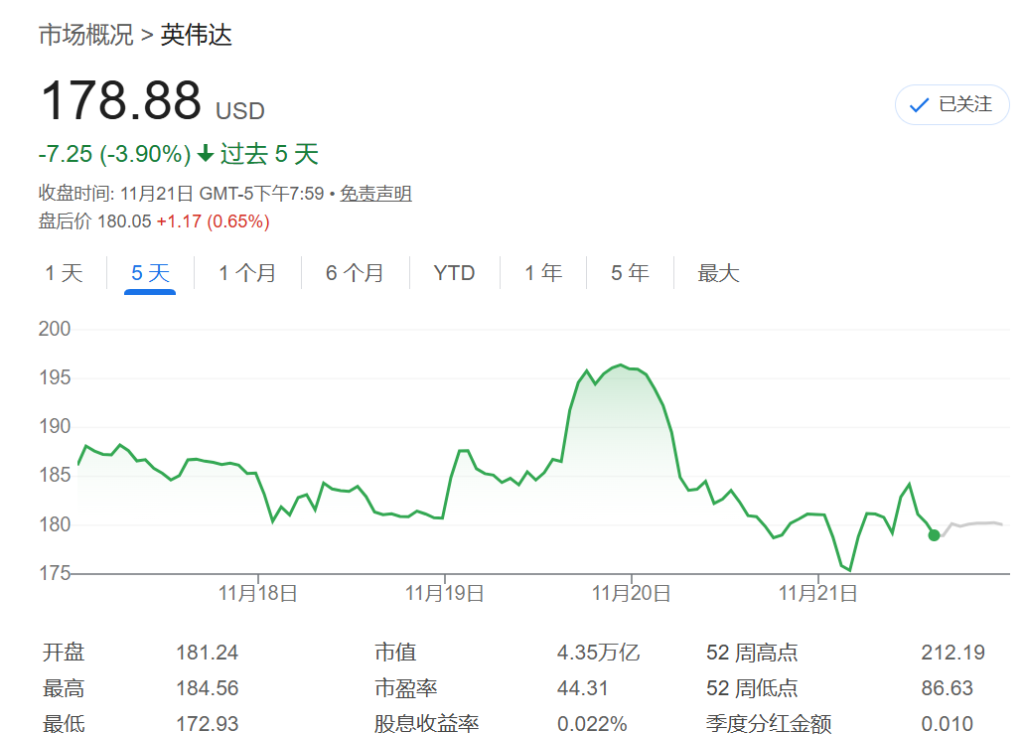
Core Viewpoint - Nvidia's strong earnings report failed to boost the AI sector and instead deepened market anxiety, shifting investor focus from capital expenditure to return on investment (ROI) [1][2][9] Market Reaction - Nvidia's stock initially rose over 5% after its earnings report but reversed to close down 3.2%, reflecting a broader market trend where the S&P 500 and Nasdaq 100 also experienced declines [2] - The AI ecosystem is under pressure, with a chip-related stock index dropping 11% in November, marking its worst month since 2022, and companies like AMD and Arm seeing declines over 20% [4] Company-Specific Performance - Meta's stock has fallen 21% since its earnings report on October 29 due to concerns over aggressive capital spending, while Microsoft's stock dropped 13% for similar reasons [4] - Companies with weaker balance sheets, such as CoreWeave and Oracle, faced significant stock price declines of over 40% and 29%, respectively, potentially marking Oracle's largest monthly drop since 2001 [4][7] Diverging Opinions on AI Outlook - There is a clear divide in market sentiment regarding the future of AI, with skeptics fearing that high valuations driven by a few AI stocks are unsustainable, especially as companies may resort to debt to maintain spending [8] - Optimists view recent market corrections as healthy adjustments, believing that major tech players will continue to invest in AI without signs of slowing down [8] Shift in Investor Focus - Investors are increasingly questioning the ROI of substantial capital expenditures, seeking evidence of faster growth and higher profitability from companies providing AI software and services [9][10] - Nvidia's strong performance has not alleviated concerns regarding its major clients, including Microsoft, Amazon, Meta, and Alphabet, which are expected to increase their combined capital expenditures by 34% to $440 billion over the next 12 months [10] Future Volatility - The consensus among investors is that the path forward for AI trading will be bumpier, influenced by macroeconomic uncertainties and differing views on the progress of the AI revolution [11]



英伟达救不了AI股,市场想看到什么?
Hua Er Jie Jian Wen· 2025-11-24 00:07
Core Insights - Despite Nvidia's strong earnings report, market anxiety persists, leading to a significant stock price reversal and a broader market decline [1] - The AI ecosystem is under pressure, with a notable drop in chip-related stocks and significant declines in companies heavily investing in AI, such as Meta and Microsoft [5][9] Market Reactions - Nvidia's stock initially rose over 5% following its earnings report but closed down 3.2%, reflecting a volatile market response [1] - A chip-related stock index fell by 11% in November, marking its worst month since 2022, with AMD and Arm experiencing declines over 20% [5] Investor Sentiment - Investors are increasingly questioning the sustainability of capital expenditures and the return on investment (ROI) from AI investments [2][10] - Concerns are growing that high valuations in the AI sector may not be justified, with fears of a potential bubble [9] Company Performance - Meta's stock has dropped 21% since its earnings report due to investor concerns over aggressive capital spending plans, while Microsoft's stock has fallen 13% for similar reasons [5] - Companies with weaker balance sheets, such as CoreWeave and Oracle, have faced even steeper declines, with CoreWeave's stock plummeting over 40% [5][8] Future Outlook - There is a divide in market sentiment regarding the future of AI investments, with some investors viewing recent corrections as healthy, while others fear unsustainable spending [9][11] - The focus is shifting from capital expenditures to the need for clear evidence of ROI, which is critical for restoring momentum in AI investments [10]
企业AI应用率提升,投入产出不明显成AI落地首要挑战
Xin Lang Cai Jing· 2025-11-21 18:17
Core Insights - The primary challenge for large-scale AI application is the unclear return on investment, which is becoming a significant barrier to its widespread adoption [1][2][3] - Companies are increasingly focusing on the practical value of AI projects, with a core emphasis on improving investment returns [1][2] Group 1: AI Application Challenges - A recent survey by the Australian Accounting Association revealed that over one-third of large enterprises are concerned about the uncertainty of technology application effectiveness, data quality issues, and complex legacy systems [2] - The upfront investment in AI infrastructure is substantial, with some systems costing hundreds of thousands to millions, leading to difficulties in quantifying AI's actual business value [2][3] - Both large and small enterprises face common pain points, including a lack of transparency and explainability in AI outputs, as well as privacy and security concerns [3] Group 2: Strategic Investment Approaches - Companies are advised to focus resources on core business and development strategies, addressing specific business pain points, and matching technology precisely to avoid unnecessary investments [3] - A phased investment approach is recommended to balance costs and risks, along with establishing governance mechanisms covering the entire AI lifecycle [3] Group 3: Talent and Workforce Implications - The survey indicated that 32% of respondents reported a reduction in hiring entry-level accounting staff, while 18% expanded their finance departments to include professionals with AI expertise, reflecting a shift in talent acquisition strategies [4] - Companies should enhance existing employee training to improve AI application capabilities and create a clear framework for AI usage to ensure compliance and efficiency [5] - The long-term success of finance professionals will depend on their ability to combine traditional expertise with technological skills and a mindset geared towards lifelong learning [5]
How smart borrowing can grow your wealth
Yahoo Finance· 2025-11-18 16:01
Core Insights - Strategic borrowing, such as personal loans, can be beneficial for building wealth if used for specific purposes that yield a return on investment (ROI) [1][3] Group 1: Uses of Personal Loans - Personal loans can be effectively used for consolidating high-interest debt, which can save money on interest and expedite debt repayment [4][5] - Home renovations funded by personal loans can increase property value, leading to higher sale prices or rental income, and enhancing equity for future borrowing [6][7] - Investing in career development through personal loans for job training or certifications can lead to higher income potential [8][9] - Personal loans can also be utilized to fund business ventures or side hustles, provided the lender permits such use [11][12] Group 2: Benefits of Debt Consolidation - Personal loans typically have lower interest rates compared to credit cards, with an average rate of 11.14% for a two-year personal loan versus 21.39% for credit cards [10] - Consolidating debt simplifies repayment by reducing multiple payments to a single monthly payment, which is predictable due to fixed rates and terms [10] - Using personal loans for debt consolidation can lower credit utilization, potentially improving credit scores and future borrowing terms [10] Group 3: Considerations for Borrowing - It is crucial to assess whether a personal loan aligns with long-term financial goals and improves financial situations over time [13] - Borrowers should ensure they can afford monthly payments without compromising emergency savings and consider the impact on their debt-to-income (DTI) ratio [14] - Shopping around for multiple lenders can help secure the best loan terms and rates [15]
行家偷偷收购老旧小区顶楼,知情人透露:其中商机你想不到
Sou Hu Cai Jing· 2025-11-16 19:50
Core Insights - The increasing interest in old top-floor apartments in first and second-tier cities is driven by their potential for investment despite their age and structural issues [1][3][6] Group 1: Investment Drivers - The demand for school district housing supports the value of old top-floor apartments, as they are often located in core urban areas near prestigious schools, making them an attractive investment option due to lower prices compared to other units in the same area [3] - The promotion of renovation policies revitalizes old neighborhoods, allowing for significant improvements in living conditions and property value, thus providing investors with additional profit opportunities [6] - The potential for substantial returns from demolition compensation is a major draw for investors, with examples showing that a small top-floor apartment can yield returns significantly higher than initial investment costs if demolition occurs [7] Group 2: Investment Returns - The investment return rates for old apartments are relatively high, with examples indicating that a 35 square meter top-floor apartment purchased for 1.8 million yuan can generate an annual rental income of 48,000 yuan, making it an appealing option for those seeking stable returns [8]

中国资产也出海
小熊跑的快· 2025-11-14 04:11
Group 1: Tencent Financial Performance - Tencent's Q3 2025 operating revenue reached 192.9 billion yuan, a year-on-year increase of 15.4%, exceeding expectations by 2% [1] - Adjusted net profit attributable to shareholders was 70.6 billion yuan, up 18.0% year-on-year, surpassing expectations by 7% [1] - The company's gross margin improved to 56.41% from 53.13% in the same period last year, while net profit margin rose to 33.67% [1] Group 2: Capital Expenditure Insights - Tencent's capital expenditure (capex) for the first three quarters of 2025 was 59.566 billion yuan, a year-on-year increase of 48.24% [1] - In Q3 2025, capex was 12.983 billion yuan, reflecting a year-on-year decline of 24.05% and a quarter-on-quarter decrease of 32.05% [1] - The decline in capex is attributed to a lack of H20 and limited purchases of other chips, with no revenue from computing power leasing included [1] Group 3: Investment Sentiment and Market Position - Some investors view Tencent as a stable investment, especially in light of deteriorating investment returns for many M7 members [1] - There is a possibility that foreign capital may increasingly allocate to Tencent, similar to investments in Google and Apple, due to its perceived stability [1] - The article suggests that Chinese assets may attract global funds in a different manner, especially as many are traded on NASDAQ [1] Group 4: Emerging Investment Products - New ETFs focused on Chinese technology, such as the Rayliant-ChinaAMC Transformative China Tech ETF (CNQQ), are now available for trading on NASDAQ [2][7] - The CNQQ ETF includes major A/H shares and US-listed companies, allowing for a 24-hour trading cycle [7] - The average P/E ratio of the ETF's constituent stocks is 27, lower than the NASDAQ 100 index at 39, indicating potential value [8] Group 5: Market Trends and Future Outlook - The technology sector within the CNQQ ETF is primarily composed of electronic technology (26.67%) and technology services (21.29%), covering strategic areas like semiconductors and AI [8] - With the Federal Reserve's interest rate cuts and increasing foreign interest in Chinese technology, the long-term performance of core Chinese tech assets remains promising [8] - The growth of CNQQ's scale may enhance its role in determining the pricing power of international capital in Chinese technology assets [8]


玩赚美国AI债务周期
2025-11-12 02:18
Summary of Conference Call on the US AI Debt Cycle Industry Overview - The conference call discusses the **US AI industry** and its current debt cycle characteristics, drawing parallels with the real estate sector's dynamics [1][2][6]. Key Points and Arguments 1. **Debt Cycle Characteristics**: The US AI industry exhibits significant debt cycle traits, characterized by rapid demand expansion and rising prices, which ultimately lead to declining investment returns. This mirrors the real estate cycle in China [2][6]. 2. **Capital Expenditure Growth**: There is an acceleration in capital expenditures within the US AI sector, with companies noticeably increasing leverage. However, this rapid expansion poses high risks and may likely lead to a future collapse [2][6]. 3. **Supply and Demand Dynamics**: On the supply side, US companies are reluctant to expand supply significantly to maintain monopoly profits, similar to the real estate sector's avoidance of investing in essential materials. This results in soaring resource prices and declining investment returns [3][5]. 4. **Impact of Debt Expansion**: The US's debt expansion has led to a capital return shift towards countries like China, particularly benefiting its manufacturing sector due to strong production capabilities. This shift results in a decline in domestic investment returns in the US [5][7]. 5. **Sustainability of Current Development Model**: The reliance on corporate leverage for AI development is fragile, with limited government leverage available. This could lead to valuation declines, and the current model is unlikely to be sustainable in the long term, risking bubble formation [6][10]. 6. **Global Energy Market Trends**: Investment trends in the global energy market are diversifying, with increased demand for AI and AIGC leading companies to invest in traditional energy sources (oil, coal) and new energy sectors. Prices for resources like oil, coal, and lithium carbonate are rising [8][9]. 7. **China's Economic Role**: China is leveraging technological innovation and traditional manufacturing to drive economic growth while reducing debt reliance. This strategy allows China to benefit from the demand released by US debt expansion without increasing supply, enhancing capital returns and stock market performance [9][10]. 8. **Investment Strategy Recommendations**: In the current macro environment, investment strategies should align with the US debt cycle. An aggressive strategy focusing on Chinese assets and commodities is recommended during US debt expansion, while a defensive strategy should be adopted if the US halts debt expansion [11][12]. Other Important Insights - The ongoing US debt cycle is seen as favorable for China, as it can produce nearly all major manufacturing products and is expected to benefit from the demand generated by US debt expansion [7][10]. - The relationship between asset volatility and the debt cycle is crucial, as sustained debt expansion typically leads to significant asset price fluctuations, creating trading opportunities for savvy investors [12].
3 Reasons to Avoid KBH and 1 Stock to Buy Instead
Yahoo Finance· 2025-11-07 04:01
Core Viewpoint - KB Home has experienced a 12.6% increase in stock price over the last six months, but this is significantly lower than the S&P 500's 19.5% return during the same period, raising concerns among investors about its future performance [1] Group 1: Backlog and Orders - KB Home's backlog is reported at $1.99 billion, with an average decline of 20.4% year-on-year over the last two years, indicating a lack of new orders and potential market saturation [4][3] Group 2: Return on Invested Capital (ROIC) - The company's ROIC has been declining, suggesting fewer profitable growth opportunities, despite previous management efforts that were well-regarded [6][5] Group 3: Debt Levels - KB Home has a debt level of $3.89 billion, which is significantly higher than its cash reserves of $330.6 million, resulting in a 5× net-debt-to-EBITDA ratio based on an EBITDA of $671.8 million over the last 12 months, indicating over-leverage [8][7]