文化强国

Search documents
贯彻落实党的二十届四中全会精神权威访谈丨推进文化事业、文化产业和旅游业高质量发展——访文化和旅游部党组书记、部长孙业礼
Xin Hua She· 2025-12-08 11:46
Core Viewpoint - The development of cultural undertakings, cultural industries, and tourism is essential for achieving high-quality growth and fulfilling the cultural needs of the people, as emphasized by the Ministry of Culture and Tourism of China [1] Group 1: Achievements in Cultural and Tourism Development - During the 14th Five-Year Plan period, cultural and tourism sectors have shown robust growth, significantly contributing to economic and social development [2] - Cultural undertakings have become more vibrant, with 3,568 projects funded by the National Art Fund, and an increase in public cultural service facilities, including 3,248 public libraries and 7,046 registered museums by the end of 2024 [2][3] - The cultural industry achieved a revenue of 19.14 trillion yuan in 2024, marking a 37.7% increase from 2020, while the tourism sector has rapidly recovered post-pandemic [3] Group 2: Future Considerations for Cultural Development - The focus for the 15th Five-Year Plan will be on enhancing public cultural services, ensuring that cultural offerings are more accessible and relevant to the public [4][5] - There is a commitment to protect and inherit cultural heritage, with an emphasis on systematic protection and innovative development of cultural relics [5][6] Group 3: Integration of Culture and Tourism - The strategy aims to deepen the integration of cultural and tourism sectors, positioning them as pillar industries that enhance people's livelihoods and happiness [6] - Efforts will be made to improve the quality of tourism services and develop diverse, high-quality tourism products to meet the evolving demands of travelers [7] Group 4: Promoting Cultural Exchange and Global Influence - The initiative includes enhancing international cultural exchanges and cooperation, establishing a network for dialogue and collaboration in cultural and tourism policies [8] - There will be a focus on promoting Chinese culture globally through various cultural events and improving the convenience of inbound tourism services [9]
推进文化事业、文化产业和旅游业高质量发展——访文化和旅游部党组书记、部长孙业礼
Xin Hua Wang· 2025-12-08 10:52
Core Viewpoint - The prosperity of culture is a significant indicator of Chinese-style modernization, emphasizing the importance of cultural development in achieving socialist modernization [1] Group 1: Achievements in Cultural and Tourism Development - During the 14th Five-Year Plan period, cultural and tourism sectors have shown robust growth, contributing positively to high-quality economic and social development [2] - Cultural activities have become more vibrant, with 3,568 projects funded by the National Art Fund, and an increase in public cultural service facilities, including 3,248 public libraries and 7,046 registered museums by the end of 2024 [2] - The cultural industry is expanding, with projected revenue of 19.14 trillion yuan in 2024, a 37.7% increase from 2020, and the tourism sector is recovering rapidly post-pandemic [3] Group 2: Future Considerations for Cultural Development - The focus for the 15th Five-Year Plan includes creating high-quality cultural products that resonate with the times and enhancing public cultural services to meet the diverse needs of the population [4][5] - Emphasis on the protection and transmission of cultural heritage, ensuring systematic protection and innovative development of cultural assets [6] Group 3: Integration of Culture and Tourism - The strategy aims to deepen the integration of cultural and tourism sectors, positioning them as pillar industries that drive domestic demand and employment [7] - Plans include enhancing the quality of tourism services and products, promoting smart tourism, and integrating cultural content into tourism experiences [8] Group 4: International Cultural Exchange and Influence - The initiative focuses on enhancing the global influence of Chinese culture through international cooperation and cultural exchange programs [9] - Efforts will be made to improve the convenience of inbound tourism, including better visa and service systems to attract foreign visitors [11]
港媒:国际出版合作提升中国软实力
Huan Qiu Wang· 2025-12-02 23:13
香港《亚洲时报》网站12月1日文章,原题:中国领军全球出版业的宏伟计划 按照目前的发展趋势,中 国将在未来10年内成为全球出版业最具影响力的力量。其崛起得益于国内市场增长、精准的海外战略、 学术出版的快速进步以及数字技术的早期应用。这种转变将影响全球的阅读内容和阅读方式。 在大众出版稳步拓展海外市场的同时,中国学术界正经历更具变革性的转变。中国在科研领域的持续投 入,已使其跻身科技强国之列。这一崛起趋势已显现明确迹象:中国在全球高被引学术论文数量上超过 了美国,其背后是年度科研产出的惊人增长。如此庞大的产出规模需要配套的出版基础设施支撑。 开放获取领域同样呈现加速态势。政策调整正推动机构建立知识库、共享数据并采用更透明的研究做 法。凭借对理工领域的大规模投入,中国正迅速跻身科研强国之列。预计到2030年,中国学术出版商在 全球影响力中将占据更大份额,尤其在工程学、医学和环境科学领域。通过扩建符合全球标准的学术基 础设施,中国正从西方学术模式的追随者逐步变为主要竞争者。 出版是软实力的一种形式,中国十分清楚其价值。共建"一带一路"倡议等举措均包含文化元素,涵盖图 书翻译项目、阅读节及学术交流活动。中国出版商通过 ...
中央美术学院:锚定双强国战略,绘就高等美术教育发展新蓝图
Xin Jing Bao· 2025-12-01 13:23
Core Viewpoint - The "15th Five-Year Plan" serves as a guiding document for China's economic and social development from 2026 to 2030, emphasizing the need for high-quality development and cultural advancement in higher education, particularly in fine arts [1][2]. Group 1: Development Strategy - The Central Academy of Fine Arts aims to establish a higher education system in fine arts that reflects Chinese characteristics and meets global standards, aligning with the "15th Five-Year Plan" and the "Education Strong Nation Construction Plan Outline (2024-2035)" [1][2]. - The institution has a historical mission to lead the development of Chinese fine arts and education, focusing on nurturing innovative talents who can contribute to national rejuvenation [2][3]. Group 2: Educational Reform - The academy is reforming its training model to integrate art and technology, promoting interdisciplinary collaboration and breaking down professional barriers to enhance practical skills and critical thinking [3][4]. - Emphasis is placed on cultivating talents with a solid artistic foundation and innovative thinking, particularly in emerging fields such as digital art and intelligent design [3][4]. Group 3: Cultural Integration - The plan highlights the importance of integrating aesthetic education with the new economy, fostering a robust cultural talent pool, and enhancing cultural originality [4][5]. - The Central Academy of Fine Arts is committed to serving national cultural needs and contributing to the development of Chinese fine arts and culture through various initiatives, including the "Mei Run China" action plan [5][6]. Group 4: National and International Collaboration - The academy aims to leverage its strengths in fine arts and design to contribute to national strategies such as rural revitalization and urban development [5][6]. - It seeks to enhance international cultural exchanges and explore pathways for the global dissemination of Chinese aesthetic education [5][6].
文化产业投资,广东下了一招妙棋
2 1 Shi Ji Jing Ji Bao Dao· 2025-11-26 05:14
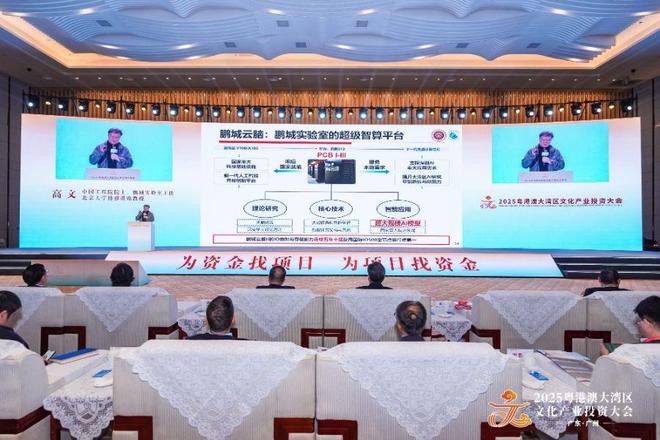
Core Insights - The 2025 Guangdong-Hong Kong-Macao Greater Bay Area Cultural Industry Investment Conference aims to connect funding with projects, attracting over 100 investment institutions and 300 cultural enterprises [1] Group 1: Importance of Cultural Industry Investment - The cultural industry is crucial for upgrading manufacturing and enhancing the quality of macroeconomic supply and demand, playing a significant role in Guangdong's economic development [2] - Guangdong has maintained its position as the leading province in cultural industry scale for 22 consecutive years, benefiting from its large industry size, innovation capabilities, and regional advantages [2] Group 2: Market Potential and Challenges - The cultural industry, including film, animation, and gaming, is still in a growth phase, but many small cultural enterprises face funding shortages that hinder innovation and product development [3] - There is a pressing need for capital to identify promising projects in the cultural sector, which is essential for both the development of Guangdong's cultural industry and China's goal of becoming a cultural powerhouse [3] Group 3: Conference Outcomes and Future Directions - The conference serves as a response to the previously announced policy package aimed at promoting high-quality development in the cultural industry, featuring targeted investment roadshows across six key sectors [4] - Future efforts will focus on creating a favorable ecosystem for the cultural industry, leveraging traditional manufacturing and high-tech industries to encourage the development of culturally integrated sectors [4]
南财快评|文化产业投资,广东下了一招妙棋
2 1 Shi Ji Jing Ji Bao Dao· 2025-11-26 05:13
Group 1 - The 2025 Guangdong-Hong Kong-Macao Greater Bay Area Cultural Industry Investment Conference aims to connect funding with projects, attracting over 100 investment institutions, 200 investors, and 300 cultural enterprises this year [2] - The cultural industry is crucial for upgrading manufacturing and enhancing the quality of macroeconomic supply, with Guangdong being the leading province in cultural industry scale for 22 consecutive years [3] - The cultural industry market has significant growth potential, but many small cultural enterprises face funding challenges that hinder innovation and product development [4] Group 2 - The conference serves as a platform for potential cultural projects and capital resources to connect, addressing the need for patience in capital investment in the cultural sector [4][5] - The event features 8 specialized investment roadshows focusing on key cultural sectors, showcasing 60 projects related to advanced technologies like AI and robotics [5] - Future efforts will focus on fostering a favorable cultural industry ecosystem and leveraging Guangdong's strengths in traditional manufacturing and high-tech industries to attract long-term capital investment [5]

夯实文化软实力 积极履责显担当 | 国信证券党委书记、董事长张纳沙:明主线 塑品牌 强赋能 以文化软实力助力高质量发展
Zhong Guo Zheng Quan Bao - Zhong Zheng Wang· 2025-11-24 23:48
Core Viewpoint - The article emphasizes the importance of cultural construction in the securities industry as a key driver for high-quality development, aligning with the strategic goals set forth in the "14th Five-Year Plan" and the recent Fourth Plenary Session of the 20th Central Committee of the Communist Party of China [1][2]. Group 1: Cultural Construction in Securities Industry - The "Ten Elements of Securities Industry Cultural Construction" aims to create a standardized, transparent, open, and resilient capital market, enhancing the industry's soft power and core competitiveness [2]. - Guosen Securities recognizes the foundational role of cultural construction, integrating party leadership into its cultural framework and establishing a "1+3+6" work system to guide its cultural initiatives [3][4]. Group 2: Implementation of Cultural Values - Guosen Securities has developed a unique "six cultures" brand, focusing on responsibility, collaboration, professionalism, integrity, compliance, and innovation, to enhance its cultural soft power [4][6]. - The company has implemented a comprehensive cultural construction plan that includes embedding compliance and integrity into employee evaluations and promoting a culture of accountability [5][9]. Group 3: Social Responsibility and Economic Contribution - Guosen Securities has actively contributed to national strategies by providing comprehensive financial services to innovative enterprises, completing 86 IPO projects on the Growth Enterprise Market, and issuing 431 billion yuan in green bonds [7]. - The company has established a "7+1+1" public welfare model, covering various forms of assistance across 31 provinces, demonstrating its commitment to social responsibility [7]. Group 4: Business Development and Financial Performance - The company aims to build a world-class investment bank, achieving a total profit of 457.48 billion yuan and a net profit of 399.83 billion yuan by the third quarter of 2025, with total assets reaching 5,610.87 billion yuan [11][12]. - Guosen Securities has completed the acquisition of Wanhe Securities to enhance its market position and leverage cross-border financial services, aligning with the development of the Guangdong-Hong Kong-Macao Greater Bay Area [12].

第三十届全国广播电视技术能手竞赛决赛颁奖仪式在京举办
Ren Min Ri Bao· 2025-11-21 23:31
Core Points - The National Broadcasting and Television Skills Competition has been held for 30 years, marking its significance in the broadcasting industry [1] - The competition is organized by the National Radio and Television Administration and is the only skills competition in the broadcasting technology field [1] - The event is part of broader national strategies including the strategy for science and education, talent development, innovation-driven growth, and cultural strength [1] Group 1 - The competition has evolved since its inception in 1996, becoming the most influential skills event in the broadcasting industry with the widest coverage and highest participation [1] - This year's competition was co-hosted by the National Radio and Television Administration and the All-China Federation of Trade Unions, featuring four specialties: network and data security, IPTV, medium and shortwave broadcasting, and frequency and television broadcasting [1] - The competition included two phases: preliminary rounds held from June to September and finals held from November 17 to 20, with a total of 132 award-winning participants [1]
五个维度,读懂二十届四中全会精神
Zhong Guo Xin Wen Wang· 2025-11-20 08:51
Group 1: Chinese-style Modernization - The central task of the Communist Party of China is to comprehensively promote the great rejuvenation of the Chinese nation through Chinese-style modernization [2] - The "15th Five-Year Plan" period is identified as a critical phase for achieving decisive progress in socialist modernization by 2035 [3] Group 2: Common Prosperity - Achieving common prosperity for all people is a fundamental goal and value pursuit of the Communist Party, emphasizing that development should benefit everyone [5][6] - The "15th Five-Year Plan" emphasizes the importance of inclusive and basic social welfare, high-quality employment, and improving the income distribution system [7] Group 3: Economic Development - The focus on economic development is reiterated as the core of the Party's basic line, essential for national strength and stability [8][9] - The "15th Five-Year Plan" aims to enhance high-quality development, emphasizing the need for a modern industrial system and the integration of technology and industry [10] Group 4: Technological Innovation - Technological innovation is highlighted as a key variable in the global landscape, with a focus on achieving high-level self-reliance in technology [11] - The "15th Five-Year Plan" outlines goals for improving the national innovation system and emphasizes the integration of technology and industry [12][13] Group 5: Cultural Strength - Cultural confidence is identified as essential for national rejuvenation, with a focus on promoting cultural prosperity as a key marker of Chinese-style modernization [14] - The "15th Five-Year Plan" includes initiatives for preserving cultural heritage, enhancing public cultural services, and improving international cultural communication [15]
学习进行时丨习近平总书记与老一辈艺术家交流交往的故事
Xin Hua She· 2025-11-13 00:35
Core Viewpoint - The articles highlight the importance of art and literature in reflecting and shaping the spirit of the times, emphasizing the support and encouragement provided by General Secretary Xi Jinping to artists and cultural workers in China [1][5][20]. Group 1: Xi Jinping's Engagement with Artists - Xi Jinping has shown a strong commitment to the arts, engaging with artists and acknowledging their contributions to cultural development [1][5]. - In a letter to eight film artists, Xi praised their dedication and the memorable characters they created, reinforcing the idea that art serves the people [3][5]. - During the National Medal and Honorary Title Award Ceremony, Xi presented the "People's Artist" title to actress Tian Hua, encouraging her and others to continue creating works that resonate with the spirit of the times [5][20]. Group 2: Recognition of Artistic Contributions - The articles detail various instances where Xi Jinping recognized the contributions of prominent artists, such as the awarding of the "July 1 Medal" to actor Lan Tianye, highlighting his lifelong dedication to the performing arts [7][8]. - Xi's remarks on the performances of artists like Li Xuejian and the importance of their roles in portraying historical figures reflect a deep appreciation for the impact of art on society [18][20]. - The emphasis on moral integrity and artistic excellence is a recurring theme in Xi's messages to artists, urging them to uphold high standards in their work [8][20]. Group 3: Cultural Development and National Identity - The articles underscore the role of artists in promoting traditional culture and moral values, with Xi Jinping encouraging them to contribute to the construction of a culturally strong nation [20]. - The commitment of artists like You Benchang and Niu Ben to the Communist Party and their artistic endeavors illustrates the intertwining of cultural identity and national pride [12][15]. - Xi's vision for a vibrant cultural landscape is rooted in the belief that the pursuit of truth, goodness, and beauty will ensure the long-term health and hope of the Chinese nation [20].