
新型城镇化

Search documents
省委办公厅、省政府办公厅、省政协办公厅印发《2026年协商计划》
Xin Lang Cai Jing· 2026-02-11 22:53
Group 1 - The core viewpoint of the article is the issuance of the "2026 Consultation Plan" by the provincial government, which outlines 16 consultation topics aimed at addressing key economic and social issues in the province [1] Group 2 - The 16 consultation topics include: - Economic responsibilities of the province - Human-centered new urbanization - Deepening state-owned enterprise reform - Accelerating the transformation of scientific and technological achievements in key areas - Increasing financial policy support for rural industry revitalization - Improving community governance - The impact of artificial intelligence on educational development - Effective protection and dynamic inheritance of historical and cultural cities and towns - Promoting high-quality development of medical services [1] Group 3 - The plan includes specific arrangements for the implementation of consultations, detailing formats, timelines, responsible units, participants, and activities [1] - Emphasis is placed on strengthening organizational implementation, enhancing consultation effectiveness, and ensuring accountability to advance the consultation plan in a timely manner [1]
高质量推进城市更新释放内需潜力
Jing Ji Ri Bao· 2026-02-11 21:59
Core Insights - The article emphasizes the importance of urban development as a key driver for economic growth and quality of life, highlighting the shift from large-scale expansion to enhancing existing urban structures and services [1][2] Group 1: Urban Development Trends - Urbanization is transitioning from rapid growth to stable development, with a focus on optimizing existing resources rather than expanding urban boundaries [2] - The urbanization rate increase of 1 percentage point can generate approximately 1 trillion yuan in new investment demand and over 200 billion yuan in consumption demand annually [2] - The concentration of population in urban clusters is expected to continue, necessitating adjustments in urban spatial layouts to accommodate new residents and enhance public services [2] Group 2: Consumer Demand and Infrastructure - There is a growing demand for diverse and high-quality living environments, driven by demographic changes and the need for improved public services [3] - The integration of technology in urban development, such as 5G and AI, is crucial for enhancing urban infrastructure and public service efficiency [3][4] - The existing housing stock of approximately 350 billion square meters presents significant opportunities for urban renewal, with an estimated annual demand for 70 million square meters of replacement due to depreciation [4] Group 3: Investment and Economic Growth - Urban renewal is not just about physical space but involves a comprehensive restructuring of urban functions, industries, and culture to stimulate investment and consumption [4][5] - Investment in urban infrastructure and services is essential for enhancing living conditions and creating new job opportunities, thereby driving regional economic growth [4][8] - The need for a sustainable urban development model is highlighted, focusing on quality over quantity in infrastructure investments [7] Group 4: Social Services and Community Development - There is a pressing need to invest in social services that cater to the entire population across different life stages, particularly in elderly and childcare services [8] - Enhancing public resource allocation to match the needs of the resident population is critical for improving living standards and community well-being [8][9] - The integration of cultural heritage into urban renewal efforts can stimulate cultural consumption and enhance the overall quality of urban life [6][10] Group 5: Governance and Community Engagement - Effective urban governance is essential for addressing community needs and enhancing the quality of urban life [10] - The article advocates for a responsive governance model that utilizes technology to identify and address urban challenges effectively [10] - Promoting cultural activities and improving public cultural services are vital for fostering community engagement and enhancing urban identity [10]
新型城镇化进程中的探索与经验
Xin Lang Cai Jing· 2026-02-11 19:49
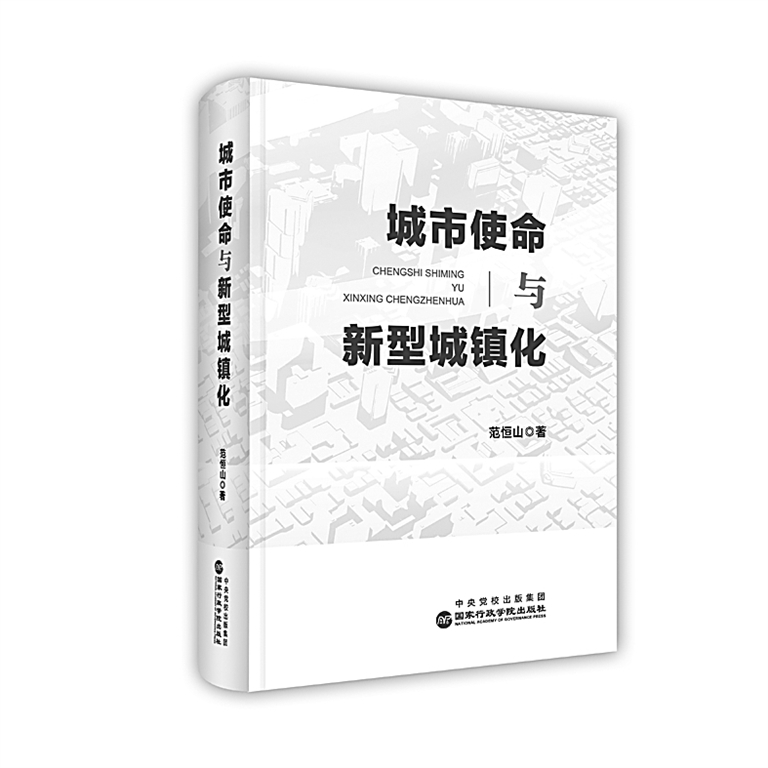
Core Viewpoint - The book "Urban Mission and New-Type Urbanization" by Fan Hengshan emphasizes the unique responsibilities and functions of cities in the context of China's urbanization, proposing a "mission-oriented city" theory rooted in practical experiences and national needs [4][5]. Group 1: Concept of "Urban Mission" - The term "urban mission" highlights the special functions and responsibilities cities must undertake in human civilization, national strategy, regional development, and improving people's livelihoods [4]. - The author redefines the essence, functions, and objectives of cities, marking the beginning of a theoretical construction of "mission-oriented cities" based on Chinese practices [4]. Group 2: National Needs and Contemporary Significance - The book identifies the optimization of urban structure, coordination of regional patterns, and enhancement of development quality as key missions for cities [5]. - A significant aspect of the urban mission is to promote rural development, reflecting the importance of agricultural modernization in China's overall modernization strategy [5]. Group 3: Seven Dimensions of New-Type Urbanization - The research covers seven important areas: urban modernization direction, urban agglomeration strategies, large city governance, distinctive urban development, collaborative development of small cities, overall planning of regional economies, and urban-rural integration [6]. - The author extracts universal scientific propositions and principles from these areas, enriching the "mission-oriented city theory" [6]. Group 4: Key Measures for Urbanization Development - The book proposes seven key measures for promoting urbanization: institutional innovation for rural population transfer, optimizing industrial structure, collaborative construction of urban agglomerations, safety-oriented urban spatial optimization, leveraging technology for smart cities, promoting urban-rural integration, and advancing county and town development [7]. - The author emphasizes specific analysis for different urban clusters, providing tailored recommendations for regions like the Greater Bay Area and the Yangtze River Delta [7]. Group 5: Innovative Insights in Urban Planning - The author introduces four principles for planning: long-term consideration with high standards, highlighting style, future development benefits, and environmental considerations [8]. - The relationship between culture and cities is explored, emphasizing the value of cultural heritage in driving economic vitality and supporting urban modernization [8].

县域发展上台阶 重要瓶颈待突破 ——广东“千亿县”零突破后的新观察
Xin Hua Wang· 2026-02-11 02:28
Core Viewpoint - The emergence of Bo Luo County as Guangdong's first "trillion county" marks a significant milestone in the county's economic development, reflecting the province's efforts to address regional economic imbalances, although challenges remain in achieving sustainable growth [1][2]. Economic Performance - Bo Luo County's GDP is projected to reach 100.545 billion yuan in 2025, with a year-on-year growth of 5.5% [2]. - The county's industrial development is supported by five major industry clusters, including new-generation electronic information and intelligent equipment, each valued at over 10 billion yuan [2]. Regional Development Disparities - Guangdong's county-level GDP accounts for only 12.4% of the province's total, significantly lower than the national average of 38.3% [3]. - The disparity in economic performance is evident when comparing Guangdong to other provinces like Jiangsu and Zhejiang, where county-level GDP constitutes over 40% of their respective totals [3]. Structural Challenges - Experts highlight that while the achievement of a "trillion county" is commendable, many counties in Guangdong still rely on traditional agriculture or low-value manufacturing, lacking high-tech and high-value industries [6][8]. - The industrial structure in many counties is characterized by homogeneity and low-end development, which hampers their ability to attract investment and create jobs [6][8]. Urbanization and Development Strategies - The urbanization development levels in Guangdong show significant regional disparities, with the Pearl River Delta leading, while other areas lag behind [5]. - To stimulate county-level economic vitality, there is a call for tailored development strategies that leverage local resources and capabilities, moving away from a one-size-fits-all approach [8]. Future Outlook - The number of "trillion counties" is expected to increase, with competition intensifying among counties aiming for this status [2]. - The need for systemic reforms to enhance county-level governance and economic management is emphasized to foster sustainable growth and development [7][8].
县域发展上台阶 重要瓶颈待突破
Xin Lang Cai Jing· 2026-02-10 21:07
Core Insights - The announcement of the first "billion-yuan county" in Guangdong, specifically in Boro County, marks a significant milestone in the region's economic development, with a GDP of 1005.45 billion yuan projected for 2025, reflecting a 5.5% year-on-year growth [2][4] - Experts highlight that while the achievement is commendable, challenges such as regional economic imbalances and structural weaknesses in the county economies persist, necessitating long-term efforts for sustainable development [1][3][4] Economic Development - Boro County's economic growth is supported by a stable manufacturing sector, with five major industrial clusters in electronics, intelligent equipment, new materials, new energy, and modern food, each exceeding 10 billion yuan [2] - The "Hundred Million Project" in Guangdong is expected to accelerate county economic growth, with projections indicating an increase in the number of billion-yuan counties to 62 by 2024 [2][4] Regional Disparities - Despite Guangdong's overall GDP ranking first in the country, county-level GDP accounts for only 12.4% of the provincial total, significantly lower than the national average of 38.3% [3] - The economic development of Guangdong's counties is uneven, with the Pearl River Delta region outperforming other areas, while counties in the eastern and western parts of Guangdong lag behind [5][6] Structural Challenges - Experts point out that many counties in Guangdong face issues such as low industrial bases, homogeneous industrial structures, and a lack of leading enterprises, which hampers their economic competitiveness [6][7] - The reliance on traditional agriculture and low-value manufacturing limits the counties' ability to attract investment and create jobs, further complicating the push for new urbanization [6][9] Recommendations for Improvement - To enhance county economic vitality, experts suggest a focus on tailored development strategies that leverage local resources and strengths, rather than a one-size-fits-all approach [9] - There is a call for reforms to empower counties through decentralization and improved resource allocation, which could stimulate local economies and align them more closely with the Greater Bay Area's economic dynamics [8][9]
高标准建设“六个之城”核心承载区
Xin Lang Cai Jing· 2026-02-10 16:59
Core Viewpoint - The Haikou Xiuying District aims to establish a national-level biopharmaceutical industry cluster and a trillion-level digital economy cluster during the "14th Five-Year Plan" period, with significant emphasis on various development projects and reforms to enhance economic growth and improve living standards [1]. Group 1: Economic Development and Investment - The district plans to accelerate the expansion and effectiveness of free trade port policies, including zero tariffs on imported goods and tax exemptions for value-added processing [3]. - Aiming for a total investment project signing amount of no less than 7 billion yuan, the district will focus on attracting investment and promoting consumption upgrades [6]. Group 2: Industry and Infrastructure - The district will develop the digital economy by leveraging policy advantages to establish a live-streaming selection center and a digital processing trade cluster [7]. - There is a goal to add 5 new industrial enterprises and 10 provincial-level specialized enterprises, with an industrial output value growth target of over 10% [7]. Group 3: Urban and Rural Development - The district will enhance urban management by implementing targeted governance in key areas and promoting scenic management trials [11]. - Urban renewal projects will be expedited, including the construction of several educational institutions and the renovation of old residential areas [12]. Group 4: Environmental Protection and Sustainability - The district will strengthen pollution prevention measures, including the construction of water treatment facilities and the expansion of deep-sea aquaculture [13]. - Initiatives for green low-carbon transformation will be promoted, focusing on clean energy technologies and waste resource utilization [14]. Group 5: Social Welfare and Public Services - The district aims to create over 12,000 new urban jobs, particularly supporting key groups such as graduates and veterans [15]. - Efforts will be made to enhance public service supply, including the establishment of quality education zones and the construction of elderly care facilities [15].
森赫股份跌3.58%,成交额7074.08万元,近3日主力净流入-1323.83万
Xin Lang Cai Jing· 2026-02-10 07:34
Core Viewpoint - Senhe Elevator Co., Ltd. has experienced a decline in stock price and trading volume, indicating potential challenges in market performance and investor sentiment [1][3]. Company Overview - Senhe Elevator Co., Ltd. is located in Huzhou, Zhejiang Province, and was established on December 7, 2007. It was listed on September 7, 2021. The company specializes in the research, manufacturing, and sales of elevators, escalators, and moving walkways, along with related installation, debugging, maintenance, and aftermarket services [6]. - The company's revenue composition includes 77.58% from equipment buyout models, 20.88% from sales and installation of elevators, and 1.53% from parts and other services [6]. Financial Performance - For the period from January to September 2025, Senhe Elevator reported a revenue of 407 million yuan, a year-on-year decrease of 24.78%. The net profit attributable to the parent company was 55.43 million yuan, down 30.36% year-on-year [6]. - The company has distributed a total of 280 million yuan in dividends since its A-share listing, with 227 million yuan distributed over the past three years [7]. Market Activity - On February 10, the stock price of Senhe fell by 3.58%, with a trading volume of 70.74 million yuan and a turnover rate of 2.44%. The total market capitalization is 4.378 billion yuan [1]. - The main capital flow showed a net outflow of 9.74 million yuan, accounting for 0.14% of the total, indicating a reduction in main capital positions over the past two days [3][4]. Technological Development - The company is engaged in the integration of new and old industries, developing technologies such as biometric recognition (voice, facial, and fingerprint recognition) and IoT-based remote elevator calling and QR code recognition [2]. - Senhe's products, including GRPS passenger elevators and GRE escalators, are integrated with the SICE IoT cloud service platform to support new urbanization initiatives [2]. International Presence - Senhe's overseas clients are primarily located in Bangladesh, Russia (Far East region), Kuwait, Uzbekistan, and Mexico, with Bangladesh, Russia, and Kuwait being the main foreign sales regions [2]. - The company holds a 49% stake in Turkmenistan Sicher, which is involved in elevator manufacturing and sales in Turkmenistan, aligning with China's Belt and Road Initiative [2].

全力以赴走出县域经济特色发展路径
Xin Lang Cai Jing· 2026-02-07 20:47
Core Viewpoint - The "14th Five-Year Plan" period is crucial for Inner Mongolia's high-quality development and exploring new paths for county-level economic development [3] Group 1: Economic Development Strategies - The government aims to significantly increase the total economic volume and enhance investment attraction by improving approval service efficiency to facilitate the signing and implementation of major projects [4] - There will be a focus on optimizing the industrial structure, with agriculture emphasizing the development of "one grain and one cow" to build a diverse and efficient modern agricultural system [4] - The secondary industry will prioritize the full-capacity operation of the incremental distribution network and the successful application of a chemical concentration zone, establishing a framework of "new energy + incremental distribution network + modern industry" [4] Group 2: Service Industry and Employment - The tertiary industry will work on addressing the shortcomings in industrial production services and actively cultivate new service sectors such as health services [4] - There is a commitment to improving employment, leading industries, and characteristic industries to effectively raise the income levels of the population [4] Group 3: Green Development and Infrastructure - A strong emphasis will be placed on green and low-carbon transformation, with concentrated efforts on cultivating zero-carbon parks and advancing the "one park, one incremental distribution network" project [4] - The initiative will also promote new urbanization, enhancing infrastructure in transportation, water conservancy, education, and healthcare to improve urban carrying capacity and service levels [4] - Encouragement will be given for surplus rural labor to engage in various industries, injecting lasting momentum into the high-quality development of the region [4]
畅通经济循环 推动城乡共同繁荣
Xin Lang Cai Jing· 2026-02-06 22:00
Core Viewpoint - The government report emphasizes the importance of promoting integrated urban-rural development, enhancing new urbanization, and fully advancing rural revitalization to facilitate economic circulation between urban and rural areas, ultimately achieving mutual prosperity [1] Group 1: Urban-Rural Integration - Establishing a sound system and policy framework for urban-rural integration is crucial for high-quality, people-centered new urbanization [1] - The report highlights the need to facilitate the flow of "people, land, and capital" to ensure effective urban-rural economic circulation [1] Group 2: Talent and Investment in Rural Areas - There is a call for targeted talent introduction policies to attract college graduates, returning youth, and agricultural professionals to modern agriculture through improved benefits and career development opportunities [1] - Financial support measures, such as tax reductions and skill training, have been instrumental in stabilizing rural entrepreneurship [1] Group 3: County-Level Urbanization - The report advocates for urbanization centered around counties, which possess both comprehensive carrying capacity and significant development potential [1] - It identifies challenges in county-level urbanization, including insufficient industrial support and weak population attraction due to limited job opportunities [1] Group 4: Quality of Life and Services - Urban-rural integration aims to enhance the quality of life for both urban and rural residents, rather than merely pushing rural populations towards cities [1] - There is a recommendation to develop a community-based, home-centered, and institutionally supported medical and elderly care service system to address the challenges of elderly care in rural areas [1]
高原城市十年蝶变 五大提升绘就新卷
Xin Lang Cai Jing· 2026-02-06 17:53
Core Insights - Qinghai has achieved significant urban development since the 2015 Central Urban Work Conference, with improvements in new urbanization, planning, governance, ecological environment, and cultural heritage [1][2] Group 1: Urbanization and Economic Growth - The urbanization rate in Qinghai increased by 13.56 percentage points over the past decade, narrowing the gap with the national urbanization rate to 3.14 percentage points [1] - The urban economy contributes 82% to the regional GDP, which has nearly doubled since 2015 [1] - The integration of the Lanzhi urban agglomeration and the Xining-Haidong metropolitan area is accelerating, with regional center cities growing and urbanization in county towns being addressed [1] Group 2: Infrastructure and Environmental Improvements - The total area of urban and county built-up areas reached 451.1 square kilometers, a 20.2% increase since 2015 [1] - The urban sewage treatment rate is at 96.09%, and major cities have eliminated black and odorous water bodies [2] - The green coverage rate in urban areas is 36.71%, promoting a lifestyle where citizens frequently encounter greenery [2] Group 3: Cultural Heritage and Community Development - Qinghai has established a comprehensive system for the protection and transmission of urban and rural historical culture, including various national and provincial historical cultural cities and villages [2] - Significant improvements in living conditions have been made for nearly 500,000 residents through the renovation of old urban communities and shantytowns [2]