
新能源消纳

Search documents
容量电价迎新规,新型储能有了稳定“底薪”
2 1 Shi Ji Jing Ji Bao Dao· 2026-02-02 12:49
Core Viewpoint - The recent notification from the National Development and Reform Commission and the National Energy Administration aims to improve the capacity pricing mechanism for coal, gas, pumped storage, and new energy storage, establishing a reliable capacity compensation mechanism to ensure stable power supply and support the transition to a new energy system [1][2][3]. Group 1: Capacity Pricing Mechanism - The capacity pricing mechanism for coal power will increase the fixed cost recovery ratio to no less than 50% due to the decline in operating hours of coal power plants [1][5]. - The notification outlines that the capacity price for pumped storage plants will be determined based on average cost recovery principles, with adjustments made by provincial pricing departments [1][7]. - New energy storage will have its capacity pricing mechanism established based on local coal power capacity pricing standards, adjusted for peak capacity and market development [1][8]. Group 2: Impact on Users - The new capacity pricing mechanism will not affect residential and agricultural electricity prices, which will continue to follow existing pricing policies [2]. - For industrial users, the balance of increased capacity pricing and decreased costs through energy markets will have a minimal impact on electricity purchasing costs [2]. Group 3: Development of New Energy Sources - By 2025, the total installed capacity of power generation in China is expected to reach 3.89 billion kilowatts, with significant growth in renewable energy sources such as solar and wind [5]. - The notification emphasizes the need for a stable revenue model for new energy storage, which has seen rapid growth, with installed capacity expected to increase by 84% by the end of 2025 [8][9]. Group 4: Reliable Capacity Compensation Mechanism - The reliable capacity compensation mechanism will be established to ensure that power generation units can provide stable supply during peak demand periods, with compensation based on the marginal costs of units unable to recover fixed costs in energy and ancillary service markets [11][12]. - The transition from capacity pricing to a reliable capacity compensation mechanism is designed to ensure fair compensation across different types of power sources, promoting a more efficient energy market [14].

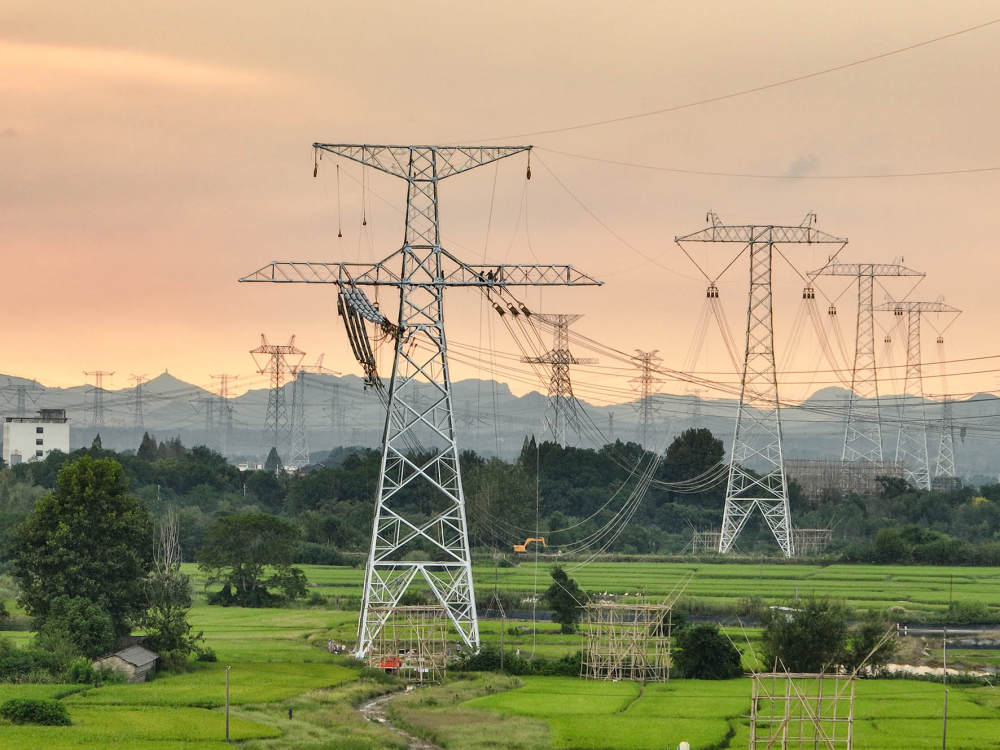
天津港集团生产用电场景实现绿电使用全覆盖
Zhong Guo Jing Ji Wang· 2026-02-02 11:37
Core Viewpoint - Tianjin Port Group has made significant progress in green port construction, achieving full coverage of green electricity usage in production scenarios [1] Group 1: Green Electricity Supply - The group has established a comprehensive green electricity supply framework through self-generated power, external introduction of additional capacity, and network expansion [1] - A comprehensive "zero-carbon port area" construction plan is being implemented to promote the layout of internal renewable energy generation facilities, enabling local production and consumption of clean electricity [1] Group 2: Future Development Plans - Tianjin Port Group will continue to deepen the integration of transportation and energy development, focusing on optimizing green electricity supply and expanding application scenarios [1] - The company aims to explore collaborative control paths for energy storage systems, wind and solar power stations, and charging networks to further enhance renewable energy consumption capacity [1]

推动成果落地 激发创新活力
Ren Min Wang· 2026-02-01 22:13
Group 1 - The core viewpoint of the articles highlights the proactive measures taken by State Grid Electric Power Research Institute (NARI Group) to enhance the stability and efficiency of the power grid through advanced technologies and reforms [1][2][3] - NARI Group is accelerating the implementation of "scientific reform actions" and deepening state-owned enterprise reforms to promote breakthroughs in key areas [1] - The company has established seven specialized research teams and seven "ten-year sword" teams, adopting a flat organizational structure to focus on solving industry pain points [2] Group 2 - By 2025, NARI Group is expected to have accumulated 171 provincial and ministerial-level scientific and technological awards, with 10 projects recognized as major technological equipment in the energy sector [2] - The company has implemented a multi-dimensional incentive mechanism to stimulate innovation, ensuring that performance and compensation grow in tandem [3] - NARI Group is expanding its focus beyond traditional power systems into energy internet and industrial internet sectors, aiming to cultivate a "second growth curve" [3]

下一个五年,新能源消纳面临大变革
中国能源报· 2026-01-31 00:40
业内专家指出,"十五五"时期新能源发展将面临消纳压力、考核机制巨变及系统成本激增等多重挑战,而"主配微协同、就近就地消 纳"是未来发展的新模式 。 我国新能源产业历经二十余年规模化发展,风电与光伏已成为全球瞩目的领军力量。站在"十四五"收官与"十五五"规划启航的交汇点 上 , 行 业 发 展 从 " 单 纯 装 机 驱 动 " 向 " 高 质 量 消 纳 与 双 碳 牵 引 " 转 变 , 面 临 阵 痛 。 近 日 , 在 " ' 十 五 五 ' 新 能 源 产 业 新 业 态 、 新 模 式 交 流 会"上,业内专家指出,"十五五"时期新能源发展将面临消纳压力、考核机制巨变及系统成本激增等多重挑战,而"主配微协同、就近就 地消纳"是未来发展的新模式。 新能源消纳仍是巨大挑战之一 经过二十多年的爆发式增长,我国新能源装机与发电量已达到惊人体量,但对电力系统的冲击也日益显著。过去"只要有装机、有项目 投产,收益即确定"的粗放增长模式一去不返。随着全面市场化的推进,新能源发展的不确定性显著增加,消纳问题成为悬在行业头顶 的达摩克利斯之剑。 中国的大部分风电、光伏装机位于西部地区,电力消费大部分又集中在东部地区, ...
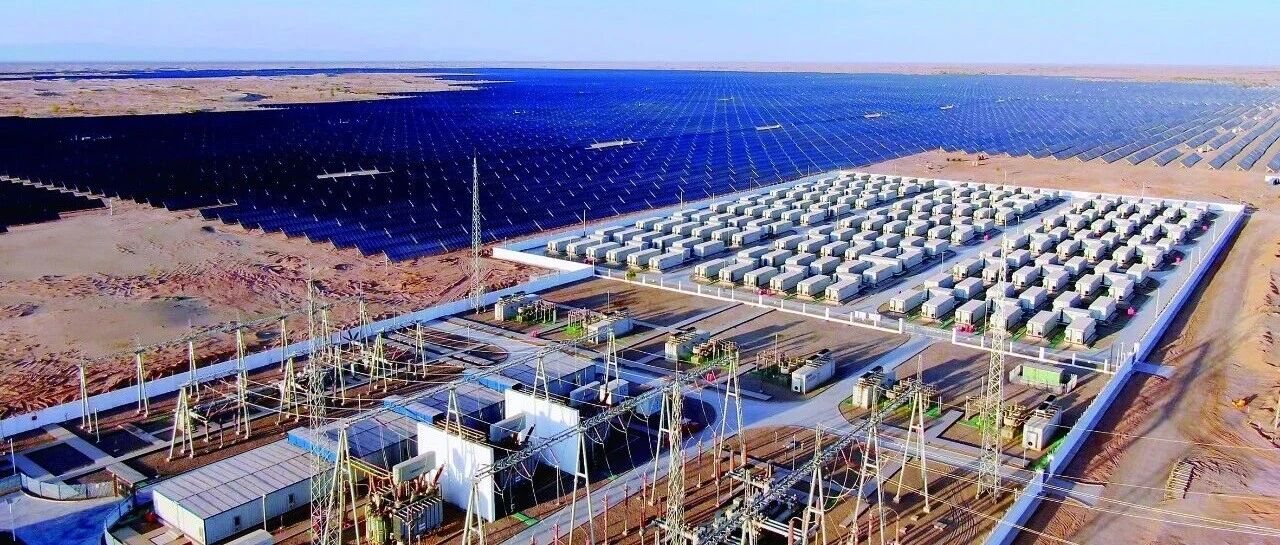
我国电网已成为全球最大新能源消纳平台
Xin Hua Cai Jing· 2026-01-30 08:10
Core Insights - China has built the world's largest and most complex hybrid AC-DC power grid, becoming the largest platform for renewable energy consumption globally [1][2] Group 1: Power Grid Characteristics - The capability for large-scale resource allocation has been continuously enhanced, with 45 ultra-high voltage transmission channels established, including 24 DC and 21 AC lines, optimizing national power resource allocation [1] - The security and supply capacity of the power grid has withstood severe tests, supporting an average annual increase of 80 million kilowatts in power load demand, ensuring reliable power supply equivalent to the total consumption of the US, EU, and Japan combined, with no major blackouts in recent years [1] - The grid has significantly promoted the green and low-carbon energy transition, supporting over 1.8 billion kilowatts of renewable energy access and efficient consumption, aiding the goal of exceeding 20% non-fossil energy consumption by 2025 [1] Group 2: Future Developments - With the rapid increase in renewable energy installation and the development of new power systems, future power systems will exhibit higher complexity and randomness, necessitating new requirements for grid development [2] - The National Development and Reform Commission and the National Energy Administration have issued guidelines to promote high-quality grid development, aiming to establish a new grid platform by 2030, integrating main grids, distribution networks, and smart microgrids [2] - The focus will be on creating a coordinated development framework for main, distribution, and microgrids, ensuring efficient collaboration and advancing major project investments to contribute to the construction of a new energy system and modernization of China [2]
储能-新业态和特高压发挥新能源消纳核心作用
2026-01-28 03:01
储能、新业态和特高压发挥新能源消纳核心作用 20260127 摘要 中国为实现碳中和目标需新增 60-80 亿千瓦装机容量,发电侧降碳关键 在于提升新能源占比,通过储能、跨区消纳和就近消纳促进发展,但当 前新能源消纳是主要挑战,需电力体制改革支撑。 电力体制改革是解决新能源消纳的关键,全国统一电力市场为灵活性资 源提供商业模式,推动新能源全面入市,促进绿电直连和就近消纳,提 高系统对新能源的吸收能力。 十四五期间,光伏装机规模显著增长,但储能发展相对滞后,利用率不 足 50%,与快速发展的新能源不匹配,储能发展亟待提速。 2025 年 1 月国家发改委能源局的通知推动新能源上网电价全面市场化, 建立可持续发展价格结算机制,保障存量项目收益率稳定,通过竞价机 制保障增量项目收益预期,利好可再生能源发展。 全国统一电力市场初步形成"管住中间、放开两头"的架构,将深刻影 响新能源汽车销量,通过灵活透明的价格机制,提高系统效率并促进可 再生能源更好地融入市场。 Q&A 新能源消纳问题的根本原因是什么? 新能源消纳问题的根本原因在于用电量的增长速度。随着我国经济进入高质量 发展阶段,全社会用电量增速不会像过去那样迅猛, ...
20cm速递|创业板新能源ETF国泰(159387)近10日资金净流入超2.4亿元,钠电池技术和工艺逐步成熟
Mei Ri Jing Ji Xin Wen· 2026-01-27 07:14
创业板新能源ETF国泰(159387)跟踪的是创新能源指数(399266),单日涨跌幅限制达20%,该指数 聚焦于新能源及相关技术领域,从市场中选取涉及可再生能源、清洁能源技术及设备制造等业务的上市 公司证券作为指数样本,以反映在技术创新和可持续发展方面表现突出的相关企业整体表现。 (文章来源:每日经济新闻) 华西证券指出,钠电兼具成本和性能优势。由于碳酸锂在锂电池成本中的比重较高,其价格的明显上涨 将带来锂电池成本的提升。而钠元素凭借资源禀赋优势,相比之下性价比优势突显。经过多年的发展, 钠电池技术和工艺逐步成熟,在储能、商用车、乘用车等领域,以及换电、低温等场景中的性能优势明 显,钠电池有望实现规模应用。在电力市场化改革、新能源消纳需求提升背景下,国内储能装机需求持 续释放,目前独立储能收入结构多元、经济性凸显,国内储能已经迈入成长快车道。海内外AIDC建设 放量,叠加海外电网建设需求提升,电力设备出海迎超级景气周期。 从资金面来看,创业板新能源ETF国泰(159387)近10日资金净流入超2.4亿元,钠电池技术和工艺逐 步成熟。 ...

数据中心强化电力基建需求,出海仍是企业长期增长驱动力:2026年电力设备年度展望
Guohai Securities· 2026-01-26 12:35
Investment Rating - The report maintains a "Recommended" rating for the power equipment industry [1] Core Insights - The report addresses key issues such as global power equipment demand from the perspective of power infrastructure investment, focusing on data center power infrastructure, overseas expansion as a long-term growth driver, and changes in the domestic power industry [6][7] - Global power infrastructure investment is expected to grow over the next decade, with varying power supply and demand situations across different regions [9][10] - Data centers are a significant driver of power infrastructure investment globally, particularly in the United States, where demand is projected to increase substantially [38][39] - The report highlights the importance of technological advancements in the power sector, including the rise of new energy technologies and their implications for power equipment demand [37] Summary by Sections Power Infrastructure - Power infrastructure investment is a direct driver of power equipment demand, with a projected CAGR of 12.7% from 2020 to 2024 [14] - In China, power supply and demand are expected to trend towards balance, with resilient grid investment during the 14th Five-Year Plan [21] - In the U.S., public utility capital expenditures are expected to grow at a CAGR of 4.6% from 2025 to 2029, with a focus on generation investment [28] - European electricity demand is anticipated to rebound, with emerging economies showing strong power demand growth [29] AI Data Centers - Data centers are projected to contribute nearly half of the load growth in the U.S., with significant investments from major tech companies [39] - The U.S. Department of Energy forecasts an increase of 52GW in data center load by 2030 compared to 2024 [41] - Supply bottlenecks exist in power transformers and gas turbines, impacting data center construction timelines [42] Overseas Expansion of Power Equipment - Overseas expansion is a crucial long-term growth driver for power equipment companies, with domestic firms expected to gain market share due to shorter delivery times [50] - The overseas market for power equipment is estimated to be four times larger than the domestic market, presenting significant growth opportunities [54] Power Trading - The domestic power market is undergoing significant changes, with a trend towards increased supply and demand balance and a rising share of new energy sources [62] - By the end of 2025, new energy sources are expected to fully enter the market, leading to substantial changes in operational and revenue models for power companies [72] - The retail market for electricity is projected to grow, with independent electricity sales companies expected to play a more prominent role [75]
十五五电网投资超万亿,锂电迎系统级增量
高工锂电· 2026-01-25 11:41
Core Viewpoint - The article discusses the significant expansion of China's power grid, which is expected to reshape the lithium battery demand structure due to a massive investment plan by the State Grid Corporation, amounting to 4 trillion yuan during the 14th Five-Year Plan, marking a 40% increase from the previous plan [1][3]. Investment and Development Goals - The State Grid's investment plan aligns with the 1710 document, which sets clear targets for the development of a new type of power grid by 2030, aiming for renewable energy to account for approximately 30% of total power generation and to support over 40 million charging facilities [2][4]. - The total investment in China's power grid during the 15th Five-Year Plan is projected to exceed 5 trillion yuan, with significant investments in the southern power grid as well [3]. Challenges in Renewable Energy Integration - By 2025, the installed capacity of renewable energy is expected to approach 50%, but the actual power generation from these sources is projected to be less than 25%, indicating a significant gap due to the grid's inability to accommodate new energy sources [4][5]. - The increasing cost of integrating renewable energy into the grid is highlighted, with estimates suggesting that for every 1% increase in renewable energy penetration, system costs rise by approximately 0.01 yuan per kilowatt-hour [6]. Structural Reforms in the Power Grid - The 1710 document proposes a transformative approach to the power grid, emphasizing a collaborative structure involving main, distribution, and micro grids, which aims to enhance the grid's capacity to integrate renewable energy [10][11]. - Key development goals include improving cross-regional transmission capabilities and optimizing the grid structure to support a significant increase in renewable energy integration by 2030 [11][12]. Focus Areas for Future Investments - Future investments will primarily target core technology areas such as distributed independent energy storage and smart microgrid solutions, which are essential for enhancing the grid's capacity to accept renewable energy [15][20]. - The article emphasizes the importance of advanced technologies like grid-forming inverters and energy storage systems to address dynamic stability issues caused by high levels of renewable energy integration [18][23]. Conclusion - The 1710 document is positioned as a guiding framework for the next decade of power grid development in China, aiming to facilitate a transition towards a new energy system that can effectively support high levels of renewable energy integration [24].
十五五电网投资展望专家会-新型电力系统电话会
2026-01-22 02:43
Summary of Conference Call on New Power System Investment Outlook Industry Overview - The conference call focused on the investment outlook for the power grid during the 15th Five-Year Plan period, particularly emphasizing the development of ultra-high voltage (UHV) projects and the integration of renewable energy sources [1][2]. Key Points and Arguments Ultra-High Voltage (UHV) Development - UHV construction is expected to accelerate during the 15th Five-Year Plan, with over 20 direct current (DC) lines anticipated, representing a significant increase compared to the 14th Five-Year Plan [1][7]. - The completion of UHV projects from the 14th Five-Year Plan was hindered by various factors, including the pandemic and insufficient preparation, with only 9 out of 14 planned DC lines completed [3][4]. Main Grid Investment - Investment in the main grid is projected to increase significantly, driven by the need to support UHV DC lines and the rapid development of renewable energy [5][2]. - The main grid investment is expected to grow by over 50%, with specific voltage levels (220kV, 330kV, 500kV, and 750kV) seeing substantial increases [2]. Distribution Network Digitalization - Investment in the digitalization of the distribution network is growing steadily at approximately 20%, focusing on enhancing supply reliability and management efficiency [6][1]. - Digitalization efforts will prioritize artificial intelligence applications and digital twin technology to improve operational efficiency [12][17]. Renewable Energy Consumption Challenges - The rapid growth of renewable energy has led to significant bottlenecks in consumption, particularly in regions like Northwest and Northeast China, where the curtailment rates for solar power can reach 50%-70% [8][16]. - The existing transmission capacity is insufficient to accommodate the increased renewable energy generation, leading to higher curtailment rates and dissatisfaction among power generation companies [9][10]. Distribution Network Investment Shortfalls - The growth rate of distribution network investment has not met expectations due to regulatory cycles and the need for precise investment effectiveness assessments [11][1]. - Large-scale upgrades required for high-penetration household solar installations have not yet been fully initiated, with a continued focus on main grid construction [11][1]. Future Expectations and Policy Changes - The national grid's energy storage construction will primarily focus on pumped storage, with an expected annual capacity of 8-9 GW, maintaining levels from the previous plan [21][22]. - A national capacity compensation policy is anticipated to be introduced, which may face opposition from local governments concerned about rising end-user electricity prices [23][24]. Technological Innovations - The development of new generation dispatch technologies will focus on integrating digitalization with operational practices to enhance automation and reliability [19][18]. - The introduction of flexible control devices in the medium and high voltage networks is expected to stabilize the grid and improve energy transmission efficiency [27][26]. Additional Important Insights - The digitalization of the power grid is transitioning from foundational infrastructure to more advanced applications, emphasizing the integration of AI and digital twin technologies [17][12]. - The need for innovative business models in the distribution network is highlighted, requiring significant structural adjustments to improve reliability and efficiency [26][1].