智能体

Search documents
AI悖论——热情高涨,价值难彰 | CEO与CIO如何解锁智能体转型价值
麦肯锡· 2026-03-19 02:56
Core Viewpoint - Artificial intelligence (AI) has become a primary focus for CEOs and CIOs across various industries, with companies increasing investments and exploring applications. However, few organizations are realizing significant returns from their AI investments due to challenges in aligning AI projects with strategic goals, scaling applications, and establishing necessary infrastructure [2][3]. Group 1: Challenges in Unlocking AI Value - Many organizations struggle to align AI projects with overall business strategies, leading to scattered applications that do not substantively support corporate objectives. CEOs often prefer exploration and experimentation over decisive scaling, limiting AI's economic impact [4]. - Although 80% of companies have deployed AI in at least one business function, most report that these applications have not yet contributed significantly to revenue. Horizontal applications like chatbots are widely used but yield limited benefits, while more impactful vertical applications remain in pilot stages due to organizational and technical barriers [5]. - AI's effectiveness is heavily dependent on high-quality, accessible data, yet many companies lack the necessary data infrastructure to support scalable AI applications, which restricts their ability to generate actionable insights and value [6]. - Organizational inertia, including resistance to change and slow adoption by frontline teams, poses significant obstacles to AI transformation, preventing its full potential from being realized [7]. - There is a notable skills gap in AI-related roles, and the lack of strategic talent planning further limits companies' ability to deploy and scale AI effectively. Technical teams need a deeper understanding of business contexts to create value-driven solutions [8]. - Many companies lack a clear understanding of where AI value will be generated and how to measure return on investment, leading to disappointment when initial results do not meet expectations [9]. Group 2: Key Responsibilities of CEOs and CIOs - CEOs must ensure that AI initiatives are closely aligned with the overall corporate strategy and drive the scaling of AI to integrate it into organizational culture and daily operations. This includes articulating a clear AI vision that connects with the company's goals [10]. - To unlock the value of AI transformation, CEOs must drive recalibration and redesign of the enterprise operating system, including making decisions on recruitment and organizational structure [11]. - CEOs should advocate for a culture of continuous learning and innovation, emphasizing the importance of understanding AI's potential within their industry [13]. - Collaboration with CFOs is essential for budget allocation and financial assessment of AI initiatives, ensuring resources are prioritized for projects that align with corporate strategy [14]. - CIOs play a crucial role as architects of technology capabilities, ensuring that the enterprise's infrastructure, data, and systems are prepared for AI applications. This includes building a robust technical foundation and establishing data governance mechanisms [15][16]. - CIOs must oversee the operation of AI systems, ensuring that the results generated align with corporate policies and standards [17]. - Both CEOs and CIOs need to prioritize resource allocation for AI projects that align with corporate strategy, establish clear metrics for evaluating AI project effectiveness, and dynamically adjust investment directions based on data insights [18][19].


腾讯电话会全文&详解:马化腾首谈“养虾”构想,今年AI投资至少翻倍,智能体将催生去中心化新生态!
美股IPO· 2026-03-19 00:04
Core Insights - Tencent has identified AI as a core strategic focus for 2025 and plans to double its investment in the "Hunyuan" model and new AI products by 2026, indicating a strong commitment to AI development [1][3] - The company expects short-term revenue growth to outpace profit growth due to significant investments in AI, but emphasizes the resilience of its core businesses in the AI era [3][12] - Tencent's management believes that the AI landscape will not be dominated by a single model but will feature a decentralized ecosystem with multiple models coexisting [13][14] Financial Performance - In Q4 2025, Tencent reported total revenue of 194.4 billion RMB, a year-on-year increase of 13%, with a gross profit of 108.3 billion RMB, up 19% [34][36] - The gaming sector saw a 22% revenue growth, significantly surpassing the global gaming industry's 7% growth rate, driven by strong user engagement and innovative content [6][34] - Marketing services revenue grew by 19%, exceeding the industry average of 14%, attributed to enhanced AI-driven advertising solutions [6][34] AI Strategy and Investment - Tencent's AI strategy is evolving from enhancing existing business operations to creating new applications, with a focus on the "Hunyuan" model and AI chat application "Yuanbao" [9][10] - The company invested 1.6 billion RMB in AI applications and the Hunyuan model in Q4 2025 alone, with total annual investment reaching 1.8 billion RMB [3][10] - Management acknowledges the potential for a revenue and profit growth disparity in the short term due to AI investments but remains optimistic about long-term returns [12][31] Core Business Resilience - Tencent's core businesses, including social networking and gaming, are expected to maintain strong resilience in the face of AI transformation, supported by deep network effects and user data privacy [5][24] - The gaming business, particularly multiplayer online games, is seen as robust, with AI enhancing content creation and user engagement [6][24] - The company's financial technology services are also considered resilient due to regulatory barriers and established user networks [24][27] AI Applications and Ecosystem - Tencent views AI agents as a significant opportunity, enabling decentralized applications that can evolve independently [14][15] - The company is integrating AI capabilities into its existing platforms, such as WeChat and QQ, to enhance user experience and service offerings [10][30] - Tencent's approach to AI emphasizes collaboration across its ecosystem, leveraging its unique position in both centralized and decentralized applications [13][15] Cloud Business Transformation - Tencent Cloud has shifted its focus from revenue growth to high-quality service delivery, resulting in improved profitability and market positioning [11][32] - The cloud business is benefiting from increased demand for GPU capabilities and AI-driven services, with significant investments in computational resources planned for the future [11][32] - The company aims to replicate the successful investment model seen in its cloud business for its new AI products, viewing initial investments as necessary for long-term value creation [31][32]


从GPU到LPU:英伟达大举进攻推理芯片,黄仁勋再落关键一子
Hua Xia Shi Bao· 2026-03-18 00:59
Core Insights - The AI industry is shifting focus from model training to inference, with companies like NVIDIA adapting to this change by introducing new products and strategies [1][3][6] - NVIDIA's CEO Jensen Huang announced the launch of the Groq 3 LPU, a dedicated AI inference chip, during the GTC 2026 event, aiming to capture a significant share of the inference chip market [1][2] - NVIDIA's revenue forecast for its Blackwell and Rubin product lines has doubled to $1 trillion by the end of 2027, indicating strong market confidence [1] Group 1: NVIDIA's Strategic Moves - NVIDIA has launched the Vera Rubin platform, which includes seven new chips, enhancing its capabilities in AI inference [2] - The Groq 3 LPU is designed to significantly increase token throughput from 100 tokens per second to 1500 tokens or more, supporting advanced AI interactions [2] - NVIDIA's acquisition of Groq's core technology assets for approximately $20 billion in December 2025 has positioned the company to leverage Groq's innovations in its product offerings [3] Group 2: Market Trends and Predictions - The market is witnessing a shift in AI chip shipments, with non-GPGPU chips expected to rise from 36% in 2024 to 45% by 2027, while GPGPU shipments will decline from 64% to 55% [3] - The demand for inference capabilities is being driven by the rise of intelligent agents, which focus more on inference rather than training [6] - NVIDIA's introduction of the LPU is a strategic response to the evolving AI compute demands, addressing the need for efficiency and lower latency in inference scenarios [3][6] Group 3: Ecosystem and Infrastructure Development - NVIDIA is enhancing its ecosystem by introducing the NeMoClaw reference architecture, which includes security and privacy features for enterprise AI systems [6] - The company has also launched the Vera Rubin DSX AI Factory reference design, aimed at optimizing AI infrastructure for scalability and performance [6][7] - Huang emphasized that in the AI era, intelligent tokens are the new currency, and AI factories are essential for generating these tokens, highlighting the importance of infrastructure in AI development [7]

英伟达GTC大会的核心看点,谁是最大受益方?
傅里叶的猫· 2026-03-17 15:08
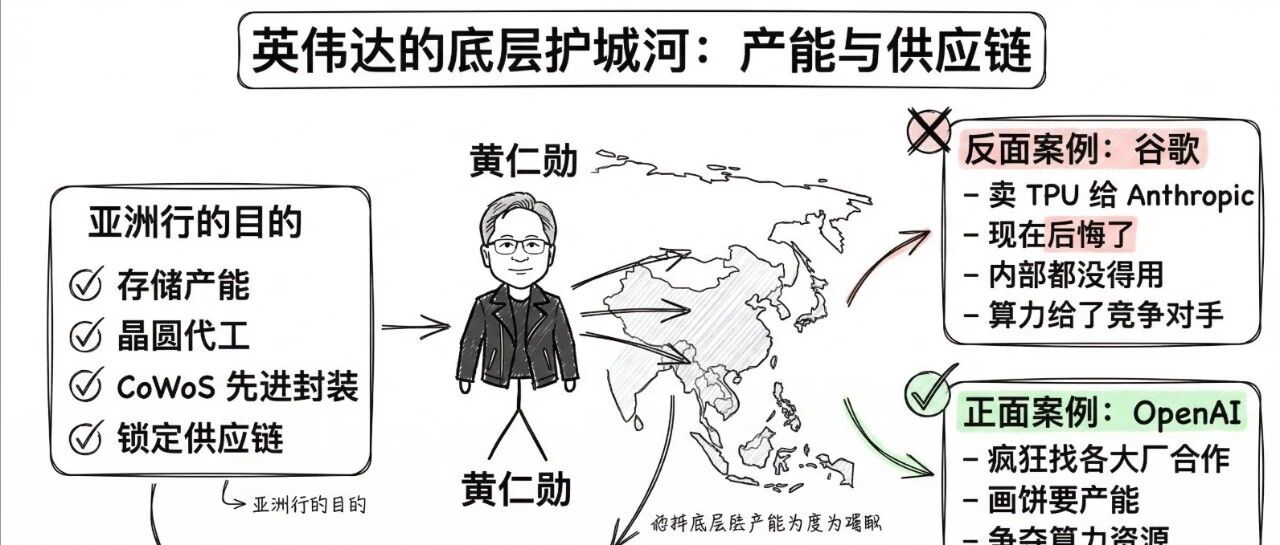
Core Insights - The article discusses the implications of NVIDIA's recent GTC event, focusing on technological shifts and potential beneficiaries in the semiconductor industry, particularly highlighting Samsung's role as a key supplier [1]. Group 1: CPX and LPU Transition - CPX has been replaced by LPU due to NVIDIA's strategic shift from prefill acceleration to inference acceleration [2][3]. Group 2: Beneficiaries of GTC - Samsung emerges as the biggest beneficiary from the GTC event, as it is the exclusive manufacturer of LPU using its N4 process technology, surpassing TSMC in overall value on Rubin [4]. Group 3: LPX Rack and FPGA Integration - The introduction of FPGA in the LPX rack allows 256 LPU to function as a single giant processor, enabling low-latency, deterministic inference acceleration [6]. Group 4: Independent CPU Cabinets - The establishment of independent CPU cabinets is aimed at supporting the autonomous operation of intelligent agents, providing a vast "sandbox" environment for testing and validation [7]. Group 5: Independent Storage Cabinets - NVIDIA's independent storage cabinets are linked to the ICMS (Inference Context Memory Storage) solution, addressing the exponential growth of KV Cache requirements in the intelligent agent era [8][11]. Group 6: Storage Architecture - NVIDIA employs a tiered storage architecture where ICMS serves as a long-term memory for AI clusters, optimizing the storage, retrieval, and sharing of massive temporary KV Cache data [13]. Group 7: Supply Chain and Capacity Control - NVIDIA's CEO emphasizes the importance of supply chain management and capacity control, frequently visiting Asia to secure storage, wafer fabrication, and advanced packaging capacities [14]. Group 8: Competitive Landscape - The article highlights a cautionary tale regarding Google's sale of TPU to Anthropic, illustrating the critical nature of controlling AI computing capacity as a determinant of competitive success in the industry [16].
黄仁勋GTC演讲全文:龙虾就是新操作系统
是说芯语· 2026-03-17 02:09
Core Viewpoint - NVIDIA is transforming from a "chip company" to an "AI infrastructure and factory company," emphasizing the concept of "Token Factory Economics" to drive future growth and address market concerns about sustainability and growth potential [2][12]. Group 1: Market Demand and Growth Projections - NVIDIA's CEO Huang Renxun projected a demand of at least $1 trillion by 2027, significantly up from the previously estimated $500 billion [5][56]. - The exponential growth in global AI computing demand is driven by advancements in large models transitioning from "perception" and "generation" to "reasoning" and "action" [4][55]. - Huang stated that the actual computing demand could exceed the $1 trillion forecast, indicating a potential supply shortage [9][10]. Group 2: Token Factory Economics - The future data centers will function as "factories" for producing tokens, which are the basic units generated by AI [12][62]. - The efficiency of token production will be determined by the throughput per watt of power, emphasizing the importance of maximizing token generation within fixed power limits [14][63]. - Different pricing tiers for tokens were introduced, ranging from free layers with high throughput to premium layers costing up to $150 per million tokens [18][63]. Group 3: Technological Innovations - The introduction of the Vera Rubin system, which is designed for high-performance AI workloads, showcases NVIDIA's advancements in AI computing systems [19][65]. - The integration of Groq's technology aims to enhance inference performance by optimizing the processing pipeline for token generation [66][70]. - NVIDIA's collaboration with various cloud service providers, including Google Cloud and AWS, enhances its AI capabilities and market reach [41][42]. Group 4: Software and Ecosystem Development - The launch of OpenClaw, described as the "operating system" for intelligent agents, signifies a shift in enterprise IT towards providing specialized AI services [25][77]. - The company is investing in the development of foundational AI models through the formation of the Nemotron Alliance, which aims to advance AI infrastructure [81][82]. - The emergence of AI-native companies is expected to create significant market opportunities, similar to past technological revolutions [50][51]. Group 5: Industry Applications and Collaborations - NVIDIA's technology is being applied across various sectors, including autonomous driving, healthcare, and telecommunications, indicating its broad industry impact [47][83]. - The company is collaborating with major automotive manufacturers to integrate AI into their vehicles, enhancing the capabilities of autonomous driving [83]. - The telecommunications industry is evolving, with base stations transforming into AI infrastructure platforms capable of real-time data processing [84].

黄仁勋GTC演讲全文:推理时代到来,2027营收至少万亿美元,龙虾就是新操作系统
华尔街见闻· 2026-03-16 23:55
Core Insights - The article discusses NVIDIA's transformation from a "chip company" to an "AI infrastructure and factory company," emphasizing the concept of "Token Factory Economics" as a driving force for future growth [2][5][13]. Group 1: Market Demand and Growth Projections - NVIDIA's CEO Huang Renxun projected a significant increase in AI computing demand, estimating at least $1 trillion by 2027, up from a previous estimate of $500 billion [6][65]. - The company anticipates that actual computing demand will exceed this projection, indicating a robust growth trajectory for AI infrastructure [10][11]. Group 2: AI Infrastructure and Token Production - Huang highlighted that modern data centers will evolve into "Token factories," focusing on the efficiency of token production as a key operational metric [74]. - The future pricing structure for tokens will include various tiers, with costs ranging from free to $150 per million tokens, reflecting the value of throughput and speed [16][75]. Group 3: Technological Advancements - The introduction of the Vera Rubin system, which achieved a 350-fold increase in token generation speed, showcases NVIDIA's commitment to cutting-edge technology [20][81]. - The integration of Groq technology aims to enhance inference performance, with a focus on optimizing the processing pipeline for AI workloads [77][79]. Group 4: Software and Ecosystem Development - The emergence of OpenClaw as a pivotal open-source project signifies a shift towards "Agent-as-a-Service" (AaaS), transforming how software companies operate [26][91]. - NVIDIA's collaboration with various enterprises to develop AI models and platforms indicates a strategic move to solidify its position in the AI ecosystem [96]. Group 5: Industry Impact and Future Outlook - The article emphasizes that the AI industry is experiencing unprecedented growth, with venture capital investments reaching $150 billion, marking a historic high [57]. - The anticipated shift towards AI-native companies will redefine industries, similar to past technological revolutions [58].

英伟达发布Rubin芯片,算力提升五倍,市场万亿美元
Xin Lang Ke Ji· 2026-03-16 22:23
Core Insights - Nvidia officially launched the Vera Rubin AI acceleration platform at the GTC 2026 conference, featuring a chip built on TSMC's 3nm process with 336 billion transistors, a 60% increase over the previous Blackwell generation [2] - The combined procurement orders for the Blackwell and Rubin architectures are expected to reach $1 trillion by 2027, double Nvidia's previous forecast [2] Group 1: Vera Rubin Platform Details - The Vera Rubin platform is a six-chip collaborative system, integrating a Vera CPU and two Rubin GPUs, along with four additional chips to form a complete AI factory infrastructure [3] - The Rubin GPU features 336 billion transistors, 288GB of HBM4 memory, and a memory bandwidth of 22TB/s, achieving inference performance of 50 PFLOPS and training performance of 35 PFLOPS, significantly surpassing Blackwell's capabilities [3] Group 2: Efficiency and Design Innovations - The Vera Rubin platform reduces inference token costs by 90% compared to Blackwell and decreases the number of GPUs needed for training mixture of experts (MoE) models by 75% [5] - The NVL72 rack features 100% liquid cooling and a modular design that reduces installation time from two hours to five minutes [5] Group 3: Future Developments - The Rubin Ultra system, set for release in 2027, will feature a new Kyber rack architecture with 576 GPUs, achieving an inference performance of 15 ExaFLOPS and a total memory capacity of 365TB [6] - Nvidia maintains a strict annual iteration schedule with planned releases for Blackwell (2024), Blackwell Ultra (2025), Rubin (2026), Rubin Ultra (2027), and Feynman (2028) [6] Group 4: Cloud Partnerships and Deployment - The Vera Rubin platform has entered mass production, with initial deployments scheduled for late 2026, including major cloud providers like AWS, Google Cloud, Microsoft Azure, and Oracle Cloud [7] - Microsoft plans to deploy the Vera Rubin NVL72 rack system for new AI data center projects, while CoreWeave will integrate Rubin systems into its AI cloud platform starting in late 2026 [7] Group 5: Strategic Vision and Expansion - Nvidia's narrative at GTC emphasizes the transition of AI from a tool to an "intelligent agent" paradigm, introducing the OpenClaw AI agent framework and the NemoClaw open-source project [8] - The company is also advancing the Vera Rubin Space-1 initiative to build a data center in orbit, aiming for computational power equivalent to 25 times that of the H100 [8] - Nvidia announced the Nvidia Groq 3 language processing unit (LPU), following a $20 billion acquisition of AI chip startup Groq, positioning itself against AMD in the inference market [8]
Openclaw加速推动Agent落地
Soochow Securities· 2026-03-16 03:30
证券研究报告·策略报告·策略周评 策略周评 20260316 Openclaw 加速推动 Agent 落地 2026 年 03 月 16 日 [Table_Tag] [Table_Summary] 本周 AI 要闻 (信息来源:财联社、AI daily、新智元等) 周度观点 ◼ 脑机接口进入临床阶段,Openclaw 加速推动 Agent 落地 (1)本周全球 AI 产业延续算力、模型与应用协同推进的演进趋势,基础 设施升级与执行型智能系统落地两条主线持续深化。算力端,Meta、英伟 达等头部科技企业通过推出自研芯片、建设数据中心等方式持续强化底层 基础设施建设,显示 AI 算力体系正向自研芯片与超大规模集群并行演进。 模型端,随着智能体技术加速发展,英伟达、OpenAI、小红书等企业通过 开源大模型和巩固模型护城河等方式,推动模型向复杂任务执行与企业级 部署延伸。应用端,AI 正逐步进入医疗、人机交互与企业自动化等现实场 景,国内脑机接口企业融资与相关产品获批上市标志脑机接口进入临床应 用阶段,而 Meta 与特斯拉分别探索 AI 智能体社交网络与企业自动化系 统。整体来看,在算力基础设施升级与智能体技术进 ...
智谱-AutoClaw会谈纪要:智能体的价值真实存在,变现和采用取决于模型、工作流和管控
2026-03-16 02:20
Summary of Conference Call Notes Company and Industry Overview - **Company**: AutoClaw - **Industry**: AI and Intelligent Agents Key Points and Arguments Adoption and Monetization of Intelligent Agents - The value of intelligent agents is recognized, but monetization and adoption depend on the model, workflow, and management [1] - AutoClaw and similar products lower the barrier for non-technical users to engage with intelligent workflows, indicating a potential for increased model usage and infrastructure demand over time [1] Popularity of OpenClaw-like Products - The rise in popularity of OpenClaw-like products is attributed to improvements in product design and usability rather than a breakthrough in model intelligence [2] - Key factors include integration with existing communication tools, persistent memory for user profiling, and broader system permissions for agents [2] Importance of Base Model Quality - The commercial potential of intelligent agents is heavily reliant on the quality of the underlying models [3] - Better models lead to improved task completion, adherence to instructions, and performance in complex workflows, benefiting leading model suppliers [3] Current Market Stage - The intelligent agent market is still in an exploratory phase, with significant monetization not expected in the short term [6] - Current products are primarily focused on helping users discover use cases, with substantial commercial expansion likely requiring 6 to 12 months of model improvements and product iterations [6] Investment Opportunities - The most promising investment areas include: 1. Technical engineering workflows (coding, testing, deployment) 2. Information and content workflows (research, document processing) 3. Personal productivity tools (email, calendar management) [7] - Investors should focus on structured enterprise tasks rather than consumer adoption for short-term expectations [7] Open Architecture vs. Closed Model Ecosystem - AutoClaw supports multiple model providers, indicating a preference for an open architecture [8] - This approach broadens the potential market but may limit exclusive downstream value capture unless model performance and integration capabilities are superior [8] Competitive Advantages - Management emphasizes that long-term competitive advantages will stem from product insight speed, base model quality, and accumulated agent functionalities [9] - The focus should be on the ability to enhance task completion rates and reduce friction over time [9] Beneficiaries in the AI Value Chain - Broader adoption of intelligent agents is expected to benefit model suppliers, reasoning infrastructure, cloud providers, and collaborative workflow platforms [10] - Integration with communication tools is highlighted as a key driver of usability [10] Risks and Challenges - Companies with limited competitive advantages in low-barrier information processing may face disruption from AI [12] - Enterprises with proprietary data and complex systems are likely to be more resilient [12] - Security and regulatory concerns, such as prompt injection and permission errors, are significant constraints on enterprise deployment [13] Investment Rating and Valuation - The company is rated "Overweight" with a target price of 800 HKD, based on a 30x P/E ratio for expected normalized earnings by 2030 [14][16] - The target price reflects a premium valuation compared to leading internet companies, anticipating a revenue CAGR exceeding 100% from 2026 to 2030 [16] Risks Affecting Rating and Target Price - Downside risks include export controls, geopolitical tensions, increased competition, and reliance on external suppliers for computing infrastructure [18] This summary encapsulates the essential insights from the conference call, highlighting the current state and future potential of intelligent agents, particularly focusing on AutoClaw and its market dynamics.
卡帕西630行代码炸出81个智能体,4天协作跑2333次实验,公布预训练十大发现
量子位· 2026-03-15 06:30
Core Insights - The article discusses the autoresearch project initiated by Karpathy, which allows AI to autonomously conduct experiments and improve language model training efficiency by approximately 11% without human intervention [1][5] - The project evolved from a single AI conducting experiments to a distributed community of AIs collaborating on research, running over 2000 experiments in just four days [2][10] - A self-organized peer review system emerged among the AIs, indicating a significant advancement in how AI can simulate a research community [4][12] Group 1: Project Development - The autoresearch project initially consisted of 630 lines of Python code and was designed to simulate an entire research community rather than just a single PhD student [1][5] - The number of AIs involved in the project expanded from 13 to over 80 within a week, demonstrating rapid growth and collaboration [10] - A variety of roles emerged among the AIs, including experimenters, verifiers, statisticians, and meta-analysts, all without pre-assigned tasks [11][13] Group 2: Experimental Findings - A significant finding was that many claimed improvements in model performance were often just noise, with one AI discovering that seed variance accounted for approximately 0.002 BPB, which is the same magnitude as many reported improvements [25][26] - The optimal architecture identified by the AIs was unexpectedly small, consisting of 12 layers, a dimension of 512, and an aspect ratio of 40 [23] - Several well-regarded techniques failed dramatically, leading to significant performance degradation, which was documented in a shared memory system to prevent future AIs from repeating the same mistakes [27][28] Group 3: Knowledge Sharing and Optimization - The collective memory of the AIs accelerated the discovery process, allowing new AIs to build on existing knowledge rather than starting from scratch [31][32] - AIs demonstrated the ability to learn from past experiments, avoiding redundancy and enhancing the efficiency of research [9][12] - The project also highlighted the importance of adjustable parameters over fixed constants, with many improvements resulting from replacing static values with learnable parameters [21][22] Group 4: Broader Implications - The findings suggest that the most significant breakthroughs may not lie in model architecture but rather in data scheduling and pipeline management, as indicated by over 1000 hypotheses generated by meta-AIs [29][30] - The autoresearch framework has implications for future AI research, showcasing the potential for AIs to autonomously explore and optimize not just models but also scientific discovery processes [33][36] - The project has sparked interest in the broader AI community, emphasizing the need for collaboration and shared knowledge in advancing AI research [38][41]