智能家电

Search documents
海尔集团与歌尔集团达成战略合作
Bei Jing Shang Bao· 2025-12-14 11:31
Core Viewpoint - Haier Group has officially signed a strategic cooperation agreement with Goer Group, focusing on deep collaboration in smart home appliances, industrial internet, new energy, and artificial intelligence fields [1] Group 1 - The partnership aims to leverage both companies' strengths in technology and innovation to enhance product offerings and market competitiveness [1] - The collaboration is expected to drive advancements in smart home solutions and industrial applications, aligning with current market trends towards digitalization and sustainability [1]


预见未来家:2025年度家电行业十大事件盘点
Xin Lang Cai Jing· 2025-12-12 14:20
Group 1 - The home appliance industry is navigating through challenges and opportunities in 2025, driven by policy support and external pressures, while embracing AI technology and market competition [1][29] - The "old-for-new" policy has been significantly expanded, with subsidies increasing from 8 to 12 categories of appliances and the maximum subsidy for air conditioners raised from 1 to 3 units per consumer [3][31] - In 2024, the "old-for-new" initiative generated over 1.3 trillion yuan in sales, and in 2025, it is expected to bring even stronger growth momentum due to increased support and extended implementation time [3][32] Group 2 - The launch of the AI model DeepSeek has revolutionized the home appliance sector, becoming a core engine for product innovation and driving a wave of new consumer experiences [4][34] - The home appliance industry has shown resilience amid a "tariff storm," with companies viewing the situation as an opportunity to expand into emerging markets [6][36] - The summer of 2025 saw unprecedented demand for air conditioners in Northeast China due to extreme heat, leading to a significant increase in sales and installation requests [15][43] Group 3 - The concept of "anti-involution" has gained traction in the home appliance industry, with calls for a shift away from price wars towards sustainable competition and innovation [18][46] - A strategic partnership between Midea and Hisense marks a significant trend in the industry, indicating a move towards collaboration among leading companies to enhance market space [13][41] - The introduction of national standards for smart home appliances is set to standardize technology requirements and improve consumer confidence in product quality [22][50] Group 4 - Rising copper prices due to global supply constraints and increased demand are putting pressure on the home appliance industry, leading to price adjustments by manufacturers [24][52] - The competitive landscape is shifting, with companies like Gree and Xiaomi engaging in public disputes over sales data, highlighting a focus on long-term service commitments and quality over short-term sales figures [20][48] - The home appliance industry is expected to face ongoing challenges and opportunities as it transitions towards a focus on technological innovation and value chain management [27][54]


小米武汉首台自研智能空调下线
Chang Jiang Ri Bao· 2025-12-11 09:33
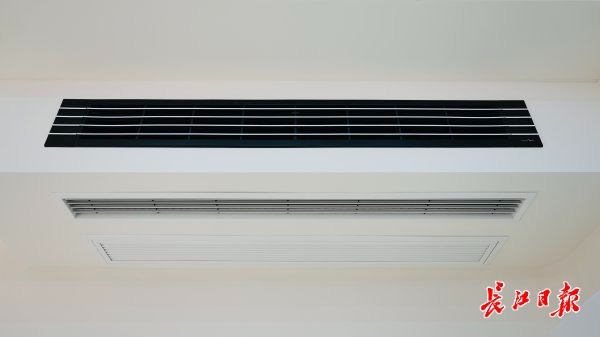
Core Insights - Xiaomi has launched its first self-produced central air conditioner in Wuhan, marking a significant step in its "smart home ecosystem" strategy in Central China [1] - The upgraded version of the previously released central air conditioner, the Mi Home Central Air Conditioner Pro, is designed for larger spaces and enhanced smart features [2] - The new air conditioner features a "dual airflow" mode to address temperature differences in winter, maintaining a temperature difference of less than 0.8°C between the head and feet [2] Product Features - The air conditioner can be controlled via voice commands and can recognize "unmanned status" to switch to energy-saving mode [3] - It operates effectively in extreme temperatures, maintaining cooling performance at 50°C and heating performance at -7°C [3] - Xiaomi has introduced a "customized purchase" option for consumers to receive tailored solutions based on room size [3] New Product Launches - Alongside the air conditioner, Xiaomi has launched four additional smart home products, including a ceiling light designed for eye protection, a smart home screen that connects over 6,000 devices, and a refrigerator with advanced preservation features [4] - The new washing machine offers a large capacity and smart features for family needs [4] Strategic Focus - Xiaomi is establishing Wuhan as a core hub for its smart home appliance industry, aiming to contribute to the region's economic development through innovation [4]

家电周报:石头科技发布黑五战报,莱克电气公告参与认购投资基金-20251207
Shenwan Hongyuan Securities· 2025-12-07 08:12
Investment Rating - The report maintains a positive outlook on the home appliance sector, with the sector index outperforming the CSI 300 index, increasing by 1.8% compared to the 1.3% rise of the CSI 300 [4][5]. Core Insights - The report highlights significant sales growth for Stone Technology during the Black Friday period, with a 41% increase in vacuum cleaner sales and a 361% increase in floor washing machines in Europe [4][13]. - Luck Electric announced its participation in a private equity fund, investing 20 million yuan, which represents 62.40% of the total subscription amount, focusing on equity investment in Shenzhen Cloud Leopard Intelligent Co., a semiconductor company [4][14]. - The report identifies three main investment themes: 1. White goods benefiting from favorable real estate policies and low valuations, recommending companies like Hisense, Midea, and Gree [4]. 2. Export-driven companies like Ousheng Electric and Dechang Co. are expected to see revenue growth due to large customer orders [4]. 3. Core components in the white goods sector are expected to see increased demand, with recommendations for companies like Huaxiang and Shun'an [4]. Data Observations - In October 2025, the air conditioning sector saw a total production of 10.13 million units, a year-on-year decrease of 27.90%, with domestic sales down 21.30% [4][36]. - The refrigerator sector reported a production of 8.27 million units, down 9.8% year-on-year, with domestic sales decreasing by 10.76% [4][42]. - The washing machine sector experienced a slight production decrease of 0.2%, but exports increased by 6.41% [4][46]. - The report notes that raw material prices for copper and aluminum have risen, with copper prices up 22.52% year-on-year [4][16].




第七届金麒麟家用电器行业最佳分析师第一名国联民生证券管泉森最新观点:“新”家电逐步破圈 看三大板块标的
Xin Lang Zheng Quan· 2025-12-01 06:38
Core Viewpoint - The home appliance industry demonstrated resilience during the Double Eleven shopping festival, supported by policy measures and structural benefits, indicating a positive outlook for demand and growth in the sector [1][2][3] Group 1: Market Performance - The home appliance sector achieved resilient growth during Double Eleven, driven by promotional discounts and the recovery of policy funding, which is expected to support demand for essential appliances and structural upgrades [1] - Major brands like Midea and Haier maintained strong performance, with Midea's COLMO product line seeing over 40% growth in bundled sales, and Haier achieving sales exceeding 4 billion yuan [1] - The trend of younger consumers engaging with home appliances is notable, with Midea's growth in this demographic exceeding 50% and Haier's Z generation growth at 38% [1] Group 2: Export Trends - The home appliance export market is showing signs of improvement, with leading companies experiencing a rebound in overseas business despite high baseline pressures [2] - Positive developments in US-China trade negotiations and ongoing global capacity expansion are expected to enhance the ability of leading companies to manage trade risks and improve profit margins in overseas markets [2] Group 3: Investment Outlook - The home appliance industry is rated as "stronger than the market," with limited pressure on domestic sales and a gradual recovery expected in exports [3] - The sector's valuation has returned to historical lows, presenting investment opportunities, particularly in leading companies such as Midea, Haier, Hisense, and Gree, which are noted for their competitive pricing and strong market positions [3] - Emerging categories like robotic vacuum cleaners are anticipated to have significant growth potential, further enhancing the investment appeal of the sector [3]

餐饮、潮玩及家电行业周报-20251130
Haitong Securities International· 2025-11-30 14:04
Investment Rating - The report assigns an "Outperform" rating to several companies in the discretionary consumption sector, including Pop Mart, Anta Sports, Huazhu Group, Miniso, Li Ning, Atour Group, New Oriental Online, and Xtep International [1][5]. Core Insights - The report highlights the stable long-term growth of Luckin Coffee despite facing short-term margin pressures, indicating resilience in the F&B sector [2]. - The introduction of new children's meal sets by Taier emphasizes the trend towards fresh and healthy dining options, reflecting consumer preferences [2]. - The report notes the expansion of Midea's automotive parts production in Mexico, which supports local manufacturing for North American electric vehicle clients [2]. - The implementation of new national standards for smart home appliances starting May 1, 2026, is expected to enhance product quality and consumer trust in the home appliances sector [2]. Summary by Sections Company Performance - Guming and Pop Mart were the top performers this week, with stock price increases of 12.6% and 12.8% respectively [3][7]. - SuperHi International reported a revenue of $21 million for Q3 2025, a year-on-year increase of 7.8%, but faced a significant drop in net profit due to increased foreign exchange losses [2][5]. - Chagee's Q3 results showed a revenue decline of 9%, with adjusted net profit down 22% [2][5]. Market Trends - The report indicates a growing trend in the F&B sector towards fresh and healthy meal options, as seen with Taier's new children's meal offerings [2]. - The smart home appliance market is set to evolve with the introduction of new standards, which will likely drive innovation and consumer adoption [2].



家电是否智能有了“新国标” 海信空调参与智能空调“新国标”制定
Zhong Guo Fa Zhan Wang· 2025-11-27 07:42
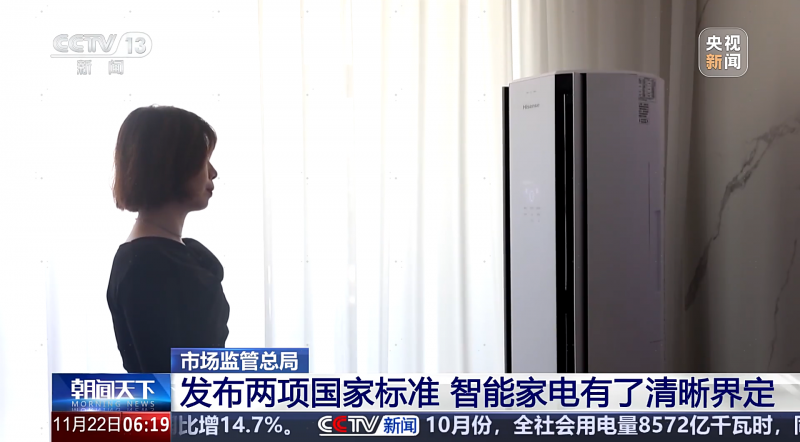
Core Viewpoint - The recent release of two national standards for smart home appliances by the State Administration for Market Regulation marks a significant step towards standardized development in China's smart appliance industry, with Hisense playing a key role in the formulation of these standards [1][3]. Group 1: New National Standards - The new standards define smart appliances based on "smart capabilities" and "scenario effects," establishing a five-level grading system from L1 to L5 to quantify the intelligence level of home appliances [1][3]. - The standards delineate nine typical smart home application scenarios, providing unified guidance for product innovation and ecological interconnectivity [1][3]. Group 2: Hisense's Innovations - Hisense has been a major contributor to the standards, leveraging its extensive experience in smart technology and innovative practices in scenario applications [1][3]. - The Hisense air conditioner, featuring the "Healthy Smart Wind" concept, has led the industry in a comprehensive upgrade, showcasing advanced smart interaction capabilities [3]. - The Hisense Brilliant U6 air conditioner, launched in September, is the first to support the Star Flash Human Sensing 2.0 technology, enabling precise and intelligent air control based on user proximity [3]. Group 3: Environmental and Health Management - The new standards specify technical requirements for environmental management, health management, and energy resource management across nine application scenarios [3][5]. - Hisense's new air conditioning model, the Deep Sleep Treasure X5, introduces a CO₂ sensor that visually indicates air quality and automatically activates fresh air circulation when CO₂ levels exceed safe limits [5]. - The Brilliant U6 series is equipped with a TVOC sensor to monitor indoor volatile organic compounds, ensuring compliance with the stringent health management requirements of the new standards [5]. Group 4: Future Implications - The new national standards will officially take effect on May 1 next year, further regulating the smart appliance market and providing authoritative references for consumers [7]. - Hisense plans to increase investment in smart technology research and development, focusing on personalized and scenario-based smart living solutions to enhance user experience [7].
一个人过得好不好,看一眼房间就知道(很准)
洞见· 2025-11-25 03:30
Core Viewpoint - The article emphasizes the importance of maintaining a clean and organized home environment, suggesting that it reflects one's inner state and can significantly impact overall well-being and quality of life [9][8]. Group 1: Home Environment and Well-being - A tidy and warm home nurtures a sense of calm and stability, while a cluttered environment may indicate fatigue and helplessness [8][9]. - The article argues that the state of one's home does not merely result from life circumstances but actively shapes one's mood and fortune [9]. Group 2: Smart Home Appliances - The article introduces several smart home appliances that can enhance living quality and simplify household chores, positioning them as "secret weapons" for improving life [13]. - The featured products include a floor cleaning machine, a heater, a mite removal device, a blender, and a garment steamer, all of which are presented as effective solutions for common household challenges [13][51][62][73]. Group 3: Featured Products - The "友望洗地机" (Youwang Floor Cleaning Machine) combines multiple cleaning functions, significantly reducing cleaning time and effort while offering features like self-cleaning and hair entanglement prevention [17][18][25]. - The "百斯腾取暖器" (Baisiteng Heater) provides efficient heating with low energy costs, making it a popular choice for winter warmth, with a reported operating cost of less than 0.2 yuan per hour [43][40]. - The "友望除螨仪" (Youwang Mite Removal Device) effectively removes dust mites and bacteria from bedding, utilizing heat and strong suction to ensure cleanliness [59][60]. - The "小熊破壁机" (Xiaoxiong Blender) offers quiet operation and versatility for various food preparations, enhancing the cooking experience [66][68]. - The "小熊挂烫机" (Xiaoxiong Garment Steamer) provides quick and effective garment steaming, promoting a polished appearance with minimal effort [75][79]. Group 4: Promotional Offers - The article highlights special promotional prices for the featured products during a live broadcast event, encouraging readers to participate for exclusive deals [28][51][73].

超半数装修建材股上涨 永安林业涨幅10.02%
Bei Jing Shang Bao· 2025-11-24 08:05
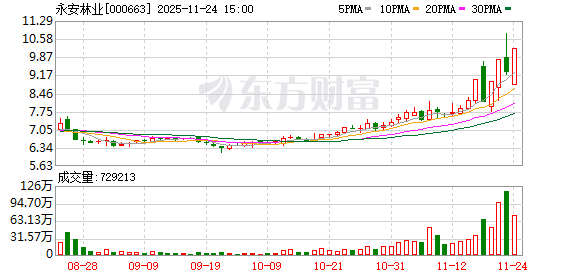
Core Viewpoint - The renovation and building materials sector experienced a slight increase, closing at 15,983.6 points with a growth rate of 0.6% [2] Group 1: Stock Performance - Yong'an Forestry led the sector with a closing price of 10.21 CNY per share, marking a rise of 10.02% [2] - Leizhi Group closed at 5.66 CNY per share, with a growth of 4.24%, ranking second in the sector [2] - Sophia closed at 14.17 CNY per share, achieving a growth of 4.19%, ranking third [2] - Haolaike led the declines with a closing price of 13.83 CNY per share, down by 10.02% [2] - Huaci Co. closed at 20.2 CNY per share, with a decline of 9.98%, ranking second in losses [2] - Wanli Stone closed at 34.72 CNY per share, down by 6.01%, ranking third in losses [2] Group 2: Market Outlook - Dongwu Securities indicated that the improvement in the market structure will become more evident due to the effects of good housing and urban renewal policies on both supply and demand [2] - The application of AI is expected to accelerate the development of smart home appliances by 2026, driven by the matching of models and computing power [2]



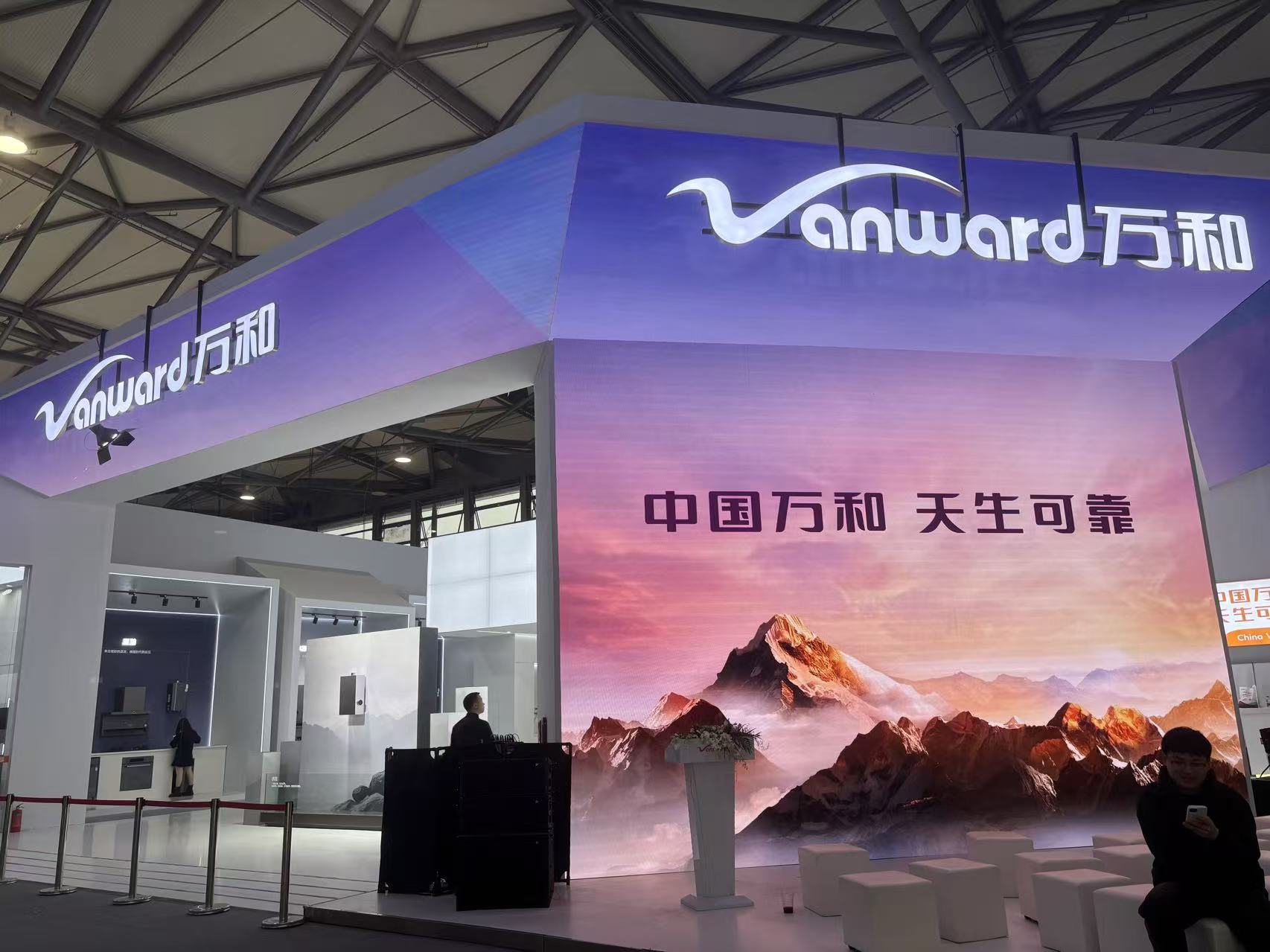
两家厨卫电器上市公司齐换将,渡过行业寒冬还需“平衡术”
Di Yi Cai Jing· 2025-11-19 09:21
Core Insights - The kitchen and bathroom appliance industry is facing significant challenges, with major companies like Vanward Electric and Vatti Holdings undergoing leadership changes amid declining market performance [2][3][4] Industry Overview - The real estate market has negatively impacted the kitchen and bathroom appliance sector, with a reported 0.6% year-on-year decline in sales for kitchen and bathroom appliances in China for the first nine months of 2025, totaling 113.1 billion yuan [3] - Sales of integrated stoves plummeted by 40.9%, while electric and gas water heaters saw slight decreases of 0.4% and 1.3%, respectively [3] - The recent Double 11 shopping festival revealed a significant drop in sales, with offline sales of various kitchen appliances down by 35% to 40% and online sales down by 20% to 59% [3][4] Company Performance - Vatti Holdings reported a 9.13% decrease in revenue to 4.158 billion yuan and an 11.9% drop in net profit to 356 million yuan for the first three quarters of the year [4] - Vanward Electric achieved a 5.54% increase in revenue to 5.524 billion yuan and a 5.56% rise in net profit to 479 million yuan, with its new kitchen appliance segment growing by 23.46% [4] - Both companies are heavily reliant on the domestic market, with Vatti's domestic revenue at 2.4 billion yuan and overseas revenue at 347 million yuan, while Vanward's domestic revenue was 2.275 billion yuan and overseas revenue at 1.729 billion yuan [5] Strategic Adjustments - Both companies are family-controlled and are attempting to balance new business ventures with traditional product lines, focusing on practical and high-end product offerings [6][8] - The need for a balance between innovation and maintaining core business operations is critical for survival in the current market environment [6][8] - The companies are also exploring smart home solutions and integrating technology into their product offerings to stay competitive [8] Leadership Changes - Recent leadership changes at Vanward and Vatti signal a potential shift in strategy, with a focus on enhancing marketing and operational efficiency [2][7] - The appointment of new executives aims to streamline operations and improve the integration of online and offline marketing strategies [7]