楼市去库存

Search documents
楼市去库存效果已现,全国商品房待售面积连降6个月
Di Yi Cai Jing· 2025-09-15 05:29
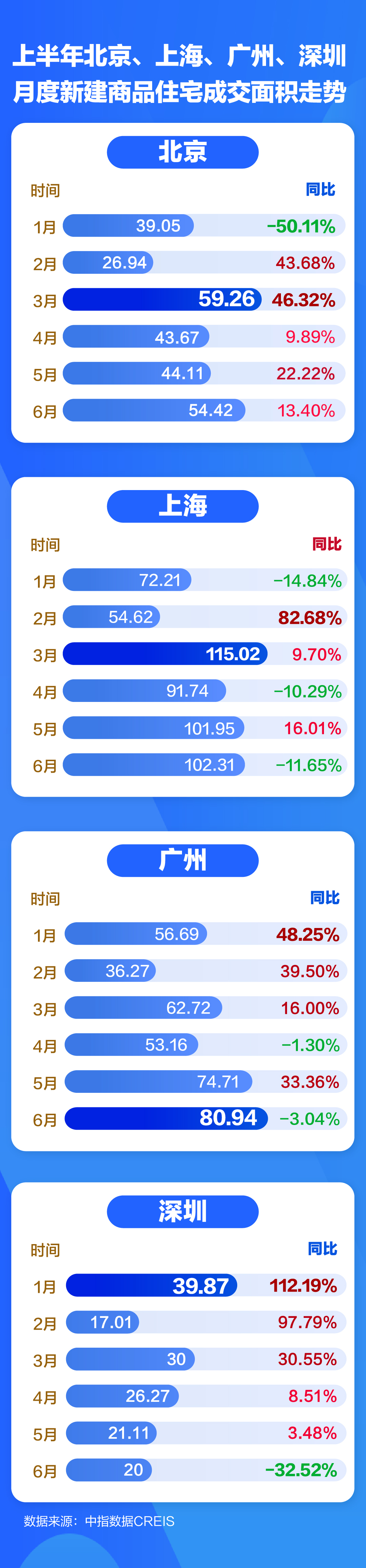
Group 1 - The core viewpoint of the articles indicates that the real estate market in China is showing signs of stabilization despite fluctuations due to domestic and international factors, with a notable decrease in inventory and a narrowing decline in sales and prices [1][2][3] - From January to August, the total sales area of new commercial housing reached 57,304 million square meters, a year-on-year decrease of 4.7%, while the sales amount was 55,015 billion yuan, down 7.3% year-on-year [1] - As of the end of August, the unsold commercial housing area was 76,169 million square meters, a reduction of 3.17 million square meters from the end of July, marking six consecutive months of inventory decline [1] Group 2 - In August, the number of cities with rising new home prices increased to 9, compared to 6 in the previous month, indicating a growing demand in second-tier cities [2] - The year-on-year decline in new residential sales prices in first, second, and third-tier cities narrowed by 0.2, 0.4, and 0.5 percentage points respectively in August, suggesting a trend towards market stabilization [2] - Local governments are implementing various policies to stimulate the market, with significant changes in purchase restrictions in cities like Beijing, Shanghai, and Shenzhen, leading to a notable increase in transaction volumes [3]
北京楼市新政48小时:有项目到访猛增200%,开发商加班做方案
2 1 Shi Ji Jing Ji Bao Dao· 2025-08-11 12:40
Core Insights - Beijing's real estate market is experiencing a significant policy shift with the introduction of new regulations aimed at optimizing housing purchases for both local and non-local residents [2][3][5] - The new policy allows non-Beijing residents who have paid social insurance or income tax for over two years to purchase unlimited properties outside the Fifth Ring Road, which is expected to stimulate market activity [2][3][12] Market Activity - Following the announcement of the new policy, there was a notable increase in market activity, with some new housing projects reporting visitor numbers up by 200% compared to previous weekends [3][14] - Real estate agents have observed a rise in inquiries from both buyers and sellers, indicating a potential uptick in transaction volumes [4][10] Developer Response - Developers are responding quickly to the new policy, with many working overtime to create marketing strategies and extend viewing hours for potential buyers [6][9] - The policy's timing is unusual, as significant real estate regulations are typically not introduced during the traditional summer lull [7][8] Sales Trends - The new policy is particularly beneficial for lower-priced housing options, with a significant portion of new sales occurring outside the Fifth Ring Road, where over 80% of new residential sales have been recorded [12][13] - There is a growing interest in properties that require lower down payments, making them more accessible to first-time buyers [13][20] Future Outlook - Analysts suggest that while the immediate effects of the policy are positive, the true impact on transaction volumes will take time to materialize due to the lag in registration data [17][19] - The market is expected to stabilize and potentially recover in the coming months, as the new regulations have improved buyer confidence [20][21]

半年末50城库存整体下行,但外围区域去化压力不减
克而瑞证券· 2025-08-08 01:44
Investment Rating - The report indicates a downward trend in inventory levels across 50 key cities, with a year-on-year decrease of 7% as of June 2025, suggesting a cautious investment outlook for the real estate sector [3][18]. Core Insights - The real estate market is currently in a de-inventory cycle, with significant pressure on certain cities like Guangzhou, Wuhan, and Nanjing, where the de-inventory period exceeds 18 months [3][18]. - The inventory structure shows that the main inventory in Guangzhou, Wuhan, and Nanjing is concentrated in the 100-120 square meter range, while larger units (over 160 square meters) are also increasing in proportion [4][18]. - Peripheral areas in Guangzhou and mid-value districts in Wuhan and Nanjing are experiencing inventory accumulation, while core urban areas are seeing a slight increase in inventory ratios [8][18]. Summary by Sections Inventory Trends - As of June 2025, the narrow inventory in 50 cities is recorded at 30,927 million square meters, reflecting a 7% year-on-year decline [3][18]. - The de-inventory cycle for these cities is approximately 21.82 months, down 5% year-on-year [3]. Area Segmentation - The main inventory in Guangzhou, Wuhan, and Nanjing is in the 100-120 square meter range, accounting for over 20% of total inventory [4][6]. - Larger units (over 160 square meters) are seeing an increase in inventory pressure due to a rise in high-end residential supply, while smaller units (70-100 square meters) are experiencing a notable decline [4][6]. Regional Analysis - In Guangzhou, peripheral low-value areas have a higher inventory ratio, with the inventory in the增城区 reaching 22.26% as of June 2025, showing a slight increase [8][9]. - Core areas in cities like Wuhan and Nanjing have inventory ratios below 5%, but there is a rising trend in these areas [8][9]. De-inventory Cycle - The de-inventory cycle for units smaller than 80 square meters and larger than 180 square meters is significantly high, indicating a mismatch between supply and demand [12][18]. - For example, in Guangzhou, units below 70 square meters and above 160 square meters have a de-inventory cycle exceeding 30 months [12][18].
行业透视|半年末50城库存整体下行,但外围区域去化压力不减
克而瑞地产研究· 2025-07-25 09:23
Core Viewpoint - The real estate market is currently in a de-inventory cycle due to restricted new housing supply, with a notable decline in inventory levels across 50 key cities, down 7% year-on-year as of June 2025 [2][4][17]. Group 1: Inventory Trends - As of June 2025, the narrow inventory of new residential properties in 50 cities stands at 30,927 million square meters, reflecting a 7% year-on-year decrease [4][17]. - The de-inventory cycle has resulted in an average de-inventory period of 21.82 months, which is a 5% decrease year-on-year [4][17]. - Major cities such as Beijing, Guangzhou, and Wuhan have de-inventory periods exceeding 18 months, indicating ongoing pressure to reduce inventory [4][17]. Group 2: Inventory Structure by Area - The primary inventory in Guangzhou, Wuhan, and Nanjing consists of medium-sized units (100-120 square meters), accounting for over 20% of total inventory [6][17]. - There is an increase in inventory for larger units (over 160 square meters) due to a steady supply of high-end residential properties, while sales growth has not kept pace, leading to short-term inventory accumulation [6][17]. - In Guangzhou, the inventory for units sized 120-140 square meters and 160-180 square meters has seen significant increases, while smaller units (70-100 square meters) have experienced notable declines [6][17]. Group 3: Regional Inventory Characteristics - In Guangzhou, the inventory is heavily concentrated in lower-value peripheral areas, with the inventory ratio in the增城区 reaching 22.26%, a year-on-year increase of 0.06 percentage points [10][11]. - In Wuhan, the inventory in the东西湖区 is 13.51%, while in Nanjing's江宁区, it stands at 20.57%, indicating a similar trend of high inventory in lower-value areas [10][11]. - Core urban areas in these cities have seen a slight increase in inventory ratios, suggesting a shift in demand towards more central locations [10][11]. Group 4: De-inventory Cycle Analysis - The de-inventory cycle is characterized by high periods for smaller units (below 80 square meters) and larger units (above 180 square meters), with significant pressure on these segments due to limited transaction volumes [13][17]. - For instance, in Guangzhou, units below 70 square meters and above 160 square meters have de-inventory periods exceeding 30 months [13][17]. - Peripheral areas in cities like Guangzhou's增城区 and武汉's长江新区 are facing substantial de-inventory pressures, indicating a supply-demand imbalance [15][17].
广州新房成交量大增,“房票安置”成推动力
Zheng Quan Shi Bao· 2025-07-10 10:08
Group 1 - In June, Guangzhou's new residential property online signing volume reached 6,796 units, marking a year-to-date high, with a total of 32,861 new homes sold in the first half of the year, representing a nearly 17% year-on-year increase [1] - A portion of the June sales was attributed to government acquisitions of resettlement housing, with significant contributions from special loans aimed at purchasing existing properties for resettlement purposes [1][3] - The "housing ticket resettlement" policy introduced in 2024 aims to match supply and demand for resettlement housing, facilitating quicker resettlement while stabilizing the real estate market [3][5] Group 2 - The integration of stock property acquisition with urban village renovation has accelerated project progress and inventory reduction, with approximately 6,000 units of existing properties purchased for resettlement as of early June [4] - The "housing ticket" system is being explored in major cities, with the potential to reduce fiscal expenditure on resettlement housing while effectively addressing inventory issues [4] - The "housing ticket resettlement" is expected to be a key stabilizing force for Guangzhou's real estate market in the second half of the year, with ongoing high signing volumes indicating continued demand for resettlement housing [5]
地产图谱|上半场北上广深杭蓉“撑场”,改善型楼盘热度高
Bei Ke Cai Jing· 2025-07-08 13:28
Market Overview - The real estate market in 2025 is experiencing a significant divergence, with a recovery trend in the first quarter followed by a weakening in the second quarter [1] - First-tier and strong second-tier cities are showing stable performance, while third and fourth-tier cities are generally declining [1] New Housing Market - In the new housing market, the transaction area of 120-144 square meter units in 30 cities has reached 30% for the first time [2] - Major cities like Beijing and Shanghai saw slight year-on-year growth in new residential sales, while Guangzhou and Shenzhen experienced over 15% growth [2] - The supply of new homes is decreasing, leading to a shorter clearing cycle as the market continues to deplete inventory [2] - High-priced improvement projects are performing well in cities like Beijing, Shanghai, Nanjing, and Chengdu, indicating a strong demand for upgraded housing [2] Second-Hand Housing Market - The second-hand housing market remains active, with Shenzhen seeing over 30% year-on-year growth, while Beijing, Shanghai, and Guangzhou experienced around 20% growth [6] - However, since May, the market has shown signs of cooling, with a decline in transaction volumes in June for first-tier cities [7] Price Trends - New housing prices have seen a slight increase of 1.16% in the first half of 2025, while second-hand housing prices have dropped by 3.60% [14] - The average price of second-hand residential properties has been in continuous decline for 38 months, with a 0.75% drop in June [14] Future Outlook - The real estate market is expected to continue its divergence, with policy factors playing a crucial role [19] - Supply in July is projected to decrease by 30% year-on-year, particularly affecting first-tier cities [19] - The market is likely to maintain low transaction volumes, but a potential narrowing of year-on-year declines is anticipated due to last year's low base [19] - The performance of high-quality projects is expected to stabilize the new housing market in core cities, but overall market conditions remain weak [24]
数读|专项债收储规模已近4000亿,回收宅地中民企占比17%
克而瑞地产研究· 2025-05-14 09:05
Core Viewpoint - The article discusses the acceleration of land storage plans by local governments in response to the central government's policies, highlighting a significant increase in land acquisition amounts and areas, which is expected to aid in the inventory reduction of the real estate market by 2025 [2][4][25]. Group 1: Land Storage Plans - Since 2025, 171 cities have announced land storage plans totaling 391.8 billion yuan, with a land area of 6,565 hectares, which is projected to accelerate inventory reduction in the housing market by 54% [2][4]. - In April alone, the announced land storage area reached 7,198 hectares, with a monetary value of 173 billion yuan, surpassing the total for the first quarter [3][4]. - The average theoretical construction area from the proposed residential land storage exceeds 130 million square meters, which is more than half of the estimated new housing sales for the first four months of 2025 [6]. Group 2: Focus on Third and Fourth Tier Cities - The majority of the land storage efforts are concentrated in third and fourth-tier cities, with 5,437 hectares (84% of the total) planned for acquisition, amounting to 165.9 billion yuan [10][14]. - Among the cities, Zhengzhou leads with a planned storage area of 273 hectares, while Xi'an has the highest total acquisition price at 12.56 billion yuan [14][18]. Group 3: Impact on Inventory Reduction - If the proposed land storage plans are fully implemented, 14 cities could see their inventory turnover periods decrease by over one year, with some cities like Jiujiang and Liu'an potentially reducing their turnover periods by more than three years [19]. - Zhengzhou, with a new housing transaction volume of 5 million square meters, has improved its inventory turnover period by 1.1 years due to effective land storage execution [19]. Group 4: Types of Enterprises Involved - State-owned enterprises dominate the land acquisition market, accounting for 70% of the total area acquired, while private enterprises only represent 17% [21]. - The average acquisition price for state-owned enterprises is the highest at 3,998 million yuan per hectare, reflecting their focus on prime locations [21]. Group 5: Recommendations for Improvement - The article suggests that local authorities should expedite the conversion of proposed land storage into actual storage and enhance transparency regarding land ownership and development progress to better manage inventory pressures [25].
房地产重磅!四大一线城市,集体实施!
21世纪经济报道· 2025-03-28 13:05
Core Viewpoint - The implementation of housing ticket policies in all four first-tier cities signals a significant shift in urban renewal strategies and aims to stimulate the real estate market by providing a new compensation mechanism for displaced residents [2][6][19]. Group 1: Housing Ticket Policy Overview - Shenzhen's housing ticket policy was formalized on March 26, 2025, following similar initiatives in Guangzhou, Beijing, and Shanghai, marking a comprehensive approach across major cities [3][10]. - Housing tickets serve as vouchers for purchasing commercial housing, directly channeling compensation funds into the real estate market [4][11]. - The reintroduction of housing tickets is driven by the urgent need for urban renewal and inventory reduction in the real estate sector [11][12]. Group 2: Historical Context and Evolution - Housing tickets have been utilized since 2005, gaining traction during the 2015 housing reform wave but receding by 2018 [8][10]. - The recent resurgence began in 2022 with Zhengzhou's implementation of supportive measures for housing ticket arrangements, highlighting a renewed focus on urban renewal [9][10]. - Over 90 cities have adopted housing ticket arrangements since 2024, indicating widespread acceptance and implementation [10]. Group 3: Market Implications - The housing ticket system is expected to enhance the effectiveness of inventory reduction strategies, providing immediate purchasing power to the market [12][19]. - The policy allows for the purchase of housing without counting against family purchase limits, further incentivizing market activity [9][12]. - The establishment of "housing resource supermarkets" in areas like Tongzhou aims to streamline the purchasing process and facilitate inventory turnover [13][19]. Group 4: Challenges and Considerations - The effectiveness of housing ticket arrangements may be limited by the mismatch between available housing options and the needs of displaced residents [16][17]. - Developers face challenges related to cash flow and regulatory scrutiny, which may impact their willingness to engage with the housing ticket system [17][18]. - Local governments are motivated to adopt housing tickets as a means to alleviate financial burdens associated with traditional compensation methods [14][19].