欧洲战略自主

Search documents
出头鸟来了!德国直接宣布恢复对美关税,欧盟:要反抗美国霸权
Sou Hu Cai Jing· 2026-01-25 09:51
Core Viewpoint - The article discusses the escalating tensions between the U.S. and Europe, particularly in light of President Trump's threats to impose tariffs on European goods while linking them to territorial issues, specifically the purchase of Greenland, which has provoked a strong response from European nations [1][8]. Group 1: U.S. Tariff Threats - Trump announced a 10% tariff on goods from Denmark, Norway, Sweden, France, Germany, the UK, the Netherlands, and Finland starting February 1, as a means to pressure these countries into selling Greenland [1][3]. - The tariffs are seen as a coercive tactic that undermines the sovereignty of European nations, with Trump framing the purchase of Greenland as a legitimate goal [1][6]. Group 2: European Response - In response to Trump's threats, eight European countries issued a joint statement condemning the actions as damaging to ally relations [3]. - Germany took a leading role in proposing three countermeasures, including reinstating a list of retaliatory tariffs on iconic American products worth approximately €2.8 billion [4][6]. Group 3: Strategic Measures - The first countermeasure involves the reactivation of a pre-existing list of retaliatory tariffs targeting American products such as motorcycles and bourbon [4]. - The second measure is the activation of the EU's "anti-coercion tool," which allows for quicker responses to trade threats without lengthy WTO procedures [4]. - The third measure emphasizes the need for Europe to accelerate its "de-Americanization" efforts, particularly in defense and economic sectors, to ensure strategic autonomy [4][6]. Group 4: Broader Implications - The situation reflects a significant shift in European sentiment, moving from passive acceptance to a more assertive stance on sovereignty and economic independence [8][15]. - The unity among European nations, particularly Germany and France, indicates a collective determination to respond to perceived U.S. overreach, marking a departure from previous tolerance of U.S. unilateralism [8][9]. - The urgency of the situation is underscored by the impending tariff implementation date, which adds pressure on Europe to present a united front against U.S. demands [13][15].

美欧围绕格陵兰岛对抗增多,信任危机下的北约走向何方?
Xin Lang Cai Jing· 2026-01-24 16:31
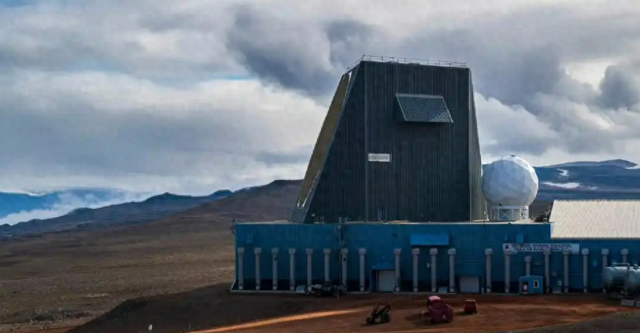
智通财经特约撰稿 凌云志 美军在格陵兰岛部署了相控阵预警雷达。 热点新闻:据央视新闻1月23日报道,美国总统特朗普22日表示,正在推进中的格陵兰岛协议将赋予美 国"一切想要的军事进入权"。特朗普还表示,该协议一旦完成,将允许美国在格陵兰岛部署其"金穹"导 弹防御系统的组成部分。而格陵兰岛称选择丹麦和欧盟,已准备好迎接更大规模军事存在。 此前,法国、德国、英国等欧洲多国宣布将向格陵兰岛派兵,参加由丹麦在该岛发起的"北极耐力"军事 演习,摆出加强军事部署姿态。虽然特朗普在达沃斯的最新表态让欧洲暂时可以"舒一口气",但面对其 反复无常的做法,不排除未来对抗再次升温的情况。 点评:特朗普政府自第二任期以来,多次公开表达对格陵兰岛的领土诉求,甚至暗示不排除使用武力手 段实现这一目标。这一立场迅速引发丹麦及法国、德国等欧洲多国的强烈反对,使格陵兰岛从长期的地 缘战略议题骤然升级为跨大西洋关系的直接冲突点。格陵兰岛争端远非单纯的领土归属问题,而是映射 出国际秩序重组时代联盟政治所面临的深刻困境,不仅动摇了北约赖以存续的互信基础,更暴露了北约 在协调内部重大利益冲突时的机制失灵。在此背景下,北约被迫在内部凝聚力削弱、战略定位 ...
出头鸟来了!德国直接宣布对美反制,欧盟态度强硬:要反抗美国霸权!
Sou Hu Cai Jing· 2026-01-23 13:49
编辑 克林拜尔的反击没有丝毫拖泥带水。冻结原计划本周提交欧洲议会表决的欧美关税协议,相当于直接撕 碎了双方此前好不容易搭建的贸易缓和框架;恢复暂停征收的对美关税,是用对等手段告诉华盛顿,贸 易战从来不是单方面的碾压;拟启用欧盟2023年立法通过的"反胁迫工具",更是搬出了压箱底的杀招。 这套被称为"贸易核武器"的机制,能绕开WTO冗长程序,直接对施压方实施限制投资、封锁公共采购 等严厉制裁,针对性极强。法国总统马克龙第一时间表态支持,欧盟委员会主席冯德莱恩也明确划红 线,强调丹麦及格陵兰岛的主权完整不容谈判,欧洲八国18日的联合声明,更传递出抱团抗美的明确信 号。 但欧洲的反击并非铁板一块。部分东欧、南欧国家在安全防务上高度依赖美国,态度始终暧昧不清。更 值得玩味的是,德国高调反击的同时,参与"北极耐力"军演的部分欧洲军事人员已悄然撤离格陵兰岛, 这种微妙的退缩,暴露了欧洲在应对美国压力时的矛盾心态。"反胁迫工具"的启用门槛同样不低,需要 15个成员国同意且覆盖欧盟65%以上人口,在利益诉求各异的欧盟内部,要达成这种高度共识绝非易 事。特朗普似乎看透了这一点,1月21日达沃斯论坛上突然变脸,宣称与北约秘书长吕 ...
中方警告话音刚落,特朗普通告全世界:税率加到200%!首个牺牲国出现
Sou Hu Cai Jing· 2026-01-23 07:41
然而,这种打击的伤害远不止于表面。美国市场的渠道、认证、物流结算体系,绝非短短几年能够轻松复制的。若失去了这个庞大的市场,法国葡萄酒的品 牌势能将遭遇持续性的削弱,甚至可能产生不可逆的品牌价值流失。消费者的购买习惯一旦养成,改变起来将异常困难,而去法国化的趋势若悄然形成,法 国酒业将面临一代人内的口味变化,这样的损失是任何努力都难以弥补的。这已经不再是单纯的贸易摩擦,而是通过摧毁对方的核心产业,迫使其在外交和 安全政策上屈服。相比之下,德国则显得尤为孤立。虽然德国也曾派兵前往格陵兰岛,但其军队在抵达后不到44小时就匆匆撤离,扣除休整时间,实际执行 任务的时间不足20小时。格陵兰岛的面积超过200万平方公里,15名士兵要在20小时内完成全岛的侦查评估,每人每小时需要覆盖6667平方公里。这显然不 合常理,实质上是德国向美国压力妥协的信号。而法国则选择了坚持到底,这种坚持源自其一贯奉行的外交自主传统,然而,现实的压力已如山大。如今, 马克龙面对着两难抉择:一旦妥协,法国不仅会丧失国家尊严,还将使得欧洲战略自主沦为笑谈;而若继续硬抗,葡萄酒产业乃至整个经济都将面临毁灭性 打击。 欧盟内部的态度也显得分歧严重。大多数 ...
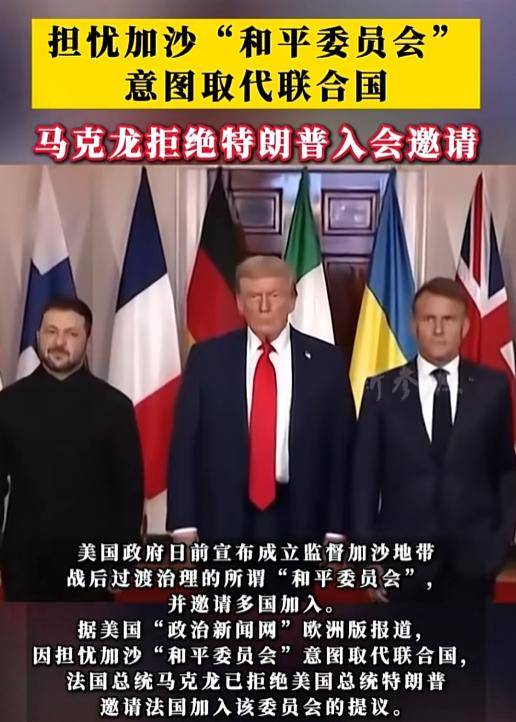
马克龙刚拒绝美国邀请,不到12小时,特朗普威胁对法国加税200%
Sou Hu Cai Jing· 2026-01-22 09:46
Core Viewpoint - French President Macron's refusal to join Trump's proposed Peace Committee highlights a significant geopolitical tension between the U.S. and France, with potential implications for international relations and trade [1][5][28] Group 1: Peace Committee and Its Implications - The Peace Committee, led by Trump, is perceived as an attempt to consolidate U.S. influence in the Middle East, which Macron is unwilling to support, fearing it would undermine European autonomy in foreign policy [5][19] - The committee's structure grants Trump extensive powers, including the ability to decide membership and veto decisions, which raises concerns about its potential to challenge the authority of the United Nations [1][19] - Macron's rejection of the committee reflects a broader European reluctance to accept U.S. unilateralism, indicating a growing awareness of the need for strategic autonomy within Europe [3][14] Group 2: Trade Relations and Economic Impact - Trump's immediate response to Macron's refusal was a threat to impose a 200% tariff on French wine and champagne, which could devastate the French wine industry, heavily reliant on the U.S. market [7][9] - The potential tariff increase would significantly raise prices for French products in the U.S., making them less competitive and risking economic turmoil for millions of workers in the French wine sector [9][10] - The European Union has indicated it may retaliate against U.S. products if tariffs are imposed, raising the possibility of a transatlantic trade war [10][23] Group 3: Broader Geopolitical Context - The conflict between the U.S. and France over the Peace Committee underscores long-standing tensions in transatlantic relations, exacerbated by Trump's unilateral actions and Europe's growing desire for independence [14][28] - Other European nations share France's skepticism towards the Peace Committee, suggesting a collective wariness of U.S. dominance in international affairs [19][25] - The situation illustrates the potential for a significant shift in global alliances, as countries reassess their positions in light of U.S. foreign policy under Trump [28]
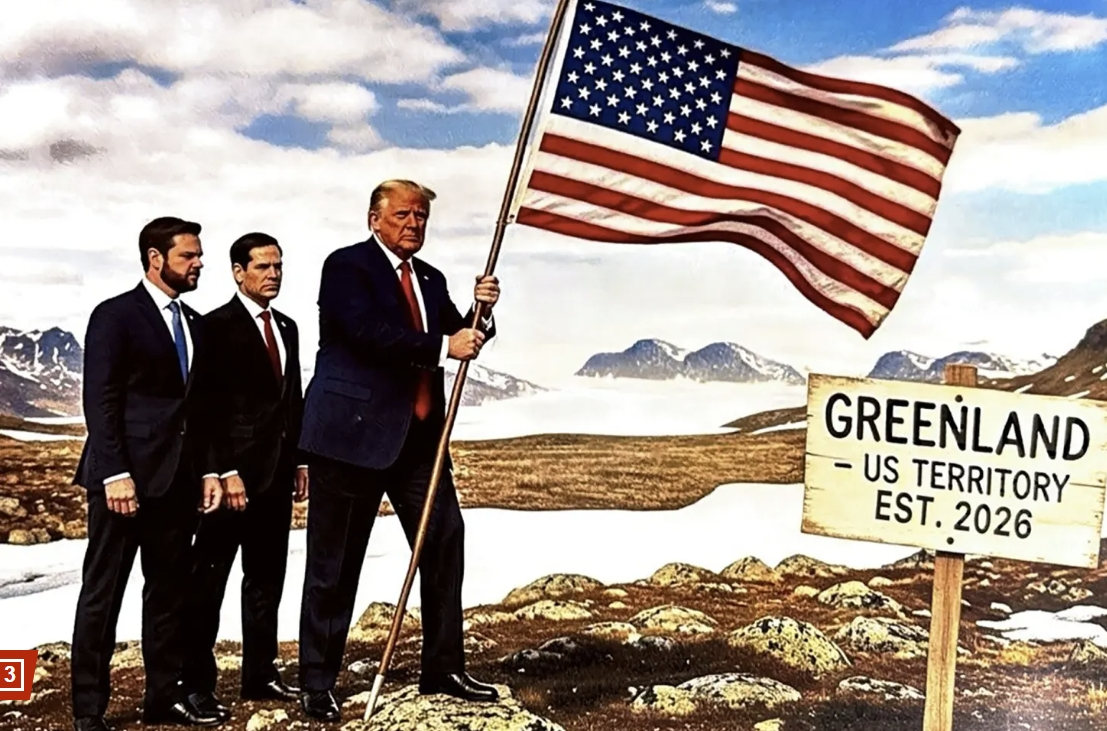
南极土著|达沃斯论坛:欧洲的失落、反思和挣扎
Guan Cha Zhe Wang· 2026-01-22 00:34
Group 1 - The core issue at the Davos Forum was Trump's announcement regarding Greenland and the proposed 10% tariffs on eight European countries participating in military exercises in Greenland, which became a focal point of discussion [1][4] - European leaders, including Ursula von der Leyen and Emmanuel Macron, expressed their concerns about the tariffs, emphasizing the importance of maintaining trust and cooperation between the EU and the US [4][11] - Macron highlighted the need for Europe to unite in the face of external pressures and to assert its position against US trade policies that undermine European interests [9][10] Group 2 - The "anti-coercion mechanism" proposed by European leaders is seen as a potential tool for imposing tariffs on US goods, with discussions around targeting approximately $109 billion worth of American products [5][7] - European defense industries are heavily reliant on key technologies from Northern and Western Europe, and any restrictions on US companies in the EU market could lead to significant losses for the US [7][11] - The discussions at Davos revealed a growing realization among European leaders that they need to strengthen their strategic autonomy and reduce reliance on the US for security and technological needs [11][12] Group 3 - Macron outlined three strategic pillars for Europe: protection, simplification, and investment, emphasizing the need to safeguard European industries from unfair competition and to streamline regulations for a unified market [14][15] - The EU is planning to enhance investments in key sectors such as AI, quantum technology, and defense, addressing the lag in innovation and investment compared to the US [15][17] - European leaders acknowledged the necessity of fostering local tech giants and increasing collaboration among European companies to retain value and drive innovation within Europe [17][18] Group 4 - The EU is moving towards a revised cybersecurity law that mandates the removal of equipment from "high-risk suppliers," a significant shift from previous recommendations to legal requirements [20][21] - The law targets critical industries, including telecommunications and energy, and aims to mitigate risks associated with reliance on foreign technology, particularly from Chinese companies [22][24] - The potential impact on European companies includes significant costs for replacing existing infrastructure, which could affect pricing and market dynamics, with companies like Ericsson and Nokia positioned to benefit from the changes [25]
马克龙暗批美国霸权
Guo Ji Jin Rong Bao· 2026-01-21 10:35
当地时间1月20日,在世界经济论坛(又称"达沃斯论坛")年会期间,法国总统马克龙发表了一场 措辞强硬、指向明确的演讲。 近期,欧美双方围绕格陵兰岛的外交争议持续发酵,美欧贸易摩擦再度升温,马克龙的表态被视为 是对当前国际秩序动荡、美国单边主义行径的集中回应。 尽管演讲以经济议题为主,但马克龙在主旨演讲中透露出的政治含义十分明显。 马克龙表示,欧洲应"毫不犹豫地动用"自身掌握的工具来维护核心利益。当前的国际竞争方式正试 图"让欧洲处于从属地位",欧洲必须正视并解决自身面临的关键问题。 根据流传的截图,马克龙针对特朗普格陵兰岛问题立场,以及其提议在巴黎举行一场包含俄罗斯代 表的会谈等想法表达了困惑。 马克龙此前曾拒绝加入特朗普提出的所谓"和平董事会"倡议。随后,特朗普威胁对法国葡萄酒和香 槟征收高达200%的关税,并公开表示此举将迫使法国方面"改变立场",进一步加剧了紧张关系。 在马克龙发表演讲前,法国总统府爱丽舍宫已在新闻吹风会上明确批评特朗普的关税策略。法方认 为,关税并非解决全球问题或经济失衡的有效工具,这种带有强制性的贸易手段"反合作",在根本上是 一条错误路径。 爱丽舍宫同时指出,特朗普的相关举措从侧面 ...
美欧对峙--这届达沃斯是如此不同
Hua Er Jie Jian Wen· 2026-01-21 05:55
特朗普政府的格陵兰诉求及关税威胁,正在瑞士达沃斯世界经济论坛上引发跨大西洋关系的深刻裂痕。 这场超现实的争端不仅主导了今年年会议程,更凸显出美欧关系可能正处于历史转折点。 据央视新闻,欧盟 委员会主席冯德莱恩在世界经济论坛上表示,丹麦的主权和领土完整不容谈判。欧盟正在制定自身安全 战略,其中北极战略将升级,而这一战略的核心原则是主权国家有权决定自己的未来。特朗普的施压策 略提醒欧洲"必须加快推进独立进程,从安全到经济,从国防到民主"。法国总统马克龙虽未点名特朗 普,但表示"我们更喜欢尊重而非霸凌,更喜欢法治而非暴力"。 欧洲理事会外交关系委员会在格陵兰争端前的民调显示,仅16%的欧洲人认为美国是"盟友",更多人将 美国视为"对手"或"竞争者"。欧盟领导人预计本周将考虑启动"反胁迫"机制,可能对美国及美国企业采 取全面报复措施。 欧洲寻求战略自主 冯德莱恩在达沃斯的讲话标志着欧洲战略思维的转变。她在准备今年演讲时,北极安全原本并非主要议 题,但特朗普的举动改变了这一切。欧盟委员会主席欢迎欧盟与四个南美国家达成的贸易协议,并谈及 进一步分散经济依赖,以应对特朗普治下美国带来的不确定性。 据华盛顿邮报周三报道,尽管 ...
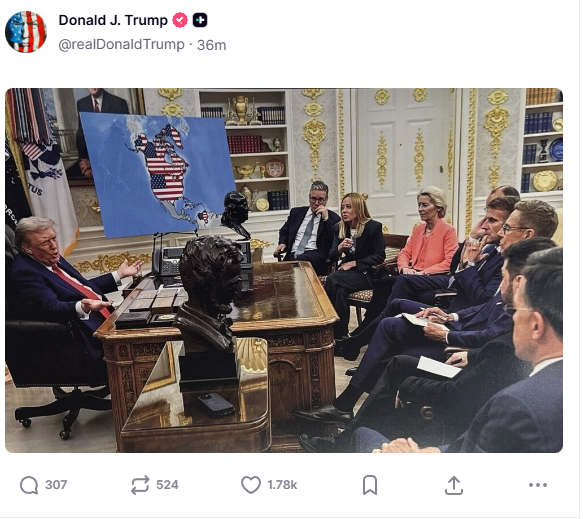
达沃斯论坛:欧洲的失落、反思和挣扎
Xin Lang Cai Jing· 2026-01-21 01:52
Group 1 - The core issue at the Davos meeting was Trump's announcement of a 10% tariff on eight European countries participating in military exercises in Greenland, which was met with criticism from EU leaders [1][19] - EU Commission President Ursula von der Leyen emphasized that the 10% tariff is a mistake and that the US should honor the trade agreement made in July [1][19] - French President Macron highlighted the need for Europe to unite against US pressure and mentioned the potential use of the "anti-coercion mechanism" against the US if new tariffs are imposed [2][19] Group 2 - The "anti-coercion mechanism" is described as a toolbox for sanctions that could include tariffs on US goods worth approximately $1.09 trillion, export controls, and restrictions on US investments in Europe [2][20] - European leaders are increasingly aware of the need for strategic autonomy, with discussions on enhancing defense spending and technological independence from the US [3][20] Group 3 - The EU is focusing on strengthening its defense capabilities and has been increasing defense spending in response to perceived unreliability from the US [3][20] - The discussions at Davos revealed a significant shift in European leaders' attitudes towards US relations, with calls for a more self-reliant Europe [24][25] Group 4 - Macron outlined three strategic pillars for Europe: protection, simplification, and investment, emphasizing the need to protect European industries from unfair competition [26][27] - The EU plans to initiate a new budget negotiation to increase investments in key areas such as AI, quantum technology, and defense [27][30] Group 5 - The EU is moving towards a revised cybersecurity law that mandates the removal of equipment from "high-risk suppliers," which is seen as a direct response to geopolitical tensions [31][33] - The law aims to unify member states' approaches to cybersecurity and reduce reliance on Chinese technology, particularly in critical sectors [32][34]


中方话音刚落,特朗普就通告全球:税率加到200%!首个牺牲国出现
Sou Hu Cai Jing· 2026-01-20 12:48
Core Viewpoint - The recent tariff threats from Trump against France and other European countries are seen as a strategic move in "transactional diplomacy," rather than a conventional economic policy [3][5][7]. Group 1: Tariff Threats and Strategic Implications - Trump has targeted eight European countries with tariffs, specifically threatening a 200% tariff on French goods, as a form of punishment for not complying with U.S. demands regarding Greenland [1][9]. - The tariffs are not merely economic measures but are intended to exert political pressure on allies, showcasing a shift from traditional trade negotiations to coercive tactics [5][15]. - France's participation in military exercises in Greenland and its refusal to join the "Peace Committee" have made it a primary target for these tariffs, highlighting the intertwining of economic and geopolitical strategies [7][9]. Group 2: European Response and Internal Divisions - The European Union is planning an emergency summit to discuss countermeasures, including the potential reactivation of tariffs on $930 billion worth of U.S. goods and the use of "anti-coercion tools" [11][13]. - There are significant internal divisions within the EU regarding how to respond, with different countries prioritizing their own economic interests, such as Germany's concern over automotive exports and Eastern European nations' fears about security cooperation [13][15]. - The situation poses a test of EU unity and its ability to respond to U.S. unilateral actions, with the risk that failure to act could undermine the EU's strategic autonomy [15][17]. Group 3: Long-term Consequences and Future Outlook - The current tariff situation is viewed as a broader geopolitical pressure test, where Europe's response will determine its future strategic voice and economic stability [15][17]. - If the EU does not respond effectively, it may set a precedent for further U.S. economic coercion, potentially affecting various sectors across Europe, including wine, automotive, and agricultural products [17][18]. - The unfolding events suggest that France may not be the last country to face such tariffs, indicating a potential escalation in U.S. trade tactics under Trump's administration [17][18].