
生态保护修复

Search documents
当好自然资源大管家,“十四五”临沂耕地面积增加37.83万亩
Qi Lu Wan Bao· 2025-12-29 14:17
Core Viewpoint - The "14th Five-Year Plan" is a critical period for the reform and integration of natural resources and planning in Linyi City, focusing on sustainable development and high-quality economic growth. Group 1: Agricultural Land Protection - The total arable land area in Linyi City reached 9.7487 million acres by the end of 2024, an increase of 378,300 acres compared to 2020 [1] - Strict implementation of the arable land protection system has stabilized the total arable land area and improved its quality [1] - The area of illegally occupied arable land has been decreasing year by year due to enhanced monitoring and enforcement measures [1] Group 2: Resource Allocation and Project Support - Linyi City approved construction land of 257,200 acres, a year-on-year increase of 19.7%, and supplied 290,000 acres of land, up 12.4% [2] - The city has effectively supported major projects such as the Weishui-Su High-speed Railway and the expansion of the Beijing-Shanghai Expressway [2] - The area of land used per unit of GDP has decreased by 20.7%, indicating more efficient land use [2] Group 3: Spatial Planning Optimization - The integration of land planning, urban planning, and functional area planning has been achieved, establishing a comprehensive national land spatial planning system [2] - The city has completed 1,497 practical village planning documents, enhancing the rational layout of agricultural, ecological, and urban spaces [2] Group 4: Ecological Protection and Governance - A total of 4,579 square kilometers of ecological restoration has been completed in the Yimeng Mountain area, recognized as a typical case of local comprehensive reform [3] - The city has successfully rehabilitated 418 historical abandoned mines and established 43 green mines, achieving a 100% completion rate for various sizes of green mines [3] Group 5: Reform and Innovation - Linyi City has initiated 10 national pilot projects for the redevelopment of low-efficiency land and 12 provincial pilot projects for optimizing land and forest layouts [3] - Six reform initiatives, including "smart registration" of real estate, have been recognized as typical cases by the Ministry of Natural Resources [3] Group 6: Public Service and Efficiency - The city has resolved 509 historical real estate registration issues, benefiting 202,000 households, leading the province in this area [4] - The new basic surveying and mapping system has been optimized, with applications in various fields such as planning and emergency response [4]
环境监测政策再上新高度,七部门印发《行动方案》
仪器信息网· 2025-12-29 09:03
Core Viewpoints - The article discusses the joint issuance of action plans for the construction of beautiful China pilot areas in three major regions: Beijing-Tianjin-Hebei, Guangdong-Hong Kong-Macao Greater Bay Area, and Yangtze River Delta, emphasizing ecological improvement and sustainable development strategies [1][2][3]. Group 1: Beijing-Tianjin-Hebei Action Plan - The plan aims to improve ecological environment quality, optimize three major structures, and explore innovative regional collaborative governance [2][6]. - Key tasks include green low-carbon transformation, environmental quality improvement, ecological protection and restoration, and technological innovation [2][8]. - By 2027, the average concentration of PM2.5 is targeted to be reduced to 33 micrograms per cubic meter, with significant improvements in water quality and a decrease in major pollutant emissions [7][11]. Group 2: Guangdong-Hong Kong-Macao Greater Bay Area Action Plan - The plan focuses on leveraging the "one country, two systems" advantage to enhance ecological quality and promote green finance innovation [3][21]. - It sets goals for PM2.5 concentration to drop below 20 micrograms per cubic meter by 2027, with a peak in carbon dioxide emissions and continuous improvement in water quality [22][21]. - Key tasks include building a modern ecological governance system and fostering collaborative innovation among the three regions [22][23]. Group 3: Yangtze River Delta Action Plan - The plan emphasizes high-quality development and ecological protection, aiming to create a model area for high-level protection and sustainable development [3][36]. - By 2027, the average PM2.5 concentration is expected to decrease to 30 micrograms per cubic meter, with improvements in water quality and a reduction in major pollutant emissions [37][41]. - Key initiatives include developing a collaborative green industry system and enhancing the regional energy structure [39][40].


深圳以最严监管筑牢生态安全屏障
Zhong Guo Huan Jing Bao· 2025-12-12 01:53
Core Viewpoint - Shenzhen is committed to a "zero tolerance" policy towards ecological damage, establishing a comprehensive regulatory and enforcement system to protect and restore the environment, positioning ecological regulation as a core guarantee for building a beautiful China [1][2] Group 1: Legislative Framework - Shenzhen has taken the lead in incorporating ecological protection and restoration into local regulations, revising the "Shenzhen Special Economic Zone Ecological Environment Protection Regulations" to include a dedicated chapter on "Protection and Restoration," clarifying the responsibilities of various stakeholders [1] - The regulatory framework enhances the legal basis for the ecological environment department's guidance, coordination, and supervision of ecological protection and restoration efforts [1] Group 2: Monitoring and Supervision - Since 2007, Shenzhen has utilized high-resolution remote sensing imagery to conduct ecological resource assessments, establishing a classification system for urban ecosystems and dynamically tracking changes in ecological resources across the city [1] - The city has implemented a proactive supervision mechanism for key ecological areas, including natural protected areas and ecological protection red lines, creating a closed-loop supervision system for problem identification, transfer, rectification, and re-examination [1] Group 3: Ecological Restoration Initiatives - Shenzhen has established a supervision mechanism for ecological restoration, evaluating the effectiveness of restoration efforts in key areas, and has conducted nearly 500 instances of regular ecological restoration supervision across various districts [2] - During the "14th Five-Year Plan" period, the city has successfully restored over 48 square kilometers of land, promoting the timely greening of large areas of bare land, with notable cases such as the ecological protection and restoration of mangroves in Futian [2] Group 4: Enforcement System - Shenzhen has pioneered the establishment of a comprehensive ecological environment enforcement system, focusing on the supervision of important ecological spaces, and has developed operational guidelines for law enforcement in natural protected areas [2] - Since the implementation of these guidelines, over 500 suspected ecological violation points have been subjected to special enforcement inspections, employing strict measures to combat ecological violations and protect natural resources [2]
平行分论坛二:“十五五”美丽中国建设战略任务与实践路径|2025年深入学习贯彻习近平生态文明思想研讨会
Zhong Guo Huan Jing Bao· 2025-12-03 01:49
Group 1 - The core viewpoint emphasizes the importance of ecological civilization and the strategic deployment of building a beautiful China, particularly in regions like Guizhou, Xinjiang, Heilongjiang, and Hubei, under the guidance of Xi Jinping's ecological civilization thought [1][3][5][7]. - The "14th Five-Year Plan" period is identified as a crucial time for ecological transformation and high-quality development, with a focus on pollution prevention, green economic transformation, and ecological protection [2][4][6][8][22]. - The integration of ecological culture and economic development is highlighted as a means to enhance the value of ecological products and promote sustainable rural development [19][20]. Group 2 - Specific measures for pollution prevention include enhancing air quality management, protecting key water bodies, and implementing comprehensive soil pollution control actions [2][4][11]. - The promotion of green production and living styles is emphasized, with initiatives aimed at reducing carbon emissions and improving energy efficiency across various sectors [4][10][12][16]. - The establishment of a robust ecological governance system is crucial for ensuring effective environmental protection and sustainable development [8][11][17].
当好家底的守护人
Si Chuan Ri Bao· 2025-11-26 06:37
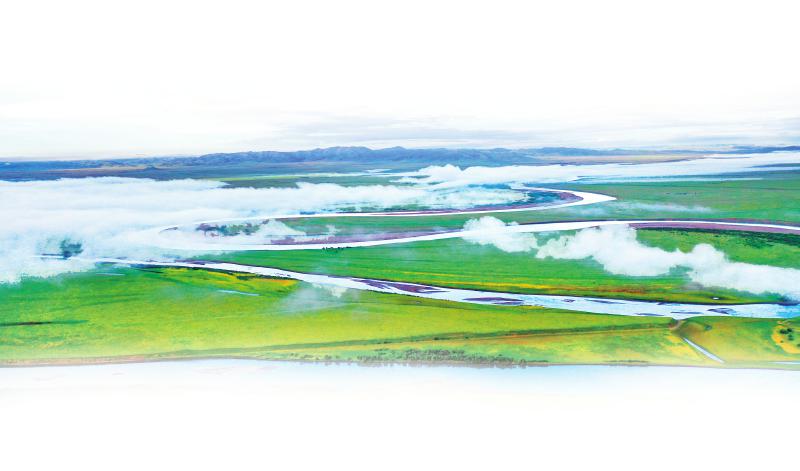
Core Insights - The article highlights the achievements of Sichuan's natural resources department during the "14th Five-Year Plan" period, focusing on resource protection, development assurance, and ecological restoration [3][4]. Group 1: Agricultural Land Protection - Sichuan has implemented a "field leader system," establishing over 187,600 field leaders and grassroots grid workers to ensure comprehensive monitoring of agricultural land [5]. - By the end of 2024, the province aims to maintain an agricultural land area of 79.6054 million acres, with 63.5706 million acres designated as permanent basic farmland [5]. - The province has seen a net increase in agricultural land for four consecutive years, while illegal occupation of agricultural land has decreased for six consecutive years [7]. Group 2: Ecological Restoration - The "Yellow River Watershed Ecological Restoration Project" has completed ecological restoration over 232,500 hectares, significantly reducing sediment concentration in the Yellow River [10][12]. - The project has led to an increase in the population of rare species such as the black-necked crane, with their activity frequency rising by 40% compared to 2022 [10][12]. - A comprehensive monitoring system using three-dimensional technology has been established to ensure the sustainability of restoration efforts [13]. Group 3: Rural Planning and Development - Sichuan has developed a national land spatial planning framework, with over 1,800 village-level spatial plans completed [15][16]. - The planning team identified that the ancient village of Gulu has rich tourism resources but weak economic conversion, leading to a focus on developing it as a highland canyon leisure tourism demonstration village [16][17]. - The village has seen a significant increase in tourist numbers, with a peak daily reception of 8,000 visitors, prompting adjustments in infrastructure and service facilities [17][18].
环境规划院副总工程师王夏晖:“十五五”时期持续深入推进生态系统优化,该抓好哪些工作重点?
Zhong Guo Huan Jing Bao· 2025-11-23 23:21
Core Viewpoint - The 20th Central Committee's Fourth Plenary Session has approved the proposal for the 15th Five-Year Plan, emphasizing significant progress in building a beautiful China as a primary goal for economic and social development during this period [1] Group 1: Achievements in Ecological Protection and Restoration - Significant progress has been made in ecological protection and restoration, establishing a solid foundation for optimizing ecosystems during the 15th Five-Year Plan [2] - The overall quality of ecosystems in the country has stabilized and improved, with a new pattern for biodiversity protection gradually forming [2][3] - The area of ecological protection red lines exceeds 30% of the land area, with 90% of terrestrial ecosystem types and 74% of key protected wild species effectively protected [3] Group 2: Challenges and Future Directions - Despite achievements, the ecological protection and restoration efforts face challenges, including the need to solidify existing gains and expand improvements [4] - The current ecological system remains under significant human activity pressure, with a need for modernization in the regulatory framework [4] Group 3: Key Focus Areas for the 15th Five-Year Plan - The focus will be on optimizing ecological systems, improving quality, enhancing functions, realizing value, and efficient regulation [5] - A comprehensive national ecological security system will be constructed, addressing spatial planning and ecological resource management [6] Group 4: Collaborative and Integrated Approaches - Emphasis on a multi-faceted approach to improve ecosystem quality, integrating various ecological elements [7] - Implementation of integrated protection and restoration projects targeting specific ecological degradation areas [8] Group 5: Enhancing Ecosystem Services and Resilience - The need to enhance ecosystem service functions and develop a robust ecological risk resilience system in response to climate change [9] - Focus on technology and innovation to improve ecological monitoring and risk assessment capabilities [11] Group 6: Realizing Ecological Product Value - The plan includes expanding channels for realizing the value of ecological products, aligning with national strategies for sustainable development [10] - Encouragement of innovative practices in ecological product value realization to support local environmental protection and economic growth [10]
湖北武汉多举措推进生态保护修复 爱惜生态家底 积聚发展优势
Ren Min Ri Bao· 2025-10-15 22:15
Core Insights - The recent "Great River Dialogue" event in Wuhan highlighted the significance of the Yangtze River dolphin, indicating a growing awareness of ecological issues in the region [1] Group 1: Ecological Achievements - Over the past five years, the Yangtze River dolphin has been sighted more than 40 times in the Wuhan section of the Yangtze River, reflecting significant ecological improvements [2] - The water quality in the Wuhan section of the Yangtze River has consistently maintained a Class II standard for five consecutive years, with a 100% compliance rate for water source quality [2] - Wuhan has undertaken extensive ecological restoration efforts, including the inspection and remediation of 1,842 pollution outlets, the closure or relocation of 93 chemical enterprises, and the clearance of 390 various docks [2] Group 2: Technological Advancements in Monitoring - Wuhan has developed an integrated "air-space-ground" monitoring system for air quality, utilizing quantum laser radar technology to create comprehensive atmospheric profiles [3][4] - The new monitoring technology allows for real-time detection of air pollutants over a radius of 6 kilometers, significantly improving efficiency and accuracy compared to previous manual methods [3] Group 3: Legal and Institutional Framework - The establishment of the "Lake Protection Order" by the Jiangxia District Court emphasizes the legal responsibilities of local fisheries in ecological protection [5] - Wuhan's courts have implemented a specialized adjudication framework for ecological restoration cases, promoting a comprehensive approach to environmental justice that includes criminal, civil, and administrative measures [5][6] - The city is exploring preventive legal measures to enhance ecological protection, aiming to mitigate environmental damage before it occurs [6] Group 4: Green Development Initiatives - Wuhan has transformed its ecological advantages into green development opportunities, with 110 new parks constructed and an increase in urban green coverage to 88% [6] - The proportion of green transportation in the central urban area has reached 83.4%, indicating a shift towards sustainable urban mobility [6] - The establishment of the "Zhongtan Building" in Wuchang District has attracted 260 carbon-related enterprises, facilitating the concentration of financial resources in the Yangtze River middle reaches urban agglomeration [6]
浙江启动全国首个省级生态保护修复专项基金
Yang Shi Wang· 2025-09-14 23:04
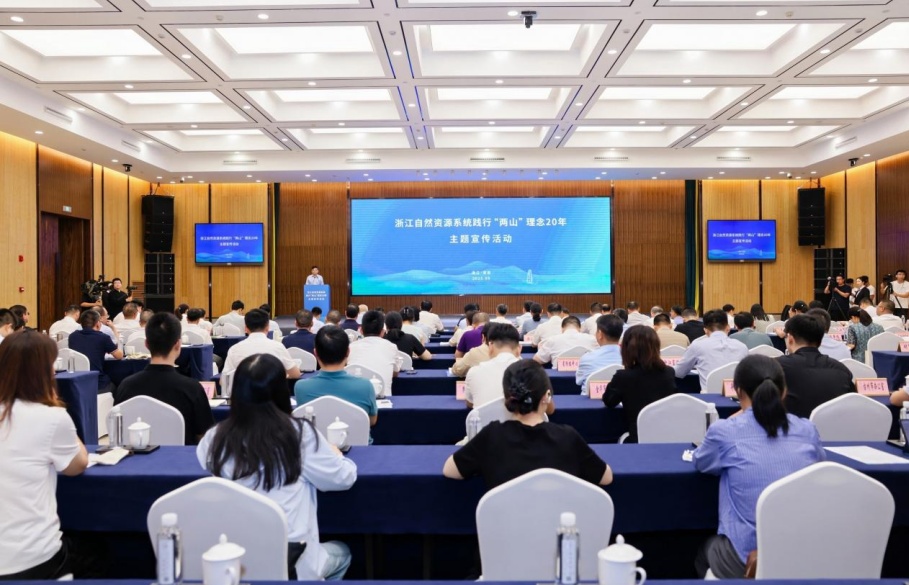
Core Insights - Zhejiang Province has launched the first provincial-level ecological protection and restoration special fund in China, approved by the Ministry of Natural Resources, aimed at promoting diversified investment mechanisms [3] Group 1: Fund Details - The ecological protection and restoration fund will focus on restoring and rebuilding damaged ecosystems within the province, utilizing a model that includes state-owned enterprises leading investments, private enterprises co-investing, and participation from national green development funds [3] - The fund aims to integrate ecological restoration with industries such as ecological agriculture, eco-tourism, and natural education, reflecting the principle of "whoever restores, benefits" [3] Group 2: Investment Projects - Six intended investment projects were signed at the event, with a total investment amount exceeding 3 billion yuan, covering various ecological protection and restoration areas including farmland, marine environments, mining, and wetlands [3] - The current restoration efforts in Zhejiang include over 7.5 million mu of mountain and water projects, more than 140 kilometers of coastline restoration, over 30,000 mu of coastal wetland restoration, and 6,000 mu of mangrove planting [3]
9月13日晚间央视新闻联播要闻集锦
Yang Shi Xin Wen Ke Hu Duan· 2025-09-13 12:58
Group 1 - The core viewpoint emphasizes the importance of specialized and innovative small and medium-sized enterprises (SMEs) in enhancing the stability of industrial and supply chains, contributing significantly to high-quality economic development [1][3] - In 2023, various regions have increased innovation investments and focused on strengthening supply chains, positioning these SMEs as key players in optimizing economic structure and fostering new productive forces [3] Group 2 - The tourism industry in Xinjiang has become a pillar industry for benefiting and enriching the local population, with the annual number of visitors increasing more than fivefold since the 18th National Congress of the Communist Party of China [4] - During the 14th Five-Year Plan period, Tianjin and Hebei have achieved new results in technological innovation and industrial development, with Tianjin implementing 329 reform tasks across ten areas to enhance regional integration and coordinated development [5][6] Group 3 - The central government is promoting the large-scale construction of new energy storage, with a target of reaching over 180 million kilowatts of installed capacity by 2027, which is expected to drive direct investment of approximately 250 billion yuan [13] - The first provincial-level ecological protection and restoration special fund has been launched in Huzhou, Zhejiang, with an initial investment of 3 billion yuan for key projects, including agricultural ecosystem restoration and wetland rehabilitation [14] Group 4 - The first Guangdong Quality Products Exhibition was held in Guangzhou, featuring five major exhibition areas and attracting over 2,100 professional buyers, aimed at helping enterprises expand domestic and international markets [15] - In the first eight months of 2023, the import and export scale of the western land-sea new corridor reached 622.89 billion yuan, marking a year-on-year growth of 17% and setting a historical record [16] Group 5 - In the first eight months of 2023, the import and export scale of the central and western regions of China exceeded 5 trillion yuan, achieving a historical high with a growth rate of 10.4%, leading the national growth [11] - Shanghai's tax refund for goods sold abroad exceeded 2 billion yuan in the first eight months, reflecting a significant increase and highlighting a new growth point in consumption [17] Group 6 - The bilateral currency settlement framework between China and Indonesia has been officially launched, expanding the scope of currency settlement to all items of international balance of payments, facilitating the use of local currencies in bilateral trade and investment [18] - The international port between China and Vietnam has officially opened, enhancing connectivity between China and Vietnam as well as ASEAN countries [19]
数读中国 我国自然资源家底更厚、根基更稳
Ren Min Wang· 2025-09-12 05:43
Key Points - The core viewpoint of the article emphasizes the strengthening of natural resource foundations in China, highlighting advancements in resource protection, development efficiency, and ecological restoration efforts [1][2]. Group 1: Natural Resource Foundation - The total cultivated land area in China has reached 194 million acres [1]. - A comprehensive assessment of 163 mineral resources has been conducted, revealing the quantity, distribution, and utilization status, with 534 new large and medium-sized oil and gas fields and mineral sites discovered [1]. - The marine production value has reached 10.5 trillion yuan [1]. - The national forest coverage rate has increased to 25.09% [1]. Group 2: Land Spatial Structure Optimization - A unified blueprint for national land spatial development and protection has been established [2]. - The urbanization strategy has evolved into a "two horizontal and three vertical" framework [2]. - An agricultural development pattern has been formed with "seven zones and twenty-three belts" [2]. - An ecological security pattern has been developed with "three zones and four belts" [2]. Group 3: Resource Protection and Development Efficiency - The area of historical abandoned mines that have been rehabilitated exceeds 2.4 million acres, and 820 kilometers of coastline and 760,000 acres of coastal wetlands have been restored [2]. - The quality of typical marine ecosystems, such as coral reefs, has improved to over 60%, and the area of mangroves has reached 465,000 acres [2]. - The "Three North" project has completed construction tasks covering 164 million acres, and 27 "mountain-water projects" have protected and restored over 8 million acres [2]. - The construction land use per unit GDP has decreased by 16% [2]. - Standards for "three rates" for 125 mineral types have been published and implemented [2].
