
老龄化社会

Search documents
好抽象,韩国给独居老人发AI玩偶,24h陪伴+健康监测
量子位· 2025-09-01 04:39
Core Viewpoint - The article discusses the introduction of AI dolls developed by the South Korean startup Hyodol, aimed at providing companionship and health monitoring for elderly individuals living alone, addressing the growing issue of loneliness among seniors in a rapidly aging society [3][4][6]. Group 1: Product Overview - The Hyodol doll is designed to engage in conversation, remind seniors to eat and take medication, and alert caregivers and family members in emergencies [3][14]. - Over 12,000 Hyodol dolls are currently deployed in the homes of elderly individuals in South Korea, providing companionship services [11]. - The doll features a ChatGPT-based dialogue system, allowing it to communicate in a cheerful voice and monitor the health status of seniors [14][15]. Group 2: Market Context - South Korea is facing a significant shortage of caregivers, with a gap of 190,000 personnel in 2023, projected to increase to 1.55 million by 2032 [20]. - The country's long-term care insurance fund is expected to be depleted by 2030, prompting investments in technologies like Hyodol to alleviate care costs [21]. - The cost of each Hyodol doll is 1.6 million KRW (approximately 8,160 RMB), which is a fraction of the annual salary of a caregiver [21]. Group 3: Emotional and Health Impact - The AI doll not only alleviates anxiety among seniors but also provides 24-hour monitoring and emotional support [6][7]. - There have been instances where seniors confided in the doll about suicidal thoughts, leading to timely intervention by social workers [18]. - The use of Hyodol dolls has been praised by caregivers for their ability to gather information that seniors may not share with family or caregivers [17]. Group 4: Global Trends - Other countries are also developing similar caregiving robots to address rising care costs due to aging populations, such as Japan's Paro and New York's ElliQ [22][29]. - The global market for elderly care robots is expected to reach $7.7 billion by 2030, indicating a growing demand for such technologies [29]. Group 5: Safety and Privacy Concerns - The use of AI dolls raises safety and privacy issues, as seniors may not be aware of the potential for personal information leakage during interactions [31]. - There are concerns about the emotional dependency that seniors may develop on these robots, with some expressing a desire to be buried with their dolls [32]. - Instances of seniors acting on the doll's prompts have raised alarms, leading to the removal of potentially dangerous phrases from the doll's programming [34][35].


如果情况不变,2025年9月以后,国内多数家庭,将面临“四大难题”
Sou Hu Cai Jing· 2025-08-22 02:19
Economic Overview - The domestic economy shows a trend of "stability with improvement" entering 2025, with GDP growth of 5.3% year-on-year in the first half of the year [1] - The per capita disposable income for residents reached 21,840 yuan, also reflecting a 5.3% year-on-year increase [1] - Consumer prices (CPI) experienced a slight decline of 0.1% year-on-year in the first half of the year, indicating relatively stable overall prices [1] Real Estate Market - The real estate market continues to face significant challenges, with both sales volume and area showing a marked decline [2] - National average housing prices have dropped over 30%, with specific examples showing properties losing substantial value, such as a home in Haidian District dropping from 5 million to 3.5 million yuan [4] - Factors contributing to the decline in housing prices include an aging population, high housing price-to-income ratios in major cities, and a struggling real economy leading to decreased household incomes [4] Investment Risks - The low interest rates on bank deposits have led many individuals to invest in stocks, funds, and bank wealth management products, but these high-yield options come with increased risks [6] - In 2024, the average loss per A-share investor was 140,000 yuan, with losses in public funds ranging from 20% to 30% [6] - The decline in bank wealth management product yields and rising risks in the bond market further complicate the investment landscape [6] Employment Challenges - The job market remains challenging, with 12.22 million new graduates entering the workforce amid a contracting economy and layoffs [8] - New social security regulations have led small and medium enterprises to hire less expensive labor options, exacerbating employment difficulties [8] Demographic Trends - Birth rates continue to decline, with projections indicating that the number of births in the first half of 2025 may only reach around 4 million, potentially falling below 9 million for the entire year [11] - The number of marriage registrations has also decreased significantly, with a 49.8% drop in the first half of 2024 compared to the previous year [11] - Factors contributing to the reluctance of young people to marry and have children include high marriage costs, housing pressures, and rising costs of child-rearing [11] Recommendations for Households - Households are advised to avoid blind investments and consider keeping funds in banks for safety while waiting for better investment opportunities [12] - When purchasing homes, it is recommended that mortgage payments do not exceed 40% of total household income [12] - Individuals are encouraged to enhance their skills and consider side jobs to maintain financial stability during economic downturns [12]

中国房地产业协会到日照调研旅居康养工作
Qi Lu Wan Bao Wang· 2025-08-06 04:47
Group 1 - The delegation from the China Real Estate Association conducted an in-depth investigation into the travel and health care projects in Rizhao, discussing cooperation matters [1][5] - The delegation visited multiple projects, gaining insights into Rizhao's planning and layout in the travel and health care sector, as well as the operational models and unique services of each project [3][6] - The Vice President of the China Real Estate Association praised Rizhao's natural environment and health care facilities, recognizing its potential for developing a high-quality health care industry [3][6] Group 2 - The China Real Estate Association emphasized the golden development period for the health care industry due to an aging society and consumption upgrades, suggesting Rizhao enhance resource integration and develop local health care brands [5][6] - The General Manager of Huazhu Group's City Home Research Institute indicated a strong alignment between Rizhao's travel health care projects and Huazhu's business layout, exploring future cooperation in travel apartments, health care services, and smart management [6] - The visit by the China Real Estate Association provided valuable suggestions for the development of Rizhao's real estate and industry, laying a solid foundation for future cooperation [6]

中国第一批养老经纪人,月入10万?
3 6 Ke· 2025-08-01 02:17
Core Insights - The Chinese government has officially recognized 17 new professions, including "Elderly Care Consultant," in response to the country's aging population, which has surpassed 14% of those aged 65 and older, marking a significant shift towards the elderly care industry as a promising sector [1][3]. Industry Overview - The elderly care industry is increasingly viewed as a "sunrise industry," with a growing number of professionals, referred to as "elderly brokers," emerging to provide consulting services for families seeking suitable elderly care facilities [1][3]. - The demand for elderly care services is rising, particularly among semi-dependent elderly individuals who can no longer rely on family members for care, leading to a notable increase in inquiries about suitable care homes [10][39]. Professional Insights - Young professionals, including those from diverse backgrounds, are entering the elderly care sector, driven by personal experiences and the recognition of the industry's growth potential [4][16][39]. - The role of elderly care consultants involves assessing the needs of elderly individuals and recommending appropriate care facilities, which requires a deep understanding of both the elderly's physical and emotional needs [6][10][20]. Market Dynamics - Despite the industry's potential, many elderly care facilities struggle with low occupancy rates, with average occupancy around 50% nationally, as many families prefer home care over institutional care [39][51]. - The financial viability of the elderly care sector remains a challenge, with most operators not yet profitable, indicating a need for a more sustainable business model in the future [39][51]. Future Outlook - The market for elderly care is expected to grow significantly in the next five to ten years as the demographic shifts continue, particularly with the retirement of the 70s and 80s generations who may have different expectations and financial capabilities for elderly care [39][53]. - There is a potential for the development of a more systematic and platform-based approach to elderly care services, similar to models seen in Japan, which could enhance the accessibility and efficiency of care options for families [51][53].
白发人与机器人活在同一屋檐下的时代不远了
Di Yi Cai Jing Zi Xun· 2025-07-31 10:42
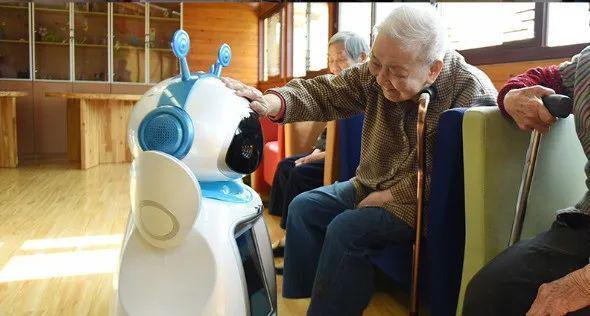
Core Viewpoint - The aging population in China, combined with rapid advancements in artificial intelligence and robotics, will lead to a future where robots play a significant role in both the workforce and elder care [2][5][12] Population Dynamics - In 1989, China's birth rate was 24.32 million, while projections for 2024 indicate only 9.54 million newborns, suggesting that by the time the CEO of Mech-Mind reaches 60, the number of young people will be less than half of his generation [4][5] - The significant decrease in the young workforce will necessitate a shift in production and economic growth strategies [5] Robotics in Industry - Mech-Mind provides general-purpose robots equipped with "3D vision + AI brain + dexterous hands," serving various industries including automotive, home appliances, logistics, and food and beverage [5][6] - As the aging population increases, there will be a greater need for robots to fill labor shortages in tedious and physically demanding jobs [5][8] Comparison with Japan - Japan, having faced similar demographic challenges, has integrated robots into its workforce, with a notable example being an Amazon distribution center where robots outnumber human workers [6][7] - In Japan, many elderly individuals continue to work due to insufficient pensions, and companies like Amazon have adapted their systems to accommodate older workers [7] Future of Robotics in Elder Care - The potential for robots to assist in elder care is significant, with advancements allowing for more complex tasks and interactions [10][11] - Current robots can provide basic interaction and companionship, but there is still a long way to go before they can fully assist elderly individuals in their homes [10][12] Market Potential and Challenges - The home robotics market presents a vast opportunity, but challenges such as safety, cost, and skill requirements must be addressed before widespread adoption can occur [12] - The evolution of robots could lead to them taking over more menial tasks, allowing human labor to shift towards elder care services [12][13] Historical Context - The development of robotics has historically raised concerns about job displacement, yet it has also led to increased labor efficiency and the creation of new job categories [13][14]

中国中产的坑,美国二十年前已经踩过一遍了(三)
Hu Xiu· 2025-07-12 14:00
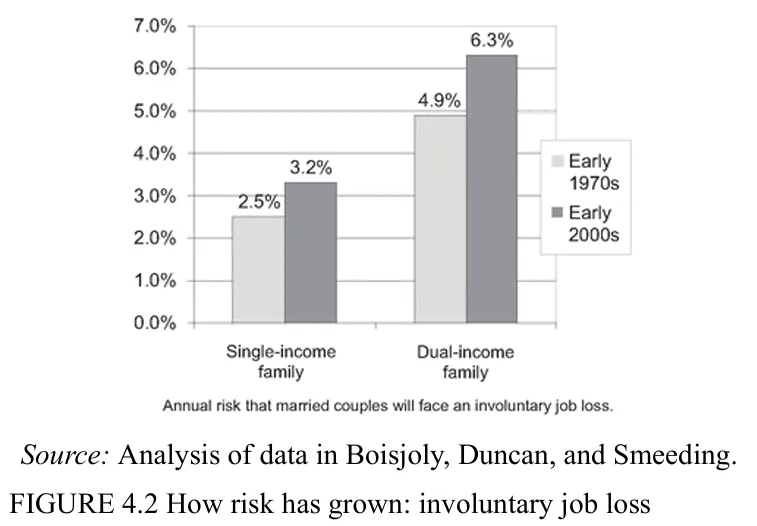
Group 1 - The core argument is that dual-income middle-class families in the U.S. are more vulnerable to economic hardships compared to single-income families due to increased exposure to unemployment risks [1][2][6][7] - The probability of at least one person in a dual-income household facing unemployment has risen to 6.3% in the 2000s, compared to 2.5% for single-income families in the 1970s [6] - The changing employment landscape has led to a 28% increase in the likelihood of involuntary unemployment for workers, particularly affecting younger parents [4][6] Group 2 - The burden of caring for family members has intensified for middle-class families, with a significant increase in the number of elderly requiring care and a decrease in birth rates [8][9][10] - Approximately 12 million families annually must take on the responsibility of caring for sick relatives, often leading to financial strain [14] - Dual-income families face nearly double the bankruptcy risk compared to single-income families when losing jobs due to caregiving responsibilities [15] Group 3 - The rise of women in the workforce has not stabilized marriages; in fact, the divorce rate for working women has increased by 40% compared to full-time mothers since the 1990s [16][18] - Single mothers, despite being more educated and earning higher incomes, face significant financial challenges post-divorce, with bankruptcy rates for middle-class single mothers being 60% higher than for low-income women [21][22] Group 4 - Middle-class families are exposed to multiple risks, including unemployment, health issues, and divorce, which can lead to a cascade of financial difficulties [22][23] - Nearly half of bankrupt families have experienced at least two of these issues simultaneously, highlighting the precarious nature of middle-class stability [22] Group 5 - The influx of cheap credit since the 1970s has exacerbated financial difficulties for middle-class families, with credit card debt skyrocketing from under $10 billion in 1968 to over $600 billion by 2000 [28][29] - Families often resort to credit to maintain their standard of living, rather than for luxury purchases, indicating a struggle to cover essential expenses [29][30] Group 6 - The role of lenders has shifted, with financial institutions increasingly targeting borrowers in distress, leading to higher interest rates and fees for those unable to pay on time [31][36] - The financial system has evolved to profit from borrowers in trouble, rather than providing support to help them recover [32][36] Group 7 - Future trends indicate increased job instability due to AI advancements, rising educational costs, and escalating healthcare expenses, all of which will further strain middle-class finances [38][40] - The financial impact of divorce remains significant, often revealing underlying vulnerabilities in family finances [41]
“无退休社会”突袭日本,会是中国未来的样本吗?
3 6 Ke· 2025-06-09 04:52
Core Insights - Japan's "no retirement society" is a reflection of deep-rooted systemic challenges arising from an aging population, economic pressures, cultural norms, and policy enforcement [2][3][4] - The aging population in Japan, with 29.1% aged 65 and older, has led to a significant decline in the working-age population, creating a precarious pension system [2][3] - Economic factors, including a low public pension replacement rate and increasing financial gaps for retirees, compel many elderly individuals to remain in the workforce [3][5] - Cultural perceptions of retirement as a form of social death drive older individuals to seek continued employment, even when not financially necessary [3][4] - Policy measures have progressively raised the retirement age, pushing the workforce participation of older individuals [3][4] Japan's Dilemma - The "no retirement society" is not an ideal solution to aging challenges but a response to labor shortages and pension pressures, leading to deeper structural issues [5][6] - Health risks associated with older workers in physically demanding jobs raise concerns about their well-being and safety [6][7] - Many elderly workers are forced into low-paying, unstable jobs, perpetuating a cycle of poverty among the aging population [6][7] - The increasing presence of older workers in the labor market creates intergenerational tensions and concerns about job competition among younger workers [6][7] - Over-reliance on older labor may stifle innovation and dynamism in the economy, as decision-making may become more conservative [6][7] China's Path Forward - China faces a similar aging trend, with projections indicating that the population aged 60 and above will exceed 400 million by 2035, necessitating reforms in the pension system [8][9] - Unlike Japan, China's economic context and technological advancements may provide opportunities to mitigate the impacts of aging through automation and industry upgrades [8][9] - The traditional family support system in China may offer a buffer against the challenges of an aging population, unlike Japan's experience [8][9] - The key question for China is whether it can build a resilient system to address aging before the demographic wave fully arrives, focusing on pension reforms and quality job creation for older individuals [9][10] - Solutions should prioritize a balanced approach that respects individual choices, enhances social security, and leverages technology to improve productivity [10][11]
“免陪照护服务”为老龄化社会输入温暖动能
Zheng Quan Shi Bao Wang· 2025-06-03 00:47
Core Viewpoint - The National Health Commission, along with other health authorities, has launched a pilot program for "unaccompanied care services" in hospitals, aimed at addressing the needs of elderly patients in the context of an aging population in China [1][2]. Group 1: Pilot Program Details - The pilot program will run from June 2025 to June 2027 in key provinces and cities with significant aging populations, focusing on tertiary hospitals with a high proportion of elderly inpatients [1]. - Unaccompanied care services will be provided by nurses or hired medical caregivers based on the patient's condition and self-care ability, with the consent of the patient or their family [1][2]. Group 2: Benefits and Impact - The initiative aims to alleviate the burden on family members who often lack the time or skills to provide adequate care, thus enhancing the quality of care for elderly patients [2]. - The program is expected to benefit not only elderly patients but also their families, allowing them to focus on work and other responsibilities while ensuring their loved ones receive proper care [3]. Group 3: Training and Standards - The program includes the establishment of training and supervision standards for medical caregivers, ensuring that they meet specific service capabilities such as hygiene, diet, sleep, and mobility care [2]. - Existing documents like the "Medical Caregiver Training Outline" and "National Occupational Standards for Medical Caregivers" will support the professionalization and standardization of care services [2]. Group 4: Financial Aspects - The National Medical Insurance Administration has introduced a pricing project for unaccompanied care services, with local governments expected to set price limits, such as Guangdong's maximum of 140 yuan per day for "one-to-three" service [3].
【养老之道】 “免陪照护服务”为老龄化社会输入温暖动能
Zheng Quan Shi Bao· 2025-05-29 22:40
Core Viewpoint - The National Health Commission, along with other agencies, has launched a pilot program for "unaccompanied care services" in hospitals, aimed at addressing the needs of elderly patients in the context of an aging population in China [1][2]. Group 1: Pilot Program Details - The pilot program will run from June 2025 to June 2027 in key provinces and cities with significant aging populations, focusing on tertiary hospitals with a high proportion of elderly inpatients [1]. - Unaccompanied care services will be provided by nurses or hired medical caregivers based on the patient's condition and self-care ability, with the consent of the patient or their family [1][2]. Group 2: Benefits and Impact - The initiative aims to alleviate the burden on family members who often lack the time or skills to provide adequate care, thus enhancing the quality of care for elderly patients [2][3]. - The program is expected to create a more supportive environment for elderly patients, allowing their family members to focus on work and other responsibilities, thereby contributing positively to social development [3]. Group 3: Training and Standards - The program includes the establishment of training and supervision standards for medical caregivers, ensuring that they meet specific service capabilities such as hygiene, diet, sleep, excretion, and mobility care [2]. - Existing documents like the "Medical Caregiver Training Outline" and "National Occupational Standards for Medical Caregivers" will support the professionalization and standardization of care services [2]. Group 4: Pricing and Regulation - The National Medical Insurance Administration has introduced a pricing project for unaccompanied care services, with government-guided pricing to ensure affordability and accessibility [3]. - Local price limits have been established, such as Guangdong's maximum price of 140 yuan per day for "one-to-three" service, with other regions encouraged to set similar standards [3].
现在还在追爱的,难道只有日本老年人?
Hu Xiu· 2025-05-22 06:21
Group 1 - The trend of young people in East Asia, particularly Japan, showing low demand for romance and marriage is leading to a decline in overall birth rates [1] - In contrast, older adults in Japan are actively seeking romantic relationships, with a notable increase in the use of matchmaking services [1][2] - The average age of male and female members at a popular matchmaking service, "Akane-kai," is 59 and 57 years old, respectively, with a 20% increase in consultations over the past three years [1] Group 2 - The aging population in Japan is facing loneliness, with projections indicating that by 2050, approximately 44.3% of households will be single-person households [2] - The phenomenon of "lonely deaths" among the elderly is alarming, with estimates suggesting around 68,000 elderly individuals die alone each year [2] - Various companies are innovating to address loneliness among older adults, including the rise of dating apps like "Hahalororu" that focus on value matching rather than appearance [3] Group 3 - Local governments in Japan are implementing initiatives to encourage multi-generational living and provide financial incentives for families to live together [3] - Community events and programs are being organized to foster connections between older adults and younger generations, addressing the issue of loneliness [3] - The new modes of elderly romance reflect Japan's innovative responses to the challenges posed by an aging society, although significant work remains to truly alleviate loneliness [4]