
设施农业

Search documents
科技“点绿”冬季 设施农业成为农民增收“新引擎”
Xin Lang Cai Jing· 2026-01-04 21:06
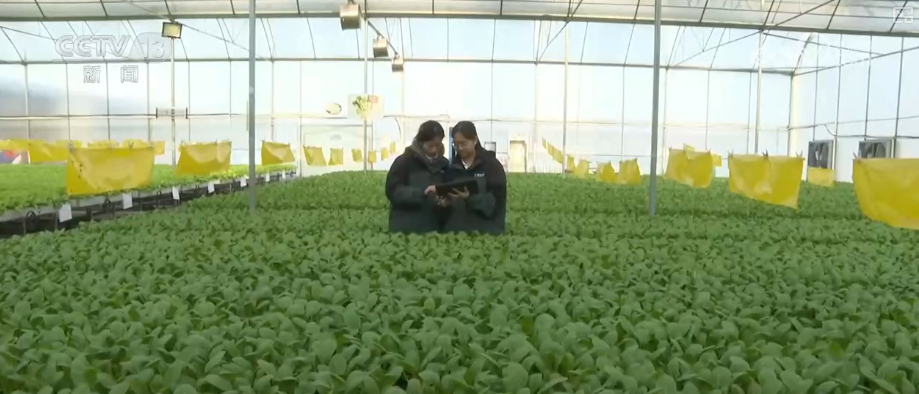
Core Viewpoint - The development of facility agriculture in Heilongjiang Province is significantly enhancing farmers' income and providing fresh produce during winter months, supported by advanced technology and innovative farming practices [1][2][3] Group 1: Facility Agriculture Development - Heilongjiang Province is strengthening facility agriculture construction, with high-standard greenhouses becoming a crucial source of income for farmers, allowing them to achieve "year-round income" [1] - As of the end of Q3 2025, the area of facility agriculture in Heilongjiang reached 427,000 acres, marking an 11% year-on-year increase, establishing it as a vital pillar for off-season agricultural product supply and farmer income growth [3] Group 2: Technological Innovations - The use of advanced technologies such as intelligent control systems in greenhouses allows for precise monitoring and adjustment of temperature, humidity, and light, leading to improved crop yield and quality [2] - Modern greenhouses in Heilongjiang utilize techniques like membrane drip irrigation and dual-layer temperature control, saving water by 40% compared to traditional methods [2] Group 3: Economic Impact - The implementation of facility agriculture is projected to enhance farmers' earnings, with some modern greenhouses generating over 30,000 yuan in additional income annually [2] - The continuous supply of fresh fruits and vegetables from greenhouses is expected to enrich the local market while boosting farmers' financial returns [2]
沙荒地上探索设施农业
Xin Lang Cai Jing· 2026-01-02 22:39
Core Viewpoint - The company, Tibet Green Source Modern Agricultural Technology Co., Ltd., is leveraging advanced agricultural techniques to develop organic fruit and vegetable production in the challenging high-altitude environment of Tibet, aiming to become a leading player in the global organic agricultural market [1][3]. Group 1: Company Overview - Tibet Green Source was established in 2019 and has transformed 3,500 acres of sandy wasteland in Zhanang County into an organic fruit and vegetable production base [1]. - The company has invested 200 million yuan in its Zhanang base, improving over 1,200 acres of sandy land and constructing 18 intelligent glass greenhouses and high-standard connected greenhouses [2]. Group 2: Agricultural Techniques and Products - The company employs a comprehensive "soil improvement, water conservation, pest control, and recycling" technology system to enhance soil fertility and production efficiency [1]. - Asparagus has been identified as a key product due to its deep root system and high value, with plans to cultivate 10,000 acres to create a high-altitude asparagus industry cluster [2]. Group 3: Market and Sales - The company sold approximately 750 tons of organic fruits and vegetables annually during winter, addressing the low self-sufficiency rate of fresh produce in the high-altitude region [1]. - In 2024, the organic asparagus is projected to generate over 4 million yuan in revenue, with products already reaching markets in Shanghai, Chengdu, and Changsha [2]. Group 4: Future Plans and Sustainability - The company aims to establish a modern organic agricultural industry park that integrates research, breeding, planting, processing, product testing, transportation, sales, and educational tourism [3]. - The company is committed to sustainable development and ecological safety by implementing standardized cultivation techniques and avoiding chemical pesticides [2].
山西天镇:设施农业提升乡村振兴发展新质生产力
Xin Lang Cai Jing· 2025-12-26 06:43
Core Insights - The article highlights the development of the agricultural sector in Tianzhen County, focusing on the growth of the facility vegetable industry and its impact on local employment and income generation [1][2][5]. Group 1: Industry Growth and Economic Impact - Tianzhen County has transformed its agricultural landscape by increasing the planting area from 8,600 acres in early 2022 to 45,000 acres by 2025, with a production output exceeding 220,000 tons and a value surpassing 1.1 billion yuan [1]. - The initiative has created 60 fixed employment positions, with an average annual income of over 30,000 yuan per person, benefiting approximately 26,000 workers with a total income of 420 million yuan [1]. - The county has been recognized as a direct supply base for vegetables to Beijing's Xinfadi market and is the only national modern facility agriculture innovation leading area in the province [1]. Group 2: Policy Support and Financial Incentives - The local government has implemented a supportive policy framework, including the "High-Quality Development Implementation Opinions for Facility Vegetable Industry," which has led to the disbursement of 170 million yuan in subsidies and attracted 2.5 billion yuan in social investment [2]. - Financial institutions have provided 1.19 billion yuan in loans for facility vegetables over four years, significantly bolstering the industry's growth [2]. - A new insurance model has been introduced, offering subsidies for greenhouse insurance, with a total of 69,000 acres insured over four years, and a new cost insurance scheme covering 3,550 acres this year [2]. Group 3: Technological Integration and Infrastructure Development - Tianzhen County has adopted the "Shouguang Model," integrating IoT, big data, and water-fertilizer integration technologies to enhance agricultural efficiency and sustainability [3]. - The establishment of over 90 vegetable procurement points and the training of more than 220 local vegetable brokers have created an efficient distribution model, facilitating the sale of 2,000 tons of vegetables to major cities like Beijing, Shanghai, and Guangdong during peak seasons [3]. - The county has invested 400 million yuan in infrastructure, resulting in the establishment of four specialized seedling production entities with an annual capacity of over 70 million seedlings, covering more than 50 varieties [3]. Group 4: Value Chain Expansion and Product Diversification - Tianzhen County is focusing on extending the value chain of facility vegetables, promoting a full-chain development model that includes seedling production, post-harvest sorting, initial processing, and waste utilization [5]. - The county is also developing processed vegetable products, such as dehydrated vegetables and pickled products, with an export revenue target of 2.81 million USD in 2024, reaching markets in over 20 countries [5]. - The introduction of a blockchain-based traceability system for agricultural products and the recent patent for a vegetable drying system highlight the county's commitment to innovation and quality assurance in the agricultural sector [5].

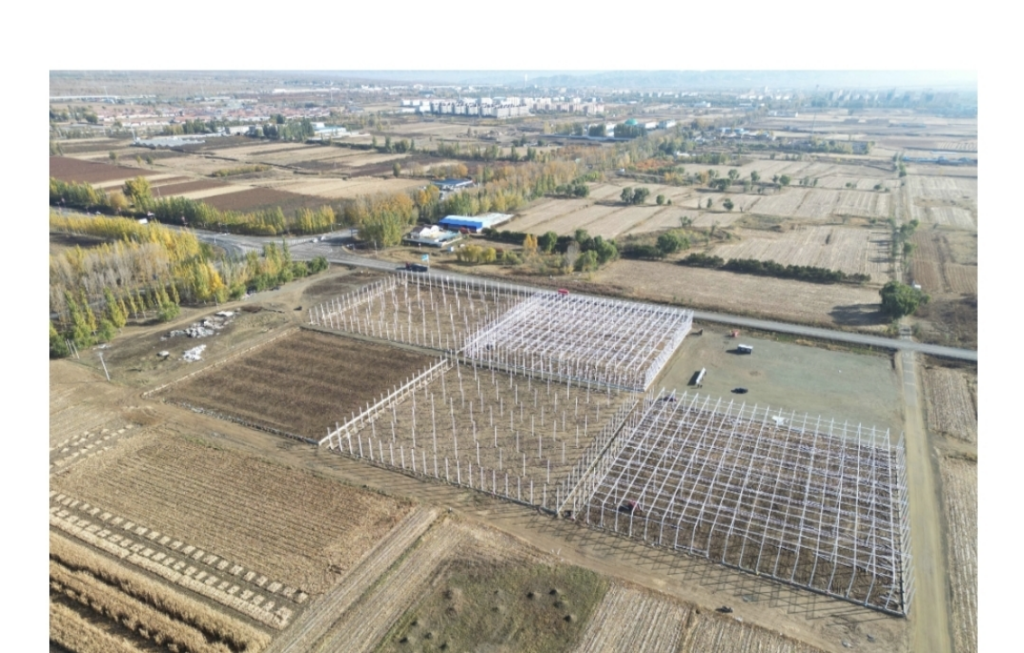
再签16个重点项目!广州南沙政企合力打造现代农业新标杆
Nan Fang Du Shi Bao· 2025-12-25 05:50
Core Viewpoint - The "2025 Modern Agriculture High-Quality Development Investment and Intelligence Conference" held in Nansha aims to promote the transformation and upgrading of regional agriculture towards intelligence and sustainability through strategic partnerships and project agreements with various institutions [1][2]. Group 1: Event Overview - The conference attracted over 180 representatives from enterprises, universities, research institutions, and financial organizations to discuss modern agricultural development paths [1]. - A total of 16 strategic framework agreements were signed with 18 organizations, focusing on agricultural technology, smart breeding, and facility agriculture [1]. Group 2: Strategic Initiatives - Nansha is developing a modern agricultural industry system that integrates production, processing, sales, and cultural tourism, demonstrating a systematic layout in the agricultural sector [1]. - The "Modern Agriculture 8 Policies" introduced earlier this year aim to optimize the agricultural investment environment [1]. Group 3: Project and Resource Matching - The event included a "Nansha Policy Package" session to facilitate efficient project-resource matching, highlighting the local government's commitment to support and service [2]. - Representatives from established enterprises shared positive experiences regarding policy support and efficiency in Nansha, emphasizing the region's rapid development [2]. Group 4: Future Development Plans - The Nansha Modern Agriculture Industry Group introduced its seven products, eight services, and nine key development projects, focusing on various sectors including fishery breeding and facility agriculture [2]. - The group aims to continue its role as a leading state-owned enterprise, promoting the implementation of modern agricultural projects and high-quality agricultural development in Nansha [2].
冬闲变“冬忙”,齐鲁田野跃动新生机
Xin Lang Cai Jing· 2025-12-21 10:24
Core Viewpoint - The article highlights the innovative agricultural practices in Shandong Province, particularly focusing on the use of container-based plant factories that significantly enhance vegetable production efficiency and quality [1][3]. Group 1: Container Plant Factory - The container plant factory in Shouguang City utilizes a controlled environment to grow vegetables, achieving a production capacity five times greater than traditional farming methods within a 30-square-meter space [3]. - This system has become a key export product for Shouguang's vegetable technology, reaching countries like the UAE, Canada, and the Netherlands, and is capable of withstanding extreme temperatures [3]. Group 2: Local Agricultural Practices - In Jiaozhou, the local cabbage, known as "Jiaobai," has a stable planting area of 65,000 acres and an annual production exceeding 350,000 tons, supported by a standardized production system involving over 80 certified bases [5]. - The region's unique soil and water conditions contribute to the exceptional taste and quality of Jiaobai, which is characterized by its tight leaves and high moisture content [5]. Group 3: Seasonal Agricultural Activity - Despite winter being traditionally seen as a downtime for agriculture, Shandong's winter production showcases a variety of crops, including scallions, winter jujubes, oysters, and crabs, indicating a shift towards facility-based agriculture and market demand [5].
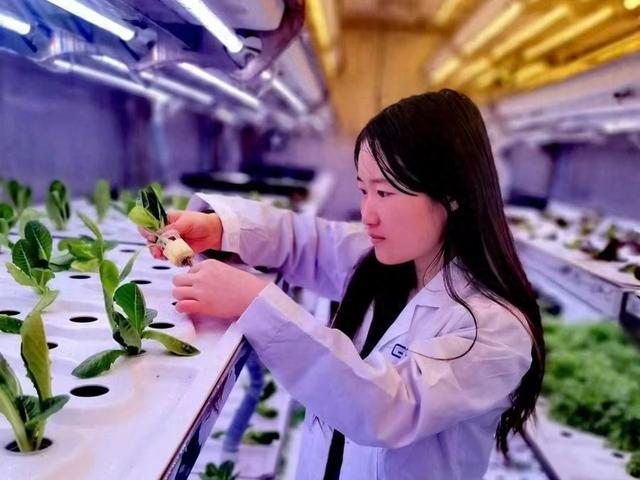
云南推进高原特色农业提质增效——深耕土特产品 跃升农业能级
Xin Lang Cai Jing· 2025-12-19 20:27
Core Insights - Yunnan's highland特色农业 is undergoing significant transformation through technological advancements and value chain enhancements, leading to increased productivity and income for farmers [1][4][5] Group 1: Technological Advancements - The integration of drones, IoT monitoring, and smart irrigation systems is becoming standard in high-quality agricultural production bases, marking a shift from traditional practices to data-driven approaches [1] - Agricultural workers are increasingly skilled in using smartphones and smart devices, becoming key drivers of modernization in Yunnan's agriculture [2] - The use of agricultural drones has been promoted in several counties, enhancing efficiency in crop management and protection [3] Group 2: Economic Performance - Yunnan's digital agriculture is thriving, with online retail sales of agricultural products reaching 466.15 billion yuan, a year-on-year increase of 11.95% [3] - The province has established 9,901 village-level logistics service stations, achieving a 67.39% delivery rate to villages, significantly improving access to markets [3] Group 3: Industry Development - Yunnan is focusing on building a strong特色农业省, promoting high-quality development across various agricultural sectors, including technology, green practices, and branding [4] - The province has made strides in seed industry revitalization, with significant investments attracting over 300 research institutions and enterprises, leading to a production value exceeding 10 billion yuan [4] Group 4: Value Chain Enhancement - Yunnan's agricultural products are increasingly processed, with coffee and wild mushrooms being transformed into high-value products, enhancing profitability for local farmers [5][6] - The province's blueberry and flower industries are thriving due to investments in facility agriculture, with blueberries leading the nation in scale [5] - The average sugar production rate in Yunnan has reached 13.35%, the highest in the country, reflecting the efficiency of its sugarcane processing [6]
设施农业“棚”勃发展
Xin Lang Cai Jing· 2025-12-19 18:23
Core Viewpoint - The development of facility agriculture in the Xinjiang Production and Construction Corps (XPCC) has significantly enhanced agricultural productivity and improved the livelihoods of local farmers, particularly during the winter season when traditional crops are less available [7]. Group 1: Facility Agriculture Development - The XPCC has increased investments in facility agriculture, implementing policies to support local adaptation, crop structure adjustments, and the introduction of new technologies [7]. - Modern agricultural technologies such as integrated water and fertilizer systems and pest control measures are being utilized to ensure high-quality and safe agricultural products [7][8]. - The use of temperature, humidity, and light monitoring systems allows for precise environmental control, enabling crops to thrive even in low-temperature conditions [7][8]. Group 2: Economic Impact and Employment - The growth of facility agriculture has created numerous flexible employment opportunities, effectively increasing income for surplus labor in surrounding areas [8]. - Farmers are experiencing significant financial benefits, with reports of high yields, such as over 8 tons of ice cream watermelon from a single greenhouse, which is in high demand in local markets [8]. - The initiative is contributing to the overall modernization of agriculture and promoting rural revitalization by overcoming natural resource limitations [8].
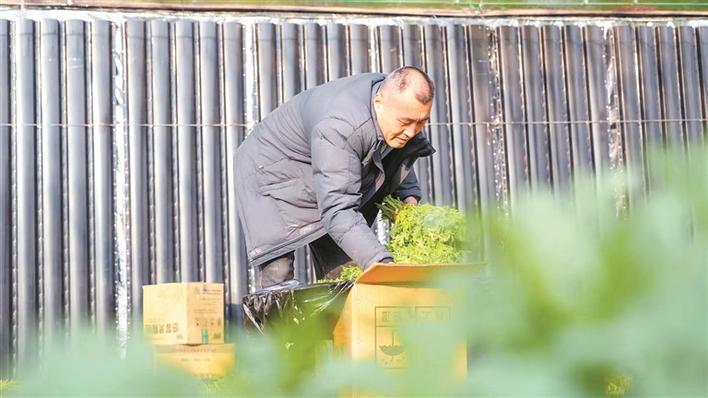
从“猫冬”到“忙冬”:沙漠腹地民勤孕育寒旱农业新景
Zhong Guo Xin Wen Wang· 2025-12-17 08:56
Core Viewpoint - The agricultural transformation in Minqin County, Gansu Province, is shifting from a "winter idle" to a "busy winter" model, showcasing the vitality of greenhouse agriculture during the winter season [2][5]. Group 1: Agricultural Practices - Farmers in the village of Guanguo are increasingly abandoning the "winter idle" approach and engaging in active agricultural practices, particularly in the cultivation of zucchini during its peak season [2]. - The village has implemented an intelligent water and fertilizer integration system, leading to an average annual income exceeding 30,000 yuan per greenhouse, thus becoming a reliable engine for continuous income growth for villagers [2][5]. - The county has developed 56,000 acres of solar greenhouses, with a total output of 380,700 tons of greenhouse products, indicating significant progress in facility agriculture [7]. Group 2: Technological Integration - Minqin County has focused on promoting facility agriculture, integrating technologies for water conservation and temperature control, effectively overcoming seasonal limitations in high-cold and arid regions [5]. - The county has adopted a scientific crop rotation strategy, optimizing the planting structure to transition from a traditional single-season model to a year-round high-efficiency model, thereby stabilizing agricultural production and expanding income channels for farmers [5][6]. Group 3: Market and Branding - The county is enhancing brand agriculture by promoting large-scale operations and standardized production, leveraging the "Minqing Source" regional public brand to support various new agricultural entities [6]. - A range of vegetable brands, including small melons, zucchinis, and peppers, are gaining recognition, reflecting the county's commitment to agricultural branding and market integration [6].
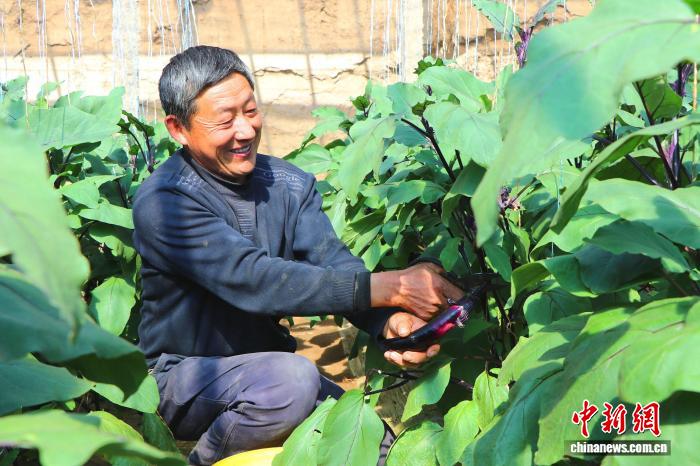
农业科普·品尝舌尖上第一口“鲜” 解锁反季节蔬菜背后高科技“密码”
Yang Shi Wang· 2025-12-10 07:16
Core Viewpoint - The article addresses misconceptions about off-season vegetables, clarifying that they are produced using modern agricultural technologies and do not inherently lack nutrition or safety [1][3][15]. Group 1: Definition and Types of Off-Season Vegetables - Off-season vegetables are defined as agricultural products that are grown outside their traditional harvest periods through modern technology, allowing for year-round supply [3]. - There are three main categories of off-season vegetables: those grown in different geographical locations, emergency reserves using preservation techniques, and those cultivated in greenhouses [4]. Group 2: Nutritional Value and Quality - Misconceptions about off-season vegetables lacking nutrition stem from perceived differences in taste and texture, which do not equate to a lack of nutritional value [6][7]. - While growing conditions can affect the flavor and texture of vegetables, the fundamental nutritional components remain stable [10]. - The use of cold chain logistics and immediate pre-cooling after harvest can significantly reduce nutrient loss and maintain freshness [12]. Group 3: Safety and Pesticide Use - Claims that off-season vegetables contain high pesticide residues are misleading; modern agricultural practices involve strict management of pesticide use [15][17]. - The majority of pesticides used today are biodegradable and subject to safety testing before products reach the market [17]. Group 4: Technological Innovations in Off-Season Vegetable Production - Advanced technologies in greenhouse farming allow for the production of off-season vegetables, with controlled environments ensuring optimal growth conditions [22][30]. - In a specific intelligent greenhouse in Shandong, the temperature is maintained above 15°C during winter, and automated systems monitor humidity and temperature to support vegetable growth [26][28]. - The use of LED grow lights compensates for reduced sunlight in winter, enhancing the growth of off-season crops like cucumbers, achieving yields comparable to summer production [31].
河南省方城县:设施农业“棚”勃发展 奏响乡村振兴“致富曲”
Zhong Guo Jing Ji Wang· 2025-12-01 12:32
Core Insights - The article highlights the successful development of facility agriculture in Shangzhuang Village, Henan Province, particularly focusing on the cultivation of tomatoes and cucumbers in greenhouses, which has significantly improved local residents' incomes [1][2] - The establishment of a "ground transaction market" has facilitated the sales of vegetables, allowing local farmers to efficiently connect with buyers and ensuring that produce is sold without excess inventory [1] Group 1: Agricultural Development - Shangzhuang Village has expanded its greenhouse vegetable planting industry, with 310 greenhouses covering 1,100 acres and involving over 200 farming households [1] - The village has seen a steady increase in the quality and profitability of greenhouse vegetables due to improved structure, new varieties, and optimized cultivation techniques [1] Group 2: Economic Impact - The facility agriculture in Bohuang Town has created over 1,600 greenhouses covering more than 7,000 acres, benefiting over 1,000 households and providing employment for more than 4,000 villagers [2] - The local economy has been positively impacted, with farmers reporting annual incomes of 20,000 to 30,000 yuan from vegetable cultivation [1]