财务风险

Search documents
熙菱信息实控人岳亚梅突遭留置 治理危机与财务风险共振
Xin Lang Zheng Quan· 2025-08-20 10:40
Core Viewpoint - The investigation of the controlling shareholder and general manager, Yue Yamei, by the Alashankou Municipal Supervisory Committee has raised significant concerns regarding corporate governance and the legitimacy of recent share transfer transactions [1][2]. Group 1: Governance Crisis - The investigation into Yue Yamei, who has been a key figure in the company since 1999 and has held the position of general manager since 2011, highlights deep-rooted governance issues within the company [2]. - The recent announcement of a share transfer of 25.06% to Shanghai Shengxun for 720 million yuan just days before the investigation raises questions about the legality and potential regulatory scrutiny of the transaction [2]. - Following the announcement of the investigation, the company's stock price plummeted by 18%, resulting in a market value loss of nearly 800 million yuan, indicating investor skepticism about the company's governance and risk management capabilities [2]. Group 2: Financial Performance - The company has reported continuous losses over the past five years, with a cumulative deficit exceeding 340 million yuan, and a 50.8% year-on-year increase in losses for 2024, amounting to 60.55 million yuan [3]. - In the first quarter of 2025, the company recorded a loss of 15.01 million yuan, further worsening its financial situation [3]. - The company's cash flow situation is alarming, with a net cash flow from operating activities dropping by 178.39% to -24.65 million yuan in 2024, and accounts receivable reaching 193 million yuan, which is 118.6% of its revenue, posing a high risk of bad debts [3].
股票投资的风险如何评估?
Sou Hu Cai Jing· 2025-08-19 19:16
Systematic Risk - Systematic risk refers to the risk faced by the entire market, influenced by macroeconomic factors such as GDP growth rate, inflation rate, and interest rates, which can significantly impact stock prices [1] - Economic expansion typically leads to increased corporate profits and rising stock markets, while economic recession can result in declining revenues and profits, putting downward pressure on stock prices [1] - Political stability fosters healthy stock market development, whereas political turmoil increases market uncertainty and investor confidence may be adversely affected [1] Market Risk - Market risk arises from price fluctuations in the stock market, primarily driven by changes in supply and demand [2] - Investor sentiment and psychological expectations can exacerbate market risks, leading to market bubbles during optimistic periods and panic sell-offs during pessimistic periods [2] - Non-systematic risk, which is specific to individual companies or industries, is also a significant concern, with operational risks being a key component [2] Financial Risk - Financial risk is influenced by a company's financial condition and capital structure, with high debt levels leading to significant interest expenses and repayment pressures [3] - Poor management or strategic decisions can result in profit declines and stock price drops, highlighting the importance of operational efficiency and market competitiveness [2][3] - Investors are encouraged to assess risks comprehensively, considering systematic, market, and non-systematic risks to make informed investment decisions [3]
众泰汽车6年半亏255亿 重庆分公司设备流拍 T300车型难复产
Chang Jiang Shang Bao· 2025-08-11 05:25
Core Viewpoint - Zhongtai Automobile has effectively been removed from the ranks of complete vehicle manufacturers due to ongoing financial difficulties and operational challenges [2][3]. Financial Situation - Zhongtai Automobile's subsidiary, Hunan Jiangnan Automobile Manufacturing Co., Ltd., had its assembly line and related equipment auctioned off, which failed to sell in the first round [2][4]. - The company has been in a state of loss since 2019, with a cumulative net profit loss of 255 billion yuan over six and a half years [2][10]. - As of the end of Q1 2025, Zhongtai's debt ratio reached 96.10%, with total assets of 35.05 billion yuan, down 42.37% year-on-year, and total liabilities of 33.68 billion yuan, down 28.4% year-on-year [7]. Operational Challenges - The judicial auction and subsequent dismantling of the assembly line will prevent the company from resuming production of its primary model, the T300, by the planned date [4][5]. - If production does not resume by 2025, the company risks having a negative net asset value, leading to financial and operational crises, as well as delisting risks [5][6]. Management Changes - The current president of Zhongtai is acting in multiple roles, including secretary of the board and vice president, indicating potential management instability [2][13]. - Recent management changes include the resignation of the vice president, which may further complicate the company's operational recovery efforts [12][13]. Sales and Production - In 2024, Zhongtai's sales volume was only 14 vehicles, with no production activity, indicating a severe decline in operational capacity [12]. - The company has been unable to recover from the impact of the automotive industry's price wars and its own competitive disadvantages [12]. Recent Performance - For the first half of 2025, Zhongtai expects a net loss of 135 million to 200 million yuan, although this represents a reduction in losses compared to the previous year [9][10].



国泰航空营收增长10.5%达1044亿港元,开通19条新航线覆盖百个航点,流动比率降至0.38引关注
Jin Rong Jie· 2025-08-06 07:58
Core Viewpoint - Cathay Pacific maintains a robust financial performance in the first half of 2025 despite uncertainties in the business environment, with the group’s passenger airline having launched or announced 19 new routes, reaching over 100 destinations globally. However, the latest financial data indicates notable changes in key financial metrics amid rapid expansion [1]. Financial Performance - In 2024, Cathay Pacific's total revenue reached HKD 104.37 billion, a 10.5% increase from HKD 94.49 billion in 2023 [3]. - Shareholder profit attributable increased slightly by 5.9% to HKD 9.61 billion, showing a significant slowdown in growth [3]. - Earnings per share rose from HKD 14.68 to HKD 16.21, while earnings per share slightly decreased from HKD 2.24 to HKD 2.20 [3]. - Return on equity improved from 14.64% in 2023 to 17.08% in 2024, and return on total assets increased from 5.11% to 5.56% [3]. - However, net asset per share declined from HKD 9.32 to HKD 8.15, indicating adjustments in the company’s asset structure [3]. - Cash flow indicators showed deterioration, with net cash flow per share at negative HKD 0.37 compared to positive HKD 0.09 in 2023, and operating cash flow per share decreased from HKD 4.10 to HKD 3.66 [3]. Liquidity Concerns - Cathay Pacific's liquidity situation has worsened, with the current ratio dropping from 0.67 in 2021 to 0.38 in 2024, and the quick ratio falling from 0.64 to 0.36 [4]. - Net current liabilities increased significantly from HKD 14.24 billion in 2021 to HKD 30.99 billion in 2024, more than doubling [4]. - Total current liabilities reached HKD 50.24 billion, while current assets totaled only HKD 19.25 billion, indicating a significant mismatch in asset-liability duration [4]. - Cash and cash equivalents decreased from HKD 8.32 billion in 2023 to HKD 7.27 billion, which may affect the company's ability to respond to emergencies amid rapid expansion [4]. - Short-term debt rose to HKD 11.63 billion from HKD 10.52 billion in 2023, increasing short-term repayment pressure [4]. Business Expansion Challenges - The company plans to invest over HKD 100 billion in fleet, cabin, lounge products, and digital innovation, aiming to enhance customer experience through increased flights and destinations [6]. - However, this large-scale investment strategy faces risks given the current financial situation [6]. - Hong Kong Express, a key component of Cathay Pacific, reported a loss of HKD 400 million in 2024, a significant decline from a profit of HKD 433 million in 2023 [6]. - Although ticket bookings to Japan have shown recovery, they have not yet returned to normal levels, and new routes require time to mature [6]. - Cathay Cargo achieved revenue of HKD 24 billion in 2024, an 8.3% year-on-year increase, but faces challenges for sustainable growth amid a complex global trade environment [6]. - Overall, while revenue and profit growth are evident, liquidity deterioration, cash flow pressures, and losses from subsidiaries are critical issues that need careful financial risk management to ensure long-term sustainability [6].


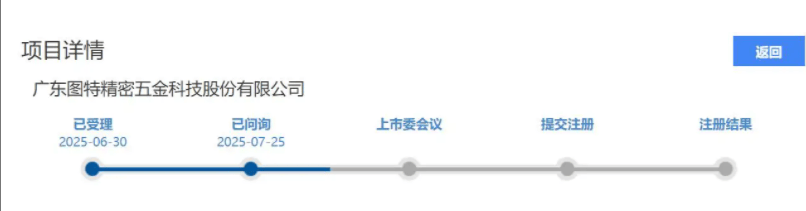
图特股份北交所IPO:劳务派遣激增219%背后的增长隐患
Sou Hu Cai Jing· 2025-07-30 05:10
Core Viewpoint - The listing application of Guangdong Tute Precision Hardware Technology Co., Ltd. has been accepted by the Beijing Stock Exchange, aiming to raise 395 million yuan through the issuance of up to 15.5 million shares, with Minsheng Securities as the sponsor [1][4]. Group 1: IPO Journey - Tute's IPO journey has faced multiple setbacks, including a failed application to the Shenzhen Stock Exchange due to regulatory scrutiny and questions regarding its business scale and industry representation [2]. - After withdrawing its application in September 2024, Tute resumed its listing process on the Beijing Stock Exchange in December 2024, with a significantly reduced fundraising target of 395 million yuan compared to the initial 690 million yuan planned for the main board [4]. Group 2: Financial Data Concerns - Tute's financial performance shows signs of weakness, with revenue growth slowing from 18.85% in 2023 to 10.07% in 2024, and net profit only slightly increasing by 1.12% to 131 million yuan [5][6]. - The company's gross margin has fluctuated, with a decline in 2024 to 29.63%, contrasting with the industry average of 29.31% [6][7]. - A significant increase in prepaid accounts receivable by 161.3% in 2024, compared to a mere 10.98% increase in operating costs, raises concerns about cash flow and profitability quality [7][20]. Group 3: Governance and Related Transactions - Tute's ownership structure reveals a family control characteristic, with the actual controllers holding 81.30% of shares, raising governance concerns due to related party transactions [9][11]. - The involvement of family members in employee stock ownership plans and the lack of lock-up periods for them compared to regular employees highlight potential governance issues [11]. - Significant increases in transaction volumes with investors post their share acquisition suggest possible conflicts of interest and require further scrutiny [12]. Group 4: Investment Projects and Capacity Utilization - Tute plans to allocate 54% of its IPO proceeds, approximately 214 million yuan, to the construction of an intelligent manufacturing base, despite existing high capacity utilization rates between 80.17% and 96.82% [13][14]. - The rationale behind investing in marketing and R&D upgrades is questioned due to a significant increase in sales expenses outpacing revenue growth [15]. Group 5: Labor and Compliance Issues - The number of labor dispatch workers surged from 18 to 219, a staggering increase of 1117%, raising compliance risks and concerns about the sustainability of the company's growth model [16][17]. - The disparity between revenue growth and the dramatic rise in labor dispatch workers indicates potential issues with the company's operational efficiency [20]. Group 6: Inventory Risks - Tute's inventory value reached 131 million yuan, accounting for 13.95% of total assets, with a low impairment provision of only 4.03%, which is below the industry average [19][20].
元创科技三闯IPO:95%家族控股背后的五大未曝隐患
Sou Hu Cai Jing· 2025-07-29 05:15
Core Viewpoint - Yuan Chuang Technology Co., Ltd. is attempting its third IPO since 2021, facing significant challenges due to financial data and governance issues revealed in its latest prospectus [1][3][23] Group 1: Ownership and Governance Issues - Yuan Chuang Technology has a high family ownership ratio of 95.24%, raising concerns about corporate governance effectiveness [3][5] - The actual controller, Wang Wenjie, has a history of legal issues, including a bribery case, which has led to scrutiny from regulatory bodies [6][7] - The management team is also characterized by familial ties, with several key positions held by relatives of the actual controller, indicating a lack of professional governance [8] Group 2: Customer Dependency and Financial Risks - The company faces significant customer concentration risk, with the top five customers contributing over 46% of sales revenue from 2022 to 2024 [11] - A major customer, Wo De Agricultural Machinery, accounts for 22.91% of revenue but represents 40.43% of accounts receivable, indicating a potential cash flow crisis [12] - The overdue accounts from Wo De Agricultural Machinery have been substantial, with overdue amounts reaching 96.08 million yuan at the end of 2022 [12] Group 3: Financial Performance and Cash Flow Concerns - The company's revenue showed fluctuations, with 2024 net profit declining by 12.94% year-on-year, while accounts receivable surged by 35.18% [14] - The net cash flow from operating activities decreased by 35.88% in 2024, raising concerns about the company's ability to convert revenue into cash [16] - The company has distributed 47.16 million yuan in cash dividends from 2020 to 2023, while planning to raise 60 million yuan for working capital, raising questions about the rationale behind this financial strategy [16] Group 4: R&D and Capacity Expansion Issues - The company reported a sudden increase in patents and claimed to have 14 R&D personnel, despite previously stating a lack of dedicated R&D staff [18] - R&D expenditure remains low at 0.72% of revenue in 2024, which is below industry standards, questioning the claimed technological advantages [19] - The efficiency of fixed asset output has been declining, indicating potential issues with asset utilization amid expansion plans [20] Group 5: Regulatory Scrutiny and Data Discrepancies - The introduction of a rebate policy for traders during a period of declining performance raises concerns about potential financial manipulation [21] - Discrepancies in reported sales figures between the company and its major customer, Wo De Agricultural Machinery, have led to questions about financial transparency [21] - Changes in the educational qualifications of key technical personnel shortly after IPO scrutiny have raised further doubts about the company's credibility [21]
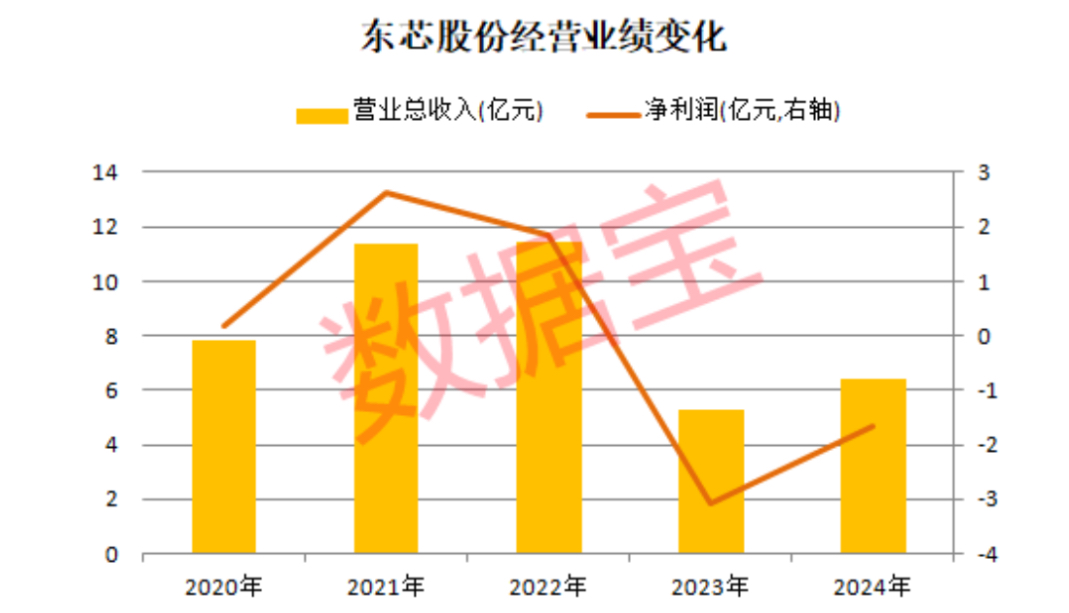
东芯股份:财务“雷点”被监管盯上了!高库存暗藏减值风险,境外收入说不清
Zheng Quan Shi Bao Wang· 2025-07-23 07:29
Core Viewpoint - Dongxin Co., Ltd. has shown a significant stock price increase of 42.57% year-to-date, but faces serious operational challenges with consecutive net losses projected for 2023 and 2024, raising concerns about its financial health [1][3]. Financial Performance - The company reported a net profit decline starting in 2022, with a projected loss of 0.59 billion yuan in Q1 2025 [1]. - As of July 22, 2023, the company's A-share market capitalization stood at 15.7 billion yuan [1]. Inventory Issues - Dongxin's inventory balance reached 1.121 billion yuan at the end of 2024, accounting for 161.87% of operating costs and 34.16% of current assets [3]. - The company reported a decrease in inventory impairment provision by 33% year-on-year, raising concerns about the adequacy of provisions given the high inventory levels [3]. Gross Margin Fluctuations - The overall gross margin for 2024 was 13.99%, an increase of 2.42 percentage points year-on-year, but product-specific margins varied significantly [6]. - NAND and NOR product margins increased by 8.25 and 6.89 percentage points respectively, while DRAM margins decreased by 7.01 percentage points [6]. Accounts Receivable Concerns - Accounts receivable surged to 159 million yuan at the end of 2024, a year-on-year increase of 67.86%, significantly outpacing revenue growth of 20.8% [6]. - The company reported a 121.59% increase in accounts receivable from direct sales customers, with only a slight increase in bad debt provisions, raising questions about credit policies [6]. Transparency of Overseas Assets - The company has overseas assets valued at 552 million yuan, constituting 15.64% of total assets, but lacks detailed disclosure on their distribution and usage [7]. - There are discrepancies noted by auditors regarding export revenue and VAT declarations, indicating potential risks in revenue recognition [7].

中山公用: 中山公用事业集团股份有限公司2025年度跟踪评级报告
Zheng Quan Zhi Xing· 2025-06-25 18:16
Core Viewpoint - The credit rating agency maintains the credit rating of Zhongshan Public Utilities Group Co., Ltd. at AA+ with a stable outlook, reflecting the company's strong regional competitive advantage in water supply and wastewater treatment, supported by its investment in Guangfa Securities and low financial leverage [3][32]. Financial Overview - Total assets increased from 254.99 billion in 2022 to 350.66 billion in 2025 [8]. - Total liabilities rose from 95.41 billion in 2022 to 172.88 billion in 2025 [8]. - Net profit decreased from 10.49 billion in 2022 to 9.92 billion in 2023, but is projected to rise to 12.11 billion in 2024 [8]. - EBITDA increased from 16.83 billion in 2022 to 20.97 billion in 2024 [8]. - The company’s debt-to-EBITDA ratio is projected to be between 4.8 and 5.8 in 2025 [30]. Business Operations - The company holds the majority of water supply concessions in Zhongshan and is responsible for wastewater treatment and drainage services, enhancing its regional advantage [7][12]. - The water supply business revenue is expected to grow by 11.60% in 2024 due to increased supply capacity and integration of water supply operations [13]. - The wastewater treatment business revenue increased by 2.55% to 6.33 billion in 2024 [14]. Investment and Projects - The company has significant ongoing projects with a total investment of 51.08 billion, primarily in water supply and wastewater treatment facilities [18][19]. - The company is in discussions to acquire additional assets from Changqing Group, which may impact future operations [18]. Risk Factors - The company faces capital expenditure pressures due to large ongoing project investments [7][18]. - The recovery of engineering payments and accounts receivable is a concern, as the scale of these has increased [20][23]. External Support - The company continues to receive government support in terms of resources and funding, which is crucial for its operations in public utilities [31].

百利好丨黄金投资暗藏“雷区”?揭秘风险管理秘籍!
Sou Hu Cai Jing· 2025-06-19 08:14
Core Viewpoint - The article discusses the various risks associated with investing in spot gold, highlighting the importance of understanding these risks for potential investors in the volatile gold market [1]. Group 1: Market Risks - Price volatility risk is influenced by global economic conditions, geopolitical events, inflation expectations, and the strength of the US dollar, leading to significant fluctuations in gold prices [3]. - Liquidity risk can arise during extreme market conditions, such as panic selling or economic crises, potentially increasing transaction costs and losses [4]. - Financial risks include the risk of price declines, where short-term drops can lead to capital losses despite gold's long-term value retention [6]. - Leverage risk is present due to the margin system in spot gold trading, which can amplify both gains and losses, potentially leading to significant losses if market movements are unfavorable [8]. Group 2: Mitigation Strategies - To manage market risks, investors should monitor economic data, geopolitical developments, and central bank policies, while diversifying their investment portfolios to reduce the impact of single asset volatility [3]. - For liquidity risk, it is advisable to choose reputable trading platforms and brokers, and to manage funds wisely to avoid excessive leverage [5]. - To address financial risks, investors should control their positions, set stop-loss points based on risk tolerance, and consider dollar-cost averaging to smooth out price fluctuations [7]. - To mitigate leverage risk, it is recommended to use leverage cautiously, typically not exceeding a ratio of 1:10, and to maintain sufficient margin [9]. Group 3: Platform and Policy Risks - Platform risk arises from the potential for fraud or instability in trading platforms that lack proper regulation and credentials [10]. - Policy risk is associated with changes in national policies, such as monetary, tax, and regulatory measures, which can affect gold market supply and demand [12].
上市失败案例分析:那些倒在IPO路上的企业做错了什么?
Sou Hu Cai Jing· 2025-06-06 10:08
Core Viewpoint - The trend of Chinese companies going public in the U.S. and Hong Kong is facing significant challenges due to stricter regulatory scrutiny and a growing number of failed IPO attempts [2][4][12] Group 1: Regulatory Environment - The IPO review process in mainland China has become increasingly stringent, leading many companies to shift their focus to Hong Kong, where financial transparency and governance requirements have also intensified [4] - The SEC imposes strict requirements on financial disclosures and audits, making companies with financial flaws or internal control deficiencies more likely to face IPO rejections [7] Group 2: Financial Challenges - Dipu Technology, an AI high-tech firm, reported cumulative losses of 2.4 billion yuan over three years, with a staggering debt-to-asset ratio of 965.3%, raising concerns about its liquidity and operational sustainability [5] - Companies are experiencing liquidity crises, reduced R&D spending, and high employee turnover, which can hinder their IPO prospects [5] Group 3: Valuation and Market Conditions - Flashback Technology's IPO attempt failed due to valuation discrepancies and a downturn in the industry cycle, highlighting the need for sustainable profit models rather than reliance on market sentiment [6] - Investors should be cautious of companies with high valuations, low profitability, and high debt, especially during industry downturns [6] Group 4: Compliance and Legal Issues - Companies must manage internal communications and external promotions carefully during the IPO quiet period to avoid legal violations that could delay or derail their IPO plans [9] - New Hehua Chinese Medicine Co. faced multiple IPO failures due to allegations of financial fraud and governance issues, demonstrating the importance of compliance in the IPO process [11] Group 5: Successful IPO Strategies - Successful IPOs are often characterized by clear business models, progress in technology commercialization, and strong ESG governance capabilities, forming a "iron triangle" for success [13] - Companies should leverage policy benefits and pre-review mechanisms to address compliance challenges and adapt their strategies based on industry characteristics and target markets [12]