
货币政策工具

Search documents
央行将开展1.1万亿元买断式逆回购操作!
证券时报· 2026-01-07 15:39
Group 1 - The People's Bank of China (PBOC) announced a 1.1 trillion yuan reverse repurchase operation with a term of 3 months, indicating a continuation of liquidity support in the market [1] - In January, a total of 1.7 trillion yuan in reverse repos will mature, and the market expects further operations to maintain liquidity stability [1][2] - The central bank is likely to use reverse repos and Medium-term Lending Facility (MLF) to manage liquidity amid government bond issuance and tax payments [2][3] Group 2 - The Ministry of Finance has completed the first batch of 2026 government bond issuance, indicating an increase in government bond scale for the year [2] - Experts predict that the government will maintain necessary fiscal deficits and expand fiscal spending, leading to a higher issuance of government bonds in 2026 [2] - The central bank's actions are aimed at ensuring a stable funding environment to accommodate the increased supply of government bonds [2]


瑞达期货焦煤焦炭产业日报-20260107
Rui Da Qi Huo· 2026-01-07 09:34
Group 1: Investment Rating - No investment rating information is provided in the report. Group 2: Core Viewpoints - Despite the macro - sentiment driving the futures prices to rise strongly, the overall supply - demand pattern is weak. With the recovery of Mongolian coal and mine supplies and the downstream profit pressure remaining, the short - term trend of coking coal is expected to be a wide - range oscillation [2]. - Although the coke futures price rebounded strongly intraday due to macro factors, the fundamentals have not improved significantly and lack the power for continuous growth. The short - term trend of coke is also expected to be a wide - range oscillation [2]. Group 3: Summary by Relevant Catalogs Futures Market - JM main contract closing price: 1164.00 yuan/ton, up 68.00 yuan; J main contract closing price: 1773.00 yuan/ton, up 118.00 yuan [2]. - JM futures contract open interest: 624774.00 lots, up 19678.00 lots; J futures contract open interest: 40135.00 lots, up 2067.00 lots [2]. - Net position of the top 20 coking coal contracts: - 61315.00 lots, up 14325.00 lots; net position of the top 20 coke contracts: - 1655.00 lots, down 1108.00 lots [2]. - JM 9 - 5 contract spread: 82.50 yuan/ton, up 5.50 yuan; J 9 - 5 contract spread: 78.50 yuan/ton, up 1.00 yuan [2]. - Coking coal warehouse receipts: 2500.00, up 700.00; coke warehouse receipts: - 17.00, down 17.00 [2]. Spot Market - Dry Qimantage Mongolian No. 5 raw coal: 953.00 yuan/ton; Tangshan Grade 1 metallurgical coke: 2200.00 yuan/ton [2]. - Russian prime coking coal forward spot: 159.00 US dollars/wet ton; Rizhao Port quasi - Grade 1 metallurgical coke: 1470.00 yuan/ton [2]. - Jingtang Port Australian imported prime coking coal: 1480.00 yuan/ton, down 40.00 yuan; Tianjin Port Grade 1 metallurgical coke: 1570.00 yuan/ton [2]. - Jingtang Port Shanxi - produced prime coking coal: 1650.00 yuan/ton; Tianjin Port quasi - Grade 1 metallurgical coke: 1470.00 yuan/ton [2]. - Shanxi Jinzhong Lingshi medium - sulfur prime coking coal: 1626.00 yuan/ton; Inner Mongolia Wuhai - produced coking coal ex - factory price: 1330.00 yuan/ton [2]. - JM main contract basis: 462.00 yuan/ton, down 68.00 yuan; J main contract basis: - 108.00 yuan/ton, down 118.00 yuan [2]. Upstream Situation - Fine coal output of 314 independent coal washing plants: 26.10 million tons, up 0.30 million tons; fine coal inventory: 319.70 million tons, down 9.30 million tons [2]. - Capacity utilization rate of 314 independent coal washing plants: 0.35%, up 0.00%; raw coal output: 42679.30 million tons, up 2004.30 million tons [2]. - Coal and lignite imports: 4405.00 million tons, up 231.00 million tons; imported coking coal inventory at 16 ports: 539.48 million tons, up 21.58 million tons [2]. - Total coking coal inventory of independent coking enterprises: 1052.50 million tons, up 12.78 million tons; total coke inventory: 91.60 million tons, down 0.64 million tons [2]. - Coking coal inventory of 247 steel mills nationwide: 802.27 million tons, down 4.45 million tons; coke inventory: 643.99 million tons, up 1.79 million tons [2]. - Available days of coking coal for independent coking enterprises: 12.88 days, down 0.08 days; available days of coke for 247 steel mills: 12.10 days, up 0.09 days [2]. Industry Situation - Coking coal imports: 1073.15 million tons, up 13.82 million tons; coke and semi - coke exports: 72.00 million tons, down 1.00 million tons [2]. - Total coking coal supply: 5239.57 million tons, up 183.04 million tons; capacity utilization rate of independent coking enterprises: 71.72%, up 0.06% [2]. - Tonnage coke profit of independent coking plants: - 14.00 yuan/ton, up 4.00 yuan/ton; coke output: 4170.30 million tons, down 19.30 million tons [2]. Downstream Situation - Blast furnace operating rate of 247 steel mills nationwide: 78.94%, up 0.62%; blast furnace iron - making capacity utilization rate: 85.26%, up 0.32% [2]. - Crude steel output: 6987.10 million tons, down 212.60 million tons [2]. Industry News - The capacity utilization rate of 314 independent coal washing plants was 35.4%, a month - on - month increase of 0.3%; the daily output of fine coal was 26.1 million tons, a month - on - month increase of 0.3 million tons; the fine coal inventory was 319.7 million tons, a month - on - month decrease of 9.4 million tons [2]. - In December, 26 construction steel production enterprises carried out production cuts and overhauls, 16 less than the previous month, and the impact on production increased month - on - month, with an estimated impact on construction steel output of 259.21 million tons, a month - on - month increase of 28.74% [2].
A股13连阳关键时刻,央行开年第一会释放重磅消息!再提“向非银机构提供流动性的机制性安排”,或成我国中央银行制度又一项重大改革
Jin Rong Jie· 2026-01-06 12:36
Group 1 - The People's Bank of China (PBOC) emphasizes a stable yet progressive monetary policy for 2026, focusing on high-quality economic development and reasonable price recovery while maintaining ample liquidity [1] - The PBOC plans to implement a mechanism for providing liquidity to non-bank financial institutions under specific scenarios, which is crucial for supporting capital markets [1][5] - Non-bank institutions, including brokerages, funds, and insurance companies, are highlighted as key players in the financial system, necessitating direct liquidity support from the central bank [6][7] Group 2 - The introduction of two monetary policy tools in 2024 significantly reversed the downward trend in the A-share market, marking the beginning of the "924 market" rally [2][3] - The PBOC's creation of liquidity support tools for non-bank financial institutions aims to enhance the stability of capital markets and is seen as a long-term mechanism [2] - The PBOC's previous liquidity support measures have been effective in stabilizing market sentiment, indicating a shift towards a more inclusive monetary policy framework [8]
央行的货币政策工具主要有哪些
Jin Tou Wang· 2026-01-06 03:46
Core Viewpoint - The central bank's monetary policy tools are categorized into general, selective, and unconventional tools, primarily aimed at regulating market liquidity, influencing interest rates, and subsequently controlling economic growth and inflation [1]. Group 1: General Monetary Policy Tools - These tools, known as the "three major weapons," affect the entire financial market, influencing overall credit scale and money supply [2]. - The reserve requirement ratio refers to the proportion of deposits that financial institutions must hold as reserves with the central bank. An increase in this ratio tightens market liquidity, while a decrease releases liquidity and lowers financing costs for businesses and households [3]. - The rediscount rate is the interest rate at which commercial banks can discount their bills with the central bank. An increase in this rate raises the financing costs for banks, leading them to tighten credit, while a decrease lowers costs and encourages lending [4]. - Open market operations involve the central bank buying and selling securities (such as government bonds) in the financial market to adjust money supply and market interest rates. Buying securities injects funds into the market, while selling them withdraws funds, thus tightening liquidity. This is the most commonly used and flexible monetary policy tool [5]. Group 2: Selective Monetary Policy Tools - These tools are more targeted, primarily regulating credit and funding flows in specific areas [6]. - Consumer credit control involves restrictions on down payment ratios and repayment terms for consumer installment purchases, thereby regulating the scale of consumer credit and influencing consumption demand [7]. - Securities market credit control adjusts the margin requirements for margin trading, controlling the scale of credit funds flowing into the securities market to prevent excessive speculation [8]. - Real estate credit control manages the down payment ratios and interest rates for real estate loans issued by financial institutions, regulating the flow of funds into the real estate market and stabilizing prices [9]. Group 3: Unconventional Monetary Policy Tools - These tools are employed when conventional tools become ineffective (e.g., when benchmark interest rates approach zero) to address special economic conditions [10]. - Quantitative easing (QE) involves the central bank purchasing large amounts of government bonds and mortgage-backed securities to inject liquidity into the market, lowering long-term interest rates and stimulating economic recovery. Conversely, quantitative tightening (QT) involves reducing or halting reinvestment in maturing bonds or directly selling assets to withdraw liquidity from the market and tighten money supply [11]. - Forward guidance is a strategy where the central bank publicly communicates the future direction of monetary policy (e.g., maintaining interest rates for a certain period) to guide market expectations and stabilize investment and consumption behaviors of economic entities [12].
央行:2025年12月中期借贷便利(MLF)净投放1000亿元
Xin Lang Cai Jing· 2026-01-05 11:28
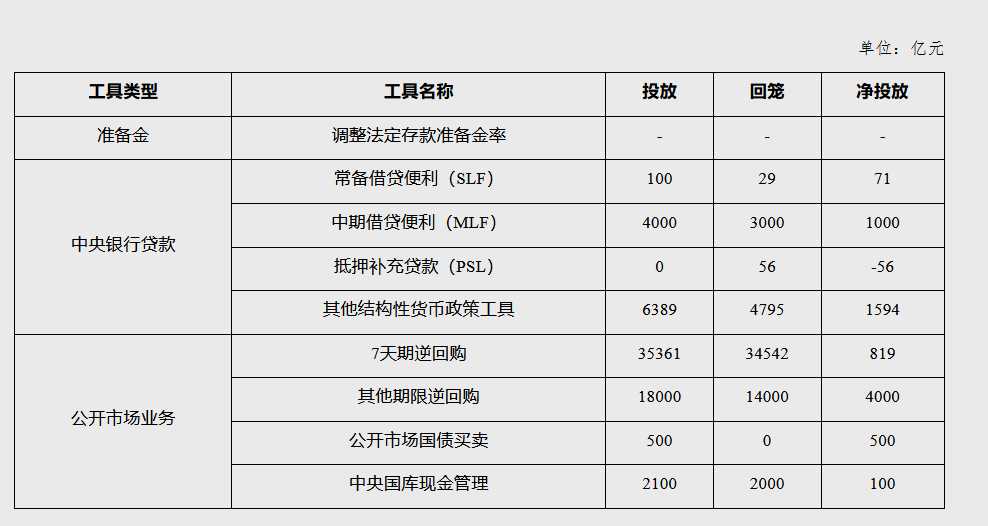
Core Viewpoint - The People's Bank of China (PBOC) has released the liquidity injection data for December 2025, indicating various monetary policy tools used to manage liquidity in the financial system [1][3]. Group 1: Liquidity Injection Details - The PBOC injected 100 billion yuan through the Standing Lending Facility (SLF), with a net injection of 71 billion yuan after 29 billion yuan was withdrawn [1][3]. - A total of 4 trillion yuan was injected via the Medium-term Lending Facility (MLF), resulting in a net injection of 1 trillion yuan after 3 trillion yuan was withdrawn [1][3]. - The 7-day reverse repurchase agreements saw an injection of 35,361 billion yuan, with a net injection of 819 billion yuan after 34,542 billion yuan was withdrawn [1][3]. - The net injection from open market government bond transactions amounted to 500 billion yuan [1][3]. Group 2: Summary of Monetary Policy Tools - The table summarizes various monetary policy tools, including: - SLF: 100 billion yuan injected, 29 billion yuan withdrawn, net injection of 71 billion yuan [2][4]. - MLF: 4 trillion yuan injected, 3 trillion yuan withdrawn, net injection of 1 trillion yuan [2][4]. - Other structural monetary policy tools: 6,389 billion yuan injected, 4,795 billion yuan withdrawn, net injection of 1,594 billion yuan [2][4]. - 7-day reverse repo: 35,361 billion yuan injected, 34,542 billion yuan withdrawn, net injection of 819 billion yuan [2][4]. - Other term reverse repos: 18,000 billion yuan injected, 14,000 billion yuan withdrawn, net injection of 4,000 billion yuan [2][4]. - Open market government bond transactions: 500 billion yuan net injection [2][4]. - Central treasury cash management: 2,100 billion yuan injected, 2,000 billion yuan withdrawn, net injection of 100 billion yuan [2][4].
央行:2025年12月常备借贷便利(SLF)净投放71亿元
Xin Lang Cai Jing· 2026-01-05 11:23
Core Viewpoint - The People's Bank of China (PBOC) has released the liquidity injection data for December 2025, indicating various monetary policy tools used to manage liquidity in the financial system [1][3]. Group 1: Liquidity Injection Overview - The PBOC utilized several tools for liquidity management, including the Standing Lending Facility (SLF), Medium-term Lending Facility (MLF), and 7-day reverse repos [1][3]. - The SLF had a total injection of 10 billion yuan, with a net injection of 7.1 billion yuan after 2.9 billion yuan was withdrawn [1][3]. - The MLF saw an injection of 400 billion yuan, with a net injection of 100 billion yuan after 300 billion yuan was withdrawn [1][3]. - The 7-day reverse repo had a significant injection of 35,361 billion yuan, resulting in a net injection of 819 billion yuan after 34,542 billion yuan was withdrawn [1][3]. Group 2: Detailed Breakdown of Monetary Tools - The following table summarizes the liquidity injection and withdrawal for various monetary policy tools: | Tool Type | Tool Name | Injection (billion yuan) | Withdrawal (billion yuan) | Net Injection (billion yuan) | | --- | --- | --- | --- | --- | | Central Bank Loans | SLF | 10 | 2.9 | 7.1 | | | MLF | 400 | 300 | 100 | | | PSL | 0 | -5.6 | -5.6 | | | Other Structural Tools | 638.9 | 479.5 | 159.4 | | Open Market Operations | 7-day Reverse Repo | 35,361 | 34,542 | 819 | | | Other Term Reverse Repo | 18,000 | 14,000 | 4,000 | | | Government Bond Transactions | 50 | 0 | 50 | | | Central Treasury Cash Management | 210 | 200 | 10 | [2][4]
人民银行在香港发行400亿元人民币6个月期央票,中标利率1.67%
Bei Jing Shang Bao· 2025-12-22 06:44
Core Viewpoint - The People's Bank of China has issued a 6-month central bank bill in Hong Kong, indicating ongoing monetary policy actions to manage liquidity and interest rates in the market [1] Group 1: Issuance Details - The total issuance amount of the central bank bill is 400 billion RMB [1] - The winning bid interest rate for the bill is set at 1.67% [1] - The effective date of the bill is December 24, 2025, with a maturity date of June 24, 2026 [1]
央行重启14天期逆回购操作维护年末资金面平稳
Zheng Quan Shi Bao· 2025-12-18 18:14
Group 1 - The People's Bank of China (PBOC) conducted a 7-day reverse repurchase operation of 88.3 billion yuan and a 14-day reverse repurchase operation of 100 billion yuan on December 18, aiming to meet year-end funding needs and maintain a stable liquidity environment [1] - The PBOC's decision to resume the 14-day reverse repurchase operation after nearly three months is seen as a measure to directly cover the funding demand during the New Year holiday and to smooth out potential short-term interest rate fluctuations [1] - The adjustment in the reverse repurchase operation structure, moving from a single-price bidding to a multiple-price bidding, reflects a focus on short-term liquidity tools rather than a significant overall easing of monetary policy [1] Group 2 - The PBOC plans to flexibly and efficiently utilize various monetary policy tools, including reserve requirement ratio (RRR) cuts and interest rate reductions, to ensure ample liquidity in the market next year [2] - The combination of various liquidity tools is expected to enhance the scientific and precise management of short, medium, and long-term liquidity, supporting increased credit supply from financial institutions [2] - The ongoing supportive stance of monetary policy is indicated by the continuous reinforcement of quantity-based policy tools [2]
离岸人民币汇率升至14月来新高,央行在港发行400亿人民币票据
Guan Cha Zhe Wang· 2025-12-18 05:37
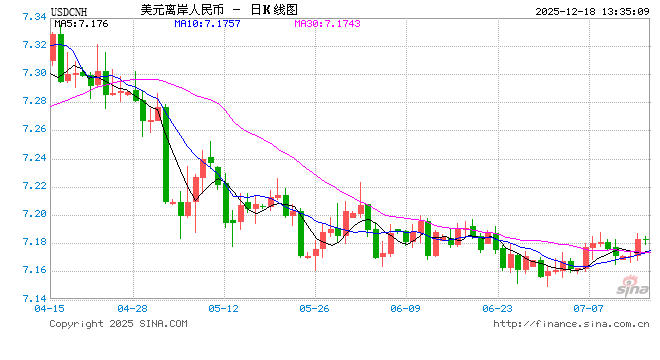
Core Viewpoint - The People's Bank of China (PBOC) is set to issue the 10th Central Bank Bill in Hong Kong to enhance the high credit-rated RMB financial products and improve the RMB yield curve in Hong Kong [1][8]. Group 1: Central Bank Bill Issuance - The 10th Central Bank Bill will have a term of 6 months (182 days) and will be a fixed-rate bond, with a total issuance amount of RMB 40 billion [1][8]. - The bill's effective date is December 24, 2025, and it will mature on June 24, 2026, with the maturity date adjusted for holidays [1][8]. - The face value of the bill is RMB 100, and it will be issued through a Dutch auction method, with the bidding subject being the interest rate [1][8]. Group 2: Economic Implications - Central Bank Bills serve as a monetary policy tool aimed at regulating market liquidity, providing a benchmark interest rate, and promoting the development of the money market, rather than raising funds [3][10]. - The issuance of these bills is expected to help absorb offshore RMB liquidity and stabilize exchange rate expectations, as the offshore RMB exchange rate has reached 7.0378, the highest in nearly 14 months [5][10].
中央银行会计核算数据集中系统公开市场买断式回购券款对付功能上线
Zheng Quan Shi Bao Wang· 2025-12-15 06:28
人民财讯12月15日电,为适应货币政策工具落地实施新需求,全面支持公开市场买断式回购业务实行券 款对付(DVP)结算,进一步提升买断式回购操作结算效率,中国人民银行清算总中心近日推出中央银行 会计核算数据集中系统(ACS)公开市场买断式回购DVP结算功能并成功上线。近日,ACS开办第一批公 开市场买断式回购DVP结算业务共计20笔,登记债券明细777条。该功能实现了中央银行公开市场买断 式回购业务全流程记账处理自动化,进一步扩展了公开市场线上交易业务范围,简化公开市场买断式回 购结算流程,缩短交割周期,提高金融机构资金与债券的使用效率;为公开市场操作提供更安全、高效 的技术支撑,有助于货币政策工具广泛实施并精准落地,增强金融调控的有效性。 ...