
超节点技术

Search documents
晚报 | 9月19日主题前瞻
Xuan Gu Bao· 2025-09-18 14:59
Group 1: Computing Power - Huawei has launched the world's strongest computing power supernode and cluster, introducing the TaiShan 950 SuperPoD, which can replace various large and small machines as well as Exadata database integrated machines [1] - The supernode technology is seen as a core innovation direction for AI computing infrastructure, breaking through traditional cluster performance and efficiency bottlenecks [1] - The technology supports trillion-parameter model training and inference with higher energy efficiency and lower latency, pushing AI from the kilowatt to the megawatt era [1] Group 2: Hydrogen Energy - The Chinese Academy of Sciences has developed the world's first hydrogen negative ion prototype battery, marking a significant breakthrough in solid-state ion battery materials [2] - This new battery technology demonstrates the feasibility of hydrogen negative ions as energy carriers and opens new possibilities for hydrogen energy applications in energy storage [2] - The hydrogen energy market is expected to reach a scale of 4 trillion yuan by 2030, driven by technological breakthroughs and policy incentives [2] Group 3: Short Video Market - The overseas short video app market saw approximately 120.1 million downloads in August, with estimated in-app revenue reaching $196.4 million, marking a significant increase from July [3] - The total revenue for the overseas short video market has surpassed $1.088 billion in the first half of the year, with projections for annual revenue to reach $2.473 billion [3] - By 2027, the overseas short video market is expected to grow to $18.7 billion, potentially surpassing the domestic market [3] Group 4: Macro and Industry News - The China Charging Alliance reported an 88.5% year-on-year increase in electric vehicle charging infrastructure, with 4.53 million new installations from January to August 2025 [4] - China has built approximately 4.6 million 5G base stations, maintaining its position as the global leader in new energy vehicle production and sales for ten consecutive years [5] - The Ministry of Culture and Tourism has launched a three-year action plan to boost cultural and tourism consumption, with over 330 million yuan in subsidies planned [5]

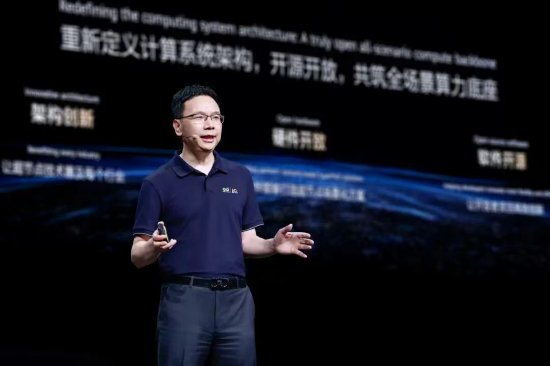
超节点架构创新,开源开放共筑全场景算力底座
中国能源报· 2025-09-18 09:10
Core Viewpoint - Huawei has introduced an innovative super node architecture aimed at building a robust all-scenario computing foundation, emphasizing open-source and hardware openness to foster industry collaboration and innovation [1][10]. Group 1: Super Node Architecture - The super node architecture, based on the Lingqu interconnection protocol, allows multiple physical machines to be deeply interconnected, enabling them to function as a single logical unit for learning, reasoning, and efficient computing [1][2]. - This architecture addresses the challenges of traditional server stacking, which can lead to lower computing efficiency and frequent interruptions during training as cluster sizes increase [1][2]. Group 2: Product Launches - Huawei has launched several new products based on the super node architecture, including the Atlas 950 SuperPoD, Atlas 850 and Atlas 860 AI servers, Atlas 350 AI accelerator cards, and the TaiShan 950 SuperPoD [4][5]. - The Atlas 950 SuperPoD is designed for large-scale AI computing tasks, featuring innovations such as zero-cable electrical interconnection and enhanced liquid cooling reliability [4]. - The Atlas 850 is the first enterprise-grade air-cooled AI super node server, capable of forming a super node cluster with up to 128 units and 1024 cards [4]. Group 3: Performance Enhancements - The Atlas 350 accelerator card, utilizing the Ascend 950PR chip, offers a 2x increase in vector computing power and a 2.5x performance boost in recommendation inference scenarios [5]. - The TaiShan 950 SuperPoD features ultra-low latency of 370 nanoseconds and a bandwidth of 2.8T, significantly enhancing performance in database and virtual machine migration scenarios [5]. Group 4: Open Collaboration - Huawei is committed to open collaboration by sharing super node technology with the industry, allowing partners to develop products based on the Lingqu protocol and super node reference architecture [6]. - The company has opened its super node hardware, including NPU modules and AI accelerator cards, to facilitate incremental development by customers and partners [6]. Group 5: Software Innovation - Huawei is also focusing on software openness, with plans to open-source the Lingqu operating system components and support various open-source communities, accelerating developer innovation [9]. - The Ascend CANN and Mind series components will be open-sourced, prioritizing support for popular frameworks like PyTorch, enhancing flexibility for developers [9].
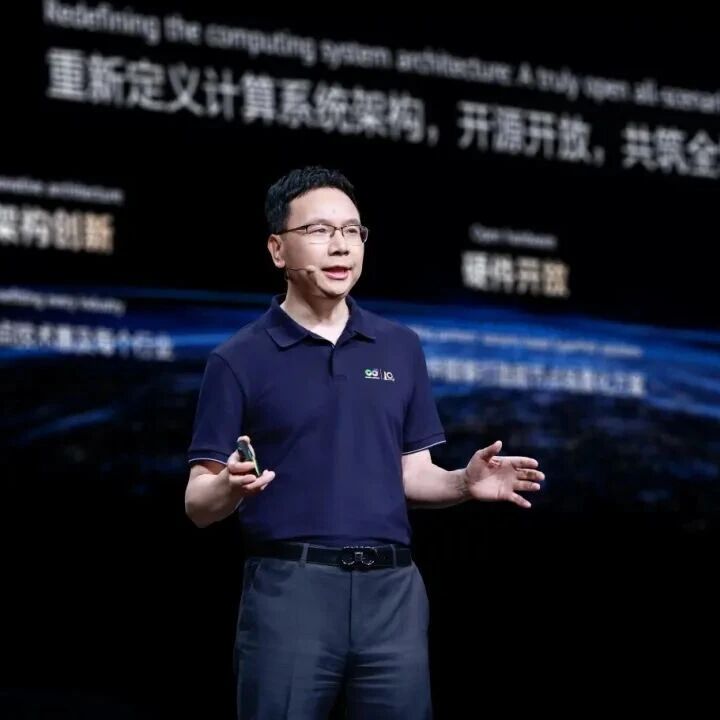
算力是中国人工智能的关键!华为徐直军最新发声
券商中国· 2025-09-18 08:28
Core Viewpoint - Huawei has unveiled its latest advancements in computing power and chip technology, emphasizing the importance of computing power for artificial intelligence (AI) and its critical role in China's AI development [1][4]. Group 1: Super Nodes and Clusters - Huawei introduced the Atlas 950 SuperPoD and Atlas 960 SuperPoD, which support 8192 and 15488 Ascend cards respectively, leading in key metrics such as card scale, total computing power, memory capacity, and interconnect bandwidth [3]. - The Atlas 950 SuperCluster and Atlas 960 SuperCluster were also launched, boasting computing power scales exceeding 500,000 cards and reaching one million cards, making them the strongest computing clusters globally [4]. - Huawei has developed a unified interconnect protocol called Lingqu, which will be open-sourced to encourage industry partners to create related products and components, fostering an open ecosystem [4]. Group 2: Ascend Chip Evolution - Huawei's Ascend chip roadmap includes the 950 series, 960 series, and 970 series, with the 950PR set to launch in Q1 2026 and the 970 series expected in Q4 2028 [6]. - The chips will cover various fields including smartphones, communications, servers, and AI, with a focus on full-stack self-research [6]. Group 3: AI Solutions for SMEs - Huawei has launched the "4+10+N" intelligent solution for small and medium-sized enterprises (SMEs) to facilitate their transition to intelligent operations [8][9]. - The "4" represents four core scenarios: intelligent office, intelligent commerce, intelligent education, and intelligent healthcare, while "10" refers to ten one-stop scenario solutions [10]. - The initiative aims to provide simple and effective intelligent solutions to SMEs, addressing their challenges in technology and talent [9][10].
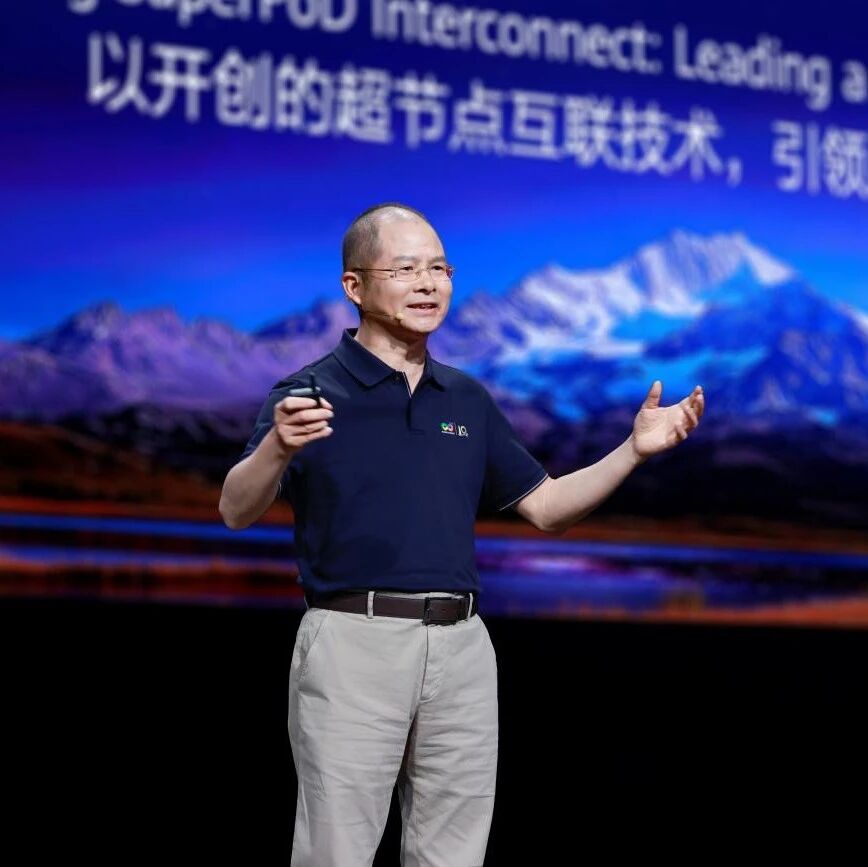
华为宣布推出超节点架构,可将多台物理机器深度互联
Xin Lang Ke Ji· 2025-09-18 06:39
Core Viewpoint - Huawei has introduced an innovative super node architecture aimed at redefining large-scale effective computing power, emphasizing open-source and hardware openness to foster industry collaboration and innovation [2][3]. Group 1: Super Node Architecture - The super node architecture allows multiple physical machines to be deeply interconnected, enabling them to function as a single logical unit for learning, reasoning, and thinking [2]. - This architecture is designed to meet the computing needs of large data centers, enterprise-level data centers, and small workstations across various industries [2]. - Key features of the super node architecture include resource pooling, scalable expansion, and reliable performance, facilitating high bandwidth and low latency interconnections for computing and storage units [2]. Group 2: New Product Launch - Huawei has launched several new products based on the super node architecture, including the AI super node Atlas 950 SuperPoD, enterprise-level AI super node servers Atlas 850 and Atlas 860, AI next-generation cards Atlas 350, and the first universal super node Taishan 950 SuperPoD [2]. - These products are designed to enhance the capabilities of data centers and support a wide range of computing scenarios [2]. Group 3: Open Source Commitment - Huawei is fully opening its super node technology to share the technological benefits with the industry, promoting inclusive and collaborative innovation [3]. - The operating system components of the Lingqu protocol will be open-sourced, with code being integrated into various upstream open-source communities such as openEuler [3].
华为发布全球最强算力超节点和集群
Yang Guang Wang· 2025-09-18 04:07
Core Insights - Huawei has launched the world's strongest computing supernodes and clusters at the Huawei Connect 2025 event, emphasizing the critical role of computing power in artificial intelligence and its importance to China's AI development [1][2] - The newly released supernodes, Atlas 950 SuperPoD and Atlas 960 SuperPoD, support 8192 and 15488 Ascend cards respectively, leading in key metrics such as card scale, total computing power, memory capacity, and interconnect bandwidth [1] - Huawei has introduced the world's first general-purpose computing supernode, TaiShan 950 SuperPoD, which aims to replace various large and small machines, including Exadata database machines, in multiple application scenarios [2] Computing Power and AI Development - The company is confident in providing sustainable and ample computing power for the long-term rapid development of artificial intelligence, leveraging its supernode and cluster technologies [2] - Huawei has developed a unified interconnect protocol, Lingqu (UnifiedBus), to address the challenges of large-scale supernode interconnect technology, and plans to open the Lingqu 2.0 technical specifications for industry partners to develop related products [2] Future Outlook - The company aims to continuously meet the growing demand for computing power based on the Lingqu-based supernodes and clusters, promoting the ongoing development of artificial intelligence and creating greater value [2]
AI算力集群迈进“万卡”时代,超节点为什么火了?
Di Yi Cai Jing· 2025-07-30 07:59
Core Insights - The recent WAIC highlighted the growing interest in supernodes, with companies like Huawei, ZTE, and H3C showcasing their advancements in this technology [3][4][5] - Supernodes are essential for managing large-scale AI models, enabling efficient resource utilization and high-performance computing [3][4][5] - The shift from traditional AI servers to supernode architectures is driven by the increasing complexity and size of AI models, which now reach trillions of parameters [4][5][9] Group 1: Supernode Technology - Supernodes integrate computing resources to create low-latency, high-bandwidth computing entities, enhancing the efficiency of AI model training and inference [3][4] - The technology allows for performance improvements even when individual chip manufacturing processes are limited, making it a crucial development in the industry [4][9] - Companies are exploring both horizontal (scale out) and vertical (scale up) expansion strategies to optimize supernode performance [5][9] Group 2: Market Dynamics - Domestic AI chip manufacturers are increasing their market share in AI servers, with the proportion of externally sourced chips expected to drop from 63% to 49% this year [10] - Companies like墨芯人工智能 are adopting strategies that focus on specific AI applications, such as inference optimization, to compete with established players like NVIDIA [10][11] - The competitive landscape is shifting, with firms like云天励飞 and后摩智能 targeting niche markets in edge computing and AI inference, avoiding direct competition with larger chip manufacturers [11][12][13] Group 3: Technological Innovations - The introduction of optical interconnects in supernode technology is a significant advancement, providing high bandwidth and low latency for AI workloads [6][9] - Companies are developing solutions that leverage optical communication to enhance the performance of AI chip clusters, addressing the limitations of traditional electrical interconnects [6][9] - The focus on sparse computing techniques allows for lower manufacturing process requirements, enabling more efficient AI model computations [11][12]
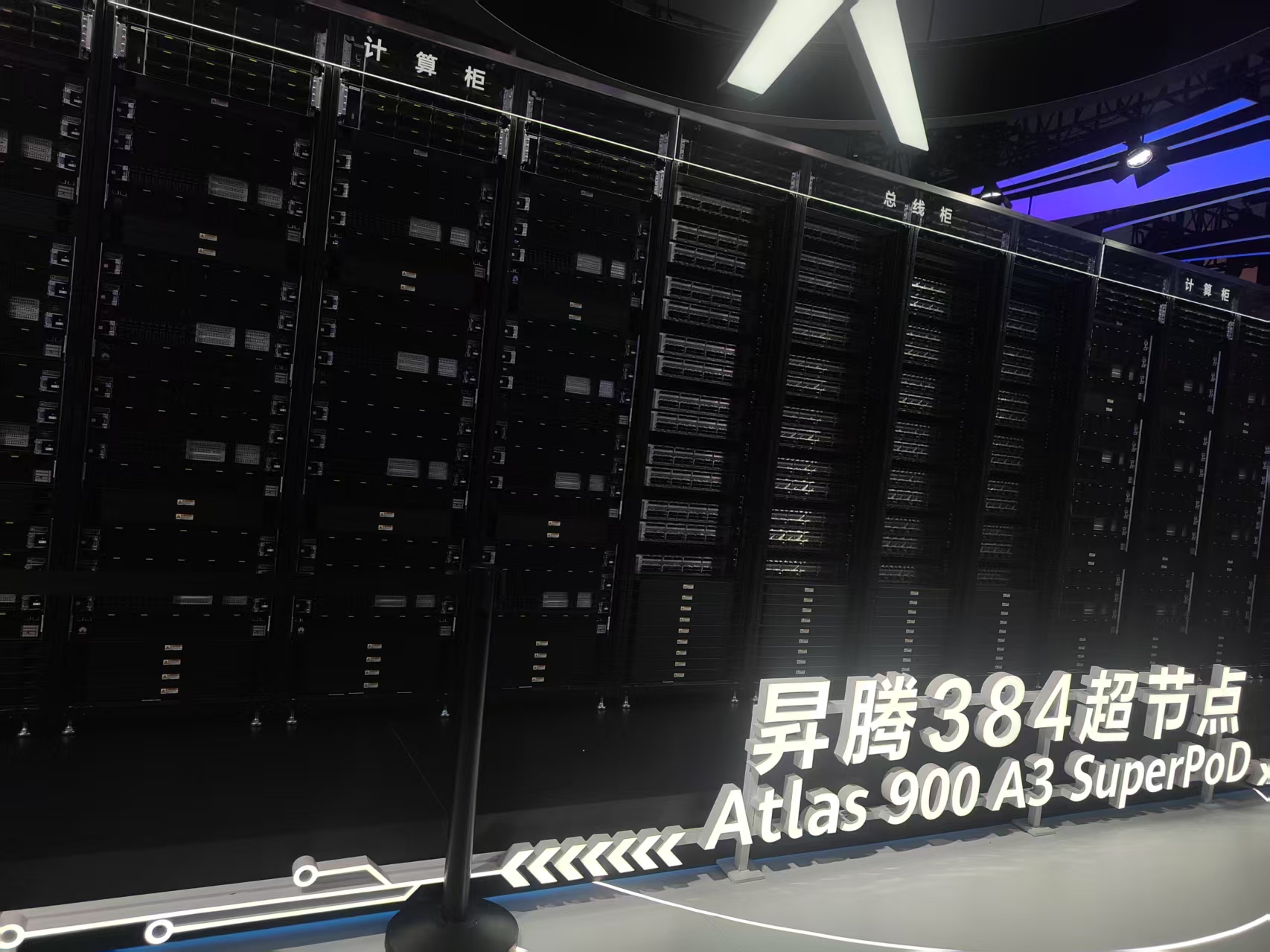
盘一盘——世界人工智能大会三大关键信息
Hu Xiu· 2025-07-30 03:32
Core Insights - The World Artificial Intelligence Conference should not be viewed merely as an exhibition, with Huawei's 384 super nodes being the most eye-catching highlight [1] - In the context of global computing power chip limitations and an accelerating arms race, super node technology has become a key to breaking through current challenges [1] Company Highlights - Huawei showcased its 384 super nodes at the conference, emphasizing its technological prowess and innovation in the AI sector [1] Industry Trends - The event reflects the growing importance of super node technology in addressing the limitations of computing power chips globally [1] - The acceleration of the arms race in technology indicates a competitive landscape where advancements in AI and computing power are critical [1]
华为“算力核弹”超越英伟达的秘密
Guan Cha Zhe Wang· 2025-06-12 14:21
Core Viewpoint - The emergence of Huawei's Ascend CLoudMatrix 384 supernode, which surpasses NVIDIA's flagship NVL72 system by 70% in computing power, signifies a shift in the AI computing landscape from single-point breakthroughs to system-level innovations, driven by the need to overcome traditional computing limitations under U.S. sanctions [1][6][29]. Group 1: AI Computing Landscape - The AI computing race is transitioning from hardware-centric approaches to architecture redefinition, with Huawei's innovations highlighting a unique path for China's system-level advancements [1][6]. - Huang Renxun, CEO of NVIDIA, has expressed increasing anxiety regarding China's rapid advancements in AI technology, emphasizing the impossibility of halting China's progress in this field [2][5][9]. Group 2: Huawei's Technological Advancements - Huawei's Ascend CLoudMatrix 384 supernode utilizes domestic Ascend chips and achieves a total computing power of 300 PFlops, significantly exceeding NVIDIA's NVL72 system [1][6][14]. - The architecture of the Ascend CLoudMatrix 384 supernode is based on a "fully equal architecture," which enhances communication efficiency and overcomes traditional bottlenecks such as the "memory wall" and "communication wall" [1][18][20]. Group 3: Competitive Dynamics - The U.S. government's sanctions have prompted NVIDIA to incur a $5.5 billion inventory loss, while simultaneously highlighting the importance of the Chinese market for NVIDIA's future [5][6]. - Huang Renxun acknowledges that China's advancements in AI technology could lead to a significant reduction in NVIDIA's market share in China, which has dropped from 95% to 50% in recent years [9][22]. Group 4: System-Level Innovations - The Ascend CLoudMatrix 384 supernode's design allows for the integration of thousands of cards, enabling it to support larger models and enhance training efficiency [1][6][14]. - The use of optical communication technology in the Ascend CLoudMatrix 384 supernode allows for high bandwidth and low latency, which is crucial for large-scale AI model training [20][21]. Group 5: Future Implications - The successful deployment of the Ascend CLoudMatrix 384 supernode and its ability to train large models like the Pangu Ultra MoE model demonstrates the potential for domestic AI infrastructure to achieve self-sufficiency [26][29]. - The emergence of Huawei's technology provides a viable alternative to NVIDIA's offerings, potentially reshaping the competitive landscape in the AI industry [22][29].


六年后再次面对禁令,华为云有了更多底气
36氪· 2025-05-16 09:21
Core Viewpoint - The article discusses the competitive landscape of AI computing power, highlighting Huawei's CloudMatrix 384 super node technology as a significant advancement in the face of U.S. export controls on advanced chips, particularly targeting Huawei's Ascend AI chips [2][4][19]. Group 1: U.S. Export Controls and Market Dynamics - On May 13, the U.S. Department of Commerce announced a global ban on Huawei's Ascend AI chips, expanding the ban to all advanced computing ICs from China [2]. - Despite these restrictions, the U.S. tech industry, particularly NVIDIA, is still eager to tap into the Chinese AI market, as evidenced by NVIDIA's announcement of a large order from Saudi Arabia on the same day the ban was issued [2][3]. - The performance degradation of NVIDIA's H20 GPU, which will see a reduction in INT8 precision computing power by over 60%, raises questions about the viability of continued sales to China [3][4]. Group 2: Huawei's Technological Advancements - Huawei's CloudMatrix 384 super node technology can aggregate 384 Ascend computing cards to achieve a computing power of 300 PFlops, rivaling the performance of NVIDIA's H100 GPU [4][13]. - The technology features a new high-speed bus network that enhances inter-card bandwidth by over 10 times, allowing for near-lossless data flow between cards, thus improving training efficiency to nearly 90% of NVIDIA's single-card performance [13][14]. - The CloudMatrix 384 super node is designed to support large-scale expert parallelism, making it compatible with current mainstream models like DeepSeek and GPT [14]. Group 3: Competitive Landscape and Industry Trends - The super node technology represents a critical solution to global AI computing power challenges, with various companies, including NVIDIA and AMD, developing their own versions of super node architectures [15][16]. - Huawei's CloudMatrix 384 is currently the only commercially available large-scale super node cluster globally, having been deployed in Wuhu data center [17]. - The article emphasizes the importance of a comprehensive AI infrastructure that integrates hardware, software, and services, positioning Huawei as a leader in this domain [21][25]. Group 4: Broader Implications and Future Outlook - The ongoing U.S. technology blockade has inadvertently accelerated China's advancements in chip manufacturing and AI technologies, as noted by Bill Gates [19][21]. - The article concludes that modern AI competition is not just about individual chips or models but requires a holistic approach that encompasses a complete ecosystem of hardware and software solutions [21][24].
山西证券:一季报后AI算力展望依然乐观 下半年国产算力或迎更强增长
智通财经网· 2025-05-02 06:18
Group 1: Cloud Computing and AI Infrastructure - The outlook for capital expenditure from cloud giants is positive, with significant growth observed in core companies such as optical modules and copper connections in Q1 [1][2] - Google's Q1 2025 report indicated a 28% year-on-year increase in cloud revenue, with capital expenditure reaching $17.2 billion (up 43% year-on-year) and an expected annual capital expenditure of $75 billion [1] - Amazon clarified that its recent adjustments in data center leasing are part of routine capacity management and do not indicate a reduction in overall data center construction plans [1] Group 2: Domestic Computing Power and AIDC Sector - The AIDC sector is driven by expectations as new capacity investments take time to convert into revenue, with significant growth in fixed assets and construction projects reported by companies like Runze Technology and Aofei Data [3] - Changes in H20 sales regulations are expected to accelerate the adoption of domestic computing power in the second half of the year, with companies like Ascend, Haiguang, and Cambricon being highlighted as key players [3] Group 3: Optical Communication and Copper Connection - Strong capital expenditure is leading to high certainty in performance for sectors such as optical modules, PCB, copper connections, and power supplies, with companies like Zhongji Xuchuang and Xinyi Sheng reporting substantial profit increases [2] - In the copper connection sector, companies like Wolong Nuclear Materials and Dingtong Technology reported year-on-year profit increases of 39% and 212%, respectively [2] Group 4: Military Information Technology - The recovery of orders in military information technology is notable, with satellite internet projects expected to drive demand for new satellite payloads and ground terminal equipment [4] Group 5: Recommended Stocks - Key stocks to watch in the optical communication sector include Zhongji Xuchuang, Xinyi Sheng, and Shijia Photon [5] - In the copper connection sector, recommended stocks include Wolong Nuclear Materials and Dingtong Technology [6] - For domestic computing power, companies like Cambricon and Haiguang are highlighted, while in military information technology, stocks such as Chengchang Technology and Zhenlei Technology are recommended [6]
