
金融衍生品

Search documents
华能国际:关于公司2026年度开展金融衍生品业务的公告
Zheng Quan Ri Bao Zhi Sheng· 2025-10-28 13:38
Core Viewpoint - Huaneng International announced plans to engage in financial derivatives business for the year 2026, including specific trading limits for various financial instruments [1] Group 1: Financial Derivatives Business - The company will conduct fuel swap transactions with a trading limit of up to $1.2 billion for 2026 [1] - The company will also engage in foreign exchange forward transactions with a trading limit of up to $1.7 billion [1] - Additionally, the company plans to undertake interest rate swap transactions with a trading limit of up to $300 million [1]

工业硅企业风险管理的“法宝”
Qi Huo Ri Bao Wang· 2025-10-14 00:54
Core Viewpoint - The industrial silicon industry is experiencing a transformation and market restructuring, with financial derivatives playing a crucial role in risk management and operational efficiency for related enterprises [2][5]. Group 1: Industry Context - Industrial silicon is a key resource supporting high-end manufacturing, deeply integrated into sectors like photovoltaic new energy, organic silicon, and aluminum alloys [2]. - The rapid expansion of industrial silicon production capacity, coupled with price volatility and dynamic policy adjustments, has increased uncertainty for enterprises in the sector [2]. - The Chinese government is promoting the orderly exit of backward production capacity and addressing low-price competition in the photovoltaic industry, signaling a shift in market dynamics [3]. Group 2: Financial Derivatives Application - Financial derivatives, such as futures and options, provide various risk management strategies for industrial silicon enterprises, including price risk hedging, procurement cost optimization, and inventory value management [2][5]. - In a rising price environment, enterprises using a "order-first, purchase-later" model may face profit compression, necessitating the use of futures markets to lock in procurement prices [3]. - A case study illustrates that a downstream grinding enterprise utilized options to reduce costs, selling a put option on July 10, 2025, which provided a premium of 181 yuan/ton, effectively lowering their costs [4]. Group 3: Operational Challenges - Industrial silicon grinding enterprises are facing thin profit margins due to increased raw material price volatility, low technical barriers in processing, and intense competition [4]. - The lack of pricing power and challenges in passing cost pressures downstream further compress profit margins, making the use of financial derivatives essential for stabilizing operations [4]. - By employing futures and options, companies can lock in raw material costs and sales prices, mitigate price fluctuation risks, and enhance capital efficiency [4]. Group 4: Future Outlook - The application of financial derivatives in the industrial silicon sector is expected to expand, becoming a core driver for optimizing risk management and resource allocation [5]. - This strategic use of financial tools will help the industry seize development opportunities amid the global energy transition and achieve high-quality growth [5].

海外期货概况(地区篇)之四:北美
Zhong Xin Qi Huo· 2025-10-13 07:59
1. Report Industry Investment Rating No relevant content provided. 2. Core Viewpoints of the Report - The report introduces the development history, major exchanges, core products, market structure, and volume - price characteristics of the North American futures market. The US futures market has Chicago and New York as its dual cores, with a complementary and comprehensive variety of functions. The Canadian futures market, centered around the Montreal Exchange, is smaller in scale but provides risk - management tools for local investors and operates stably [1][2]. 3. Summary by Directory 3.1 Development History 3.1.1 United States - The US futures market has a "dual - core driven" pattern of CME and ICE. CME Group has strengthened its system - important position through energy derivatives pricing and technological innovation, while ICE Futures US has become a global pricing benchmark in the soft - commodity field [8]. - Chicago is the origin of the US futures market. The development of commodity futures was promoted by its position as a transportation hub and agricultural center. The CBOT, established in 1848, marked the birth of modern agricultural futures trading. The CME, founded in 1898, transformed into a leading financial derivatives exchange in the 20th century, launching foreign exchange and interest - rate futures. In 2007, CME and CBOT merged, and in 2008, CME Group acquired NYMEX and COMEX, becoming a comprehensive trading platform [9]. - The US government's regulatory framework evolution also influenced market development. The 1922 "Grain Futures Act" brought futures trading under unified regulation, and the 1974 establishment of the CFTC regulated both commodity and financial futures markets [10]. - New York is the second core of the US futures market. The New York Cotton Exchange in 1870 started futures trading in New York. The development of energy and metal futures, such as the launch of WTI crude oil futures by NYMEX in 1983 and the establishment of COMEX as a global metal derivatives pricing center, contributed to its growth. ICE, founded in 2000, promoted the electronic trading of energy futures and formed a dynamic pricing mechanism [11]. 3.1.2 Canada - The development of the Canadian futures market is centered around the Montreal Exchange (MX). MX, formerly the Montreal Stock Exchange, started as a securities exchange in 1874. In 1975, it launched Canada's first stock options. In 1982, it was renamed MX, focusing on options and futures. In the 21st century, it went through adjustment and transformation, and since 2020, it has been upgraded to a "North American - characteristic derivatives hub" [15][16]. 3.2 Futures Products 3.2.1 United States - **CME (Chicago Mercantile Exchange)**: It offers equity futures (e.g., S&P 500 index futures), commodity futures (covering agriculture, energy, and cryptocurrencies), and exchange - rate futures (the world's largest regulated FX futures market) [20][21][23]. - **CBOT (Chicago Board of Trade)**: Specializes in interest - rate futures (e.g., 10Y and 2Y US Treasury bond futures) and commodity futures (corn, soybeans, and wheat futures) [24][25][26]. - **NYMEX (New York Mercantile Exchange)**: A global center for energy and some metal futures, with WTI crude oil futures as one of the global oil - pricing benchmarks [27]. - **COMEX (New York Commodity Exchange)**: Focuses on metal futures and options, being a global pricing center for precious and industrial metals, such as gold and copper futures [28]. - **ICE (Intercontinental Exchange)**: Covers equity futures (e.g., MSCI emerging - market index futures), commodity futures (Brent crude oil, natural gas, and agricultural products), and exchange - rate futures (with the US dollar index futures as the core) [29][30][32]. 3.2.2 Canada - **MX (Montreal Exchange)**: Provides equity futures (e.g., S&P/TSX 60 index futures) and interest - rate futures (Canadian government bond futures and CORRA futures) [34][35][36]. 3.3 Volume - Price Overview - From 2012 to 2024, the trading volume of North American futures derivatives generally showed an upward trend with fluctuations. In 2025, the overall trading volume of the six major North American exchanges remained high. Interest - rate derivatives are the core driving force, followed by stocks, stock index futures, and US - dollar - related currency derivatives. Emerging categories are expanding rapidly [37]. - In terms of energy, NYMEX and ICE are dominant; in agriculture, products like corn, soybeans, etc., are actively traded; in metals, COMEX's gold futures have high trading volume. Overall, the North American futures market is characterized by interest - rate product dominance, followed by energy and agriculture, with stable precious metals and currencies, and rapid growth in emerging categories [38]. - In terms of open - interest amounts, the E - mini S&P 500 and 10 - year US Treasury bond futures are the mainstays of the North American derivatives market. The E - mini S&P 500 shows an upward - trending and volatile pattern, and the 10 - year US Treasury bond futures maintain a high open - interest scale [38]. 3.4 Appendix: North American Futures Exchanges' 2025 Futures Trading Volume Ranking - **CME**: The trading volume of stock index products is 813,667,719, short - term interest - rate futures (STIRS) is 607,317,183, etc., with a total trading volume of 1,623,724,330 [46]. - **CBOT**: The trading volume of medium - term interest - rate futures (2 - 10 years) is 875,104,350, long - term interest - rate futures (> 10 years) is 143,363,588, etc., with a total trading volume of 1,314,723,478 [47]. - **NYMEX**: The trading volume of West Texas Intermediate (WTI) crude oil is 157,735,117, natural gas is 92,166,306, etc., with a total trading volume of 350,951,301 [49]. - **ICE**: The trading volume of natural gas is 136,932,054, stock index products is 31,665,405, etc., with a total trading volume of 240,545,798 [50]. - **COMEX**: The trading volume of gold is 68,242,447, copper is 13,883,451, etc., with a total trading volume of 96,761,551 [52]. - **MX**: The trading volume of medium - term interest - rate futures (2 - 10 years) is 50,756,344, short - term interest - rate futures (STIRS) is 23,876,422, etc., with a total trading volume of 84,199,074 [51].


金融史最疯豪赌!握1.2万亿AIG差点毁全球经济,美联储850亿救市
Sou Hu Cai Jing· 2025-10-10 09:58
Core Viewpoint - The collapse of AIG in 2008 was a significant event that triggered global financial panic, highlighting the interconnectedness of major financial institutions and the potential systemic risks they pose [1][3][10]. Group 1: AIG's Background and Significance - AIG was once considered a "healthy benchmark" in the financial industry, with operations in 140 countries and total assets of $1.2 trillion, making it one of the largest insurance companies globally [3][5][16]. - The company had a 3A credit rating, which allowed it to secure favorable lending terms and attract business without actively seeking it [23][25]. - AIG's involvement in the insurance of over 80 million life insurance policies, with a total face value of $1.9 trillion, positioned it as a critical player in the financial system [23][31]. Group 2: The Crisis Trigger - The financial crisis began on September 15, 2008, when Lehman Brothers declared bankruptcy, leading to a 60% drop in AIG's stock price and a downgrade in its financial rating [10][12]. - AIG faced a liquidity crisis, prompting it to seek a $30 billion emergency loan from the New York Federal Reserve [12][16]. - The U.S. government, under President Bush, initially resisted the idea of bailing out Wall Street firms, reflecting public sentiment against using taxpayer money to rescue failing corporations [12][14]. Group 3: The Decision to Rescue AIG - Timothy Geithner, then President of the New York Federal Reserve, argued for a government bailout, emphasizing AIG's systemic importance due to its extensive connections with global financial institutions [20][21]. - AIG's risk exposure was estimated at $3 trillion, significantly higher than that of Lehman Brothers, indicating the potential for widespread financial fallout if AIG failed [21][31]. - Ultimately, the Federal Reserve approved an $85 billion bailout, which included a significant restructuring of AIG's management and a substantial equity stake for the government [39][42]. Group 4: Aftermath and Lessons Learned - The bailout successfully prevented a broader financial collapse, reinforcing the idea that the government must sometimes intervene to maintain market confidence [46][51]. - The U.S. government later profited from the bailout, recouping $22.7 billion four years after the initial investment [53]. - The AIG crisis serves as a cautionary tale about the risks of financial products like credit default swaps (CDS) and the importance of understanding systemic risk in the financial sector [55][57].
海航科技拟开展金融及外汇衍生品业务,交易额度达千万美元
Xin Lang Cai Jing· 2025-09-29 13:02
Core Points - HNA Technology Co., Ltd. held its 12th Board of Directors' fourth meeting on September 29, 2025, to address market volatility risks and ensure stable operations for the company and its subsidiaries [1][2] - The board unanimously approved two significant proposals: the first is to engage in financial derivatives business through forward freight agreements (FFA) to hedge against market risks, with a maximum trading margin of $3 million and a maximum contract value of $30 million on any trading day [1] - The second proposal involves conducting foreign exchange derivatives trading to mitigate exchange rate and interest rate risks, with a maximum trading margin and premium not exceeding $3 million and a total usage limit of $80 million [1] Proposal Details - The FFA business aims to use proprietary funds for hedging purposes, with the approved trading limits valid for 12 months from the board's approval date [1] - The foreign exchange hedging business will allow for a maximum trading amount of $80 million, which can be reused within the authorized period, also valid for 12 months [1] - Both proposals do not constitute related party transactions and do not require shareholder meeting approval, reflecting the company's commitment to proactive risk management and stable operations [2]

2025年度有色金属衍生品专题培训在西矿举办
Sou Hu Cai Jing· 2025-09-22 07:14
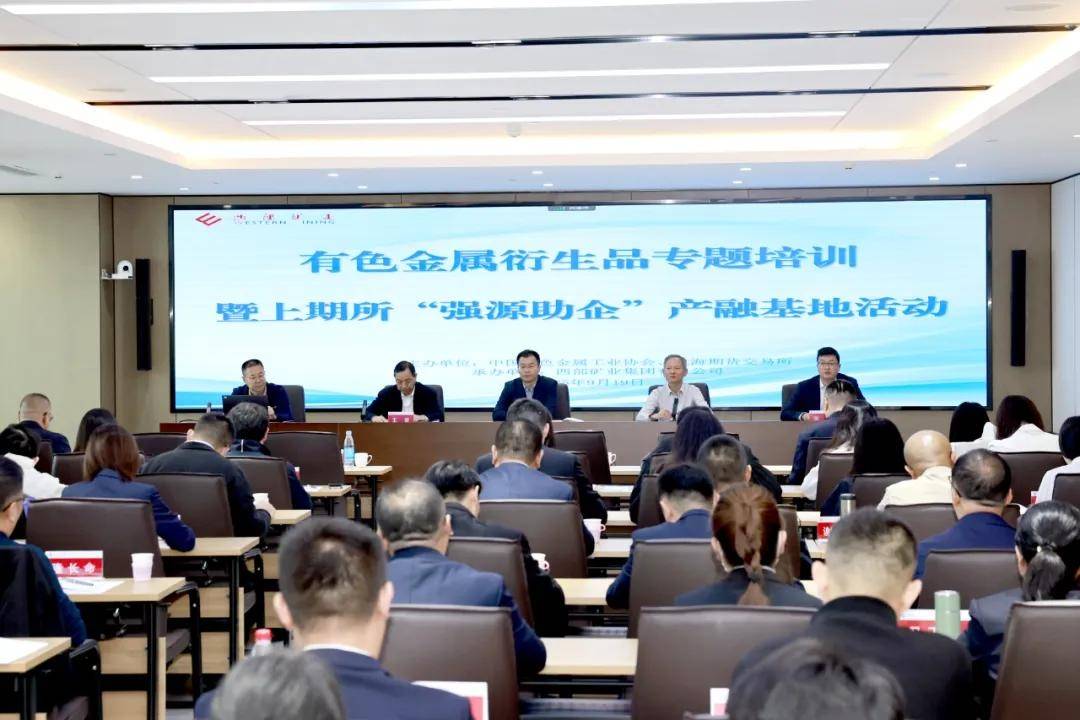
Group 1 - The event held on September 19 focused on enhancing the understanding and practical skills of financial derivatives among management teams in the non-ferrous metal industry, aiming to support stable operations amidst market fluctuations [1][3] - Wang Jian, representing the China Nonferrous Metals Industry Association, emphasized the importance of ecological and green development in the operations of Western Mining, a leader in the industry, and highlighted the association's commitment to providing valuable information and policy guidance to member enterprises [3][5] - Lu Feng from the Shanghai Futures Exchange pointed out the critical functions of futures derivatives in price discovery, risk avoidance, and asset allocation, which are essential for stabilizing enterprise profitability and controlling production costs [5][6] Group 2 - Zhao Fukan from Western Mining expressed gratitude towards supporting organizations and highlighted the company's full industry chain layout, emphasizing the need to utilize financial derivatives to manage market risks effectively [6] - The training program included expert-led sessions covering macroeconomic analysis, industry policy assessment, hedge management practices, and the application of options, focusing on addressing business pain points and essential needs [6]

股指期权数据日报-20250919
Guo Mao Qi Huo· 2025-09-19 01:18
Report Overview - This is an equity index option data daily report by Guomao Futures Research Institute, with data from September 18, 2025, sourced from Wind and Guomao Futures Research [2][3] Market Review Index Performance - The Shanghai Composite Index rose 0.37% to 3876.34 points, the Shenzhen Component Index rose 1.16%, the ChiNext Index rose 1.95%, the BeiZheng 50 fell 0.6%, the KeChuang 50 rose 0.91%, the Wind All A Index rose 0.67%, the Wind A500 rose 0.72%, and the CSI A500 rose 0.78%. A-share trading volume reached 2.4 trillion yuan, up from 2.37 trillion yuan the previous day [4] Index Quotes | Index | Closing Price | Change (%) | Trading Volume (billion) | Turnover (billion yuan) | | --- | --- | --- | --- | --- | | SSE 50 | 2952.7778 | 0.17 | 1550.34 | 56.67 | | CSI 300 | 4551.023 | 0.61 | 6084.54 | 235.72 | | CSI 1000 | 7554.8125 | 0.95 | 4932.96 | 301.71 | [3] CFFEX Equity Index Option Trading Option Volume and Open Interest | Index | Call Option Volume (million contracts) | Put Option Volume (million contracts) | Volume PCR | Call Option Open Interest (million contracts) | Put Option Open Interest (million contracts) | Open Interest PCR | | --- | --- | --- | --- | --- | --- | --- | | SSE 50 | 5.78 | 3.90 | 0.48 | 10.55 | 6.45 | 0.64 | | CSI 300 | 11.76 | 6.32 | 0.54 | 24.29 | 13.25 | 0.83 | | CSI 1000 | 25.61 | 18.05 | 0.70 | 43.66 | 19.08 | 1.16 | [3] Volatility Analysis Historical Volatility and Volatility Cone - The report presents historical volatility and volatility cones for SSE 50, CSI 300, and CSI 1000, including 5 - day, 20 - day, 40 - day, 60 - day, and 120 - day historical volatilities, along with 10%, 30%, 60%, and 90% quantile values [3] Volatility Smile Curve - Volatility smile curves for the next - month at - the - money implied volatility are provided for SSE 50, CSI 300, and CSI 1000 [3]
股指期权数据日报-20250918
Guo Mao Qi Huo· 2025-09-18 13:06
Report Core View - The report presents the trading data and volatility analysis of stock index options on September 18, 2025, including the performance of the Shanghai Composite Index, Shenzhen Component Index, ChiNext Index, etc., as well as the trading volume, turnover, and volatility of options for the Shanghai 50, CSI 300, and CSI 1000 indices [3][4]. Market Review Index Quotes - The Shanghai Composite Index rose 0.37% to 3876.34 points, the Shenzhen Component Index rose 1.16%, the ChiNext Index rose 1.95%, the North - 50 Index fell 0.6%, the Science and Technology Innovation 50 Index rose 0.91%, the Wind All - A Index rose 0.67%, the Wind A500 Index rose 0.72%, and the CSI A500 Index rose 0.78%. A - share trading volume was 2.4 trillion yuan, compared with 2.37 trillion yuan the previous day [4]. Index Option Quotes | Index | Closing Price | Change (%) | Turnover (Billion Yuan) | Trading Volume (Hundred Million) | | --- | --- | --- | --- | --- | | Shanghai 50 | 2952.7778 | 0.17 | 1550.34 | 56.67 | | CSI 300 | 4551.023 | 0.61 | 6084.54 | 235.72 | | CSI 1000 | 7554.8125 | 0.95 | 4932.96 | 301.71 | [3] CFFEX Stock Index Option Trading | Index | Call Option Volume (Million Contracts) | Put Option Volume (Million Contracts) | Volume PCR | Call Option Open Interest (Million Contracts) | Put Option Open Interest (Million Contracts) | Open Interest PCR | | --- | --- | --- | --- | --- | --- | --- | | Shanghai 50 | 5.78 | 3.90 | 0.48 | 10.55 | 6.45 | 0.64 | | CSI 300 | 11.76 | 6.32 | 0.54 | 24.29 | 13.25 | 0.83 | | CSI 1000 | 25.61 | 18.05 | 0.70 | 43.66 | 19.08 | 1.16 | [3] Volatility Analysis Shanghai 50 Volatility - The report shows the historical volatility and volatility cone of the Shanghai 50 index, as well as the volatility smile curve of the next - month at - the - money implied volatility [3]. CSI 300 Volatility - It presents the historical volatility and volatility cone of the CSI 300 index, along with the volatility smile curve of the next - month at - the - money implied volatility [3]. CSI 1000 Volatility - The historical volatility and volatility cone of the CSI 1000 index are provided, and the volatility smile curve of the next - month at - the - money implied volatility is also shown [3].
AI硬件股杀跌,沪指三连阴!高手4天逆势盈利200%,为何这么牛?“牛市旗手”异动是何信号?
Mei Ri Jing Ji Xin Wen· 2025-09-04 10:30
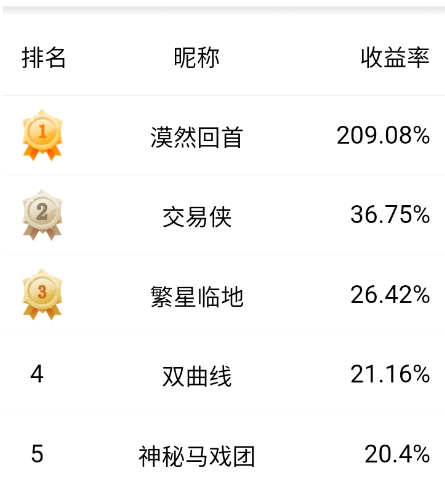
Market Overview - The A-share market unexpectedly continued to decline, with AI hardware stocks leading the drop, and the Shanghai Composite Index hitting a low of 3732 points during trading [1] - The index has experienced three consecutive days of decline, leaving many investors feeling confused and uncertain [1] Futures Market Insights - In the futures market, canola seeds, iron ore, and eggs saw significant gains, while red dates, CSI 500, and CSI 1000 index futures experienced notable declines [1] - A participant in the "Economic Grain Cup - National Futures Simulation Competition" achieved a remarkable 209% return over four days by capitalizing on the egg market [1] Key Technical Levels - Experts believe that the 3730-point level on the Shanghai Composite Index is a critical support point, as it represents the upper boundary of a ten-year trading range [4] - The recent rally in the brokerage sector indicates that market participants view the 3730-point level as having some support [4] Advantages of Futures Trading - Futures trading offers several advantages over stocks, such as the ability to go long or short, leverage trading, and T+0 trading, which can be beneficial in a declining stock market [6] - The purpose of the futures competition is to help investors understand and learn about futures and options, broadening their investment horizons and improving trading skills [6] Professional Traders' Strategies - Unlike ordinary retail investors, institutional traders often remain calm during market fluctuations due to their access to a wider range of financial instruments, including derivatives like index futures and options [7] - These tools allow traders to hedge against market downturns and create diverse risk-return profiles to adapt to different market conditions [7] Misconceptions About Derivatives - Many retail investors misunderstand index futures and options, perceiving them as overly risky and complex; however, these tools can effectively manage risk when used correctly [8] Learning Opportunities - The current high-volatility market presents an ideal opportunity for traders to learn how to utilize these financial instruments [9] - A special course on index futures and options is being offered to educate investors on relevant strategies and risk management techniques [10] Competition Details - The "Economic Grain Cup - National Futures Simulation Competition" provides a risk-free environment for participants to practice trading with virtual funds, simulating real trading conditions [12] - Participants can join without any financial investment, receiving 1 million virtual funds to trade, which helps mitigate the fear of losing real money [13] Incentives for Participation - The competition features a dual evaluation mechanism with weekly and monthly prizes, allowing participants to earn rewards based on positive returns [13] - Monthly prizes can reach up to 1288 yuan (pre-tax), with additional rewards for top performers, creating an engaging learning experience [13]
A股高位震荡市,如何运用股指期货和期权守住浮盈?这门课给你答案
Mei Ri Jing Ji Xin Wen· 2025-09-04 04:26
Core Viewpoint - The A-share market is experiencing a significant rise, with the Shanghai Composite Index reaching around 3888 points, leading to increased volatility and divergence among investors [1] Group 1: Market Conditions - The market is currently in a high-level fluctuation phase, causing many investors to feel conflicted as their stocks may not reflect the overall index gains, leading to anxiety about potential losses [1][2] - Traditional "buy and hold" strategies are failing for many investors, as they face challenges in maintaining profits amidst market corrections [2] Group 2: Professional Traders vs. Retail Investors - Professional traders are generally more composed during market fluctuations, utilizing financial derivatives such as index futures and options to hedge against risks and capitalize on market volatility [3] - There is a common misconception among retail investors that derivatives are overly risky and complex, whereas, when used correctly, they can actually reduce overall trading risk [4] Group 3: Educational Opportunities - The current market environment presents an ideal opportunity for traders to learn about and utilize financial derivatives, with specialized courses being offered to educate investors on index futures and options [5] - The courses will cover fundamental concepts, practical strategies, and risk management techniques to help traders navigate the current market conditions effectively [7][8] Group 4: Simulation Competitions - A nationwide futures simulation competition is being organized to provide investors with a risk-free environment to practice trading skills, offering virtual funds and the chance to win cash prizes [10] - The competition is designed to be accessible to all users of the Daily Economic News app, with no real capital required for participation, thus encouraging learning through practice [10][11]
